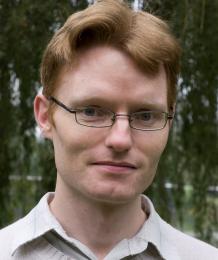
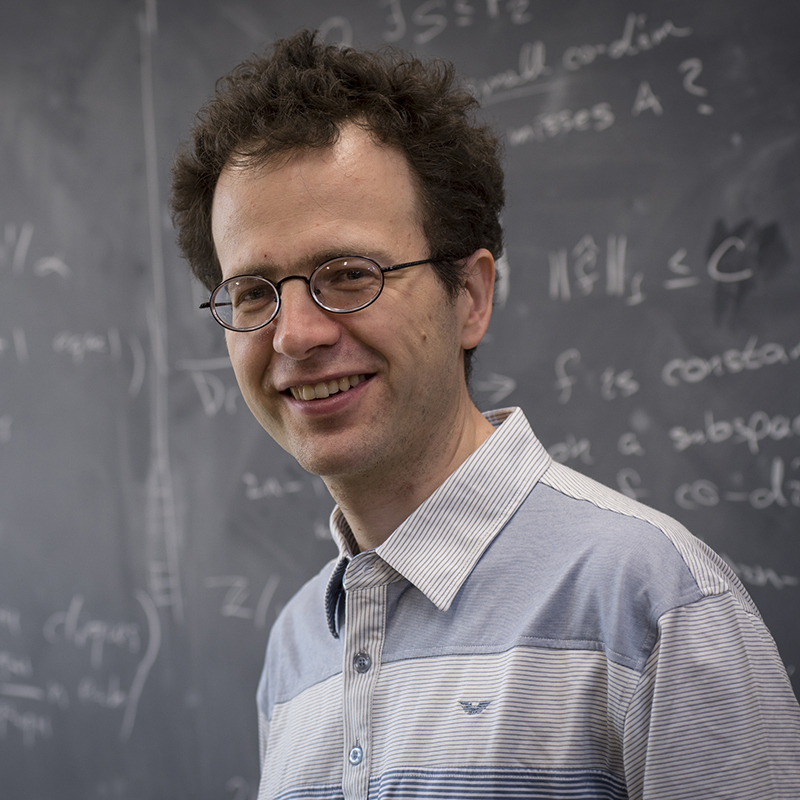
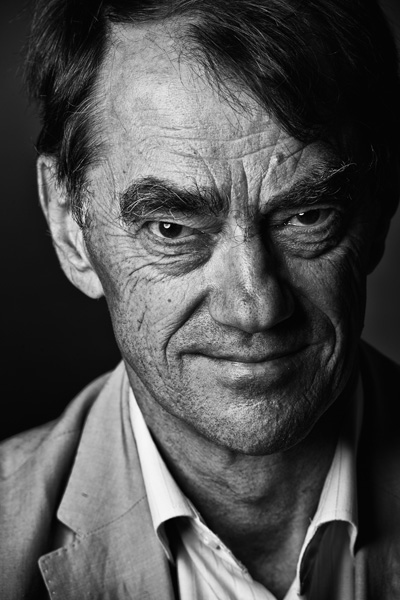
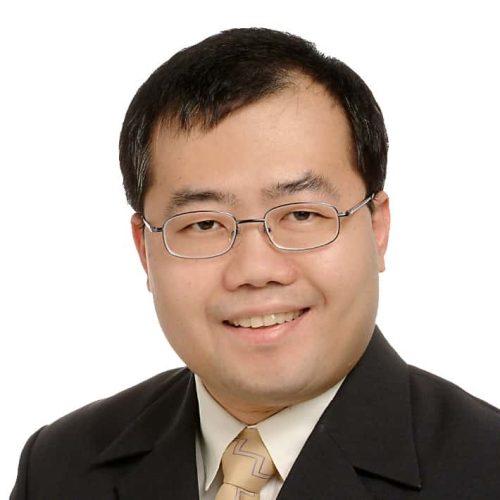
Thanh-Toan (Toan) Do is a Senior Lecturer at the Department of Data Science and AI, Faculty of Information Technology, Monash University. He obtained his Ph.D. in computer science from INRIA (2012) and previously held positions as a Research Fellow at the Singapore University of Technology and Design (2013–2016), the Australian Centre for Robotic Vision (2016–2018), and a Lectureship at the University of Liverpool (2018–2020). His research spans Computer Vision and Machine Learning , with emphasis on: Compact Deep Learning (efficient model architectures) Few-Shot Learning (generalization from minimal data) Metric Learning (similarity optimization) Visual Search & Visual Question Answering (multimodal AI systems) His publications (2023–2025) focus on generative modeling (e.g., diffusion models), noisy-label robustness, human-AI collaboration, and assistive healthcare technology. Trends indicate strong cross-disciplinary integration with HCI and medical applications. Awards: Harold Boley Award for Most Promising Paper (RuleML+RR 2021) CVPR 2019 Best Paper Finalist He is a Chief Investigator in the 2022–2025 project Large-scale multimodal knowledge management (Australian grant). Actively advises PhD students and leads research in deep learning efficiency and vision-language models.
Professor Roger Colbeck is a faculty member in the Department of Mathematics at the University of York, where he serves as Head of Section for Applied Mathematics. His research focuses on quantum information theory and foundational questions in quantum mechanics. He holds a PhD from the University of Cambridge and has held positions at ETH Zurich, the Perimeter Institute for Theoretical Physics, and as a Junior Research Fellow at Homerton College, Cambridge. His research explores interdisciplinary areas including device-independent quantum cryptography, quantum random number generation, uncertainty relations, and causal models in quantum theory. He investigates the implications of quantum mechanics for information processing, such as secure computations and protocols leveraging relativistic principles. Professor Colbeck has contributed to projects like the EPSRC Quantum Communications Hub and collaborates internationally. His work often bridges theoretical foundations with practical applications, such as improving cryptographic security through device-independent approaches. He advises three doctoral students and offers PhD projects in quantum cryptography, random number generation, or quantum foundations. His research has been published in top journals, including Physical Review Letters , and he frequently presents at conferences and seminars on topics like nonlocality and causal structures.
Boris Bukh is a Professor of Mathematics at Carnegie Mellon University (CMU), affiliated with the Department of Mathematical Sciences within the Mellon College of Science. He holds a Ph.D. from Princeton University and has held postdoctoral positions at the University of Cambridge and Churchill College. His research focuses on combinatorics, discrete geometry, extremal graph theory, and geometric selection theorems. He has received prestigious awards such as the Sloan Research Fellowship and the NSF CAREER Award. His work spans topics like Turán problems, geometric configurations, and algebraic methods in combinatorics. Recent publications explore extremal graph structures, convex polytopes in restricted point sets, and applications of random algebraic constructions to computational complexity. Bukh organizes events like the Math Kangaroo competition, fostering mathematics engagement among students. Key contributions include advancements in Ramsey theory, coding theory, and the intersection of combinatorics with geometry. His research often bridges theoretical insights with computational techniques, addressing problems in graph density, geometric incidences, and discrete optimization.
Wolfgang Spohn is a Professor and Chair of Philosophy and Philosophy of Science at the University of Konstanz, where he has held a position since 1996. His academic career includes previous appointments as Chair of Philosophy of Science at the University of Bielefeld (1991-1996), Associate Professor at the University of Regensburg (1986-1991), and Assistant Professor at the University of Munich (1976-1986). Spohn earned his PhD in 1976 from the University of Munich with a thesis on decision theory foundations and completed his Habilitation in 1984 with research on causality theory. His scholarly work spans multiple philosophical domains with particular emphasis on formal approaches to traditional philosophical problems. His research focuses on epistemology (especially ranking theory), philosophy of science , philosophy of mind and language , metaphysics , philosophical logics , and rationality theory . Spohn's work is characterized by rigorous formal methods applied to foundational philosophical questions, most notably through his development of ranking theory as a comprehensive framework for belief revision and epistemology. His publications show a clear trajectory from early work on decision theory and causality to his mature development of ranking theory. His most influential work 'Ordinal Conditional Functions' (1988) has garnered 895 Google Scholar citations, while his 1980 paper laid early foundations for Bayesian networks theory. Lakatos Award 2012 (first non-Anglosaxon recipient) Frege-Preis 2015 (premier German award in analytic philosophy) Fellow of the National Academy of Sciences Leopoldina Fellow of the Center for Advanced Study in Behavioral Sciences Spohn has supervised over 30 PhD students and mentored 8 Habilitation candidates. He has directed 17 research projects with approximately 3 million Euros in funding and co-led 4 research networks totaling 17 million Euros. His administrative service includes over 10 years as dean, department head, and study dean, plus 8 years on the University of Konstanz senate. He has served extensively in academic governance as editor-in-chief of ERKENNTNIS (1988-2001), on advisory boards for institutions including Carnegie Mellon University, and on editorial boards for 11 academic journals.
Siew Ann Cheong is an Associate Professor in the Division of Physics and Applied Physics at the School of Physical & Mathematical Sciences, Nanyang Technological University (NTU), Singapore. He is also an External Faculty member at the Complexity Science Hub (CSH) since 2019. Associate Professor, NTU (2016–present) Assistant Professor, NTU (2007–2016) Postdoctoral Associate, Cornell Theory Center (2006–2007) External Faculty, Complexity Science Hub (2019–present) Educational Background: B.Sc. (Hons) in Physics, National University of Singapore (1997) M.Sc., National University of Singapore (2000) M.Sc., Cornell University (2002) Ph.D. in Theoretical Condensed Matter Physics, Cornell University (2006) Siew Ann Cheong’s research centers on understanding the dynamics of complex systems with many degrees of freedom, such as financial markets, earthquakes, infectious diseases, biological sequences, and social systems. He employs both modeling and data-driven approaches to explore fundamental questions: What makes a system complex? How does complexity emerge? His goal is to develop a computational theory of complex systems by treating their dynamics as information processing. He applies methods from statistical physics, network science, time series analysis, and agent-based modeling to uncover universal principles across disciplines. His recent publications reveal a strong trend toward interdisciplinary research, particularly in econophysics, urban science, and computational history. He frequently uses topological data analysis (TDA), persistent homology, and network-based methods to study financial market crashes, urban gentrification, and knowledge evolution. His work bridges physics with social sciences, ecology, and digital humanities, demonstrating a consistent focus on identifying critical transitions and structural changes in complex systems. Scientific Awards: SPMS Excellence in Teaching Award (2008, 2010, 2011) Nanyang Award for Excellence in Teaching (2010) Science Mentorship Programme Outstanding Mentor Award (2010) Best Paper Award, International Conference on Culture and Computing (2013) Siew Ann Cheong has supervised numerous PhD, undergraduate, and high school research students, contributing significantly to academic mentoring. He has received multiple teaching awards, reflecting his commitment to education. His research is supported by interdisciplinary collaborations and grants, particularly in complex systems and data science. He has also contributed to computational history and heritage impact modeling through projects like SHIFT (Sustainable Heritage Impact Factor Theory). He leads a research group focused on complex systems, with former fellows and students now in academic and research positions worldwide. Labs and Research Groups: While no formal lab name is mentioned, his research is conducted within the Division of Physics and Applied Physics at NTU, involving a team of former and current students and fellows working on complex systems, econophysics, and network science. He collaborates with institutions such as the Complexity Science Hub, National University of Singapore, and international universities.
Sourav Chakraborty is a Professor in the Advanced Computing and Microelectronics Unit (ACMU) of the Computer and Communication Sciences Division at the Indian Statistical Institute (ISI), Kolkata, India. He joined ISI in July 2018 after serving as faculty at Chennai Mathematical Institute from 2010-2018. Previously, he held postdoctoral positions at Centrum Wiskunde & Informatica (CWI) in Amsterdam and Technion in Israel. Education: Ph.D. in Computer Science, University of Chicago (2008) M.S. in Computer Science, University of Chicago (2005) B.Sc. in Mathematics, Chennai Mathematical Institute (2003) Research Focus: Professor Chakraborty specializes in Theoretical Computer Science with emphasis on classical and quantum complexity of Boolean functions, including sensitivity analysis, property testing, and quantum database search. His work extends to graph algorithms, electronic commerce mechanisms, and coding theory. His research explores fundamental questions in computational complexity through innovative mathematical frameworks. Publication Trends: Recent work demonstrates a strong focus on property testing, sampling algorithms, and complexity theory, with significant contributions to streaming algorithms, Boolean function analysis, and quantum query complexity. His publications frequently appear in top theoretical computer science venues and exhibit consistent innovation in algorithm design and complexity boundaries. Awards & Honors: Praise from Donald E. Knuth for streaming algorithms research Inclusion in Oded Goldreich's 'my choices' list for Conditional Sampling and Huge-Object Model work Chakraborty's function named in his honor for Sensitivity Conjecture contributions Academic Service: Teaches courses in discrete mathematics and theoretical computer science, with detailed course materials available through institutional pages. Organized workshops including the 2020 Workshop on Sensitivity and Query Complexity at ISI.
Vajira Thambawita is a researcher at the University of Oslo's Department of Informatics, specializing in medical image analysis and AI-driven healthcare solutions. With over 90 publications since 2019, their work spans gastrointestinal endoscopy, reproductive medicine technology, and multimedia systems for clinical applications. Research focuses on medical image segmentation (polyp detection, sperm tracking), anomaly detection in time-series data, and multimodal analysis for clinical decision support. Key projects include the Medico Multimedia Task at MediaEval (sperm tracking), VISEM-Tracking dataset, and ImageCLEFmedical challenges for GI tract analysis. Their work bridges computer vision with clinical practice through collaborations with Oslo University Hospital and Simula Research Laboratory. Recent publications demonstrate strong trends in generative AI for medical data augmentation (SinGAN-Seg, PolypConnect), explainable AI for clinical validation , and multimodal integration (SoccerNet-Echoes). The research consistently targets real-world clinical problems with emphasis on transparency and robust evaluation. Thambawita actively contributes to major benchmark challenges including ImageCLEF, Medico, and Medical AI competitions, serving as organizer and participant in advancing evaluation standards for medical AI systems.
Thomas Eiter is a Professor at TU Wien's Institute of Logic and Computation. His research focuses on declarative programming paradigms, knowledge representation, and artificial intelligence. He leads projects in neurosymbolic systems, answer set programming (ASP), and stream reasoning, with applications in visual question answering, scheduling optimization, and semantic scene generation. Eiter has contributed to foundational work in ASP semantics, computational complexity, and hybrid reasoning frameworks. His work bridges logical formalisms with practical AI challenges, emphasizing explainability and scalability. Projects like ALASPO and neurosymbolic integration showcase his focus on advancing both theoretical and applied aspects of AI. Projects: HumanE AI Network, WASP, REWERSE Research Themes: Neurosymbolic AI, Answer Set Programming, Stream Reasoning Notable achievements include pioneering work on semiring-based reasoning frameworks and developing efficient ASP solvers like Alpha. His contributions span over 471 publications, emphasizing interdisciplinary applications in computer vision, robotics, and automated planning.
Ryan Williams is a Professor of Electrical Engineering and Computer Science at MIT's Computer Science and Artificial Intelligence Laboratory (CSAIL) and the Department of Electrical Engineering and Computer Science. Previously, he held a faculty position at Stanford University from 2011 to 2016. He obtained his PhD in Computer Science from Carnegie Mellon University under Manuel Blum and completed his undergraduate studies at Cornell University. His research focuses on computational complexity theory, exploring the boundaries of efficient computation and connections between algorithm design and complexity lower bounds. He teaches advanced courses such as Automata, Computability, and Complexity Theory at MIT. Education: PhD in Computer Science, Carnegie Mellon University (Advisor: Manuel Blum) Bachelor's Degree in Computer Science, Cornell University Research Interests: His work addresses fundamental questions in theoretical computer science, including the P vs. PSPACE problem, circuit lower bounds, and the development of algorithms with provable efficiency. He investigates connections between algorithmic techniques and complexity-theoretic limitations, aiming to establish barriers to solving computational problems efficiently. Publications and Trends: Ryan Williams' recent work spans topics like space-bounded computation, probabilistic polynomial sparsity, circuit lower bounds, and algorithms for compression and graph problems. His research often bridges theoretical insights with practical algorithm design, emphasizing the interplay between computational models and their limitations. Advising and Grants: Current advisees include Rahul Ilango, Ce Jin, and Ted Pyne. He has mentored numerous PhD students who have contributed to areas like fine-grained complexity and circuit analysis. While specific grants are not detailed, his research aligns with foundational studies in theoretical computer science. Labs and Teams: Williams is affiliated with MIT CSAIL, where he collaborates on projects exploring computational complexity and algorithmic foundations.
Pelayo Areins is a Visiting Assistant Professor in the Department of Philosophy at Grand Valley State University, part of the College of Liberal Arts and Sciences. Previously, she held a Visiting Assistant Professor position at Wesleyan University. She earned her PhD in Philosophy from the University of Illinois at Chicago in 2022. Research Interests: Her work centers on early modern philosophy, the history and philosophy of science, and feminist epistemology. She investigates epistemological and ontological questions in scientific knowledge, focusing on figures such as Newton, Émilie du Châtelet, Leibniz, and Sor Juana. Her research explores the nature of scientific hypotheses, the criteria for their justification, and the interplay between metaphysics and empirical science in the early modern period. Her recent publications and presentations reveal a strong focus on comparing Newtonian and du Châteletan methodologies, particularly regarding universal gravity, geodesy, and the law of continuity. She examines whether hypotheses serve as predictive tools or as causal mechanisms, and how certainty is established in natural philosophy. Scientific Awards: APA Berry Fund in Public Philosophy Grant (2025) – supporting a series of 'Philosophy in Nature' public engagement sessions. Advising and Grants: While no formal students are listed, she is actively mentoring through public philosophy initiatives and conference participation. She has secured competitive funding from the American Philosophical Association, demonstrating strong grant-writing ability and commitment to public engagement. Her recent attendance at teaching institutes indicates active professional development in pedagogy. Labs and Research Teams: While no formal lab is mentioned, she is actively involved in scholarly networks, presenting at international conferences such as the Philosophy of Science Association (PSA), the University of Minnesota’s Center for Canon Expansion and Change, and specialized workshops on Émilie du Châtelet. She is part of a growing interdisciplinary community re-examining early modern women philosophers and expanding philosophical canons.
Philip Tetlock is the Leonore Annenberg University Professor at the University of Pennsylvania, holding appointments in the Department of Psychology (School of Arts and Sciences) and the Wharton School (Management). He is a leading scholar in political psychology , organizational behavior , and forecasting science , with a career spanning institutions like UC Berkeley, Ohio State University, and Penn. His work bridges social psychology , decision theory , and geopolitical analysis . Education : B.A. (1975), M.A. (1976), University of British Columbia; Ph.D. (1979), Yale University Tetlock’s research focuses on expert judgment , forecasting accuracy , and counterfactual reasoning . He pioneered studies showing that while most experts are no better than chance at predicting political events, a subset termed superforecasters consistently outperform peers. His Good Judgment Project (with Barbara Mellers) demonstrated how team-based aggregation and probabilistic thinking improve predictive outcomes. His recent publications analyze prediction markets , crowd wisdom , and Bayesian betting to identify elite forecasters. Articles emphasize decomposing complex questions , calibrating confidence , and reducing cognitive biases through structured methods. Key Awards : American Political Science Association’s Woodrow Wilson Award (2006), Robert E. Lane Award (2006), Harold Lasswell Award (2008), MacArthur Fellowship (1987-1989), and Andrew Carnegie Fellowship (2015). Leadership Roles : Director of the Institute of Personality and Social Research (UC Berkeley, 1988-1995), Associate Dean at Wharton (2003-2004), and co-founder of the Good Judgment Project .
Wilker Ferreira Aziz is an Assistant Professor at the Institute for Logic, Language and Computation (ILLC) within the Faculty of Science at the University of Amsterdam, where he leads the Probabilistic Language Learning group. His primary affiliation is with the Natural Language Processing & Digital Humanities research unit. His research focuses on the intersection of machine learning, natural language processing, and probabilistic modeling. Key areas of interest include language modeling, machine translation, syntactic parsing, text classification, and question answering. He develops techniques for probabilistic inference, gradient estimation, and uncertainty quantification in neural language models. Dr. Aziz's recent publications demonstrate a strong focus on uncertainty in natural language generation, with multiple papers at top-tier conferences like EACL, EMNLP, and ICLR. His work examines how language models represent uncertainty compared to humans, calibration issues when humans disagree on labels, and methods for more robust decision-making in text generation. Best Paper Award at Coling 2020 He actively supervises both PhD and MSc students, with several ongoing PhD projects focusing on uncertainty in language models and neural text generation. Dr. Aziz serves on program committees for major ML and NLP conferences including ACL, EMNLP, NeurIPS, and ICLR, and has acted as area chair for several of these venues. His research has been supported through positions at the Mercury Machine Learning Lab, a collaboration between Booking.com, TU Delft, and the University of Amsterdam.
Pierre Bienvenu is a Research Scientist at the Johann Radon Institute for Computational and Applied Mathematics (RICAM), part of the Austrian Academy of Sciences, since June 2025. Previously, he held postdoctoral positions at the Technische Universität Graz (2021-2022), the Max Planck Institute for Mathematics in Bonn (2020-2021), and the Institut Camille Jordan in Lyon/St-Etienne (2018-2020). He also served as a Teaching Fellow at Trinity College Dublin (2022-2023) and as a Lecturer at the American University in Paris in Spring 2018. His educational background includes a PhD in Mathematics from the University of Bristol (2014-2018), supervised by Julia Wolf, with a thesis titled "Linear, bilinear and polynomial configurations in function fields and the primes." Bienvenu's research lies at the intersection of arithmetic combinatorics, number theory, and harmonic analysis. He employs analytic, combinatorial, probabilistic, and algebraic methods to study problems in additive combinatorics, such as configurations in prime numbers, sum-product estimates, and density of sumsets. His work has strong connections to ergodic theory and theoretical computer science, particularly in pseudorandomness and error-correcting codes. His recent publications, spanning from 2017 to 2025, focus on density constraints, intersective sets, power monoids, and transference principles in additive combinatorics. These works often involve deep applications of higher-order Fourier analysis and the Green-Tao method, addressing fundamental questions about the structure of sets of integers and primes. As a member of RICAM, Bienvenu contributes to the institute's research groups in computational mathematics and number theory, collaborating with an international network of mathematicians on cutting-edge problems in arithmetic combinatorics.
Salvador Miret Artés serves as a Research Professor at the Institute of Fundamental Physics, Spanish National Research Council (CSIC), Madrid, Spain, and holds an active associate position at the Donostia International Physics Center (DIPC) with 22 documented research stays since 2013. His institutional profile emphasizes his dual affiliation between CSIC's Madrid-based research unit and DIPC's Basque Country network. His research program investigates the interplay between quantum mechanics and stochastic processes, targeting foundational questions in theoretical physics. This work spans quantum system dynamics, probabilistic modeling in physical phenomena, and mathematical frameworks for uncertainty in quantum theories, contributing to broader domains of statistical mechanics and quantum information science. No scientific awards were documented in the source material. While the text confirms his advisory capacity through his Research Professor rank, no specific student names, mentoring activities, or grant-funded projects were disclosed. His role implies involvement in CSIC's research infrastructure without explicit team or laboratory references.
David Enrique Losada Carril is a Full Professor in Computer Science and Artificial Intelligence at the CiTIUS Research Center of the University of Santiago de Compostela (Spain). He holds a PhD in Computer Science (2001, University of A Coruña) and has been active in Information Retrieval (IR) research since joining the university in 2003 as a senior research fellow under the Ramón y Cajal program. BS and PhD (with honors) from University of A Coruña ACM Senior Member awardee (2011) Co-founder of the eRisk CLEF Lab for early risk detection on the internet Active in IR community with roles in ACM SIGIR, ECIR, and CLEF Research Focus spans probabilistic IR models, novelty detection, health search technologies, and mental health analysis via social media monitoring. His recent work explores large language models for depression symptom assessment and misinformation detection in health contexts. Scientific Leadership includes: Principal Investigator for projects like Big-eRisk and LudoTrack Co-author of over 20 top-tier publications (SIGIR, ECIR, ACL, ECIR, Springer series) Technical Contributions feature real-time social media analysis platforms (e.g., Catenae , eXtream ) and benchmark datasets like DepreSym for depression detection.