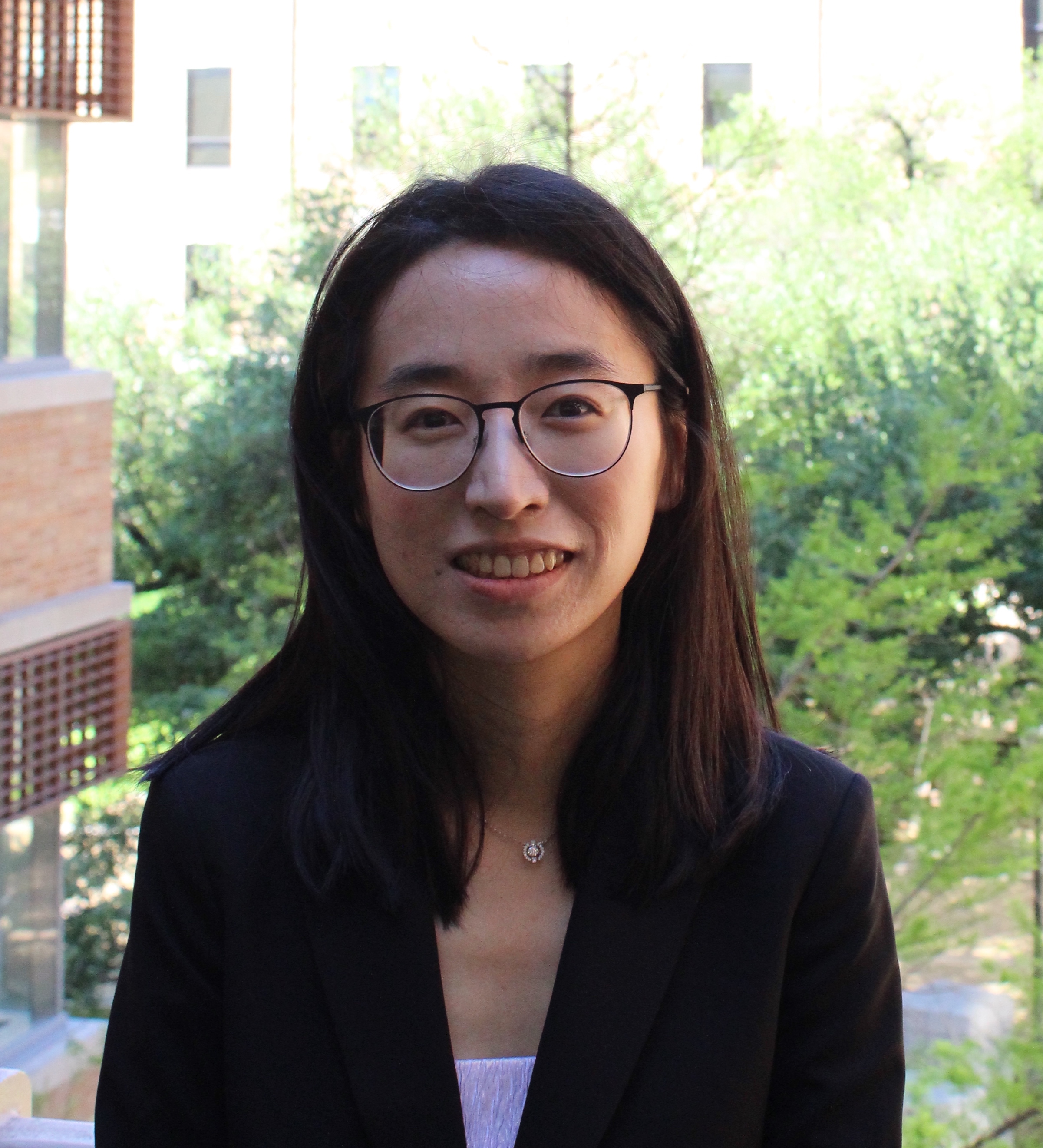
Sihem Amer-Yahia is a distinguished Research Professor at the University of Grenoble Alpes (affiliated with Grenoble Informatics Laboratory ), with significant contributions to database systems , data exploration , and fairness in AI . Her work bridges human-computer interaction and machine learning to create systems that enhance data-driven decision-making. Research Pillars : Algorithmic fairness, interactive data mining, recommender systems, and human-AI collaboration Recent Advances : 2023-2025 publications focus on statistically sound hypothesis testing , multi-objective recommendation , and conversational analytics Leadership : Co-organized major conferences (DASFAA 2024) and led DEI initiatives in database communities Her 15 most recent articles (2020-2025) span topics like producer fairness in recommendation , statistical hypothesis frameworks , and AI-powered education systems , with keywords covering database optimization , reinforcement learning , and ethical data mining . She actively contributes to ACM/IEEE journals and VLDB/SIGMOD conferences.
Mihai Boicu is an Associate Professor at George Mason University's Volgenau School of Engineering , Department of Applied Information Technology, and Associate Director of the Learning Agents Center (LAC) . His research spans Artificial Intelligence , structured analytical methods, personalized education, and collective intelligence. He is the architect of the Disciple agent development platform and has secured grants from the US Department of Defense , VentureWell , and Oculus Info Inc. . His work includes over 100 publications, with three defense-focused textbooks and contributions to journals like AI Magazine and International Journal of Intelligence and CounterIntelligence . He has co-organized premier AI conferences such as ICMLA and AAAI Symposia . His research focuses on AI in defense , education technology , and metacognition in STEM , published in venues ranging from AAAI to IEEE and Hawaii International Conference on System Sciences . Scientific Awards : Innovative Application Award from AAAI Certificates of Appreciation from U.S. Army War College and Air War College GMU Teacher of Distinction (2015) His recent articles (2023–2025) analyze machine learning in education, quantum computing , LLM feedback systems , and metacognition , with projects like SugarNet (diabetes management) and FlightList (Air Force compliance). He advises PhD students in applied AI, education technology, and innovation.
Daisaku Yokoyama is an Assistant Professor at the Institute of Industrial Science, University of Tokyo, where he works in Department 3 of the Kitsuregawa-Toyoda Laboratory. His research focuses on parallel and distributed processing, combinatorial search, game tree search, and other search processes. He is also involved in the development of "Gekisashi," a computer shogi (Japanese chess) player. His academic background includes: March 1998: Graduated from the Department of Electronic and Information Engineering, Faculty of Engineering, The University of Tokyo March 2000: Completed Master's course in Information Engineering at the University of Tokyo 2002.3: Graduated from the Doctoral Program in Information Engineering, Graduate School of Engineering, The University of Tokyo September 2006: Obtained a PhD in Science from the Graduate School of Frontier Sciences, University of Tokyo Daisaku Yokoyama's research interests primarily center around parallel and distributed computing systems, with a particular focus on combinatorial search algorithms and game tree search techniques. His work bridges theoretical computer science with practical applications, especially in the domain of computer shogi where he has developed "Gekisashi." Beyond game AI, his research has expanded into big data analytics, particularly in transportation systems where he analyzes passenger flows in metro networks and driver behavior using vehicle recorder data. His work demonstrates a consistent thread of applying parallel processing techniques to solve computationally intensive problems across various domains. Yokoyama's publication record shows a clear evolution from foundational work in parallel combinatorial optimization (PopKern library) to more applied research in computer shogi and eventually to big data applications in transportation systems. His early work established frameworks for parallel search algorithms, while more recent publications demonstrate applications of these techniques to real-world problems involving massive datasets from metro systems and vehicle recorders. His research consistently emphasizes the importance of domain-specific knowledge in optimizing parallel algorithms. His notable scientific achievements include: DBSJ Best Paper Award 2014 for "Application and Evaluation of a Bayesian-Based Monte Carlo Tree Search Algorithm to Shogi" Game Programming Workshop Excellent Paper Award (awarded twice) Throughout his career, Yokoyama has been actively involved in academic service, serving on editorial boards, program committees, and as an organizer for numerous conferences and workshops related to programming, parallel computing, and game AI. His work on the Gekisashi shogi engine represents a long-term research project that has evolved from basic search algorithms to sophisticated AI systems, demonstrating both theoretical rigor and practical implementation skills. He is part of the Kitsuregawa-Toyoda Laboratory at the Institute of Industrial Science, University of Tokyo, which focuses on advanced computing systems, database technologies, and large-scale data processing. The laboratory provides a collaborative environment for research spanning theoretical computer science to real-world applications in transportation analytics and game AI.
Eric SanJuan is an Associate Professor in Computer Science at Avignon Université, affiliated with the Institute of Technology (IUT) in the Department of Statistics and Decision Support Systems (StID). He specializes in discrete probabilistic models for Knowledge Representation, Natural Language Processing, and Information Retrieval. Habilitation in Computer Science (2018), Avignon Université Ph.D. in Mathematics and Computer Science (2000), Université Claude Bernard - Lyon 1 M.Phil. in Mathematics (1995), Université Claude Bernard - Lyon 1 M.A. in Discrete Mathematics (1994), Université Claude Bernard - Lyon 1 B.A. in Mathematics (1993), Université Claude Bernard - Lyon 1 His research spans Text Mining, Machine Learning, and Discrete Mathematics, focusing on efficient algorithms for textual data processing. He contributed to cultural heritage applications and microblog retrieval through the CLEF MC2 lab. He teaches Computer Science, Information Systems, and Data Mining at undergraduate and postgraduate levels in Avignon and Lyon, covering topics from databases to graph theory and advanced statistics.
Allison Barry (BSc, MSc, DPhil) is a Canadian-British-German pain neurobiologist currently conducting postdoctoral research at the University of Vienna and University of Texas at Dallas . Formerly a DPhil student at University of Oxford under Prof. David Bennett and Prof. Georgios Baskozos, she specializes in multi-omics approaches to pain pathophysiology, focusing on dorsal root ganglia (DRG) proteomics , spatial compartmental profiling , and iPSC-derived nociceptor modeling . Her work is rooted in open science advocacy and chronic migraine patient perspectives. Education: BSc Neuroscience (2015), Dalhousie University MSc Neurosciences (2017), Max Planck Institute/University of Göttingen DPhil Ion Channels & Disease (2022), University of Oxford Research Focus spans neuropathic pain mechanisms , multi-omics data integration , and sex-specific pain pathways . She employs spatial proteomics , proximity labeling , and synaptosome profiling to dissect sensory neuron subtypes in disease contexts. Her lab-generated DRG Directory database hosts processed sequencing datasets for community reuse. Publication Trends reveal interdisciplinary work bridging neuroscience with bioinformatics , emphasizing TNFα signaling , NKG2D ligand discovery , and neuroimmune interactions . Her methodological critiques (e.g., limitations of silhouette scores in single-cell analysis) highlight rigor in computational pain research . Grants & Collaborations: Funded by NIH, Wellcome Trust, and former Medical Research Council/NSERC support, she collaborates with teams across Harvard , King’s College London , and MDC Berlin . Her work intersects with open science movements and chronic migraine advocacy . Labs & Networks: Previously affiliated with Oxford’s Neural Injury Group, she now contributes to Vienna’s Starkl Lab (immunology focus) and Dallas’ WeirLab (chronic pain reversal strategies). She actively engages with global consortia like Bioconductor and PAIN Journal editorial initiatives.
Carlos Guestrin is the Fortinet Founders Professor of Computer Science at Stanford University, Director of the Stanford AI Lab (SAIL), and Senior Fellow at the Stanford Institute for Human-Centered AI (HAI). He also serves as Chief Scientist at Visual Layer and Virtue AI, and is a Member of the National Academy of Engineering. His research centers on Machine Learning Methods, Explainability, Fairness & Ethics of AI, and Machine Learning Systems. He develops interpretable and reliable models, addresses algorithmic fairness, and builds efficient large-scale ML systems through frameworks like XGBoost. His work bridges theoretical rigor with real-world applications in healthcare and human-centered AI. His recent publications (2023–2025) demonstrate leadership in generative AI evaluation, model reliability, and ethical frameworks. Key trends include developing live benchmarks for research synthesis, on-device calibration techniques, multi-objective optimization with constraints, and societal impact assessment tools—showcasing a trajectory from foundational ML systems to responsible AI deployment. Honors include: Member of the National Academy of Engineering Details about his advising and grant activities were not provided in source materials, though his leadership roles indicate extensive mentorship and funding oversight. As Director of SAIL, he shapes one of the world’s premier AI research centers, while his HAI fellowship drives interdisciplinary initiatives ensuring AI advances human welfare. His industry roles at Visual Layer and Virtue AI translate academic research into practical AI solutions.
Taylor Dupuy is an Assistant Professor at the University of Vermont in the Department of Mathematics and Statistics within the College of Engineering and Mathematical Sciences. His research bridges arithmetic geometry, differential algebra, and applied model theory. Expertise in Arithmetic Geometry , focusing on abelian varieties and Mochizuki's work Contributions to Differential Algebra through p-differentials and differential equations Applications in Applied Model Theory for mathematical logic Recent publications examine topics like Ford spheres, angle ranks of abelian varieties, and extensions of the Abel-Jacobi map. His work connects number theory with geometric frameworks and computational verification. He teaches courses such as MATH 6441: Theory of Functions of Complex Variables and MATH 2248: Calculus III .
Yuqi Song is an Assistant Professor in the Department of Computer Science at the University of Southern Maine (USM), where she joined in August 2023 after completing her Ph.D. at the University of South Carolina. Her interdisciplinary research bridges machine learning with materials science, tourism, and recommender systems. Her educational background includes: Ph.D. in Computer Science, University of South Carolina (2023), supervised by Dr. Jianjun Hu M.S. and B.S. in Computer Science, Chongqing University, supervised by Dr. Ming Gao Dr. Song's research focuses on applying state-of-the-art deep learning techniques—including generative adversarial networks, graph neural networks, and transformer models—to solve real-world problems. She develops AI-driven solutions for materials discovery (predicting crystal structures and properties) and tourism applications (employee turnover prediction systems). Her work uniquely combines computational methods with domain-specific challenges, emphasizing practical implementation through user-friendly tools like her materials informatics web platform MaterialsAtlas.org. Analysis of her recent publications (2023-2025) reveals three dominant research thrusts: (1) materials informatics using transformer-based generative models for crystal structure prediction, (2) robust recommender systems security against data hybrid attacks, and (3) computer vision innovations in depth estimation and medical image analysis. Her work consistently leverages attention mechanisms and cross-disciplinary data integration. Dr. Song actively mentors graduate students, currently advising Reihaneh Maarefdoust (Complex Learning and Machine Learning) and Zahra JahediBashiz (NLP, Generative AI). She teaches core courses including Software Engineering (COS 430) and Artificial Intelligence (COS 470), emphasizing practical programming skills. Her lab seeks motivated students for projects in materials discovery and tourism analytics. She leads a research group focused on interdisciplinary AI applications, collaborating with materials scientists and hospitality industry partners to develop deployable solutions. Current initiatives include deep learning models for predicting piezoelectric properties and generative design of 2D materials, alongside tools for tourism workforce analytics.
Matthieu EXBRAYAT is a Lecturer in Computer Science at the University of Orleans, affiliated with the Fundamental Computer Science Laboratory of Orléans (LIFO). He holds significant administrative responsibilities including Vice President for Digital and Educational Innovation at the University of Orleans and previously served as Co-head of the IT department (2019-2021) and Head of the IMIS Computer Science Masters (2015-2021). His research spans multiple domains with a primary focus on Machine Learning applications in data analysis and visualization, time series analysis, and computer vision applications in archaeology. His work demonstrates strong interdisciplinary connections between computer science and archaeological documentation, particularly in ceramic sherd classification using deep learning techniques. Earlier in his career, he contributed significantly to high-performance databases and probabilistic relational learning, especially Markov logic networks. Analysis of his publication history reveals an evolving research trajectory: beginning with database systems and parallel join algorithms in the early 2000s, progressing through Markov logic networks and clustering algorithms in the 2010s, and more recently focusing on machine learning applications in archaeological imaging and programming language analysis. His recent publications show a clear shift toward practical applications of machine learning in diverse domains while maintaining theoretical rigor. Throughout his career, EXBRAYAT has maintained extensive collaborative research networks, with Lionel Martin appearing as a co-author on 20 publications, followed by Guillaume Cleuziou (14), Jacques-Henri Sublemontier (9), and Quang-Thang Dinh (7). These collaborations span multiple research domains and demonstrate his ability to work across disciplinary boundaries. As an educator, he teaches distributed information systems, programming languages, databases, AI/data mining, and geographic information systems. He has also been actively involved in scientific mediation, delivering numerous public lectures on artificial intelligence topics since 2017, including conferences such as "Living in harmony with AIs" (2023) and "Artificial Intelligence: My new toaster is an AI!" (2019). His administrative contributions are substantial, including roles as Communications Correspondent for the Computer Science Disciplinary Center, Facilitator of the DataCenters ComUE Centre Val de Loire reflection group, and Vice President of Digital Resources at the Leonardo da Vinci Confederal University. He also served as LIFO website webmaster for over a decade (2002-2014) and was responsible for the STIC degree program (now IT degree) from 2004-2008.
Rong Chen is an Associate Professor in the Department of Diagnostic Radiology and Nuclear Medicine at the University of Maryland School of Medicine. He serves as Associate Vice Chair of AI and leads the Biomedical Data Mining Laboratory, focusing on integrating machine learning, computational neuroscience, and neuroimaging to decode brain-behavior relationships. His work spans clinical and translational research for disorders like Alzheimer’s, Parkinson’s, autism, and HIV, and he develops open-source software (GAMMA suite, Advanced Connectivity Analysis) for neuroimaging data analysis. Education: BS in Biomedical Engineering, Southeast University, China (1996) MS in Electrical Engineering, The Graduate School of Chinese Academy of Sciences (1999) PhD in Electrical and Computer Engineering, Washington State University (2003) Postdoctoral Researcher in Radiology, University of Pennsylvania (2005) MTR in Translational Research, University of Pennsylvania (2012) Research Interests: Computational modeling of neural activity and behavior Development of machine learning frameworks for neuroimaging Brain-inspired AI and therapeutic concepts Longitudinal analysis of brain disorders Distributed data mining for heterogeneous databases Software tools for biomarker detection and functional connectivity Scientific Contributions: 20+ years of advanced modeling and algorithm development Two open-source neuroimaging software packages (GAMMA suite, ACA) NIH and BRAIN initiative-funded research Editorial roles in journals like Frontiers in Computational Neuroscience Honors: Senior Member of IEEE Labs & Collaborations: Dr. Chen collaborates with institutions like NIH and Oracle, and his lab has developed tools used in studies on sickle cell disease, autism, and traumatic brain injury.
Vince Lyzinski is an Associate Professor in the Department of Mathematics at the University of Maryland, College Park, with additional affiliations in the Applied Mathematics, Statistics, and Scientific Computation (AMSC) program. His work spans statistical network inference, graph matching algorithms, and machine learning applications to complex networks. Ph.D. in Applied Mathematics and Statistics (2013), M.S.E. (2011), and M.A. (2007) from Johns Hopkins University B.S. in Mathematics from University of Notre Dame (2006) His research focuses on statistical network inference , particularly graph matching and vertex nomination , with applications to connectomics and adversarial activity analytics. Supported by DARPA MAA , AFOSR , and JHU HLTCOE , he develops algorithms like iGraphMatch for graph alignment and analysis. Recent publications (2025-2023) explore vertex label error impacts, network trimming for robustness, and stochastic blockmodel extensions. Key papers include "Asymptotically Perfect Seeded Graph Matching" and "ACRONYM: Augmented Degree-Corrected Network Models" . Scientific Awards : Best Paper Award at GTA3 2018 Workshop He has advised 13 Ph.D. students and 1 postdoc across UMD , JHU , and Texas A&M , including Keith Levin (now at UW-Madison) and Jesus Arroyo (now at Texas A&M). His DARPA-funded team includes researchers from UMass, UMD, BU, and JHU.
David Bani-Harouni is a researcher at the Chair of Computer Aided Medical Procedures at Technische Universität München (TUM). His work focuses on Medical Informatics , Artificial Intelligence , and Deep Learning , with an emphasis on Clinical Decision Support and Medical Image Analysis . Research Interests : Large Language Models (LLMs), Vision Language Models (VLMs), interpretability in deep learning, multimodal clinical decision support, and medical image analysis. Teaching : He contributes to lectures and practical courses such as Computer Aided Medical Procedures I , Medical Augmented Reality , and Deep Learning for Medical Applications . Publications : His research spans reinforcement learning for clinical decision-making, multimodal operating room datasets, toxin prediction systems (e.g., ToxNet), and graph convolutional networks for intoxication prediction. Contact : david.bani-harouni@tum.de
Natalia Sergeevna Belova is an active Associate Professor at the Department of Software Engineering within the Faculty of Computer Science at the National Research University Higher School of Economics (HSE University). She has been with HSE since 2012, accumulating 13 years of scientific and teaching experience. Her academic journey began with engineering education and progressed through postgraduate studies to earning her Candidate of Technical Sciences degree. Her educational background includes: 2010: Candidate of Technical Sciences from Moscow State University of Instrument Engineering and Computer Science, specializing in Mathematical and Software Support for Computing Machines 2009: Postgraduate studies at the same institution 2005: Engineering degree from Moscow State Academy of Instrument Engineering and Computer Science Belova's research interests span automatic text analysis, information search, IT project management, embedded databases, and project-based learning in engineering education. Her work demonstrates a strong focus on practical applications of computer science, particularly in face recognition, pattern recognition, and educational methodologies for software engineering. She has made significant contributions to the fields of embedded database systems and computer vision. Her publication record shows a clear evolution from foundational work on embedded databases (2009) to advanced research in computer vision and deep learning (2015-2025). The most recent publications focus on artificial intelligence applications in transport design and affect recognition in video, demonstrating her ability to adapt to emerging technologies while maintaining expertise in her core areas. Among her notable achievements: Gratitude from HSE University leadership (2023, 2025) Multiple publication bonuses for high-impact research Recognition as Best Teacher (2016-2017) Membership in the High Professional Potential Group (HSE personnel reserve) Belova has supervised numerous bachelor's theses, guiding students through projects ranging from mobile applications to complex software systems. She has also secured significant research funding, including a Presidential Grant for young doctors of science (2017-2018) for developing pattern recognition methods. Her teaching portfolio includes courses on Group Dynamics and Communication in Software Engineering Professional Practice and Software Engineering Economics, reflecting her dual expertise in technical and soft skills development for future software engineers.
Prof. Dr. Kurt Stockinger is a Professor of Computer Science at ZHAW School of Engineering and holds a doctorate at the University of Zurich . He serves as Head of the MAS Data Science program and co-leads the ZHAW Datalab . His research focuses on Intelligent Information Systems , bridging information systems, natural language processing, and machine learning. Affiliated with the University of Zurich, he contributes to Quantum Machine Learning and Open Data Exploration initiatives. Stockinger's educational background includes a PhD in Computer Science (University of Vienna & CERN), a Master in Business Informatics (University of Vienna), and a CAS in Didactics & Methodology (ZHAW). He has taught courses in Quantum Computing , Big Data for Natural Sciences , and Data Science programs at ZHAW and University of Zurich. His research spans Data Science , Big Data , Natural Language Query Processing , Knowledge Graphs , and Quantum Machine Learning . Recent publications focus on quantum autoencoders , hybrid quantum neural networks , and prompt engineering for knowledge graph question answering. He has developed frameworks like ScienceBenchmark for real-world NL-to-SQL evaluation and NQuest for natural language query exploration. Scientific awards include the Best Paper Award at 7th Swiss Conference on Data Science (2020) He leads major projects such as DataGEMS (Data Discovery Platform, Horizon Europe) Digital Health Zurich (Clinical Innovation Lab) INODE4StatBot.swiss (NL-to-SQL Translation) GraphQueryML (Graph Database Optimization) ScienceBenchmark (NL-to-SQL Evaluation) Stockinger's work intersects with computer vision , biomedical data , and industrial applications , demonstrated through collaborations with institutions like Lawrence Berkeley National Laboratory, CERN, and University of Washington. He has contributed to establishing QuantumBasel and ZHAW Datalab as research hubs.
Jingbo Wang is an Assistant Professor in the Elmore Family School of Electrical and Computer Engineering at Purdue University, where he conducts research at the intersection of software engineering and formal methods. His work emphasizes developing rigorous program analysis and verification techniques to improve the security, robustness, and fairness of software systems. Prior to joining Purdue in August 2024, he was a Postdoctoral Researcher in the Department of Computer Science at University of Texas, Austin, working with Professor Isil Dillig. He obtained his PhD in Computer Science from the University of Southern California in 2023 under the supervision of Professor Chao Wang. Dr. Wang's educational background includes: PhD in Computer Science, University of Southern California, 2023 Postdoctoral Researcher, University of Texas, Austin, 2023-2024 Dr. Wang's research focuses on bridging software engineering and formal methods to create more secure, robust, and fair software systems. His work spans several key areas: Program Analysis and Verification : Developing techniques for static and dynamic analysis of software systems Security and Privacy : Creating methods to detect and prevent security vulnerabilities and privacy leaks Fairness in Machine Learning : Certifying and quantifying fairness properties of AI systems Formal Methods for Neural Networks : Verification techniques for deep learning models His recent publications demonstrate a strong trend toward applying formal methods to machine learning systems, particularly in ensuring fairness and robustness. He has published extensively in top-tier venues including PLDI, POPL, ICSE, and CAV, with multiple papers on verifying properties of neural networks and decision trees. His work often combines program analysis techniques with constraint solving and optimization approaches. Dr. Wang has received numerous awards and recognitions for his research: ACM SIGPLAN Distinguished Paper Award, PLDI, 2023 MIT EECS Rising Star, MIT, 2021 WiSE Merit Award, USC, 2021 Selected to participate in the 7th Heidelberg Laureate Forum, 2019 Selected for CRA-W Grad Cohort for Women Workshop, 2019 Multiple conference scholarships including VMW Scholarship (CAV'19) and PLMW Scholarship (PLDI'19) Dr. Wang is actively mentoring students and planning to recruit PhD students for Fall 2025. He currently advises: Siyu Chen (PhD student, 2024 Fall -- present) Xuyang Li (PhD student, 2024 Fall -- present) Multiple undergraduate researchers including Weiyi Chen, Yaoyang Ye, Paul Jiang, and Sarthak Tandon He has also served as a mentor for the PLMW @ PLDI'21 and USC Viterbi Graduate Mentorship Program. Dr. Wang is deeply involved in the programming languages and formal methods research community, serving on multiple program committees including OOPSLA, PLDI, CAV, ICSE, and ISSTA. His GitHub repository shows active work on fair decision trees and formal verification techniques, indicating an active research lab focused on the intersection of formal methods and machine learning.