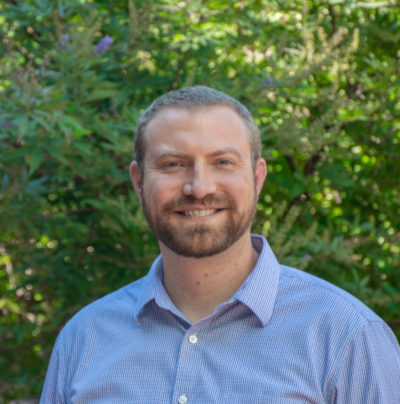
Paul Rosen is an Associate Professor at the University of Utah, affiliated with the Scientific Computing and Imaging Institute and the Kahlert School of Computing. He holds a Ph.D. in Computer Science from Purdue University (2010). Prior to his current role, he was an Assistant/Associate Professor at the University of South Florida (2015–2022) and a Research Assistant Professor at the University of Utah's SCI Institute (2010–2015). Research Focus: Rosen specializes in topology-based visualization techniques, with emphasis on network visualization, uncertainty quantification, and perceptual studies. His work bridges computational methods with human perception, aiming to enhance data understanding through effective visual design. Awards & Recognition: National Science Foundation CAREER Award (2019) Best Paper Awards at PacificVis 2016, IVAPP 2016, and multiple other conferences Honorable Mentions for IEEE VIS and VAST Challenge submissions Leadership: As General Chair of IEEE VIS 2024, Rosen led the planning for this flagship visualization conference, emphasizing community-driven design and in-person collaboration. Education Contributions: His research includes pedagogical innovations, such as predictive modeling for student feedback and peer review analysis in visual literacy courses.
Gita Reese Sukthankar is a Professor in the Department of Computer Science at the University of Central Florida (UCF) , where she directs the Intelligent Agents Lab . Her research focuses on activity and plan recognition , with applications in multi-agent systems, robotics, and human-robot interaction. She earned her Ph.D. from the Robotics Institute at Carnegie Mellon University and joined UCF in fall 2007. Research Interests: Her work spans activity recognition , intent inference , multi-agent coordination , and human-robot teams . She has applied these techniques to domains such as adversarial games (e.g., military simulations, Unreal Tournament), assistive technologies, and cooperative robotics. Her research integrates AI, machine learning, and probabilistic models to understand and predict complex team behaviors. Publication Trends: Her publications emphasize spatio-temporal modeling , probabilistic graphical models (e.g., HMMs, CRFs) , and multi-agent plan recognition . She frequently publishes in top venues like AAMAS, AAAI, and ICRA, with a focus on robust recognition of team behaviors, transfer learning, and real-world AI applications. Scientific Awards: NSF CAREER Award (2009) AFOSR Young Investigator (2009) ONR Summer Faculty Fellow (2008) UCF Faculty Excellence for Doctoral Mentoring (2012) CECS Dean's Research Professorship (2013) AAAI Senior Member (2021) ACM and IEEE Senior Member Advising and Grants: She mentors graduate students in AI and robotics and has led research funded by DARPA, AFOSR, and ONR. Her lab develops systems for intelligent agents that can understand and collaborate with humans. She has served on numerous program committees and editorial boards, including ACM Transactions on Autonomous and Adaptive Systems . She teaches courses such as Intelligent Systems , Robotics , and Machine Learning , and has been recognized for both research and teaching excellence. Labs and Teams: She leads the Intelligent Agents Lab at UCF, which focuses on data-driven social informatics and AI for human-agent teams. Her group collaborates with researchers in robotics, computer vision, and cognitive science to build adaptive, intelligent systems.
Shahin Jabbari is an Assistant Professor in the Computer Science Department at the College of Computing & Informatics, Drexel University, where he is a member of the EconCS research group. His research lies at the intersection of machine learning, game theory, and algorithmic fairness, with a focus on ethical AI and its societal implications. Prior to Drexel, he was a CRCS postdoctoral fellow at Harvard University's School of Engineering and Applied Sciences, hosted by Milind Tambe, and affiliated with the EconCS group. Education: PhD in Computer and Information Science, University of Pennsylvania (2013–2019), advised by Michael Kearns Master's in Computing Science, University of Alberta, advised by Robert Holte and Sandra Zilles Bachelor's in Computer Engineering, Sharif University of Technology His research interests center on machine learning, algorithmic fairness, and game theory, particularly focusing on how AI systems can be designed to be more equitable, interpretable, and robust. He investigates ethical aspects of algorithmic decision-making, aiming to ensure AI technologies contribute positively to society. His work often integrates human behavior modeling and experimental validation, especially in cybersecurity and public health domains. His recent publications span top venues including ICML, NeurIPS, AAAI, AAMAS, PNAS, and TMLR. The research trends show a consistent focus on fairness in AI, explainability, robustness, and strategic interactions in complex systems. Topics include fair influence maximization, adaptive phishing training, cyber deception games, and ethical machine learning frameworks. These works reflect a multidisciplinary approach combining theoretical rigor with real-world applicability. Scientific Awards and Recognitions: Best Paper Finalist, AAMAS 2021 Best Paper, GameSec 2020 Spotlight Presentation, ICML 2021 Best Paper, KI 2012 Shahin Jabbari actively contributes to the academic community through advising, teaching, and service. He teaches graduate courses such as CS 589: Responsible Machine Learning and CS 590: Privacy. He has served on the senior program committees of ICML and NeurIPS, is an Action Editor for TMLR, and has reviewed for numerous top-tier conferences and journals. He mentors students through research projects and invites prospective PhD candidates to apply through Drexel’s formal channels. He is involved in the Drexel Computer Science Theory Reading Group and contributes to advancing responsible AI practices. He is affiliated with the EconCS group at Drexel, which focuses on economic and computational aspects of AI, including game theory, mechanism design, and multi-agent systems. His lab integrates tools from machine learning, behavioral modeling, and optimization to develop AI systems that are not only intelligent but also fair and trustworthy. Future work is expected to further explore human-AI collaboration, ethical AI deployment, and policy-aware algorithm design.
Dr. Cheng-Chew Lim is a Professor in the School of Electrical and Mechanical Engineering at the University of Adelaide. He specializes in control theory, autonomous systems, and multi-agent reinforcement learning. His research focuses on trusted autonomous systems, secure cyber-physical networks, and decentralized decision-making models. He has published over 300 articles and supervised 50+ PhD and master’s students. Dr. Lim teaches courses in control systems, autonomous systems, and engineering project management. He has held editorial roles, including Associate Editor for IEEE Transactions on Systems, Man, and Cybernetics, and is actively involved in professional associations like the IEEE Control and Aerospace Electronic Systems Joint Chapter. His current projects include physics-informed neural networks for medical imaging, secure distributed autonomous systems, and resilient formation control under cyberattacks. Dr. Lim has secured research grants from ARC and industry partnerships, emphasizing practical applications in robotics, cybersecurity, and smart systems.
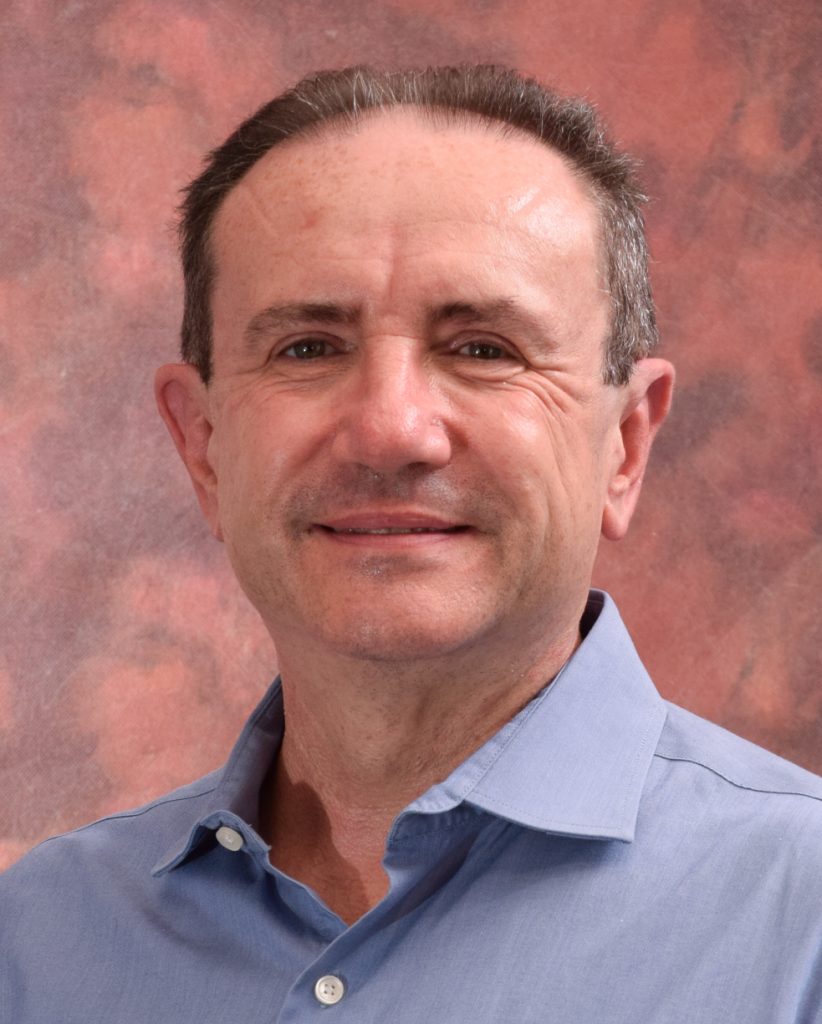
Awi Federgruen is the Charles E. Exley Professor of Management and Chair of the Decision, Risk, and Operations (DRO) Division at Columbia University’s Graduate School of Business. He joined Columbia’s faculty in 1979 after earning his DSc in Operations Research from the University of Amsterdam and holding roles as a Research Fellow at the Mathematical Centre in Amsterdam and faculty member at the University of Rochester. He also holds a courtesy appointment in Columbia’s School of Engineering and Applied Sciences. Education: BA, University of Amsterdam, 1972 MS, University of Amsterdam, 1975 DSc (Operations Research), University of Amsterdam, 1978 Research Interests: Federgruen’s work focuses on optimizing supply chain and service systems through advanced operations research methodologies. Key areas include supply chain coordination, inventory management under uncertainty, service system design, and dynamic pricing. His theoretical contributions span applied probability, queuing models, and dynamic programming. Recent applications include pharmaceutical supply chains, healthcare operations, and vaccine distribution strategies. Awards & Recognition: 2004 Distinguished Fellowship Award (MSOM Society) INFORMS Presidential Fellow (highest honor) National Science Foundation & ARPA grants Consulting & Industry Impact: Federgruen advises companies in pharmaceuticals, consumer electronics, and logistics. Notably, he developed marketing mix models for the pharmaceutical industry and advised the Israeli Air Force on logistics policies. His work bridges academic theory with real-world applications in industries like retail, healthcare, and transportation. Editorial Roles: Editor-in-Chief of Naval Research Logistics ; former Departmental Editor for Manufacturing & Service Operations Management and Associate Editor of Operations Research .
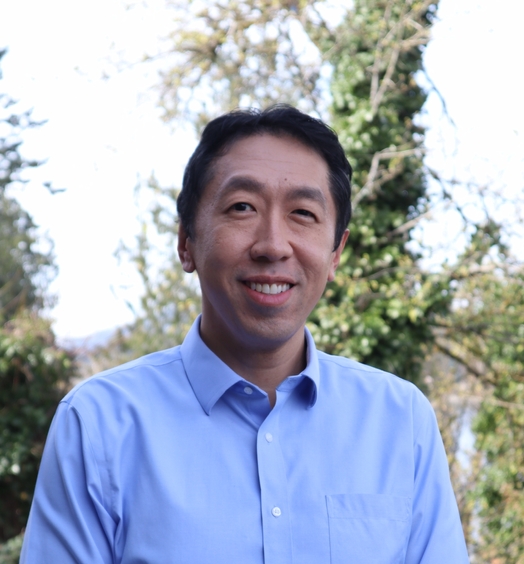
Andrew Ng is an Adjunct Professor at Stanford University's Computer Science Department and a globally recognized leader in AI. He is the Founder of DeepLearning.AI, Executive Chairman of LandingAI, General Partner at AI Fund, and Co-Founder of Coursera. His work has revolutionized machine learning and online education, with over 200 research papers in AI, robotics, and related fields. He was named to the 2023 Time100 AI list of most influential figures in AI. Ng's research focuses on machine learning, deep learning, reinforcement learning, and their applications in robotics and education. He pioneered the development of massive open online courses (MOOCs), notably through Stanford's early experiments in 2011 that attracted hundreds of thousands of learners. His contributions include foundational work in algorithms like Latent Dirichlet Allocation (LDA) for text analysis and advancements in spectral clustering and inverse reinforcement learning. His publications span topics from robotic hand design to scalable deep learning systems, emphasizing practical and scalable solutions. Ng's educational initiatives, such as the Machine Learning and Deep Learning Specializations, have educated millions worldwide. He advocates for accessible AI education and ethical AI development, emphasizing collaboration between academia and industry.
Dr. Tao Hong is the Duke Energy Distinguished Professor and NCEMC Faculty Fellow at the Department of Systems Engineering and Engineering Management, University of North Carolina at Charlotte. He directs the Big Data Energy Analytics Laboratory (BigDEAL) and has been a Founding Chair of the IEEE Working Group on Energy Forecasting (2011-2019). Ph.D., Electrical Engineering & Operations Research (2010), NC State University M.S., Operations Research & Industrial Engineering (2008), NC State University B.Eng., Automation (2005), Tsinghua University His research focuses on Energy Forecasting with applications in power systems operations, renewable integration, risk management, and cross-sector forecasting for healthcare, transportation, and sports. He has led major Delivery point level load analysis (2017-present) Short-term probabilistic forecasting (2016) Demand response modeling using smart meter data (2014-2015) Dr. Hong's scientific contributions include 9+ journal articles on energy forecasting methodologies and 3 major forecasting competitions (GEFCom2012-2017, BigDEAL Challenge 2022). His work has been cited in leading journals like International Journal of Forecasting and IEEE Transactions on Smart Grid . Charlotte Business Journal Energy Education Leader of the Year (2017) IEEE PES PSPI Technical Committee Prize Paper Award (2016) As a dedicated educator , Dr. Hong has advised multiple PhD and Master's students including Shreyashi Shukla (2023), Yike Li (2022), and Jordan McCorey (2021). He teaches specialized courses in energy systems planning and computational intelligence.
Hamidreza Mahyar is an Assistant Professor at the Faculty of Engineering , McMaster University , and an Associate Member of the Computing and Software department. His academic journey includes postdoctoral work at Boston University and TU Wien , and a Ph.D. in Computer Science from Sharif University of Technology . Research Focus: Mahyar's work bridges machine learning and network science , emphasizing graph neural networks for applications in social networks , recommendation systems , drug discovery , and generative AI . His research spans industrial AI (Industry 4.0 projects at Infineon Technologies), biomedical engineering (organoid morphology analysis), and semiconductor manufacturing (wafermap modeling). Scientific Recognition: McMaster Teaching Merit Award (2022) Vector Scholarship in AI (2023) NSERC USRA Award (2022) Google Cloud Platform for Research Award (2018) Best Paper Selection, Complex Networks (2018) Academic Leadership: He mentors PhD students (Taraneh Ghandi) and MSc students (Reza Namazi, Mohammad Khodadad, Ali Shiraei), while leading AI initiatives at Mind Lab 56 and BrainMaven . Former mentees include industry leaders at Google, Accenture, and ETH Zurich.
Lori Graham-Brady is a Professor in the Department of Civil and Systems Engineering at Johns Hopkins University's Whiting School of Engineering. She serves as Vice Dean for Faculty and directs the Center on AI for Materials in Extreme Environments (CAIMEE), while also holding secondary appointments in Mechanical Engineering and Materials Science and Engineering. Her research focuses on stochastic mechanics, multiscale modeling, and machine learning applications for understanding material variability under extreme conditions. Research areas include probabilistic mechanics, AI-driven materials design, and fragmentation modeling. Leadership roles: Director of CAIMEE, former Director of Center for Materials in Extreme Dynamic Environments, founding Director of HT-MAX, and founding Associate Director of HEMI (2012-2024). Education: PhD in Civil Engineering and Operations Research from Princeton University. Her recent work emphasizes AI for multiscale mechanics, error propagation in material characterization, and digital microstructure generation. Publications highlight stochastic modeling of ceramics, composites, and metals under impact and high-strain-rate loading. Scientific awards include the Presidential Early Career Award, Huber Civil Engineering Research Prize, and Fellowships in ASCE EMI and USACM. She led NSF IGERT programs and serves as Associate Editor for the ASCE Journal of Engineering Mechanics.
Emtiyaz Khan is a Researcher at the RIKEN Center for AI Project in Tokyo, Japan. His work focuses on Bayesian deep learning, optimization, and variational inference methods. He leads research on the Bayesian Learning Rule framework, which bridges deep learning optimization with Bayesian principles. His research interests include developing scalable Bayesian methods for large neural networks, uncertainty quantification in deep learning, optimization algorithms (natural gradients, variational inference), and applications to foundation models. Key areas are efficient adaptation methods, model sensitivity analysis, and Bayesian principles for deep learning. Khan's publications demonstrate strong focus on Bayesian deep learning, optimization techniques, and uncertainty estimation, with applications ranging from large-scale models (GPT-2, ImageNet) to theoretical foundations of variational inference. He leads the Team Approx-Bayes research group focused on approximate Bayesian inference methods and maintains collaborations through JST CREST-ANR and Kakenhi grants.
Fabrizio Riguzzi is a Full Professor at the Department of Mathematics and Computer Science of the University of Ferrara, Italy. His academic career spans over two decades at the same institution, having served as Associate Professor (2014-2020) and Assistant Professor/Ricercatore (1999-2014). He is an active researcher in the fields of Logic Programming and Statistical Relational Artificial Intelligence with numerous publications and leadership roles in international conferences. His educational background includes: PhD in Electronic and Computer Engineering from the University of Bologna (1999) Laurea in Computer Engineering from the University of Bologna (1995) Riguzzi's research focuses on probabilistic approaches to artificial intelligence, particularly probabilistic logic programming and statistical relational AI. His work bridges symbolic reasoning with probabilistic methods, developing frameworks for uncertain knowledge representation and reasoning. He has made significant contributions to probabilistic answer set programming, neuro-symbolic integration, and applications in areas like network intrusion detection and knowledge graph completion. His research demonstrates how logical formalisms can be enhanced with probabilistic reasoning to tackle real-world problems with uncertainty. An analysis of his recent publications reveals a strong trend toward integrating neural and symbolic approaches in AI, with significant work on probabilistic answer set programming frameworks. His research spans theoretical foundations of probabilistic logic programming, practical implementations, and applications in cybersecurity, knowledge graphs, and decision-making under uncertainty. The interdisciplinary nature of his work connects computer science theory with practical AI applications. His notable awards include: Alain Colmerauer 10-Year Test-of-Time Award at ICLP 2021 Best Paper Award for "BUNDLE: A Reasoner for Probabilistic Ontologies" at RR-2013 Highly Commended Paper Award for "Probabilistic declarative process mining" at KSEM 2010 Riguzzi has supervised several PhD students to completion, including Elena Bellodi, Riccardo Zese, and Giuseppe Cota, who have gone on to win prestigious awards for their theses. He has served in numerous editorial roles, including Associate Editor of the Journal of Artificial Intelligence Research and Editor in Chief of Intelligenza Artificiale. His leadership extends to organizing major conferences like ILP 2018 and serving on program committees for top AI venues including IJCAI, AAAI, and ECAI. He is a member of the ML@unife research group and has developed several online systems including cplint, TRILL, and an Online AUC calculator. His work has fostered collaborations across the AI research community, particularly in the areas of probabilistic logic programming and neuro-symbolic AI.
Dr. Clark N. Taylor is an Associate Professor of Computer Engineering and Director of the ANT Center at the Air Force Institute of Technology (AFIT), located at Wright-Patterson Air Force Base, Ohio. He is actively engaged in research and education within the Graduate School of Engineering and Management, focusing on advanced navigation and sensor fusion technologies for autonomous systems. Ph.D., Electrical and Computer Engineering (Computer Engineering), University of California, San Diego, 2004 M.S., Electrical and Computer Engineering, Brigham Young University, 1999 B.S., Electrical and Computer Engineering, Brigham Young University, 1995 Dr. Taylor's research spans computer engineering, navigation systems, and autonomous robotics, with a strong emphasis on sensor fusion, state estimation, and robust uncertainty modeling. His work integrates vision, inertial, magnetic, and pressure sensors for navigation in GPS-denied environments, particularly for unmanned aerial vehicles (UAVs). He is a leading expert in factor graph-based estimation, visual-inertial odometry, cooperative localization, and magnetic navigation. His publications demonstrate a consistent trend toward robust, uncertainty-aware estimation frameworks. Over the past decade, his research has evolved from early work on visual stabilization and pose estimation to advanced topics such as conservative covariance estimation, invariant filtering, and machine learning for spacecraft pose estimation. His recent articles focus on factor graphs, multi-agent fusion, and deep learning, indicating a trajectory toward intelligent, resilient navigation systems for defense and aerospace applications. Scientific awards include a Best Presentation in Session award at the ION GNSS+ conference in 2021. His research is supported by the U.S. Air Force and related defense agencies, with applications in surveillance, autonomous refueling, and on-orbit inspection. Dr. Taylor has advised numerous MS and PhD students, particularly in the areas of UAV navigation, sensor fusion, and cooperative localization. His lab, the ANT Center, focuses on advanced navigation and tracking, bringing together students and researchers to develop cutting-edge solutions for real-world operational challenges. The team conducts both simulation and experimental work, often integrating novel sensor modalities and estimation algorithms for improved system performance.
Zeyu Ding is an Assistant Professor in the School of Computing at Binghamton University, with a courtesy appointment in the Department of Mathematics and Statistics. He holds two PhDs: one in Computer Science from Penn State University and another in Mathematics from Binghamton University, along with a BS in Mathematics from Zhejiang University. Research Interests His work focuses on the intersection of privacy, security, machine learning, and algorithmic fairness. He investigates how to protect sensitive personal information through differential privacy mechanisms, formal verification, numerical optimization, and privacy-preserving statistical inference. Article Trends Ding's publications highlight advancements in differential privacy, including the Report Noisy Max with Gap Mechanism and the Permute-and-Flip approach. His research also addresses security challenges like reconstruction attacks and automated verification tools (e.g., Checkdp and DPGen), alongside mathematical explorations of automorphism group schemes and Barsotti-Tate groups. Scientific Awards CCS Outstanding Paper Award, 2018 Caper Bowden PET Award Runner-up, 2019 CCS Best Paper Award Runner-up, 2020 CCS Best Paper Award Runner-up, 2021 Research Award from Penn State University, 2019 Teaching Award from Penn State University, 2021 His research is supported by the NSF grant 2317233, underscoring his contributions to privacy-preserving computational methods.
Alan Kuntz is an Assistant Professor at the University of Utah's Kahlert School of Computing (KSoC) and a core member of the Robotics Center. He leads the interdisciplinary Kuntz Research Lab, focusing on robotics and computational methods with medical applications, particularly in healthcare and surgery. His work spans robot motion planning, autonomous systems, and robot design optimization. Education: Ph.D. in Computer Science from the University of North Carolina at Chapel Hill, with research in the Computational Robotics Research Group. Previously a postdoctoral scholar at Vanderbilt University's Medical Engineering and Discovery Lab. Research interests include surgical robotics, continuum robots, needle steering, and medical device design. Recent projects include autonomous needle navigation, continuum lung staplers, and metamaterial-based robots. His team has published extensively on topics like kinematic modeling, uncertainty quantification, and medical intervention systems. Notable awards include the 2022 IEEE Access Best Video Award for his group's work, and mentoring over 15 students through the University of Utah's Undergraduate Research Opportunities Program. The Kuntz Lab actively collaborates on clinical applications, presenting at top conferences like IROS, Hamlyn Symposium, and ISMR. Labs/Teams: Directs the Kuntz Research Lab, known for its innovative medical robotics projects. The lab's work has been featured in Forbes and other media outlets for breakthroughs like in vivo needle steering demonstrations.
Leonard P. Wesley is an Associate Professor at the Computer Science Department, College Of Science, San Jose State University. With a Ph.D. and M.S. in Computer Science from University of Massachusetts and a B.A. in Physics and Math from Northeastern University, his work spans bioinformatics, pharmaceutical discovery, machine learning, robotics, and evidential reasoning. He has published extensively on SVM/QSAR-based drug prediction, autonomous systems, and uncertainty management. Ph.D., University of Massachusetts - Computer Science M.S., University of Massachusetts - Computer Science B.A., Northeastern University - Physics and Math His research focuses on developing predictive models for drug discovery, autonomous robotics, and data analytics. Recent publications emphasize SVM applications in medical diagnostics and pharmaceutical modeling. He has contributed to conferences in aerospace, robotics, and biotechnology, with invited talks at NASA and Los Alamos National Laboratory. 3D-QSAR & SVM prediction of drug inhibitors Evidential decision analytics Autonomous robotic control PCA/SVM-based sepsis diagnostics Hybrid network congestion management Professor Wesley teaches courses in artificial intelligence, bioinformatics, and advanced programming. His lab investigates applications of machine learning in biotechnology and aerospace, including biomarker identification and CFD expert systems. He has served as session chair at international conferences and collaborated with institutions like NASA and Advanced Decision Systems.