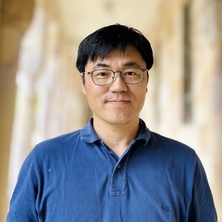
Lizi Liao is an Assistant Professor at the School of Computing and Information Systems , Singapore Management University (SMU) , specializing in Artificial Intelligence and Conversational AI . Her research bridges Machine Learning , Natural Language Processing , and Multimodal Systems , focusing on proactive dialogue systems, multimodal conversational search, and task-oriented interactions. Education : PhD in Computer Science (2019) from the National University of Singapore (NUS) , advised by Professor Tat-Seng Chua . Research Interests center on principles of human conversational understanding and machine implementation, particularly in proactive conversational agents , multimodal dialogue systems , and target-driven conversation planning . Key applications include emotional support systems , intelligent shopping assistants , and learning companions . Recent Publications (2024-2025) highlight her work on LLM-based proactive dialogue , multimodal emotion recognition , and dynamic graph modeling , often integrating NLP , Multimedia , and Knowledge Graphs . Collaborative projects with her CoAgent Lab team emphasize human-AI interaction and ethical response generation . Scientific Awards : Google South Asia & Southeast Asia Research Award 2023 Lee Kong Chian Fellow Teaching includes Visual Analytics for Business Intelligence (undergraduate) and Text Analytics and Application (graduate). She also serves as Associate Editor for TOIS and TOMM , and organizes tutorials at ACL , SIGIR , and WSDM .
Mark S. Hoddle is a Professor of Entomology and Biological Control Specialist at the University of California, Riverside (UCR), where he has headed research in his laboratory since 1997. He serves as the Director of the Center for Invasive Species Research and is a Principal Investigator focusing on biological control of invasive pests. His work bridges academic research with practical applications for California agriculture. Education: D.Sc. Zoology (2018), University of Auckland, New Zealand Ph.D. Entomology (1996), University of Massachusetts, Amherst M.S. Zoology (1991), University of Auckland, New Zealand B.S. Zoology (1988), University of Auckland, New Zealand Dr. Hoddle specializes in biological control, the intentional use of host-specific natural enemies to suppress pest populations. His research focuses on identifying pest problems amenable to biological control, locating and releasing natural enemies, and evaluating their impact on pest population growth. He works extensively with invasive species affecting California agriculture, particularly pests of citrus, avocado, palm trees, and other crops. His approach combines field evaluations with laboratory studies of pest and natural enemy biology and behavior. Analysis of Dr. Hoddle's recent publications reveals a strong focus on invasive species threatening California agriculture, particularly the Asian citrus psyllid, red palm weevil, and brown marmorated stink bug. His research integrates field and laboratory approaches, with emphasis on phenology modeling, natural enemy evaluation, and innovative control methods. Much of his work addresses the economic and ecological impacts of invasive pests on specialty crops. Scientific Awards: Entomological Society of America, Pacific Branch Entomology Team Leader Award (2023) UC-ANR Distinguished Service Award for Outstanding Research (2022) Fellow, Entomological Society of America (2018) California Department of Pesticide Regulations IPM Achievement Award for Asian Citrus Psyllid Biocontrol (2018) IOBC Distinguished Scientist of the Year (2015) Multiple awards from the Entomological Society of America (2007, 2012, 2013, 2014) Dr. Hoddle has mentored numerous students and researchers throughout his career, including postdoctoral scholars and specialists who contribute to his laboratory's work on invasive species. His research has been supported by various granting agencies, private institutions, and commodity boards, enabling extensive international projects focused on identifying and implementing biological control solutions for invasive pests. He has facilitated the Harry Scott Smith Scholarship Fund to support graduate students in biological control. Dr. Hoddle directs the Center for Invasive Species Research at UCR and leads a productive laboratory team that includes postdoctoral scholars, specialists, and students. The lab conducts research on multiple invasive species threatening California agriculture and natural ecosystems, with particular emphasis on citrus, avocado, and palm tree pests. Current projects include proactive biological control of the spotted lanternfly and research on invasive palm weevils, avocado pests, and other emerging threats.
Alexander J Sundermann serves as an Assistant Professor in the Department of Epidemiology at the University of Pittsburgh School of of Public Health. His research focuses on leveraging pathogen genomic surveillance and machine learning to revolutionize infection prevention practices in healthcare settings, with demonstrated impacts on outbreak detection accuracy and intervention speed. Education: 2013: BS in Microbiology, University of Rochester 2014: MPH in Infectious Diseases and Microbiology, University of Pittsburgh 2022: DrPH in Epidemiology, University of Pittsburgh Dr. Sundermann's work centers on whole-genome sequencing of pathogens to detect healthcare-associated transmission invisible to traditional methods. His research demonstrates how genomic surveillance reveals hidden outbreaks of vancomycin-resistant Enterococcus (VRE) and mucormycosis, directly linking colonization to clinical outcomes like ICU admission and mortality. He pioneers machine learning tools that analyze electronic health records to identify transmission routes, creating more efficient outbreak investigation frameworks across hospital networks. His publication portfolio (2019-2025) shows a clear trajectory toward integrated genomic-clinical surveillance systems, with recent work quantifying clinical and economic impacts while addressing implementation barriers. This interdisciplinary approach bridges epidemiology, genomics, and data science to transform infection prevention protocols. Scientific Awards: No awards listed in available information. Advising and Grants: While specific advisees and grant details aren't provided, his multi-institutional collaborations suggest active mentorship within genomic epidemiology research teams. His work with the National Healthcare Safety Network indicates engagement with major public health surveillance infrastructure. Labs and Teams: Dr. Sundermann leads cross-functional teams including microbiologists, data scientists, and clinicians across multiple healthcare systems. His UPMC outbreak investigations and national linen contamination studies demonstrate operational frameworks for real-time genomic surveillance implementation in complex hospital environments.
Wang Jianmin serves as Professor and Doctoral Supervisor at Tongji University's School of Art and Media, concurrently holding the position of Vice Dean since 2014. With a computer science PhD from Sun Yat-sen University, he bridges engineering and media arts through pioneering research in intelligent communication systems and digital media interfaces. His work focuses on human-centered design for emerging technologies, particularly in automotive and virtual environments. His academic foundation includes: PhD in Engineering (Computer Software and Theory), Sun Yat-sen University (2003) Master's in Computational Mathematics, Sun Yat-sen University (1999) Bachelor's in Computational Mathematics, Nankai University (1996) Professor Wang's research centers on intelligent communication systems and digital media art, with significant contributions to automotive human-machine interfaces (HMI), virtual reality applications, and user experience methodologies. His investigations into driver-robot transparency, augmented reality navigation, and mixed-reality educational platforms demonstrate interdisciplinary innovation connecting computer science, cognitive psychology, and design theory. Current projects explore AI-driven media systems for urban environments and safety-critical interaction frameworks. Analysis of his recent publications reveals a cohesive research trajectory focusing on automotive HMI (40% of output), human-robot interaction (30%), and mixed reality applications (30%). His work consistently emphasizes experimental validation through driving simulators and user studies, yielding practical design guidelines for industry implementation. The interdisciplinary nature spans computer science, cognitive ergonomics, and media studies, with increasing emphasis on AI integration in communication systems. His scientific recognition includes national and provincial awards for innovation in human-computer interaction and educational technology: 2019 China Industry-University-Research Innovation Award for automotive HMI systems 2020 China User Experience Alliance Excellence Award 2012 Guangdong Dingying Science and Technology Award Multiple national/provincial science progress awards (2001-2009) 2020 Tongji University Teaching Achievement Award for curriculum development As an educator, Professor Wang mentors graduate students in national design competitions including the 'Core Cup' Future Automotive HMI Challenge and International User Experience Innovation Competition. His research program is supported by substantial funding from diverse sources: National Grants: National Natural Science Foundation projects on driver behavior modeling and cognitive testing Ministry of Education: 15+产学合作 projects for virtual simulation labs and curriculum development Shanghai Municipal: Publicity Department funding for smart city media research Industry Partnerships: Huawei (intelligent vehicle HMI), SAIC Motor (AR-HUD design), and automotive electronics firms He directs Tongji's Media Experiment and Practice Teaching Center and the All-Media Research Institute, leading teams developing virtual simulation platforms for emergency news reporting, intelligent vehicle interaction testing systems, and mixed reality educational tools. Current initiatives focus on AI-enhanced media art for urban applications and next-generation HMI frameworks for autonomous mobility solutions.
Professor Larry D. Lynd is a prominent researcher at the University of British Columbia's Faculty of Pharmaceutical Sciences, with additional appointments as a Scientist at the Centre for Health Evaluation and Outcome Sciences (CHEOS) at Providence Health Care Research Institute, Director of the Collaboration for Outcomes Research and Evaluation (CORE), Scholar at the Peter Wall Institute of Advanced Studies, and Associate of the UBC School of Population and Public Health. Dr. Lynd completed his PhD in the Department of Health Care and Epidemiology at UBC and a post-doctoral fellowship in health economics at McMaster University. As a pharmacist (BSP) and epidemiologist, he has developed a distinguished career at the intersection of health outcomes research, epidemiology, and health economics, with a particular focus on the application of large administrative health datasets to inform practice and policy. His research spans multiple high-impact areas including rare diseases, multiple sclerosis, respiratory disease, and genomic medicine. Dr. Lynd leads major research initiatives such as the CANadian PROactive Cohort study for People Living with MS, the GenCOUNSEL study evaluating whole genome sequencing for clinical genetic services, and the Early Health Technology Assessment platform for the Nanomedicines Innovation Network. His recent publications demonstrate a strong emphasis on health technology assessment, genomic medicine implementation, multiple sclerosis outcomes research, and addressing unmet needs in clinical genetic services. Dr. Lynd's scientific contributions have been recognized through prestigious awards including the Dr. John McNeil Excellence in Health Research Mentorship Award (2022), Fellowship in the Canadian Academy of Health Sciences (2018), and the UBC Faculty of Pharmaceutical Sciences PharmD Teaching Award (2014-2015). As a mentor, Dr. Lynd has supervised doctoral students including Tamara Mihic (PhD in Pharmaceutical Sciences) and Kennedy Borle (PhD in Interdisciplinary Studies). He has secured substantial research funding, with recent grants totaling over $5 million from organizations including the Canadian Institutes for Health Research, Genome Canada, MS Society of Canada, and Genome British Columbia. Dr. Lynd actively contributes to health policy through leadership roles on committees including as chair of the Health Canada Special Advisory Committee on Non-Prescription Drugs, Special Advisory Committee to the Respiratory and Allergy Therapies Division of Health Canada, BC Ministry of Health Services Expensive Drugs for Rare Diseases Committee, and the BC PharmaNet Data Stewardship Committee.
Associate Professor Dan Dongseong Kim is Deputy Director of UQ Cybersecurity and an Associate Professor at The University of Queensland (UQ), Australia. Previously, he held permanent academic positions at The University of Canterbury (UC), New Zealand (2011-2018) as a Senior Lecturer and Lecturer. His research focuses on Cybersecurity and Dependability for AI, IoT, Autonomous Vehicles, Cloud Computing, and Moving Target Defenses (MTD). Doctor of Philosophy in Computer Engineering from Korea Aerospace University Postdoctoral Research at Duke University (2008-2011) Visiting Scholar at University of Maryland (2007) Dan's work explores Graphical Security Models , Moving Target Defense for proactive resilience, and AI-Driven Cybersecurity with emphasis on adversarial robustness and interpretable models. His recent publications (2024-2025) span journals like IEEE Transactions on Dependable and Secure Computing and conferences such as DSN , addressing automated defense, evolving attacks, and hardware-aware security frameworks. He has advised 15 Ph.D. graduates, including researchers now at institutions like RMIT University, La Trobe University, and CSIRO's Data61. Current supervision includes projects on Automated Penetration Testing , AI-Based Intrusion Response , and Moving Target Defense . Dan's research is funded by agencies including the Republic of Korea's Agency for Defence Development and US Army Research Lab . His professional roles include Associate Editor for IEEE Communications Surveys and Tutorials and Steering Committee Chair for IEEE PRDC .
Chao Ma is a Lecturer at the Research School of Management, Australian National University (ANU). He holds a Doctor of Philosophy, MPhil, Master of Business, and BBA in Human Resource Management from ANU and HKBU. His research focuses on Human Resource Management (e.g., perceived overqualification, career development) and Organisational Behaviour (e.g., leadership, unethical pro-organisational behaviour). He has supervised research students and contributed to over 22 peer-reviewed articles since 2016, exploring topics like AI in HR, knowledge-sharing platforms, and leadership dynamics. His work often examines cross-cultural contexts, particularly in China, addressing themes such as temporary worker integration, follower behaviour under authoritarian leadership, and the dual effects of overqualification on workplace outcomes. Collaborations span international scholars, focusing on topics like employee voice, humility in leadership, and stress management in multi-employment environments. Chao Ma's research bridges theoretical frameworks with practical implications for managing modern organisational challenges, emphasizing ethical leadership, employee well-being, and leveraging technology in HR practices. His recent studies highlight AI's role in improving migrant worker conditions and resolving knowledge-sharing dilemmas in digital platforms.
Dr. Joyoung Lee is an Associate Professor in the Department of Civil and Environmental Engineering at New Jersey Institute of Technology (NJIT). He previously served as Laboratory Manager at the Federal Highway Administration's Saxton Transportation Operations Laboratory. His research focuses on Connected Vehicle (CV) systems, including applications in traffic management, signal control optimization, and autonomous vehicle infrastructure integration. Dr. Lee holds a Ph.D. (2010) and M.S. (2007) in Transportation Engineering from the University of Virginia, and a B.S. (2000) in Transportation Engineering from Hanyang University. His work emphasizes CV-based solutions for real-time traffic systems, cooperative vehicle-infrastructure systems (CVIS), and autonomous vehicle integration. Notable achievements include the 2019 IEEE CAVS Best Paper Award and multiple best paper recognitions from PTV User Group Meetings. His research also addresses traffic safety through innovations like the Virtual Guide Dog system for visually impaired pedestrians and advanced traffic monitoring frameworks using LiDAR and computer vision. Education: Ph.D., Transportation Engineering, University of Virginia (2010) M.S., Transportation Engineering, University of Virginia (2007) B.S., Transportation Engineering, Hanyang University (2000) Dr. Lee's research interests span smart city infrastructure, edge computing for traffic systems, and sustainable transportation solutions. He has pioneered algorithms for cooperative intersection management, automated platooning systems, and federated learning-based traffic optimization. His work bridges theoretical models with real-world implementation through partnerships with FHWA and industry stakeholders. Key contributions include development of the Cumulative Travel-Time Responsive (CTR) traffic signal control system, smart arrival notification systems for paratransit services, and advanced microsimulation calibration techniques. His lab focuses on translating CV data into actionable strategies for safer, more efficient transportation networks. Awards: IEEE CAVS Best Paper Award (2019) ASCE Grand Challenge Innovation Contest Honorable Mention (2017) PTV VISSIM Best Paper Awards (2012, 2008) Excellence in Research Award (University of Virginia, 2011) Ongoing projects include semi-decentralized graph neural networks for traffic forecasting and low-cost LiDAR-based traffic monitoring systems. His work addresses critical challenges in autonomous vehicle integration, incident management, and infrastructure resilience through interdisciplinary collaborations.
Yong-Bin Kang is a Senior Data Science Research Fellow at the ARC Centre of Excellence for Automated Decision Making and Society (ADM+S) at Swinburne University of Technology, affiliated with the School of Social Sciences, Media, Film and Education. He holds a PhD in AI from Monash University and leads numerous transdisciplinary research projects applying artificial intelligence to address complex societal challenges. Education: PhD in Faculty of IT, Monash University, Australia Dr. Kang's research focuses on Responsible AI and Society, with specific interests in developing Societal-AI platforms that integrate social data with ethical principles. His work spans healthcare, humanitech, education, financial planning, environmental health, and justice domains. He investigates how AI can enhance decision-making processes while promoting societal well-being, with particular attention to ethical implementation and human-centered approaches. His expertise encompasses AI, natural language processing, machine learning, and decision-making optimization. Analysis of Dr. Kang's recent publications reveals a strong trajectory toward socially responsible AI applications across diverse domains. His work consistently bridges technical AI capabilities with social implications, particularly focusing on ethical frameworks, community-centered design, and addressing societal inequalities through technology. The publications demonstrate increasing collaboration across disciplines including criminology, environmental science, mental health, and education. Dr. Kang is actively involved in significant research funding initiatives, with multiple ongoing projects that address critical societal challenges through AI. His supervision availability includes Doctorate (PhD) candidates, indicating his commitment to mentoring the next generation of researchers in AI and data science fields. Current Flagship Areas: Digital Capability Innovative Society Manufacturing Futures Sustainable Development Goals: Good Health and Well Being (SDG 3) Industry, Innovation and Infrastructure (SDG 9) Affordable and Clean Energy (SDG 7)
Uwe Zdun is a Professor at the Faculty of Computer Science, University of Vienna, where he serves as Vice-Director of Studies for Computer Science and Head of the Research Group Software Architecture. His teaching portfolio includes core courses such as Software Engineering 2, Advanced Software Engineering, and Practical Software Courses for Bachelor's and Master's theses across multiple semesters (2024W-2025S). His research spans software architecture with emphasis on microservices, cloud computing, and DevOps. Key focus areas include architectural design decisions, infrastructure-as-code conformance, security in distributed systems, and the integration of machine learning operations (MLOps/RLOps). He investigates cognitive aspects of architecture practices through controlled experiments and develops model-driven approaches for quality assessment in complex systems. Recent publications (2024-2026) reveal three dominant trends: (1) Security and coupling analysis in infrastructure-as-code deployments, (2) MLOps/RLOps integration for Industry 4.0 cyber-physical systems, and (3) Performance optimization patterns for CI/CD pipelines and autoscaling. His work bridges theoretical architecture models with industrial practice, particularly in microservice ecosystems and reinforcement learning applications. Professor Zdun leads the Research Group Software Architecture at the University of Vienna's Faculty of Computer Science. The group focuses on empirical validation of architectural patterns, tool development for conformance checking, and advancing design decision methodologies in cloud-native and AI-driven systems.
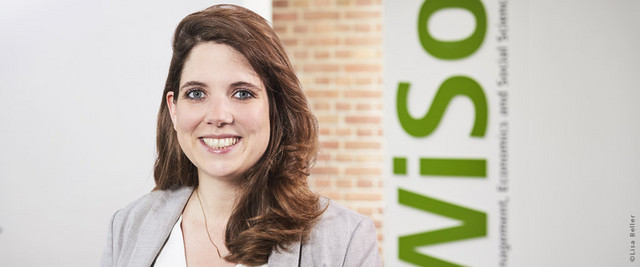
Prof. Dr. Mona Mensmann is an Associate Professor of Innovation Management and Entrepreneurship at the University of Cologne , School of Business and Social Sciences. Her research bridges entrepreneurship with psychology, focusing on entrepreneurial mindset, proactive behavior, and training curricula. Current: Associate Professor (W2), University of Cologne (2021–) Previous: Associate/Assistant Professor at Warwick Business School (2018–2021) Education: PhD in Psychology, Leuphana University (2013–2017); MSc in Psychology, University of Heidelberg (2011–2013) Mensmann’s research explores the psychological foundations of entrepreneurship, including the impact of cognitive traits (e.g., ADHD, need for cognition) on entrepreneurial intentions and outcomes. She emphasizes personal initiative training as a tool for poverty reduction and sustainable business development, particularly in West Africa and developing economies. Her publications span peer-reviewed journals like Entrepreneurship Theory and Practice and Science , focusing on topics such as sleep quality’s influence on founders, training program effectiveness, and lifespan entrepreneurship. She has also contributed to academic book chapters and conference proceedings.
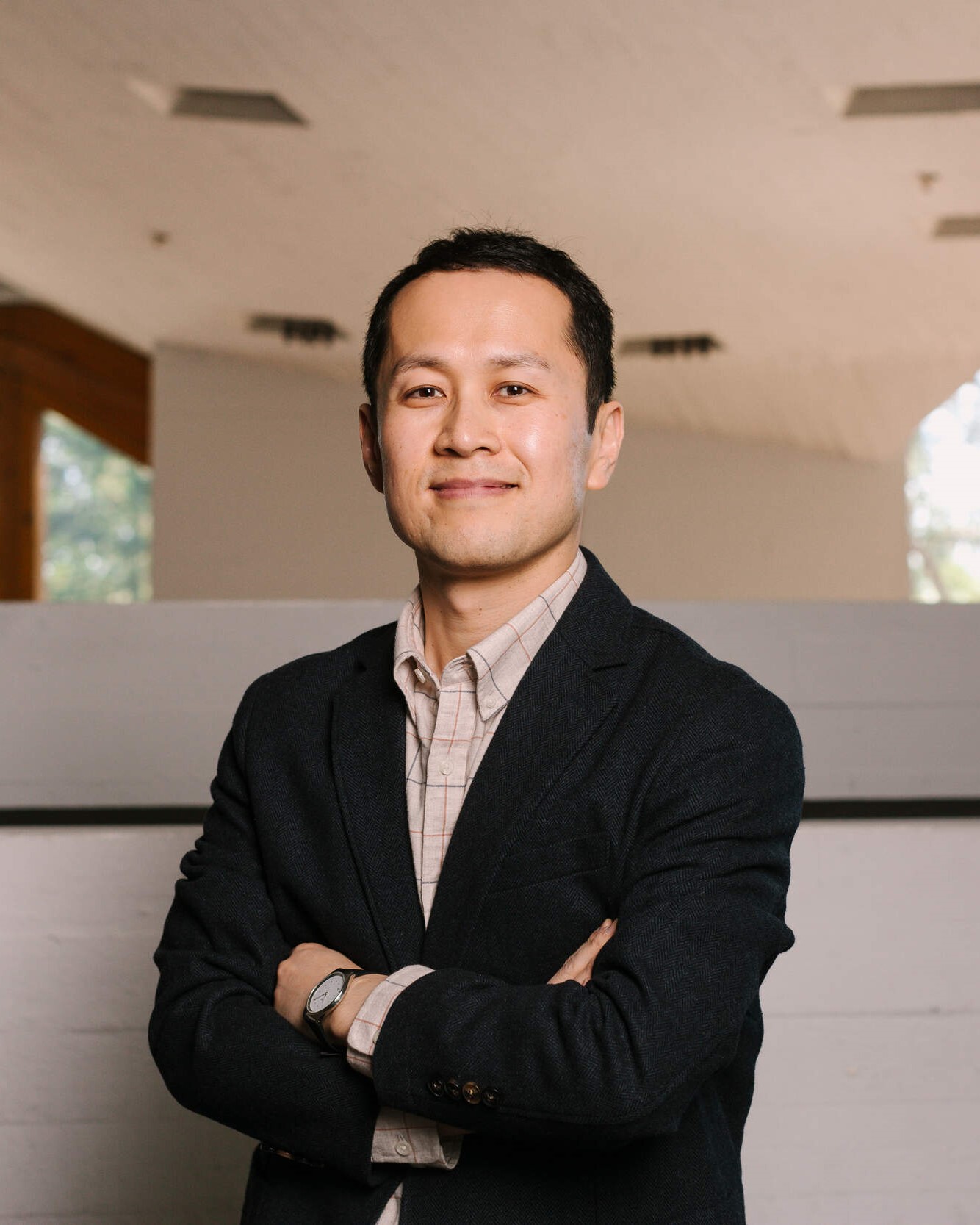
Dr. Johnson Xuesong Shen is an Associate Professor at the School of Civil and Environmental Engineering , University of New South Wales . His work integrates Digital Twins , Building Information Modeling (BIM) , and Construction Automation with a focus on robotics, AI, and LiDAR/UAS technologies. Research Interests: Digital Twins, BIM, Construction Robotics, Emissions Modeling, LiDAR/UAS, Structural Health Monitoring Education: Ph.D. in Construction Engineering and Management, The Hong Kong Polytechnic University His publications span 2025–2005, emphasizing construction automation , environmental impact reduction , and innovative tunneling solutions . Recent work includes IoT-Bayes fusion for real-time safety monitoring and life cycle analysis of construction waste. Scientific Awards: Vice Chancellor's Award for Teaching Excellence, UNSW, 2014 Best PhD Student Paper Award, CONVR, UK, 2013 Postdoctoral Fellowship, University of Alberta, 2011-2013 Best Paper Award, ASCE Construction Research Congress, 2010 Dr. Shen mentors 9 PhD candidates in areas like 3D object detection , fuel consumption modeling , and UAV-based LiDAR . His grants include $5.98M from the Australian Research Council (2022–2027) for resilient infrastructure systems and projects on modular construction and intelligent tunneling .
Professor Li Hui serves as the executive dean of the School of Network and Information Security at Xidian University, where he holds the position of second-level professor and doctoral supervisor. He is nationally recognized as a distinguished teacher and serves in multiple prestigious roles including member of the National Steering Committee for Postgraduate Education in Cryptography, inaugural president of ACM SIGSAC CHINA, and director of several major academic societies related to cryptography and information security. Professor Li's research spans cryptographic information security, privacy computing, information theory, and coding theory, with significant contributions to network and cyberspace security. His work demonstrates a strong focus on both theoretical foundations and practical applications, particularly in developing security protocols for emerging technologies like blockchain, federated learning systems, and IoT environments. His research output shows consistent innovation in balancing security requirements with computational efficiency across diverse application domains. With over 300 publications and more than 15,000 Google Scholar citations (H-index 60), Professor Li's scholarly impact is substantial. His recent publications demonstrate increasing emphasis on privacy-preserving machine learning, secure multi-party computation, and cryptographic protocols for distributed systems, reflecting the evolving security challenges in the AI era. Three second-class national teaching achievement awards Special prize and first-class national teaching achievement awards Four first-class provincial and ministerial science and technology progress awards Privacy Computing Theory award (Qian Weichang Chinese Information Processing Science and Technology Award) Multiple patents with over 80 granted inventions Professor Li leads the Cyber Changan Team and serves as head of the Shaanxi Provincial Innovation Team for Mobile Internet Security. He has successfully supervised numerous doctoral and master's students who have gone on to win prestigious competitions like the National College Student Information Security Competition. His research is supported by major national grants including a National Key R&D Program project and key projects from the National Natural Science Foundation of China.
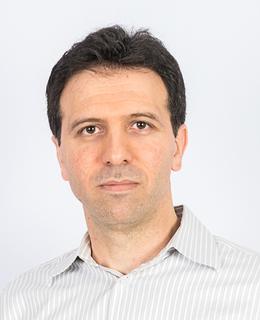
Majid Ghaderi is a Professor in the Department of Computer Science at the University of Calgary, Faculty of Science. His expertise spans network algorithms, secure communication, and machine learning applications in network control. He holds a Ph.D. in Computer Science from the University of Waterloo (2006), and M.Sc. and B.Sc. degrees in Software Engineering from Sharif University of Technology (2001 and 1999). Education: Ph.D. Computer Science, University of Waterloo, 2006 M.Sc. Software Engineering, Sharif University of Technology, 2001 B.Sc. Software Engineering, Sharif University of Technology, 1999 Research Interests: Dr. Ghaderi focuses on optimizing network algorithms, securing communication in distributed systems, and leveraging machine learning for network control. His work addresses challenges such as secure wireless protocols, SDN-based network management, and efficient resource allocation in data centers. He explores proactive traffic scheduling and anomaly detection in critical infrastructures like industrial control systems and vehicular networks. Publications Trends: His recent work emphasizes covert communication in heterogeneous networks, adaptive federated learning in edge environments, and low-overhead diagnostic systems for cloud networks. He also investigates cybersecurity defenses against hardware vulnerabilities and dynamic threat landscapes. Awards: Best in-session Presentation Award, IEEE INFOCOM 2018 Municipal Excellence Award, Government of Alberta 2018 Faculty of Science Excellence in Teaching Award 2012 Advising & Grants: While no specific advisees are listed, his research has been supported by grants focusing on network security, edge computing, and IoT applications. He teaches CPSC 441 (Computer Networks) and maintains an active lab focused on network systems and cybersecurity. Labs & Teams: His research group collaborates on projects involving software-defined networks, vehicular communication, and industrial IoT security. The team develops open-source tools for network monitoring and anomaly detection.
Seongtae Kim is an Assistant Professor of Supply Chain Management at Aalto University School of Business. He joined Aalto in 2019 after postdoctoral research at the Swiss Federal Institute of Technology Zurich. His PhD in Supply Chain Management was obtained from the University of Hull’s Logistics Institute (2013–2016). His research focuses on supply chain sustainability, risks, complex networks, and digital transformation. Key projects include a four-year Academy of Finland-funded initiative on supply chain restructuring amid disruptions. He serves as an associate editor for the International Journal of Operations and Production Management and editorial board member for Decision Sciences and Journal of Supply Chain Management , earning review service awards. His work emphasizes interdisciplinary connections between environmental, social, and governance issues in global supply chains. Research awards include the JSCM Best Paper Award (2020) and Chris Voss Best Paper Award (2022). Current grants involve analyzing supply chain resilience during megadisruptions. His articles span topics like ethical sourcing, shareholder value effects of disruptions, and green practices in multi-tier networks. He advocates for integrating diversity, equity, and inclusion into sustainable operations, addressing paradoxes in lean manufacturing and sustainability performance.