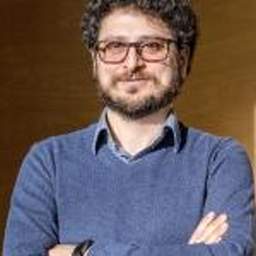
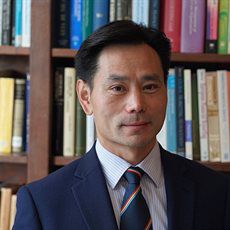
Michel Bruneau is a SUNY Distinguished Professor at the University at Buffalo's Department of Civil, Structural and Environmental Engineering within the School of Engineering and Applied Sciences. His research focuses on earthquake-resistant design, blast-resistant structures, multi-hazard engineering, and seismic evaluation of infrastructure. He has authored influential books such as The Blessings of Disaster , exploring disaster resilience and societal adaptation. Bruneau's career includes leadership roles in NSF-funded research centers and over 20 prestigious awards for engineering innovation. Beyond academia, he has published novels and composed music, blending technical expertise with creative pursuits. Education: PhD (1987), MS (1984) in Structural Engineering from UC Berkeley; BS in Civil Engineering from Université Laval (1983). Research emphasizes resilient infrastructure, including seismic retrofitting of bridges and buildings. His work bridges engineering, policy, and sociology, advocating for proactive disaster preparedness. Notable contributions include advances in buckling-restrained braces and composite plate shear walls for structural resilience.
Behnam Taebi is Full Professor of Energy & Climate Ethics and Scientific Director of the Safety & Security Institute at Delft University of Technology. He leads TU Delft | The Hague, a university-wide initiative connecting engineering knowledge with public policy. His work bridges technology, ethics, and policy through roles at Harvard University’s Belfer Center (2014–2020) and The Young Academy of the Royal Netherlands Academy of Arts and Sciences (2016–2021). As co-Editor-in-Chief of Science and Engineering Ethics , he contributes to shaping ethical discourse in engineering. BSc in Material Science and Engineering (2006) PhD in Philosophy of Technology (2010) Taebi's research focuses on the ethical dimensions of energy systems, nuclear technology, and climate engineering. He explores intergenerational justice, distributive equity, and responsible innovation frameworks. His work integrates value-sensitive design and moral emotions to address uncertainties in technological risk governance, particularly for nuclear energy and carbon capture. Recent publications highlight ethics in nuclear waste repositories, climate policy metaphors, and synthesizing justice frameworks. His VENI-grant from NWO supports innovative research on technological risks. Collaborations span the OECD Expert Panel on transdisciplinary research and co-editorship of influential volumes like The Ethics of Nuclear Energy (Cambridge, 2015) and Ethics and Engineering: An Introduction (Cambridge, 2021). As Scientific Director of the Safety & Security Institute , he leads interdisciplinary efforts to address societal challenges through engineering ethics. His initiatives emphasize inclusive energy transitions, equitable climate strategies, and bridging technical and social sciences in policy-making.
Professor Norifumi Kawai serves as an Associate Professor in the Department of Management at the University of Bergamo since 2021, with an extensive international academic background spanning Universität Duisburg-Essen (Germany), Universität Tübingen (Germany), University of Sussex (UK), University of Pavia (Italy), and Sophia University (Japan). Dr. Kawai completed his academic training with a Ph.D. summa cum laude in Managerial Economics from Universität Duisburg-Essen (2010), preceded by a Master's Degree in International Political Economy from the University of Pittsburgh (2003) and a Graduate Certificate in West European Studies. His scholarly credentials include Fellow status with the UK's Higher Education Academy (FHEA). Professor Kawai's research program centers on global strategy, international human resource management, entrepreneurship, and corporate governance , with particular expertise in Japanese business contexts. His work has appeared in premier journals including Journal of World Business, British Journal of Management, International Business Review, and International Journal of Human Resource Management. His recent publications reveal an evolving focus on digital transformation, crisis management during global pandemics, and gender-specific factors in entrepreneurial success across international boundaries. His publication record demonstrates consistent scholarly productivity with current research extending through 2025, showing particular interest in how social media influences entrepreneurial opportunity identification and how multinational corporations implement progressive HR practices across cultural boundaries. His work frequently employs rigorous quantitative methodologies to examine complex organizational phenomena in global contexts. 2015 Best Paper Award of the Academy of Multinational Enterprises (Japan) 2018 Emerald Literati Award for Excellence (UK) Best Lecturer Award for 2012-2013 (University of Sussex) Excellence in Teaching Awards 2015 (University of Sussex) Professor Kawai maintains active research funding from multiple sources including the Japan Society for the Promotion of Science (2016, 2019, 2020) and All Japan Bank Academic Research Promotion Foundation (2013, 2015, 2022). He serves on the editorial review board of International Business Review (since 2021) and the editorial board of International Studies of Management & Organization (since 2017), reflecting his standing in the international business academic community. His current teaching responsibilities include International Business and Trade, Special Topics in International Business, and Business Economics for graduate programs at the University of Bergamo.
Jan Theeuwes is a full Professor and current Head of Department at Vrije Universiteit Amsterdam's Department of Cognitive Psychology. With over 250 peer-reviewed publications, he leads research in visual attention, statistical learning, and distractor suppression mechanisms. His work bridges fundamental cognitive science with practical applications in road design and human factors. His educational background includes: BSc in Mechanical Engineering (1981) BSc and MSc in Experimental Psychology with highest honors (cum laude) from Tilburg University (1987) PhD from Vrije Universiteit with highest honors (1992) Theeuwes' research focuses on fundamental knowledge acquisition regarding perception, attention, memory, and emotion using diverse methodologies including behavioral measurements, eye tracking, fMRI, psychophysiological recordings, patient studies, and computational modeling. His specific contributions span attentional and oculomotor capture, working memory, multimodal integration, remapping, face perception, visual search, emotion processing, unconscious processing, the attentional blink, reward processing, and applied road design research. His recent work demonstrates how statistical learning shapes attentional selection by creating predictive models of where and when to expect relevant information. Analysis of his recent publications reveals a strong focus on the neural and behavioral mechanisms of learned distractor suppression, with particular emphasis on how statistical regularities in the environment shape attentional priority maps. His research increasingly integrates electrophysiological methods with behavioral paradigms to uncover the temporal dynamics of attentional selection and suppression processes. His notable scientific achievements include: Election to the Royal Dutch Academy of Science (KNAW) in 2010 Receiving the first Bertelson Award for outstanding psychological research from the European Society for Cognitive Psychology in 2001 Serving as president of ESCOP (European Society for Cognitive Psychology) from 2016 to 2018 Theeuwes serves as principal advisor to the Dutch Department of Transportation (Rijkswaterstaat) regarding road design and signing. In 2023, he co-founded Attention Architects with two former PhD students, a company applying eye-tracking research to practical settings. His work has received substantial research funding supporting his investigations into attentional mechanisms and their real-world applications. Theeuwes has established collaborations across multiple institutions and mentored numerous researchers who have gone on to establish their own careers in cognitive science. He leads the Cognition Team at Vrije Universiteit Amsterdam, which investigates fundamental attentional processes using cutting-edge methodologies. The team maintains strong connections with applied research settings through projects with government agencies and industry partners, particularly in transportation safety. Their current work focuses on how statistical learning dynamically shapes attentional selection in complex visual environments.
Mona Mensmann is an Associate Professor of Innovation Management and Entrepreneurship at the University of Cologne's Faculty of Economics and Social Sciences (WiSo-Fakultät), Department of Corporate Development. She has been a Cluster member of ECONtribute: Markets & Public Policy since 2021, which is Germany's first Cluster of Excellence in economics, jointly funded by the University of Bonn and the University of Cologne. Her educational background includes a PhD from Leuphana University of Lüneburg (2013-2017), a Master of Science in Psychology from the University of Heidelberg (2011-2013), and a Bachelor of Science in Business Psychology from the University of Lüneburg (2007-2011). Professor Mensmann's research focuses on the psychology of entrepreneurship, entrepreneurial mindset, and entrepreneurship training. Her work primarily uses RCT-based methodologies to investigate how people can be helped to think and act in more entrepreneurial ways. Her main research topics include entrepreneurial mindset, entrepreneurship in low- and middle-income countries, and gender and entrepreneurship. Her research often examines how personal initiative training impacts entrepreneurial success, particularly in developing contexts. Her publications reveal a strong trend toward interdisciplinary research combining psychology, economics, and entrepreneurship. Many studies employ randomized controlled trials to assess the effectiveness of entrepreneurial training interventions, particularly in developing countries. Her work spans cognitive psychology aspects (examining how need for cognition affects entrepreneurial persistence), educational interventions (studying remote learning during the pandemic), and development economics (analyzing entrepreneurship training in West Africa). Professor Mensmann has contributed to high-impact journals including Science, Proceedings of the National Academy of Sciences, and Entrepreneurship Theory and Practice. Her work has received media attention from major outlets such as The Wall Street Journal, The Economist, and Wirtschaftswoche. Before joining the University of Cologne in July 2021, she served as an Associate Professor at Warwick Business School in the UK (2020-2021) and as an Assistant Professor there (2018-2020). She previously worked as a Research Associate at Leuphana University of Lüneburg and as a Consultant for Innovations for Poverty Action. As a member of the ECONtribute Cluster of Excellence, she contributes to research at the intersection of business, politics, and society, focusing on how markets function within broader societal contexts and how policy interventions can address challenges like economic inequality and political polarization.
Alan A. Stocker is a Professor in the Department of Psychology at the University of Pennsylvania, with affiliations in the Neuroscience Graduate Group, Bioengineering Graduate Group, and Computational Neuroscience Initiative. He leads the Computational Perception and Cognition (CPC) Laboratory, focusing on how prior beliefs and expectations shape sensory perception through Bayesian inference and efficient coding principles.
Dr. Ronald van Steden is Associate Professor in Public Administration and Political Science at the Faculty of Social Sciences, Vrije Universiteit Amsterdam, and Senior Researcher at the Netherlands Institute for the Study of Crime and Law Enforcement (NSCR). His work bridges academic research and practical governance in the field of security, with a strong focus on policing, public order, and citizen participation. His research interests include community policing, restorative justice, private and plural policing, municipal law enforcement, citizen-centric safety initiatives, and the moral and philosophical dimensions of security governance. He employs qualitative social science methods and action research to explore the normative and operational challenges in contemporary policing. The trends in his recent publications reflect a deep engagement with collaborative governance, boundary-spanning in local security, evidence-based policing, and the ethical implications of restorative and preventive practices. His work increasingly addresses digital citizen initiatives, such as WhatsApp-based neighborhood surveillance, and the existential underpinnings of public administration. Van Steden serves as Editor of Tijdschrift voor de Politie (Police Magazine) and is a board member of the Christian Social Congress, contributing to both scholarly and public discourse on policing and morality. He teaches in the master’s program Governance of Security at VU, where he leads the course Samenwerking in Veiligheid (Cooperation in Security), and supervises master’s theses. He has also supervised two PhD theses. His research is supported by projects such as Online Blauw , which investigates digital crime handling at police basic teams. His work contributes to UN Sustainable Development Goals related to peace, justice, and strong institutions, particularly through enhancing accountability, inclusivity, and ethical governance in law enforcement.
Professor Gregoris Mentzas is a faculty member at the National Technical University of Athens, School of Electrical and Computer Engineering, where he directs the Division of Industrial Electric Devices and Decision Systems. His research focuses on AI-enabled decision systems, knowledge management, and semantic technologies applied to digital enterprises and e-government. With over 350 publications, he ranks among the top 2% most cited scientists globally. Research Interests: Artificial intelligence for decision augmentation, big data analytics in personalized health and smart mobility, semantic web technologies, and industrial internet of things. Current projects investigate trustworthy AI frameworks and hybrid intelligence systems for Industry 5.0. Teaching: Leads courses in Digital Enterprise Management, Strategic Information Systems, and Project Management at undergraduate and postgraduate levels, incorporating industry case studies and experiential learning approaches. Awards & Leadership: Top 2% Highly Cited Scientist (PLOS Biology 2021) 5 Best Paper Awards in international conferences Director of Information Management Unit (1997-present) Board Member of Institute of Communication and Computer Systems (2006-2009) Projects & Funding: Secured over €18 million in research grants through 60+ European projects with industry partners including SAP, IBM, and Siemens. Research outcomes led to three technology spin-offs.
Adrian Raine is a Professor at the University of Pennsylvania, holding joint appointments in the Departments of Criminology, Psychiatry, and Psychology. He is renowned for pioneering Neurocriminology, a discipline integrating neuroscience with criminological inquiry. His research focuses on biological underpinnings of antisocial behavior, including psychopathy, aggression, and violence. Raine directs the Mauritius Child Health Project, a 50+ year longitudinal study examining child development and health impacts on antisocial outcomes. He earned his B.A., M.A., and D.Phil. in Experimental Psychology from Oxford University and York University. His work employs advanced techniques like structural/functional brain imaging, neuroendocrinology, and transcranial stimulation. Key areas include nutritional interventions (e.g., omega-3 and vitamin D supplementation), autonomic nervous system functioning, and the biopsychosocial model of criminality. Raine's research highlights biological risk factors like low resting heart rate, diminished empathy, and brain abnormalities. He advocates for neuroscience-informed penal policies, emphasizing prevention over punishment. Recent studies explore bidirectional relationships between sleep quality and child behavior, as well as cross-cultural psychopathology patterns. Lab Focus: Biological interventions, antisocial behavior, and neurocriminology Key Projects: Mauritius Child Health Project, ABCD Study collaborations Techniques: fMRI, EEG, nutritional trials, behavioral assessments He develops validated clinical tools like the Schizotypal Personality Questionnaire (SPQ), Reactive-Proactive Aggression Questionnaire (RPQ), and Selfishness Scale (SQ). His work bridges basic science and practical applications in criminal justice and mental health systems.
Professor Yufeng Zhang is a Chair in Operations Management and Head of the Department of Management at Birmingham Business School, University of Birmingham. He is also a Senior Fellow of the Higher Education Academy and a Fellow of the Alan Turing Institute. His academic journey began at Shanghai Jiao Tong University, continued at the Technical University of Berlin, and culminated with a PhD from the University of Cambridge, where he also worked as a Research Associate before joining Birmingham in 2009. PhD, Engineering – University of Cambridge MSc/Dipl-Ing, Global Production Engineering – Technical University of Berlin BEng, Mechanical Engineering & Automation – Shanghai Jiao Tong University BEng, International Finance – Shanghai Jiao Tong University PG Cert in Learning & Teaching in Higher Education Yufeng Zhang’s research focuses on sustainability, digitalisation, engineering innovation, and global network operations. His work integrates engineering and management perspectives, employing qualitative, quantitative, and simulation methods. He has led numerous projects funded by UK, EU, and international bodies, and has published over 80 refereed papers in top-tier journals such as Journal of Operations Management , International Journal of Production Economics , and Journal of Cleaner Production . His recent publications highlight trends in green operations, sustainable supply chains, digital transformation, and network capabilities. The research spans subfields including environmental performance, IoT integration, supply chain flexibility, and servitisation, reflecting a strong interdisciplinary focus on modern operational challenges. His scientific awards include the University’s Excellence in Teaching and Learning Award (2013), Literati Nominations for Highly Recommended Papers (2008, 2013), and recognition as a Senior Fellow of the Higher Education Academy and Turing Fellow. Yufeng has supervised over 20 PhD students and has held key roles such as Deputy Lead for REF2021, Director of Business Programmes with Engineering, Sciences, Law and Languages (2010–2017), and Coordinator of Europe China High Value Engineering Networks (EC-HVEN). He is an External Examiner for multiple universities and a Visiting Professor at Zhejiang University, demonstrating extensive academic leadership and collaboration. He leads and contributes to research labs and networks focused on engineering innovation and sustainable operations, including collaborations with industry and international institutions. His future work continues to explore the intersection of digital technologies, sustainability, and global operations, aiming to shape resilient and responsible business practices.
Dr. Leila Moslemi Naeni is a Senior Lecturer at the University of Technology Sydney (UTS), School of Built Environment, with a dual appointment in the Faculty of Design, Architecture and Building. She previously served as a Lecturer at UTS (2016-2018) and Sessional Lecturer at Curtin University (2015-2016). PhD in Computer Science (University of Newcastle, 2017) MSc in Industrial Engineering (Sharif University of Technology, 2007) BSc in Industrial Engineering (Iran University of Science and Technology, 2004) Her research focuses on project management under uncertainty, integrating fuzzy systems and mathematical modeling with applications in construction, ESG reporting, and disruptive technologies. She developed innovative methods for statistical control charts in project monitoring and leads research on leveraging blockchain and digital tools for sustainable infrastructure. Recent publications highlight her work on resource-constrained scheduling algorithms, ESG integration in megaprojects, and gamification in project management education. She serves as Review Editor for Frontiers in Environmental Science and on the Editorial Board of Smart and Sustainable Built Environment . 2016 PMI NSW Research Award 2022 Walt Lipke Award 2013 FEBE Postgraduate Research Prize As an active research mentor, she supervises PhD students in machine learning applications, disaster management technologies, and social infrastructure investments. Her teaching emphasizes simulation-based learning, collaborating with Oulo University (Finland) to quantify educational value.
Priyanko Guchait is a tenured Full Professor and Program Director of the Doctorate in Global Hospitality Leadership (DGHL) at the Conrad N. Hilton College of Global Hospitality Leadership , University of Houston. His research focuses on organizational behavior, leadership, human resources, and service management in hospitality contexts, with over 75 peer-reviewed articles published. Education: B.E. in Mechanical Engineering, University of Pune, India M.S. in Hospitality Management, University of Missouri M.S. in Human Resources and Employment Relations Ph.D. in Hospitality Management, The Pennsylvania State University Research Interests include error management culture, psychological safety, service recovery performance, leader behavioral integrity, and AI’s impact on hospitality workers’ mental health. His work examines shame, forgiveness climate, and team dynamics in service environments. Article Trends show a focus on multi-level error management, human-robot collaboration in service recovery, diversity inclusion climates, and cross-cultural leadership studies. Recent papers explore AI ethics, pandemic response strategies, and emotional labor in hospitality roles. Awards & Honors Stephen Rushmore/HVS Research Excellence Award (2023, 2015) Donald Greenaway Excellence in Research, Teaching, and Service Award (2022) Best Paper Award, The Service Industries Journal (2023) ICHRIE Faculty Collegiality Award (2021) ICHRIE McCool Breakthrough Award (2021) Honored as 50-in-5 Scholar (2021) Provost’s Excellence Award (2015) Best Reviewer Awards (IJCHM 2016-2017) Committee & Editorial Roles include Associate Editor of IJCHM, Coordinating Editor of IJHM, and leadership positions at ICHRIE (President 2020-2021, Vice President 2019-2020). He has served on university curriculum, research, and Ph.D. selection committees.
Barry Goldman serves as Associate Professor of Management and Organizations at the University of Arizona's Eller College of Management, where he has held faculty position since 1998. His academic home resides within the Department of Management and Organizations, focusing on the intersection of legal frameworks and organizational behavior. Previously, he practiced as an attorney with the U.S. General Accounting Office and private law firms before transitioning to academia. His educational background includes dual advanced degrees from the University of Maryland: a PhD in Human Resources and Organizational Behavior alongside a Juris Doctor (JD). This unique combination forms the foundation of his interdisciplinary research approach. Goldman's research centers on human resource management, conflict resolution, and organizational justice, with particular emphasis on employee legal-claiming behaviors , negotiation dynamics , and social exchange theory . His work examines how individuals perceive fairness in workplace disputes, the psychological underpinnings of negotiation approaches across professional groups, and the complex interplay between legal systems and organizational justice. Recent publications increasingly address diversity issues in hiring practices and systemic justice reform. Analysis of his publication trajectory reveals consistent focus on workplace dispute resolution mechanisms, with growing attention to intersectional discrimination and technology-mediated conflicts. His research bridges psychological theory with practical legal applications, demonstrating how social exchange principles shape responses to perceived injustice. His scientific recognition includes: Top 1 percent (#40) Most Cited Management Author (2000-2004) Best Paper Award in International Journal of Conflict Management (2017) Highly Commended Award from International Journal of Conflict Management Goldman maintains active professional engagement through editorial roles at Journal of Applied Psychology and Journal of Management, while serving as Senior Book Editor for International Journal of Conflict Management. His practical application extends to extensive executive education consulting and expert witness activities in employment law cases, demonstrating the real-world impact of his theoretical work. He previously chaired the Conflict Management Division of the Academy of Management for a five-year term.
CJ Park is an Assistant Professor in the Department of Educational and Counseling Psychology, and Special Education at the University of British Columbia (UBC), Faculty of Education. A licensed psychologist with international experience, she previously served as Assistant Professor at New Mexico State University and maintains an active clinical and research practice from her Scarfe Library Block 280 office. Her academic credentials include: Bachelor of Psychology from the University of Hong Kong Master of Counseling Psychology from Ewha Womans University (South Korea) PhD in Counseling Psychology from the University of Missouri-Columbia (2021) Dr. Park's research integrates vocational and positive psychology with critical social justice frameworks, examining career development through lenses of diversity, critical consciousness, and cross-cultural identity. Her clinical work employs Interpersonal Psychotherapy and Multicultural-Feminist Therapy to address systemic barriers in educational and career settings. Analysis of her 15 recent publications reveals dominant themes in career psychology (particularly STEM pathways for women of color), microaggression dynamics, and health behavior intersections with sleep/alcohol use. Her work consistently centers marginalized populations while advancing measurement tools like the Career Futures Inventory. Currently accepting graduate students for 2026-27, Dr. Park maintains active research collaborations across counseling psychology, education, and health sciences, with recent publications demonstrating interdisciplinary grant-funded work on social determinants of health and career development.
Rudolf Sinkovics is Professor of Strategy and International Business at Durham University (UK) and Visiting Professor at LUT University (Finland). His research examines global value chains, responsible business practices, and the impact of digital transformation on international business operations. Research interests focus on: Governance and upgrading in global value chains Responsible business and sustainability transitions Digital transformation in international business Cross-border knowledge networks International marketing and consumer behavior Sinkovics has received prestigious recognitions including Fellowship in the Royal Society for Arts (FRSA) and inclusion in the Stanford/Elsevier list of top 2% most cited scientists globally. His editorial roles include Co-Editor-in-Chief for Critical Perspectives on International Business. His publications demonstrate strong interdisciplinary focus, combining international business theory with sustainability science, digital transformation studies, and organizational ethics. Recent work emphasizes the role of business in achieving Sustainable Development Goals through innovative governance models.