Ian Greer is a Research Fellow at Cornell University's School of Industrial and Labour Relations , with a career focused on marketisation , industrial relations , and transnational solidarity . He holds a PhD from Cornell University and has previously studied at Bard College. His work examines labor dynamics in globalised industries , welfare states , and multinational corporations , often through qualitative comparative methods . Education : BSc (Bard College), MSc/PhD (Cornell University) Greer's research spans marketisation of employment services , social movement unionism , and labour policy in crisis situations . His publications include studies on European welfare-to-work schemes , healthcare privatisation , and labour migration . He is associated with the Centre for Employment Relations, Innovation and Change (CERIC) at the University of Leeds. Greer's recent work analyses precarious labor and project-based employment in social services across Slovenia and France. He also contributes to debates on social dumping , work-first welfare states , and activist labor strategies in sectors like healthcare and automotive manufacturing. He has no listed scientific awards. His work often involves collaboration with scholars like Marco Hauptmeier , Charles Umney , and Nathan Lillie , though no formal advisees are named in the provided text. His email is icg2@cornell.edu .
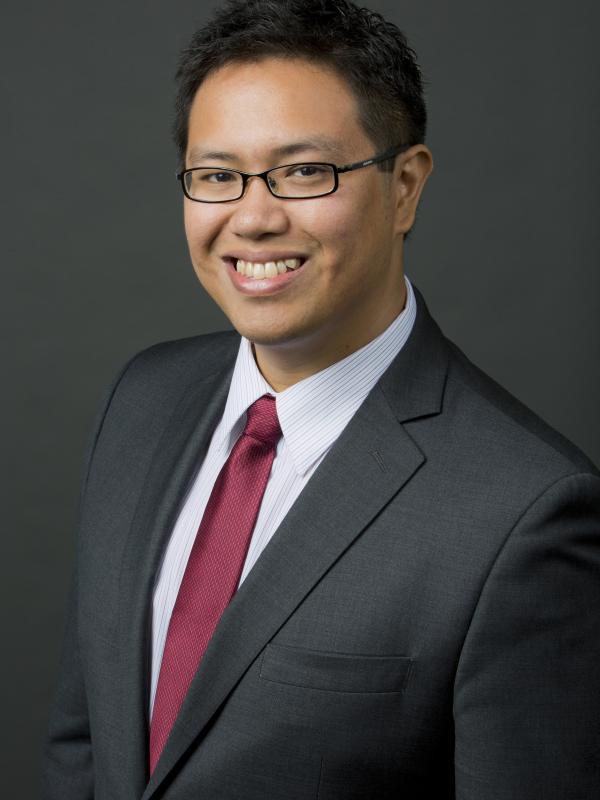
Jose Miguel Abito ("Mike") is an Associate Professor in the Department of Economics at The Ohio State University (OSU), serving as Director of Undergraduate Studies. He holds a PhD from Northwestern University, with prior roles including Assistant Professor at the Wharton School, University of Pennsylvania, where he won a teaching award. His research focuses on applied microeconomics, particularly industrial organization, regulation, and environmental economics. He examines topics such as regulatory incentives, consumer misinformation effects, and antitrust methodologies in sectors like electricity, extended warranties, and infant formula. Education: PhD in Economics from Northwestern University (Evanston, IL), graduate studies in Econometrics and Mathematical Economics at Toulouse, France, and undergraduate studies in Singapore. Research Interests: Mike explores how regulatory frameworks impact market efficiency, consumer welfare, and firm behavior. Recent work analyzes renewable energy market design, electricity procurement dynamics, and demand spillovers in welfare programs like WIC. His methodologies bridge theoretical models and empirical analysis to address complex policy questions. Professional Activities: Currently serves as a University Senator (2023-2026), member of the Salmon P. Chase Center Academic Advisory Committee, and faculty advisor for the Quantitative Finance Club at OSU. Previously involved in inclusive teaching initiatives at Wharton. Awards: Recognized with a teaching award during his tenure at Wharton School. Grants & Advising: Advises on projects related to infant formula markets, wage dynamics, and environmental policy. Engaged in collaborative research on green jobs, regulatory auditing frameworks, and productivity analysis.
Sascha van Schendel is an Assistant Professor in Data Protection & Cybersecurity at the Department of Law & Markets, Erasmus School of Law, Erasmus University Rotterdam. She is affiliated with the Erasmus Centre of Law and Digitalization and contributes to the Sectorplan SSH-Breed research initiative on the influence of digitalization on work, prosperity, and entrepreneurship. Her research lies at the intersection of law, technology, and fundamental rights, with a focus on data protection, privacy, algorithmic governance, and the regulation of emerging technologies in public and environmental domains. She has published widely on topics including GDPR compliance, privacy by design, smart energy systems, AI in criminal justice, and the legal implications of predictive policing. The recent publications reflect a strong trend toward the regulation of data in public infrastructure (e.g., energy grids), algorithmic accountability in law enforcement, and the integration of legal and technical perspectives in privacy-preserving systems. Her work spans environmental law, criminal procedure, and digital constitutionalism, demonstrating interdisciplinary reach. Scientific Awards: No awards explicitly mentioned in the provided text. Advising and Grants: While no formal PhD or Master’s students are listed, Dr. van Schendel has been involved in significant research projects such as the NWO-funded Megamind project on smart energy grids, indicating experience with competitive grant funding. She actively collaborates with legal scholars and contributes to public policy debates, including responses to national legislation like the Dutch Cybersecurity Bill. Labs and Teams: She is a core member of the Erasmus Centre of Law and Digitalization, a research hub focusing on the legal challenges of digital transformation. Her work is embedded in interdisciplinary collaborations involving law, technology, and public policy experts.
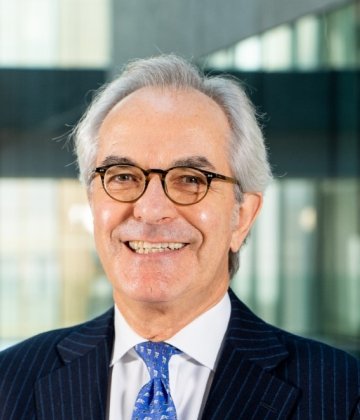
Maurizio Dallocchio is a Full Professor of Corporate Finance at Bocconi University and SDA Bocconi School of Management. He served as Dean of SDA Bocconi (2003–2007) and has held leadership roles in academic and professional institutions, including Chair of the Audit Committee of the European Investment Bank (EIB). His research focuses on corporate valuation, mergers & acquisitions (M&A), and sustainable finance. Dallocchio founded DGPA & Co., a corporate finance consultancy, and advises public and private entities globally. He has taught at leading institutions like London Business School and NYU Stern School of Business. Educational Background: Ph.D. in Business Administration, Bocconi University Advanced studies at London Business School and New York University Stern School of Business Research Interests: Prof. Dallocchio’s work emphasizes corporate restructuring, ESG integration in finance, and strategic valuation methodologies . Recent studies explore environmental performance in emerging markets and the resilience of conglomerates during economic crises. He advocates for sustainable investment strategies that balance financial returns with societal impact. Professional Engagements: Board member roles at Klepierre Management, General Finance, and Podravska Banka Past Director of the Master in Corporate Finance program at SDA Bocconi Labs/Teams: Leads research initiatives at Bocconi’s Corporate Finance and Real Estate Department, collaborating with global institutions on projects involving corporate governance, M&A analytics, and sustainable development.
Professor Will Bateman is a distinguished academic at the Australian National University (ANU) College of Law, where he serves as a Professor and recently completed his term as Associate Dean (Research) from 2021 to 2024. He is also a Chief Investigator for the ANU Grand Challenge project "Humanising Machine Intelligence" and a Fellow at the Gradient Institute, a leading ethical AI research organization based in Sydney. Professor Bateman's educational background is impressive, having earned a PhD and LLM (Hons) from the University of Cambridge and a BA/LLB (Hons) from the Australian National University. Prior to his academic career, he worked in appellate litigation, commercial disputes, and banking as a solicitor at Herbert Smith Freehills, and served as an associate to Justice Stephen Gageler AC of the High Court of Australia and Justice Steven Rares of the Federal Court of Australia. Professor Bateman's research spans two major interdisciplinary domains that sit at the intersection of law with finance and technology. His work on financial regulation focuses on the legal aspects of central banking, sovereign debt markets, digital currencies, and sustainable investing. He has provided expert evidence to the UK Parliament's House of Lords Inquiry into Quantitative Easing, and has collaborated with major financial institutions including the Federal Reserve Bank of New York and the Bank of England. His research on artificial intelligence examines regulatory frameworks for AI in the public sector, with collaborations including the Minderoo Foundation and the Gradient Institute. His recent publications demonstrate a remarkable breadth across legal theory, financial regulation, and AI governance. The articles reveal a consistent theme of examining how traditional legal frameworks adapt to new financial technologies and monetary policy challenges. His work bridges theoretical legal scholarship with practical policy implications, as evidenced by his numerous government consultations and collaborations with central banks worldwide. 2020 Yorke Prize by the University of Cambridge for his work on public finance and constitutionalism Top 10 all-time most downloaded SSRN paper on central banking ("Central Bank Money: Liability, Asset, or Equity of the Nation?") Professor Bateman actively supervises research students, currently mentoring Benjamin Ettinger who is pursuing a PhD on "Legal Method, Cartels and Public Monopolies: A View From the High Court 1908 - 1948." He has secured significant research funding, including projects funded by the Economic and Social Research Council (UK), the German Research Foundation (Deutsche Forschungsgemeinschaft), and The Minderoo Foundation. His "Rebuilding Macroeconomics Initiative: Legal and Economic Conceptions of Money" received £245,000, while the "FA Mann" project was funded with €620,000 (approximately A$1,012,500). He leads the "Humanising Machine Intelligence" project, an ambitious interdisciplinary initiative involving computer scientists, mathematicians, philosophers, sociologists, psychologists, and lawyers aimed at developing democratically legitimate machine intelligence. He also co-led a major project with the University of Western Australia to formulate model legal frameworks for AI regulation in the public sector, funded by The Minderoo Foundation.
Patrick Le Galès is a CNRS Research Professor at Sciences Po's Centre for European Studies and Comparative Politics (CEE), where he contributes to research on urban governance, public policy, and European political sociology. He was the founding Dean of the Sciences Po Urban School (2015–2022) and remains an active faculty member, teaching and leading research groups on urban transformation and state restructuring. His research interests span urban sociology, comparative public policy, political economy, and the governance of European cities. He investigates themes such as financialization of housing, digital cities, urban inequalities, and the reconfiguration of the modern state. His work combines sociological and political science approaches to analyze how cities and states adapt to economic and social change. The 15 most recent publications reflect a consistent focus on urban governance, state transformation, and European integration. These works span subfields including smart cities, policy instruments, metropolitan conflict, and institutional change, with keywords in political science, sociology, and urban studies. His research often adopts a comparative framework across European and global cities. Fellow of the British Academy (FBA) Member of Academia Europaea CNRS Silver Medal (2018) Stein Rokkan Prize (2002) Regional Studies Association Best Paper Award (2017) CNRS Bronze Medal (1996) GRALE CNRS Prize (1991) Mattei Dogan Foundation Award of Excellence (2007) Le Galès has supervised numerous PhD candidates and junior researchers, though specific advisees are not listed. He has led and participated in multiple funded research projects, including European, national, and international contracts. He has served on ERC panels and editorial boards of leading journals such as British Journal of Political Science , Socio-Economic Review , and European Urban and Regional Studies . He co-edits book series on Governance (Presses de Sciences Po) and Urban and Social Change (Wiley/Blackwell). He is involved in the 'Cities are back in town' and 'Restructuring the state' research groups at the Centre for European Studies and Comparative Politics. He also contributes to the Transversal Seminars and thematic seminar series on urban and policy transformations. His ongoing project LAC-EU (2024–2028) explores Latin American challenges in the 21st century, expanding his comparative urban research globally.
Susanne Iwarsson is a Professor in Gerontology and Care for Older People at Lund University's Faculty of Medicine, holding the Mary and Seved Ribbing Professorship since 2005. She also serves as Director of the Centre for Ageing and Supportive Environments (CASE) and Coordinator of the Swedish National Graduate School for Competitive Science on Ageing and Health (SWEAH). Her academic journey includes a PhD in Medical Science (1997) and promotions to Associate Professor (1999) and Professor (2003). She has held leadership roles such as Pro-dean of the Faculty of Medicine (2006-2011) and Coordinator of the strategic research area MultiPark (2012-2014). Her research focuses on environmental gerontology, housing accessibility, and proactive ageing strategies. Key contributions include the Housing Enabler assessment tool and studies on ageing populations' participation in society. She has supervised 18 PhD students and 6 licentiates, with ongoing supervision of 4 current PhD candidates. Major projects include the Home, Health and Disability longitudinal study (2002-present) and the UserAge program exploring user participation in ageing research. Awards include the Excellent Teaching Practitioner title (2010) and Doctor Honoris Causa. Her work addresses UN Sustainable Development Goals related to health, sustainable cities, and reduced inequalities. Collaborations span universities in Sweden, Finland, Latvia, and the U.S., with partnerships in healthcare and municipal sectors.
Henri van Soest is a Professor of Policy Analysis at the RAND School of Public Policy and a Senior Analyst at RAND Europe. He is based at RAND, a global policy research organization, where he leads studies on energy security, artificial intelligence governance, critical infrastructure protection, and European Union policy. His work supports key institutions including the European Union, UK government, and Dutch government. His research focuses on the intersection of technology and policy, particularly in energy systems and AI. Key areas include: AI governance and trustworthy AI tools Energy security and digitalisation of the power grid Critical undersea infrastructure protection Cybersecurity in energy systems Space technology regulation Societal resilience and national security The trend in his recent publications shows a growing emphasis on the dual-use nature of AI in critical infrastructure, balancing innovation with security and resilience. His work combines technical analysis with policy recommendations, often using modeling and expert elicitation. Much of his research addresses transatlantic and European policy challenges, especially in energy and security domains. Scientific contributions and policy impact are evident through frequent publications and expert submissions to governmental bodies. Notable outputs include evidence submissions to the UK Parliament and reports for the U.S. Department of Energy. While no formal awards are listed, his influence is reflected in high-level policy engagement. He has advised on grants and policy studies involving global teams, particularly in energy transition, AI infrastructure, and resilience planning. His prior experience includes energy policy research at the University of Oslo, cleantech analysis, and corporate governance in banking. He holds a Ph.D. from the University of Cambridge and a joint LL.M. from KU Leuven and the University of Zurich. Henri van Soest leads research within RAND Europe’s multidisciplinary teams focusing on science, technology, and security policy. His work often involves collaboration across international experts and institutions, particularly on EU and NATO-related security issues. He contributes to projects involving horizon scanning, Delphi studies, and quantitative modeling in policy contexts.
Dr. Nemanja Stanišić is a Full Professor at Singidunum University's Faculty of Business, with a distinguished academic career spanning over 15 years. He holds a Ph.D. in Corporate Finance from Singidunum University (2010), an MBA in Finance from Lincoln University (2007), and a Bachelor's in Accounting from the University of Belgrade (2005). His expertise focuses on Corporate Finance, Banking, Audit, and Applied Statistical Analysis. His research integrates quantitative methods with economic theory, addressing topics such as audit opinion prediction using AI, tourism destination competitiveness, financial distress dynamics, and air pollution health impacts. He co-authored textbooks including Contemporary Exchange and E-business (2010) and Financial Statement Analysis (2024), and served as Editor-in-Chief of The European Journal of Applied Economics . He teaches courses from Financial Accounting to Advanced Financial Engineering at undergraduate, master's, and Ph.D. levels. The 15 most recent publications highlight his interdisciplinary approach: 7 in Finance/Audit, 5 in Tourism/Hospitality, and 3 in Environmental Health. Key trends include applying machine learning to audit quality (2023), multilevel modeling for hospitality satisfaction (2015-2019), and air pollution mortality analysis (2016). His work appears in high-impact journals like Tourism Management (IF 10.125) and Environmental Health (IF 4.986). He held administrative roles including Rector (2020-2021) and Vice President of Singidunum University. He served as Vice Dean for Student Affairs (2010-2011) and participated in TEMPUS projects for educational reform. He mentors graduate students extensively, advising 100+ bachelor's, 57 master's, and 4 doctoral theses, including international candidates. His visiting professorship at Bangkok's ICO NIDA and teaching in Austria-Singidunum joint programs reflect global engagement. Professional development includes advanced training at Utrecht University (Bayesian Modeling, 2019), Stanford (Mentoring, 2010), and NYU (Valuation, 2012). He reviews for top journals like Annals of Tourism Research and Cornell Hospitality Quarterly , with 1017 Google Scholar citations and 349 Scopus citations. Current research involves the Science Fund of Serbia's TOURCOMSERBIA project evaluating tourism competitiveness models.
Robert Thomas is a Professor of Public Law at the University of Manchester's School of Law. He holds a LL.B. from Cardiff University (1995) and a Ph.D. from Nottingham University (1998). His research focuses on administrative law, immigration/asylum law, and administrative justice, with particular emphasis on tribunals, judicial review, and institutional design. He has advised the UK Parliament on immigration reforms and authored influential works like Administrative Justice and Asylum Appeals (2011), which won the Peter Birks Prize. His recent projects include studies on AI in governance, constitutional history, and systemic administrative justice failures. Thomas is actively involved in legal education, co-authoring Public Law (5th ed., 2024) and supervising postgraduate research in public law and immigration law. Key research contributions include empirical analyses of asylum appeals, administrative tribunals, and ombudsman practices. He has addressed challenges in public sector digitalisation, outsourcing impacts on administrative justice, and the implications of pandemic governance. Thomas advocates for administrative fairness agendas in immigration systems and contributes to legal scholarship through peer-reviewed articles and edited volumes on topics ranging from judicial review to constitutional caricature history. His awards include the 2011 Peter Birks Prize for Outstanding Legal Scholarship. Thomas engages with policy-making through expert testimony, public commentary, and collaborative research funded by the British Academy and Nuffield Foundation. His work intersects law, policy, and social justice, emphasizing the practical implications of legal frameworks on vulnerable populations.
Clémence Poirier is a Senior Researcher in the Cyberdefense Project within the Risk and Resilience Team at the Center for Security Studies (CSS) at ETH Zurich. She previously served as a Research Fellow at the European Space Policy Institute (ESPI) in Vienna and as a Researcher for Flinders University in Adelaide, Australia. She also holds the position of Space Generation Advocacy and Policy Platform's Lead on Responsible Space Behavior at the Space Generation Advisory Council (SGAC). Her educational background includes a Master's degree in International Relations, International Security and Defense and a Bachelor's degree in Foreign Applied Languages (English, Russian, Spanish), both from University Jean Moulin Lyon III, France. Dr. Poirier is multilingual, which supports her international research collaborations. Dr. Poirier's research focuses on the critical intersection of space operations and cybersecurity, with particular emphasis on geopolitical implications of cyber conflict in outer space. Her work examines how terrestrial conflicts like the Ukraine war impact space security architecture and explores policy frameworks for protecting space infrastructure from cyber threats. She has conducted extensive research on space cybersecurity policy across multiple jurisdictions including Australia, Europe, and the United States. Analysis of her publication record reveals a clear progression from foundational space policy research toward increasingly specialized work on space cybersecurity. Her recent publications demonstrate growing attention to practical policy implementation challenges, with several papers addressing specific national and regional approaches to space cybersecurity governance. There's also a notable trend toward multidisciplinary collaboration, particularly with technical experts in space systems engineering. Dr. Poirier has established significant research partnerships with major space institutions including the European Space Agency, with whom she collaborated on climate policy research examining the integration of space-based data in European environmental policies. Her work with SmartSat CRC in Australia demonstrates international research coordination on space infrastructure security. She leads research initiatives focused on responsible space behavior and has contributed to policy development through her work with the European Economic and Social Committee. Her current Cyberdefense Project at ETH Zurich's CSS represents the culmination of her expertise in space security policy development.
Martin Ruhs is a Full-time Professor of Migration Studies and Deputy Director of the Migration Policy Centre (MPC) at the European University Institute (EUI) in Florence. Previously, he served as Professor of Political Economy at the University of Oxford. His academic appointments include significant leadership roles at the Robert Schuman Centre for Advanced Studies. Ruhs's research focuses on the economics and politics of international migration with a strong international comparative dimension. He is particularly interested in the links between migration and wider public policies, and the tensions between diversity in national institutions and supra-national policy-making. His work addresses key questions and dilemmas in public policy-making across Europe, North America, and Asia. Analysis of his recent publications reveals a consistent focus on migration policy dilemmas, with particular emphasis on irregular migration, public perceptions of fairness in asylum systems, ethical considerations in migration governance, and the relationship between migration and welfare states. His research combines theoretical rigor with practical policy implications, often examining how institutional frameworks shape migration outcomes. Co-editor of the World Migration Report 2018 (IOM) Co-author of a 2022 European Parliament study on rights of irregular migrant workers Regular contributor to major media outlets including New York Times, Financial Times, Guardian, and Irish Times Ruhs currently provides policy analysis and advice for various national governments and international institutions. His supervisory work includes mentoring PhD students Andreea Ferent, Julie Fournier, and Hirotaka Fujibayashi. His ongoing research projects include 'Protecting Irregular Migrants in Europe (PRIME)' (2023-26), freeEUmove, MEDAM, DYNAMIG, MigResHub, AFAR, Dilemmas, and research on EU Member States' protection policies for Ukrainian refugees.
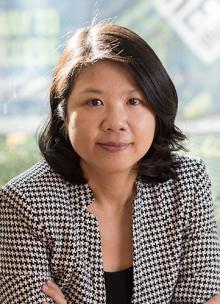
Lily Hsueh is an Associate Professor of Economics and Public Policy (with tenure) at the School of Public Affairs, Arizona State University (ASU), and a Visiting Scholar at the Woods Institute for the Environment, Stanford University. She is affiliated with multiple research centers, including the Julie Ann Wrigley Global Futures Laboratory, the Center for Environmental Economics and Sustainability Policy, the Center for Organization Research and Design, and the Political Economy Working Group at ASU. She earned her Ph.D. in Public Policy and Management from the University of Washington, an M.S. in Economics from University College London, and a B.A. in Economics from the University of California, Berkeley. Prior to her academic career, she worked as a Senior Analyst at the Federal Reserve Bank of San Francisco. Dr. Hsueh’s research focuses on the intersection of economics, politics, and governance in environmental policy. She investigates how alternative governance systems—such as voluntary programs and market-based mechanisms—affect policy outcomes in areas like climate change, toxic chemicals, and marine resources. Her work emphasizes the role of firms, institutions, and governments in shaping environmental governance and social equity. Her recent publications explore trends in corporate climate disclosure, sustainable public procurement, participatory budgeting, and the health impacts of environmental disasters. These studies employ rigorous econometric methods and contribute to both academic and policy debates on sustainability and governance. Recipient of the 2020–21 AAUW American Fellowship Two-time winner of the Distinguished Teaching Award at ASU (2016–17, 2021–22) Recipient of the 2023 Professor of Impact award (student-initiated) Elected to the APPAM Policy Council (2024–2028) Editorial board member of PLOS Climate Dr. Hsueh has secured research funding from NOAA, the V. Kann Rasmussen Foundation, and ASU. She actively mentors students and junior scholars and is currently completing a book with MIT Press titled Corporations at Climate Crossroads . She also leads curriculum development in economics and public policy at ASU and teaches across undergraduate, master’s, and Ph.D. levels. She is involved in several research teams and initiatives, including the Political Economy Working Group and the Sustainable Procurement Research Group at ASU, and collaborates with interdisciplinary teams at Stanford on climate governance research.
Harvey NEO is a Professorial Research Fellow at Singapore University of Technology and Design (SUTD), leading the Cities and Urban Science programme at the Lee Kuan Yew Centre for Innovative Cities (LKYCIC). He holds a PhD in Geography from Clark University, USA, and previously served as an Associate Professor at the National University of Singapore (NUS). His research focuses on urban sustainability, citizen-centric urban science, and nature-society interactions. He is the Southeast Asian editor for Human Geography and Frontiers in Sustainable Cities , and sits on multiple international advisory boards. Key roles include Director of SUTD's Master in Urban Science, Policy and Planning programme, and co-leader of the Tote Board's Future Ready Society initiative. Education: PhD, Graduate School of Geography, Clark University (2007); MSc, Geography, NUS (2002); BA (Hons), NUS. Research interests emphasize urban futures, participatory governance, and environmental policy, with a focus on Southeast Asian cities like Ho Chi Minh City, Jakarta, Manila, and Phnom Penh. His work bridges academia and practice through projects on electric vehicle policies, urban heat adaptation, and 3P+ (People, Public, Private + Academia) partnerships. Publications span urban mobility, pandemic responses, and eco-city development, reflecting a commitment to interdisciplinary solutions for sustainable urbanization. He has secured grants from Singapore’s Social Sciences Research Council and Housing Development Board, fostering collaborations across sectors to address societal challenges. Labs/Teams: LKYCIC's Urban Environmental Sustainability Programme and the Future Ready Society Initiative, which integrate research with policy and community action.
Ying-Yi Chih is a Professor of Project Management at the Research School of Management, Australian National University (ANU) , and serves as the Associate Dean (Students and Industry Experience) for the College of Business and Economics. Her research focuses on project management, public-private partnerships (PPPs), value co-creation in projects, and employee well-being in project-based environments like the construction industry. She has published extensively in journals such as International Journal of Project Management and Journal of Construction Engineering and Management , with funding from government and industry sources. Education: PhD in Project Management Research Interests include: Infrastructure Project Planning and Management Public-Private Partnerships (PPPs) Value Co-Creation in Professional Services Employee Psychological Well-being and Performance Management Recent Publications highlight trends in green innovation, crisis resilience, leadership dynamics, and technology adoption in construction and project management. Her work bridges theoretical frameworks with practical applications in the AEC (Architecture, Engineering, Construction) industry and public sector projects. Editorial Roles: Associate Editor for Journal of Management in Engineering and Editorial Board member for Journal of Vocational Behavior . Research Projects have explored value co-creation, international development projects, and performance management in multi-project environments, with collaborations across Australia, Taiwan, Vietnam, and the Philippines.