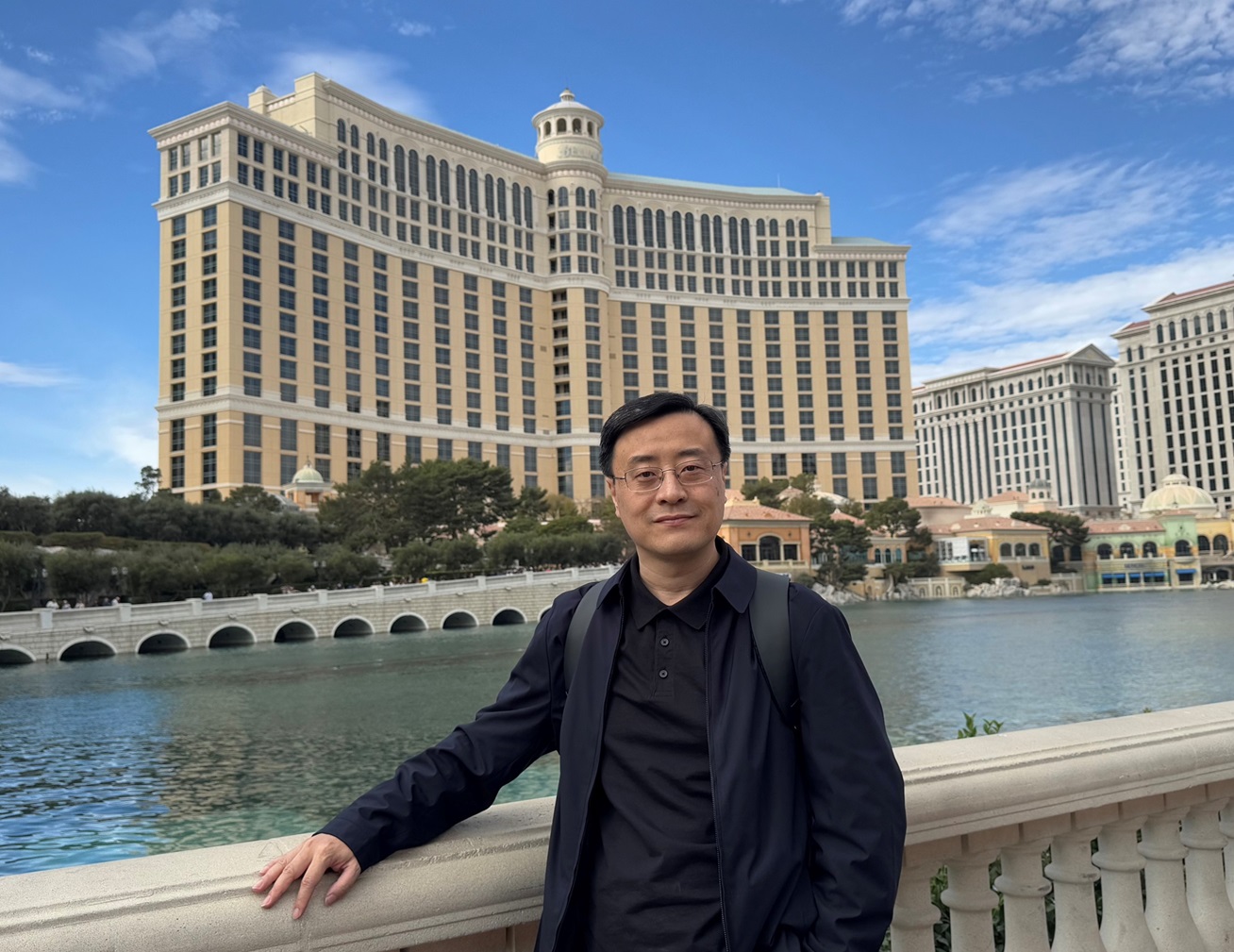
Lu Su is an Associate Professor at the School of Electrical and Computer Engineering , Purdue University , with prior appointments at SUNY Buffalo . His research spans Internet of Things , cyber-physical systems , mmWave sensing , and crowd-sourced data validation , focusing on quality-of-information aware distributed sensing and security in autonomous systems . Ph.D. in Computer Science (2013) and M.S. in Statistics (2012) from University of Illinois at Urbana-Champaign M.E. and B.E. from Harbin Institute of Technology Research Interests: IoT , cyber-physical systems , crowd sensing , security and privacy , and machine learning for sensor networks. His work addresses quality-aware information integration , adversarial attacks in autonomous vehicles , and privacy-preserving crowd-sourced systems . Recent publications focus on mmWave-based sensing (e.g., 3D pose reconstruction), federated learning (driver monitoring), and data poisoning attacks in crowd-sourced systems. His research also extends to traffic optimization and human activity recognition using wireless networks. Professional Roles: Workshop Chair (INFOCOM 2023, 2022) TPC Vice Chair (INFOCOM 2021) Program Committee Member for top conferences Editorial Board, ACM Transactions on Sensor Networks Teaching: Courses on Embedded Systems , Internet of Things , and Network Concepts at both undergraduate and graduate levels.
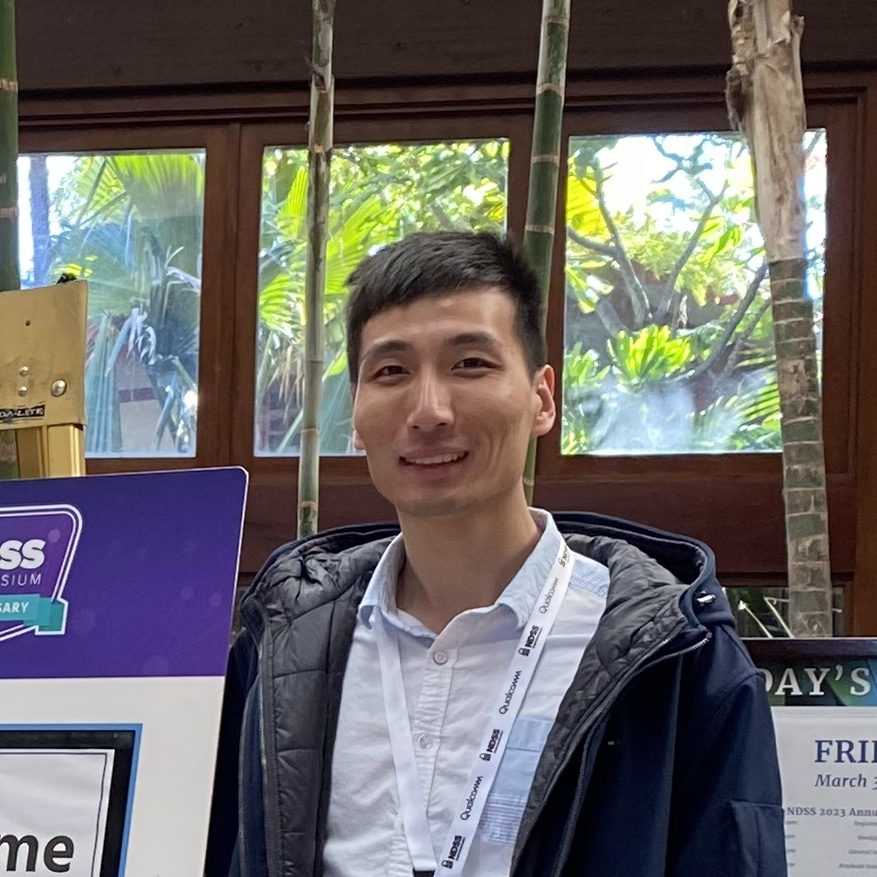
Guanhong Tao is an Assistant Professor at the Kahlert School of Computing, University of Utah. His research focuses on the security and safety of AI-enabled systems, particularly addressing adversarial attacks on machine learning models and large language models (LLMs). He has received notable awards, including the NVIDIA Academic Grant Award (2025) and the Maurice H. Halstead Memorial Award (2023). Educational Background: He earned his Ph.D. in Computer Science from Purdue University under Dr. Xiangyu Zhang’s supervision. His work spans adversarial generative AI, LLM agent security, and machine learning for security applications. Research Interests: Tao’s research emphasizes securing AI systems against adversarial threats, including backdoor attacks, alignment loss in LLMs, and privacy-preserving techniques. His projects have been published in top venues like IEEE S&P, USENIX Security, and NeurIPS. Recent Contributions: Key publications include 'Alleviating the Fear of Losing Alignment in LLM Fine-tuning' (S&P 2025) and 'BAIT: Large Language Model Backdoor Scanning' (S&P 2025). His work often bridges cybersecurity and machine learning, addressing real-world vulnerabilities in AI systems. Grants & Awards: In addition to his NVIDIA grant, Tao has received the ACM SIGPLAN Distinguished Paper Award (2019) and multiple best-paper recognitions. His research is funded by leading industry and academic partnerships. Advising & Teaching: He advises students like Shih-Chieh Dai and co-advises Kang Yang (with Dr. Jun Xu). He teaches courses such as 'Machine Learning Security' at the University of Utah and has guest-lectured at institutions like Purdue and Rutgers. Professional Service: Tao serves on program committees for top conferences, including IEEE S&P, ACM CCS, NeurIPS, and CVPR. He chairs workshops like BANDS (ICLR) and AISCC (NDSS), fostering collaborative research in AI security.
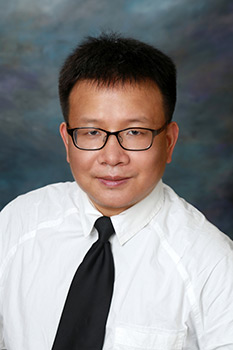
Jiannan Wang is an Associate Professor in the School of Computing Science at Simon Fraser University (SFU). He holds a Ph.D. from Tsinghua University (2013) and a B.Sc. from Harbin Institute of Technology (2008). His research focuses on database systems, data management, and data science, with particular emphasis on data cleaning, crowdsourcing, and big data technologies. He leads the SFU Data Science Research Group, aiming to accelerate data science workflows through innovative tools like DataPrep and ConnectorX. Education: Ph.D. in Computer Science and Technology, Tsinghua University, China (2013) B.Sc. in Computer Science and Technology, Harbin Institute of Technology, China (2008) Research Interests: Dr. Wang's work spans database systems, data cleaning, crowdsourcing, and big data education. He develops open-source tools for data scientists to streamline data preparation and analysis. His lab's mission is to make data science more efficient through technologies like DataPrep and ConnectorX . Awards: IEEE TCDE Rising Star Award (2018) CS-Can|Info-Can Outstanding Early Career Researcher Award (2020) VLDB Best Experiments, Analysis & Benchmark Paper Award (2021) PVLDB Distinguished Review Board Member Award (2020) Advising & Leadership: Director of SFU's Professional Master's Program in Big Data and Visual Computing. Supervised over 20 graduate and undergraduate students, many of whom have gone on to roles at top companies like Google, Amazon, and Huawei. Lab & Teams: Part of the SFU Data Science Research Group and the SFU Big Data Academic Advisory Committee. His lab collaborates with industry partners and contributes to open-source projects in data management and machine learning.
Rongxing Lu is an Adjunct Professor at the Faculty of Computer Science, University of New Brunswick (UNB), Canada, since August 2016. Previously, he held positions at Nanyang Technological University (NTU), Singapore (2012–2016) and the University of Waterloo, Canada (PhD in 2012). His research focuses on applied cryptography, privacy enhancing technologies, and IoT-big data security. He has over 7,500 citations and received prestigious awards like the Governor General’s Gold Medal (2012) and the IEEE ComSoc Asia Pacific Outstanding Young Researcher Award (2013). He is an IEEE senior member and serves on editorial boards of journals like IEEE Network. **Education**: PhD in Electrical & Computer Engineering, University of Waterloo (2012), awarded Governor General’s Gold Medal Postdoctoral Fellow at University of Waterloo (2012–2013) **Research Interests**: Developing cryptographic protocols for IoT and big data systems Privacy-preserving techniques for distributed systems Secure communication in 5G/6G networks and vehicular systems **Awards and Recognition**: Recipient of multiple best paper awards in IEEE conferences 2016–2017 Excellence in Teaching Award at UNB **Editorial and Leadership Roles**: Symposium co-chair at IEEE Globecom’16 Secretary of IEEE ComSoc CIS-TC Organized special issues on fog computing security (Elsevier) and big data security (IEEE IoT Journal) **Key Contributions**: Pioneered privacy-aware data reporting schemes for vehicular networks Designed lightweight IoT authentication protocols Advanced secure machine learning frameworks with privacy guarantees
Chun Ouyang is a Professor at Queensland University of Technology (QUT) in the School of Computer Science within the Faculty of Science. With an extensive publication record spanning over two decades from 2002 to 2025, Professor Ouyang has established themselves as a leading researcher in Business Process Management, Process Mining, and Explainable AI. Their work bridges theoretical foundations with practical applications across healthcare, finance, and industrial sectors. Professor Ouyang's research interests primarily focus on Business Process Management systems, Process Mining techniques, Explainable Artificial Intelligence, and Healthcare Process Analysis. Their work has evolved from foundational BPMN/BPEL translation research in the early 2000s to sophisticated process mining approaches in the 2010s, and most recently to cutting-edge Explainable AI applications in clinical and business contexts. They have developed novel methodologies for process querying, predictive process analytics, and XAI evaluation frameworks that have significantly advanced the field. Their research consistently emphasizes practical applicability while maintaining strong theoretical foundations, with publications in top-tier journals and conferences including IEEE Transactions, Springer journals, and major BPM conferences. Analysis of Professor Ouyang's recent publications (2023-2025) reveals a strategic research trajectory that integrates traditional process mining with modern AI techniques, particularly focusing on explainability and trustworthiness. Their work demonstrates a consistent pattern of addressing real-world challenges through rigorous methodological development, with increasing emphasis on healthcare applications, clinical decision support systems, and the ethical implications of AI deployment. The publications show strong interdisciplinary collaboration patterns, particularly with medical researchers and industry partners. Professor Ouyang has mentored numerous PhD students and early-career researchers who have gone on to establish themselves in the BPM and AI communities. Their research group at QUT has secured multiple competitive grants supporting innovative work in process analytics and AI. They maintain active collaborations with leading researchers globally, including Catarina Pinto Moreira, Arthur ter Hofstede, and Moe Wynn. Professor Ouyang leads the Process Analytics Research Group at QUT, which focuses on developing advanced techniques for business process analysis, prediction, and optimization. The group maintains strong industry connections with healthcare providers, financial institutions, and government agencies, ensuring their research has practical impact. Current projects include developing trustworthy AI systems for clinical decision support, cross-organizational process analysis frameworks, and next-generation process mining techniques for complex, distributed systems.
Ana Filipa Sequeira is a researcher affiliated with INESC TEC, Porto, Portugal, and the University of Porto. Her work spans biometrics, fairness in AI, and explainable artificial intelligence. She has contributed to advancements in face recognition, synthetic data applications, and bias mitigation through techniques like knowledge distillation and model compression. Institution: INESC TEC (Porto, Portugal) Research Themes: Face recognition, fairness, explainability, synthetic data, biometric security Her recent publications focus on addressing demographic biases in face recognition systems, developing privacy-preserving explainable methods, and evaluating synthetic data's impact. She collaborates extensively with researchers like Pedro C. Neto, Jaime S. Cardoso, and Naser Damer. Sequeira has participated in organizing and analyzing competitions such as FRCSyn, BIOSIG, and SYN-MAD, emphasizing robust evaluation frameworks. Her work intersects technical innovation with ethical considerations, advocating for responsible AI applications in biometrics.
Andreas Ekelhart is a Researcher at TU Wien's Department of Information and Software Engineering. His work focuses on cybersecurity, cyber-physical systems, and industrial control systems. He specializes in developing frameworks like SLOGERT for automated log analysis and Kyrstal for attack discovery using knowledge graphs. His research also explores digital twin technology for threat detection and semantic web applications in machine learning systems. Key contributions include the VloGraph framework for distributed security log analysis and the QualSec approach for automated security risk identification in production systems. He collaborates on standards like AutomationML and emphasizes privacy-preserving data analysis through semantic architectures.
Prof. Dr. Enkelejda Kasneci is a Distinguished Professor at the Technical University of Munich (TUM), leading the Chair of Human-Centered Technologies for Learning. She holds dual affiliations within TUM School of Social Sciences and Technology and TUM School of Computation, Information and Technology. Her research integrates AI, eye-tracking, and immersive technologies to advance educational paradigms. She directs the TUM Center for Educational Technologies and chairs the MSc program 'AI in Society.' Education: PhD in Computer Science from University of Tübingen (2013), M.Sc. from University of Stuttgart (2007). Earlier roles include Assistant Professor and Dean of Studies at University of Tübingen. Research Focus: Human-centered AI applications in education, multimodal interaction design, and privacy-preserving eye-tracking. Her work bridges technology and pedagogy through projects like AI tutor PEER, VR Classroom, and Privacy-Preserving Eye-tracking. Key Projects: Leads EU-funded projects VIVA (€1.125M), DigiProMIN (€163K), and SARA Kids (€244.8K). Active in policy initiatives like Europe’s AI Imperative. Awards: TUM Heinz Maier-Leibnitz Medal (2024), Liesel Beckmann Distinguished Professorship (2022), and Südwestmetall Research Prize (2014). Grants & Advising: Over €5M in secured funding across 12+ projects. Supervises 14+ PhD researchers and mentors postdocs in AI education and HCI. Labs & Teams: IT-Stiftung EdTech Lab houses advanced VR/eye-tracking setups. Research group includes 20+ members spanning AI, HCI, and educational technology.
Ke Li is an Assistant Professor at Simon Fraser University (SFU) in Vancouver, Canada. He previously worked at Google and the Institute for Advanced Study (IAS) in Princeton. He holds a Ph.D. from UC Berkeley, advised by Jitendra Malik, and a B.Sc. in Computer Science from the University of Toronto. His research focuses on machine learning, computer vision, and algorithms, with contributions to generative modeling, neural rendering, fast nearest neighbor search, and meta-learning. Education: Ph.D. in Computer Science, UC Berkeley (2016) B.Sc. in Computer Science, University of Toronto (2008) Research Interests: Dr. Li explores foundational challenges in machine learning, including: - Generative Modeling : Developing methods like Implicit Maximum Likelihood Estimation (IMLE) to improve generative model training. - Neural Rendering : Innovating techniques like Proximity Attention Point Rendering (PAPR) for dynamic 3D scene representation. - Fast Nearest Neighbor Search : Pioneering algorithms to overcome dimensionality curses. - Learning to Optimize : Automating algorithm design through reinforcement learning. Professional Activities: Organized the IAS Seminar Series on Theoretical Machine Learning with Sanjeev Arora Lead organizer of the BIRS Workshop on 3D Generative Models Reviewer for NeurIPS, ICML, CVPR, and other top conferences Teaching: Recently taught CMPT 726: Machine Learning and CMPT 983: Generative Models at SFU.
Aidong Zhang is the Thomas M. Linville Professor of Computer Science at the University of Virginia, with joint appointments in Biomedical Engineering and the School of Data Science. Her research focuses on machine learning, interpretable AI, federated learning, and generative AI applications in healthcare and bioinformatics. She holds a Ph.D. in Computer Science from Purdue University. Dr. Zhang has been honored with prestigious awards including the ACM Fellow (2017), IEEE Fellow (2009), and the 2025 Distinguished Researcher Award from UVA. Her work bridges computational methods with biomedical challenges, emphasizing fairness, robustness, and explainability in AI systems. Key research areas include federated learning frameworks, concept-based models, and large language models for scientific hypothesis generation. Dr. Zhang leads a lab offering PhD positions in machine learning, bioinformatics, and health informatics. Notable grants include NSF projects on explainable AI platforms and hardware-software co-design for extreme-scale machine learning. Education: Ph.D., Computer Science, Purdue University Affiliations: School of Engineering and Applied Science, School of Data Science Grants: NSF-funded projects on federated learning, multimodal analysis, and biomedical AI Labs/Teams: Zhang's Research Group focusing on interpretable machine learning and healthcare applications
Chris Volinsky is a Clinical Professor of Technology, Operations, and Statistics at the Leonard N. Stern School of Business, New York University, joining in September 2023. His work bridges industry-scale data science and academic research, focusing on practical applications of machine learning and statistical modeling in business contexts. Education: PhD in Statistics, University of Washington BA in Statistics and Mathematics, University of Buffalo His research interests lie at the intersection of data science and business operations, with a focus on recommender systems , personalization , social network analysis , and mitigating bias in machine learning models . He also emphasizes data visualization and the ethical implications of data usage, particularly in balancing innovation with privacy concerns and regulatory compliance. While no specific publications are listed in the provided text, his career has been defined by high-impact, real-world applications of data science, particularly in telecommunications and entertainment industries. Scientific Awards: $1M Netflix Prize (2009) as member of BellKor's Pragmatic Chaos team Volinsky has extensive experience in advising and leading data science teams. He led a team of 40 data scientists at AT&T, where he oversaw projects with significant business impact, including fraud detection, customer complaint prediction, and computer vision applications. Although formal student advising is not detailed, his leadership roles imply substantial mentorship and team development. He has not disclosed specific grants, but his work at AT&T and NYU suggests engagement with large-scale, industry-funded research initiatives. He was instrumental in pioneering work on large-scale recommender systems and continues to contribute to the evolution of data-driven decision-making in enterprise settings.
Robert J.K. Jacob is a Professor of Computer Science at Tufts University, affiliated with the School of Engineering's Department of Computer Science. His research focuses on Human-Computer Interaction (HCI), particularly implicit brain-computer interfaces (BCI) using fNIRS and EEG technologies. He has held visiting positions at University College London, Université Paris-Sud, and MIT Media Lab. Education: Ph.D. in Computer Science from Johns Hopkins University. Research Interests : Jacob's work explores novel interaction techniques, adaptive interfaces, and BCI applications. Current projects emphasize real-time fNIRS-based systems for effortless user input, cognitive workload assessment, and neuroadaptive technologies. His lab investigates how brain signals can enhance user interfaces in domains like music learning, gaming, and urban design. Recent Trends in Articles : Recent publications highlight advancements in BCI design, neuroadaptive systems, and interdisciplinary applications of fNIRS. Work spans theoretical frameworks (e.g., NeuroCHI ethics) to practical tools like the Tufts fNIRS dataset. Key themes include improving BCI calibration, exploring AI's role in urban environments, and integrating affective computing into artistic interfaces. Awards : ACM Fellow (2016) ACM CHI Academy Membership (2007) Best Paper Award at CHI 2016 Advising & Grants : Supervised 15+ Ph.D. alumni in HCI and BCI. Served as Vice-President of ACM SIGCHI and co-chair of UIST/CHI conferences. Active in editorial roles for Human-Computer Interaction and ACM Transactions on Computer-Human Interaction . Labs & Teams : Directs the Tufts HCI Lab in the Joyce Cummings Center. Collaborates with interdisciplinary teams on projects like the Marble Track Audio Manipulator and Reality-Based Interaction Framework.
Vinod Vaikuntanathan is the Ford Foundation Professor of Engineering in the MIT EECS department and a principal investigator at MIT CSAIL. He holds a BTech from IIT Madras (2003), and SM/PhD degrees from MIT (2005/2009). His research focuses on cryptography, particularly fully homomorphic encryption (FHE), lattice-based cryptography, and quantum-resistant systems. He co-founded Duality Technologies as Chief Cryptographer. **Education:** BTech in Computer Science (2003), Indian Institute of Technology Madras SM in Electrical Engineering & Computer Science (2005), MIT PhD in Computer Science (2009), MIT **Research Interests:** His work spans FHE (enabling computations on encrypted data), lattice-based cryptography (post-quantum security), and intersections with quantum computing, machine learning, and privacy. He explores applications in secure computation, algorithm design, and cryptographic protocols. **Awards:** Recipient of the Gödel Prize (2022), Simons Investigator (2023), and MacVicar Faculty Fellow (2024). His work on FHE and lattice algorithms has earned widespread acclaim in cryptography and theoretical computer science. **Teaching & Mentorship:** Advanced cryptography courses at MIT (e.g., 6.5630, 6.876J) Advised PhD students (e.g., Sergey Gorbunov, Tianren Liu) and postdocs (e.g., Nir Bitansky, Mark Zhandry) now leading positions in academia and industry **Collaborations:** Organizer of the Charles River Crypto Day and MIT Cryptography Seminar Principal investigator on grants from NSF, DARPA, and Microsoft
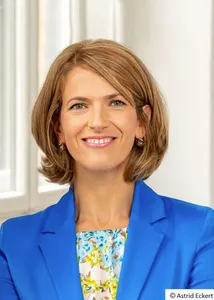
Lokke Moerel is a Full Professor of Global ICT Law at Tilburg University and Senior Counsel at Morrison & Foerster, specializing in data protection and cybersecurity. She leads the EU-wide binding data protection rules initiative since 2004 and chairs the Dutch Cyber Security Council. Her work integrates legal frameworks with technological advancements, focusing on GDPR compliance, corporate governance, and ethical challenges in digital transformation. Education & Career: Started career at De Brauw Blackstone Westbroek (IP specialist for IBM/Philips/Intel, 1990s) Partner at Linklaters London (2000–2002), managing global licensing and IT contracts Joined Morrison & Foerster as Senior Counsel in 2015, focusing on privacy and cybersecurity Research Interests: Data protection law, blockchain privacy, AI ethics, metaverse regulations, and corporate governance in digital environments. Her work critically evaluates existing frameworks for emerging technologies, advocating for adaptive legal solutions. Recent Contributions: Active in projects like THESEUS (cybersecurity patching) and "Regulating Socio-Technical Change" (EU law & digital innovation). Publicly engaged through media commentaries on data dilemmas and GDPR challenges. Awards & Recognition: Market-leading data protection lawyer per Chambers Global and Legal 500 Author of the seminal textbook Binding Corporate Rules (Oxford UP, 2012) Advisory Roles: Member of the Dutch Cyber Security Council, Board of Advisors for the Netherlands Atlantic Association, and supervisory board member of Mauritshuis Museum.
Prof. Michael Weyrich is a faculty member at the Institute of Industrial Automation and Software Engineering (IAS) within the University of Stuttgart , leading the Cluster of Excellence IntCDC . His academic rank is Professor, and he focuses on Industrial Automation , Digital Twins , and Large Language Models (LLMs) for manufacturing and automotive systems. His research explores integrating LLMs into industrial automation for adaptive control, cloud offloading of vehicle functions, and semantic interoperability via Asset Administration Shells . He investigates modular production architectures , connected vehicle systems , and synthetic data generation for autonomous machinery. Recent publications highlight LLM-driven production planning , dynamic sensor calibration , and machine learning for fault detection in electric vehicle powertrains. His work emphasizes real-time data modeling and flexible microservice orchestration .