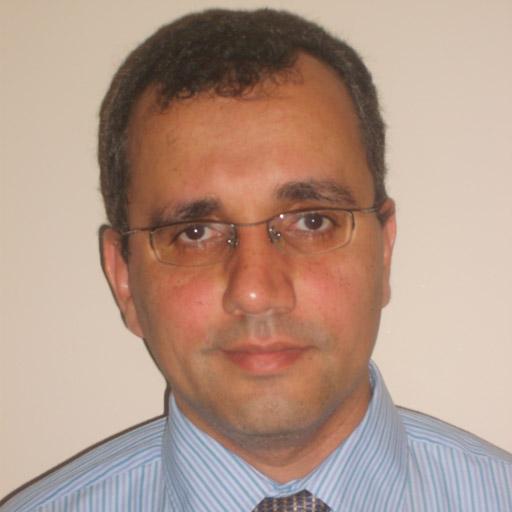
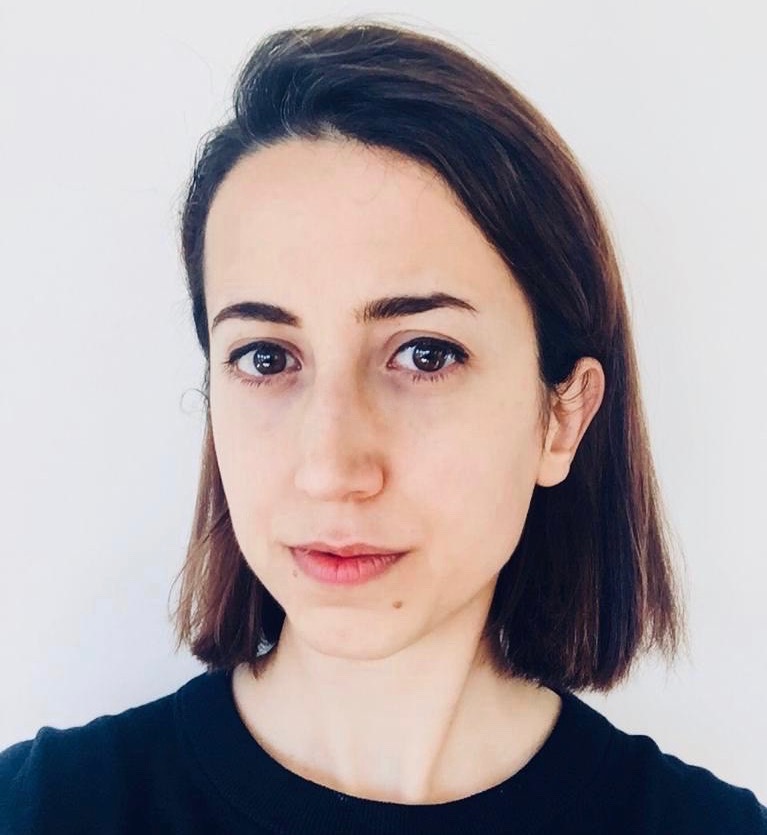
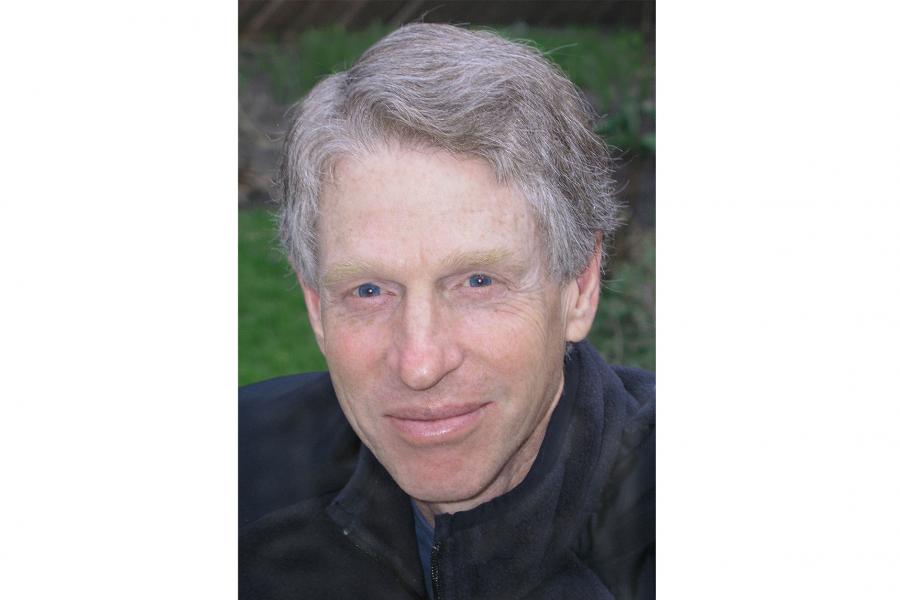
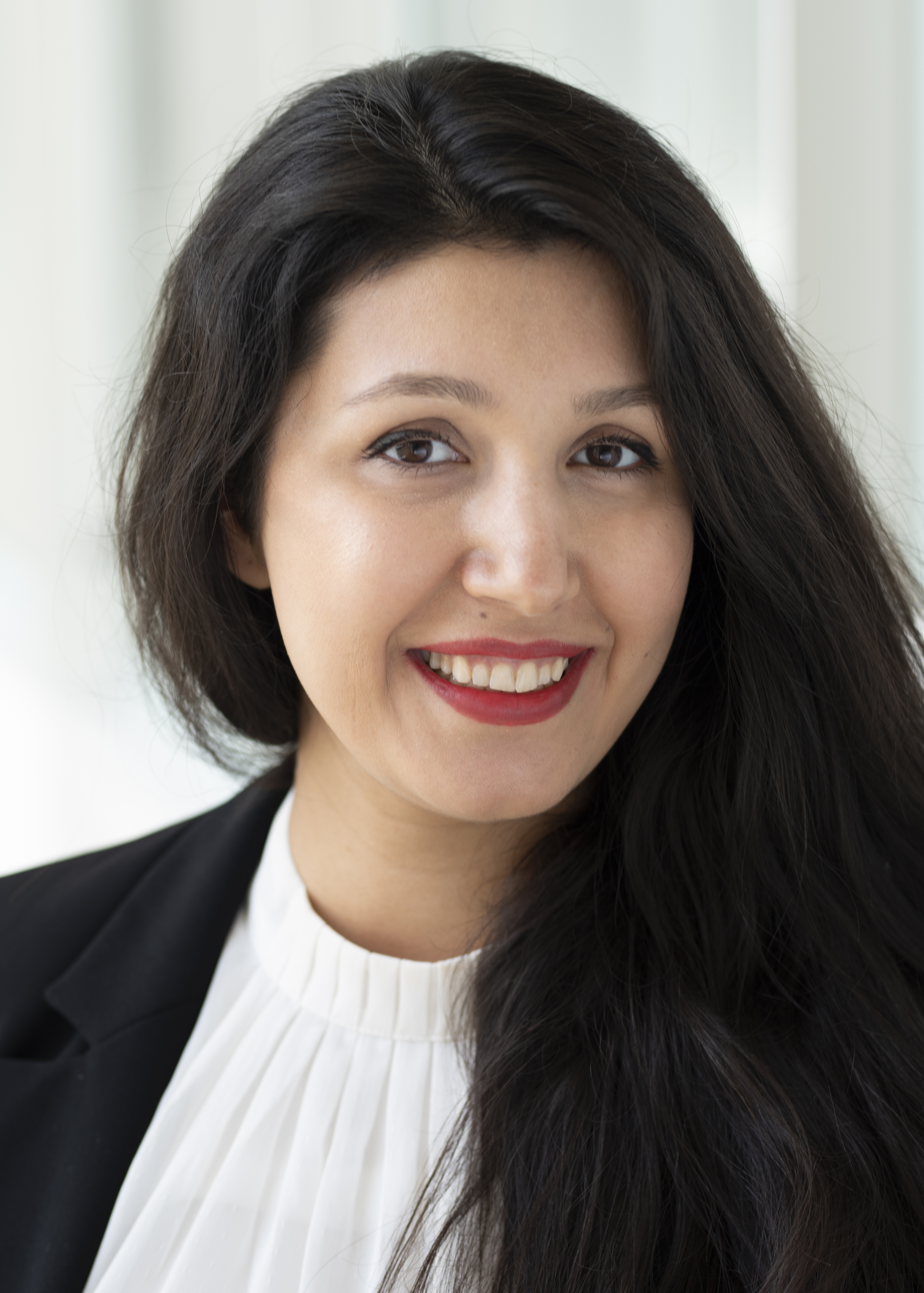
Ian Goldberg is a Professor at the Cheriton School of Computer Science , University of Waterloo, Canada. He holds the Canada Research Chair in Privacy Enhancing Technologies and leads the Cryptography, Security, and Privacy (CrySP) group . He is affiliated with the Cybersecurity and Privacy Institute and the Institute for Quantum Computing . Research Focus: Security, privacy, and privacy-enhancing technologies (PETs) for the Internet, including Off-the-Record (OTR) Messaging , censorship resistance , private information retrieval , and zero-knowledge proofs . Recent Publications: His work addresses metadata protection , deniable authentication , and secure multi-party computation , with applications to anonymous communication and censorship resistance. Scientific Awards: Canada Research Chair in Privacy Enhancing Technologies Students: He advises current and former PhD/Master’s students in projects like Lox , PRSONA , Walkie-Talkie , and SkypeMorph . Notable advisees include Sajin Sasy (Privacy-Preserving Communications), Justin Tracey (PETs Development), and Tao Wang (Website Fingerprinting Defenses). Labs & Teams: Goldberg is a core member of the CrySP group and contributes to the Tor Project and Off-the-Record Messaging open-source initiatives. His research bridges theoretical and applied cryptography, with deployments in real-world systems like Tor and PIR protocols.
Amr Youssef is a Professor at the Concordia Institute for Information Systems Engineering, Concordia University. His research focuses on applied cryptography, network security, cyber-physical systems security, blockchain, and privacy. He has contributed extensively to securing smart grids, IoT devices, and web applications through cryptographic protocols and machine learning-driven solutions. His work addresses critical challenges in cybersecurity, including e-voting systems, fault-tolerant differential protection, and privacy-preserving communication protocols. He explores vulnerabilities in modern systems such as SSO permissions, JavaScript exploits, and stalkerware tools, while developing frameworks like MEGR-APT for APT detection and TEE-Receipt for non-repudiation. Youssef’s research integrates interdisciplinary approaches, combining cryptography with AI (e.g., vision transformers for power quality analysis) and leveraging trusted execution environments (TEE) for secure computing. His projects often involve collaboration with industrial standards (e.g., IEC 61850), emphasizing practical implementations in real-world systems.
Dr. Mi Jung Park is an Assistant Professor in the Department of Computer Science at the University of British Columbia (UBC), part of the Faculty of Science. She is also a Canada CIFAR AI Chair at the Amii. Her research focuses on privacy-preserving machine learning, particularly differential privacy, synthetic data generation, and their applications in healthcare. She holds a PhD in Electrical and Computer Engineering from the University of Texas at Austin, supervised by Dr. Jonathan Pillow, and has held postdoctoral positions at the University of Amsterdam and University College London. Education : PhD, Electrical and Computer Engineering, University of Texas at Austin (2016) Master's, Electrical and Computer Engineering, University of Texas at Austin (2012) Bachelor's, Electrical and Computer Engineering, Hanyang University, Seoul, South Korea (2009) Research Interests : Her lab develops methods to balance privacy and accuracy in data analysis, emphasizing differential privacy's role in healthcare. Key areas include: Generating synthetic data with privacy guarantees Integrating fairness, interpretability, and causality into privacy-preserving models Bayesian techniques for model compression and uncertainty estimation Recent Work Trends : Her publications explore differential privacy in generative models (e.g., diffusion models, kernel methods) and neural network pruning. Recent work highlights privacy-preserving techniques for image classification, latent diffusion, and perceptual feature integration. Awards : Canada CIFAR AI Chair (2021). Advising & Grants : Supervises postdocs (e.g., Mingyu Kim), master's students (e.g., Amman Yusuf), and PhD candidates (e.g., Margarita Vinaroz). Her research is supported by the CIFAR AI Chair program and collaborations with institutions like the Max Planck Institute for Intelligent Systems. Labs & Teams : Leads the Privacy-Preserving Machine Learning Lab at UBC, advancing technologies to protect sensitive healthcare data while enabling clinical and research use.
Florian Kerschbaum is a Professor and NSERC/RBC Industrial Research Chair in Data Security at the Cheriton School of Computer Science, University of Waterloo. His research focuses on data security and privacy, applied cryptography, and confidentiality in data science. Research interests span data collection/preparation management, secure multi-party computation, homomorphic encryption, differential privacy, and machine learning robustness/privacy. His work develops cryptographic solutions for practical data management challenges in distributed systems.
Anwar Hithnawi is an Assistant Professor of Computer Science at the University of Toronto, where he leads the Privacy Preserving Systems Lab (PPS Lab). His research focuses on data privacy, applied cryptography, and secure systems, with emphasis on privacy-preserving machine learning, federated learning, and encrypted data processing. He holds a Ph.D. in Computer Science from ETH Zurich and was a postdoctoral researcher at UC Berkeley. Previously, he served as an Ambizione Fellow and research group leader at ETH Zurich. Research Interests: Data Privacy & Security Applied Cryptography (Homomorphic Encryption, Zero-Knowledge Proofs) Privacy-Preserving Systems (Federated Learning, Secure Analytics) IoT Security & Privacy Secure Collaborative Learning Awards: Google Research Award SNF Ambizione Grant ETH Medal for Outstanding Master Thesis (student Lukas Burkhalter) Microsoft Research Ph.D. Award (student Lukas Burkhalter) Lab Activities: The PPS Lab develops systems for privacy-preserving computation, secure collaborative learning, and encrypted data stream processing. Notable projects include Zeph, HECO, and Cohere. Recent achievements include acceptance of DPolicy at IEEE S&P 2025 and RoFL at Oakland 2023.
Dr. Mohammad Zulkernine is a Full Professor and Canada Research Chair in Cyber-Physical System Security at Queen’s University’s School of Computing (Faculty of Arts and Science). He leads the Queen’s Reliable Software Technology (QRST) research group and directs the Queen’s Centre for Security & Privacy. His research focuses on secure software systems for cyber-physical systems, including autonomous vehicles, IoT, and cloud computing. Dr. Zulkernine holds a cross-appointment in Electrical and Computer Engineering and is a licensed Professional Engineer in Ontario. Education: BSc (Bangladesh BUET), MEng (Japan), PhD (University of Waterloo). He joined Queen’s in 2003 and has held sabbaticals at University of Trento, Italy and Irdeto Canada. He has published over 250 papers, led 35+ research projects, and supervised 120+ students. Awards include Canada Research Chairs (Tier I and II), Queen’s Excellence in Graduate Supervision Award, and Distinguished Supervision Award from the School of Computing. Research Interests: Cyber-Physical System Security, Software Reliability, IoT Security, Vehicle Networks, Secure Software Engineering, and Cybersecurity Risk Assessment. Active industry collaborations include EU-funded projects and Canada-Africa initiatives.
Dr. Euijin (Alley) Choo is an Assistant Professor in the Department of Computer Science at the University of Alberta, specializing in data-driven cybersecurity and big data analytics. Her research focuses on AI-based cybersecurity solutions, anomaly detection in network traffic, and adversarial attacks on federated learning systems. She holds a Ph.D. from North Carolina State University and has held roles at Qatar Computing Research Institute, Korea University, and the University of Missouri-Rolla. Education: Ph.D., Computer Science, North Carolina State University (2015) M.S., Computer Science & Engineering, Korea University (2008) B.S. Dual Degree in Computer Science & Mathematics, Korea University (2006) Research Interests: Security and big data analysis intersections Federated learning security and privacy Anomaly detection in network logs and enterprise systems Malware/phishing detection using graph inference AI-driven threat intelligence aggregation Recent Grants: Mitacs Accelerate Program Grant: Fraud Detection in Financial Graphs ($60,000, 2025) National CyberSecurity Consortium Grant: IntruderInsight ($2M, 2025-2027) NSERC Discovery Grant: Threat Detection Framework ($180,000, 2025-2031) Awards: Best Paper Award at DBSEC 2015 NSERC Early Career Researcher Award (2025) Provost Fellowship (NC State, 2009-2010) Labs/Teams: Leads the Data-driven Network and Cyber Security (DANS) Lab, focusing on federated learning defenses, compromised entity detection, and malicious domain analysis.
Teresa Scassa is a Full Professor in the Common Law Section of the University of Ottawa's Faculty of Law and holds the Canada Research Chair in Information Law and Policy. She is affiliated with the Centre for Law, Technology and Society and cross-appointed to the School of Information Studies. Dr. Scassa earned her LL.B. from McGill University and LL.M. and SJD from the University of Michigan. Her research focuses on law and technology intersections, including AI regulation, data governance, privacy law, and intellectual property. She has authored influential books like Artificial Intelligence and the Law in Canada and Canadian Trademark Law . Scassa advises Canadian government bodies, including the Advisory Council on Artificial Intelligence and Ontario’s Law Commission. She has contributed to privacy law debates through high-profile cases like Clearview AI litigation and public sector data governance challenges. Her work bridges legal frameworks with emerging technologies, emphasizing interdisciplinary approaches. Recent publications address facial recognition surveillance, data privacy enforcement, and ethical challenges in AI. Scassa’s academic leadership includes roles on data policy working groups and international collaborations, reflecting her role as a leading voice in information law policy.
Lawrence Goodridge is a Professor and Director of the Canadian Research Institute for Food Safety (CRIFS) at the University of Guelph's Ontario Agricultural College. He holds the Leung Family Professorship in Food Safety and leads research at the intersection of food safety, antibiotic resistance, and One Health principles. His work focuses on applying genomic technologies to study foodborne pathogens (E. coli, Salmonella, Listeria, Cronobacter) and leveraging wastewater surveillance for infectious disease outbreak prediction. Academic History: BSc Microbiology (University of Guelph, 1995), MSc Food Microbiology (2003), PhD Food Microbiology (2002), followed by post-doctoral training in Food Safety at the University of Georgia (2002). Joined CRIFS in 2003. Research Interests: Genomic analysis of pathogen emergence, wastewater-based epidemiology, bacteriophage applications, and consumer education strategies for food safety. His lab develops innovative methods for rapid pathogen detection in food systems and environmental samples. Articles Trends: Over 100 peer-reviewed publications emphasize genomic surveillance of foodborne pathogens and SARS-CoV-2, with a focus on wastewater sampling innovations. Recent work explores multi-modal data integration for public health forecasting and ethical data protection frameworks for surveillance programs. Awards: While no specific prizes are listed, his $50M+ research funding from Canadian/international sources underscores recognition of his impactful work. Grants support projects like phage-based sanitization and antimicrobial resistance tracking. Advising & Labs: Leads CRIFS laboratory operations and collaborates globally on food safety initiatives. His research has informed food industry guidelines and policy frameworks for mitigating pathogen risks in agricultural and environmental systems.
David Lie is a Professor at the University of Toronto, jointly appointed in the Edward S. Rogers Department of Electrical and Computer Engineering, Department of Computer Science, and Faculty of Law. He directs the Schwartz Reisman Institute for Technology and Society, co-founded the IT3 Lab, and serves as Associate Director at the Data Sciences Institute. His research focuses on securing computer systems through operating systems, architecture, and formal verification approaches. B.A.Sc (University of Toronto, 1998) M.S. (Stanford, 2001) Ph.D. (Stanford, 2004) His research emphasizes building secure systems for mobile platforms and cloud computing, with significant contributions to trusted execution environments (XOM architecture precursor to Intel SGX/ARM TrustZone) and Android permission mapping (PScout tool). Recent work spans cryptographic side-channels, web tracking detection, and AI safety. Key honors include SOSP 2003 Best Paper, Ontario MRI Early Researcher Award (2008), Connaught Global Challenge Award (2017), and Canada Research Chairs (Tier 2 2013-2018, Tier 1 current). He has secured over $30M in research funding and served as General Chair for CCS 2018. Lie leads the IT3 Lab (Technology and Policy Integration), collaborates with industry leaders (Google, VMware, Telus), and mentors graduate students working on practical security implementations. He co-teaches ECE1724: Privacy Problems with Lisa Austin from the Faculty of Law, reflecting his technology-policy interests.
Dr. Xiaodong Lin is a Professor at the University of Guelph's School of Computer Science and an IEEE Fellow (2017) for contributions to secure vehicular communications. He leads the Blockchain Technology and Cybersecurity (BTC) lab, focusing on privacy-enhancing technologies, digital forensics, wireless network security, blockchain applications, and DeFi security. PhD, Beijing University of Posts and Telecommunications, China PhD, University of Waterloo, Canada His research bridges theoretical and applied domains in cybersecurity, particularly vehicular networks, smart grids, and decentralized systems. Recent work examines blockchain security, privacy-preserving protocols for IoT, and secure data aggregation in wireless networks. Key publication trends include secure fog computing for vehicular crowdsensing, privacy-preserving authentication in 5G, and cryptographic solutions for smart grids. Awards highlight multiple Best Paper recognitions at IEEE conferences. IEEE Fellow (2017) Best Paper Awards (IEEE INFOCOM 2018, GLOBECOM 2017, SECURECOMM 2016) Dr. Lin supervises graduate students in blockchain security, AI security, and digital forensics. His lab provides financial support to qualified students.
Arthur Schafer is a Full Professor in the Department of Philosophy at the University of Manitoba's Faculty of Arts and Founding Director of the Centre for Professional and Applied Ethics. He serves as a National Research Associate of the Canadian Centre for Policy Alternatives and previously held roles as ethics consultant for the Winnipeg Regional Health Authority and Head of the Section of Bio-Medical Ethics in the Faculty of Medicine. His academic credentials include a BLitt in Philosophy from the University of Oxford (1967) and a BA Honours from the University of Manitoba. His distinguished career spans over five decades of ethical scholarship and public engagement. Professor Schafer specializes in professional and applied ethics with intensive focus on bioethics , research ethics , and biomedical conflicts of interest . His work critically examines medical assistance in dying , informed consent , clinical trial ethics , and human rights frameworks , establishing him as a leading voice in Canadian ethical discourse. His philosophical approach bridges theoretical rigor with practical policy applications across multiple professional domains. Analysis of his 13 most recent publications reveals enduring engagement with evolving ethical challenges, particularly the tension between institutional interests and professional integrity. His scholarship demonstrates consistent progression from foundational ethical theory toward contemporary policy applications, with recent work heavily concentrated on medical assistance in dying and pharmaceutical industry influence in healthcare systems. His scientific recognition includes: D. R. Campbell Outreach Award (1984) Olive Beatrice Stanton Award for Excellence in Teaching (1976) Canadian Commonwealth Scholarship (1964) Woodrow Wilson Fellowship (1964) Canada Council Fellow As an active supervisor for Master's and PhD students, Schafer extends his mentorship through ethics consulting for professional associations in Medicine, Engineering, Architecture, Nursing, and Pharmacy. His policy impact is evidenced by service on the Provincial-Territorial Expert Panel on Medical Assistance in Dying and two published reports for the Canadian Centre for Policy Alternatives. His extensive media contributions—including hundreds of CBC appearances and newspaper columns—demonstrate exceptional public scholarship. The Centre for Professional and Applied Ethics, which he founded, functions as a vital interdisciplinary hub connecting academic philosophy with real-world ethical challenges across healthcare, law, and public policy sectors, facilitating ongoing dialogue between scholars, practitioners, and community stakeholders.
Golnoosh Farnadi is an Assistant Professor at McGill University's School of Computer Science and an Adjunct Professor at the University of Montréal. She serves as a Visiting Faculty Researcher at Google, a Core Academic Member at MILA (Quebec Institute for Learning Algorithms), and holds a prestigious Canada CIFAR AI Chair. Farnadi co-directs McGill's Collaborative for AI & Society (McCAIS) and founded the EQUAL Lab (EQuity & EQuality Using AI and Learning algorithms), which focuses on advancing algorithmic fairness and responsible AI. Her educational background includes a Ph.D. in Computer Science from KU Leuven and Ghent University (2017), with postdoctoral research at the University of Montreal/MILA (2018-2020) and the University of California, Santa Cruz (2017-2018). During her doctoral studies, she was a visiting scholar at UCLA, University of Washington, Tsinghua University, and Microsoft Research. Dr. Farnadi's research centers on developing mathematical tools and algorithms for fairness-aware machine learning systems. Her work addresses bias and discrimination in AI decision-making across critical domains including healthcare, criminal justice, financial services, and social media. She has pioneered approaches to ensure fairness in deep learning models, particularly in sequential decision-making under uncertainty. Her research bridges theoretical foundations with practical applications, examining how AI systems can be designed to promote equity while maintaining performance. Analysis of her recent publications reveals a strong focus on practical implementations of fairness mechanisms across diverse AI applications. Her work spans technical domains from generative models and large language models to recommender systems and healthcare optimization. A unifying theme is the development of mathematically rigorous frameworks that balance performance with fairness considerations, with increasing attention to cultural diversity in multilingual AI systems and privacy-preserving fairness approaches. Google Scholar Award (2021) Facebook Research Award (2021) Rising Stars in AI Ethics (2021) Google Award for Inclusion Research (2023) WAI Responsible AI Leader of the Year Finalist (2023) 100 Brilliant Women in AI Ethics (2023) Canada CIFAR AI Chair Dr. Farnadi advises numerous doctoral and master's students across McGill University, University of Montréal, and MILA, with research focusing on fairness, privacy, and responsible AI. Her EQUAL Lab brings together researchers from computer science, social sciences, and policy domains to address systemic challenges in AI ethics. She has secured significant research funding from Google and other major organizations to support her work on fairness-aware AI systems, with applications spanning healthcare, social media safety, and public policy. The EQUAL Lab serves as a hub for interdisciplinary research on algorithmic fairness, bringing together computer scientists, social scientists, and policy experts. The lab's work spans theoretical foundations of fairness metrics, practical implementations in real-world systems, and policy recommendations for responsible AI deployment. Current projects include developing frameworks for fair kidney exchange programs, mitigating cultural stereotypes in multilingual language models, and creating privacy-preserving approaches for detecting online harms while protecting user data.
Anthony Niblett is a Professor and Canada Research Chair in Law, Economics, & Innovation at the University of Toronto Faculty of Law. He is an Affiliate Researcher with the Vector Institute for Artificial Intelligence and co-founder of Blue J, a startup leveraging AI for tax and legal professionals. Education: Ph.D. in Economics, Harvard University (2009) M.A. in Economics, Harvard University (2006) LL.B. (Honours), University of Melbourne (2003) B.Com. (Honours in Economics), University of Melbourne (2003) Bigelow Fellow, University of Chicago His research bridges artificial intelligence , innovation , and legal theory , with a focus on contract law , competition policy , and judicial behavior . He explores how machine learning transforms legal practice, regulatory frameworks, and judicial decisions. His work includes self-driving contracts , computational antitrust , and the personalization of law . Recent publications analyze AI’s role in legal disagreement , gender gaps in employment law , and computational merger reviews . His articles emphasize the intersection of technology , economics , and legal reform . Scientific Awards: Canada Research Chair in Law, Economics, & Innovation Bigelow Fellow, University of Chicago He serves as an Academic Advisor at the Future of Law Lab and contributes to Blue J , advancing AI applications in legal domains. His teaching includes Contract Law , Torts , and Economic Analysis of Law .
Noman Mohammed is an Associate Professor of Computer Science at the University of Manitoba’s Faculty of Science, leading the Data Security & Privacy (DSP) laboratory. He specializes in privacy-preserving techniques for data sharing, addressing challenges in healthcare, genomic, and financial data. In 2020, he received the Terry G. Falconer Memorial Rh Institute Foundation Emerging Researcher Award for his contributions to bridging privacy and data utility gaps. His research focuses on balancing data accessibility and individual privacy through technical solutions like federated learning, differential privacy, and secure genomic data processing. He emphasizes integrating policy guidelines with advanced technologies to mitigate privacy risks from interconnected data sources. Notable achievements include developing toolkits for data anonymization and federated learning frameworks, as well as advancing methods to secure cloud-based data storage and analysis. His work aligns with societal needs for robust privacy mechanisms in an era of expanding personal data collection. Future objectives involve addressing privacy challenges in emerging technologies, such as heterogeneous data integration and scalable systems for personal data management. Despite his research focus, he notably avoids social media platforms.