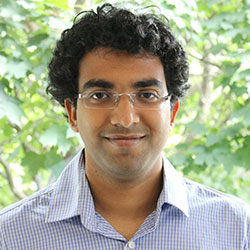
Dr. Volkan Dedeoglu is an active researcher at Queensland University of Technology (QUT), specializing in blockchain technology and IoT systems within the School of Computer Science. His work focuses on developing privacy-preserving frameworks and trust architectures for distributed systems. Research Focus: Blockchain applications in IoT and cyber-physical systems Privacy-preserving data sharing and threat intelligence Decentralized trust and reputation management Secure data aggregation and marketplace frameworks His recent work explores cutting-edge applications like CypherChain for privacy-preserving data aggregation in blockchain-based demand response programs and Priv-Share for differential privacy in cyber threat intelligence sharing. These publications demonstrate a consistent focus on bridging theoretical blockchain innovations with practical cybersecurity challenges in IoT ecosystems. Collaborative Research: Dr. Dedeoglu frequently collaborates with QUT colleagues including Raja Jurdak, Salil Kanhere, and Sidra Malik, indicating active participation in QUT's distributed systems and cybersecurity research groups.
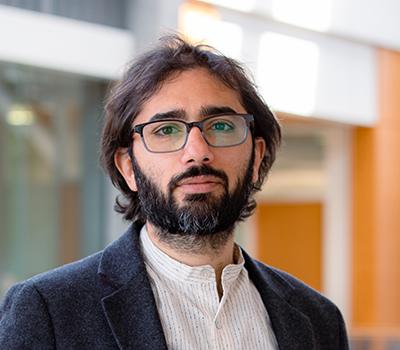
Michael Benedikt is a Professor of Computer Science at the University of Oxford and a Governing Body Fellow of University College. He holds the role of Director of the Advanced MSc in Computer Science program. His research focuses on databases, Web data management, logical methods in computer science, and theoretical computer science. Benedikt's work intersects with artificial intelligence, machine learning, and algorithms, with contributions to query languages, data integration, and formal methods. Education: Ph.D. in Mathematics, University of Wisconsin, 1993 Prior roles: Distinguished Member of Technical Staff at Bell Laboratories (1994–2006), visiting researcher at Yahoo! Labs Research Interests: Databases and information exchange Web and Web 2.0 data management Logical methods in computer science Formal verification and query optimization Applications in AI and machine learning Key Projects: FOX : Query-driven data acquisition from web-based sources PDQ : Proof-driven query answering over web-based data TRANCE : Transforming nested collections efficiently Awards: Best Paper Award at ICALP 2017 (Track B) EPSRC Established Career Fellowship (2015–2020) Advising & Grants: Directed the MSc in Advanced Computer Science program Supervised PhD students including Chia-Hsuan Lu and past advisees such as Luying Chen and Ben Spencer Received funding for projects like the ERC DIADEM initiative Labs & Teams: Active in the Department of Computer Science’s research groups, including the Algorithms At Large and Databases teams.
Dr. Vijayaraghavan Aravindan is an Associate Professor in the Department of Computer Science at Northwestern University, with a courtesy appointment in Industrial Engineering & Management Sciences. He is a core member of the Theory CS Group and serves as the Site Director for the NSF-funded Institute for Data, Economics, Algorithms, and Learning (IDEAL). His research focuses on theoretical computer science, particularly algorithmic foundations of machine learning, quantum information, and beyond worst-case analysis. Education: Ph.D. and M.A. in Computer Science, Princeton University B.Tech. in Computer Science and Engineering, Indian Institute of Technology Madras Research Interests: His work bridges theoretical computer science and machine learning, emphasizing efficient algorithms for high-dimensional data, quantum entanglement certification, and adversarial robustness. He explores paradigms such as smoothed analysis and stability-based approaches to provide practical algorithmic guarantees. Awards & Grants: NSF CAREER Award Google Research Scholar NSF AITF Grants (CCF-1637585, CCF-2154100) Advising & Teaching: He advises PhD students on topics like quantum computing, robust machine learning, and optimization. Courses taught include graduate algorithms, theoretical foundations of data science, and quantum computation. His lab collaborates on projects at IDEAL and with institutions like Carnegie Mellon University and TTI Chicago. Professional Leadership: Served as FOCS 2024 General Chair and organizes the McCormick Theory Workshops. Active on program committees for ICML, COLT, and NeurIPS.
Jun Shen is a Professor at the School of Computing and Information Technology, University of Wollongong. He specializes in computational intelligence, cloud computing, and big data applications, with a focus on AI-driven solutions for real-world challenges in transport systems, healthcare, education, and environmental management. He has secured over 40 research grants totaling AU$4.5 million and supervised 26 completed PhD projects. His work spans interdisciplinary areas including bioinformatics, smart manufacturing, and digital health. Research interests include bio-inspired algorithmic optimization, AI in arts/media, and edge computing for IoT systems. He has pioneered research centers in applied computing since 2014 and holds editorial roles in top journals like IEEE Transactions. As an IEEE Distinguished Lecturer, he actively promotes AI ethics and interdisciplinary collaboration. Recent publications emphasize adversarial machine learning defenses, UAV systems, and multimodal data fusion. His supervision includes projects in intelligent transport systems, cloud computing, and e-learning. Grants include projects on resilient energy systems and UAV geolocation verification. Leadership roles include leading over 20 researchers and chairing conferences. He advocates for digital transformation in public services and has conducted fieldwork at MIT, UCI, and Georgia Tech.
Meng Xu is an Assistant Professor in the Cheriton School of Computer Science at the University of Waterloo, Canada. He is affiliated with the Cryptography, Security, and Privacy (CrySP) group and the Cybersecurity and Privacy Institute (CPI). His research focuses on system and software security, emphasizing secure-by-design languages (e.g., Rust, Move), automated program analysis, and runtime defense techniques. Education : Ph.D., Computer Science (2020), Georgia Institute of Technology B.Eng. and B.Business (First Class Honors), Nanyang Technological University (2014) Research Interests : Secure-by-design languages Automated security analysis (fuzzing, symbolic execution) Runtime defense mechanisms (moving target defense, secure hardware) Key Awards : EAPLS Best Paper Award (2022) USENIX Security Distinguished Paper Award (2018) Grants & Funding : BlackBerry Research Grant (CAD $200,000) Amazon Research Award (USD $60,000) NSERC Discovery Grant (CAD $170,000) Labs & Collaborations : CrySP (Cryptography, Security, and Privacy Group) Cybersecurity and Privacy Institute (CPI)
Bailey Kacsmar is an Assistant Professor in the Department of Computing Science at the University of Alberta and an Alberta Machine Intelligence Institute (Amii) Fellow. Her research focuses on developing human-centered privacy solutions, combining technical privacy mechanisms (e.g., private machine learning, secure computation) with user perception studies and usability evaluations. She holds a PhD and MMath in Computer Science from the University of Waterloo. Education: PhD in Computer Science, University of Waterloo Masters of Mathematics (MMath), University of Waterloo Research Interests: Privacy-preserving machine learning and AI User-centric privacy design Cryptography for private computation Usability of privacy-enhancing technologies Recent Work Trends: Her publications emphasize practical privacy solutions, including private set intersection protocols, differential privacy in machine learning, and user comprehension of privacy mechanisms. Awards: 2025 U of A Award for Outstanding Mentorship in Undergraduate Research Honorable Mention for CRA Outstanding Undergraduate Researcher Award (Jialiang Yan) Teaching & Advising: Courses include Cryptography for Digital Privacy and Privacy, Cryptography, Network Security. Advises graduate students and undergraduate researchers on privacy-preserving technologies. Emphasizes ethical and human-centered approaches in advising. Labs & Teams: Leads the PUPS (Practical Usable Privacy and Security) Lab, focusing on interdisciplinary privacy research spanning technical design, usability, and societal impact.
Aleksandra Slavković is a Professor of Statistics and Associate Dean for Graduate Education at Pennsylvania State University's Eberly College of Science. She holds a PhD in Statistics from Carnegie Mellon University (2004) and has held academic roles since 2004, including appointments at the Institute for Computational and Data Sciences and Penn State College of Medicine. Her research focuses on statistical data privacy, differential privacy, algebraic statistics, and applications in social and health sciences. She has authored over 50 peer-reviewed publications and serves on editorial boards of top journals like Journal of Privacy and Confidentiality and Annals of Applied Statistics . Slavković has received major honors including Fellowships from the Institute of Mathematical Statistics (2021) and American Statistical Association (2018). She leads initiatives to enhance graduate education, including the Science Achievement Graduate Fellows Program, and actively promotes diversity in STEM through her leadership roles. Her recent work emphasizes privacy-preserving techniques for genomic, healthcare, and network data, with contributions to synthetic data generation and secure multiparty computation protocols. Her academic service includes chairing ASA committees and advising at the National Academy of Sciences. She maintains collaborative ties with institutions like Cornell University and UC Berkeley through visiting scholar programs, and her research bridges statistics, computer science, and applied mathematics.
Houssam Abbas is an Assistant Professor in the School of Electrical Engineering and Computer Science at Oregon State University. He holds a Ph.D. in Electrical Engineering from Arizona State University and has professional experience in SoC verification at Intel and postdoctoral research at the University of Pennsylvania. His work focuses on computational ethics for AI agents, design/verification of cyber-physical systems, and autonomous systems like self-driving cars and drones. Education: Ph.D., Electrical Engineering, Arizona State University (2015) M.Sc., Electrical Engineering, Arizona State University (2006) B.Eng., Computer and Communications Engineering, American University of Beirut (2004) Abbas' research integrates deontic logic for ethical obligations in AI, distributed verification techniques for autonomous systems, and fair control algorithms for aerial missions. He co-leads the F1/10 autonomous racing initiative and teaches hands-on courses on self-driving cars. Awards: 2022 NSF CAREER Award 2022 Grainger Foundation Frontiers of Engineering Symposium Participant Grants & Projects: NSF CCRI Grant for F1/10 Racecar platforms (with Penn and Clemson) FAA ASSURE project on UAV cybersecurity Lab/Teams: His work involves the Autonomous Systems Lab , focusing on ethical AI, robotics, and formal verification tools like the F1/10 platform.
Denghui Zhang is an Assistant Professor in the School of Business at Stevens Institute of Technology. His research focuses on data science, large language models (LLMs), and business analytics, with particular emphasis on applications in financial systems, knowledge graphs, and spatio-temporal prediction. He is a member of the Stevens Institute for Artificial Intelligence and has held academic roles including reviewer positions for prestigious journals like Nature Communications and conferences such as AAAI and SIGKDD. Dr. Zhang holds a PhD in Information Systems from Rutgers University (2023) and an MS in Computer Science from the University of Chinese Academy of Sciences (2018). His educational background bridges computer science and business analytics, enabling his cross-disciplinary research. His research explores cutting-edge topics like federated learning optimization for LLMs, theory-of-mind reasoning mechanisms, and ethical AI governance. Notable contributions include turbulence forecasting models, traffic prediction frameworks, and venture capital investment strategies leveraging reinforcement learning. Dr. Zhang has received prestigious recognitions including the ICIS 2023 Best Student Paper Award and AAAI-23 Student Scholar distinction. His work frequently addresses practical challenges in AI ethics, financial decision-making systems, and scalable machine learning architectures. He actively contributes to academic communities through program committee roles for top conferences and has pioneered novel methodologies in multi-agent financial systems and graph neural network design.
Sanchuan Chen is an Assistant Professor in the Department of Computer Science and Software Engineering at Auburn University's College of Engineering. His research focuses on Machine Learning Security, Trusted Execution Environments, Software Security, and Programming Languages. He holds a Ph.D. from The Ohio State University, an M.E. from the Chinese Academy of Sciences, and a B.E. from the University of Science and Technology of China. His work addresses critical challenges in secure computing, including enclave vulnerabilities, speculative execution attacks, and data privacy preservation. Key research contributions include defenses against SGX enclave leaks (e.g., SGXpectre attacks), data flow tracking techniques, and hardening strategies for binary code. His publications span topics like side-channel mitigation, speculative execution exploits, and privacy-preserving data publishing. Chen collaborates on hardware-software co-design solutions to enhance system security without compromising performance.
Marc Sánchez Artigas is an Associate Professor at Rovira i Virgili University, Department of Computer Engineering and Mathematics. He holds a PhD from Pompeu Fabra University (2009) and conducted postdoctoral research at EPFL (Switzerland). His research focuses on distributed computing, cloud storage systems, and serverless architectures. He leads the CloudLab research group and coordinates major EU projects like Horizon Europe's CloudSkin and H2020's IOStack. Education: PhD in Computer Science (2009), Pompeu Fabra University MSc in Computer Engineering (2004), Universitat Rovira i Virgili BSc in Computer Engineering (2002), Universitat Rovira i Virgili Research Interests: Distributed systems, cloud computing, software-defined storage, serverless computing, and privacy-preserving storage solutions. His work emphasizes scalable architectures, data management in heterogeneous environments, and optimizing cloud storage efficiency through novel algorithms and frameworks. Awards: Best Paper (IEEE LCN 2007), Best Dataset (ACM IMC 2015), Serra-Hunter Excellence Professorship, and multiple grants from EU and Spanish funding bodies. Grants & Projects: Coordinated over €5 million in projects including H2020 CloudButton (serverless analytics), FP7 CloudSpaces (personal clouds), and national initiatives like Software-Defined Edge Clouds. Active in coordinating IPCEI-CIS for cloud infrastructure. Teaching: Courses on distributed systems, parallel architectures, and cloud computing. Taught at Universitat Rovira i Virgili and Universitat Oberta de Catalunya.
Dr. Mohamed Ibnkahla is a Full Professor and NSERC/Cisco Senior Industrial Research Chair in Sensor Networks for the Internet of Things (IoT) at Carleton University's Department of Systems and Computer Engineering. He holds a Ph.D. and HDR from the National Polytechnic Institute of Toulouse (INP), France. His research focuses on IoT, wireless sensor networks, cognitive radio systems, and adaptive signal processing, with applications in smart cities, healthcare, energy, and transportation. He has led numerous industry and government-funded projects, including the Carleton-Cisco IoT Testbed. Education: Ph.D. and HDR (INP Toulouse, 1996/1998), Engineering and MSc in Electronics/Signal Processing (INP Toulouse, 1992). He previously served at Queen’s University (2000–2015) and INP Toulouse (1996–1999). Research Interests: IoT security, energy harvesting, cognitive radio networks, smart grid communication, and machine learning for wireless systems. His work spans theoretical contributions (e.g., 5 books on signal processing and IoT) and applied innovations (e.g., sensor network architectures for environmental monitoring). He has published over 150 peer-reviewed papers, 4 books, and supervised ~40 graduate students. Awards include the INP Leopold Escande Medal (1997) and Ontario’s Prime Minister’s Research Excellence Award (2000). His lab develops solutions for IoT trust management, edge computing, and decentralized access control using blockchain. Key Projects: Cisco-funded IoT sensor networks for smart cities, NSF-funded cognitive radio projects, and collaborations on eHealth systems. His research addresses IoT security challenges in healthcare, transportation, and energy grids, emphasizing scalable, energy-efficient solutions.
Gideon Christian is an Associate Professor and University Excellence Research Chair in AI and Law at the University of Calgary’s Faculty of Law. He holds a Ph.D. from the University of Ottawa, an LLM specializing in Law and Technology, and an LLB from the University of Lagos. Prior to his current role, he worked as Legal Counsel at the federal Department of Justice and as an adjunct professor at the University of Ottawa. He currently serves on the boards of CanLII and Lexum. Education: Ph.D., University of Ottawa (2014) LLM (Law & Tech), University of Ottawa (2008) LLB, University of Lagos (2002) Research Interests: Dr. Christian focuses on AI’s legal implications, particularly addressing racial bias in technologies. His work includes analyzing algorithmic racism in facial recognition systems, ethical use of Generative AI in law, and AI’s environmental impacts. He has advised parliamentary committees on AI in immigration decisions and its societal effects. Awards: 2024: Calgary Herald’s Top 20 Compelling Calgarians 2023: Alberta Newcomer Recognition Award 2023: NCC Grant ($916,000) and OBA Fellowship 2022: Howard Tidswell Teaching Excellence Award Teaching and Grants: Teaches courses like eLitigation, Civil Procedure, and Ethical Lawyering. Has secured grants totaling over $1.2M for research on AI ethics, cybersecurity, and legal frameworks. His work bridges law, technology, and social justice. Labs/Teams: Collaborates with CanLII and Lexum on open legal information. Engages in interdisciplinary projects addressing AI’s societal impact through partnerships with NGOs and government bodies.
Christos Nicolaides is an Assistant Professor at the Department of Business and Public Administration within the School of Economics and Management at the University of Cyprus (UCY), holding a secondary appointment as a Digital Fellow at MIT's Initiative on the Digital Economy. Previously, he spent three years as a James McDonnell Foundation-funded Postdoctoral Fellow at MIT Sloan School of Management. His educational background includes a PhD in Engineering from Massachusetts Institute of Technology (2014), SM from MIT (2011), MSc in Applied Mathematics from Imperial College London (2009), and BSc in Physics from University of Thessaloniki (2008). Nicolaides' research applies mathematical, statistical, and computational tools to large-scale empirical questions in social influence mediated by digital technologies. His work spans Data Science , Machine Learning , Social Networks , and Computational Social Science , with significant contributions to understanding human mobility patterns, disease transmission dynamics, and social contagion effects. His research has established novel methodologies for analyzing complex network structures in mobility data and social interactions. Analysis of his 15 most recent publications reveals a consistent focus on applying network science to real-world problems, particularly in pandemic response (12 publications), human mobility analytics (9 publications), and social contagion dynamics (7 publications). His work demonstrates increasing interdisciplinary integration, combining computer science, epidemiology, and organizational behavior since 2020. Marie S. Curie Fellow Two Highly Cited Papers by Web of Science (2017, 2020) Best Paper Award by Risk Analysis Society (2019) Professor of The Week by Poets & Quants (2020) As principal institutional investigator, Nicolaides has secured over €1 million in research funding from the European Commission, industry partners, Cyprus Innovation and Research Foundation, and Cyprus Ministry of Health. His current teaching includes Social Networks and Entrepreneurship, Introduction to Operations Management, and Quantitative Methods in Management. Media coverage of his work spans major outlets including The New York Times, CNN, Nature, and Science, with significant impact on public health policy discussions during the COVID-19 pandemic.
Professor Gregoris Mentzas is a faculty member at the National Technical University of Athens, School of Electrical and Computer Engineering, where he directs the Division of Industrial Electric Devices and Decision Systems. His research focuses on AI-enabled decision systems, knowledge management, and semantic technologies applied to digital enterprises and e-government. With over 350 publications, he ranks among the top 2% most cited scientists globally. Research Interests: Artificial intelligence for decision augmentation, big data analytics in personalized health and smart mobility, semantic web technologies, and industrial internet of things. Current projects investigate trustworthy AI frameworks and hybrid intelligence systems for Industry 5.0. Teaching: Leads courses in Digital Enterprise Management, Strategic Information Systems, and Project Management at undergraduate and postgraduate levels, incorporating industry case studies and experiential learning approaches. Awards & Leadership: Top 2% Highly Cited Scientist (PLOS Biology 2021) 5 Best Paper Awards in international conferences Director of Information Management Unit (1997-present) Board Member of Institute of Communication and Computer Systems (2006-2009) Projects & Funding: Secured over €18 million in research grants through 60+ European projects with industry partners including SAP, IBM, and Siemens. Research outcomes led to three technology spin-offs.