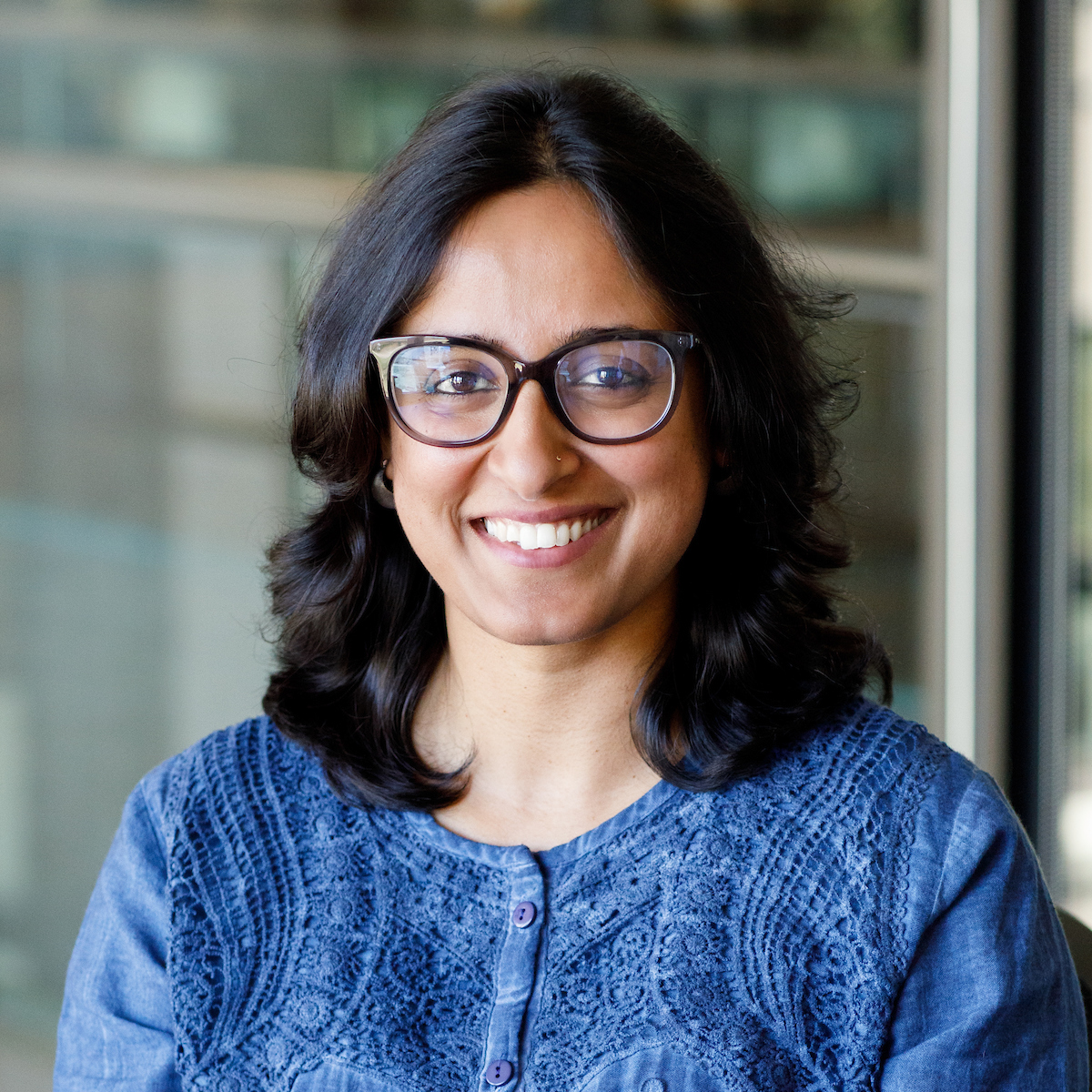
Shamya Karumbaiah is an Assistant Professor in the Learning Sciences department at the University of Wisconsin–Madison's School of Education. She holds a PhD in Learning Sciences from the University of Pennsylvania (2021) and previously served as a postdoc fellow at Carnegie Mellon University. Her research focuses on equitable and responsible use of AI in education, addressing algorithmic bias, and methodological innovations in learning analytics. Education: PhD in Learning Sciences (University of Pennsylvania, 2021), MS in Computer Science (University of Massachusetts Amherst, 2017), BE in Computer Science (Sri Jayachamarajendra College of Engineering, 2011). Research Interests: Human-centered AI in education, algorithmic bias mitigation, affective computing, and teacher practices in human-AI collaboration. She critiques colonial continuities in algorithmic systems and advocates for upstream equity in AI development. Awards: Includes the Nellie McKay Fellowship (UW-Madison), multiple best paper nominations, and the Dean’s Fellowship (UPenn). Grants & Labs: Active in projects analyzing multimodal classroom data and AI ethics. Collaborates with institutions like Cisco and USC ICT.
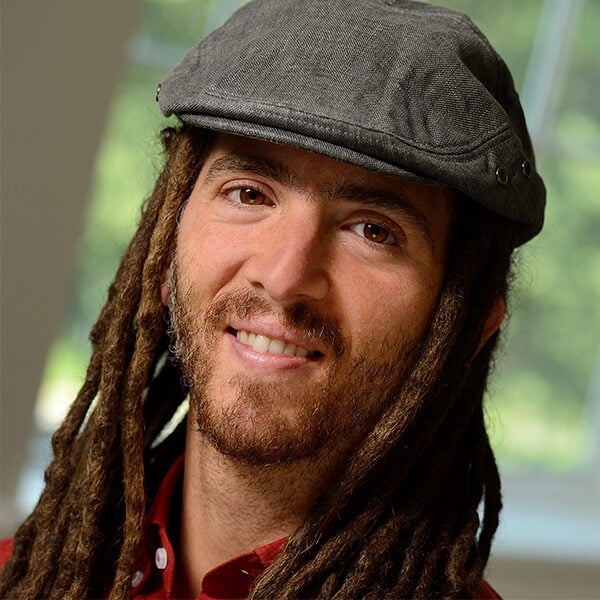
Jingxian Wang is an NUS Presidential Young Professor and Assistant Professor in the Department of Computer Science at the National University of Singapore's Faculty of Computing. His research builds next-generation wireless systems and satellite networks, with primary focus on integrating AI with wirelessly networked devices from WiFi to satellites. He earned his PhD from Carnegie Mellon University and previously served as a research scientist at Microsoft Research in Redmond, where he led the Smart Surface for 6G and Space initiative. His educational journey includes: PhD, Carnegie Mellon University Wang's research spans Wireless Systems , Satellite Networks , Artificial Intelligence , and Internet of Things , emphasizing AI-augmented wireless systems. His interdisciplinary work bridges robotics , materials science , and AI to develop sustainable sensing methods, robust communication networks, and multimodal AI techniques. Key projects include Multimodal AI for IoT (funded by Microsoft's Accelerate Foundation Models Program) and Satellite IoT Networks. His publication trends reveal accelerating integration of AI into wireless systems, with recent focus on satellite networking, soft robotics actuation, and generative models for IoT. The research consistently targets real-world deployment challenges in battery-free systems and space networks. His scientific contributions have earned prestigious recognition: ACM SIGMOBILE Doctoral Dissertation Award 2023 Communications of the ACM Research Highlights (2021, 2022) ACM SIGMOBILE Research Highlights 2021 Best Paper Awards at IPSN 2021 and UbiComp 2020 Microsoft Research Fellowship 2020 Emerging Rockstar in IEEE Pervasive Computing 2024 Wang actively mentors doctoral students and postdoctoral researchers through his AIoT Group. His grant portfolio includes Microsoft's Accelerate Foundation Models Research Program funding for multimodal AI projects, with ongoing work targeting satellite IoT infrastructure and wireless-powered soft robotics. Future directions emphasize foundation models for space networks and battery-free IoT systems. He leads the AIoT Group, fostering cross-disciplinary collaboration between computer scientists, roboticists, and materials engineers to pioneer wireless sensing and actuation technologies.
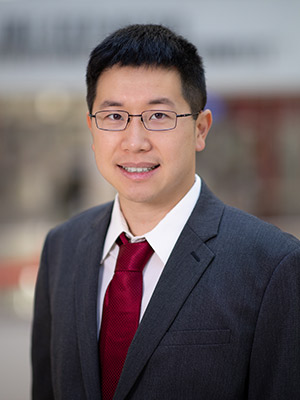
Dr. Jiaojiao Jiang is a Senior Lecturer in the School of Computer Science and Engineering at the University of New South Wales (UNSW). She holds a Ph.D. from Deakin University (Melbourne, Australia) and has published over 45 articles with 1,100+ citations. Her research focuses on AI-driven cybersecurity solutions, particularly misinformation detection and modeling information propagation dynamics. She is affiliated with UNSW's Sydney campus and can be contacted at jiaojiao.jiang@unsw.edu.au . Education: Ph.D., Deakin University, 2010s Research Interests: Artificial Intelligence applications in cybersecurity Misinformation detection and network analysis Machine learning for network security Data privacy in IoT systems Publications span topics like fake news detection via graph neural networks, multiplex network robustness, and cyber threat intelligence frameworks. Her work bridges theoretical network science with practical cybersecurity challenges.
Taylor Johnson is an Associate Professor of Computer Science and Electrical and Computer Engineering at Vanderbilt University's School of Engineering. He directs the Verification and Validation for Intelligent and Trustworthy Autonomy Laboratory (VeriVITAL) and serves as a Senior Research Scientist in the Institute for Software Integrated Systems. Previously, he was an Assistant Professor at the University of Texas at Arlington from 2013 to 2016. His research focuses on formal verification techniques for cyber-physical systems (CPS), emphasizing safety, reliability, and security through hybrid systems, formal methods, and control theory. He has published extensively on neural network verification, earning best paper awards and recognition from IEEE, IFIP, and ACM. Education: Ph.D., Electrical and Computer Engineering (University of Illinois at Urbana-Champaign, 2013) M.Sc., Electrical and Computer Engineering (University of Illinois at Urbana-Champaign, 2010) B.S.E.E., Electrical and Computer Engineering (Rice University, 2008) Research Interests: Formal verification of neural networks and CPS, safety-critical systems, autonomous systems, and AI/ML security. His work bridges theoretical foundations (e.g., hybrid systems) with practical applications in aerospace, energy systems, and robotics. Key Contributions: Developed the NNV tool for neural network verification, led the Verification of Neural Networks Competition (VNN-COMP), and pioneered techniques for robust federated learning and malware detection. Awards: AFOSR YIP Award (2016), NSF CRII Award (2015), and multiple best paper honors. His research is funded by AFRL, NSF, Intel, NVIDIA, and industry partners. Labs & Collaborations: VeriVITAL Lab (Vanderbilt), collaborations with United Technologies Research Center, Boeing, and Toyota.
Dr. Xuhui Fan is a Lecturer in Artificial Intelligence at the School of Computing, Macquarie University. He holds a PhD in Computer Science from the University of Technology Sydney (Australia) and a bachelor's degree in Mathematical Statistics from China. Prior to his current role, he worked as a project engineer at Data61 (formerly NICTA), a postdoc fellow at the University of New South Wales, and a lecturer at the University of Newcastle. His research focuses on Bayesian methods, federated learning, temporal point processes, and neural network architectures. He is affiliated with the Data Horizons Research Centre and the Frontier AI Research Centre at Macquarie University. Key research interests include developing interpretable AI models, advancing federated learning for privacy-sensitive applications, and applying Bayesian techniques to complex data analysis. His work bridges theoretical advancements in machine learning with practical applications in areas such as anomaly detection, generative models, and spatio-temporal data analysis. Dr. Fan’s publications span top-tier conferences like NeurIPS, ICML, and IJCAI, covering topics such as diffusion models, nonstationary processes, and scalable relational models. He has contributed to surveys on Bayesian federated learning and developed novel frameworks for dynamic customer segmentation and network sustainability. His research collaborations span institutions in Australia and internationally, reflecting his expertise in interdisciplinary AI applications. Current projects emphasize ethical AI practices, efficient uncertainty quantification, and scalable inference techniques for large-scale datasets.
Professor Raja Jurdak is a leading academic in distributed systems and applied data sciences at Queensland University of Technology (QUT), where he directs the Trusted Networks Lab. He holds dual roles as Professor of Distributed Systems and Chair in Applied Data Sciences, alongside leadership in the Centre for Data Science. His research focuses on dynamic network modeling, blockchain-based trust frameworks, and IoT applications, with particular emphasis on cybersecurity, energy efficiency, and mobility-driven diffusion processes. Jurdak formerly led CSIRO's Distributed Sensing Systems Group and maintains a visiting scientist role there. Education: PhD in Information and Computer Science, University of California, Irvine MS in Computer Networks and Distributed Computing, University of California, Irvine BE in Computer and Communications Engineering, American University of Beirut Research Interests: Network science, blockchain technology, IoT security, sustainable energy systems, and data-driven decision-making. His work bridges theoretical advancements with practical applications in smart grids, health surveillance, and urban mobility. Awards: Finalist for the 2019 Eureka Prize, multiple CSIRO accolades, and IEEE Senior Member status. His research has received industry recognition for interdisciplinary innovation, including the DiNeMo project's real-time disease surveillance system. Advisory & Grants: Leads high-impact projects funded by government and industry partnerships. Supervises PhD candidates in areas like decentralized data processing and privacy-preserving AI. Holds editorial roles at journals such as Ad Hoc Networks and PLoS ONE . Labs & Teams: Directs the Trusted Networks Lab at QUT, fostering collaborations with institutions like Oxford University and MIT. His work emphasizes cross-disciplinary teams to address global challenges in cybersecurity and sustainable systems.
Dr. Joshua T. Vogelstein is an Associate Professor in the Department of Biomedical Engineering at Johns Hopkins University, holding joint appointments in Biostatistics, Applied Mathematics & Statistics, Neuroscience, and Computer Science. He leads the NeuroData lab, focusing on big data science, machine learning, and connectomics. Education: PhD and MSE in Neuroscience and Applied Mathematics from Johns Hopkins (2009), BS in Biomedical Engineering from Washington University (2002). Notable achievements include co-founding the Open Connectome Project (acquired by APL) and Gigantum (acquired by NVIDIA). Recognized with the NSF CAREER Award (2020), F1000 Prime (2014), and multiple Johns Hopkins Discovery Awards. Research emphasizes statistical connectomics, network science, and applying AI to biomedical challenges. Key contributions include mapping the first insect brain connectome (Science 2023) and developing open-source tools like CloudReg and BrainLine. Collaborates with Microsoft Research and industry partners, co-founding ventures like Global Domain Partners and Mind-X. Advised over 60 trainees, teaches machine learning and data science. Promotes open science through NeuroData's ecosystem of tools and data. Current work explores organoid intelligence, prospective learning, and neural network dynamics.
Muhammed Esgin is a Lecturer in the Department of Software Systems & Cybersecurity at Monash University's Faculty of Information Technology (FIT). He holds a PhD in Cybersecurity from Monash University (2020) and has extensive postdoctoral experience at Monash and CSIRO's Data61, alongside an IBM Research internship in Zurich. His research focuses on quantum-resistant cryptography, privacy-enhancing technologies, and blockchain protocols, with applications in cybersecurity and social good. Education: Doctor of Philosophy (Cybersecurity), Monash University, 2020 Research Internship, IBM Research - Zurich (hosted by Vadim Lyubashevsky) Research Interests: Post-quantum cryptography (lattice-based schemes) Privacy-preserving protocols (e.g., zero-knowledge proofs) Secure blockchain technologies (confidential transactions, ring signatures) Cryptographic primitives for decentralized systems Recent Projects: Securing Privacy-Preserving Cloud Computation Against Active Attacks (2025–2028) More Efficient Post-Quantum Multi-Signatures (2024–2025) Quantum Information Technology: Industry Readiness & Applications (2023–2027) Teaching Roles: Lecturer for FIT units: Network Security, Introduction to Computer Architecture, Advanced Security Topics Tutor/Admin Tutor for multiple cybersecurity courses
Samson Zhou is an Assistant Professor in the Department of Computer Science & Engineering at Texas A&M University, part of the College of Engineering. He holds a Ph.D. from Purdue University and dual B.S. and M.Eng. degrees from MIT in Computer Science and Mathematics. His research focuses on theoretical computer science, data science, and machine learning, with specializations in numerical linear algebra, streaming algorithms, and differential privacy. He has held postdoctoral positions at institutions including Carnegie Mellon University and Rice University. Education: Ph.D., Computer Science, Purdue University (2018) M.Eng., Computer Science, MIT (2011) B.S., Computer Science & Mathematics, MIT (2010-2011) Research Interests: Dr. Zhou explores intersections of algorithms, data science, and machine learning, emphasizing numerical linear algebra, streaming algorithms, differential privacy, and adversarial robustness. He designs efficient algorithms for large-scale data processing with provable guarantees. Key Contributions: His work includes advancements in sliding window clustering, adversarially robust streaming algorithms, and privacy-preserving techniques. Notable achievements include the Silver Best Paper Award at ICML 2021 and spotlight presentations at ICLR 2025. Service & Leadership: He organizes workshops (e.g., TTIC 2024 on Learning-Augmented Algorithms) and serves on program committees for SOSA, NeurIPS, and COLT. He also co-leads the TAMU Math Circle's problem-solving sessions and the Algorithms & Data Science Reading Group. Labs/Teams: He collaborates on projects involving co-hosted postdocs (e.g., Chen Wang) and masters students (e.g., Shenghao Xie), focusing on topics like coresets, streaming algorithms, and fair clustering.
Fatemeh Ganji is an Assistant Professor in the Department of Electrical & Computer Engineering at Worcester Polytechnic Institute (WPI), with an affiliation to the Cybersecurity program. She holds a Ph.D. in Electrical Engineering from the Technical University of Berlin (2017), where she received the BIMoS Ph.D. Award and was nominated for the ACM Dissertation Award. Prior to WPI, she served as a Post Doctoral Associate at the University of Florida (2018–2020) and at Telecom Innovation Laboratories/Technical University of Berlin (2017–2020). Her research focuses on interdisciplinary approaches in hardware security, combining machine learning and cryptography to design and evaluate security-critical hardware systems. Key areas include physically unclonable functions (PUFs), side-channel analysis, and countermeasures against tampering and counterfeiting. Her work is funded by the European Union (Horizon 2020, FP7), German BMBF, NSF, and NIST. Ganji actively contributes to the academic community as a reviewer for IEEE and ACM journals and serves on technical program committees for CHES, FPL, DATE, and SPACE conferences. Her recent projects include developing AI-driven forensic analysis for PCB tamper detection, secure multiparty computation frameworks for chiplet systems, and open-source tools for implementation security testing. Her awards include the BIMoS Ph.D. Award 2018 and recognition from the Technical University of Berlin for her doctoral work on PUF learnability. She has also pioneered methods to detect recycled integrated circuits and enhance hardware trust through reverse engineering and machine learning.
Prof. Joaquin GARCIA ALFARO is a Professor at Telecom SudParis, affiliated with the SCN department. His research focuses on cybersecurity, network security, quantum computing applications, and resilience engineering in cyber-physical systems. He has contributed to advancements in intrusion detection systems, blockchain integration in cellular networks, and privacy-preserving frameworks for IoT and healthcare. University: Telecom SudParis Key Research Areas: Cybersecurity, Quantum Computing, IoT Security, Resilience Engineering Labs: SAMOVAR laboratory His work emphasizes practical solutions for real-world challenges, including secure data provenance, digital twin implementations, and energy-efficient edge computing. Recent research explores quantum-resistant protocols and collaborative drone systems.
Rocco Servedio is a Professor in the Department of Computer Science at Columbia University, where he leads research in theoretical computer science with a focus on computational complexity theory, learning theory, and the role of randomness in computation. He previously served as Chair of the Computer Science Department from 2018 to 2021. He holds a Ph.D., MS, and AB in Mathematics from Harvard University. His research interests include property testing, computational learning theory, and algorithmic lower bounds. He has contributed to foundational work in areas like junta testing, trace reconstruction, and convexity testing. Servedio has held leadership roles in major conferences such as STOC, CCC, and COLT, and has mentored students through courses like Unconditional Lower Bounds and Derandomization . Education: Ph.D. in Computer Science, Harvard University MS in Computer Science, Harvard University AB in Mathematics, Harvard University His research bridges theoretical computer science and applied mathematics, with recent work exploring the intersection of Gaussian processes, convex geometry, and algorithmic efficiency. Servedio's contributions to the field are exemplified through his involvement in high-impact conferences and his leadership in advancing fundamental computational theories.
Dr. Panagiotis Andriotis is a Lecturer in Computer Science at the School of Computer Science, University of Birmingham, within the College of Engineering and Physical Sciences. He is also a GIAC Certified Forensic Examiner (GCFE, GASF) and a Senior Fellow of the Higher Education Academy (SFHEA). His interdisciplinary research spans Cyber Security, Human Factors, and Mobile and Ubiquitous Computing. He teaches courses in Computer Science, Cyber Security, and Digital Forensics. His educational background includes a PhD in Computer Science from the University of Bristol (2016), an MSc with Distinction in Computer Science from the same institution (2011), and a BSc in Mathematics from the National and Kapodistrian University of Athens (2004). Dr. Andriotis’s research interests focus on user-centered security, particularly in mobile environments. He investigates how users interact with Android’s permission systems, develops novel authentication mechanisms like Bu-Dash, and explores adversarial machine learning in cybersecurity. His work bridges technical and human aspects, aiming to improve both system robustness and user experience. His recent publications reflect a strong trend in adversarial machine learning, mobile malware detection, usable privacy, and the societal implications of AI in education. He has contributed to high-impact journals such as IEEE Transactions on Cybernetics, ACM Transactions on Privacy and Security, and Elsevier’s Journal of Information Security and Applications. Best Paper Award at HCI International 2020 Impact Award, UWE Bristol Student Union GIAC Certified Forensic Examiner (GCFE) GIAC Advanced Smartphone Forensics (GASF) SANS Lethal Forensicator Coin Dr. Andriotis has advised PhD students, including Andrew McCarthy, and has been involved in funded research projects such as those related to fuzzing, software security, and critical infrastructure protection in collaboration with Airbus. He has served as an External Examiner at Cardiff Metropolitan University and is currently on the editorial boards of Digital Threats: Research and Practice (ACM) and the Journal of Responsible Technology (Elsevier). He has held visiting roles at the National Institute of Informatics in Tokyo, including as a JSPS Fellow and Toshiba Fellow. He leads research in digital forensics and security, with a lab focus on mobile ecosystems, behavioral modeling, and AI-driven threat detection. His team explores both technical and human dimensions of cybersecurity, contributing to tools and frameworks that enhance mobile security and user awareness.
Baris Kasikci is an Associate Professor in the Paul G. Allen School of Computer Science & Engineering at the University of Washington. Previously (2017-2023), he was a Morris Wellman Assistant Professor in the Electrical Engineering and Computer Science Department at the University of Michigan. His research focuses on building efficient and trustworthy computer systems through innovative combinations of approaches from systems, computer architecture, and programming languages. Dr. Kasikci received his PhD in Computer Science at EPFL and has held research positions at Microsoft Research Cambridge, Google, Intel, and VMware. His work addresses critical challenges in system reliability, security, and performance in increasingly complex software ecosystems. His research interests center on improving the efficiency of datacenter applications and machine learning systems, analyzing and fixing failures, and enhancing hardware security. His lab develops techniques for automated bug detection, formal verification of distributed systems, and building systems support for heterogeneous hardware architectures. Recent projects include Whisper (profile-guided branch misprediction elimination), Huron (taming false sharing), and Agamotto (automatic detection and repair of bugs in persistent memory applications). Analysis of his recent publications shows a strong trend toward optimizing large language model serving, hardware security, and performance optimization for modern heterogeneous architectures. His work bridges traditional systems research with emerging AI infrastructure needs, particularly in efficient LLM serving, security vulnerabilities in modern hardware, and performance optimization for heterogeneous computing environments. NSF CAREER award Microsoft Research Faculty Fellowship Intel Rising Star Award VMware Early Career Faculty Grant Google Faculty Award Roger Needham PhD Award (best PhD thesis in computer systems in Europe) Patrick Denantes Memorial Prize (best PhD thesis at EPFL) Best Paper Award at OSDI'18 Best Paper Award at MICRO'22 Dr. Kasikci has advised numerous PhD students who have gone on to prestigious positions in academia and industry, including Tanvir Ahmed Khan (Assistant Professor at Columbia University), Akshitha Sriraman (Assistant Professor at CMU), and Jiacheng Ma (AMD). His research has been supported by significant grants from NSF, DARPA, Intel, Google, Microsoft, VMware, and Amazon. His lab, the EfesLab, focuses on building tools and techniques that make computer systems more reliable, secure, and efficient. The EfesLab, led by Dr. Kasikci, brings together postdocs, PhD students, and undergraduate researchers to tackle fundamental challenges in systems reliability and performance. The lab has developed numerous influential tools including Whisper, Huron, and Agamotto that address critical performance and reliability issues in modern computing systems. Current research directions include efficient LLM serving, security of emerging hardware technologies, and automated debugging techniques.
Dr. Zhenghao Chen is a Lecturer in Data Science at the University of Newcastle, affiliated with the School of Information and Physical Sciences. He earned his Ph.D. from the University of Sydney in 2022, following a B.Eng. H1 degree from the same institution in 2017. Prior to his current position, Dr. Chen served as a Postdoctoral Research Fellow at the University of Sydney (2022-2024), a Research Engineer at TikTok (2024), and as a Visiting Research Scientist at Microsoft Research and Disney Research (2022-2023). Dr. Chen's educational background includes: Doctor of Philosophy, University of Sydney (2022) Bachelor of Information Technology (B.Eng. H1), University of Sydney (2017) Dr. Chen's research spans multiple domains within artificial intelligence, with particular expertise in Computer Vision, Natural Language Processing, and Machine Learning. His work in Generative AI has garnered significant recognition, with applications in both academic and industrial settings. His research interests are reflected in his Fields of Research percentages: Deep Learning (30%), Computer Vision (30%), Natural Language Processing (20%), and Multimodal Analysis and Synthesis (20%). His publications in top-tier venues like CVPR, ICCV, ECCV, and journals like IEEE TPAMI demonstrate the breadth and impact of his work. Analysis of Dr. Chen's recent publications (2022-2025) reveals a consistent focus on neural compression techniques, 3D perception, and multimodal AI systems. His work spans medical imaging (CXR bone suppression), video compression, point cloud processing, and neural surface reconstruction. A notable trend is his exploration of efficient AI systems that work well under resource constraints, as evidenced by his involvement in the EMCLR workshop. His research often bridges theoretical advances with practical applications across multiple domains. Dr. Chen has received several prestigious awards: Microsoft Research Asia StarTrack Fellowship (2025) ACM SIGMM Award for Outstanding PhD Thesis in Multimedia Computing (2024) Australia Government Research Training Program (RTP) Fellowship (2019) Google Australia Prize for Excellence in Computer Science (2017) Dr. Chen is actively involved in the academic community, serving on the Program Committee for major AI conferences including CVPR, ICCV, ECCV, SIGGRAPH, AAAI, and others. He also organizes workshops in Multimedia and ICCV conferences, and serves as a reviewer for prestigious journals. His teaching responsibilities include courses on Intelligent Visual Signal Understanding, Video Intelligence and Compression, Database and Information Management, and Computing Fundamentals at both the University of Sydney and University of Newcastle.