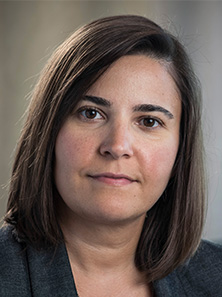
Jeff Mellow is a Professor of Criminal Justice at John Jay College of Criminal Justice, Deputy Director of the Corrections Lab, and affiliated with the Criminal Justice Doctoral Program at the CUNY Graduate Center. He holds a Ph.D. (2001) and M.A. (1994) in Criminal Justice from the University at Albany, SUNY, and a B.A. (1989) in International Studies from American University. His research focuses on correctional policy, reentry planning, program evaluation, and corrections in Latin America. Notable projects include reducing overcrowding in Salvadoran prisons, assessing due process in Central American prisons, and developing the Transition from Jail to Community (TJC) model. He collaborates with agencies like the U.S. Department of State, DOJ, and the National Institute of Corrections. Dr. Mellow has secured over $12 million in external funding, emphasizing practical solutions for corrections systems. His work bridges academic research and real-world applications, addressing issues like recidivism, prison overcrowding, and international corrections reform.
Dr. Noam Haviv is an Assistant Professor of Criminology at John Jay College of Criminal Justice (CUNY), specializing in correctional solutions, prison rehabilitation programs, and advanced statistical methodologies. He holds a Ph.D. in Criminology from the Hebrew University of Jerusalem, with postdoctoral research at Arizona State University’s Center for Correctional Solutions and Office of Sex Trafficking Intervention Research (STIR). His work focuses on reducing recidivism through evidence-based interventions, with a particular emphasis on program efficacy, risk factors, and cultural contexts. He has conducted extensive evaluations of prison-based education, vocational training, and religious programs in Israel, contributing to policy reforms. Dr. Haviv has advised the Israeli Prison Service on rehabilitation program evaluations and has lectured at institutions like Ashkelon Academic College. Education: B.A. in Sociology & History (Hebrew University, 2006-2008), M.A. in Criminology (Hebrew University, 2010-2013), Ph.D. in Criminology (Hebrew University, 2014-2019), Postdoc at Arizona State University (2022-2023). Research Interests: Recidivism reduction, prison rehabilitation programs, substance abuse treatment, religious interventions, juvenile justice, policing strategies, and the impact of social policies on criminal behavior. Methodological expertise includes quasi-experimental designs, survival analysis, and qualitative interviews. Articles Trends: His work explores prison program outcomes (e.g., yoga’s impact on recidivism), evaluates policy disparities (e.g., gendered sentencing), and analyzes rehabilitation trends in diverse populations (e.g., ethnic minorities, sex-trafficked individuals). Recent studies address pandemic effects on juvenile crime and the role of identity in stigmatized communities. Scientific Awards: Outstanding Researcher Grant (Ashkelon Academic College, 2021) Israeli President’s Scholarship (2015–2018) Israeli Society of Criminology Award (2017) Erasmus+ Scholarship (2019) Advising & Grants: Directed evaluations of Israel’s national correctional programs, advised on halfway house policies, and received grants for research on rehabilitation equity. His work with the STIR office focuses on sex trafficking intervention strategies. Labs/Teams: Collaborates with the Center for Correctional Solutions (ASU) and the Hebrew University’s Institute of Criminology. Leads interdisciplinary teams analyzing prison program outcomes and policing innovations.
Baz Dreisinger is a Professor at John Jay College of Criminal Justice (CUNY), serving as the Founding Academic Director of its Prison-to-College Pipeline program. She earned a Ph.D. in English from Columbia University, specializing in American and African-American studies. Her work focuses on race, crime, culture, and justice, with an emphasis on prison reform and restorative justice systems. Additionally, she contributes as a journalist and critic, writing on Caribbean culture, race, music, and pop culture for major outlets like the New York Times and NPR. Education: Ph.D. in English, Columbia University (specialization: American & African-American Studies) Research Interests: Dreisinger’s research explores global prison systems, mass incarceration critiques, and the intersection of criminal justice with cultural narratives. Her book Incarceration Nations (2016) was critically acclaimed, and she co-produced documentaries on hip-hop and the prison industrial complex. She advocates for expanding educational access to incarcerated individuals through initiatives like the Prison-to-College Pipeline, now being replicated internationally. Awards: 2017-2018 Global Fulbright Scholar Advising & Grants: Currently developing a roadmap to replace mass incarceration with restorative justice systems, funded by international collaborations. Her work bridges academia and activism, leveraging media platforms to amplify justice reform discourse. Labs/Teams: Directs the Prison-to-College Pipeline, connecting incarcerated individuals to higher education and reentry support networks.
Yunhan Zhao is a researcher specializing in criminology, sociology, and public health, with a geographic focus on the United States and China. Their work investigates structural inequalities, criminal justice systems, and health disparities through empirical analysis of large-scale social patterns. Research Focus Zhao's research integrates criminological theory with spatial analysis to examine: Racial disparities in policing and incarceration Health inequities linked to socioeconomic factors Prison systems and rehabilitation programs Urban segregation and community outcomes Cross-cultural applications of Western theories Publication Trends Recent publications (2017-2025) demonstrate: Strong emphasis on police violence and segregation dynamics in U.S. counties Comparative analyses of China's criminal justice and healthcare systems Methodological focus on spatial modeling of societal inequalities Interdisciplinary approaches bridging public health and criminology
Dr. Deborah Wendell is an **Assistant Professor (Non-Tenure Track, Part-Time)** at the **LSU Health Sciences Center New Orleans** in the **Department of Epidemiology & Population Health**. She has been affiliated with the Louisiana Office of Public Health (OPH) since 1995 and currently oversees the **Data Management/Analysis Unit** at the OPH STI/HIV/Hepatitis Program. **Education**: PhD in Public Health (Epidemiology), Tulane University School of Public Health and Tropical Medicine, 2008. MPH in Public Health (Health Policy and Analysis: Maternal & Child Health), University of Michigan School of Public Health, 1988. BA in History (Biology emphasis), Northwestern University, 1986. **Research Focus**: Dr. Wendell specializes in **infectious disease surveillance**, **data linkage**, and **public health database management**. Her work addresses **health disparities**, particularly in HIV/STI/hepatitis prevention, and evaluates interventions targeting **incarcerated populations** and **prisoner reentry**. She also focuses on **surveillance systems**, **health information exchanges**, and **opt-out testing programs** for viral hepatitis. **Recent Trends in Publications**: Her articles emphasize **HIV outcomes among formerly incarcerated individuals**, **hepatitis C prevalence in prisons**, and **technology-driven strategies** (e.g., videoconferencing) to improve care access. She also explores **financial incentives** and **collaborations between Medicaid and public health** to enhance health equity. **Service & Committees**: - Committee member, **Curriculum Committee** at LSU Health Sciences Center (2024–2024). - Active presenter at national conferences (APHA, National Ryan White Conference), focusing on **AIDSVu tools**, **data-to-care strategies**, and **prison health initiatives**. **Labs/Teams**: Leads the **Data Management/Analysis Unit** at the OPH STI/HIV/Hepatitis Program, coordinating statewide surveillance and intervention evaluations.
Dr. Melanie Reid serves as the Associate Dean of Faculty and Professor of Law at Loyola Marymount University's Duncan School of Law. Prior to her academic role, she worked as a trial attorney in the Narcotics and Dangerous Drug Section at the U.S. Department of Justice, an Assistant United States Attorney in Florida, and a law clerk for the Eleventh Circuit Court of Appeals. She is a member of the Florida Bar and holds a J.D. from the University of Notre Dame Law School, an M.A. from Middlebury College, and a B.A. from the University of Notre Dame. Her research focuses on criminal procedure, comparative law, national security, and international criminal law. She has lectured globally on topics including narcotics trafficking, asset forfeiture, and intelligence-derived evidence in prosecutions. Notable engagements include the DEA Office of International Training, the National Advocacy Center, and the University of Latvia via a Fulbright grant (2018). Her work addresses modern legal challenges such as robo-cops, economic espionage, and the global war on drugs. Reid has received the Fulbright U.S. Scholar Grant and presented widely on topics like mass incarceration, Snowden disclosures, and drone technology in policing. Her teaching portfolio includes Criminal Procedure, Federal Criminal Law, and National Security Law. She actively contributes to legal education through initiatives like Academic Success programs and innovative course design.
Dr. Sylvia Lindinger-Sternart is an Associate Professor of Counseling at the University of Providence's School of Health Professions, contributing to the Master of Science in Clinical Mental Health Counseling program since 2015. She played a crucial role in achieving CACREP accreditation for the program. Her academic background includes a PhD in Counselor Education & Supervision (University of Toledo), MAs in Rehabilitation Counseling (Bowling Green State University) and Clinical Psychology (University of Salzburg, Austria), and a BS in Psychology and Mechanical Engineering (College of Technology, Linz). Her research focuses on trauma, substance use disorders, multicultural counseling, EMDR therapy, and the integration of technology in counseling. Clinical experiences span diverse settings, including psychosomatic clinics, college counseling centers, and private practice. Dr. Lindinger-Sternart is certified in EMDR and holds licenses in Montana and Ohio. Professional affiliations include EMDRIA, the American Counseling Association, and several multicultural counseling organizations. She has been nominated for the Sisters of Providence Mission Award and the Marich Outstanding Faculty Award, and received the Fritz-Freyschlag Award for Solidarity and Humanity. Her teaching spans courses like Counseling the Addicted Client, Multicultural Competence, and practicum/internship supervision.
Geraldine Brown is an Associate Professor at the Centre for Agroecology, Water and Resilience, Coventry University. Her research focuses on social justice, inequality, and race relations, with a community development approach. She has conducted studies on marginalized groups including Black and minority ethnic communities, incarcerated individuals, and young parents. Geraldine’s work emphasizes producing ‘oppositional knowledge’ to amplify underrepresented voices and foster systemic change. Her doctoral thesis (2014) explored African Caribbean communities’ perspectives on urban gun crime through auto/biographical methods. She has led projects like the Southwark Food Poverty Project and evaluations of prison rehabilitation programs such as the Master Gardener Programme. Geraldine also teaches and trains practitioners in community engagement and participatory research methods. Recent publications address food insecurity, prison reform, and sustainability initiatives. Her work contributes to UN Sustainable Development Goals related to reducing inequality, promoting peace, and ensuring sustainable communities. Geraldine is actively supervising PhD students and advocating for inclusive research practices that bridge academic and community knowledge.
Dr. Carrie Oser is the DiSilvestro Endowed Professor and University Research Professor in the Sociology Department at the University of Kentucky (UK), affiliated with the College of Arts & Sciences. She holds leadership roles as Associate Director of the Substance Use Priority Research Area (SUPRA) and the Center for Health, Engagement, and Transformation (CHET). Her research focuses on addiction health services, HIV risk behaviors, corrections, implementation science, and health disparities, particularly among marginalized populations. Dr. Oser has secured over $142 million in NIH funding, published 140+ peer-reviewed articles, and provided congressional testimony on substance use policy. Education: BA from the University of Kentucky; MA and PhD in Sociology from the University of Georgia. Research Interests: Interdisciplinary approaches to reducing substance use disparities Prison-based medication initiation for OUD Rural health equity Community-engaged research methods Notable Achievements: Principal Investigator on 7 NIH grants ($7M) + Co-I on $135M Recipient of multiple mentoring awards (2015–2023) Developed the Inside-Out Prison Exchange Program course Key contributor to the HEALing Communities Study Grants & Teams: Leads NIH-funded projects addressing opioid overdose mortality, rural/urban treatment disparities, and PrEP implementation among justice-involved individuals. Collaborates with correctional facilities, community coalitions, and policymakers. Labs/Teams: Center on Drug and Alcohol Research, Health, Society & Populations Program, and the HEALing Communities Study consortium.
Dr. Sophia Sarantakos is Assistant Professor at University of Denver's Graduate School of Social Work, where her work centers prison-industrial complex (PIC) abolition through collective care models. Holding a PhD from University of Chicago (2020) and MSW from Tulane (2006), she co-founded the Abolitionist Social Change Collective (ASCC). Her research examines mutual aid networks, anti-carceral frameworks, and liberatory social work practice. Recent publications analyze COVID-19 mutual aid movements and professional responses to structural violence. Professional Background Developed Louisiana's first jail diversion program 10 years clinical social work experience Creator of 'Introduction to PIC Abolition' MSW curriculum
Paul Hirschfield is an Associate Professor of Sociology and Director of the Criminal Justice Program at Rutgers University. He holds a Ph.D. from Northwestern University (2003) and focuses on criminology, punishment, policing, and inequality. His research examines social control mechanisms in schools, policing practices, and racial disparities in discipline and juvenile justice. He investigates therapeutic alternatives to exclusionary discipline and international variations in police use of deadly force, particularly in the U.S. and Latin America. Recent work emphasizes firearms prevalence, legal standards, and police governance as drivers of lethal outcomes. Dr. Hirschfield has conducted evaluations of programs like Moving to Opportunity and the Comer School Development Program, assessing their impacts on juvenile justice involvement. His research has been published in top journals such as *Criminology* and *Sociology of Education*, and he has contributed to public discourse via *Foreign Affairs* and *Huffington Post*, addressing topics like U.S. gun violence and police lethality. His academic contributions bridge criminological theory and policy analysis, with a focus on equity in education and criminal justice systems. He has advised on reentry programs for ex-offenders and explored the 'school-to-prison pipeline' metaphor’s validity. Current projects include studies on school safety policies and restorative justice alternatives.
Anne Morrison Piehl serves as Professor of Economics and Department Chair at Rutgers University, concurrently directing the Program in Criminal Justice. A Research Associate at the National Bureau of Economic Research, she maintains active policy engagement through congressional testimony and National Academy of Sciences committee appointments. Her educational foundation includes an A.B. in Economics from Harvard University followed by a Ph.D. in Economics from Princeton University. Prior to joining Rutgers in 2005, she held faculty positions at Harvard's John F. Kennedy School of Government. Piehl's research examines mass incarceration dynamics , sentencing determinants , and immigration-crime relationships through historical and contemporary lenses. Her empirical approach analyzes prison population booms, judicial discretion in sentencing guidelines, and demographic impacts on criminal justice outcomes, frequently highlighting nonlinear crime-incarceration relationships and policy-induced marginal returns. Analysis of her recent publications reveals sustained focus on incarceration scale effects , gender/racial disparities , and immigrant assimilation patterns within correctional systems. Her work demonstrates methodological rigor through quasi-experimental designs like calculation error analysis in sentencing guidelines, while connecting historical data (1900-1930) to modern policy challenges. Piehl actively bridges academic research and policy implementation through service on the National Research Council's Committee on Law and Justice, ad-hoc incarceration committees, and the New Jersey Commission on Government Efficiency and Reform. Her congressional testimony before the Sentencing Commission and House Immigration Subcommittee directly informs legislative debates on criminal justice reform. As Department Chair and program director, she oversees academic operations while mentoring emerging scholars. Her policy-relevant research has shaped reentry initiatives like Montgomery County's Pre-release Center and influenced evaluations of programs such as Boston's Operation Ceasefire, demonstrating practical applications of economic analysis in criminal justice settings.
Michelle Broaddus, PhD, is an Associate Professor in the Department of Psychiatry and Behavioral Medicine at the Medical College of Wisconsin. She specializes in community-based and public health programs addressing mental health, substance use, and HIV care. Her work emphasizes health equity and vulnerable populations, particularly through initiatives like the Wisconsin Child Psychiatry Consultation Program (WI CPCP) and the Advancing Behavioral Health Initiative (ABHI). As PI of ABHI, she led an 8-year project funding community coalitions across Wisconsin to improve behavioral health systems at a population level. Education: PhD in Social Psychology, University of Colorado, Boulder MS in Social Psychology, University of Colorado, Boulder BS in Psychology, Centre College Research Focus: Dr. Broaddus prioritizes scalable interventions to address mental health disparities. Her work spans clinic-based and population-level strategies, including systems navigation for HIV-positive populations leaving prison, telehealth for pediatric mental health (WI CPCP), and leveraging technology (SMS, geosocial apps) for health promotion. She emphasizes community-driven solutions, stating, 'If we give time and resources to passionate community members, there’s no limit to what they can achieve.' Grants & Leadership: Principal Investigator of the $multi-million Advancing Behavioral Health Initiative (ABHI) Academic Partner Team Leader for ABHI coalitions WI CPCP collaboration with primary care providers Labs/Teams: Coordinates the Academic Partner Team supporting ABHI’s 10 community coalitions, focusing on data analysis and program evaluation. Collaborates with interdisciplinary teams on mental health equity initiatives.
Professor Poulopoulos Charalampos serves as Deputy Head of Department at the University of West Attica. He holds a PostDoc from King's College London (2005), PhD from University of Bradford (1998), and Bachelor's in Social Work (1983). His research specializes in addiction treatment methodologies and social work interventions. Research interests focus on: Development of therapeutic communities for substance abusers Addiction prevention and social reintegration programs Group work methodologies in social work contexts Organizational behavior in healthcare systems His publications predominantly explore addiction treatment frameworks, rehabilitation methodologies, and social reintegration challenges, with recent work examining maternal addiction, prison rehabilitation, and foster care systems. Scientific Awards: Erick Broekaert Award (2019) for contributions to therapeutic communities Professor Poulopoulos chairs the International Certification Reciprocity Consortium for Greece, Cyprus, Bulgaria and Malta, and has held leadership positions in the World Federation of Therapeutic Communities, European Federation of Therapeutic Communities, and International Council on Alcohol and Addictions.
Abigail Henson is an Assistant Professor of Criminology and Criminal Justice at Arizona State University’s Watts College of Public Service & Community Solutions. She holds a Ph.D. in Criminal Justice from Temple University (2020). Her research focuses on transformative justice, program evaluation, and the societal impacts of policing/corrections, employing qualitative and ethnographic methods to challenge systemic inequities. She teaches courses such as Victims and the Criminal Legal System, Translational Criminology, and Carceral Systems Analysis. Dr. Henson bridges academia and public engagement through her podcast Critical Conversations and YouTube series Office Hours with Abbie and Juwan , which popularize justice-related topics. She collaborates with organizations like the Vera Institute of Justice and Arnold Ventures to translate research into policy. Her work emphasizes racial justice, carceral system critiques, and community safety strategies. Her teaching portfolio includes over 10 years of instructing courses on corrections, victimology, and qualitative methods, reflecting her commitment to education and practitioner engagement. She has advised policymakers on reentry programs and stigma reduction, advocating for strengths-based approaches in criminal justice interventions. Dr. Henson’s research spans themes like racial-criminal stigma, carceral bonds among formerly incarcerated individuals, and temporal debt faced by fathers in the justice system. She has conducted over 500 interviews, emphasizing lived experiences in her scholarship. Her outreach efforts aim to democratize academic knowledge through accessible media formats.