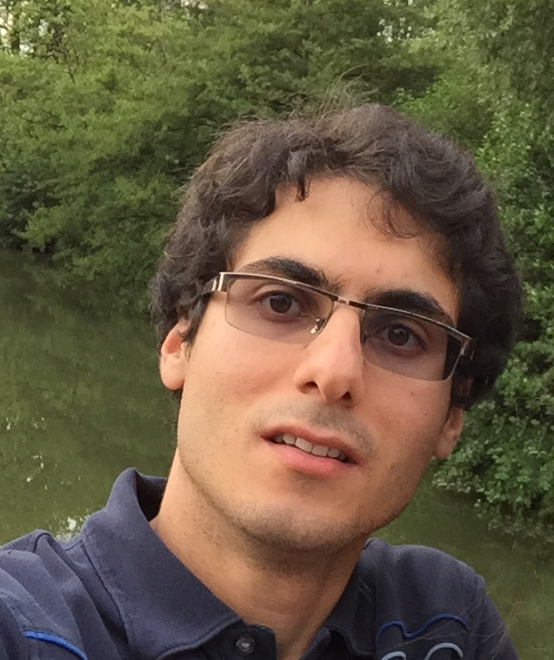
Stephen Marglin is the Walter S. Barker Professor of Economics at Harvard University, Department of Economics. His research critically examines foundational assumptions of economics, particularly how economic theories marginalize community and cultural values. He explores labor-surplus economies, cost-benefit analysis, and macroeconomic adjustment processes. His work challenges mainstream economics through publications like The Dismal Science: How Thinking Like an Economist Undermines Community (2008). Marglin also advises governments and international agencies on economic policy, including recent tax reform work in Puerto Rico. His teaching integrates standard economics with critical perspectives, focusing on modernity's cultural impact and globalization. Research interests include development economics, economic theory, and the interplay between economic systems and cultural values. His articles span Keynesian theory reinterpretation, labor dynamics, and critiques of neoclassical economics. Marglin collaborates with his spouse, anthropologist Frédérique Apffel-Marglin, blending economic and cultural analyses. Personal interests include gardening, animal husbandry, and family life. He has held roles such as adviser to governments and institutions, emphasizing policy relevance. His academic contributions are translated into multiple languages, reflecting global influence.
Jordi Galí is a Professor at the Department of Economics and Business at Universitat Pompeu Fabra (UPF), a Senior Researcher at the Center for Research in International Economics (CREI), and a Research Professor at the Barcelona School of Economics (BSE). He holds a PhD from MIT and has played a central role in shaping modern macroeconomic theory, particularly the New Keynesian framework used by central banks worldwide. Education: PhD in Economics, Massachusetts Institute of Technology (MIT), 1989 Master in International Management, ESADE, 1985 Bachelor in Economics, Universitat Pompeu Fabra, 1994 His research focuses on macroeconomic theory, monetary economics, and macroeconometrics. He is best known for his work on the New Keynesian Phillips Curve, optimal monetary policy rules, and the role of technology and expectations in business cycles. His influential book, Monetary Policy, Inflation and the Business Cycle , is a standard reference in graduate programs globally. The most recent articles highlight a continued focus on critical issues in modern macroeconomics: the implications of a low natural rate of interest (r*), the effectiveness of monetary policy at the zero lower bound, the role of wage and price flexibility, and the interaction between fiscal and monetary policy. His work increasingly integrates heterogeneity, financial frictions, and experimental methods, reflecting the evolving frontiers of the field. Scientific Awards: BBVA Foundation Frontiers of Knowledge Award (2025) Yrjo Jahnsson Award (2005) Premi Rei Jaume I d'Economia (2004) Premio Nacional de Investigación “Pascual Madoz” (2022) Three ERC Advanced Grants Foreign Honorary Member, American Economic Association (2020) Galí has advised numerous central banks, including the ECB, Federal Reserve, and Banque de France. He has held leadership roles as President of the European Economic Association (2012), co-editor of the Journal of the European Economic Association , and co-director of the CEPR International Macroeconomics Programme. He is a Research Fellow at CEPR, a Research Associate at NBER, and a Fellow of the Econometric Society. He has also been actively involved in public policy debates in Spain and Europe, particularly on issues of productivity, labor market reform, and fiscal policy. His research program continues to explore the design of stabilization policies in open and currency union economies.
Benjamin Born serves as Professor of Macroeconomics at Frankfurt School of Finance & Management and Research Director at the ifo Institute. He is a Research Fellow at CEPR and CESifo, advises the European Commission's DG ECFIN, serves on the European Parliament's Expert Group on Monetary Policy, and sits on the CEPR–EABCN Euro Area Business Cycle Dating Committee. Starting in September 2025, he will join the University of Bonn as Professor of Macroeconomics. Education PhD in Economics, 2011, University of Bonn, Germany MSc in Econometrics and Economics, 2007, University of York, UK BA/MA in Economics, 2006, University of Siegen, Germany Professor Born's research focuses on business cycles, fiscal and monetary policy, heterogeneous agent models, and empirical methods in macroeconomics. His work bridges theoretical modeling with empirical analysis, often using innovative data sources including firm surveys and social media data. He has made significant contributions to understanding how monetary policy affects different segments of the economy, how fiscal policy transmits through various channels, and how firms form expectations about the future. His recent publications reveal a strong trend toward analyzing heterogeneous effects in macroeconomics, particularly examining how different groups (firms, workers, consumers) respond differently to economic shocks and policies. His work increasingly incorporates social media data and novel survey methodologies to capture real-time economic behavior. A significant portion of his research addresses policy responses to the COVID-19 pandemic, including fiscal stimulus packages and lockdown effects. Professor Born is actively involved in the academic community, serving on the editorial boards of the Journal of Monetary Economics and the European Economic Review. He regularly organizes major academic conferences including the BASEforHANK Winterschool and the ifo Conference on Macroeconomics and Survey Data. Teaching and Supervision Currently teaches Macroeconomics II (first-year Ph.D. course at BGSE) Has taught Macroeconomics and Econometrics at all levels Supervises theses in macroeconomics and applied econometrics
Ching Crumley is a Senior Lecturer in the Economics Department at Bentley University, joining in summer 2024. Previously, they taught at Grinnell College (liberal arts college) and Texas Tech University across courses including Time Series Econometrics and Intermediate Macroeconomics. Education: Ph.D. in Economics from Texas Tech University (2023) International Business from Zhongnan University of Economics and Law (2018) Research focuses on Macroeconomics—specifically monetary policy mechanisms—and Energy Economics, with deep analysis of oil market volatilities and comparative studies between developed and developing economies. Their work directly supports UN Sustainable Development Goals related to economic growth and sustainable energy systems. Recent publications (2023-2024) reveal an interdisciplinary trajectory connecting business cycle modeling, zero lower bound monetary policy, BRICS trade integration, pandemic-era oil price asymmetries, and high-skill labor market dynamics. These works demonstrate rigorous application of econometric models like GTAP-E across macroeconomic and energy sectors. Teaching experience has cultivated strong advising capabilities for both coursework and research projects, though no formal advisees or grants are specified. No scientific awards or laboratory affiliations are documented in the available materials.
Tommy Sveen is Professor of Economics at BI Norwegian Business School and serves as Head of the Department of Economics. He also holds an adjunct professorship at the Norwegian School of Economics (NHH) and directs the Centre for Monetary Economics. His career includes extensive experience at Norges Bank in roles including Assistant Director and Senior Advisor across Research and Monetary Policy departments. Education: PhD (Dr.Oecon) in Economics from Norwegian School of Economics (NHH), 2001 Master Cand. Oecon from Norwegian School of Economics (NHH), 1995 Master of Science in Business from BI Norwegian Business School, 1988 Research Focus: Professor Sveen specializes in Monetary Economics, Macroeconomics, and Open Economy Macroeconomics. His work examines monetary-fiscal policy interactions, investment dynamics under nominal rigidities, labor market adjustments to technological shocks, and exchange rate mechanisms. He frequently employs New Keynesian frameworks to analyze policy transmission and economic stabilization. Publication Trends: Recent research (2020-2025) focuses on optimal policy coordination in small open economies, monetary responses to export shocks, and labor market margins. Earlier work (2013-2018) established foundational insights into lumpy investment behaviors, Taylor rule applications, and real exchange rate determinants. His articles consistently integrate microeconomic foundations with macroeconomic policy analysis. Leadership: Directs the Centre for Monetary Economics and authors the independent evaluation report Norges Bank Watch , critically assessing Norwegian monetary policy.
Justin Wan is a Professor in the Department of Computer Science at the University of Waterloo. His research focuses on scientific computing, medical image processing, computational finance, and machine learning. He holds a Ph.D. from UCLA (1998), an M.A. from UCLA (1995), and a B.Sc. from the Chinese University of Hong Kong (1992). Wan’s work bridges numerical methods, optimization, and deep learning, with applications in financial modeling, medical imaging, and fluid dynamics. His research interests include advanced techniques in scientific computing (e.g., multigrid methods), computer graphics simulation, and medical image enhancement (e.g., CT scan artifact reduction). He has pioneered applications of machine learning to computational finance, including option pricing and hedging using deep neural networks and GANs. His recent work explores denoising diffusion models and multi-agent systems for optimal execution in finance. Publications span topics like volatility surface computation, optimal mass transport for image registration, and parallel solvers for fluid dynamics. His methods address challenges in high-dimensional problems, robust numerical valuation, and scalable algorithms for large datasets. Wan collaborates across disciplines, integrating mathematical rigor with practical engineering solutions.
Vincent R. Nijs is a Teaching Professor of Business Analytics and Marketing at the Rady School of Management, University of California San Diego, where he serves as the inaugural Co-Director of the Master of Science in Business Analytics program. He received his Ph.D. from KU Leuven in Belgium and a master's degree in marketing research from the University of Groningen. Dr. Nijs previously served as an assistant professor of marketing at the Kellogg School of Management, Northwestern University, where he was the McManus Research Professor, won the Sidney J. Levy Teaching Award, and was recognized by the Marketing Science Institute as part of its Young Scholars program. At Rady, he has been awarded Excellence in Teaching and Most Valuable Professor awards by students in both the MBA and MSBA programs. His research focuses on marketing analytics, customer analytics, competition, category management, and marketing strategy, with specific expertise in promotion and advertising impact, competitive retaliation, category captains, pass-through of trade-promotions, and price rigidity. His scholarly work has been published in top-tier journals including Marketing Science, Journal of Marketing Research, and Journal of Marketing. Dr. Nijs has won prestigious awards including the John D. C. Little Award and Frank M. Bass Award for his paper 'The Category Demand Effects of Price Promotions.' His research demonstrates consistent contributions to understanding pricing dynamics, competitive interactions, and promotional effectiveness in retail environments. He currently teaches Customer Analytics to MBA and MSBA students and Math and Programming for Business Analytics to MSBA students. He has developed several educational tools to support student learning, including Radiant (a browser-based interface for business analytics in R), rsm-jupyter (a comprehensive analytics platform), pyrsm (a Python package for customer analytics), and GitGadget (a tool for version control and assignment management). These tools are used at Rady and other business schools worldwide, including Marshall (USC), Kellogg (Northwestern), Olin (Washington University), Carlson (Minnesota), and Scheller (Georgia Tech).
Olivia Gu is an Associate Professor of Finance at Sy Syms School of Business, Yeshiva University. She holds a PhD in Finance from the University of Illinois at Urbana-Champaign and has previously taught investments and risk management at The University of Hong Kong (HKU). Her research spans asset pricing, corporate governance, ESG, and machine learning applications in finance. PhD in Finance, University of Illinois at Urbana-Champaign Research interests include: Asset Pricing Return Predictability Innovation Finance ESG Investing Corporate Governance Machine Learning Applications Gender Discrimination Analysis Recent publications analyze venture capital human capital impacts, price rigidities, market competition effects, and corporate diversification strategies. She received multiple prestigious awards including the Trefftzs Award and SAC Capital PhD Candidate Award. Trefftzs Award SAC Capital PhD Candidate Award for Outstanding Research HKU Research Output Prize Professor Gu serves on the editorial board of Review of Financial Economics and participates in finance conference committees.
Bryan Bollinger is a Professor of Marketing at Dartmouth College Tuck School of Business. Previously, he served as Associate/Professor at NYU Stern School of Business from 2019-2025. His research focuses on the causal effects of policy decisions in sustainability domains, including energy, environment, and health, with grants from DOE, NSF, and EPA. He has authored influential studies on solar adoption, dynamic pricing, and behavioral marketing. PhD in Marketing, Stanford University (2011) BA/BE in Engineering, Dartmouth College (2003) MA in Economics, Stanford University (2010) Research interests include technology adoption, energy policy, peer effects, and empirical methods. His work has appeared in Marketing Science , Management Science , and Nature . He currently edits leading journals like Journal of Marketing and Quantitative Marketing and Economics . Recent articles explore solar subsidy valuations, soda tax impacts, and behavioral strategies for sustainable products. Awards include the AMA-EBSCO Responsible Research Award. Supervised over 20 PhD/postdoc students in marketing and economics. Active in editorial boards and policy advisory roles. Labs/Teams: Collaborates with interdisciplinary groups on energy policy and behavioral science initiatives. Leads research on solar diffusion, climate change consumer behavior, and sustainable marketing strategies.
Miguel Leon-Ledesma is a Professor of Economics at the Department of Economics , University of Exeter Business School , joining in September 2024. Previously, he held a Professorship at the University of Kent . A macroeconomist, he specializes in Economic Growth , International Economics , and Business Cycles , with affiliations as Research Fellow at the Centre for Economic Policy Research (CEPR) and Fellow at the National Institute for Economic and Social Research (NIESR). He has advised international organizations like the European Central Bank and Asian Development Bank and serves as a committee member and trustee for the UK's Money Macro and Finance Society (MMF) . Research Interests : His work bridges macroeconomic theory and empirical analysis , focusing on growth volatility, trade dynamics, labor share trends, and structural transformation. He explores how monetary policy interacts with labor markets, the role of technology frontiers in productivity, and the impact of import elasticities and network effects on development. Article Trends : His recent publications and working papers emphasize growth convergence , DSGE model innovations , factor substitution in production, and trade-policy linkages , reflecting a thematic focus on macroeconomic stability, structural change, and globalization's economic implications. Scientific Awards : Research Fellow, Centre for Economic Policy Research (CEPR) Fellow, National Institute for Economic and Social Research (NIESR) Grants & Projects : Funded by the Leverhulme Trust , Nuffield Foundation , and ESRC , his work includes projects on pensions and health economics, oil shocks' network amplification, and UK firm creation during the pandemic. Labs & Teams : Collaborates with international researchers (e.g., Mathan Satchi, Laura Puzzello) and contributes to policy-oriented networks like the Money Macro and Finance Society , integrating academic research with institutional policy advice.
Eric T. Anderson is the Polk Bros. Chair in Retailing and Professor of Marketing at Northwestern University's Kellogg School of Management. He serves as Chair of the Marketing Department and Director of the Kellogg-McCormick MBAi Program. Anderson holds a Ph.D. from MIT Sloan School of Management and has held academic positions at the University of Chicago and University of Rochester. His research focuses on pricing strategies, retail analytics, AI/ML applications, customer loyalty, and channel management. He teaches courses in pricing, retail analytics, and marketing strategy at Kellogg. Education: PhD in Management Science, MIT Sloan School of Management (1995) MS in Engineering-Economic Systems, Stanford University (1989) BS in Electrical Engineering, Northwestern University (1988) Research Interests: Anderson's work bridges quantitative and behavioral marketing. He explores pricing dynamics, retail innovation, and the impact of digital tools on consumer decisions. His recent studies analyze alternative data for credit scoring, backorder effects, and AI-driven analytics. His research has appeared in top journals like Management Science and Marketing Science . Teaching & Recognition: A four-time winner of the Sydney Levy Award for teaching excellence, Anderson is known for courses like Pricing and Retail Analytics. He advises Canadian Tire and LiftLab, and serves on editorial boards for Management Science and Journal of Marketing Research . His work often collaborates with industry, yielding practical insights for firms like FTD and NASCAR. Grants & Labs: Leads the Center for Global Marketing Practice at Kellogg. His research has been funded by the Marketing Science Institute and industry partnerships. Active in doctoral training, Anderson coordinates the Marketing Ph.D. program and mentors emerging scholars.
Sasha Indarte is an Assistant Professor of Finance at The Wharton School, University of Pennsylvania. His research focuses on Household Finance, Financial Intermediation, and Macroeconomics, with a particular interest in the intersection of social policy, consumer credit, and financial stability. PhD in Economics from Northwestern University His work examines how financial intermediaries’ reputations affect sovereign debt markets, the role of liquidity and moral hazard in household bankruptcy, and the impact of social insurance programs like Medicaid on household credit behavior. His recent research highlights racial disparities in bankruptcy outcomes and the design of optimal debt relief policies. Key trends in his publications include empirical analysis of historical financial systems, econometric modeling of consumer behavior, and policy evaluation of social programs. His articles have appeared in top journals such as the Journal of Finance and the Review of Financial Studies . Scientific Awards and Honors: National Science Foundation Grant (2021) Wharton Teaching Excellence Award (2020) NBER Small Grant (2020) Rodney L. White Center Grant (2020) Macro Financial Modeling Fellowship (2017) Susan Schmidt Bies Prize (2016) Marshall Blume Prize (1970) Brattle Prize (2024) Indarte teaches courses in Corporate Finance (FNCE1000, FNCE6110) and Empirical Methods (FNCE9260). His empirical research often leverages quasi-experimental designs and large datasets, including a race imputation model trained on 30 million observations.
Professor Matthew Elliott is a leading academic in the Faculty of Economics at the University of Cambridge , where he serves as Professor of Economics , Faculty Executive Director of Research , and Director of the Keynes Fund . His work bridges Networked Markets , Game Theory , and Microeconomic Policy , with applications to Supply Chains , Systemic Risk , and Labor Markets .
David Baqaee is a Professor of Economics at the University of California, Los Angeles (UCLA), affiliated with the Department of Economics in the College of Letters and Science. His research focuses on aggregation and heterogeneity in macroeconomics, particularly examining how resource misallocation from market power, nominal rigidities, and increasing returns to scale impacts aggregate productivity. He has contributed to prestigious journals such as Econometrica and the American Economic Review. Education: Ph.D. Economics, Harvard University; B.Sc. Mathematics and Economics, University of Canterbury His research interests span applied economic theory, industrial organization, macroeconomics, and network economics. Recent work explores trade wars, sanctions' long-term effects, energy import dependencies, and the interplay between monetary policy and supply-side dynamics. He has served as an associate editor for Econometrica and the Quarterly Journal of Economics. His publications reflect a focus on policy-relevant macroeconomic questions, including the consequences of geopolitical events, trade restrictions, and pandemic impacts on global supply chains. His methodologies emphasize disaggregated models and input-output networks to capture microeconomic foundations of aggregate phenomena.
Yuriy Gorodnichenko serves as the Quantedge Presidential Professor in the Department of Economics at the University of California, Berkeley since 2018. His extensive academic affiliations include being a Faculty Research Associate at the National Bureau of Economic Research (2014-present), Research Fellow at the Institute for the Study of Labor (2007-present), International Fellow at the Kiel Institute for the World Economy (2011-present), and Research Consultant for both the European Central Bank (2018-present) and European Investment Bank (2017-present). He also serves as Editor of the Journal of Monetary Economics (2018-present) and Member of the Executive Committee of the Association for Comparative Economic Studies (2019-present). Education: Ph.D., Economics, University of Michigan, 2007 M.A., Statistics, University of Michigan, 2004 M.A., Economics (high honors; valedictorian), Economics Education and Research Consortium at National University of Kyiv-Mohyla Academy, Kiev, Ukraine, 2001 B.A., Economics (honors; valedictorian), National University of Kyiv-Mohyla Academy, Kiev, Ukraine, 1999 Gorodnichenko's research spans multiple subfields of economics with particular emphasis on monetary economics, public finance, international economics, and macroeconomics . His scholarly approach typically combines both macroeconomic and microeconomic data with rigorous theoretical and statistical analyses. His work is organized into five major categories: monetary economics, aggregate implications of informational frictions, business cycles, development/productivity/income differences, and inequality. As an applied macroeconomist, he frequently bridges methodological approaches across different economic subdisciplines. His publication record demonstrates consistent high-impact research across top economics journals including American Economic Review, Journal of Political Economy, and Review of Economic Studies. The trajectory of his work shows increasing focus on the microfoundations of macroeconomic phenomena, particularly how information frictions affect economic behavior and policy transmission mechanisms. His recent publications have increasingly addressed the distributional consequences of monetary policy and the role of cultural factors in economic development. Scientific Awards and Honors: Fellow, Econometric Society (2021) Highly Cited Researcher, Clarivate (2021) Distinguished Teaching Award, Social Science Division, UC Berkeley (2020) World Junior Prize in Monetary Economics and Finance (2018) NSF CAREER award (2012) Sloan Research Fellowship (2013) Multiple #1 rankings among young economists by RePEc (2014-2021) Best paper award, American Economic Journal: Economic Policy (2015) Gorodnichenko has received consistent recognition for his teaching and advising from UC Berkeley's Economics Department, including multiple runner-up positions and a win for the Best Advisor Award (2014). His research has been supported by prestigious grants including the NSF CAREER award and Sloan Research Fellowship. His impact metrics are substantial with over 19,000 citations and an h-index of 54, reflecting significant influence in the economics profession. While the scraped text doesn't specify dedicated research laboratories, Gorodnichenko maintains active research collaborations through his affiliations with major economic research institutions including NBER, IZA, and Kiel Institute. His editorial roles at leading journals position him at the center of contemporary macroeconomic research discourse.