

Christopher R. Knittel is the George P. Shultz Professor of Energy Economics and Professor of Applied Economics at the Massachusetts Institute of Technology (MIT) Sloan School of Management . He serves as Director of MIT’s Center for Energy and Environmental Policy Research (CEEPR), Director of the MIT Climate Policy Center, and Deputy Director for Policy at the MIT Energy Initiative (MITEI). PhD, University of California, Berkeley (1999) M.A., University of California, Davis (1996) B.A., California State University, Stanislaus (1994) His research focuses on energy economics, environmental policy, and machine learning applications in energy systems. He leads interdisciplinary initiatives like the Climate Action Through Education program for high schools and co-directs the E2e Project with UC Berkeley and University of Chicago. Recent publications analyze data center energy dynamics, hydrogen technologies, Russian oil sanctions, and transportation policy reforms. His work emphasizes policy cost-effectiveness, emissions equity, and energy market responses to regulation.
جستجوی استاد راهنمای دانشگاهی
برای مسیر پژوهشیتان، استاد راهنما، استاد دانشگاه و پژوهشگر مناسب را پیدا کنید و با آنها ارتباط بگیرید.
نمایش ۱-۱۵ از ۵۷۰ استاد راهنما
اطلاعات پروفایلها از صفحات عمومی دانشگاهها گرفته شده و ممکن است بهروز نباشد.
Wei Xiong is the Hugh Leander and Mary Trumbull Adams Professor in Finance and Professor of Economics at Princeton University, affiliated with the Department of Economics and Bendheim Center for Finance. His research centers on behavioral finance and capital market imperfections with a focus on China's financial system and commodity markets. His educational background includes: Ph.D. in Finance from Duke University (2001) B.S. in Physics from University of Science and Technology of China (1993) Research Interests: Professor Xiong's work fundamentally explores behavioral finance and capital market imperfections , pioneering studies on speculative bubbles , heterogeneous beliefs in asset pricing , and financing frictions . His recent scholarship critically examines the financialization of commodity markets , belief distortions during financial crises , and the unique institutional dynamics of China's hybrid economy , where state and market forces interact. Publication Trends: Xiong's 48 publications in top-tier journals reveal an evolving trajectory from classical behavioral finance (2001-2013) toward contemporary China-focused systemic analysis (2017-2025). Recent works integrate cryptocurrency economics, real estate risk management, and policy design in emerging markets, demonstrating methodological rigor through structural modeling and empirical analysis of large-scale financial datasets. Scientific Awards: 2012 Smith Breeden Award (first prize) for the best non-corporate finance paper published in Journal of Finance 2013 NASDAQ OMX Award for the best asset pricing paper presented in Western Finance Association Meetings Professional Activities: As NBER research associate and former Management Science finance editor (2009-2011), Xiong bridges academia and policy. He co-founded VoxChina.org to foster China-world economic dialogue and co-edited The Handbook of China’s Financial System (Princeton University Press). His keynote addresses at major conferences—including the 2024 Chinese Economists Society meeting on “Information Discovery in a Hybrid Economy”—demonstrate sustained policy influence. Labs and Initiatives: Xiong leads Princeton's Bendheim Center for Finance research initiatives and directs VoxChina.org, which produces influential policy analyses on China's economy. His recent work includes the NBER-commissioned study on commodity market risks and ongoing projects examining big tech lending models and data privacy impacts on digital finance.
- Financial Analysis
- Equity Valuation
- Life Insurance
- +۳ مورد دیگر
Demetris Christodoulou is an Associate Professor in Accounting, Governance and Regulation at the University of Sydney. He holds a BEcon from Piraeus University, an MSc(Fin) from the University of York (UK), and a PhD from Athens University of Economics and Business (AUEB). His research focuses on applying data analytics, econometrics, and visualization techniques to financial analysis, equity valuation, life insurance, and financial advice. He co-directs the PEMA research group, specializing in productivity and performance measurement analytics, and previously led the MEAFA research group (2007–2022). He has collaborated extensively with industry partners including Deloitte and Australian insurers, and developed training programs for over 1,000 executives. His work includes open-source contributions to Stata software and the Graph Workflow platform, alongside $662k in workshop-generated funds supporting academic programs. He has advised multiple PhD students and taught at leading universities globally. Education: BEcon in Economics (Econometrics), Piraeus University MSc in Finance, University of York (UK) PhD in Accounting and Financial Analysis, Athens University of Economics and Business His research interests span financial reporting models, life insurance underwriting strategies, and behavioral finance. Recent projects address dishonesty mitigation in insurance disclosures and the adviser effect on customer disclosures. He has published widely in top journals like the Review of Accounting Studies and Stata Journal , and his work was featured in The Australian for insights on insurance fraud reduction. He maintains international collaborations, including visiting roles at Columbia Business School and the University of Cyprus, and serves on advisory boards for organizations like Behaviour.ai. Publications highlight methodological innovations in econometrics and visualization, with 2025's upcoming Stata Journal paper advancing time-series analysis techniques. His grants include partnerships with industry on longitudinal studies of insured lives, aiming to improve risk modeling and public policy insights.

JIN Chenمشاهده پروفایل
دانشیار
**Dr. JIN Chen** is an **Associate Professor** in the **Department of Information Systems and Analytics** at the **National University of Singapore (NUS) School of Computing**. He holds a PhD in Industrial Engineering and Management Science from Northwestern University (U.S.) and joined NUS in 2018 after postdoctoral work at the Wharton School, University of Pennsylvania. His research focuses on **online platforms**, **information systems operations**, and **digital transformation**, with a particular interest in addressing challenges like fake information dissemination and platform competition. His work bridges **operations management** and **information systems**, emphasizing practical applications in e-commerce and fintech. **Education**: B.Sc. (Shanghai Jiao Tong University) M.Sc. & Ph.D. (Northwestern University, U.S.) **Research Interests**: Platform design and competition Information bundling and pricing strategies Consumer search behavior Right-to-repair policies and environmental impacts **Awards & Recognition** (selected): Finalist, MSOM Service Management SIG Best Paper Award (2024) Nomination for NUS Young Researcher Award (2022–2024) Winner, INFORMS ENRE Young Researcher Prize (2022) Teaching Excellence Awards (2021–2023) **Key Projects**: Optimal information structure design to combat fake orders/reviews Environmental and welfare implications of right-to-repair laws Strategic bundling and pricing in multi-service platforms

- Financial Economics
- Asset Pricing
- Market Liquidity
- +۵ مورد دیگر
Jiang Wang is the Mizuho Financial Group Professor at the MIT Sloan School of Management, where he has been a faculty member since 1990, progressing from Assistant Professor to his current named professorship. He holds appointments in the Finance department and maintains an active research program in financial economics. Massachusetts Institute of Technology, Sloan School of Management (2005-present) MIT Sloan School of Management: Assistant Professor (1990-1994), Associate Professor (1994-1998), Professor (1998-1999), NTU Professor (1999-2005) Wang's research focuses on financial economics, asset pricing, market liquidity, trading volume, and financial market microstructure , with significant contributions to understanding information dynamics in markets. His work bridges theoretical models with empirical analysis, particularly in Chinese capital markets. Wang has developed influential theories on liquidity, trading volume, and market efficiency that have shaped modern financial economics. His recent publications demonstrate continued scholarly productivity, with research spanning market uncertainty, circuit breakers, repo markets, and Chinese financial markets. Wang's work integrates theoretical modeling with empirical validation, maintaining relevance to both academic discourse and practical market concerns. China Economics Prizes (2018) Smith Breeden Prize (2007, 2006) New York Stock Exchange Award FAME Research Prize (2004) Trefftz Award, Western Finance Association (1990) Wang has advised numerous doctoral students and supervised significant research projects, though specific student names aren't listed in the available materials. His extensive grant history includes multiple NSF awards and industry-sponsored research. Wang has held leadership positions including President of the Western Finance Association (2017-2018) and Director of the China Center for Financial Research at Tsinghua University (2002-2014). His academic service includes editorial roles for major finance journals and advisory positions with institutions including the Federal Reserve Bank of New York, Nasdaq Stock Market, and China Securities Regulatory Commission.
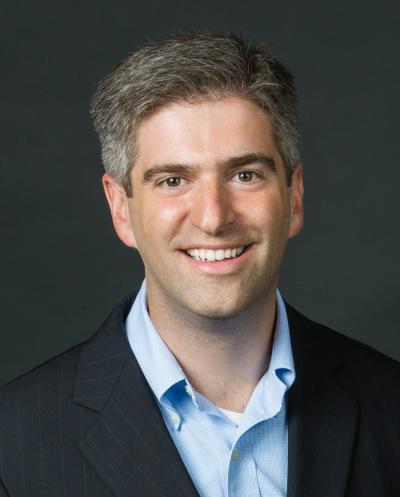
Benjamin J. Keys is a Research Associate at the University of Pennsylvania's Wharton School within the Public Economics program. His work focuses on public economics, environmental economics, and financial risk management with particular emphasis on housing markets and climate change impacts. University of Pennsylvania - The Wharton School Public Economics Department His research explores: Climate risk capitalization in housing markets Mortgage insurance moral hazard Consumer credit card payment behaviors Emergency credit systems Regional economic redistribution through mortgages Email: benkeys@wharton.upenn.edu Scientific awards include: Fellowships on Consumer Financial Management

Leo Schwinn is a Lecturer at the Technical University of Munich (TUM) within the Department of Computer Science (I26), working in the Data Analytics and Machine Learning group supervised by Prof. Stephan Günnemann at the TUM School of Computation, Information and Technology. His research focuses on robust machine learning with particular emphasis on data-efficient learning and robustness vulnerabilities of Large Language Models (LLMs). Dr. Schwinn's research interests span multiple critical areas in contemporary machine learning including: Robustness against adversarial attacks in LLMs Embedding space vulnerabilities and defenses Model unlearning and privacy preservation Efficient training methodologies for large models Time-series forecasting with probabilistic frameworks Graph-based machine learning approaches His work bridges theoretical understanding with practical security implications of modern AI systems. Analysis of his recent publications (2023-2025) reveals a strong focus on LLM security, with multiple papers accepted at premier conferences including ICML, CVPR, ICLR, and NeurIPS. His research demonstrates consistent innovation in identifying novel attack vectors while developing practical defense mechanisms, particularly through embedding space manipulation techniques. The work shows increasing sophistication in handling both theoretical aspects of model robustness and practical deployment concerns. His notable scientific achievements include: Receiving the ATE dissertation price for his PhD work at FAU Securing an oral presentation at ICLR 2025 Organizing the ICLR BlogPost Track Becoming a member of ELLIS (European Laboratory for Learning and Intelligent Systems) Dr. Schwinn has served as review process chair for the 2024 Conference on Lifelong Learning Agents (CoLLAs) and actively collaborates with researchers at Mila Quebec AI Institute. His research group at TUM focuses on addressing fundamental challenges in machine learning robustness, particularly as they apply to real-world deployment scenarios where security and reliability are paramount. He maintains active GitHub repositories related to LLM security research, including circuit-breakers-eval and LLM_Embedding_Attack, demonstrating his commitment to open science and reproducible research in the field of AI security.
- Game Theory
- Bargaining Theory
- Coalition Formation
- +۴ مورد دیگر
Juan Camilo Gómez is an Associate Professor with tenure at the University of Washington Bothell's School of Business, specializing in game theory, bargaining, and microeconomic theory. He earned his Ph.D. in Economics from the University of Minnesota and his B.Sc. in Mathematics from Universidad de los Andes in Colombia. Education: Ph.D. Economics (1998–2003), University of Minnesota, Minneapolis, MN B.Sc. Mathematics (1990–1996), Universidad de los Andes, Bogotá, Colombia Research Interests: His research focuses on foundational and applied aspects of game theory, including bargaining models, coalition formation, cooperative solution concepts, and general equilibrium. He explores how efficiency can be achieved in strategic interactions, especially when agents may behave manipulatively or when traditional balance conditions do not hold. His work contributes to understanding how coalitions form and how outcomes can be predicted or designed to ensure equitable and efficient allocations. He also investigates the implications of reference points in bargaining and the role of aspirations in shaping cooperative behavior. Publications Overview: Across his publications, a clear trajectory emerges from foundational theoretical work—such as axiomatizing core extensions in cooperative games—to applied models that predict coalition formation and bargaining outcomes. His research consistently bridges rigorous mathematical frameworks with practical economic questions, including market interpretations of cooperative solutions and strategic pricing models like 'Pay What You Want'. Awards and Honors: 2010 MBA Professor of the Year, University of Washington Bothell Teaching and Advising: Gómez has taught a wide range of courses from undergraduate calculus and mathematical economics to graduate-level game theory and quantitative methods for business. He has held teaching roles at institutions including Macalester College, University of Copenhagen, Universidad de los Andes, and University of Minnesota. He has also co-directed undergraduate theses, such as that of Santiago Saavedra, and served on numerous academic committees including MBA Admissions and faculty hiring. Labs and Teams: While no specific lab is mentioned, his collaborative working papers with researchers like Camelia Bejan and P.V. Balakrishnan suggest active participation in research networks focused on game theory and economic modeling.
Arman Eshraghi is a Professor of Finance and Investment at Cardiff Business School , with 15 years of academic and industry experience. He founded the Cardiff Fintech Research Group , leads the Digital Transformation Innovation Institute 's fintech theme, and co-directs the Behavioral Finance Working Group . He serves as Editor-in-Chief of International Review of Economics and Finance and Senior Editor in multiple journals. Key academic appointments: Cardiff University (2018–present), University of Edinburgh (2013–18) International fellowships: Development Bank of Japan, University of Canterbury (New Zealand), UCL Industry engagement: Federal Reserve Bank (NY), Alan Turing Institute, CFA Society UK, CityUK Research Focus: Behavioral finance, corporate finance, financial technology, and interdisciplinary accounting. His work examines retail investor psychology, fund manager behavior, CEO decision-making, and fintech impacts on financial markets. He has published in Review of Financial Studies , Harvard Business Review , and Financial Times . Scientific Contributions: EFMD Global, Emerald Literati, and European Financial Group awards Keynote speaker at global conferences (New York, London, Mumbai, Frankfurt) Media citations in Financial Times , BBC , Forbes , and Bloomberg Teaching & Leadership: Delivers award-winning MSc/MBA/PhD courses in UK, Europe, and Asia. Holds a Postgraduate Certificate in Academic Practice and Fellow of AdvanceHE. Designed executive programs for firms including Aetna CVS Health and Scottish Widows. Research Leadership: Co-organizes international conferences like the Cardiff Financial Technology Conference and European Financial Management Association Meeting . Supervises PhD students on topics spanning fintech, behavioral finance, and CEO lifestyle impacts.

Craig Pirrong is a Professor of Finance at the C. T. Bauer College of Business, University of Houston, where he also serves as the Energy Markets Director for the Gutierrez Energy Management Institute (GEMI). He joined the faculty in January 2003, bringing prior experience from Oklahoma State University, the University of Michigan, the University of Chicago, and Washington University in St. Louis. Ph.D. in Business Economics, University of Chicago His research centers on the economics of commodity markets, particularly the interplay between market fundamentals and price dynamics in energy and derivatives markets. He is known for developing structural models linking observable factors like temperature and load to power derivatives pricing. His work spans power markets, financial exchanges, and risk management. His publications reveal a strong focus on energy derivatives, structural modeling, and market manipulation detection. Recent and forthcoming work includes applications in power and weather derivatives, lattice pricing methods, and commodity price dynamics, reflecting his deep expertise in quantitative and fundamental analysis of energy markets. Author of three books, including Managing Energy Risk Over 30 professional publications Consultant to global utilities, commodity firms, and exchanges Blogger at Streetwise Professor He has advised numerous industry clients and contributed to regulatory and market design discussions, particularly in energy and derivatives markets. While no formal students are listed, his leadership in GEMI and extensive research output suggest active mentorship and collaboration. He is involved with research initiatives at the intersection of finance, energy, and policy. Dr. Pirrong has held significant roles across top-tier business schools and continues to influence both academic and industry practices in commodity and energy finance.
Abhinav Goyal is a Professor of Finance and Director of Global Engagement at Birmingham Business School, University of Birmingham. He is affiliated with the Department of Finance and plays a leadership role in shaping the school's international strategy. His research is widely published in premier finance journals, and he serves on editorial boards including as Associate Editor for British Accounting Review . Education: PhD in Banking and Finance, University College Dublin, Ireland (2013) MA in Financial Risk Management, Simon Fraser University, Canada (2007) BE (Hons) in Computer Science, India (2006) His research focuses on corporate finance , particularly IPOs, corporate governance, privatization, and dividend policy, with a strong emphasis on institutional and emerging market contexts. His work explores how legal, political, cultural, and media factors influence corporate financial decisions, especially in initial public offerings and payout policies. Using empirical methods, he investigates global patterns in financial markets, often drawing on cross-country datasets to assess the impact of governance reforms, ownership structures, and socio-political events. The recent articles reflect a consistent focus on IPO pricing dynamics, influenced by democracy, media, terrorism, board reforms, and legal frameworks. His research integrates insights from political economy, behavioral finance, and institutional theory, demonstrating a multidisciplinary approach to understanding financial markets. A recurring theme is the role of transparency, governance, and external shocks in shaping corporate financial behavior. Scientific Awards and Editorial Roles: Associate Editor, British Accounting Review Area Editor (Frontier Markets), Research in International Business and Finance Dr. Goyal has advised doctoral and postdoctoral researchers in finance, though specific names are not listed. He has secured research funding through collaborative projects reflected in his co-authored publications with international scholars. His past academic appointments include positions at University College Cork and the University of Liverpool, along with visiting roles at Monash University, Xi’an Jiaotong-Liverpool University, and Manipal University, indicating a strong global academic network. He teaches advanced courses such as Contemporary Topics in Banking and Finance (MBA) and Private Equity and Venture Finance (MSc), contributing significantly to graduate education. He leads no named research lab or center in the provided text, but his editorial roles and global engagement position suggest active participation in research communities and international academic collaborations.
Duane J. Seppi is a Professor of Financial Economics at the Tepper School of Business , Carnegie Mellon University since 2001, currently holding the Richard C. Green Professor chair. His research focuses on market microstructure (price manipulation, limit orders, market liquidity) and derivative pricing for commodities. PhD in Finance from University of Chicago (1988) MBA from University of Chicago (1984) BA from Stanford University (1977) His work bridges financial theory with commodity operations , exploring topics like natural gas storage valuation , electricity price modeling , and merchant commodity asset management . Key publication trends include Nash equilibrium in price impact , latent trading demand analysis , and commodity real options . Scientific awards include: Best Paper Award (2015) WFA/NYSE Prize (2005) George Leland Bach Award (2002) Roger F. Murray Prize (1998) As a dedicated educator , he teaches option pricing , stochastic processes , and algorithmic trading . His editorial board service spans the Journal of Finance , Journal of Financial Markets , and Review of Finance . Duane has held visiting fellowships at the U.S. SEC , University of Vienna , and Nanyang Technical University .

- Artificial Intelligence
- Law
- Economics
- +۶ مورد دیگر
Anthony Niblett is a Professor and Canada Research Chair in Law, Economics, & Innovation at the University of Toronto Faculty of Law. He is an Affiliate Researcher with the Vector Institute for Artificial Intelligence and co-founder of Blue J, a startup leveraging AI for tax and legal professionals. Education: Ph.D. in Economics, Harvard University (2009) M.A. in Economics, Harvard University (2006) LL.B. (Honours), University of Melbourne (2003) B.Com. (Honours in Economics), University of Melbourne (2003) Bigelow Fellow, University of Chicago His research bridges artificial intelligence , innovation , and legal theory , with a focus on contract law , competition policy , and judicial behavior . He explores how machine learning transforms legal practice, regulatory frameworks, and judicial decisions. His work includes self-driving contracts , computational antitrust , and the personalization of law . Recent publications analyze AI’s role in legal disagreement , gender gaps in employment law , and computational merger reviews . His articles emphasize the intersection of technology , economics , and legal reform . Scientific Awards: Canada Research Chair in Law, Economics, & Innovation Bigelow Fellow, University of Chicago He serves as an Academic Advisor at the Future of Law Lab and contributes to Blue J , advancing AI applications in legal domains. His teaching includes Contract Law , Torts , and Economic Analysis of Law .
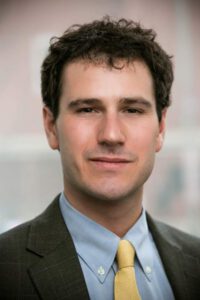
Marshall Steinbaumمشاهده پروفایل
استادیار
Marshall Steinbaum is an Assistant Professor of Economics at the University of Utah and a Senior Fellow in Higher Education Finance at the Jain Family Institute. His empirical research focuses on employer power in labor markets, with applications to antitrust policy, student debt, and economic inequality. He holds a Ph.D. in Economics from the University of Chicago and a B.A. (Hons) in Philosophy, Politics, and Economics from Oxford University. Steinbaum's research investigates: The dynamics of labor market concentration and its impact on wages Antitrust enforcement in franchising and gig economies Student debt crises and higher education financing Historical and policy-driven causes of economic inequality His recent publications analyze trends in franchising restrictions, mergers' labor market effects, and student debt cancellation impacts. Articles consistently emphasize employer power, regulatory gaps, and structural inequities across labor and education sectors.
- Experimental Finance
- Behavioral Finance
- Auctions
- +۵ مورد دیگر
Prof. Tibor Neugebauer is a Full Professor of Finance at the University of Luxembourg’s Faculty of Law, Economics and Finance (FDEF), Department of Finance. He holds a Doctorate in Economics from the University of Valencia (2000) and professional qualifications from Hannover, with prior academic positions at institutions including York, Kiel, Hannover, and research stays at Lisbon, Bari, Valencia, and Rome. His research focuses on Experimental Finance and Economics, particularly behavioral finance, asset markets, auctions, and decision-making under uncertainty. He designs laboratory experiments to analyze markets, strategic interactions, and algorithm-human dynamics, with recent emphasis on algorithmic trading and market regulations. Education: Doctor of Economics, University of Valencia (2000) Master of Science in Economics, University of Alicante (1997) Bachelor’s in Economics, University of Bonn (1994) Professional Qualification in Economics, University of Hannover (2006) Research Interests: Prof. Neugebauer’s work examines institutional and informational structures’ impact on market outcomes, including fairness in co-determination, communication effects in asset markets, and algorithmic arbitrage. His experiments explore human behavior in complex environments, such as speculative asset trading and regulatory interventions. He has pioneered studies on algorithmic trading’s role in experimental markets, combining theoretical models with empirical behavioral insights. Key Contributions: His research addresses topics like margin trading regulations, Modigliani-Miller theorem validity in experimental settings, and the ‘greater fool’ phenomenon. Recent studies emphasize algorithmic-human interaction dynamics, market efficiency under varying mechanisms, and the implications of wash trading. Awards & Grants: No specific awards listed, but his extensive publication record reflects sustained recognition in experimental finance. Grants and collaborations likely relate to his research on market design and behavioral finance. Labs/Teams: Active in the FDEF’s finance research group, contributing to Luxembourg’s international reputation in experimental economics and finance. Collaborates with global institutions on algorithmic trading and market dynamics.