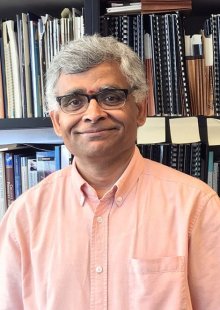
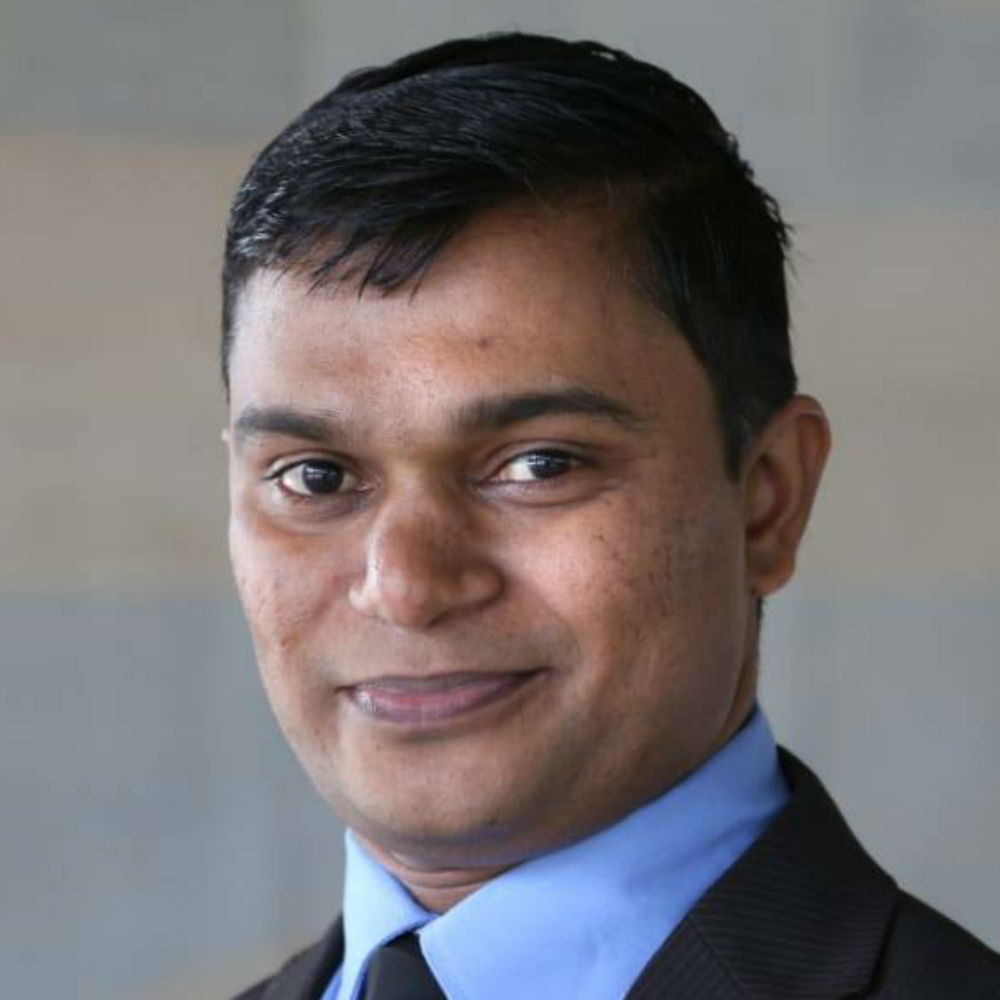
Prof. Christian Holz is an Associate Professor at the Department of Computer Science and Deputy Head of the Institute of Intelligent Interactive Systems at ETH Zürich. His work focuses on advancing human-computer interaction through innovations in wearable technologies, mixed reality systems, and sensor-driven applications. Key research areas include motion capture, physiological signal processing, and adaptive user interfaces. Holz leads the SIPLab (siplab.ethz.ch), producing influential work at the intersection of computer science and biomedical engineering. His research explores cutting-edge topics such as egocentric vision systems, wearable health monitoring devices, and VR/AR applications. Recent studies investigate cybersickness detection via EEG, heart rate estimation from eye-tracking cameras, and scalable motion capture using inertial/UWB sensors. Holz's work emphasizes practical applications in healthcare, education, and human-centered computing. Publications reflect a strong focus on interdisciplinary solutions, combining machine learning with sensor data analysis. Notable contributions include the EgoSim multi-view simulator, WildPPG biomedical dataset, and MiBOT cardiovascular modulation device. His research bridges theoretical advancements with real-world usability in domains like emergency response training, chronic disease monitoring, and immersive education.
Dr Nga Wun (Doris) Li is a Senior Lecturer at the University of Technology Sydney (UTS) within the Faculty of Design, Architecture and Building, Department of Fashion and Textiles. She leads research in seamless knitting technology, smart textiles, and sustainable fashion innovation. PhD in Fashion & Textile Design (HK PolyU, 2021) BA (Hons) in Fashion & Textiles (HK PolyU, 2012) Certifications in Wholegarment Machine (Shima Seiki, Japan) and Higher Education Pedagogy (UTS) Her research focuses on functional garments, knitting technology, and bio-informed textile design. Key projects include smart socks for DVT prevention , one-size sports bras , and buoyant swimwear for children . She combines knitting with machine learning and 3D printing for material innovation. Recent publications highlight her work on compression textiles (2025), wearable glucose sensors (2025), and knitted metasurfaces for acoustic comfort (2024). She has secured AU$52,000+ in grants across 5 funded projects. Fashion Design Award (Jeanswest, China) Outstanding Presentation & Research Paper Awards (2024) Dr Li supervises PhD and MPhil students in smart textiles and sustainable design while coordinating machine knitting courses. She collaborates with AiDLab (Hong Kong) and Powerhouse Museum (Australia).
Dr. Shirley Coyle is an Assistant Professor in the School of Electronic Engineering at Dublin City University (DCU) and Programme Chair for the BSc Global Challenges. She holds a BEng in Electronic Engineering from DCU (2000) and a PhD in Biomedical Engineering from NUI Maynooth (2005). Her career includes roles as a Telecoms Engineer at Siemens, Research Fellow at the National Centre for Sensor Research, and Team Leader of Wearable Sensors in the INSIGHT Centre for Data Analytics. She also studied part-time at the Grafton Academy for Fashion Design and later founded a consultancy in wearable technologies. Her research focuses on smart garments, wearable sensors, and sustainable textiles, with applications in healthcare, sports performance, and S.T.E.A.M. integration. Key interests include developing wearable chemical sensors, energy-autonomous sensing systems, and IoT-enabled rehabilitation devices. She has pioneered work on wearable sensors for monitoring chronic diseases, athlete training, and home rehabilitation using VR. Dr. Coyle’s work spans interdisciplinary collaboration, combining biomedical engineering with textile design. Her contributions include innovations in electrospun textiles, self-powered sensors, and sensor integration with microfluidics. She has held leadership roles in DCU’s Governing Authority and promotes STEM education through design-focused initiatives.
Deepak Ganesan is a Professor at the Manning College of Information and Computer Sciences (CICS) at the University of Massachusetts Amherst. His research focuses on low-power sensing and communication, networked systems, and machine learning applied to pervasive health monitoring and societal challenges. PhD, Computer Science, University of California, Los Angeles (2004) MS, Computer Science, University of California, Los Angeles (2000) BTech, Computer Science, Indian Institute of Technology, Madras (1998) Ganesan's work bridges wireless sensor networks, smart textiles, and healthcare applications. He designs ultra-low-power wearable devices for tracking health signals like drug use, smoking, and cognitive performance, often integrating machine learning for robust detection. His research emphasizes societal impact, particularly in aging and Alzheimer's care through the Massachusetts AI and Technology Center for Connected Care (MassAITC) and the Center for Personalized Health Monitoring (CPHM). Recent publications highlight innovations in edge-cloud collaboration, fabric-based sensors, and longitudinal health analytics. His NIH-funded MD2K Center for Excellence and affiliations with the Center for Data Science and Computational Social Science Institute further underscore his interdisciplinary approach. ACM Fellow NSF CAREER Award (2006) IBM Faculty Award (2008) UMass Junior Faculty Fellow (2008) UMass Lilly Teaching Fellow (2009) Best Paper at CHI 2013 Best Paper Runner-up at Mobicom 2014 Honorable Mentions at Ubicomp 2013 Ganesan leads the SENSORS: Wireless Sensor Networks Group and contributes to global initiatives like the Internet of Battlefield Things. His work spans academic research, industry partnerships, and policy development in AgeTech and digital health.
Neil White is Professor of Intelligent Sensor Systems at the University of Southampton's Electronics and Computer Science (ECS) school and serves as Director of the ECS Centre for Healthcare. He has held various leadership positions including Head of Electronics and Computer Science from 2011 to 2015 and has been instrumental in establishing research initiatives in sensor technology and energy harvesting. His research interests focus on medical sensors , intelligent sensor systems , and energy harvesting technologies. Professor White's work bridges the gap between engineering and healthcare applications, with significant contributions to wearable medical devices, particularly respiratory monitoring systems. His research integrates micro-electromechanical systems (MEMS), energy harvesting techniques, and smart textiles to create innovative healthcare solutions. Analysis of his recent publications reveals a strong focus on energy harvesting technologies, medical sensor applications, and e-textile development. His work spans multiple disciplines including biomedical engineering, electrical engineering, and materials science, with applications in healthcare monitoring, environmental sensing, and transportation systems. The research demonstrates a consistent theme of creating self-powered, intelligent sensor systems for practical applications. Professor White has received notable recognition including the Callendar silver Medal (2009) from the Institute of Measurement and Control and the 1989 Educational Prize from the International Society for Hybrid Microelectronics. Principal Investigator on NIHR i4i project developing low-cost wearable respiration sensors Former Director and co-founder of Perpetuum Ltd., specializing in vibration energy harvesting Current collaborations with clinicians at University Hospital Southampton Extensive funding from EPSRC, European Union, and industry partners Professor White leads research within the Smart Electronic Materials and Systems group, the Institute for Life Sciences, and the Centre for Health Technologies. His work in the Interdisciplinary Musculoskeletal Health and Digital Health research areas demonstrates his commitment to cross-disciplinary collaboration to address complex healthcare challenges through engineering solutions.
Helder Carvalho is an Associate Professor at the University of Minho's School of Engineering, Campus de Azurém, where he also serves as Director of the Department of Textile Engineering and Director of the Master's program in Textile and Accessories Product Design and Innovation. His academic career spans over three decades, with a focus on textile engineering and its intersection with electronics and automation systems. His educational background includes: PhD in Textile Engineering (2004) from University of Minho, School of Engineering MSc in Textile Engineering (1998) from University of Minho, School of Engineering BSc in Electrotechnical and Computer Engineering (1992) from University of Porto, Faculty of Engineering Professor Carvalho's research primarily focuses on smart textiles, textile sensors, and instrumentation systems for industrial sewing machines. His work bridges the gap between traditional textile manufacturing and modern electronics, creating innovative solutions for interactive textiles and wearable technology. He has particular expertise in developing flexible sensors that can be integrated into fabrics for applications ranging from sports performance monitoring to healthcare. His recent publications demonstrate a strong trend toward sports applications of smart textiles, with numerous papers on fencing apparel, karate body protectors, and general athletic performance monitoring. The research spans material science, sensor development, and user experience design, showing a comprehensive approach to creating functional and attractive smart textile products. Professor Carvalho has received recognition through research funding from major institutions: BE@T Bioeconomy Textile and Clothing (current) Greenauto - Green Innovation for the Automotive Industry (current) Factor ST+ (2021-2023) FAMEST (2017-2020) TSSIPRO (2016-2019) He has directed multiple academic programs including the Master's in Textile and Accessories Product Design and Innovation, and coordinated educational initiatives like the CET 'Fashion Commerce' program. His work at the Textile Science and Technology Centre demonstrates a commitment to translating research into practical applications across sports, healthcare, and industrial manufacturing sectors.
Dr. Sundaresan Jayaraman is a Professor at the School of Materials Science and Engineering, Georgia Institute of Technology, and Founding Director of the Kolon Center for Lifestyle Innovation. His research focuses on converging textiles with computing, notably pioneering the concept of 'Fabric is the Computer.' Key contributions include the Smart Shirt (Wearable Motherboard™), featured in LIFE Magazine and archived at the Smithsonian. He has secured $16M+ in research funding from NSF, DARPA, and industry. His work spans smart textiles, respiratory protection systems, and computer-aided manufacturing. Awards include the 1989 Presidential Young Investigator Award and the 2018 Textile Institute Research Publication Award. He holds ten U.S. patents and serves on editorial and advisory boards for journals like the Journal of the Textile Institute. Professional roles include leadership in National Academies committees on manufacturing and personal protective equipment. Education & Early Career: Dr. Jayaraman’s career began at Software Arts, Inc. (developers of VisiCalc) and Lotus Development Corporation, where he contributed to early spreadsheet and equation-solving software. His PhD research led to TK!Solver, a pioneering equation-solving program. Research Interests: His work bridges engineering and healthcare through smart textiles, wearable biomedical systems, and advanced manufacturing. Current projects address respiratory protection systems, wearable sensor networks, and personalized healthcare technologies. He emphasizes interdisciplinary collaboration to address societal challenges in health, security, and quality of life. Publications & Impact: Over 100 refereed papers and book chapters highlight his contributions to textile informatics, healthcare wearables, and manufacturing automation. Recent articles focus on next-generation respiratory protection devices and continuous fit monitoring systems. Past innovations include the Wearable Motherboard™ and sensor-integrated garments for vital signs monitoring. Awards & Recognition: In addition to his NSF and Textile Institute honors, he received the Georgia Technology Research Leader Award (2000) and Distinguished Alumni Award from A.C. College of Technology (2019). He is a Fellow of the Textile Institute and founding member of IEEE Technical Committees on Biomedical Wearables. Labs & Teams: Leads the Kolon Center for Lifestyle Innovation and collaborates with industry partners on textile-based computing solutions. His lab’s work on 3D-printed respiratory devices and smart garments exemplifies cutting-edge translational research.
Sungmee Park is a Principal Research Scientist at the School of Materials Science and Engineering at Georgia Institute of Technology. Her work bridges academia and industry, with groundbreaking contributions to smart textiles and wearable technologies. She co-invented the world’s first Wearable Motherboard (Smart Shirt) in 1996, foundational to modern wearables. At Kolon Glotech in South Korea, she developed Printronix printing technology and heating textiles (HeaTex), applied in sports, military, and automotive sectors. She also served as Vice President and Head of Future Strategy at Kolon Corporation, driving innovation in strategic partnerships and new ventures. Her research focuses on electronic textiles, smart fabrics, and wearable biomedical systems, addressing health monitoring, security, and human welfare. With over 30 patents and numerous publications, her work emphasizes translating research into practical applications like low-cost reusable masks and respiratory protection devices. Key collaborations include ongoing projects with Professor Jayaraman on wearable data platforms and Big Data analysis. Dr. Park’s articles highlight advancements in textile-based electronics, wearable healthcare systems, and smart textile manufacturing. She has pioneered methodologies for integrating sensors and communication systems into fabrics, enabling applications from athlete monitoring to SIDS prevention. Her contributions reflect a vision of technology enhancing quality of life through interdisciplinary innovation at the intersection of art, science, and engineering. Notable projects include the Inspiring Journey Exhibit showcasing her work in art-science fusion and strategic leadership in identifying new growth areas for the Kolon Group. Her research continues to drive global impact through sustainable, human-centered technological solutions.
Jeyeon Jo is an Assistant Professor in the Department of Textiles, Merchandising and Interiors at the University of Georgia's College of Family and Consumer Sciences. Her research focuses on wearable sensors, assistive technology, and ergonomic design, with an emphasis on sustainable materials and healthcare applications. She holds a Ph.D. in Human Centered Design from Cornell University (2023), an M.S. in Fashion Design (2017), and a B.S. in Clothing and Textiles (2014), both from Seoul National University. **Education:** Ph.D. Human Centered Design, Cornell University (2023) M.S. Fashion Design, Seoul National University (2017) B.S. Clothing and Textiles, Seoul National University (2014) **Research Interests:** Jeyeon develops wearable healthcare solutions using stretchable fiber optics and passive RFID, with a focus on optimizing user comfort and performance. Her work spans assistive technologies, firefighting gear ergonomics, and cross-cultural studies of clothing's sociocultural role. Recent projects include sustainable textile prototyping (LeatherBoard) and gait-monitoring systems (RFInsole). **Awards:** Human Service Studies Graduate Fellowship (Cornell, 2022) Best Brief at ISWC 2021 (2021) Roberta G. & John B. De Vries Graduate Award (Cornell, 2020) **Grants & Advising:** Currently no grants explicitly listed; actively advising students in wearable tech and textile engineering. Editorial roles include Fashion and Textiles (2024–present) and Korean Fashion & Textile Research Journal (2025–2026).
Southern University of Science and Technology (SUSTech)China
Dr. Bai Ziqian is an Assistant Professor in the School of Automation and Intelligent Manufacturing at Southern University of Science and Technology (SUSTech) in Shenzhen, China. Recognized as a Pujiang Scholar and Shenzhen Pengcheng Peacock Talent, she has established herself as a leading researcher at the intersection of wearable technology, textile engineering, and human-computer interaction. Her work bridges technical innovation with practical design applications, focusing on user-centered solutions that enhance human experience through technology integration. Dr. Bai's educational background includes: PhD in Smart Wearable Product Design (2011-2015), Hong Kong Polytechnic University MA in Fashion and Textile Design (2005-2006), Hong Kong Polytechnic University BA in Fashion Design and Engineering (2001-2005), South China Agricultural University Her research spans wearable technology, tangible interactive interfaces, IoTs, ergonomics, functional garments, wearables for healthcare, material innovation, smart home applications, and user-centered design. Dr. Bai has pioneered work in smart wearable fabrics and sensing mechanisms based on flexible materials, with a particular focus on human-computer interaction theory and practice. She has established a research team that has mastered key technologies in smart fabrics, interactive textiles, physiological signal monitoring, and human-computer interaction systems. Her approach consistently emphasizes user-centered design principles, ensuring that technological innovations serve practical human needs while maintaining aesthetic appeal. Dr. Bai's publication record demonstrates a clear evolution from foundational work in photonic textiles toward increasingly sophisticated wearable healthcare and human-computer interaction systems. Her recent publications focus on advanced sensor technologies, energy harvesting for wearables, and sophisticated data analysis for human motion and physiological monitoring. The interdisciplinary nature of her work is evident in publications spanning materials science, biomedical engineering, textile technology, and design methodology, with papers appearing in high-impact journals including Advanced Functional Materials (IF: 19.5), ACS Sensors (IF: 8.9), and Computers in Industry (IF: 10). Dr. Bai has received numerous prestigious awards that highlight both the technical and artistic dimensions of her work: 2024 German Red Dot Design Award for Best Design 2013 Neo-Neon, permanent collection at China Silk Museum (State grade 1 museum) 2019 Finalist, ThermoBlanket, TechStyle for Social Good International Competition 2017 1st Prize Teaching Award, Donghua University 2017 China National Textile and Apparel Council Teaching Award Multiple Service Learning Awards from Hong Kong Polytechnic University She has successfully secured research funding from prestigious sources including the National Natural Science Foundation of China and Guangdong Province's General Project. Her projects include a collaborative effort with the Guangdong Provincial Department of Education and Li Ning Company on a 'flexible wearable lower limb functional electrical stimulation system.' Dr. Bai has extensive teaching experience across multiple institutions and has guided student teams to success in national competitions. She currently leads the Human-Computer Interaction Design Laboratory (HCID) at SUSTech, which focuses on advanced design, engineering, and technology research at the intersection of disciplines, training the next generation of interdisciplinary designers and engineers.
National School of Arts and Textile IndustriesFrance
Vladan Koncar is a Full Professor and Research Supervisor at École Nationale Supérieure des Arts et Industries Textiles (ENSAIT), where he directs the GEMTEX laboratory and international relations. His research spans smart textiles, e-textiles, wearable sensors, and energy-harvesting systems, with applications in healthcare, military, and environmental monitoring. Research Interests: Koncar's work focuses on three primary themes: (1) Smart textile design for medical/safety applications; (2) Energy harvesting via textile NFC antennas and metamaterials; (3) Standardization of e-textile reliability and testing. His innovations include textile-based ECG monitors, airflow sensors, and photodynamic therapy fabrics. Projects & Grants: He coordinates major EU initiatives (e.g., ETEXWeld, MAPICC 3D) and industrial collaborations with Petit Bateau and @Health. Key projects involve developing instrumented textiles for healthcare, dynamic lighting systems, and filtration monitoring. Honors: Ordre des Palmes Académiques, Chevalier (French Prime Minister Award, 2019) IPC Golden Gnome & Rising Star Awards (2021-2022) Doctor Honoris Causa (Gheorghe Asachi University, 2010) Annual PEDR Award for PhD supervision since 1995 Labs & Teams: Leads the Human Centered Design Group at GEMTEX, specializing in textile-electronics integration. The lab focuses on structural health monitoring, smart composites, and washable e-textile systems.
Dr. Chaminda Wijethilake serves as a Senior Lecturer in Accounting at Essex Business School, University of Essex, where he contributes to sustainability accounting education and research. His academic journey spans Sri Lanka, Taiwan, and Australia, culminating in impactful work at the intersection of accounting, sustainability, and governance across diverse global contexts. Education: Bachelor of Commerce with First Class Honours, University of Peradeniya, Sri Lanka (2007) Master of Business Administration, National Cheng Kung University, Taiwan (2011) PhD in Accounting and Corporate Governance, Macquarie University, Australia (2016) Chaminda's research pioneers the application of accounting frameworks to urgent sustainability challenges, particularly examining how management control systems mediate organizational responses to environmental pressures. His work spans waste management governance, sustainable supply chains in emerging economies, and accountability mechanisms during disasters, consistently revealing how formal control systems interact with cultural and institutional factors to drive (or hinder) sustainability outcomes. Current projects investigate digitalization in NGOs and sustainability core values in risk management. His publication portfolio demonstrates a clear trajectory toward increasingly complex global sustainability challenges, evolving from firm-level sustainability controls to transnational waste governance and pandemic response systems. Recent work shows growing emphasis on Global South contexts and the political dimensions of environmental accountability. Scientific Awards: President’s Award for Scientific Research by the Government of Sri Lanka Best International Impact Research Award by the University of Essex Chaminda actively supervises four PhD candidates researching sustainability management accounting in healthcare, Thailand's primary care system, and public sector accountability. His research program is supported by significant grants from PEFA-World Bank Group, Innovate UK, and the Global Challenges Research Fund, including a 2021 ESRC IAA project developing an Essex employability toolkit and a 2020 GCRF project integrating climate change into South Asian public finance policies.
Isabel Maria Dias Cabral is a Contracted Researcher at the Centre for Textile Science and Technology (2C2T) at Universidade do Minho, Portugal. She holds a Doctorate in Textile Engineering (2018) and has academic background in Industrial Design (2004) and multiple Masters in Textile and Design fields (2009, 2011). Her research focuses on smart materials applied to textile design, particularly color change materials, shape memory textiles, and sustainable practices. Doctorate in Textile Engineering (2018) Master in Space, Product and Communication Design (2009) Licenciatura in Industrial Design (2004) Her work explores intersections between Humanities (Arts, Architectural Design) and Engineering (Materials, Textiles). Key research areas include smart textiles , interactive materials , and ecological coloration , with a focus on thermochromic , photochromic , and hydrochromic textile systems. Recent publications (2023-2025) demonstrate expertise in natural dyes (eucalyptus, weld, madder), colorimetry in design education , and functionalization of materials for specific applications. She co-supervises PhD and MSc students in projects related to sustainable fashion , smart printed textiles , and ecological coloration . Scientific recognition includes: CEECIND award (2022) Post-Doc grant (2018) FCT PhD grant (2012) Active in project coordination (Bioeconomia Têxtil e Vestuário_BE@T), educational outreach through workshops, and international collaboration with institutions in Sweden, Spain, and Belgium. Her work bridges art , science , and technology in textile innovation.
Dr. Ying Fang serves as an Assistant Professor in the Department of Physical Therapy within the College of Health Professions at Rosalind Franklin University of Medicine and Science. Her primary appointment reflects her expertise in biomechanics and rehabilitation science, with a focus on developing evidence-based interventions for vulnerable populations. PhD in Biomedical Engineering, Worcester Polytechnic Institute MS in Kinesiology (Biomechanics), University of Tennessee, Knoxville BS in Kinesiology, Shanghai University of Sport Dr. Fang's research program centers on gait rehabilitation using assistive devices and biofeedback systems , with particular emphasis on improving balance and preventing falls in older adults and developing exercise interventions to prevent bone loss in spinal cord injury. Her work integrates principles of neuromuscular control and biomechanics to address mobility challenges across diverse patient populations. The research employs advanced methodologies including movement analysis, exoskeleton technology, and sensor-based biofeedback systems to develop practical clinical solutions. Her publication record demonstrates strong focus on ankle exoskeleton applications for cerebral palsy and elderly populations, spinal cord injury rehabilitation , and bone health preservation . The research consistently bridges engineering principles with clinical rehabilitation needs, resulting in practical interventions that address real-world mobility challenges. NIH F32 Postdoctoral Fellowship Funding from Eunice Kennedy Shriver National Institute of Child Health and Human Development (NICHD) Dr. Fang directs the Movement Analysis Laboratory within the Department of Physical Therapy, where she leads research on human movement biomechanics and rehabilitation technology development. Her laboratory serves as a hub for interdisciplinary collaboration between physical therapy, biomedical engineering, and clinical rehabilitation sciences.
Emanuel Gunnarsson is an Assistant Professor at the University of Borås , affiliated with the Faculty of Textiles, Engineering and Business and actively engaged in the Department of Textile Technology . His work bridges textile engineering with electronic integration, focusing on smart textile development and evaluation. Academic affiliation: Department of Textile Technology, University of Borås Teaching areas: Textile mechanics, textile electronics, smart textiles, testing technology Research groups: Textiles and Wearable Sensors for P-Health, Advanced Textile Structures Research Focus: Gunnarsson's work addresses fundamental challenges in smart textile technology, including: Characterization of skin-electrode impedance for wearable sensors Single-step manufacturing of functional garments with integrated sensors Impact of production parameters on textile-human interface Sustainability and durability of smart textile systems Conductive textile characterization Development of textile electronics without specialized machinery Student Supervision: Actively co-supervises doctoral research at the university level.