Haagen Klaus is a Professor in the Department of Anthropology at George Mason University, specializing in bioarchaeology, paleopathology, and forensic anthropology. Since 2013, he has directed research on the north coast of Peru, focusing on human skeletal biology, mortuary practices, and the impacts of colonialism and environmental stressors on prehistoric and historic societies. Ph.D., Department of Anthropology, The Ohio State University (2008) M.A., Department of Anthropology, Southern Illinois University (2003) B.A., Department of Anthropology, State University of New York at Plattsburgh (2000) Klaus's research explores biocultural transformations in complex societies, with emphasis on health, violence, identity, and ethnogenesis. His Lambayeque Valley Biohistory Project (founded 2003) investigates skeletal markers of disease, stress, and violence across 10,000 years of Andean history. Methodologies include isotopic chemistry, ancient DNA analysis, and dental phenetics. Recent work (2025) examines oral microbiomes during Spanish colonization, syndemic processes in colonial dynamics, and stress indicators in pre- and postcontact populations. Projects integrate osteoimmunology, ecoimmunology, and life history trade-offs to understand physiological and cultural resilience. Current graduate students under his supervision include Rae-Ocean Blake, Kimberly Hargrave, Megan Jankowski, Emily Schopmeyer, and Celeste Schultheiss. He leads international collaborations involving Peruvian, Japanese, Canadian, and American researchers through the Lambayeque Valley Biohistory Project.
Søren Munch Kristiansen is an Associate Professor in the Department of Geoscience at Aarhus University, Faculty of Natural Sciences. His interdisciplinary research bridges geoscience and archaeology, focusing on the complex interactions between soil, water, and human societies across time. He is actively engaged in transdisciplinary projects involving geoarchaeology, groundwater, and public health. Research Interests: His work centers on how soil and groundwater have shaped human prehistory and continue to influence modern life. Key areas include safe drinking water from a lifelong perspective, geoarchaeological prospection, Viking Age settlements, and the application of geophysical and geochemical methods in archaeological contexts. He is particularly interested in novel, interdisciplinary methodologies. Recent Research Trends: His recent publications reveal a strong focus on integrating geophysical data (e.g., GPR, borehole databases) with archaeological interpretation, especially in 3D urban modeling and landscape change. Themes include Viking Age sites, interglacial deposits, and anthropogenic soil modifications. His work increasingly employs machine learning and large-scale data synthesis. Scientific Awards: No awards mentioned in the provided text. Advising and Grants: While specific students are not listed, he leads and participates in multiple funded research projects, indicating an active supervisory role. His grants span from 2016 to 2024, including projects like TITAN, SAGA, and 'Fingerprinting displaced molecular substances,' highlighting sustained funding and leadership in interdisciplinary geoscience-archaeology research. Labs and Teams: He is involved in collaborative networks such as the Soil Science & Archaeo-geophysics Alliance (SAGA), suggesting leadership in interdisciplinary research teams. His work often involves multi-proxy analyses and international collaborations, particularly in Scandinavian archaeological geophysics.
Dr. Alastair Key serves as Director of Studies in Archaeology and Official Fellow in Archaeology at Queens' College, University of Cambridge. His research bridges Paleolithic archaeology, stone tool technology, and hominin behavioral evolution through experimental and computational approaches. Director of Studies and Official Fellow at Queens' College, Cambridge Specializes in Paleolithic stone tool analysis, Acheulean technology, and hominin adaptation Conducts experimental archaeology and computational modelling to assess tool functionality Key's research focuses on Acheulean handaxe production , lithic microwear patterns , and ergonomic constraints in prehistoric tool use . He has extensively published on topics including glacial-stage hominin occupations , Oldowan toolmakers , and machine learning applications to archaeological analysis . His recent publications (2025-2023) span diverse subfields: Acheulean chronology , hominin tool use biomechanics , experimental projectile testing , and computational morphometric methods . The work often integrates multidisciplinary datasets and open-source analytical tools to address fundamental questions about human technological evolution. Current research directions include stone tool sharpness quantification , handaxe social signaling potential , and cross-species tool use comparisons through primate studies.
HUANG Fei is a Professor of Chinese History and Society in the Department of Chinese Studies at the Faculty of Humanities, University of Tübingen, Germany. She has held this position since 2020, following a Junior Professorship at the same institution from 2014 to 2020. Her academic journey began with a BA in History from Sun Yat-sen University (Guangzhou, 2005) and culminated in a PhD in Chinese Studies from Leiden University (2012). University: University of Tübingen School: Faculty of Humanities Department: Department of Chinese Studies Academic Rank: Professor Email: fei.huang@uni-tuebingen.de Her research spans an interdisciplinary terrain, combining landscape studies, environmental history, history of the body, cultural geography, historical anthropology, art history, and material culture studies . Her work primarily investigates China’s historical development from the 16th to the 20th century, with a regional focus on Southwest China, especially Yunnan, and thematic attention to frontier dynamics, urban environments, and the interplay between natural resources and cultural memory. Professor Huang’s recent publications reveal a consistent and evolving scholarly trajectory centered on the transformation of natural and urban landscapes. Her research on hot springs —such as Huaqing Hot Springs—explores their roles in public health, urban planning, and ideological representation in modern China. Her earlier work on Dongchuan examines how imperial and local actors reshaped frontier landscapes through cultural representation, religious practice, and economic interests. Articles on sulfur manufacturing, bathing culture, and Tusi succession highlight her ability to connect local practices with broader global and environmental networks. Scientific Awards and Recognition: No specific awards or fellowships are mentioned in the provided texts. Advising and Grants: She supervises PhD and Master’s theses in Chinese history and culture, though specific student names are not listed. No explicit mention of grants or funded research projects is made in the texts, but her extensive publication record in top-tier journals suggests active research engagement. Labs and Research Teams: She is affiliated with the Department of Chinese Studies at the University of Tübingen and participates in interdisciplinary research within the Faculty of Humanities. Her work often involves collaboration with scholars in anthropology, geography, and environmental history, as evidenced by her co-taught courses and international academic engagement.
Dr. Steve Renette is an Assistant Professor in Mesopotamian Archaeology at the University of Cambridge's Department of Archaeology. His research focuses on material culture, art and iconography, and the interplay between Mesopotamian and Zagros societies during the Chalcolithic and Early Bronze Age (c. 6000–2000 BCE). University of Cambridge, Department of Archaeology Research Interests: Specializing in environmental archaeology, geoarchaeology, and landscape studies, Dr. Renette investigates cultural evolution and field methods across Mesopotamia and the Near East. His work emphasizes local community practices in adopting external influences and reconstructs historical geography. Publications: His recent articles analyze Kani Shaie's 2024 Early Bronze Age excavations, seal impression analysis, and regional ceramic chronologies. His studies span from prehistoric land use (2019) to Hellenistic-Parthian occupations (2024), with a focus on stratigraphic continuity and cross-border interactions. Professional Activities: Involved in the Kani Shaie Archaeological Project (2012–2016) and the Mahidasht Survey Project, Dr. Renette contributes to cultural heritage preservation and regional absolute chronology development.
Gregory Nagy is the Francis Jones Professor of Classical Greek Literature and Professor of Comparative Literature at Harvard University. He serves as Director of the Center for Hellenic Studies and oversees HarvardX MOOCs, engaging over 181,000 learners globally. His work bridges archaic Greek literature, oral traditions, and comparative metrics. Research Focus: Archaic Greek poetry, oral-formulaic theory, Indo-European metrics Publications: 15+ monographs including Ancient Greek Heroes, Athletes, Poetry (2024) and Masterpieces of Metonymy (2015) His scholarship reveals patterns in epic transmission, emphasizing performance's role in Homeric text stabilization. He pioneered the "24 Hours" methodology for analyzing heroic narratives across media. Scientific Awards: Goodwin Award of Merit (1982) for The Best of the Achaeans Nagy's HarvardX MOOC and mentorship initiatives have transformed classical education, creating intergenerational networks. He co-edited the digital Festschrift Donum Natalicium (2012) celebrating his 70th birthday.
Dr Tristen Jones is a Lecturer in the Master of Museum and Heritage Studies program at the University of Sydney, specializing in Australian Indigenous archaeology and heritage. Her work emphasizes rock art, cultural landscapes, material culture, and museum collections. Lecturer at University of Sydney PhD and MArchSci from Australian National University (ANU) Research Focus : Indigenous-led methodologies and collaborative partnerships with Australian Indigenous communities Rock art chronology, style, and social function in Arnhem Land Transformative potential of museum collections in disciplinary histories Material culture agency and cultural landscape analysis Scientific Awards : George Chaloupka Fellowship (2014) Australia Awards Endeavour Postdoctoral Fellowship (2017) National Geographic Society Research Award (2019) Key Projects : ARC Linkage Project (2020-2025) on Cape York Peninsula rock art Ubirr Rock Art Conservation (2020-2023) with Kakadu National Park International collaboration with University of Barcelona (2017)
Adam T. Smith is Distinguished Professor of Arts and Sciences in Anthropology at Cornell University, specializing in Archaeology, Political Theory, Landscape Studies , and Material Culture . He co-founded Project ArAGATS in Armenia and co-directs the Aragats Foundation , focusing on collaborative archaeological research in the South Caucasus. His work spans from the Bronze Age to contemporary heritage preservation issues. PhD (1996), MA (1993) - University of Arizona, Anthropology MPhil (1991) - University of Cambridge, Social & Political Science BA (1990) - Brown University, Anthropology & Political Science Research interests center on political anthropology through material culture , analyzing how objects shape political systems from ancient to modern contexts. His projects include Caucasus Heritage Watch for satellite monitoring of endangered sites and extensive studies of Late Bronze Age/Early Iron Age fortresses in Armenia. Key contributions involve redefining South Caucasus chronologies using radiocarbon dating and Bayesian modeling. Recent publications focus on 2023: Cultural heritage documentation during Nagorno-Karabakh conflicts 2022: Critiques of Armenian Genocide erasure in archaeological discourse 2018: Revised Bronze/Iron Age timelines for the Caucasus 2015: Sovereignty mechanisms in Urartian landscapes Scientific honors include 2023 Finalist - Falling Walls Science Breakthrough (Social Sciences) 2010-2011 Guggenheim & Cornell Humanities Fellowships 1997-1999 Michigan Society of Fellows He leads the Landscapes and Objects Laboratory and teaches courses like Archaeological Research Design while engaging in public archaeology through initiatives like St. James AME Zion Church excavations in Ithaca, NY.
Alissa Mittnik is a Group Leader at the Department of Archaeogenetics, Max Planck Institute for Evolutionary Anthropology in Leipzig, Germany. She leads the 'MySocialBeIng' group, focusing on integrating archaeoscience to reconstruct social systems like kinship, gender roles, and mobility patterns in ancient societies. Her work bridges genetics, archaeology, and cultural studies to understand prehistoric populations. Education: PhD in 2016: University of Tübingen (Investigating Social Dynamics via Ancient DNA) Studies in Biology at Washington University (USA), University of Rostock, and University of Tübingen Research Interests: Genetic correlates of cultural transitions and social hierarchies Mobility in the ancient Mediterranean Archaeogenetic analysis of prehistoric populations Applications of ancient DNA to reconstruct migration and kinship networks Key Projects: Co-led the 'Times of Upheaval' project (2016-2018) on Bronze Age societal changes Published extensively on European, Mediterranean, and African prehistoric populations Lab/Team: Her group combines genomic, isotopic, and archaeological data to address questions about human migration, social organization, and cultural evolution.
Helle Vandkilde is a Professor at Aarhus University's Department of Archaeology and Heritage Studies since 2009, with a Docent title at Lund University since 1999. Her work spans Bronze Age Europe, globalization studies, and metallurgy. Current roles: International board member at Kiel's 'Roots' program (2019–2025), Executive Board member of Independent Research Fund Denmark (2019–), Scientific Advisory Board of the National Museum of Denmark (2018–) Research focuses on Bronze Age metallurgy, transcultural warriorhood, prehistoric globalization, and violence. She integrates material culture analysis with theoretical frameworks. Scientific awards include: Doctor Philosophiae Honoris Causa (Lund University, 2019) The Prehistoric Society’s Europa Prize (2017) Ridder af Dannebrog (2014) She participates in peer review panels and committee work globally, emphasizing Bronze Age interconnectivity and cultural mobility.
Wiebke Kirleis is Professor for Environmental Archaeology and Archaeobotany at the Institute for Pre- and Protohistory, Faculty of Arts and Humanities, Christian-Albrechts-Universität zu Kiel (CAU). She has held this position since May 2014 and was previously a junior professor at the same university from 2008 to 2014. She is actively involved in major interdisciplinary research projects, including the Cluster of Excellence ROOTS and the Collaborative Research Centre 1266 'Scales of Transformation', where she serves as co-speaker and technical platform speaker. PhD in Natural Sciences, University of Göttingen (2002) Diploma in Biology, University of Göttingen (1998) Studies in Botany, Anthropology, and Environmental History, University of Göttingen (1990–1998) Wiebke Kirleis' research centers on the interaction between humans and plants during the late Pleistocene and Holocene, with a focus on plant economy, domestication, agricultural development, and landscape transformation. Her work explores how wild and cultivated plants were used for nutrition, ritual, and technical purposes, and how agricultural innovations such as ploughing and manuring impacted Central European landscapes. She has a strong geographical focus on Northern and Central Germany, Southeastern Europe, the Near and Middle East, and Southeast and East Asia, particularly Indonesia. Her methodological expertise includes archaeobotany (analysis of charred and waterlogged plant remains), palynology (pollen and spore analysis from sediment cores), and anthracology (study of charcoal remains). Her recent research includes studies on broomcorn millet diffusion, early farming in Scandinavia and Russia, and plant use in Bronze Age settlements across Europe and Turkey. She leads and collaborates on numerous interdisciplinary projects, emphasizing the integration of botanical data into broader archaeological narratives. Her publications reflect a consistent trend in environmental archaeology, focusing on plant domestication, agricultural transitions, and human-induced landscape change. Keywords across her recent work include archaeobotany, palynology, Neolithic and Bronze Age subsistence, and environmental reconstruction. Her research spans subfields such as food security, cultural transmission of plant use, early monumentality, and socio-economic aspects of prehistoric agriculture. Board member, Cluster of Excellence ROOTS Co-speaker, CRC 1266 'Scales of Transformation' Speaker, ROOTS Technical Platform Board member, Johanna-Mestorf-Akademie Chair, Scientific Advisory Board, Dithmarschen Stone Age Park (since 2023) Full member, German Archaeological Institute (DAI) Elected member, Commission for Archaeology of Non-European Cultures (KAAK) Wiebke Kirleis has supervised numerous research projects funded by the DFG and other agencies, including the Graduate School 'Human Development in Landscapes'. She has advised students and collaborated internationally with institutions in Italy, Norway, Indonesia, and Australia. Her leadership roles in academic self-administration include serving on planning, budget, and equality committees at CAU Kiel. She is committed to science communication, having launched the digital exhibition 'Alles bleibt anders' and produced educational films on archaeobotany. She is also involved in mentoring female postdocs through the via:mento program. She leads the archaeobotanical component in the 'Superfood' module of the SFB 1266 digital exhibition and is actively involved in the ROOTS Cluster’s Subcluster 'Dietary ROOTS'. Her lab and research team operate within the Institute for Pre- and Protohistory, contributing to the university’s strong focus on interdisciplinary landscape archaeology.
Birgitte Skar is an Associate Professor and Collection Manager for the Stone Age and Bronze Age at the Department of Archaeology and Cultural History, NTNU Science Museum. Her research focuses on Mesolithic and Neolithic adaptations, biomolecular studies, submerged landscapes, and cultural heritage protection. She leads the SCAPES project (2025-2028), funded by RCN FRIPRO, exploring social complexity through biomolecular data. Her work integrates archaeology with genetics and isotopic analysis, addressing topics such as migration patterns, dietary practices, and social stratification in prehistoric societies. Key contributions include studies on Scandinavian Neolithic pathogens, Viking Age genetic diversity, and Mesolithic mobility in Fennoscandia. She advises numerous master’s students and collaborates with institutions like the University of Bergen and the Swedish Museum of Natural History. Publications span high-impact journals like Nature and Cell , alongside museum exhibitions and policy-oriented reports on heritage management. Her research often bridges natural sciences and humanities, emphasizing interdisciplinary approaches to understanding human-environment interactions.
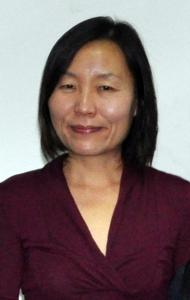
Gyoung-Ah Lee is a Professor in Anthropology at the University of Oregon, specializing in environmental archaeology, paleoethnobotany, and the origins of agriculture in East Asia. She has conducted fieldwork across Asia, Australia, Canada, and North America, focusing on the transition from foraging to farming and cultural niche construction. Education: B.A., Seoul National University (1992) M.S., University of Toronto (1997) Ph.D., University of Toronto (2003) Her research spans Neolithic to early historic societies, with expertise in phylogenetics of crops, traditional farming technologies, and quantitative archaeology. She teaches courses on food origins, East Asian archaeology, archaeobotany, and plant-human interactions. Recent publications examine Neolithic dietary patterns in Jeju Island, niche construction in Korea, and land use transformations in North China. These works integrate isotope analysis, soil micromorphology, and interdisciplinary methodologies. Active grants include the Korean Studies Promotion Service Grant (2015-20) and National Geographic Science & Exploration Grant (2015-16). Her fieldwork in Northeast China and Jeju Island reflects global research scope.
Dr. Lenny Salvagno is a University Teacher in Zooarchaeology at the School of Biosciences, University of Sheffield. He holds a PhD from the University of Sheffield (2017) and a prior degree from the University of Parma (2007). His academic affiliation spans institutions such as the Ludwig-Maximilians-Universität München (2020–present) and the University of Sheffield (2011–present). Education: PhD in Archaeology, University of Sheffield (2017) BA in Archaeology, University of Parma (2007) Research Interests: Salvagno specializes in animal domestication and husbandry intensification, with a focus on medieval Britain and prehistoric Italy. His work integrates geometric morphometrics and statistical analysis to resolve identification challenges in faunal remains, particularly sheep/goat and pig studies. He investigates ritual deposits, settlement continuity from the Neolithic to Modern era, and socio-economic transformations through faunal assemblages. Publication Trends: Salvagno’s research bridges methodological innovation (e.g., biometric systems for sheep/goat differentiation, tooth wear rate quantification) with socio-historical interpretation (pig husbandry during medieval-early modern transitions, goat rarity in England). His work often involves comparative studies across species (sheep, goat, cattle, pig) and periods (Neolithic to Post-Medieval), emphasizing regional contexts like Northern Italy and England. Scientific Awards: Marie Skłodowska-Curie Individual Fellowship (2020) Gerda Henkel Stiftung Post-doc Grant (2017) AHRC PhD Grant (2012) University Research and Innovation Grant (2011) Teaching and Collaboration: Salvagno actively teaches zooarchaeology to undergraduates and masters students and contributes to short courses like 'Understanding Zooarchaeology I'. He collaborates with institutions such as the University of Sheffield, Ludwig-Maximilians-Universität München, and the Gerda Henkel Stiftung, focusing on grants and multi-methodological research projects.
PD Dr. Reinhard Jung is an Associate Professor and Group Leader of the research group 'Mediterranean Economies' at the Institute for Oriental and European Archaeology (OREA) of the Austrian Academy of Sciences in Vienna. His work focuses on prehistoric archaeology in the Mediterranean and Southeast Europe, with a specialization in the Bronze and Early Iron Ages. He leads excavations and interdisciplinary research projects such as those at Punta di Zambrone (Italy) and Ayios Vasileios (Greece). Key research interests include Mycenaean Greece, Aegean-Italian cultural and economic interactions, chronology systems, and the application of archaeometric methods. He has published extensively on topics such as Mycenaean pottery production, Bronze Age trade networks, and the collapse of Mediterranean palatial systems. Recent research highlights include organic residue analysis at Ayios Vasileios, interdisciplinary studies on Punta di Zambrone's role as a harbor site, and investigations into the absolute chronology of Mediterranean Bronze Age events. His work bridges archaeology with natural sciences, emphasizing collaborative, data-driven approaches to understanding ancient societies. He has edited volumes on Mediterranean economies, Mycenaean palace destructions, and Bronze Age transformations, reflecting his role in shaping scholarly discourse. His contributions span excavations, publications, and leadership in international collaborative projects, making him a leading figure in Aegean and Mediterranean prehistory.