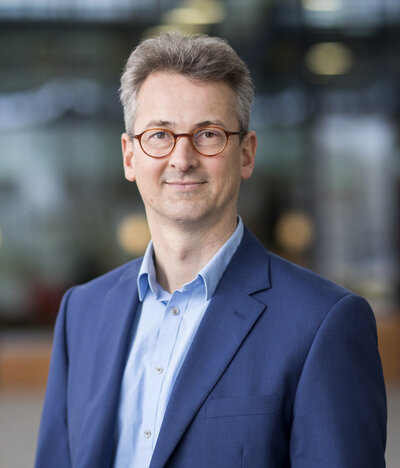
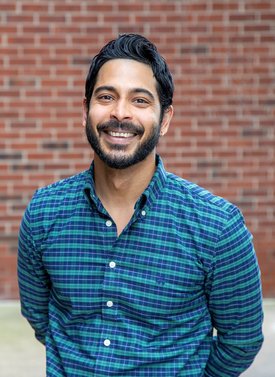
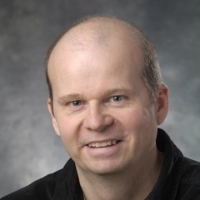
Axel Parmentier is a Lecturer and researcher at the École Nationale des Ponts et Chaussées, where he founded the AI for Air Transport industry research chair with Air France. His work focuses on the intersection of operations research and machine learning, particularly in data-driven combinatorial optimization and stochastic optimization, with industrial applications in air transportation, supply chain, and predictive maintenance. He holds a Ph.D. and has been recognized with awards including the AMIES Dissertation Award (2017) for applied mathematics with industrial impact and the Robert Faure Prize (under 35) from ROADEF. His research also includes contributions to structured reinforcement learning, optimization layers in machine learning, and explainable AI for operational decisions. Awards: AMIES Dissertation Award, Robert Faure Prize Labs/Teams: CERMICS laboratory, AI for Air Transport Chair (collaboration with Air France) Grants/Projects: Continent-scale inventory routing solutions, Renault’s logistics optimization His advising includes students like Victor Cohen, whose work on predictive maintenance was featured on France Culture.
Mark Bakker is a Professor in the Water Management Department within the Civil Engineering and Geosciences faculty at Delft University of Technology. He obtained his engineering degree from the Civil Engineering Department in Delft in 1989 and his Ph.D. from the Department of Civil Engineering of the University of Minnesota in 1994. His research focuses on advanced groundwater modeling techniques and hydrological processes. His research interests include modeling groundwater dynamics with impulse response functions, analytic element modeling of multi-aquifer flow, seawater intrusion modeling, analytic element modeling of unsaturated flow, groundwater whirls, and transient groundwater flow in aquifers with periodic boundary conditions. He has developed computational tools like TimML for analytic computation of heads and velocities in aquifer systems. His recent publications reveal a strong focus on practical applications of groundwater modeling, including arsenic removal systems in Bangladesh, coastal aquifer management, and innovative measurement techniques using fiber optic cables. His work bridges theoretical hydrogeology with real-world water management challenges, particularly in developing regions and coastal environments. Groundwater modeling techniques Seawater intrusion processes Analytic element method applications Time series analysis for aquifer characterization Multi-aquifer system dynamics Unsaturated zone hydrology Professor Bakker has made significant contributions to groundwater science through both theoretical developments and practical applications, with his work appearing in leading journals such as Water Resources Research, Ground Water, and Advances in Water Resources. His research has important implications for water resource management in coastal regions and developing countries.
Paola Cardamone serves as Associate Professor of Economic Policy within the Department of Economics, Statistics, and Finance (DESF) at the University of Calabria (UNICAL). She concurrently holds key administrative roles as Deputy Coordinator of both the Bachelor's and Master's Degree programs in Economics (since 2024) and as a member of the Quality Assurance Management Group (since 2017), having previously served on the DESF Board from 2015 to 2017. Her academic profile is anchored in rigorous empirical research on innovation dynamics and economic policy impacts. Her research program critically examines bank de-branching effects on regional firm creation, R&D spillovers in family-owned enterprises, university-industry knowledge transfer, and preferential trade agreement effectiveness. With strong methodological expertise in spatial econometrics and firm-level analysis, she investigates how geographical proximity, ownership structures, and green transition initiatives influence productivity—particularly within Italian manufacturing and food sectors. Recent work reveals family firms' distinct innovation patterns and the spatially contingent nature of knowledge diffusion. Analysis of her publication trajectory shows consistent focus on microfoundations of innovation, with increasing attention to sustainability dimensions since 2019. Her work demonstrates sophisticated use of quantile regression and spatial modeling to uncover heterogeneous effects across firm types, challenging uniform policy assumptions. The recurring emphasis on Italian regional contexts provides valuable insights for place-based economic development strategies. Cardamone actively contributes to the DIVARI DI PRODUTTIVITA', INNOVAZIONE E POLITICHE DI SVILUPPO research group, which examines efficiency, innovation diffusion, eco-innovation pathways, and European structural fund impacts. This collaborative environment supports her investigations into knowledge spillovers, green economy transitions, and university-firm linkages through meritocratic management practices.
Woan Foong Wong is an Associate Professor in the Department of Economics at the University of Oregon. She is also a Faculty Research Fellow at the National Bureau of Economic Research (NBER) in the International Trade and Investment program, and a Research Affiliate with the Centre for Economic Policy Research (CEPR) in International Trade and Regional Economics, as well as with CESifo in the Global Economy area. Dr. Wong serves as an Associate Editor for both the Journal of International Economics and Economic Inquiry. Dr. Wong completed dual Bachelor's degrees in Economics and Music Composition at Oberlin College and Conservatory of Music, followed by Master's and Ph.D. degrees in Economics from the University of Wisconsin-Madison. Prior to graduate school, she worked as a Research Analyst at the Peterson Institute for International Economics. As an international trade economist, Dr. Wong specializes in how trade frictions—particularly transportation technology and trade policies—shape economic activity, firm outcomes, and trade flows. Her research spans several key areas including global transportation networks, supply chain dynamics, trade policy analysis, and the economic impacts of trade liberalization. She has made significant contributions to understanding hub-and-spoke shipping networks, transshipment activity, and the evolution of global transportation usage over time. Dr. Wong's extensive publication record demonstrates consistent focus on transportation economics within international trade. Her work shows increasing attention to multimodal transport networks, supply chain resilience, and the interplay between trade policy and transportation infrastructure. A notable trend in her research is the examination of how smaller countries participate in global trade through hub economies, and how transportation costs affect trade patterns and welfare outcomes. Among her notable achievements, Dr. Wong was awarded the Sundaran Memorial Prize for Young Malaysian Researchers 2018-19 by the World Bank Development Research Group. Dr. Wong's research has been generously supported by multiple prestigious funding sources including the National Science Foundation, National Bureau of Economic Research, United States Department of Transportation, and Economic Research Institute for ASEAN and East Asia. These grants have enabled her to conduct comprehensive studies on transportation economics, trade policy impacts, and global supply chain dynamics.
Wei Wei is an Associate Professor at the University of Cincinnati, focusing on aerospace engineering with applications in unmanned systems and energy technologies. Her research integrates computational modeling, control systems, and electrochemistry to advance battery design, electrolysis, and UAV performance. Key research areas include mechano-electrochemical battery models, hydrogen production via electrolysis, and aerospace system optimization. Recent publications emphasize multiphysics simulations for energy devices, with applications in electric vehicles and renewable hydrogen. Articles demonstrate consistent innovation in 3D modeling of electrochemical processes, material degradation analysis, and transport phenomena in energy systems. Computational methods bridge fundamental electrochemistry and industrial applications.
Dawit Bekele is an Adjunct Senior Lecturer at the Global Centre for Environmental Remediation within the University of Newcastle , specializing in contaminant hydrogeology and vapour intrusion risk assessment. With over 15 years of experience in environmental research and consulting, he focuses on subsurface contaminant fate/transport modeling, conceptual site development, and groundwater remediation. Current Role: Adjunct Senior Lecturer, University of Newcastle Research Centres: Global Centre for Environmental Remediation (GCER) Expertise: Vapour Intrusion, PFAS Remediation, Contaminated Site Characterization Research Interests span multiple environmental domains: Contaminant hydrogeology and biogeochemistry Environmental risk assessment and remediation Vapour intrusion modeling and mitigation Water resource management Development of real-time monitoring systems Scientific Contributions include 15+ journal articles (2015-2025) covering topics like PFAS transport dynamics , electrokinetic remediation , and vapour intrusion pathways . His work emphasizes practical applications for environmental monitoring and remediation technologies. Grants totaling $5.1M highlight his leadership in CRC-funded projects related to vapour intrusion, PFAS remediation, and hydrocarbon-contaminated site management. He has supervised 6 completed and 2 ongoing research projects in environmental remediation.
Frederick L. Dryer serves as Educational Foundation Distinguished Research Professor in Mechanical Engineering at the University of South Carolina while holding Professor Emeritus status at Princeton University. Elected to the National Academy of Engineering in 2021, he maintains active research leadership despite emeritus status at Princeton since 2013, demonstrating continued scholarly engagement across institutional boundaries. Education: Bachelor of Aeronautical Engineering, Rensselaer Polytechnic Institute (1966) Ph.D. in Aerospace and Mechanical Sciences, Princeton University (1972) Dr. Dryer's research centers on combustion science and chemical kinetics with emphasis on propulsion systems and energy conversion. His work bridges fundamental reaction mechanisms to applied fuel engineering, particularly for transportation and aviation sectors. Key contributions include developing surrogate fuel methodologies, characterizing ignition phenomena, and establishing structure-property relationships for complex hydrocarbon fuels, directly impacting engine efficiency and emissions reduction strategies. Analysis of recent publications reveals sustained focus on combustion characteristics of alternative aviation fuels, with significant attention to droplet dynamics, preferential vaporization effects, and chemical functional group approaches for predicting ignition behavior. His work consistently integrates advanced experimental techniques like NMR spectroscopy with chemical kinetic modeling to address real-world fuel performance challenges. Scientific Awards: Egerton Gold Medal (2012) Propulsion and Combustion Medal (2014) Fellow of the International Combustion Institute Fellow of the American Society of Mechanical Engineers Fellow of the Society of Automotive Engineers Associate Fellow of the American Institute of Aeronautics and Astronautics Member of the National Academy of Engineering (2021) Although no longer accepting graduate students at Princeton, Dr. Dryer's academic lineage spans generations through his extensive mentoring documented in academic tree resources. His research has been consistently funded by major federal agencies and industry consortia focused on advancing combustion science, with particular emphasis on sustainable aviation and transportation fuel technologies. Dr. Dryer maintains collaborative research networks across global institutions including the University of Melbourne (where he holds an Honorary Professional Fellowship) and continues experimental work through university-affiliated combustion facilities, leveraging his editorial leadership in premier journals to shape the field's research agenda.
Prof. Dr. Ulrich Meyer is a full Professor of Computer Science at Goethe University Frankfurt, where he joined as a full professor in 2007 at the age of 35. He is also a Fellow at the Frankfurt Institute for Advanced Studies (FIAS) since 2020 and serves as the spokesperson for the DFG priority program "Algorithms for Big Data" (SPP 1736), which spans over 15 sites across Germany, Austria, and Switzerland. Professor Meyer received his Ph.D. in computer science from Saarland University in 2002. Following his doctorate, he worked as a postdoc and later as a senior researcher (W2) at the Max-Planck Institute for Computer Science in Saarbrücken before joining Goethe University Frankfurt. His research focuses on the design and engineering of algorithms and data structures for very large data sets, with particular emphasis on parallelism (Shared-Memory, clusters, GPUs), memory hierarchies (caches, SSDs, hard disks), and energy efficiency. His work spans the spectrum from theoretical worst-case results and average-case analyses to experimental evaluation of heuristics. A significant portion of his research involves graph algorithms, where his group has achieved more than a thousand-fold speed-up over state-of-the-art methods through algorithms with better access patterns. His recent work has focused on memory-efficient graph exploration in dynamically changing data, approximate solutions, and efficient generation of randomized graph test data. Professor Meyer has received numerous prestigious awards including the 2019 ESA Test of Time Award for the Delta-Stepping Algorithm, Best Paper Awards at ESA 2019 for research on Fragile Computing and Graph Generation, the 2011 Award Germany Land of Ideas for Ecosort, records in the JouleSort Competition in 2009/10, and the 2003 Best Dissertation Award from the University of Saarland. As spokesperson for the DFG priority program SPP 1736 "Algorithms for Big Data," Professor Meyer coordinates research across multiple institutions. His Algorithm Engineering group is also part of the DFG Research Unit FOR 2971 "Algorithms, Dynamics, and Information Flow in Networks" and the LOEWE Priority Programme CMMS. His research has been supported by various grants that have enabled significant contributions to parallel and external-memory graph algorithms, large-scale network generation, and energy-efficient computing. Professor Meyer's research group forms part of the Computer Sciences and AI Systems division at FIAS. They collaborate extensively with researchers across Europe through the DFG priority program and other initiatives. The group is particularly known for their work on memory-efficient graph algorithms, large-scale network generation, and contributions to understanding the algorithmic foundations of big data processing.
Gavan McGrath is an Adjunct Research Fellow at the University of Western Australia (UWA) , School of Agriculture and Environment, with a research focus on hydrology and eco-hydrological systems. He also holds an external position as Research Scientist at the Department of Biodiversity, Conservation and Attractions, Western Australia. Education PhD in Hydrology/Soil Physics, University of Western Australia (Award Date: 1 Jul 2007) Bachelor (Honours) in Environmental Engineering, University of Western Australia (Award Date: 31 Dec 1998) Research Interests Hydrological Processes Eco-hydrology Geomorphology Pesticide/Nutrient Transport Climate Change Impact on Water Systems Self-Organizing Environmental Systems Recent Research Trends His recent work focuses on salinity dynamics in shallow lakes, non-perennial river systems, salt marsh flooding under climate change, and geophysical indicators of forest drought vulnerability. Key themes include climate drying effects , land-use interactions , and stochastic hydrological modeling . Grants and Collaborations Biogeomorphology of Pilbara Rivers (Rio Tinto, 2016-2020) Herbicide Impact on Soil Processes (GRDC, 2014-2018) Critical Zone Concept Workshop (UWA, 2014) Ecosystem Change Management (ARC, 2014-2016) Network and Expertise His fingerprint includes expertise in salinity , climate change , preferential flow , and stochastic processes , with collaborations across Australia and global research networks.
Jeroen van Oijen is Full Professor in the Power & Flow group at the Department of Mechanical Engineering of the Eindhoven University of Technology (TU/e). His expertise lies in theoretical and numerical modeling of combustion, with a focus on engines and energy converters and his teaching covers mechanical engineering, chemically reacting flows, combustion modeling, and interfacial transport phenomena. His research interests include: Theoretical and numerical modeling of combustion Development of computational methods for chemically reacting flows Design of clean and efficient combustion devices for sustainable fuels Flamelet-Generated Manifold (FGM) method development Reduced chemical mechanisms for engineering applications Professor van Oijen's publications demonstrate a strong progression from fundamental flame theory to practical applications in complex combustion systems. His work focuses on flamelet-based chemical reduction techniques, particularly the Flamelet Generated Manifold approach for modeling premixed and partially-premixed flames. The research shows increasing sophistication in handling flame stretch, curvature, and preferential diffusion effects while maintaining computational efficiency for engineering applications. His scientific awards include: Fellow of The Combustion Institute (2021) Chairman of the Dutch Association for Flame Research Professor van Oijen has coordinated several national and international research projects on development of reduced models for turbulent combustion and emissions. His models are widely used for the design of clean and efficient engines, boilers, furnaces and gas turbine combustors. He has been actively involved in the Power & Flow research group, which focuses on developing new models for devices employing new combustion concepts and future sustainable fuels for the energy transition.
Ida Bastiaens serves as Professor and Department Chair of Political Science at Fordham University. She holds a BA from Davidson College and a PhD from the University of Pittsburgh, with extensive expertise in international political economy and development. Her research centers on global economic integration and its political consequences, examining how international trade liberalization affects fiscal policy in developing countries, citizen preferences regarding capital flows, and democratization pathways. Key projects analyze remittance impacts on political systems, globalization's influence on voting behavior, and tax aid effectiveness for revenue generation in the Global South. Recent publications reveal consistent focus on trade-agreement governance (particularly non-trade issues like labor/environmental provisions), fiscal vulnerability during economic liberalization, and democratic resilience in revenue-constrained states. Her work frequently employs cross-national comparative methods and mixed-method approaches. Professor Bastiaens teaches undergraduate courses including Introduction to Politics, Political Economy of Poverty, and International Political Economy, alongside graduate seminars in Comparative Political Analysis and Global Economic Relations.
Aaron Mohammed is an Assistant Professor in the Departments of Earth and Environmental Sciences and Civil and Environmental Engineering at Syracuse University. His research focuses on hydrology and hydrogeology in rapidly changing environments, including cold regions, coastal systems, and permafrost thaw dynamics. He holds a Ph.D. in Geology and Geophysics from the University of Calgary (2019), an M.Sc. in Geology from the University of Western Ontario (2014), and a B.Sc. in Civil and Environmental Engineering from the same university (2011). Research interests include the interplay between water, energy, and chemical transport in landscapes undergoing climate warming and development. Notable areas of expertise encompass numerical modeling of hydrological processes, permafrost thaw mechanisms, and coastal hydrogeology. His work aims to enhance understanding of hydrological processes in a changing climate and inform resource management strategies. Recent articles highlight studies on submarine groundwater discharge in tidal environments, saltwater intrusion dynamics, and the impacts of sea-level rise on Arctic hydrogeology. Mohammed has received prestigious fellowships, including the WARES Postdoctoral Fellowship (2021–2023) and the Ocean Frontier Institute Fellowship (2019–2021). He serves as an Associate Editor for the Hydrogeology Journal and reviews for top journals in hydrology and environmental science. Teaching includes courses on hydrogeology and hydrologic systems modeling. He has secured grants such as the NSF-funded study on winter climate impacts on snowmelt runoff and a Syracuse University grant on mercury mobilization from thawing permafrost. Mohammed actively participates in academic service, including search committees and editorial roles.
Dr. Chang Pao Li is a full-time Associate Professor of Economics at the School of Economics, Singapore Management University (SMU) , where she also serves as Associate Dean (Research and Industry Engagement) and sits on the University Tribunal . Her academic journey began with a B.A. in Business Administration from National Taiwan University (1994), followed by an M.A. and Ph.D. in Economics from the University of Michigan (1997, 2002). Research Priorities: Dr. Chang's work bridges GATT/WTO institutional analysis Political economy of trade policy Empirical trade-foreign direct investment (FDI) linkages Quantitative trade flow modeling Education systems' impact on human capital and trade patterns Flood resilience in firm performance Global value chain dynamics Spatial dependence in production functions Notable Contributions: Her 2022 World Economy paper on global value chains and the CPTPP, and the 2022 Management Science study on country image effects in trade stand out among her 15 most recent publications. Current projects examine WTO concessions balancing Preferential trade agreement depth Flood impact on Chinese firms China-U.S. trade war responses Global value chain effects on Singapore Academic Leadership: As Associate Dean, she drives industry engagement strategies while advising PhD candidates like Wei Jin , Yuting Chen , and Phuong Nguyen . Though no specific awards are listed, her editorial roles at Review of World Economics and Economic Modelling underscore scholarly influence. Methodological Impact: Known for expanding Penrose's power index simulations and developing spatial econometric frameworks for production function estimation, her work appears in top journals including Journal of International Economics , Journal of Development Economics , and Mathematical Social Sciences .
Ryan Johnson is an Assistant Professor in the Civil & Environmental Engineering Department at the University of Utah . His research focuses on integrating machine learning and open-source software into hydrological modeling, particularly in snow distribution, water supply forecasting, and low-cost snow monitoring systems. He teaches courses in Hydraulics , Data Science , and Hydroinformatics . Current research projects include: Deep neural networks for heterogeneous snow modeling in the Western US. LSTM-based extensions of the National Water Model to season-to-season forecasts. Low-cost snow monitoring systems for critical water supply catchments. He has secured grants from institutions like the University of Alabama , U.S. Geological Survey , and National Oceanic and Atmospheric Administration , totaling over $1.2M in funding since 2023. His work emphasizes climate-resilient water management, with a focus on urban flooding, water quality, and adaptive infrastructure strategies. Recent publications span topics like real-time urban drainage control, climate-sensitive water demand modeling, and the Great Salt Lake's declining resilience. Johnson collaborates widely, with co-authors from institutions such as MIT, NOAA, and the University of Utah’s Department of City & Metropolitan Planning.
Gary Parkin is an Associate Professor at the University of Guelph, affiliated with the Ontario Agricultural College's School of Environmental Sciences. His research focuses on measuring and modeling water flow, solute transport in the unsaturated zone, and groundwater quality in rural areas. Key areas include hydrologic water budgets, electromagnetic soil characterization, and contaminant transport in the vadose zone. Education: B.Sc., M.Sc. from the University of Western Ontario; Ph.D. from the University of Guelph. He collaborates with the University of Waterloo and Sri Lankan institutions on groundwater-related projects. Research interests span soil physics, shallow groundwater dynamics, soil water budgets, and nitrate leaching. His work emphasizes practical applications in agriculture and environmental sustainability. His publications (2010) explore soil moisture sensors, nitrogen dynamics in manure, land surface modeling, geophysical instruments for drainage, and radar-based soil wetting front analysis. These contributions address agricultural hydrology and environmental engineering challenges. Labs and offices: Alexander Hall 135 (lab and office).