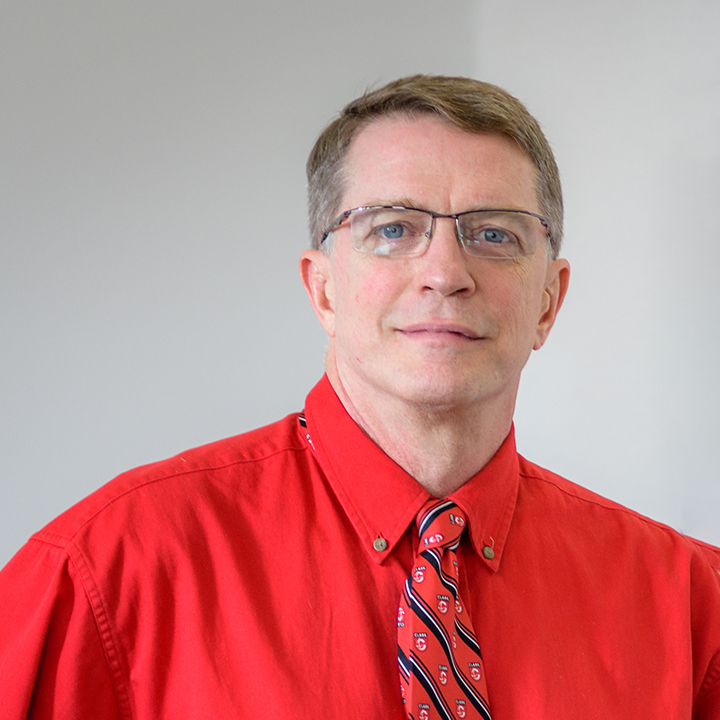
Robert Gilmore Pontius Jr. is a Professor at Clark University's Graduate School of Geography specializing in Geographic Information Science with expertise in Land Change Science , Simulation Modeling , and Statistical Analysis . He develops quantitative methods for spatial data analysis that are implemented in the TerrSet software suite. B.S. Mathematics & Economics , University of Pittsburgh (1984) M.S. Applied Statistics , Ohio State University (1989) Ph.D. Environmental Science , SUNY College of Environmental Science and Forestry (1994) His research focuses on map comparison methodology and land change modeling , particularly addressing quantity disagreement and allocation disagreement in spatial data. He pioneered the Total Operating Characteristic (TOC) framework and advanced techniques for accuracy assessment in remote sensing . Recent publications analyze land category transitions , urban risk modeling , and multi-resolution map comparison . His work has received 19,000+ citations and been funded by NSF , NASA , and Edna Bailey Sussman Fund for research in Plum Island Ecosystems and Brazilian Cerrado Biome . Michael Breheny Prize (2005) Fulbright Scholar of Brazil Clark Labs research affiliate Scientific Advisory Board member, MapBiomas He teaches GIS & Land Change Models and GIS & Map Comparison , with student-created tutorials viewed internationally. He also performs as Doctor Stardust , a professional juggler who won the International Jugglers Association's People's Choice Award .
Reza Talemi is a Professor and Head of the Elooi Research Laboratory within the SCALINT Division at the Department of Materials Engineering (MTM), Faculty of Engineering Technology, KU Leuven, Belgium. His research focuses on structural integrity of materials fabricated through advanced manufacturing techniques, with particular expertise in impact dynamics, fracture mechanics, and fatigue analysis of metallic materials. His educational background shows extensive specialization in materials science and engineering, with research focusing on structural integrity assessment of advanced materials. His work bridges experimental and numerical approaches to understand material behavior under various loading conditions. Talemi's research interests span structural integrity of advanced materials, tribo-mechanical fracture, innovative testing methods for material behavior assessment, and advanced numerical modeling of material failure. His work has significant applications in aerospace, energy, and manufacturing sectors where material integrity is critical for safety and performance. His recent publications demonstrate a strong focus on additive manufacturing technologies, particularly examining fretting fatigue behavior of additively manufactured components, residual stress characterization, and microstructural analysis. The research shows consistent advancement in understanding how advanced manufacturing processes affect material properties and structural performance. Among his notable contributions are development of specialized testing apparatus for evaluating material performance in dovetail joint configurations, advanced numerical modeling techniques for predicting material behavior, and innovative approaches to characterize material integrity under complex loading conditions. Professor Talemi actively supervises numerous PhD students and leads multiple research projects, including 'Precise advanced material processing via controlled fatigue fracture' and 'Hybrid Experimental and Numerical Framework for Monitoring Structural Integrity in Aerospace Structures,' demonstrating his leadership in both academic and applied research domains.
Marcelo Pereyra is a Professor in Statistics at the School of Mathematical & Computer Sciences of Heriot-Watt University and the Maxwell Institute for Mathematical Sciences in Edinburgh, UK. His academic journey began with a double M.Eng. degree from ITBA (Argentina) and INSA Toulouse (France), followed by a M.Sc. from INSA Toulouse in 2009. He earned his Ph.D. in Signal Processing from the University of Toulouse in 2012, after which he served as a Research Fellow in Statistics at the University of Bristol from 2012 to 2016. In 2017, he joined Heriot-Watt University as an Assistant Professor in Statistics, was promoted to Associate Professor in 2019, and subsequently to Professor in Statistics in 2023. His educational background includes: Ph.D. in Signal Processing, University of Toulouse (2012) M.Eng. (double degree) from ITBA (Argentina) and INSA Toulouse (France), with M.Sc. from INSA Toulouse (2009) Professor Pereyra's research advances the statistical foundations of quantitative and scientific imaging. He has made important contributions to Bayesian imaging sciences and developed significant connections between statistical, variational, and machine learning approaches to imaging. His specific interests include robust uncertainty quantification in imaging inverse problems, automatic calibration and verification of statistical image models, scalable Bayesian computation algorithms derived from stochastic diffusion processes, and applications of imaging with high social or environmental value. His work sits at the intersection of statistics, computational mathematics, and imaging science, with a strong emphasis on developing mathematically rigorous methods that provide reliable uncertainty quantification alongside point estimates. His recent publications demonstrate a clear trajectory toward integrating modern machine learning techniques, particularly diffusion models and generative approaches, with traditional Bayesian statistical methods for imaging problems. The research spans applications from medical imaging to astronomical observations and industrial inspection, with consistent emphasis on uncertainty quantification. His work increasingly focuses on developing scalable computational methods that can handle the high-dimensional nature of modern imaging problems while maintaining statistical rigor. Professor Pereyra has received numerous prestigious awards throughout his career: SIAM SIGEST Award in Imaging Sciences for contributions to proximal Markov chain Monte Carlo methodology Marie Curie Intra-European Fellowship for Career Development (2013) Brunel Postdoctoral Research Fellowship in Statistics (2012) Postdoctoral Research Fellowship from French Ministry of Defence (2012) Leopold Escande PhD Thesis award from the University of Toulouse (2012) INFOTEL R&D award from the Association of Engineers of INSA Toulouse (2009) ITBA R&D award from the Buenos Aires Institute of Technology (2007) Professor Pereyra is deeply committed to developing early career talent, currently supervising five PhD students and two Postdoctoral Research Associates (PDRAs), having previously supervised four PhD students and three PDRAs to completion. His research has received significant support from Heriot-Watt University and the UK Engineering and Physical Sciences Research Council (EPSRC). He is known for fostering multidisciplinary collaboration, having organized eleven international interdisciplinary research meetings in the UK since 2012 and chaired the IMA Conference on Inverse Problems in Edinburgh (2022). As a leader in his field, Professor Pereyra has held Invited Professor positions at prestigious institutions including Institut Henri Poincaré (Paris, 2019), Ecole Normale Supérieure Lyon (2023), and Université Paris Cité (2024). He frequently delivers invited talks at leading mathematical centers worldwide (CIRM, BIRS, IHP, Flatiron, Hausdorff School, INI, and ICMS) to promote multidisciplinary collaboration in imaging sciences.
Steven Wu is an Associate Professor in the School of Computer Science at Carnegie Mellon University, with primary appointments in the Software and Societal Systems Department (S3D) and affiliated roles in the Machine Learning Department, Human-Computer Interaction Institute, CyLab, and Theory Group. Previously, he held positions at the University of Minnesota (Assistant Professor) and Microsoft Research-New York City (post-doctoral researcher). Ph.D. in Computer Science, University of Pennsylvania (co-advised by Michael Kearns and Aaron Roth) His research spans Machine Learning , Algorithms , Privacy , and Fairness , focusing on responsible AI foundations, interactive learning, causal inference, and economic applications. Recent work explores uncertainty quantification and privacy risks in synthetic data. He has received prestigious awards including the NSF CAREER Award and Penn's Rubinoff Award for his dissertation. His group mentors students across Ph.D. , postdoc, and visiting programs, with alumni now at institutions like UC Berkeley, Stanford, and Amazon. Key grants: NSF, Okawa Foundation, Open Philanthropy, Amazon, Google, J.P. Morgan, Meta, Mozilla, Apple, Cisco
Hugo Lewi Hammer er professor ved Oslo Metropolitan University, tilhørende Faculty of Technology, Art and Design og Department of Information Technology – Mathematical Modeling . Hans forskning fokuserer på forbedring av pålitelighet og transparens i maskinlæring, forsterkende læring og dyb læringsmodeller gjennom metodikk innen modelltolkning, usikkerhetskvantifisering, robust statistikk og kausal inferens. Hans nylige arbeid inkluderer: AI-drevet optimering i assistert reproduksjonsteknologi (embryoutvalg og sædcelleanalyse) Medisinsk bildebehandling (polypdeteksjon, meibomkertutgang) Neural nettverkstolkning og usikkerhetsmodellering i EEG-analyse Biomekanisk prediksjon av muskelutmatting Hans publikasjoner viser mangfoldige anvendelser av AI i medisin og teknologi, med spesialvekt på: Explainable AI (XAI) i diagnostikk og behandling Usikkerhetskvantifisering i dyb læring Automatisering av medisinske prosedyrer (ICSI, embryoanalyse) Stokastisk simulering og kausal inferens Hammer er engasjert i forskningsgruppene Applied Artificial Intelligence og Mathematical Modeling og har publisert over 130 vitenskapelige artikler og 7 forskningsrapporter.
Carl R Schmidt is an Associate Professor in the Department of Physics & Astronomy at Michigan State University, where he conducts theoretical research in high-energy particle physics with a focus on quantum chromodynamics and proton structure. His work is central to advancing precision predictions for collider experiments worldwide. Education: Ph.D. in Physics, Harvard University (1990) Dr. Schmidt's research program revolves around parton distribution functions (PDFs) and their applications in high-energy collisions. As a key member of the CTEQ collaboration, he develops global QCD analyses (including CT10, CT14, and CT18 PDF sets) that incorporate data from the LHC, HERA, and fixed-target experiments. His expertise spans Higgs boson production mechanisms, electroweak symmetry breaking in beyond-Standard-Model scenarios (particularly little Higgs models), top quark physics, and photon-induced processes. His theoretical frameworks directly enable precision tests of the Standard Model and searches for new physics at energy frontiers. Analysis of his 15 most recent publications (2019-2024) reveals a dominant focus on reducing PDF uncertainties through novel methodologies and incorporation of high-precision LHC data. Key themes include the determination of photon content within the proton, NNLO corrections to global fits, and applications to critical measurements like the weak mixing angle and Higgs cross-sections. His work bridges theoretical developments with experimental requirements, particularly for ATLAS and CMS collaborations. Scientific awards: No awards or fellowships were documented in available sources While specific student mentorship details are absent from current records, his active role in the CTEQ collaboration—which involves extensive international collaboration and training—suggests significant contribution to graduate education. Research funding is inferred through CTEQ's institutional support from the U.S. Department of Energy and National Science Foundation, though specific grants aren't itemized in the source material. Dr. Schmidt operates within the CTEQ framework, a major international consortium connecting theorists and experimentalists to refine QCD understanding. This collaboration maintains vital links with LHC experiments and drives community-wide efforts in PDF development through regular workshops and shared computational frameworks.
Dr. Ye Zhao is an Associate Professor and Woodruff Faculty Fellow at the Georgia Institute of Technology's Woodruff School of Mechanical Engineering, where he directs the Laboratory for Intelligent Decision and Autonomous Robots (LIDAR). He holds affiliations with the Institute for Robotics and Intelligent Machines, Machine Learning Center, and Supply Chain and Logistics Institute. Dr. Zhao received his Ph.D. from UT Austin (2016) and completed postdoctoral training at Harvard University. Research Focus: His work integrates planning, control, and learning for contact-rich robots, emphasizing computationally efficient algorithms with formal safety guarantees. Key research thrusts include: Reactive synthesis for terrain-adaptive locomotion and manipulation Vision-tactile perception for deformable object grasping Social navigation of bipedal robots in human environments Distributed optimization for multi-robot coordination His lab utilizes platforms including Mini Cheetah quadruped, Cassie biped, and custom manipulators. Publication Trends: Recent articles demonstrate a strong focus on bridging formal methods (temporal logic, reactive synthesis) with learning-based approaches (RL, transformers) to enhance robustness in locomotion and manipulation. Key themes include terrain adaptation, human-robot interaction, and real-time model predictive control. Awards & Honors: ONR Young Investigator (2023) NSF CAREER Award (2022) IEEE ICRA Best Automation Paper Finalist (2021) IEEE Senior Member (2022) Woodruff Faculty Research Award (2023) Educational Initiatives: Leads the Vertically Integrated Program (VIP) for Agile Locomotion & Manipulation, engaging 80+ undergraduates in robotics research. The team won 1st place in Georgia Tech's VIP Innovation Competition (2021, 2022).
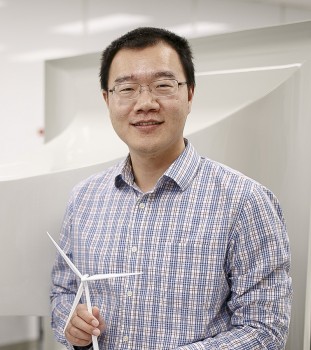
Dr. Jie Zhang is a Professor in the Department of Mechanical Engineering at the University of Texas at Dallas (UTD), affiliated with Electrical and Computer Engineering and the Center for Wind Energy. He holds a Ph.D. in Mechanical Engineering from Rensselaer Polytechnic Institute (2012), and M.S. and B.S. from Huazhong University of Science & Technology (2008, 2006). Before joining UTD in 2015, he was a Research Engineer and Postdoctoral Researcher at the National Renewable Energy Laboratory (2012–2015). His research focuses on sustainable energy systems, including renewable integration, grid resilience, and AI-driven optimization. Notable projects include using Navy ships for emergency power, hydrogen systems in Texas, and generative AI for EV cybersecurity. His lab, the Design and Optimization of Energy Systems (DOES), has secured grants from DOE, NSF, and industry partners. Dr. Zhang has authored over 100 peer-reviewed publications and received awards such as the ONR Young Investigator Award (2020), ASME Design Automation Young Investigator Award, and 16 best paper awards. He leads a team of ~15 graduate/undergraduate students and postdocs, with alumni in academia and industry. Recent achievements include a 2025 UTD Faculty Research Award, promotion to Full Professor (2025), and a $3.5M DOE grant for EV cybersecurity research. His work bridges engineering, AI, and policy to address energy challenges like decarbonization and grid resilience.
Dr. Igor Chernyavsky is a Senior Lecturer in Applied Mathematics at the Department of Mathematics, The University of Manchester. His research focuses on complex living systems, particularly transport phenomena and biofluid dynamics in tissue physiology. He leads projects in continuum mechanics, mathematics in life sciences, and uncertainty quantification. His work contributes to UN Sustainable Development Goals through initiatives like Digital Futures, Christabel Pankhurst Institute, and Henry Royce Institute. Research interests include placental hemodynamics, biomimetic models, and multiscale modeling of biological systems. Key projects involve placental circulation modeling for stillbirth prediction, umbilical cord dynamics, and microfluidic studies of blood flow in porous media. He collaborates on placental imaging, bioreactor engineering, and clinical placentology. Recent publications highlight placental oxygenation, umbilical cord solute transfer, and robust fabrication of PDMS microcapsules mimicking red blood cells. His work bridges experimental and theoretical approaches, emphasizing clinical translation. He supervises PhD students and leads grants totaling £ millions, including Maternal & Fetal Health Research Centre (2018-2035) and ROBUST-BIOPRINT (2023-2025). He actively seeks collaborations in biomaterials, fluid dynamics, and biomedical engineering. Labs/teams: Continuum Mechanics Group, Mathematics in Life Sciences Team, and Uncertainty Quantification & Data Science Group.
Prof. Dr.-Ing. Joachim Denzler is a Professor leading the Chair for Digital Image Processing (Lehrstuhl für Digitale Bildverarbeitung) at Friedrich-Schiller-Universität Jena. His research spans computer vision, machine learning, medical imaging, and remote sensing applications across diverse domains including biomedical analysis, environmental monitoring, and facial recognition systems. His research interests focus on explainable AI, causal discovery, physics-informed neural networks, and bias mitigation in deep learning models. He has made significant contributions to fine-grained classification, concept activation vectors, and privacy-preserving techniques in facial recognition. His work often bridges theoretical computer vision with practical applications in medical diagnostics, environmental science, and infrastructure monitoring. His recent publications demonstrate a strong trend toward causal discovery methods, physics-informed neural networks, and addressing bias in machine learning systems. His work spans both theoretical advancements in model interpretability and practical applications in medical imaging, environmental monitoring, and infrastructure safety. The interdisciplinary nature of his research is evident from collaborations with ecologists, neuroscientists, and civil engineers. Best Paper Award at International Conference on Pattern Recognition (ICPR) 2024 Prof. Denzler actively mentors numerous PhD students and postdoctoral researchers, with frequent co-authors including Maha Shadaydeh, Niklas Penzel, Gideon Stein, and Tim Büchner appearing as first authors on significant publications. His laboratory has secured research funding across multiple domains including medical imaging, environmental monitoring, and AI safety. His work on CausalRivers represents a major contribution to benchmarking causal discovery methods with real-world time series data. The Chair for Digital Image Processing maintains strong industry and clinical partnerships, particularly in medical imaging applications for facial palsy analysis and neonatal care. Prof. Denzler's team has developed novel techniques for dam deformation monitoring using remote sensing data and created advanced methods for analyzing plant diversity effects on ecosystem functioning.
Dewar Finlay is a Professor of Electronic Systems and Head of the School of Engineering at Ulster University . He previously served as Research Director for the School of Engineering and Interim Associate Dean for Research & Impact within the Faculty of Computing, Engineering and the Built Environment. His work bridges healthcare technology and computational engineering. Education: BEng in Electronic Systems, Ulster University PhD in Computing, Ulster University Research Interests: His research focuses on healthcare technology with emphasis on computerised ECG analysis and deep learning applications in cardiology . He explores AI-driven diagnostics , signal processing , and medical device validation through projects like DTNet+ Digital Twin Network and IoT-Driven Cybersecurity Framework for Intrusion Detection in Drones . Scientific Awards: Best Poster (2024) - Calibrated Uncertainty AI in ECG Analysis Early Career Investigators Award (2022) - British Society for Heart Failure Grants & Collaborations: He has secured funding from EU Horizon 2020 , RCUK , DEL , and InvestNI . Current projects include AI-assisted echocardiography for congenital heart defects in Sub-Saharan Africa and federated learning frameworks for cardiac healthcare.
Prof. Dr. Thilo Streck is a Professor of Biogeophysics at the Institute of Soil Science and Land Evaluation, University of Hohenheim, Germany . He has served as Head of the Department of Biogeophysics since 2001 and was Head of the Institute of Soil Science and Land Evaluation (2002-2006) . Since 2023, he is the Research Director of the Computational Science Hub (CSH), University of Hohenheim . His research focuses on: Soil and environmental physics Measurement and modeling of terrestrial ecosystem processes Land surface processes (soil-plant-atmosphere exchange) Environmental fate of chemicals Regionalization and risk assessment Recent publications highlight his work in 2025 on trait-based microbial modeling , land-atmosphere feedback observatories , and climate change impacts on agricultural systems , with 2024 work on crop yield prediction , water demand modeling , and organic matter stabilization . Scientific honors include: Gips-Schüle Award 'Freedom for Research' (2016) Fritz Scheffer Award of the German Soil Science Society (1994) He has led major DFG research initiatives: Research Unit 1695 (2012-2019) : Agricultural Landscapes under Global Climate Change PAK 346 (2008-2011) : Structure and Functions of Agricultural Landscapes
Chancellor Johnstone serves as an Adjunct Assistant Professor at the Air Force Institute of Technology (AFIT), specializing in interdisciplinary research bridging military applications with advanced analytics. His work integrates operations research, statistical modeling, and machine learning to solve complex defense-related challenges. His academic credentials include: PhD in Statistics, Iowa State University, 2020 MS in Operations Research, Air Force Institute of Technology, 2015 BS in Operations Research, United States Air Force Academy, 2013 Dr. Johnstone's research focuses on robust optimization for decision-making under uncertainty, anomaly detection in complex systems, and federated learning frameworks for distributed data environments. His methodology emphasizes conformal prediction for uncertainty quantification and physiology-based classification in human-machine systems, with direct applications to Air Force operations including pilot training, mission planning, and personnel selection. Analysis of his 2021-2024 publications reveals three dominant research trajectories: (1) military logistics optimization incorporating cyber-physical constraints; (2) physiological signal processing using graph neural networks for multi-modal data; and (3) responsible AI development addressing bias in high-stakes military personnel decisions. His work consistently demonstrates translation of theoretical advances—particularly in conformal prediction and federated learning—into operational Air Force contexts.
Brooks Paige serves as an Associate Professor in Machine Learning at University College London's Department of Computer Science, where he leads research at the intersection of artificial intelligence, computational biology, and environmental science. His work bridges theoretical machine learning with high-impact applications in drug discovery, genomics, and climate modeling. His research portfolio spans: Machine Learning (core methodology development) Artificial Intelligence (generative models and deep learning) Information Systems (data-intensive applications) Cognitive and Computational Psychology (human-AI interaction aspects) Analysis of his 56 publications (2021-2025) reveals a dominant focus on generative modeling for molecular design, particularly protein-ligand binding prediction and antibody-epitope analysis. His methodological innovations include Gibbs sampling variants, Gaussian processes on non-Euclidean domains, and active learning frameworks, applied across biomedical and environmental domains including Arctic sea ice forecasting and urban analytics. No scientific awards are documented in available sources. Similarly, student advisement records, research grant details, laboratory facilities, and collaborative team structures remain unspecified in the current dataset.
Maria Elena Martin Cañadas is an Associate Professor at the Department of Electrical Engineering within the Barcelona East School of Engineering (EEBE) at Universitat Politècnica de Catalunya (UPC). She leads research at the SEPIC group (Power Electronics and Control Systems), focusing on renewable energy integration and power systems optimization. Research Interests: Her work spans power electronics, microgrid design, energy policy analysis, and control systems for distributed generation. Key research areas include: Regulatory frameworks for renewable energy adoption Uncertainty modeling in energy systems High-temperature heat pump technologies Economic optimization of microgrids Solar energy integration and policy analysis Publication Trends: Recent articles (2020-2025) demonstrate strong focus on regulatory impacts in energy systems, with methodologies addressing uncertainty through stochastic modeling and probabilistic analysis. Dominant themes include microgrid optimization, solar policy evolution, and decarbonization strategies for industrial applications. Student Advising & Projects: Supervised doctoral candidates include Alonso (microgrid design), Coronas (distributed generation), and El Mariachet (power quality). Actively leads competitive R&D projects such as: Decarbonization of energy-intensive industries Power quality improvement in remote systems Regulatory framework development for Latin American biogas projects Research Group: Core member of SEPIC laboratory specializing in power electronics applications for sustainable energy systems, collaborating with industrial and international partners.