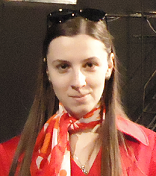
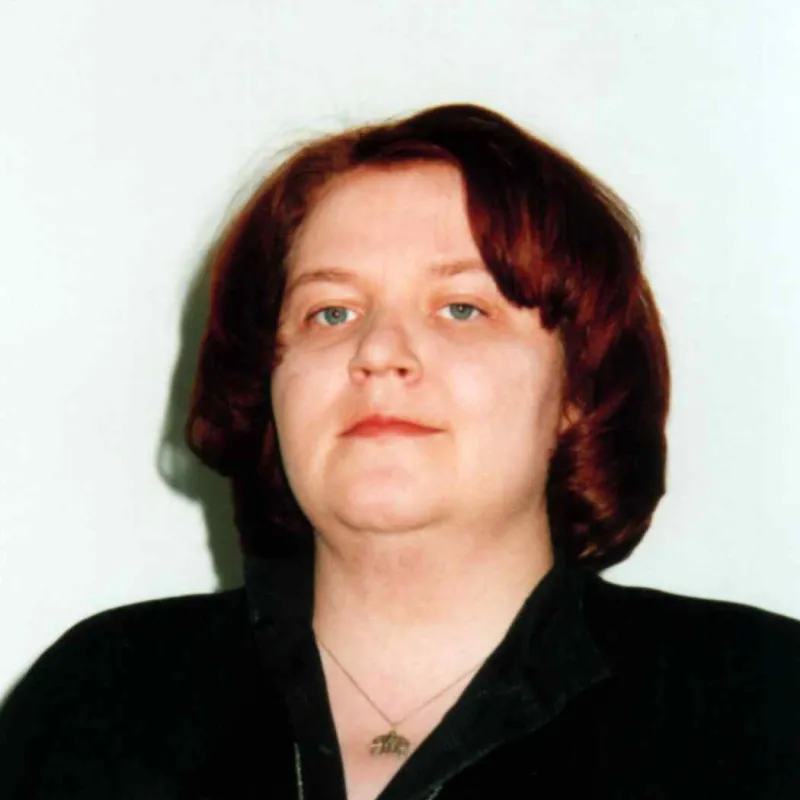
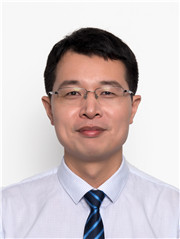
Dr. Onet-Marian Zsuzsanna is a Lecturer in the Department of Computer Science at Babes-Bolyai University in Cluj-Napoca, Romania. Her research focuses on applying machine learning techniques to software engineering challenges, particularly software defect prediction and restructuring. Academic Rank: Lecturer Affiliation: Babes-Bolyai University Department: Computer Science Email: zsuzsanna.onet@ubbcluj.ro Research Interests : Dr. Marian specializes in developing machine learning models (clustering, association rules, reinforcement learning) for software defect detection, package-level restructuring, and test order optimization. She also explores applications of Formal Concept Analysis in text summarization and music pattern discovery. Recent Publications highlight her work in source-code embeddings, unsupervised learning for software analysis, and comparative studies of online/traditional learning environments. Her methods often integrate domain-specific metrics and AI-driven optimization. Contact : zsuzsanna.onet@ubbcluj.ro | Office: Teodor Mihaly street, Room 440
Muhammad Usman Hanif is an Assistant Professor at the Department of Technology and Innovation within the Faculty of Engineering at the University of Southern Denmark (SDU). His research focuses on structural health monitoring , concrete durability , and damage assessment in civil engineering systems. Research Highlights Advanced signal processing for bridge damage detection Acoustic Emission techniques in CFRP-concrete debonding Machine learning applications in concrete durability prediction Augmented Reality integration with bridge monitoring systems Recent Publications (2023-2025) 2025: Machine learning in concrete durability 2024: Novel ΔT mapping for debonding detection 2023: FBG sensors in CFRP retrofitted beams 2022: MEMS accelerometers for damage assessment Teaching Activities Finite Element Method (2025) Non-linear Finite Element Method (2025) Advanced Finite Element Analysis (2024)
Itxaro Errandonea Aranibar is a Researcher at the Asociación Centro Tecnológico Ceit (CEIT), a research center formally linked to the University of Navarra where she maintains institutional affiliation. She earned her PhD from the University of Navarra in 2022 with doctoral research focused on industrial applications of digital technology. Education: PhD in Engineering from University of Navarra (2022) - Thesis: "Digital Twins in Maintenance: A Use Case Applied to Railway Infrastructure" Her research centers on digital twin implementation for predictive asset management, specifically targeting railway infrastructure resilience. She investigates real-time simulation models to optimize maintenance scheduling and reduce system downtime, bridging industrial engineering with smart infrastructure solutions. This work demonstrates applied focus on translating theoretical digital frameworks into operational industrial contexts. As a core researcher at CEIT, she operates within the center's engineering division that partners with transportation and industrial sectors. While specific lab assignments aren't detailed, her work aligns with CEIT's technology transfer mission in advanced manufacturing and infrastructure systems.
Dr. Mubashir Ahmad is a researcher at the School of Physics, Engineering & Computer Science, University of Hertfordshire. His work focuses on applying computational methods to solve real-world challenges in healthcare, infrastructure, and environmental sustainability. Research Focus Dr. Ahmad's expertise spans: Core AI/ML Techniques : Deep learning, machine learning algorithms, computer vision systems Application Domains : Medical imaging diagnostics, pollution modeling, infrastructure inspection automation, and climate impact analysis Emerging Areas : Robotic systems integration and big data fusion for industrial applications Project Engagement Deep Learning-powered Apple Disease Detection System (ADDS) (2024-2025): Serving as Co-Investigator to develop AI tools for agricultural disease identification in collaboration with UK farmers. Publication Trends His recent publications demonstrate consistent focus on operationalizing deep learning across diverse sectors. Dominant themes include automated infrastructure inspection (sewer systems), medical image analysis (chest radiographs), and environmental forecasting (air quality/pollution). This reflects a cross-disciplinary approach bridging computer science with civil engineering, healthcare, and environmental science.
Maurizio Bevilacqua serves as a Full Professor in the Department of Industrial Engineering and Mathematical Sciences at the University of Ancona (Università Politecnica delle Marche). His academic focus falls under the scientific sector IIND-05/A - Impianti industriali meccanici (Mechanical Industrial Plants). Based at the university's Engineering faculty located at Via Brecce Bianche in Ancona, Italy, Professor Bevilacqua maintains an active research profile with numerous publications spanning industrial engineering, digital transformation, and smart manufacturing technologies. Professor Bevilacqua's research interests center on cutting-edge industrial engineering topics including Digital Twin technology, Industry 4.0 implementation, smart retrofitting of industrial machinery, maintenance engineering, and robotics applications in manufacturing. His work demonstrates particular expertise in applying these technologies to challenging sectors such as oil and gas, food manufacturing, and maritime transportation. His research bridges theoretical innovation with practical industrial applications, as evidenced by his numerous case studies across different manufacturing sectors. An analysis of his recent publications (2023-2025) reveals a strong emphasis on digital transformation in industrial settings, with particular focus on Digital Twin implementations across various sectors. His work shows a progression from foundational Industry 4.0 concepts toward more sophisticated applications including Digital Triplet frameworks and human-machine integration approaches that anticipate Industry 5.0 paradigms. Many of his studies combine multiple advanced techniques such as machine learning, fuzzy cognitive maps, and association rule mining to solve complex industrial problems. Professor Bevilacqua's research demonstrates strong industry collaboration, with numerous case studies conducted in real industrial settings across multiple sectors including oil and gas, food manufacturing, and maritime transportation. While specific grant information isn't provided in the available materials, his extensive publication record suggests active participation in research projects that bridge academic theory with practical industrial implementation. His work frequently addresses challenges related to legacy system modernization, operational resilience, and sustainable manufacturing practices. Though specific laboratory affiliations aren't detailed in the available information, Professor Bevilacqua's research appears to focus on industrial applications of digital technologies, suggesting collaboration with industrial partners and possibly university research centers focused on manufacturing innovation, robotics, and industrial IoT. His work on smart retrofitting solutions indicates involvement with projects that transform conventional machinery into intelligent systems capable of integration within modern digital manufacturing ecosystems.
Dr. Abdelrahman Abuarqoub is a Senior Lecturer in Computer Security at the Cardiff School of Technologies , Cardiff Metropolitan University . He holds a PhD in Computer Science (2014) from Manchester Metropolitan University and an MSc (Distinction) in Data Telecommunications and Networks (2011) from the University of Salford . Research focuses on Computer Security , IoT Networks , and Lightweight Encryption Active member of IEEE TSUSC , MTAP-Springer , and other technical program committees Published extensively in IEEE , Springer , and ACM venues
Brian Caffo is a Professor in the Department of Biostatistics at the Johns Hopkins Bloomberg School of Public Health, Johns Hopkins University, with an active research profile evidenced by 2024-2025 publications and GitHub contributions. He is a key contributor to Neuroconductor (an R platform for medical imaging analysis) and the Acute to Chronic Pain Signatures (A2CPS) project, while maintaining significant educational impact through Coursera data science courses and open-source textbooks. His research spans biostatistics, neuroimaging analysis, and causal inference methodology, with emphasis on functional MRI data, multi-omics integration, and machine learning applications in public health. Current work focuses on advanced neural architectures for brain imaging, causal mediation in autism research, and biomarker discovery for chronic pain and neurodegenerative diseases. Analysis of his 15 most recent publications reveals dominant themes in transformer-based neuroimaging analysis (28%), causal inference applications (27%), and multi-omics/pain signature research (20%). His work consistently bridges statistical methodology with clinical applications in HIV prevention, autism spectrum disorders, and long COVID prediction through large collaborative projects like the National COVID Cohort Collaborative. Dr. Caffo leads the JHU Data Science Lab and contributes to multiple interdisciplinary initiatives including shell MEA development for neural organoids and DREAM-02 HIV microbicide trials. His GitHub profile shows active maintenance of educational repositories like LittleInferenceBook and regmodsbook, supporting widespread adoption of data science methods in biomedical research.
William Peterman is an Associate Professor in Wildlife Ecology and Management at The Ohio State University. His research integrates field observation, molecular lab work, and quantitative modeling to study biodiversity responses to climate change, habitat alteration, and urbanization. He focuses on animal population connectivity, habitat restoration, and conservation strategies across spatial-temporal scales. Landscape ecology and conservation biology Population genetics and metapopulation dynamics Climate change impact on amphibians and reptiles Recent publications highlight advancements in landscape resistance modeling, hybridization effects on conservation, and climate-agroecosystem interactions. His lab emphasizes interdisciplinary methods including biophysical models and camera trap technology for biodiversity monitoring. Current students in his lab include Grant Ravary, Olivia Ruppert, Marissa Roseman, Aidan McCarthy, Jess Dong, Ryan Wagner, and Allison Williams. He has developed specialized software (ResistanceGA) and teaches courses like ENR 5370: Management of Wildlife Habitat .
Dr. Bogumiła Hnatkowska serves as Assistant Professor at the Institute of Informatics within the Faculty of Computer Science and Management at Wrocław University of Science and Technology. Her academic career spans software engineering research and education with emphasis on model-driven approaches and quality assurance methodologies. Her research interests include: Software Engineering Analysis and Design of Information Systems Software Development Methodologies Model-Based Software Development Domain-Specific Languages Software Quality Recent publications (2021-2025) reveal concentrated research in model-driven engineering, business rules processing, and ontology integration. Key trends involve textual specification languages for use-cases, automated test generation mechanisms, and formal transformations for ontologies – demonstrating consistent application of theoretical rigor to practical software development challenges across agile and model-based contexts. Scientific Awards: No scientific awards were mentioned in the provided text Dr. Hnatkowska has served as principal investigator for multiple State Committee for Scientific Research grants including UML extensions for multimedia systems (2000), real-time systems analysis (2005), and model-driven database design (2008). Her teaching portfolio includes Software Engineering, Software System Development, and Advanced Programming Techniques courses where she supervises team projects providing students with hands-on development experience. She actively participates in partner programs including Visual Paradigm's Academic Training Partner Program (providing UML/BPMN/agile tools) and IBM Academic Initiative, supporting her research in software engineering methodologies and educational tool development.
Magdalena Von Der Thannen is a Senior Scientist & Lecturer at the Institute of Soil Bioengineering and Landscape Construction at the University of Natural Resources and Life Sciences, Vienna (BOKU). She earned her doctorate with distinction in 2019 and holds two master's degrees from BOKU Vienna - in Alpine Natural Dangers/Watershed Regulations (2014) and Landscape Planning and Landscape Architecture (2012). Her educational background includes: Doctorate (2019, passed with distinction) Master in Alpine Natural Dangers / Watershed Regulations (2014, BOKU Vienna) Master in Landscape Planning and Landscape Architecture (2012, BOKU Vienna) Dr. Von Der Thannen's research focuses on soil bioengineering, river restoration, life cycle assessment, carbon balance, ecosystem services, and eddy covariance measurements. Her work bridges engineering, ecology, and environmental science with particular emphasis on sustainable approaches to natural hazard protection and landscape management. She has developed methodologies for environmental life cycle assessment of alpine protective structures and soil bioengineering constructions, with a strong focus on carbon balance and ecosystem services valuation. Analysis of her publications reveals a consistent research trajectory focused on quantifying the environmental performance of bioengineering solutions. Her most recent work (2024-2025) emphasizes carbon accounting in urban green infrastructure and floodplain ecosystems, building upon earlier work on life cycle assessment methodologies. She has established connections between eddy covariance measurements and ecosystem services, particularly in riparian restoration contexts. Her scientific recognition includes: Jubiläumsfonds der Stadt Wien für die Universität für Bodenkultur (2020) Projektprämierung der Stadt Wien - BOKU Research Funding Programm 2020 Dr. Von Der Thannen has presented her research at numerous international conferences including the EGU General Assembly and INTERPRAEVENT meetings. Her work demonstrates strong collaboration with Austrian and European institutions focused on natural hazard management and sustainable infrastructure development.
Andrzej Raganowicz serves as an external lecturer at the Technical University of Munich (TUM) within the Chair of Urban Water Management, maintaining a dual affiliation with the Association for wastewater disposal in the Hachinger Valley as indicated by his institutional email domain. His academic credentials include a doctorate in engineering (Dr.-Ing.) and habilitation (habil.), demonstrating advanced scholarly qualification in his field. His research focuses on the intersection of urban water infrastructure and predictive analytics, with core expertise in sewer system condition forecasting and drainage channel rehabilitation. He pioneered statistical-stochastic modeling approaches for assessing structural integrity of drainage networks and developed methodologies for renovating property drainage connections, bridging theoretical engineering with municipal wastewater management practice. Dr. Raganowicz has established scholarly authority through two seminal Springer Vieweg publications: Use of statistical-stochastic models in sewer condition forecasting (2017) and Renovation of connecting channels for property drainage (2018). His work emphasizes practical implementation of predictive models for optimizing wastewater infrastructure maintenance cycles and resource allocation in municipal systems.
Satu-Pia Reinikainen is a tenured Professor in Computational Engineering at the Lappeenranta-Lahti University of Technology (LUT) School of Engineering Sciences . With expertise in chemometrics and multivariate analysis, her work bridges statistical modeling, spectroscopy, and environmental monitoring. Research Focus Development of advanced kernel-based methods for process control Application of hyperspectral imaging in material and environmental analysis Microplastic pollution dynamics in aquatic systems Integration of spectroscopic techniques for real-time monitoring Conservation of geological and heritage materials through data-driven approaches Her research combines chemometric algorithms, environmental data analysis, and industrial process monitoring to solve complex analytical challenges.
Junkai HE serves as an Assistant Professor in the Operations, Supply Chain and Information Management department at KEDGE Business School and is affiliated with the CESIT research center since September 2024. He earned his PhD in mathematics and computer science from Paris-Saclay University (France) in 2020, following which he conducted postdoctoral research at IRT SystemX and Télécom SudParis. His research specializes in decision making under uncertainty through advanced modeling and algorithm design , with primary applications in supply chain management , remanufacturing , and maintenance optimization . Key methodologies include stochastic programming, multi-objective optimization, and predictive maintenance modeling for complex industrial systems. Analysis of his 2019-2024 publications reveals a consistent trajectory in applying operations research to sustainable industrial practices. His work increasingly focuses on uncertainty integration in disassembly line balancing and remanufacturing systems, while maintaining strong foundations in classical scheduling problems for manufacturing and logistics. Publications predominantly appear in top-tier journals like the International Journal of Production Economics and Computers & Operations Research. He teaches core operations management courses including operations research, production planning, and logistics, demonstrating active educational engagement. His research at CESIT likely involves industry collaborations addressing real-world supply chain challenges, though specific grant details are unmentioned. As a CESIT researcher, he contributes to KEDGE's industrial technology research initiatives, bridging theoretical optimization methods with practical applications in manufacturing and logistics systems. Current work appears oriented toward sustainable supply chain innovations and digital transformation of maintenance practices.
Zhao Zhigang is an Associate Professor at the School of New Materials and New Energy, Shenzhen University of Technology, where he has been employed since May 2017. Previously, he served as a Lecturer at the School of Optoelectronic Engineering, Shenzhen University (2013-2017) and completed postdoctoral research at Shenzhen University (2010-2012) after earning his PhD from Huazhong University of Science and Technology. His academic journey began with undergraduate and master's studies at PLA Ordnance Engineering College (now Army Engineering University). His educational background includes: PhD in Optical Engineering, Huazhong University of Science and Technology (2005-2010) Master's in Optical Engineering, PLA Ordnance Engineering College (2002-2005) Bachelor's in Military Optoelectronic Engineering, PLA Ordnance Engineering College (1995-1999) Zhao's research focuses on hyperspectral imaging systems and machine learning applications for material classification. His work emphasizes embedded image data acquisition and processing using ARM and FPGA platforms, with significant contributions to micro-hyperspectral imaging technology. His research spans three primary areas: hyperspectral image processing on ARM/FPGA systems, machine learning applications in spectral analysis, and embedded AI implementations on FPGA/Zynq platforms. This interdisciplinary work bridges optical engineering, computer vision, and hardware design. Analysis of his recent publications reveals a strong emphasis on hyperspectral data compression techniques , machine learning applications for spectral analysis , and embedded system implementations . His work demonstrates a consistent focus on practical applications of hyperspectral imaging in fields ranging from food quality assessment to battery health monitoring, with increasing incorporation of deep learning techniques in recent years. His scientific recognition includes: Multiple teaching awards at Shenzhen University of Technology (2019-2024) Shenzhen City high-level professional talent designation (2016) Numerous national competition awards as student supervisor (2016-2023) Outstanding Paper Award at Shenzhen Optical Society (2010) Zhao has secured substantial research funding as Principal Investigator, including horizontal projects (2023-2024), Shenzhen Postdoctoral Research Funding (2019-2020), and Shenzhen Basic Research Projects. He has successfully guided students in academic competitions, resulting in five national first prizes. His research group maintains strong industry connections through multiple school-enterprise cooperation projects focused on practical applications of hyperspectral imaging technology. His laboratory work centers on FPGA-based embedded systems for hyperspectral imaging, with recent projects developing micro-hyperspectral spectrometers for UAV platforms, real-time video processing systems, and specialized hardware for spectral data acquisition and compression. These efforts demonstrate a clear trajectory from fundamental optical engineering toward practical applications of machine learning in spectral analysis.
Dr Richard Collins is a Senior Lecturer in Water Engineering at the University of Sheffield , affiliated with the School of Mechanical, Aerospace and Civil Engineering. His research focuses on hydraulic transients , pipeline integrity , and smart water infrastructure . Graduated with an Aerospace Engineering degree (2005) and PhD in Materials and Mechanical Engineering (2009) Current research explores pressure transients , leak detection , and autonomous robotic systems for pipeline inspection Projects include fatigue analysis , biofilm mobilisation , and ultrasound-based pipe assessment His publications emphasize cast iron pipe fatigue , acoustic leak detection , and transient-induced contamination . Funded by RCUK and Datatecnics , his work bridges mechanical engineering and civil infrastructure challenges.