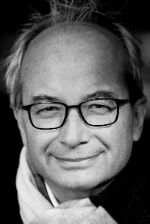
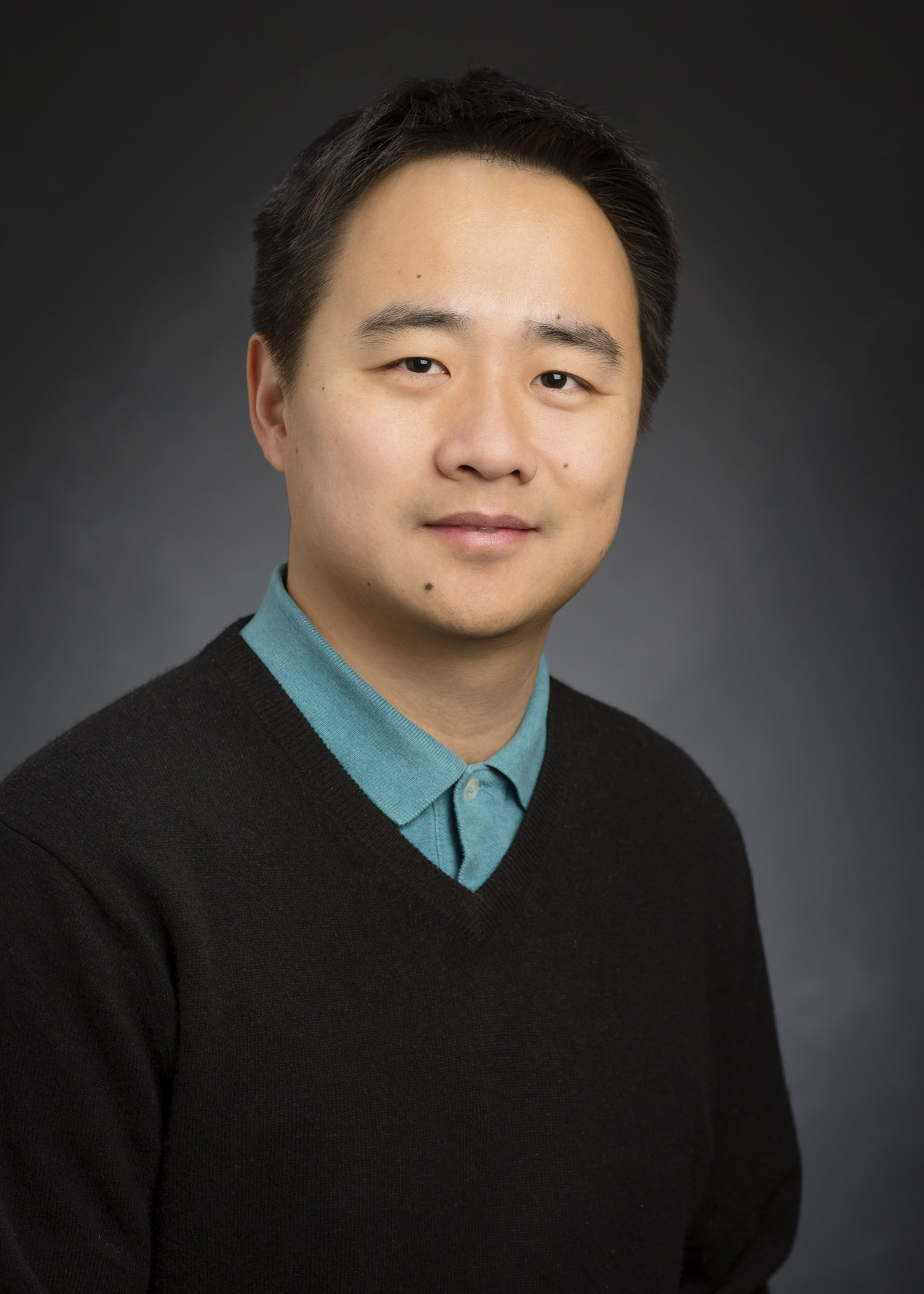
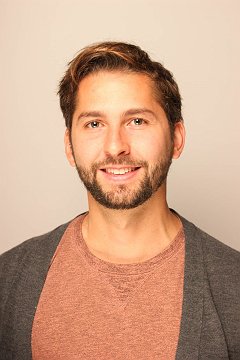
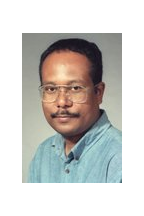
Mehdi Khamassi is a Research Director at the French National Center for Scientific Research (CNRS), assigned to the Institute of Intelligent Systems and Robotics (ISIR) at Sorbonne University in Paris, France. He holds an engineering background in computer science (specializing in AI and statistical modeling) from the National School of Computer Science for Industry and Business (2003), a Cogmaster in cognitive science from Pierre and Marie Curie University (2003), and a PhD in cognitive neuroscience from UPMC/Collège de France (2007). Recruited by CNRS in 2010, he co-organizes the Symposium of Biology of Decision-Making (SBDM) and co-directs the modeling major for the Cogmaster program. His research integrates computational modeling , neuroscience experiments , and robotic systems to study decision-making and learning mechanisms. Key interests include: Reinforcement learning in biological and artificial systems Role of social/non-social rewards in adaptive behavior Ethical implications of autonomous decision-making in AI Neuro-robotic models of hippocampal-prefrontal interactions Recent publications (2023-2025) demonstrate strong focus on reinforcement learning paradigms, AI alignment with human values, neurorobotics, and computational neuroscience. Work frequently bridges machine learning theory with empirical validation in biological systems or robotic platforms. He leads research within the ACIDE team at ISIR, exploring adaptive coordination of learning strategies in brains and robots. Current collaborations include NTUA (Greece), University of Oxford, and University of Trento.
Arnoldo Frigessi is Professor of Statistics at the University of Oslo, where he leads the Oslo Center for Biostatistics and Epidemiology and serves as director of BigInsight—a Centre of Excellence for Research-Based Innovation. This consortium unites industry, business, public actors, and academia to develop model-based machine learning methodologies for big data, with strong emphasis on health applications. His research centers on statistical methodology driven by real-world scientific challenges, specializing in stochastic models for complex dependence structures and computationally intensive inference algorithms. Core application domains include: Genomics and personalized cancer therapy (particularly breast and lung cancer) Infectious disease modeling (including pandemic response) eHealth, sensor data analysis, and recommender systems Personalized marketing and viral diffusion dynamics Analysis of his 15 most recent publications (2024-2025) reveals dominant themes in cancer systems biology , where he integrates multi-omics, single-cell transcriptomics, and computational modeling to decode tumor evolution under therapy. Parallel work advances infectious disease epidemiology through time-varying reproduction number estimation and mobility-based transmission modeling, while methodological innovations span synthetic data generation (TVineSynth), causal inference via target trial emulation, and Bayesian ranking models for recommender systems. Scientific Awards: No specific awards mentioned in source materials Frigessi actively supervises graduate students, including a Department of Informatics project on "Utilizing covariate information in recommender systems." His leadership of BigInsight—funded as a Research-Based Innovation Centre by the Research Council of Norway—secures major grants supporting interdisciplinary collaborations with industrial partners (e.g., Telenor, DNB) and public health institutions. Current projects integrate real-world clinical data with mechanistic models for treatment optimization. He directs BigInsight's multidisciplinary team of statisticians, computer scientists, and domain experts, while leading the Oslo Center for Biostatistics and Epidemiology's efforts in developing statistical frameworks for complex health data. These initiatives drive Norway's national strategy for data-driven health innovation.
David Clingingsmith is an Associate Professor in the Department of Economics at the Weatherhead School of Management, Case Western Reserve University, where he has been faculty since 2007. His research integrates economic theory with empirical analysis across diverse domains including automation, entrepreneurship, and social behavior. Education: PhD in Economics, Harvard University (2007) MA in Anthropology, University of Chicago (1998) BA, University of Toronto (1994) His research program explores the socioeconomic impacts of technological change, particularly how automation transforms manufacturing work and entrepreneurship. He employs mixed methodologies spanning causal inference econometrics, lab/field experiments, and qualitative analysis, with recent work developing AI techniques for analyzing interview corpora. Current projects examine job design in craft entrepreneurship and historical automation effects. Publication trends reveal strong focus on automation's economic consequences (2022-2024), pitch dynamics in entrepreneurship (2018-2023), and crisis policy responses (2020). His work consistently bridges economic history with contemporary issues, showing particular interest in behavioral mechanisms underlying status, consumption, and charitable behavior. Scientific Awards: Academy of Management Prize for Best Paper in Organizational Neuroscience (2021) Academy of Management Lewis-Progressive Fellowship (2016) Weatherhead School of Management Explorations Prize (2009) Dr. Clingingsmith serves as reviewer for top journals including Journal of Political Economy and Quarterly Journal of Economics, and participates in institutional governance through the Academic Integrity Board. While no specific grants are detailed in source materials, his research appears in leading outlets like Management Science and Experimental Economics. He also contributed COVID-19 policy analysis through Economic Policy Ideas for COVID-19 initiatives. He collaborates with interdisciplinary teams including healthcare economists (Helper, Shane) and development researchers (Khwaja, Kremer), and maintains an active ceramics practice at Brick Ceramic + Design studio since 2023.
Tetsunori Kobayashi is a Professor in the School of Fundamental Science and Engineering at Waseda University, Japan, where he has served since 1997. He is renowned for pioneering research in human–robot interaction, spoken language processing, and multimodal conversational systems, leading to over 230 refereed papers and an h-index of 35 (Google Scholar). Education: 1980 B.Eng. in Electrical Engineering, Waseda University 1982 M.Eng. and 1985 Dr.Eng. from Graduate School of Science and Engineering, Waseda University Research Interests: His work spans intelligent robotics , perceptual information processing , pattern recognition , image and audio processing , and conversational AI . He develops algorithms for real-time dialogue systems, multi-party conversation facilitation robots, and non-autoregressive speech recognition leveraging CTC and pre-trained language models. Recent Publication Trends: Since 2020 his group has advanced non-autoregressive end-to-end ASR (Mask-CTC, Intermpl, BECTRA), noise-robust attention , multi-look-ahead conversational ASR , and neural speaker diarization . They integrate BERT-style pre-training with CTC losses to accelerate inference while maintaining accuracy. Parallel work explores vision-and-language topics such as scene-graph generation, video semantic indexing, and personalized summarization for spoken news delivery. Scientific Awards: IEICE Fellow 2023 – for multi-modal multi-party conversation research IPSJ Fellow 2016 – for pioneering robot conversation studies JST Award for Academic Start-ups 2024 Best Paper Awards from IEICE, IEEE BTAS, ACM SIGGRAPH VRCAI, and several IPSJ workshop prizes Advising & Grants: He has mentored dozens of PhD and Master’s students who now lead in academia and industry. Major funded projects include JST CREST on conversational robotics, NEDO and JST-support for AI-based speech interfaces, and industry collaborations with NHK, OKI, and NEC. Labs & Teams: Kobayashi heads the Perceptual Computing Laboratory at Waseda, conducting interdisciplinary research with domestic and international partners such as MIT, ATR, and NHK Science & Technology Labs.
Jian Peng is an Associate Professor and Willett Faculty Fellow at the University of Illinois at Urbana-Champaign with primary appointment in the Department of Computer Science and courtesy appointments in the College of Medicine. He holds affiliate positions at the Institute of Genomic Biology, Cancer Center at Illinois, and National Center for Supercomputing Applications. His research integrates computational biology and machine learning, focusing on functional genomics, cancer genomics, neurodegenerative diseases, deep learning architectures, and reinforcement learning applications in biological domains. His work bridges algorithmic development with real-world biomedical challenges. Analysis of recent publications (2020-2021) reveals strong emphasis on machine learning applications in drug design, protein engineering, and computational biology. Key technical themes include generative modeling for molecular structures, reinforcement learning advancements, causal inference frameworks, and novel computer vision approaches. The work demonstrates consistent interdisciplinary innovation across computational and biological domains. Major Scientific Awards: Donald Biggar Willett Faculty Fellow (2020) Overton Prize - ISCB (2020) Dean's Award for Excellence in Research (2020) C.W. Gear Junior Faculty Award (2019) NSF CAREER Award (2017-2022) Sloan Research Fellowship (2016) He leads significant research initiatives including co-directing the NSF AI Institute's Molecular Maker Lab and an ASAP collaborative grant for Parkinson's disease research. His students have secured faculty positions at leading institutions including Georgia Tech and University of Washington.
Jürgen Cito is an Associate Professor with tenure at Vienna University of Technology (TU Wien), specializing in software engineering, explainable AI, and performance engineering. He leads research at the IPA Lab (as indicated by his personal website) and maintains a visiting researcher position at Google. His academic journey began with joining TU Wien as an Assistant Professor in Spring 2020, with promotion to Associate Professor announced in April 2024. His research interests span multiple critical areas of modern software development, with particular focus on developer experience, program comprehension, and the intersection of AI with software engineering practices. His work bridges theoretical foundations with practical industrial applications, as evidenced by collaborations with major technology companies. Analysis of his recent publications reveals a strong emphasis on practical tools and methodologies that enhance software quality, performance, and security. His research trajectory shows increasing focus on explainable AI techniques applied to software engineering problems, performance prediction from source code, and automated security testing approaches that leverage large language models. best teaching award for distance learning for Web Engineering (2020) Cito actively contributes to the software engineering community through numerous conference committee roles, including program committee positions at ASE, ICSE, ESEC/FSE, and other major venues. His lab appears to focus on developer tools, program analysis, and AI-assisted software engineering, with connections to both academic and industrial research environments.
Shin Yoo is a tenured Full Professor in the School of Computing at Korea Advanced Institute of Science and Technology (KAIST), where he leads the Computational Intelligence for Software Engineering (COINSE) research group. He received his PhD from King's College London in 2009 under the supervision of Prof. Mark Harman. Currently, he serves as the General Chair for ASE 2025, which will be held in Seoul, Korea. Professor Yoo earned his PhD in Computer Science from King's College London (2009), following an MSc in Software Engineering with Distinction from the same institution (2006). His academic journey includes positions as Tenured Associate Professor (2021-2025), Associate Professor (2018-2021), and Assistant Professor (2015-2018) at KAIST, as well as Lecturer and Research Associate positions at University College London and King's College London. His research focuses on the intersection of software engineering and artificial intelligence, particularly in search-based software engineering, software testing, automated debugging, SE4AI (Software Engineering for AI), and AI4SE (AI for Software Engineering). Professor Yoo's work bridges theoretical foundations with practical applications, developing innovative techniques for fault localization, test case generation, and debugging using machine learning and genetic programming approaches. His research has significant implications for improving software reliability and development efficiency in both traditional software systems and AI-powered applications. Professor Yoo's recent publications demonstrate a clear trend toward leveraging large language models and deep learning techniques for software engineering tasks. His work spans fault localization, automated debugging, GUI testing, and program analysis, with increasing focus on the challenges and opportunities presented by AI systems. His research shows a consistent evolution from traditional search-based software engineering to AI/ML-enhanced approaches, reflecting the broader trends in the field. ACM SIGEVO HUMIES Silver Medal (2017) for human competitive application of genetic programming to fault localization research IEEE TCSE Most Influential Paper Award (ICST 2024) for work on mutation-based fault localization Professor Yoo has supervised five PhD students to completion, with his former students now holding positions as assistant professors, post-doctoral researchers, and software engineers at institutions including Kyoungpook National University, Max-Planck Institute Security & Privacy, Università della Svizzera Italiana, Roku Korea, and NUS. He currently serves as an associate editor for the Journal of Empirical Software Engineering and ACM Transactions on Software Engineering and Methodology, and has held significant leadership roles in major software engineering conferences including Program Co-chair for SSBSE (2014), ICST (2018), and ICSE NIER track (2020), General Chair for SSBSE (2022), and Testing & Analysis Area Chair for ICSE (2024). As leader of the Computational Intelligence for Software Engineering (COINSE) group at KAIST, Professor Yoo directs research that combines computational intelligence techniques with software engineering challenges. The group focuses on developing novel approaches to software testing, debugging, and analysis using search-based and AI-driven methods. Their work spans both theoretical foundations and practical implementations, with strong connections to industry challenges and applications.
Dr. Dima Alhadidi is an Associate Professor in the School of Computer Science at the University of Windsor. His research focuses on Cybersecurity, Data Privacy, Machine Learning, and their applications in Health Informatics, Cloud Computing, and Smart Grids. He holds a PhD in Computer Science and Software Engineering from Concordia University (2010). His research interests include secure federated learning frameworks, privacy-preserving techniques for genomic and health data, and adversarial machine learning defenses. Notable contributions include Trustformer (2025), secure aggregation methods in federated learning, and hybrid malware classification using deep learning. Recent work emphasizes mitigating membership inference attacks and developing privacy-preserving analytics for distributed systems. Dr. Alhadidi actively advises graduate students on topics like social network clustering (NICASN 2022) and federated learning security. No scientific awards are explicitly listed. His research spans theoretical frameworks (e.g., λ_AOP calculus) to applied systems in smart grids and healthcare informatics.
Kshirasagar Naik is a Professor in the Department of Electrical and Computer Engineering at the University of Waterloo, Ontario. He is actively involved in graduate research supervision and has been a member of IEEE since 1994. His academic career spans decades, with a focus on wireless communication, energy efficiency, and cybersecurity. 1992, Doctorate in Computer Engineering from Concordia University, Ontario 1988, Master of Mathematics in Computer Science from University of Waterloo, Ontario 1983, MTech in Computer Engineering from Indian Institute of Technology, Kharagpur, India 1981, BScEng in Electronics and Telecommunication from Sambalpur University, India His research interests include Mobile and Ad Hoc Networks , Cybersecurity , Internet of Things (IoT) , and Intelligent Transportation Systems . He has published extensively on energy optimization in wireless devices, delay-tolerant networks, and security protocols for vehicular systems. Recent publications highlight the integration of Machine Learning and IoT in environmental monitoring, particularly forest fire detection and prediction. Other works focus on cybersecurity , vehicular networks , and energy optimization in data centers and handheld devices. Professor Naik is currently accepting graduate students for research in mobile systems, network protocols, and green computing at the University of Waterloo.
Ying-Cheng Lai is a Regents' Professor in the School of Electrical, Computer and Energy Engineering at Arizona State University (ASU), where he has been a full-time faculty member since 2005. He holds affiliations with the Center for Biodiversity Outcomes and the Center for Biological Physics. Previously, he served as the Sixth Century Chair in Electrical Engineering at the University of Aberdeen (2009–2017) and returned to ASU as the ISS Endowed Professor (2014–present). His academic journey includes a BS and MS in Optical Engineering from Zhejiang University (1982–1985), followed by MS and PhD in Physics from the University of Maryland, College Park (1989–1992). He completed a postdoctoral fellowship in Biomedical Engineering at Johns Hopkins University School of Medicine (1992–1994). His research focuses on Nonlinear Dynamics and Chaos , Machine Learning applied to complex systems, Relativistic Quantum Chaos , Complex Networks , Mathematical Biology , and Theoretical Ecology . He explores topics such as quantum scars in Dirac materials, synchronization control in networks, and early warning signals for ecological tipping points. His work integrates data analysis techniques with interdisciplinary applications in healthcare, climate science, and cybersecurity. His recent publications highlight advancements in machine learning-driven predictions for critical transitions, quantum transport modeling in graphene, and cybersecurity strategies for power grids. These trends reflect his commitment to bridging theoretical physics with applied engineering solutions. Awards: Regents Professor (ASU's highest faculty honor, 2021) Vannevar Bush Faculty Fellowship (DoD, 2016) Corresponding Fellow of the Royal Society of Edinburgh (2018) Foreign Member of Academia Europaea (2020) Fellow of AAAS (2020) Fellow of the American Physical Society (1999) Ying-Cheng Lai has advised 24 PhD and 20 MS students, supported 15 postdocs, and secured funding from agencies like DOD (AFOSR, ARO, Navy-ONR), NSF, and the National Academies. His grants include projects on quantum billiard systems, sensor applications, and network resilience in multilayer ecological frameworks. He runs a research group focused on advanced topics in electrical engineering and interdisciplinary physics.
Xinfeng Gao is a Professor of Mechanical & Aerospace Engineering at the University of Virginia, leading the CFD & Propulsion Laboratory. She specializes in high-performance computing (HPC) algorithms for fluid dynamics, combustion, and plasma systems. Her work integrates numerical methods, parallel computing, and data analytics to address complex engineering challenges. Prior to UVA, she held a professorship at Colorado State University from 2011 to 2023, establishing the CFD and Propulsion Lab there. She earned her PhD in Aerospace Engineering from the University of Toronto in 2008, followed by postdoctoral research at Lawrence Berkeley National Laboratory (LBNL). Her research focuses on three core areas: high-order CFD methods for high-speed flows, parallel adaptive algorithms for spatial and temporal domains, and HPC combined with data analytics for aerospace design optimizations. Applications include reduced-order models for turbulence, propulsion device innovation, and quantum computing for fluid simulations. She collaborates with national labs (LLNL, LBNL), aerospace industries (Boeing), and software companies to translate research into practical solutions. Her recent grants include the NSF Mid-Career Advancement Award (2022–2025) for CFD+DA integration in commercial tools and UVA’s RIG Award (2025–2026) for gas-surface material studies under extreme conditions. She teaches MAE 6720 (Computational Fluid Dynamics) and MAE 3420 (Computational Methods). Key awards include the 2023 University of Virginia Research Achievement Award and the 2022 NSF MCA Award. Her work emphasizes cross-disciplinary innovation, blending computational science with experimental validation through initiatives like the Gas-Surface-Materials RIG project, involving experts from MAE, MSE, Chemistry, and Physics.
Alan A. Stocker is a Professor in the Department of Psychology at the University of Pennsylvania, with affiliations in the Neuroscience Graduate Group, Bioengineering Graduate Group, and Computational Neuroscience Initiative. He leads the Computational Perception and Cognition (CPC) Laboratory, focusing on how prior beliefs and expectations shape sensory perception through Bayesian inference and efficient coding principles.
Prof. Akash Kumar is a Professor at the Chair of Embedded Systems at Ruhr University Bochum, Germany. He previously held professorships at TU Dresden (2015–2024) and the National University of Singapore (NUS; 2011–2015). His research focuses on design automation of embedded systems, reliability optimization, and approximate computing, with a strong emphasis on FPGA and emerging technologies. He leads projects such as Lean-MICS (DFG-funded) and SecuREFET-II, addressing cross-layer reliability and secure circuits. Education: PhD in Multimedia Multiprocessor Systems from Eindhoven University of Technology (TUe) and NUS (2005–2009), Master of Technological Design (Embedded Systems) from NUS (2003–2004), and B.Eng (Computer Engineering) from NUS (1999–2002, First Class Honours). Research interests span embedded systems, reconfigurable architectures, and hardware-software co-design. His work includes optimizing energy efficiency, fault tolerance, and cross-layer approximation techniques. Recent publications highlight advancements in FPGA-based accelerators, machine learning optimizations, and mixed-criticality systems. Active in grants and leadership, Kumar is Principal Investigator on multiple DFG and industry-funded projects, emphasizing collaborative research in distributed computing and approximate architectures. His contributions bridge theory and practice, with applications in edge AI, IoT, and cybersecurity.
Ti John is a Research Fellow at Aalto University's Department of Computer Science within the School of Science. He is affiliated with Professor Marttinen's research group and the Probabilistic Machine Learning group led by Professor Samuel Kaski. His work connects with the Finnish Center for Artificial Intelligence (FCAI) and the Helsinki Institute for Information Technology (HIIT). Dr. John's research focuses on machine learning, particularly Bayesian optimization, Gaussian processes, and point process models. His work spans theoretical developments in neural processes and practical applications in healthcare analytics and large language models. He has made significant contributions to equivariant neural processes, causal mediation analysis in healthcare, and interpretability of additive models. His publication record shows consistent output with 17 publications between 2021-2024, including multiple papers at top AI conferences like NeurIPS, ICML, and ICLR. His research demonstrates strong interdisciplinary connections between statistical modeling, artificial intelligence, and healthcare applications. Active reviewer for NeurIPS, ICLR, AISTATS Reviewer for Journal of Machine Learning Research Member of Finnish Center for Artificial Intelligence project Dr. John has been actively contributing to the machine learning community through peer review and conference participation, demonstrating expertise across multiple subfields of artificial intelligence and statistical modeling.
David Frazier is a Professor in the Department of Econometrics & Business Statistics at Monash University, specializing in simulation-based inference, financial econometrics, and nonparametric/semiparametric modeling. He teaches ETC 1010: Data Modeling and Computing. His research focuses on robust statistical methods, Bayesian computation, and model misspecification. Key projects include 'Consequences of Model Misspecification in Approximate Bayesian Computation' (2020-2025) and 'Loss-based Bayesian Prediction' (2020-2025). Recent work addresses forecasting in misspecified models, weak identification in econometric frameworks, and robust variational Bayes techniques. His contributions align with UN Sustainable Development Goals related to economic and environmental sustainability. Projects: 4 active/funded projects with ARC, Brown University, and international collaborators. Publications: Over 37 peer-reviewed articles in journals like the Journal of the American Statistical Association and Journal of Econometrics. Research interests include advancing Bayesian methodologies for complex models, with applications in asset pricing and economic forecasting. His work emphasizes reliability in statistical inference under model uncertainty and computational efficiency.