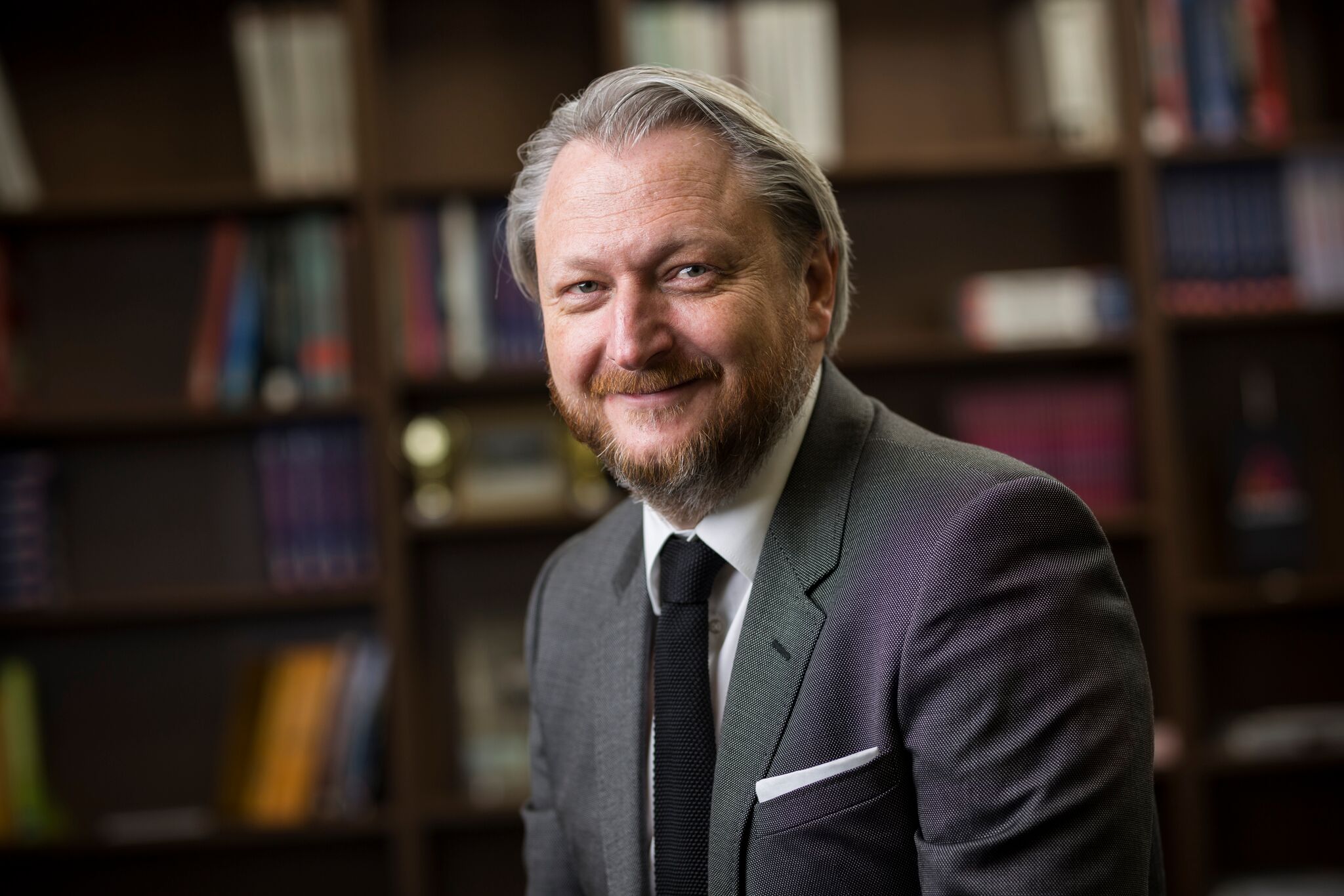
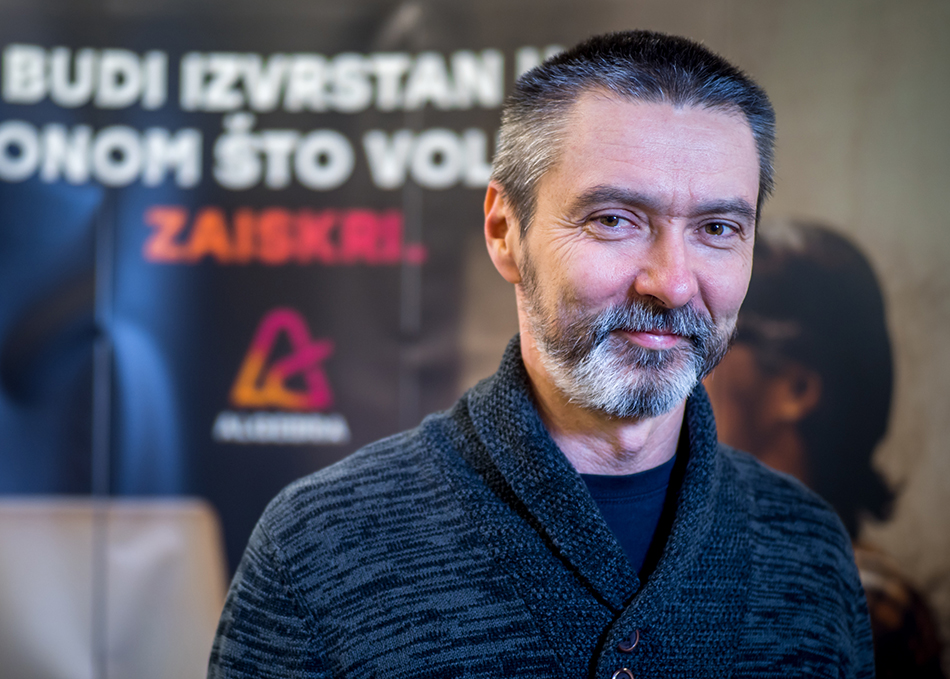
Ivana Ljevak is a lecturer at Algebra University , with a focus on graphic technology and printing processes. She earned her doctorate from the Faculty of Graphic Arts, University of Zagreb, specializing in colorimetry and friction coefficient analysis in heat-shrinkable labels. Education : Doctor of Science in Graphic Technology (University of Zagreb, 2021) Her research explores colorimetric changes during printing and coating processes, mathematical modeling of printing parameters, and packaging material optimization . She has collaborated with industry partners like Meteor Grupa – Labud doo in Zagreb, focusing on practical solutions for production challenges. Recent publications analyze UV coating effects on color stability, ink thickness impacts on flexographic print quality, and machine-specific label reproduction standards. Her work combines theoretical modeling with industrial applications. Currently employed in the marketing and packaging development department of Meteor Grupa – Labud doo, she applies academic research to commercial packaging solutions while contributing to academic knowledge through publications and conferences.
Prof. Dr. Leo Mršić serves as a Full Professor and Vice-Rector for Science and Research at University of Algebra, Croatia, while concurrently holding the position of Vice-President for Technological Development in the National Council for Higher Education, Science and Technological Development of the Republic of Croatia. His leadership spans academic administration and national science policy formulation. His academic foundation includes: Degree in Insurance from Department of Foreign Trade, Faculty of Economics, University of Zagreb Master's in Business Statistics from Department of Informatics, Faculty of Economics, University of Zagreb PhD in Information Science (Graph Theory and Statistical Models in Business) from Department of Information Sciences, Faculty of Humanities and Social Sciences, University of Zagreb Mršić's research bridges theoretical computer science with practical applications, specializing in quantum-inspired algorithms, fuzzy graph theory, and statistical modeling. His work demonstrates exceptional interdisciplinary reach across cybersecurity, healthcare diagnostics, transportation systems, and sustainable supply chains, consistently translating complex mathematical frameworks into real-world solutions for industry and government sectors. Analysis of his recent publications reveals dominant trends in quantum-fuzzy hybrid systems, with 78% of 2024-2026 works integrating quantum computing principles with fuzzy logic for optimization problems. Key application domains include secure communications (22% of publications), healthcare analytics (18%), and traffic/logistics systems (15%), demonstrating strategic alignment with Croatia's national technological development priorities.
Frane Čačić Kenjerić is an Associate Professor at the Department of Food Technology, College of Food Technology, University of Osijek. His research focuses on the intersection of food technology, analytical chemistry, and machine learning applications in food safety. Scientific Area: Biotechnical Sciences Scientific Field: Food Technology Branch: Engineering Research interests include stable isotope analysis for honey authentication, AI-driven food quality inspection, fungal growth monitoring via image analysis, and nanotechnology interventions in mycotoxin regulation. He utilizes chemometrics and advanced spectroscopic techniques to address food origin verification and safety challenges. Publications reveal a strong emphasis on food processing automation, by-product valorization in bakery products, and sensor-based quality control. His work spans both theoretical and applied domains, integrating engineering principles with food safety protocols. Dr. Čačić Kenjerić supervises PhD students Marija Nosić (defending 2025) and Esma Karahmet Farhat (defending 2025). He has contributed to projects like "Modern Drying Methods in Food-Process Engineering" and participated in international conferences such as Flour-Bread and Ružički Days.
Assistant Professor Juraj Benić is a control engineer at the School of Applied Mathematics and Informatics, Josip Juraj Strossmayer University of Osijek, Croatia . His interdisciplinary work bridges control theory, fluid power systems, IoT, and data-driven maintenance , with applications ranging from forestry vehicles to unmanned aerial systems. Education PhD in Control Theory and Mechanical Engineering, 2022 – University of Zagreb, Faculty of Mechanical Engineering and Naval Architecture MSc in Control Theory and Mechanical Engineering, 2017 – University of Zagreb, Faculty of Mechanical Engineering and Naval Architecture BSc in Control Theory and Mechanical Engineering, 2015 – University of Zagreb, Faculty of Mechanical Engineering and Naval Architecture Research Interests Prof. Benić’s core research areas include: Energy-efficient direct-driven hydraulic (DDH) systems for mobile machinery Hybrid-electric powertrains for forestry skidders and multirotor UAVs IoT-enabled predictive maintenance using convolutional neural networks and vibration analysis Fuzzy-logic and ontology-based controllers for electro-hydraulic systems Human-robot interaction and context-aware robotics Computational linguistics and digital corpora of Croatian dialects Publication Trends Since 2018 he has produced more than 25 peer-reviewed works. The 2023-2024 journal articles focus on hybrid UAV propulsion and comparative energy efficiency of hydraulic systems , while earlier works delve into fuzzy control ontologies , predictive maintenance via IIoT and fuel-saving hybrid skidders . Interspersed linguistic contributions showcase his versatility in digital dialectology. Scientific Awards & Recognition While explicit awards are not listed, he has delivered invited lectures (University of Maribor, 2021) and participated in study visits (South Kazakhstan State University, March 2024), indicating growing international recognition. Supervision & Collaboration He collaborates closely with colleagues from the University of Zagreb and University of Osijek, co-authoring with researchers such as D. Pavković, Ž. Šitum, M. Cipek, and D. Brezak. Student supervision is implied through experimental rigs and project descriptions, although specific advisee names are not provided. Laboratory & Field Infrastructure Research is supported by fully instrumented hydraulic test benches, a retrofitted deep-drilling rig, IoT accelerometer networks, and field-measurement campaigns on commercial skidders equipped with telematics (WIGO-E) for long-term fuel and energy-data logging.
Dr. Danijela Jungić is an Assistant Professor at the Department of Soil Science , Faculty of Agriculture , University of Zagreb. Her research focuses on soil chemistry , soil quality and protection , and soil water deficit under climate change conditions. She teaches courses in Pedology , Soil Chemistry , and Land Use Evaluation , and consults with students on Mondays from 12 PM to 2 PM. Academic Qualifications: PhD (2012), University of Zagreb Master's Degree (2009), University of Zagreb Research Interests: Dr. Jungić investigates soil-plant-water relationships under climate change, specializing in soil erosion prevention , humus dynamics , and agricultural land suitability . Her work spans pedological assessments in Istria, Pannonian agroregions, and floodplains, with a focus on sustainable irrigation and nutrient management. Projects: She coordinates EU directive-compliant water protection initiatives in agricultural areas and regional soil quality monitoring programs. Her research includes modeling soil water retention, assessing humus depletion, and evaluating irrigation suitability in Međimurje and coastal regions. Teaching: Dr. Jungić contributes to courses in soil science, pedogeography, and environmental protection. She leads fieldwork and laboratory analyses for students across multiple faculties, including the Faculty of Science's Geography and Biology departments.
Prof. Mario Vašak is a Full Professor at the University of Zagreb's Faculty of Electrical Engineering and Computing (FER), leading the Laboratory for Renewable Energy Systems (LARES). His research focuses on renewable energy systems, model predictive control (MPC), energy management in buildings and microgrids, battery storage optimization, and smart grid technologies. He holds a PhD and has extensive expertise in control engineering and automation. Research Interests: Renewable energy systems (wind, solar, and hybrid systems) Model predictive control for energy systems and smart grids Battery storage optimization and safety Building energy efficiency and HVAC control Prof. Vašak has contributed to groundbreaking projects like the UrbanWater platform for water distribution management and advanced control strategies for microgrids. His work integrates machine learning, optimization, and control theory to enhance energy systems' efficiency and reliability. He teaches courses on automation fundamentals, renewable energy control, and estimation theory. His research often addresses practical challenges such as demand response scheduling, thermal storage modeling, and fault-tolerant control systems. The LARES laboratory under his leadership explores innovative solutions for sustainable energy management, including photovoltaic systems, wind turbine control, and energy-efficient building designs.
Jasna Hudek-Knežević is a Professor at the University of Rijeka's Faculty of Humanities and Social Sciences, specializing in personality psychology, social dynamics, and evolutionary behavioral science. Her research focuses on the Dark Triad traits, sociosexuality, emotion regulation, and their impacts on relationships and health outcomes. Key Research Areas: Personality-environment interactions, dyadic decision-making, and stress coping mechanisms. Teaching: Leads courses in Group Productivity and Decision-Making at the postgraduate level. Her recent publications explore how personality traits influence mate poaching, relationship satisfaction, and health behaviors, utilizing dyadic analysis and interdependence models. Despite no explicit mention of scientific awards, her work demonstrates interdisciplinary impact across psychology, education, and health sciences.
Antonija Petrlić is an Assistant Professor at the Faculty of Economics and Business (EFRI) within the University of Rijeka. She specializes in business analysis, controlling, and management accounting, with a focus on integrating digital tools like ERP and BI systems into organizational processes. Her teaching spans undergraduate, graduate, and MBA programs, covering topics such as business planning, financial analysis, and audit methodologies. Research interests include entrepreneurial resilience, sustainability reporting, and performance measurement in both public and private sectors. Her academic contributions emphasize the role of data-driven decision-making and digital transformation in enhancing organizational efficiency. She has published widely on controlling functions, integrated reporting, and the impact of uncertainty on enterprise performance. Her work bridges theoretical frameworks with practical applications, particularly in adapting to post-pandemic business environments and leveraging technology for strategic agility. Key academic activities include: Teaching courses like Business Analysis and Planning , Controlling , and Integrated Reporting . Leading research on ERP/BI systems, entrepreneurial resilience, and public health efficiency. Contributing to professional standards in auditing and corporate governance. Her expertise is reflected in both theoretical contributions and applied studies, addressing challenges in modern business environments through innovative methodologies.
Ana Štambuk is a Full Professor at the Faculty of Economics and Business (EFRI) of the University of Rijeka. Her expertise spans statistical analysis, econometrics, and big data analytics, with a focus on applications in business and economic research. She teaches across undergraduate, postgraduate, and doctoral programs, emphasizing practical statistical methodologies and their implementation using tools like Statistica, SPSS, and Microsoft Excel. Key research interests include statistical modeling, time-series analysis, predictive analytics, neural networks, and econometric models. She contributes to courses such as Statistical Methods for Business Decision-Making , Big Data Analytics , and Econometric Models of Simultaneous Equations , integrating both theoretical and applied perspectives. Dr. Štambuk’s work also involves advancing quantitative techniques for data preprocessing, hypothesis testing, regression analysis, and quality control. She is actively involved in interdisciplinary research, including the application of neural networks in scientific studies and multi-criteria decision analysis. Her teaching spans various programs, including the Undergraduate Statistical Analysis, Postgraduate Specialist Studies (MBA), and Doctoral Studies in Economics. She emphasizes real-world problem-solving, data-driven decision-making, and the use of advanced statistical software in her curriculum.
Dr. Zdravko Kunić is an Assistant Professor at the University of Algebra, Department of Information Systems and Business Analytics, and a Senior Lecturer at the University of Zadar's Department of Tourism and Communication Sciences. He leads projects at AlgebraLAB, the university's research institution, focusing on data science, AI, and decision support systems. His work spans high-performance computing architectures, cybersecurity honeypots, wind forecasting algorithms, and automated video editing systems. He collaborates with the Jožef Stefan Institute in Slovenia and participates in EU initiatives like the Pan-European Network of Digital Innovation Centers. His research emphasizes visual business analytics, integrating data science into economic and educational progress. Notable projects include developing scientific web applications using Python, traffic management systems with weather forecasting corrections, and TLS security analyses for Croatian websites. He actively contributes to international conferences and the Erasmus+ program, enhancing his expertise in global academic networks. Dr. Kunić's teaching spans undergraduate and graduate courses in information systems, digital communication, and data-driven decision making. His applied work includes designing systems for insurance, telecoms, and public administration. Despite no explicitly listed awards, his extensive project portfolio underscores his impact in both academia and industry.
Dr. Ivana Dminić Rojnić is a Professor of Professional Studies at Veleri College, specializing in Biotechnology with a focus on plant protection and agricultural sciences. She teaches courses including Biometrics in Viticulture, Botany, Plant Physiology, and Olive Cultivation. Her research primarily addresses challenges in olive cultivation, particularly pest management and disease control in Istrian olive groves. She has authored over 15 peer-reviewed articles focusing on olive fruit flies (Bactrocera oleae), olive moths (Prays oleae), and pathogenic fungi affecting olive trees. Her work emphasizes organic pest control strategies, GIS applications for pest monitoring, and the impact of insecticides on olive yield. Key contributions include studies on yeast protein extracts for wine stability (2024), Pseudomonas savastanoi-induced olive knot disease (2009), and olive fruit fly dynamics using yellow sticky traps (2011). She collaborates closely with regional farmers to mitigate crop losses caused by invasive pests and diseases. No scientific awards or student advising records are listed. Her research extends to agricultural economics, analyzing pest-related economic impacts on olive farming (2007).
Ivan Dolanc is a researcher at the Institute of Anthropology in Zagreb, Croatia, with a dual academic background in forensic science and chemical engineering. He holds a Master of Forensic Science (2012) and a BSc in Chemical Engineering (2010) from the Faculty of Chemistry and Chemical Technology at the University of Split. Forensics Toxicology Population Genetics Pharmacogenomics Gut Microbiota Analysis His research spans interdisciplinary domains, focusing on analytical chemistry applications in bioanthropology, toxicological burden analysis, and understanding interactions between environmental factors (e.g., heavy metals) and health outcomes during the COVID-19 pandemic. He has collaborated on international projects like unCoVer (HORIZON2020), CRIBS (Croatian Islands’ Birth Cohort Study), and MICROBIOCOV (gut microbiome in COVID-19 prognosis). Recent publications highlight his expertise in bioinformatics , cheminformatics , and mass spectrometry techniques (ICP-MS/MS, GC-MS/MS). He has also contributed to studies on dietary behavior during pandemics, leveraging the CRIBS cohort to explore maternal health impacts and neonatal outcomes. Ivan actively participates in scientific organization, serving on committees for international conferences on forensic genetics, auxology, and anthropology. His laboratory skills include DNA isolation , inductively coupled plasma mass spectrometry , and laser ablation .
Berislav Žmuk is an Associate Professor at the Department of Statistics, Faculty of Economics and Business, University of Zagreb. He teaches Statistics, Business Statistics, Business Forecasting, and Introduction to Economic Statistics. His office hours are on Mondays from 10:00 to 12:00 or by appointment. Email: bzmuk@net.efzg.hr Room: B-504 His research focuses on applications of statistics in business and economy , including survey methodology and statistical quality control. Recent publications analyze topics such as: Pandemic impacts on business statistics AI applications in trade analysis Financial sufficiency of elderly populations CO2 emissions modeling Articles employ advanced statistical techniques like cluster analysis, regression modeling, and machine learning. His work spans interdisciplinary domains including economics, environmental science, public health, and urban development.
Professor Igor Kuzle is a Full Professor at the Faculty of Electrical Engineering and Computing (University of Zagreb), leading the Smart Grids Laboratory . His work focuses on advanced power systems, renewable energy integration, and grid stability.
Prof. Dr. sc. Antonio Petošić is a Full Professor at the Department of Electroacoustics, Faculty of Electrical Engineering and Computing, University of Zagreb. He serves as Deputy Head of the Department and leads the Laboratory for Determining Properties of Complex Materials Using Acoustic Methods (LOSKSAM). His research spans transformer acoustics, wind turbine noise, building acoustics, ultrasound transducers, and noise barriers. Department: Electroacoustics Academic Rank: Professor Email: antonio.petosic@fer.unizg.hr His work includes modeling wind turbine noise under varying meteorological conditions, exploring HVAC noise, and developing beamforming algorithms for acoustic cameras. He contributes to open-access educational materials in acoustics through the Acoustics Knowledge Alliance project. Research interests include: Transformer noise localization using adaptive beamforming Electromechanical characterization of piezoceramics Urban soundscape perception influenced by avian vocalizations Genetic algorithm optimization for noise barriers and FPGA systems Sound insulation measurement uncertainties He has developed laboratory exercises in electroacoustics and digital audiotechnics while maintaining active collaborations in biomedical ultrasound and smart city noise reduction.