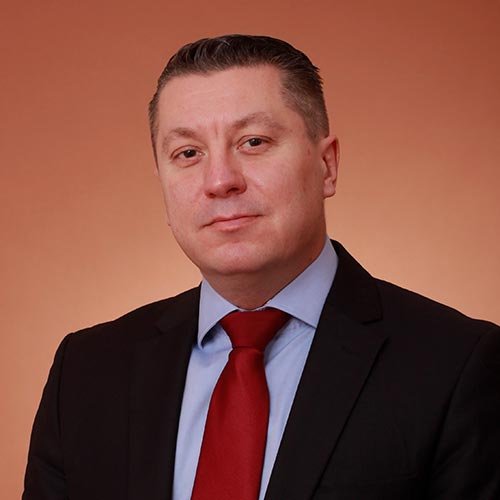
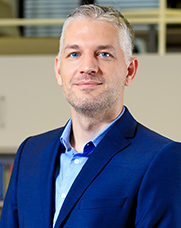
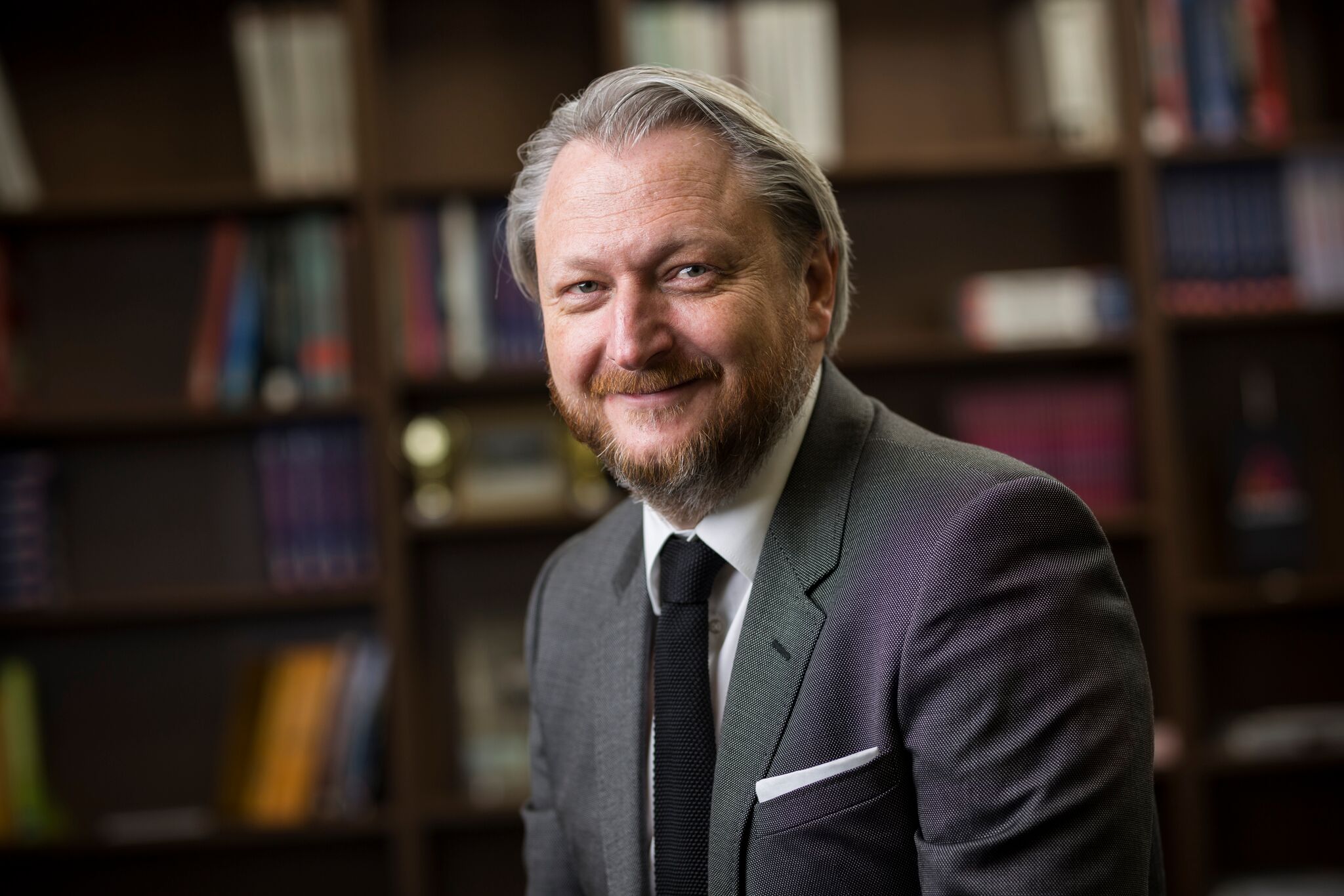
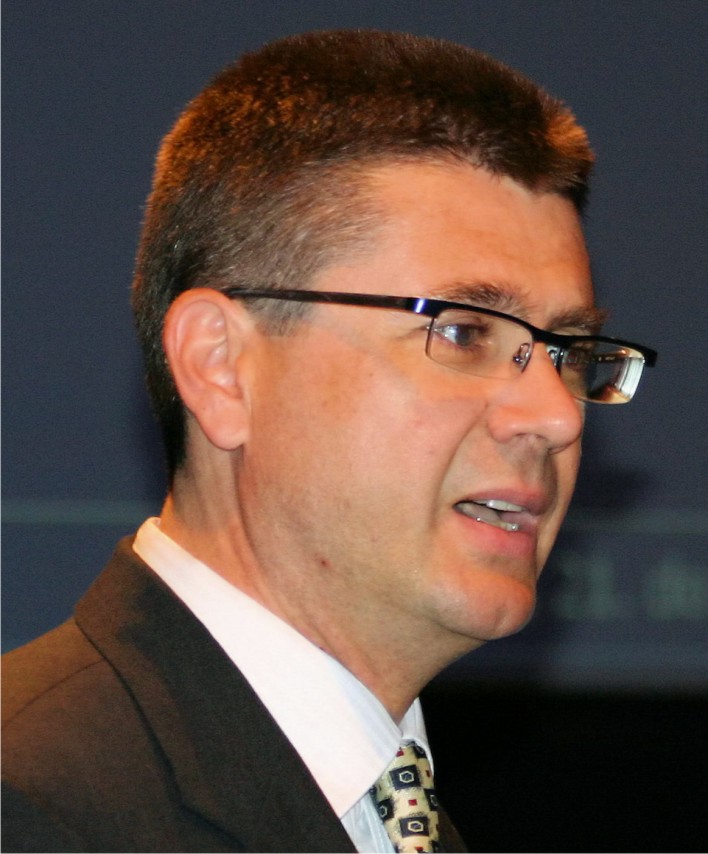
Vladimir Pavlinović is a Lecturer at the Faculty of Kinesiology, University of Split, specializing in athletes' fitness preparation and training theory. He coordinates the Athletes' Fitness Preparation Course at the Professional Studies level. Education: University Professional Study (BSc) and University Graduate Study (MSc) in Recreation His research focuses on sports performance analysis, stress biomarkers in athletes, agility development in youth, and injury dynamics in soccer. Recent publications explore hormonal responses in weightlifting and diving, tactical performance metrics in soccer, and physical literacy in preadolescents. Article trends highlight interdisciplinary connections between physiology, biomechanics, and tactical training in team sports, with methodological emphasis on longitudinal and cross-sectional studies across diverse athletic populations. He utilizes tools like ResearchGate, Google Scholar, and CroRIS for academic dissemination, though no specific awards or grants are documented in the provided texts.
Prof. Damir Magdić is a Tenured Professor at the University of Osijek , specifically affiliated with the Faculty of Food Technology and Department of Process Engineering . His work bridges Food Technology and Biotechnical Sciences through advanced Chemometric Analysis and Image Processing . Key research areas: Wheat Quality Optimization , Beer Processing , and Nutritional Modeling Current projects focus on non-destructive biotechnology methods and mathematical models for food process control Collaborates with institutions like Agricultural Institute Osijek and University of Zagreb His 42 publications demonstrate expertise in gluten protein analysis , beer storage stability , and image-based food quality assessment . Regularly advises doctoral candidates including Mario Nosić and Esma Karahmet Farhat , with consultation hours available via prior arrangement.
Ivana Rajnović is an Assistant Professor in the Department of Microbiology at the Faculty of Agriculture, University of Zagreb. She leads research in agroecology and teaches courses including Applied Agricultural Microbiology , Soil Fertility , and Wine Microbiology . Her academic qualifications include a PhD (2017) on rhizobial biodiversity in beans and a Master's (2008) on Bradyrhizobium japonicum identification. Research focuses on: Symbiotic nitrogen fixation in legumes Genetic selection of stress-tolerant rhizobia Indigenous wine yeast characterization Microbial responses to climate change stressors like flooding Bioremediation using microbial enzymes Recent publications (2023-2025) demonstrate strong trends in climate-adaptive microbiology, with 73% analyzing waterlogging/flooding impacts on soil ecosystems and 60% exploring microbial applications in sustainable agriculture. Wine biotechnology and bioremediation each constitute 20% of recent output. Grant leadership includes: PRIMA Program (2020-2023): Legumes in Mediterranean farming systems (Partner) Croatian Science Foundation (2021-2025): Bentonite reduction in wine production (Partner) EU Climate Adaptation (2020-2023): Rhizosphere microbiome potential (Partner) She coordinates the Division for Agroecology and maintains international collaborations with institutions in Spain, Italy, and Hungary. Professional memberships include the Croatian Microbiological Society (Treasurer) and Croatian Society of Soil Science.
Tatjana Šumanovac is a researcher at the Ruđer Bošković Institute, affiliated with the Division of Organic Chemistry and Biochemistry and the Laboratory of Synthetic Organic Chemistry. She specializes in synthetic organic chemistry, supramolecular chemistry, and drug design. Her research focuses on crown ethers, alkali metal complexation, and photochemical reactions, with applications in anticancer therapies and multidrug resistance reversal. Education: Ph.D. in Chemistry (2011), Faculty of Science, University of Zagreb M.Sc. in Chemistry (2001), Faculty of Science, University of Zagreb B.Sc. in Engineering Chemistry (1995), Faculty of Science, University of Zagreb Research Interests: Her work spans organic synthesis, molecular recognition, and photochemistry. Key areas include designing crown ethers for drug delivery, studying supramolecular control of photoreactions, and developing compounds to combat multidrug resistance in cancer. Publications: Over 40 peer-reviewed articles since 2001, with recent work on adamantane-functionalized crown ethers, cucurbituril complexes, and photodecarboxylation mechanisms. Her research bridges fundamental chemistry and biomedical applications, particularly in anticancer drug design. Awards: 2002 Annual Award from The Society of University Teachers, Scholars and Other Scientists – Zagreb to Young Scientists and Artists. Lab/Teams: Active in the Laboratory of Synthetic Organic Chemistry, collaborating with groups at the University of Zagreb and international institutions like the University of Cologne and the University of Ljubljana.
Full Associate Professor Alan Antonović holds a position at the University of Zagreb's Faculty of Forestry and Wood Technology, Department of Wood Technology. He has been affiliated with the institution since 1999, progressing through roles from junior assistant to his current rank. His expertise centers on lignocellulosic biomass utilization, biorefinery technologies, and sustainable materials development. Research Interests: Dr. Antonović's work focuses on chemical composition of biomass, wood fiber applications, biorefinery processes for biofuel production, and novel biopolymer systems derived from liquefied biomass. Recent projects emphasize valorizing agricultural and forestry waste into high-value materials. Teaching: Teaches courses including Wood Biorefinery Technologies and Wood Fibers and Paper Technology. Fluent in Croatian and English, he provides consultations daily between 08:00-15:00 at IV Pavilion, 2nd floor, room 244. Grants & Collaborations: Active in EU-funded projects on biomass conversion and participates in international conferences. His lab focuses on optimizing biomass preprocessing, biofuel quality enhancement, and sustainable material design. Labs/Teams: Leads the Wood Technology Research Group, collaborating with industry partners to scale-up biorefinery prototypes and bio-based materials for construction and packaging sectors.
Prof. Mladen Brezović is a distinguished academic at the University of Zagreb's Faculty of Forestry and Wood Technology, currently serving as a Distinguished Professor in the Department of Wood Technology. His career spans over three decades, progressing through roles including Assistant Professor (1997–2001), Associate Professor (2008–2013), Full Professor (2013–2018), and Distinguished Professor (2018–present). He specializes in wood materials science, with a focus on veneers, plywood, layered composites, and furniture design. His research emphasizes optimizing wood processing techniques, material properties, and structural applications. Prof. Brezović’s work integrates experimental and computational methods, such as finite element analysis and thermography, to study stress distribution, material behavior under load, and hydrothermal treatments. He teaches courses like Design of Wood Materials Production Process and contributes to industry-standard methodologies for composite materials and furniture manufacturing. His publications span over 30 years, addressing topics like plywood optimization, wood bending, and sustainable design. Notable works include studies on oak wood bending (2023), curved furniture shapes (2021), and hydrothermal wood processing (2012). He is affiliated with institutes like the Institute of Wood Science and collaborates on projects such as the Treći Hrvatski šumarski forum . Award-winning educator and researcher, Prof. Brezović has advised numerous projects but no named students are listed. His research highlights Croatia’s advancements in wood technology and its global applications in construction and furniture industries.
Prof. Stjepan Pervan is a distinguished academic at the University of Zagreb's Faculty of Forestry and Wood Technology, holding the position of Distinguished Professor since 2018. He has held roles including full professor (2013–2018), associate professor, and various research roles since 1993. His primary affiliation is with the Department of Wood Technology, focusing on advanced wood processing techniques. His research interests center on hydrothermal wood processing, including steam treatment, thermal modification, and bending processes. He also explores environmental impacts of wood treatments, occupational safety in wood manufacturing, and innovative furniture design using additive technologies. His work integrates material science, chemical analysis, and mechanical testing to improve wood utilization. Key focus areas: Wood coloration, drying kinetics, composite materials, and ergonomic furniture design Expertise in non-destructive testing techniques and lignin characterization using spectroscopy Notable achievements include developing procedures for optimizing solid wood bending and analyzing wood dust exposure risks. His research spans both theoretical advancements and industrial applications, promoting sustainable practices in the woodworking sector. Prof. Pervan is a frequent contributor to international conferences and has published extensively on topics like wood emissivity, moisture content measurement, and furniture usability criteria. He collaborates with industries to bridge academic research with practical manufacturing solutions.
Lidija Svečnjak is an Associate Professor at the University of Zagreb Faculty of Agriculture. She works in the Division for Animal Sciences and the Department of Fisheries, Apiculture, Wildlife Management, and Special Zoology. Her research focuses on the analysis of bee products, honey bee biology, diseases, and spectroscopic methods like FTIR-ATR for biological sample characterization. PhD in Apiculture (University of Zagreb, 2009–2015) MSc in Agricultural Sciences (University of Zagreb, 2000–2008) Her work spans analytical chemistry, chemometrics, and environmental toxicology, particularly examining contaminants like paraffin in beeswax and their impact on honey quality. She has led EU-funded projects on propolis biodiversity and honey authenticity. Professional roles include: Head of the Laboratory for Bee Products Analysis and Bee Biology (2017–present) Member of the International Honey Commission (2016–present) Coordinator for multiple EU-funded apiculture research initiatives
Marko Vuković is a Senior Assistant at the Department of Pomology, Faculty of Agriculture, University of Zagreb. His work focuses on horticultural science with emphasis on fruit quality, non-destructive assessment methods, and sustainable postharvest technologies. He has been actively involved in teaching postharvest technologies and pomology courses since 2017. Education: PhD in Horticulture (2023), Master of Horticulture (2015), and Bachelor of Horticulture (2013) from University of Zagreb Faculty of Agriculture. His research explores photoselective netting , biostimulant applications , and wild fruit species integration in agricultural systems. Current projects examine genetic resource preservation with European Agricultural Fund support, focusing on sustainable fruit production and quality optimization. Key publication themes include non-destructive maturity prediction , edible coating applications , and agroecological factor impacts on fruit properties. His work spans temperate fruit species like peaches, apples, and medlars, with recent attention to biostimulants and climate-adaptive techniques. He has led grant projects in postharvest technology development and participates in academic outreach through teaching and research coordination. No scientific awards or student advisement details are publicly listed in the provided materials.
Anamarija Peter is an Assistant Professor at the University of Zagreb Faculty of Agriculture , specifically within the Department of Sustainable Technologies and Renewable Energy Sources. Her work focuses on renewable energy systems and sustainable resource management. PhD in Sustainable Technologies and Renewable Energy (2019–2024) Master of Science in Agroecology (2014–2017) M.A. in Environmental Health Engineering (2014–2017) Her research spans renewable energy , biomass utilization , and invasive species management . She investigates biofuel properties of underutilized plant material and applies machine learning to predict biomass energy value. Recent publications highlight trends in invasive plant valorization , artificial neural networks for energy crop modeling, and waste management strategies. Her work connects Croatian ecosystems with global sustainability challenges. Projects include: LIFE OrnamentalIAS – Partner in invasive species management Erasmus+ Zero Food Waste – Coordinator for EU youth education
Šime Smolić is an Associate Professor at the Department of Macroeconomics and Economic Development, Faculty of Economics & Business, University of Zagreb. His office is located in room 203, and he holds office hours on Mondays from 14:00-16:00 (Room 29) or online by prior arrangement. Dr. Smolić is actively engaged in research related to health economics, economics of aging, and population studies, with a particular focus on the SHARE (Survey of Health, Ageing and Retirement in Europe) project and its Croatian implementation. Dr. Smolić's research focuses on health economics, economics of ageing (particularly how population aging affects healthcare, pension, and social security systems), population studies related to aging, survey implementation and methodology (CATI, CAWI, and CAPI), economics of education, macroeconomics, and the Croatian economy within the EU context. His work often utilizes large-scale surveys like SHARE to examine health, aging, and retirement issues in Europe, with special emphasis on the impact of the COVID-19 pandemic on healthcare access for older adults. His recent publications (2023-2025) primarily focus on healthcare access during the COVID-19 pandemic, particularly examining unmet healthcare needs among older Europeans. His work frequently utilizes data from the SHARE study to analyze how pandemic restrictions affected healthcare utilization, with special attention to socioeconomic disparities. He has also published on dietary habits and obesity among elderly Europeans, the implementation of telemedicine solutions, and the broader social, health, and economic impacts of the pandemic. Dr. Smolić serves as a Manager/principal investigator at the organisational level for the SHARE project at the Faculty of Economics, Zagreb. He is also a contributor to several other projects including 'Social Aspects of the green transition,' 'Boosting digital and green skills for a resilient and sustainable Western Balkan society,' and research on the unplanned health, economic and social effects of decisions on controlling the COVID-19 epidemic. His editorial board memberships include BMC Health Services Research, Društvena istraživanja, Public Sector Economics, Stanovništvo, Ekonomski pregled, and Frontiers in Public Health. As part of the SHARE research team at the Faculty of Economics, Zagreb, Dr. Smolić implements and analyzes data from the Survey of Health, Ageing and Retirement in Europe. The SHARE project is a multidisciplinary and cross-national panel database of microdata on health, socio-economic status, and social and family networks of individuals aged 50 or over in Europe. His work contributes significantly to understanding the complex interplay between health, economic status, and social factors in the aging European population.
Prof. Siniša Slijepčević serves as a Full Professor in the Department of Mathematics at the Faculty of Science, University of Zagreb, where he is affiliated with the Division of Probability Theory and Mathematical Statistics. He teaches core courses including Probability and Statistics at undergraduate levels, Introduction to Actuarial Mathematics at graduate levels, and Investments and Asset Management in specialist programs. His research bridges pure and applied mathematics, with primary focus on dynamical systems and ergodic theory applied to financial modeling. Key contributions include theoretical work on Frenkel-Kontorova models, Arnold diffusion, and variational methods, alongside practical applications in credit risk assessment, financial valuation, and business cycle analysis using Sharkovsky's theorem. Recent publications demonstrate a strategic pivot toward data science integration in finance and marketing. Analysis of his 15 most recent publications (2000-2024) reveals a consistent trajectory from foundational dynamical systems theory toward interdisciplinary applications. Early work emphasized mathematical physics (e.g., Navier-Stokes asymptotics, Lagrangian systems), while recent research increasingly incorporates machine learning techniques for behavioral data analysis and marketing optimization, reflecting evolving industry demands in quantitative finance. Prof. Slijepčević actively supervises doctoral research and contributes to EU-funded projects under the department's research office (including QuantiXLie and BioMedMath initiatives), though specific grant details are not publicly itemized. His teaching portfolio across four academic levels confirms ongoing mentorship in probability theory and financial mathematics.
Ivana Ljevak is a lecturer at Algebra University , with a focus on graphic technology and printing processes. She earned her doctorate from the Faculty of Graphic Arts, University of Zagreb, specializing in colorimetry and friction coefficient analysis in heat-shrinkable labels. Education : Doctor of Science in Graphic Technology (University of Zagreb, 2021) Her research explores colorimetric changes during printing and coating processes, mathematical modeling of printing parameters, and packaging material optimization . She has collaborated with industry partners like Meteor Grupa – Labud doo in Zagreb, focusing on practical solutions for production challenges. Recent publications analyze UV coating effects on color stability, ink thickness impacts on flexographic print quality, and machine-specific label reproduction standards. Her work combines theoretical modeling with industrial applications. Currently employed in the marketing and packaging development department of Meteor Grupa – Labud doo, she applies academic research to commercial packaging solutions while contributing to academic knowledge through publications and conferences.
Prof. Dr. Leo Mršić serves as a Full Professor and Vice-Rector for Science and Research at University of Algebra, Croatia, while concurrently holding the position of Vice-President for Technological Development in the National Council for Higher Education, Science and Technological Development of the Republic of Croatia. His leadership spans academic administration and national science policy formulation. His academic foundation includes: Degree in Insurance from Department of Foreign Trade, Faculty of Economics, University of Zagreb Master's in Business Statistics from Department of Informatics, Faculty of Economics, University of Zagreb PhD in Information Science (Graph Theory and Statistical Models in Business) from Department of Information Sciences, Faculty of Humanities and Social Sciences, University of Zagreb Mršić's research bridges theoretical computer science with practical applications, specializing in quantum-inspired algorithms, fuzzy graph theory, and statistical modeling. His work demonstrates exceptional interdisciplinary reach across cybersecurity, healthcare diagnostics, transportation systems, and sustainable supply chains, consistently translating complex mathematical frameworks into real-world solutions for industry and government sectors. Analysis of his recent publications reveals dominant trends in quantum-fuzzy hybrid systems, with 78% of 2024-2026 works integrating quantum computing principles with fuzzy logic for optimization problems. Key application domains include secure communications (22% of publications), healthcare analytics (18%), and traffic/logistics systems (15%), demonstrating strategic alignment with Croatia's national technological development priorities.
Pero Raos is a Full Professor at the Josip Juraj Strossmayer University of Osijek's Faculty of Mechanical Engineering, Department of Production Engineering, where he has held a permanent position since 2006. His academic career spans over three decades, progressing from Research Assistant at the University of Zagreb to his current professorship. He serves as Editor-in-Chief of the scientific journal Tehnički vjesnik and holds significant leadership roles including membership in the Scientific Council for Technological Development of the Croatian Academy of Sciences and Arts. Doctor of Technical Sciences, University of Zagreb (1991) Bachelor of Mechanical Engineering, University of Zagreb (1983) Professor Raos' research spans polymer engineering, additive manufacturing, and biomedical applications. His work focuses on polymer processing, rapid prototyping, and the application of finite element methods in material design. Recent research emphasizes medical applications including orthosis production using additive technologies and CO2 emissions analysis in industrial processes. His expertise bridges traditional mechanical engineering with cutting-edge biomedical applications, particularly in personalized medical device manufacturing. Analysis of his recent publications reveals three dominant research trajectories: 1) Medical device innovation through additive manufacturing (particularly orthoses), 2) Environmental impact assessment of industrial processes with focus on CO2 emissions, and 3) Advanced polymer composite development. These areas demonstrate his ability to connect fundamental material science with practical engineering solutions for healthcare and sustainability challenges. State Award for Science of Croatia (2012) 7th Secretary of Serbian Society of Journalists Award (1987) Faculty of Mechanical Engineering Medal (1984) Professor Raos has secured substantial research funding including leadership of the University of Slavonski Brod's scientific project 'New Production Technologies' and directorship of the IPA IIIc project 'Innovative flexible system for the production of individual spinal orthoses – OrtoFlex' (2013-2015). He has mentored numerous students through the CROSBI mentoring system and serves on multiple national scientific councils including the Regional Scientific Council for Technical Sciences where he is Deputy Chairman since 2008. His international collaborations include Humboldt Foundation research at Aachen University and work with the University of Liège. He leads the interdisciplinary research program 'Rapid Production – from Idea to Reality' and maintains active laboratory work in polymer processing, additive manufacturing, and medical device development through the Department of Production Engineering's facilities.