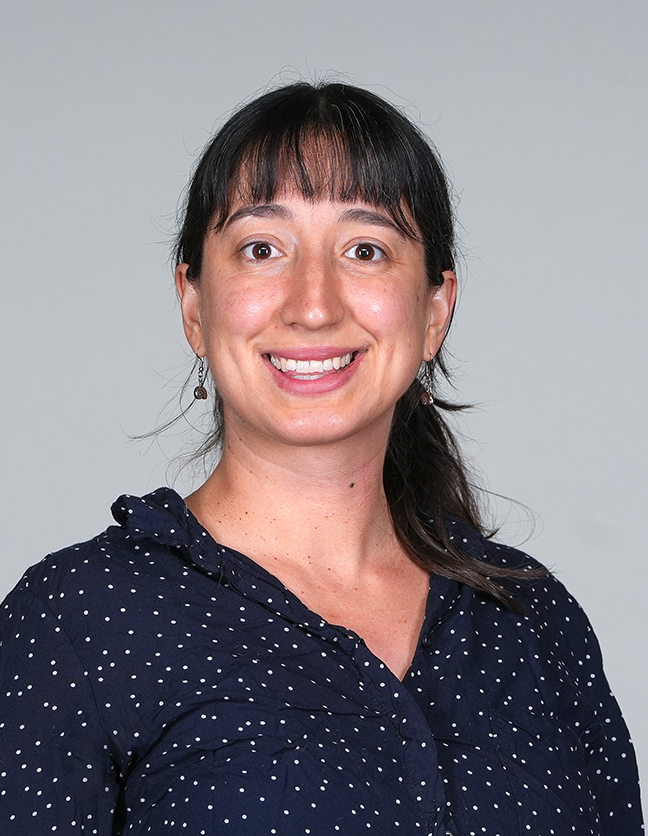
Zoe Almeida is a Senior Research Associate at the Cornell Biological Field Station, part of Cornell University's College of Agriculture and Life Sciences, Department of Natural Resources and the Environment. She specializes in aquatic ecology, focusing on freshwater fish conservation and management, with expertise in physiological and behavioral responses to environmental stressors. Her work bridges individual-level physiology to population dynamics and ecosystem-level impacts. Education: Ph.D. in Evolution, Ecology and Organismal Biology from The Ohio State University (2021); M.Sc. in Aquatic Sciences from Purdue University (2016); B.A. in Biology from Scripps College (2011). Research Interests: Climate change impacts on fish populations Early life experiences and long-term ecological legacies Ecological effects of hypoxia and nutrient loading Simulation modeling for fisheries management Advising & Collaborations: Works closely with students and management agencies, emphasizing science-based solutions for fisheries conservation. Active in collaborative projects on walleye recruitment and Pacific cod responses to heatwaves. Labs/Teams: Affiliated with the Cornell Biological Field Station, focusing on Oneida Lake and Lake Erie studies.
Joseph Schulz is a Professor in the Biology Department at Occidental College , where he has been appointed since 2004. His academic journey includes a B.S. from Indiana University and a Ph.D. from UC San Diego. Academic Appointments : Professor of Biology (Occidental College, 2004–present) Education : B.S. (Indiana University), Ph.D. (UC San Diego) Contact : Office in Bioscience 308, jschulz@oxy.edu, (323) 259-1408 Dr. Schulz's research focuses on the evolution and functional activity of venom peptides in fish-hunting cone snails. His laboratory combines biochemistry, molecular biology, and electrophysiology to investigate neurotoxins with biomedical applications, particularly their role in prey capture mechanisms and potential therapeutic uses. The selected publications highlight trends in venom peptide characterization, biomechanics of venom delivery systems, and neurotoxin interactions with ion channels. Research spans structural analysis of neuroexcitatory peptides, high-speed predatory mechanisms, and comparative studies of venom composition across species and time.
Antonio Calò is a Researcher at the Department of Earth and Marine Sciences (DiSTeM) within the University of Palermo . His work focuses on marine ecology, fisheries science, and conservation biology, with a particular emphasis on small-scale fisheries, marine protected areas (MPAs), and coastal ecosystem dynamics in the Mediterranean Sea. His research explores the ecological and social impacts of MPAs, fish dispersal patterns, environmental DNA applications, and the effects of human activities like scuba diving on marine life. His publications highlight collaborations with interdisciplinary teams and contributions to ecosystem-based management frameworks.
Ivan Jaric is a Junior Professor at University of Paris-Saclay (since 2022) and Researcher at the Biology Centre of the Czech Academy of Sciences (since 2017). He previously served as Lecturer at University of South Bohemia (2019-2022) and held research positions at Leibniz-Institute of Freshwater Ecology in Berlin and Woods Hole Oceanographic Institution. His primary affiliation is with the Laboratoire Écologie, Société et Évolution – IDEEV at University Paris-Saclay. His research spans multiple interconnected fields including species extinctions and extinction risk assessments, biological invasions, conservation culturomics, iEcology, fish ecology and fisheries management. He has made significant contributions to developing novel model-based risk assessment approaches and has particular expertise in sturgeon management and conservation. His work often bridges ecological theory with practical conservation applications. His recent publications demonstrate a strong focus on big-data approaches to ecology, with high-impact papers in Science (2022) and Nature (2021) examining animal movement ecology and economic costs of biological invasions. His research increasingly integrates digital data sources, social media analysis, and citizen science approaches to address conservation challenges. The Award of the Czech Academy of Sciences for outstanding results in science (2022) Danubius Young Scientist Award (2015) Georg Forster Research Fellowship (2014-2017) J. E. Purkyne Fellowship (2018-2022) Dr. Jaric actively supervises doctoral and master's students including Katarina Jovicic (completed PhD), Lobsang Tsering (current PhD), and Anna Cihlova (completed MSc). He serves on editorial boards for Frontiers in Ecology and the Environment and Extinction journals, and has reviewed for numerous high-impact ecology journals including Nature Sustainability, Trends in Ecology and Evolution, and Global Change Biology. He is actively involved with the Alliance for Freshwater Life and Conservation Culturomics Working Group of the Society for Conservation Biology. His laboratory work primarily focuses on freshwater ecosystems, particularly examining fish population dynamics, extinction risk assessment, and the impacts of biological invasions. He leads collaborative research teams across multiple European institutions and has established strong connections with conservation organizations through his work on sturgeon conservation and the Danube Sturgeon Task Force.
Dr. Jimena Golcher-Benavides is an Assistant Professor of Biology at Hope College in Holland, Michigan. Her research focuses on biodiversity conservation, particularly in freshwater fishes, combining approaches from fisheries science, ecology, and evolutionary biology. She teaches courses including Aquatic Ecosystems and mentors undergraduate students in fieldwork and laboratory research. Education: Ph.D. in Ecology (University of Wyoming, 2021), M.Sc. in Biological Sciences (University of Konstanz, Germany, 2015), B.S. in Biological Sciences (UNA, Costa Rica, 2011). Research Interests: Origins of freshwater biodiversity, evolutionary drivers in fish communities, conservation genomics, and molecular ecology. Current projects investigate rapid diversification in African cichlids and invasive carp population dynamics in the Mississippi River Basin. Recent Work: Her lab uses environmental DNA (eDNA), behavioral observations, and comparative anatomy to study species diversity. Collaborations include work in Lake Tanganyika (Tanzania) and Costa Rica, emphasizing field-based research and undergraduate involvement. Professional Experience: Previously served as a fisheries researcher at Iowa State University and conducted postdoctoral research on invasive carp in the Mississippi River Basin. Taught at Lees-McRae College in North Carolina and collaborated on projects with The Nature Conservancy and Tanzanian Fisheries Institute. Teaching Philosophy: Advocates for experience-based learning in science education, integrating fieldwork and lab techniques into undergraduate training. Develops curricula using R programming for data analysis and visualization in ecology.
Sean Landsman is an Assistant Professor, Teaching Stream in the Department of Biology at Carleton University, affiliated with the Faculty of Science. His research focuses on fisheries science, science communication, and aquatic conservation. He teaches courses in science communication and actively practices science outreach through freelance writing and photography for outlets like National Geographic and CBC. His research interests include the behavior of fish post-capture, conservation policy evaluation, urban aquatic ecosystems, and anadromous fish ecology. He emphasizes interdisciplinary collaboration between scientists and engineers to improve fish passage infrastructure and advocates for knowledge co-production in fisheries management. Landsman actively recruits undergraduate students for Honours programs and offers opportunities for students interested in science communication through creative writing, photography, and multimedia. His recent publications highlight topics such as freshwater biodiversity frameworks, fish behavior in regulated waterways, and the societal impacts of conservation policies. While no scientific awards are explicitly listed, his work demonstrates a strong commitment to both academic research and public engagement. His teaching and outreach efforts aim to bridge the gap between scientific research and broader societal understanding.
Mark I. McCormick is a Professor at James Cook University, specializing in coral reef fish ecology and behavior. His research focuses on predator-prey interactions, impacts of environmental changes (e.g., ocean acidification, warming), and habitat degradation effects on marine organisms. He has authored/co-authored over 270 publications, with key contributions on fish behavioral plasticity, microplastic impacts, and anthropogenic noise effects. Research Interests: Coral Reef Ecology, Marine Behavioral Ecology, Climate Change Impacts, Fish Physiology, and Conservation Biology. His work integrates field and experimental studies to understand how environmental stressors affect fish survival, behavior, and ecosystem dynamics. Recent Articles Highlight: Studies on aerobic metabolism changes in coral groupers, coral reef pinnacle biodiversity drivers, and motorboat noise impacts on fish reproduction. Collaborations span global marine ecosystems, emphasizing applied conservation strategies.
James Chadwick Johnson is an Associate Professor in the School of Mathematical and Natural Sciences at Arizona State University's New College of Interdisciplinary Arts and Sciences, where he has held a faculty position since 2006. He maintains additional appointments as a Senior Global Futures Scientist and with the Central Arizona-Phoenix Long Term Ecological Research project, focusing on urban ecology and arthropod behavior. His educational background includes a Ph.D. in Biology from the University of Kentucky (2003), an M.S. in Biology from Illinois State University (1998), and a B.A. in Biopsychology from Earlham College (1990). Johnson's research centers on animal behavior mechanisms across ecological contexts, with specialization in black widow spiders' behavioral syndromes in urban versus desert environments. His work examines aggression correlations in foraging and anti-predator scenarios, population genetics of urban infestations, and the impact of urbanization on reproductive strategies, aiming to develop non-pesticide pest management solutions. Analysis of his 15 most recent publications reveals dominant trends in urban heat island effects on spider development, thermal biology adaptations, and behavioral plasticity. Key interdisciplinary themes include sexual cannibalism dynamics, sibling interactions under urban stressors, and stoichiometric relationships between spiders and prey across habitat gradients. His scientific recognition includes: NSF International Postdoctoral Research Fellowship (2003-2005) Johnson has secured multiple NSF grants including CAP LTER Phase 2 ($7.2M), MSP Science and Literacy Projects for K-12 education, and REU supplements. He regularly supervises honors theses (BIO 493/LSC 493) and directed studies (LSC 492), while developing curricula like his black widow research-based middle school science program. He actively collaborates through the Central Arizona-Phoenix LTER project with interdisciplinary teams studying urban sustainability, and serves on editorial boards for journals including Animals and Urban Naturalist .
Dr Steve Portugal is an Associate Professor of Animal Behaviour in the Department of Biological Sciences at the University of Oxford and a Tutorial Fellow at St Hugh's College. His research focuses on understanding how environmental changes impact animal behavior and physiology, with a macroecology approach to evolutionary drivers. He studies avian collisions, group behavior under environmental stress, and biomimetic applications from animal behavior and eggshell structures. His model systems include homing pigeons, northern bald ibis, avian brood parasites, naked mole-rats, and Siamese fighting fish. Affiliations: Edward Grey Institute, University of Oxford Scientific Associate, Natural History Museum Tutorial Fellow, St Hugh's College Research Interests: Avian navigation and collision vulnerability Collective behavior and flock dynamics Eggshell physiology and structural adaptations Physiological responses to environmental stress Recent Fieldwork Locations: Zambia, Panama, Australia, Costa Rica, South Africa, USA, Czech Republic, France, Cambodia, Malaysia Advising: Current PhD/MSc students: Jamie Mayson, Robin Melhausen-Franks, Sam Thompson, Avi Berger, and others Alumni include Hana Merchant, Cecylia Watrobska, and Jack Thirkell Labs/Teams: Research focuses on animal behavior and physiology, with collaborations on cuckoo embryology, eggshell surface structure, and biomechanics of unique species like secretary birds and mole-rats.
Pär Byström is a Professor at the Department of Ecology, Environment and Geoscience at Umeå University. His research focuses on size-dependent predatory and competitive interactions in fish species, examining impacts of climate change and fisheries on aquatic ecosystems. He works at the Climate Impacts Research Centre (CIRC), contributing to global change modeling and Arctic lake management. Affiliated with the Freshwater Ecology group and Marine Ecology research teams, Byström conducts field studies in the Bothnian Bay, boreal lakes, and Arctic ecosystems. Climate change effects on aquatic food webs Fishing mortality and sustainable harvest regimes Environmental DNA (eDNA) monitoring Whole-lake and mesocosm experiments Arctic char and trout population dynamics His publications from 2022-2025 reveal trends in warming impacts, browning of waters, bioaccumulation patterns, and habitat-specific productivity. Current projects include "Building Bridges Between the Alps and the Arctic" and "Global Change on Aquatic Ecosystem Resilience."
Associate Professor Craig Sherman is a leading researcher at Deakin University, where he serves as Associate Head of School (Research and Industry Engagement) in the School of Life and Environmental Sciences under the Faculty of Science, Engineering and Built Environment. His work bridges ecological and molecular approaches to address critical questions in evolutionary biology, population genomics, and marine ecosystem restoration. Education : PhD (University of Wollongong), Graduate Certificate in Higher Education (Deakin University), BSc (University of Wales) Research Interests focus on genetic adaptation in marine and terrestrial organisms, invasive species dynamics, ecosystem restoration strategies (particularly seagrass), and the application of environmental DNA (eDNA) for biosecurity and forensic purposes. His group investigates species like sea anemones, European starlings, and marine invertebrates to uncover fundamental ecological and evolutionary mechanisms. Recent Publications highlight advancements in seagrass restoration techniques, genomic assessments of apex predators like white and tiger sharks, and the development of eDNA tools for marine monitoring and forensic applications. His work also addresses climate change impacts on marine ecosystems, biofouling management, and genetic diversity in aquaculture practices. Grants and Projects include significant funding from organizations like Melbourne Water Corporation, Department of Agriculture, Fisheries & Forestry, and Ecological Society of Australia. These initiatives support research into seagrass nursery development, marine pest detection, and climate-resilient restoration methods. Supervision spans 18 current and completed doctoral projects, covering topics such as white shark genetics, seagrass restoration, invasive species ecology, and climate adaptation in marine organisms. His lab, EcoGenetics Lab , trains students in advanced molecular and ecological techniques. Teaching emphasizes evolutionary biology, population genetics, and marine ecology. His collaboration network extends globally, with partnerships in Australia, the UK, and the US.
Eve Robinson is an Assistant Professor (Teaching) in the Department of Biological Sciences at the University of Calgary’s Faculty of Science. She holds a PhD in Integrative Biology from the University of California, Berkeley, an MS in Marine Science from the University of Texas at Austin, and a BSc in Biology and Environmental Studies from the University of Victoria. Her teaching portfolio includes courses such as Quantitative Biology, Comparative Biology of Plants and Animals, and Environmental Science. Her research focuses on predator-prey dynamics in aquatic ecosystems, with a particular emphasis on larval fish behavior, parasite-host interactions in salmon populations, and the ecological impacts of water flow dynamics. She also explores Indigenous STEM education through culturally responsive methodologies, such as talking circles. Her work bridges molecular ecology (e.g., gene copy number biomass estimation) with applied conservation efforts in large river systems. Recent publications span topics from modeling disease risk in salmonids to understanding copepod escape mechanisms under hydrodynamic conditions. While no awards are listed, her contributions to both field and lab-based studies highlight a commitment to interdisciplinary marine and freshwater ecology.
Jonathan Cox is a Senior Lecturer in the Department of Chemistry at the University of Bath, where he has been a faculty member since 1993. His interdisciplinary research bridges chemistry, biology, and engineering, focusing on the sensory mechanisms of aquatic vertebrates, particularly fish olfaction. He is affiliated with international research networks including the Natural History Museum, University of Glasgow, Penn State University, and the University of Guelph. PhD in Chemistry, Durham University, 1989 BSc in Chemistry, Durham University, 1986 Postdoctoral Research Assistant, University Chemical Laboratory, Cambridge, 1989–1990 SERC Postdoctoral Fellow, University Chemical Laboratory, Cambridge, 1990–1992 Postdoctoral Research Assistant, Centre for Protein Engineering, Cambridge, 1992–1993 Lecturer/Senior Lecturer, Department of Chemistry, University of Bath, 1993–present Dr. Cox’s research centers on understanding how odorants are transported to the olfactory epithelium in cartilaginous fish such as sharks, rays, hagfish, and chimaeras. He employs advanced imaging techniques including micro-computed tomography (micro-CT) and magnetic resonance imaging (MRI) to reconstruct detailed 3D models of nasal anatomy. These models are then used in physical experimental setups or computational fluid dynamics (CFD) simulations to analyze flow patterns and sensory efficiency. His recent publications (2019–2025) demonstrate a consistent focus on olfactory mechanics across diverse fish species—from sturgeons and pike to sea catfish and hammerhead sharks. The work reveals how morphological adaptations influence odorant capture and sensory input, contributing to broader understanding of aquatic sensory ecology and evolutionary biology. Themes across these studies include externally driven olfactory flow, resampling behaviors, and the integration of imaging with biomechanical modeling. Dr. Cox has led two significant research projects: Using Mechanical Models to Attack the Protein Folding Problem (funded by the Leverhulme Trust, 2005–2008) and Artificial Nasal Cavity (funded by the Defence Science and Technology Laboratory, 2005–2009). These projects reflect his expertise in applying physical modeling to biological questions. He is an active participant in academic discourse, with recent and upcoming presentations at key scientific events such as the Symposium for Vertebrate Palaeontology and Comparative Anatomy (2024) and talks titled Navigating with a Single Nose and The Fluid Dynamics of a Hammerhead Shark’s Nose (2024–2025). His work contributes to UN Sustainable Development Goals related to life below water and responsible scientific innovation. Dr. Cox collaborates extensively with global institutions, including the CT unit at the Natural History Museum, Simpleware, Glasgow Experimental MRI Centre, Department of Integrative Biology at the University of Guelph, and the Applied Research Laboratory at Penn State University. These partnerships enhance the technical and comparative scope of his research.
Joe Nohner is an Adjunct Assistant Professor at the Department of Fisheries and Wildlife within Michigan State University . He works for the Michigan Department of Natural Resources (DNR) as the Inland Lake Habitat Expert in the Fisheries Division’s Habitat Management Unit. Ph.D. in Fisheries and Wildlife from Michigan State University M.S. in Natural Resources and Environment from the University of Michigan His research explores fish-habitat interactions in inland lakes across ecological, economic, and spatial scales, integrating GIS modeling with climate change adaptation strategies. Key areas include: Fish Habitat Modeling (GIS-based predictive frameworks) Climate Change Impact Assessment on aquatic ecosystems Watershed Management and woody debris restoration Economic Surveys of shoreline conservation participation Publications highlight trends in inland fisheries sustainability , with a focus on recreational fishing, biodiversity, and ecosystem services. Joe also contributes to statewide habitat guidance and partnerships like the Midwest Glacial Lakes Partnership.
Christian Klug serves as an Adjunct Professor of Paleontology and Curator of the Collection and Museum at the Palaeontological Institute, University of Zurich, where he maintains an active research profile in marine paleontology. His work bridges academic scholarship with museum curation, focusing on fossil analysis and collection management. His primary research interests encompass: Cephalopod evolution (ammonoids, nautiloids, and coleoids) Vertebrate paleontology (sharks, ichthyosaurs, and early fish) Mesozoic and Paleozoic marine ecosystem dynamics Taphonomic processes and fossil preservation Paleobiogeographic patterns across geological time Analysis of his 2024-2025 publications reveals a strong emphasis on cephalopod systematics, with recurring themes in morphological variation, evolutionary adaptations, and predator-prey relationships. His work frequently integrates field data from Switzerland, Morocco, and Poland with advanced analytical techniques like finite element analysis and microwear texture studies. Notable contributions include descriptions of new fossil species (e.g., hybodontiform sharks, chimaera egg capsules) and investigations into macroecological patterns across deep time. As Curator of the Collection and Museum, Dr. Klug oversees fossil repositories at the University of Zurich, contributing to both research infrastructure and public scientific engagement. His role exemplifies the integration of academic research with museum-based stewardship of paleontological heritage.