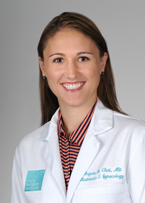
Dr. Angela Rank Choi is an Associate Professor in the Department of Obstetrics and Gynecology at the Medical University of South Carolina (MUSC). She joined MUSC Women's Care in 2013 after completing her undergraduate studies at Wake Forest University, medical school, and residency at MUSC. Her clinical and academic work focuses on contraception, family planning, preconception counseling, adolescent gynecology, obstetrics, and menopause, with a particular emphasis on preventative health strategies. Education: Bachelor's Degree: Wake Forest University Medical School: MUSC College of Medicine (2009) Residency: Medical University of South Carolina Medical Center (2013) Research & Clinical Interests: Dr. Choi specializes in menopause management (certified via the Menopause Society), contraception options, and adolescent gynecological care. She advocates for holistic preventative health approaches integrating nutrition and exercise into patient care. Awards: Menopause Society Certified Practitioner (MSCP) Advising & Grants: No formal advisee list or grants specified in available records. Her current professional activities focus on clinical care and academic contributions in obstetrics/gynecology. Labs/Teams: No specific research labs or collaborative teams explicitly mentioned in provided materials.
Falk MÜLLER-RIEMENSCHNEIDER is an Associate Professor and Vice Dean (Research) at NUS Saw Swee Hock School of Public Health and holds a joint affiliation with NUS Yong Loo Lin School of Medicine. He leads the Physical Activity and Nutrition Determinants in Asia (PANDA) research programme. With a medical degree from the University of Cologne (2003) and advanced training in Public Health at the London School of Hygiene & Tropical Medicine (2005), he has built a career focused on cardiovascular disease prevention, physical activity promotion, and obesity epidemiology. His academic qualifications include a Doctoral degree from Charité University Medical Centre Berlin (2005) and Habilitation (2011). Professional roles include Senior Lecturer/Research Fellow positions at Charité (2005–2012), and administrative leadership roles such as Teaching Coordinator and Project Division Coordinator for Cardiovascular Research (2008–2012). Research interests center on lifestyle determinants of chronic diseases, with emphasis on physical activity interventions, dietary patterns, and early childhood development. Notable work includes the Singapore Preconception Study and the GUSTO cohort study, examining long-term health trajectories. Media engagements highlight his work on screen time effects in children and urban green space benefits. His recent publications (2021–2025) address mHealth intervention design, park-based physical activity, and 24-hour movement guidelines. Key themes include digital health adoption barriers, longitudinal cohort studies, and culturally tailored public health strategies.
Claire O'Brien is an Associate Professor in Biomedical Science (Virology) at the University of Canberra, leading the Host-Microbe Interactions research group. Previously, she held positions at the Australian National University (ANU) Medical School as a Lecturer and Senior Lecturer at the University of Wollongong. She earned her PhD from ANU in 2012, focusing on microbiological aspects of Crohn's disease. Her research investigates gut microbiome dysbiosis in diseases like inflammatory bowel disease (IBD), using in vitro co-cultures of bacteria and macrophages. Key projects include studying antimicrobial resistance in retail meat and microbial resilience in IBD patients. Dr. O'Brien has received prestigious awards, including the Australian Academy of Science France-Australia Fellowship and NHMRC Peter Doherty Biomedical Research Fellowship. Her work spans translational research, such as the 'GUTSY' project addressing sarcopenia in Crohn’s disease, and collaborations on microbiome dynamics. She actively supervises Honours and higher-degree research students in IBD and microbiome-related fields. Research interests include host-microbe interactions, Crohn's disease pathogenesis, and the role of the microbiome in health. Her lab employs genomic, transcriptomic, and microbiological techniques to uncover mechanisms linking microbial imbalances to disease. She is also engaged in public health initiatives, such as optimizing preconception care and reducing pregnancy complications in women with polycystic ovary syndrome (PCOS).
Deborah Ehrenthal is a Professor in the Department of Biobehavioral Health at The Pennsylvania State University and serves as Director of the Social Science Research Institute (SSRI). Her research leverages large administrative datasets to investigate maternal and child health outcomes, with particular focus on prenatal opioid exposure, birth complications, and healthcare system interactions within Medicaid populations. Her primary research spans maternal and child health epidemiology, utilizing Wisconsin Medicaid data (2010-2019) to examine opioid exposure trajectories, neonatal abstinence syndrome, infant mortality, and spillover effects on sibling development. She investigates modifiable factors like treatment continuity and prenatal care coordination, while addressing health disparities through implementation science frameworks. Her work bridges clinical outcomes with social determinants of health, emphasizing policy-relevant findings for vulnerable populations. Recent publications (2022-2025) reveal consistent focus on opioid-related pregnancy outcomes, demonstrating how exposure timing/duration affects neonatal withdrawal and child welfare involvement. She pioneers analyses of Medicaid enrollment gaps across pregnancy stages and explores broader implications like metabolic syndrome risks following adverse birth outcomes, while extending research into pandemic-era community health responses. Scientific Awards: Lloyd Prize for Innovative Health Research (2025) Dr. Ehrenthal's research program is sustained through federal and state grants supporting large-scale data analysis of Medicaid populations, though specific funding mechanisms aren't detailed in current profiles. As Professor and SSRI Director, she mentors graduate students in biobehavioral health and public health, supervising research on substance use disorders and implementation science. Her leadership cultivates interdisciplinary collaboration across Penn State's research ecosystem. As Director of SSRI, she spearheads initiatives including the Climate, Society, and Health program launched in November 2023. She leads cross-institutional teams analyzing Wisconsin administrative data, with strong partnerships in public health departments and medical schools. Her work integrates epidemiological methods with health services research to address the opioid epidemic's impact on maternal-child health systems.
Dr. Jessica Grieger is a Research Fellow at the University of Adelaide, affiliated with the Adelaide Medical School under the Faculty of Health and Medical Sciences. Her research focuses on maternal diet, metabolic health, and reproductive outcomes, with a particular emphasis on gestational diabetes, fertility, and developmental origins of disease. Her research program includes systematic reviews and meta-analyses on gestational diabetes prevention, intervention components, and the impact of preconception diet on fertility. She has contributed to high-impact studies in journals like Communications Medicine and Human Reproduction Update . Dr. Grieger's scientific work has been recognized through her NHMRC Externally-Funded Research Fellow position, and her findings have informed clinical guidelines and public health strategies. She supervises honors and higher degree research students in dietary analysis, qualitative methods, and metabolic syndrome studies. Her collaborations span institutions like the Australian Pathogen Genomics Program and involve developing genomic tools for pathogen tracking. She also explores telomere biology in offspring and the implementation of precision medicine approaches for maternal health.
Dr. Angela Flynn is a Senior Lecturer in the School of Population Health at RCSI. She holds a BSc in Pharmacy from Trinity College Dublin, an MSc in Nutrition, and a PhD in maternal health from King's College London. Her academic career includes a Lecturer position at King's College London (2021–2023) before moving to RCSI in 2023. Her research focuses on optimizing pregnancy preparation, improving outcomes for women at metabolic risk, and leveraging community pharmacies for public health interventions. Key themes include gestational diabetes prevention, postpartum care for pregnancy complications, and intergenerational health patterns. She employs large datasets and qualitative methods to inform policy and clinical practice. Her work aligns with UN Sustainable Development Goal 3 (Good Health and Well-Being) and targets vulnerable populations through innovative interventions. Recent studies investigate preconception health behaviors, maternal obesity outcomes, and the role of AI in nutritional assessment. Publications span peer-reviewed journals like BJOG , Nutrients , and Public Library of Science , with a focus on systematic reviews, meta-analyses, and clinical trial insights. Her research emphasizes translational healthcare solutions and community engagement.
Julie S. Downs is a Professor of Psychology and Decision Science and Associate Dean of Research at Carnegie Mellon University’s Dietrich College of Humanities and Social Sciences. She directs the Center for Risk Perception and Communication, focusing on social influences in decision-making, particularly through behavioral interventions in risky domains like adolescent sexual behavior, food choices, online privacy, and vaccination. Her interdisciplinary work bridges public health, computer science, and economics. Education: Ph.D. in Social Psychology, Princeton University; A.B. in Psychology, UC Berkeley Leadership: Served on editorial boards (Psychological Science, Developmental Review), grant review panels (NIH, NSF), and institutional review boards (CMU, Disney Research) Her research emphasizes improving communication of technical information through Usable privacy and security frameworks Calorie labeling and dietary behavior Sexual health interventions for adolescents Behavioral responses to health risk calculators Decision-making in critical care Analysis of her 15 most recent publications reveals a focus on adolescent health, risk communication, and digital interventions. Awards include Platinum Remi, Aurora, and Telly Awards for her behavioral interventions’ impact. Scientific Contributions: Behavioral interventions reducing STI risk Contextualized risk communication strategies Grant-funded studies (NIH, NSF) Editorial leadership in psychological and public health journals Advising: Mentors current Ph.D. students (Aaron Balleisen, Trent Cash, Ramon Silvera Zumaran, Wenzhuo Xu) and guides alumni (Alison Butler, Samantha Horn, Stephanie Permut). Labs: Leads the Downs Research Lab, developing interactive tools (Seventeen Days, Your Move, Hold That Thought, READY-Girls) to address contraception, STIs, and psychological stigma.
Associate Professor Zohra Lassi is an internationally recognized epidemiologist affiliated with the University of Adelaide’s School of Public Health and Robinson Research Institute. Her work focuses on improving reproductive, maternal, newborn, child, and adolescent health in low-resource settings, with expertise in evidence synthesis and global health policy. She holds an NHMRC Ext-Funded Emerging Leader-2 Fellowship. Education: PhD (2015). Professional roles include Feedback Editor for Cochrane’s Acute Respiratory Infections Group and Technical Advisor to the WHO. Awards include Cochrane’s Kenneth Warren Prize (2011) for exceptional systematic review work. Key research interests: scaling evidence-based interventions, community health worker strategies, and implementation research in health systems. Her work contributed to global maternal and newborn policies, including contributions to Lancet series and WHO guidelines. Publications: Over 200 peer-reviewed articles in top journals (e.g., Lancet, BMJ, PLOS Medicine) plus 10 Cochrane reviews and 11 book chapters. Current studies include preconception health interventions in LMICs, CVD risks in mothers/children with pregnancy complications, and Aboriginal youth health in SA. Awards: Kenneth Warren Prize (Cochrane, 2011), NHMRC Fellowship, invited contributions to five Lancet review groups. Supervision: Currently at capacity for PhD/Masters supervision but open to discussions. Active in mentoring global health researchers and policy advisors.
Professor Deborah Loxton is a leading academic at the University of Newcastle , serving as Director of the Centre for Women's Health Research (CWHR) and the Australian Longitudinal Study on Women's Health (ALSWH) . Her work bridges quantitative and qualitative research in women's health, with a focus on reproductive health, domestic violence impacts, and social determinants of wellbeing. PhD in Health (University of New England, 2003) Bachelor of Psychology (Honours, University of New England) Loxton’s research examines lifelong health impacts of trauma, particularly domestic violence, and maternal/infant health disparities. She has pioneered the WWOMB program to reduce global maternal mortality and co-authored the #EndGenderBias survey report on healthcare discrimination. Her recent publications address topics like intimate partner violence in twin studies, contraceptive use among women with chronic diseases, and WASH services in Nepal. Awards include the CAPHIA Team Award (2015) and University of Newcastle Faculty Research Award (2008) . Secured over $50 million in grant funding Collaborated with WHO, USA Academy of Violence and Abuse, and Korean Women’s Development Institute She leads the HMRI Women’s Health Program , focusing on violence prevention, maternal health, and healthy aging. Her work has shaped Australia’s National Women’s Health Strategy and National Plan to End Violence policy.
Sylvia H. Ley, PhD, RD, serves as a tenure-track Assistant Professor in the Department of Epidemiology at Tulane University's Celia Scott Weatherhead School of Public Health and Tropical Medicine. She teaches Epidemiologic Methods I and III while mentoring PhD and MS students in chronic disease research. Her educational background includes: Postdoctoral training at Harvard T.H. Chan School of Public Health focusing on large-scale cohort studies Doctoral studies in maternal and infant nutrition and clinical epidemiology at University of Toronto Registered Dietitian certification from Sunnybrook Health Sciences Centre Dr. Ley's research centers on life-course strategies for chronic disease prevention , with emphasis on nutrition , diabetes progression , and cardiovascular risk in women. Her work investigates how reproductive factors (menarche timing, lactation, gestational diabetes), sleep patterns , and dietary behaviors influence long-term metabolic outcomes across the lifespan. She employs advanced epidemiological methods in major cohort studies including NHANES and the Bogalusa Heart Study. Analysis of her recent publications reveals consistent focus on sex-specific disease pathways and developmental origins of health , particularly examining how early-life exposures manifest as cardiometabolic disorders decades later. Her work bridges clinical epidemiology with nutritional science to identify modifiable risk factors. Dr. Ley actively mentors graduate students including Santos MP, Mullen AJ, and Siebach MK. Her research receives continuous funding from major agencies including NIH, NSF, and CIHR, supporting her 80+ peer-reviewed publications that have accumulated over 14,000 citations. She serves in leadership roles as Past-Chair of Nutritional Epidemiology for the American Society for Nutrition, Associate Editor for the American Journal of Clinical Nutrition, and co-Chair of the Women's Interprofessional Network for the American Diabetes Association.
Lucy Frith is a Professor of Bioethics at the School of Law, University of Manchester, and holds a Visiting Fellowship at the University of Hong Kong. She chairs the Research Committee of the Institute of Medical Ethics. Her work bridges bioethics, medical sociology, and health services research, focusing on improving healthcare decision-making and policy through empirical ethics, qualitative methods, and public patient involvement. Her research addresses topics such as pregnancy and childbirth ethics, research ethics (including clinical trials and cross-cultural consent), healthcare funding, evidence-based policy, and the social and ethical dimensions of reproductive technologies like surrogacy and donor conception. She has contributed to over 150 publications and led projects on pandemic ethics, digital governance of genetic testing, and post-pandemic healthcare recovery. Recent articles highlight ethical challenges in pandemic healthcare, donor conception kinship dynamics, and surrogacy governance. Her work aligns with UN Sustainable Development Goals on health, gender equality, and social justice. She collaborates internationally and engages with policy stakeholders to translate ethical insights into actionable frameworks.
Dr. Carole Ann Spencer is a Professor at the University of Southern California, specializing in Research Medicine. She holds a PhD from Glasgow University, Scotland, and has completed fellowships in Clinical Biochemistry at Glasgow University and at the National Academy of Clinical Biochemistry. Her work focuses on advancing thyroid-related diagnostics and clinical practices, particularly in immunoassay techniques and thyroid hormone metabolism. Her research interests include thyroid physiology/pathology, thyroglobulin and thyroid cancer biomarkers, optimizing thyroid hormone suppression therapy for differentiated thyroid cancer (DTC), and studying thyroid dysfunction during pregnancy. She emphasizes the development of cost-effective diagnostic methodologies and addressing challenges in clinical endocrinology. Awards: Endocrine Society International Award for Publishing Excellence (2011) 2× Distinguished Scientist Awards from National Academy of Clinical Biochemistry (2004) and Clinical Ligand Assay Society (1998) Multiple Outstanding Speaker recognitions from the American Association for Clinical Chemistry (1998, 1997, 1992) Albert L. Chaney Award (2003) and Gold Medal from London Academy of Music and Dramatic Art (1967) Her advising and grant activities are not detailed in the provided text. She contributes to collaborative efforts in endocrinology and clinical biochemistry, though specific labs or research teams are not mentioned here.
Angela C Incollingo Rodriguez is an Associate Professor in the Social Science & Policy Studies department at Worcester Polytechnic Institute (WPI), with affiliations in Psychological Science, Neuroscience, Biology & Biotechnology, and Global Health. She serves as the Assistant Director of the Psychological & Cognitive Science Program and directs the Stigma, Eating, & Endocrinology Dynamics (SEED) Lab. Dr. Rodriguez earned her BA in Psychology & Spanish from Rutgers University in 2012, followed by an MA in Health Psychology (2015) and PhD in Health Psychology (2018) from UCLA. Her academic journey has positioned her at the intersection of psychological, biological, and social approaches to health. Her research employs an integrated biopsychosocial approach to investigate psychosocial predictors and mechanisms driving health behaviors, overall health, and health disparities. Dr. Rodriguez's work focuses on the intersection of social phenomena (particularly weight stigma), biomarkers (such as cortisol and inflammation), and psychological factors (including stress and behavior change). She teaches Social Psychology, Health Psychology, Psychophysiology, and Advanced Psychophysiology courses at WPI. Analysis of her recent publications reveals a strong focus on weight stigma across the reproductive spectrum, examining its impact on maternal health, relationship quality, and health outcomes from preconception through postpartum. Her work also explores technology's influence on eating behaviors, race-based differences in chronic pain interventions, and methodological approaches for studying structural racism's health impacts. Her research consistently connects psychological, physiological, and social factors in understanding health behaviors and disparities. Awards: Romeo L. Moruzzi Young Faculty Award for Innovation in Undergraduate Education (2023) Dr. Rodriguez is deeply committed to mentoring students and leads an active research team in the SEED Lab. She encourages interested students to contact her about research opportunities, including work, volunteering, or conducting projects. Her media engagement includes contributions to Self Magazine on pregnancy body image and NPR discussions on postpartum weight stigma, demonstrating her commitment to translating research into public understanding. She directs the Stigma, Eating, & Endocrinology Dynamics (SEED) Lab, which conducts interdisciplinary research throughout WPI and collaborates with researchers globally. The lab focuses on how social phenomena like weight stigma interact with biological markers and psychological factors to influence health behaviors and outcomes.
Dr. Sheila Barton is Associate Professor of Statistical Genetics at the University of Southampton with expertise in clinical trial design and genomic data analysis. She serves as senior statistician for the multinational NiPPeR Trial examining preconception nutritional interventions. Key research areas include: Statistical methods for genomic/epigenetic data Phenotype-genotype associations Multi-ethnic cohort analysis Clinical trial statistics Honors include serving as Statistical Editor for nutrition journals and receiving the Vice Chancellor's Award. Teaches statistical genetics and mentors PhD candidates in health sciences.
Zachary Colvin, DO is an Assistant Professor in the Department of Obstetrics and Gynecology at the Medical College of Wisconsin, specializing in maternal-fetal medicine. He serves as Co-Director of the 3rd year OB/GYN clerkship, emphasizing medical education. His clinical practice focuses on high-risk obstetrics, preconception counseling, and complex prenatal care. Education: Medical School at Chicago College of Osteopathic Medicine (2010-2014), residency at Advocate Lutheran General Hospital (2018), and Maternal-Fetal Medicine fellowship at Medical College of Wisconsin (2019-2021). Research interests include hematologic disorders in pregnancy, postpartum opioid use, and medical education innovation. He has presented nationally and published peer-reviewed articles on fetal alloimmune thrombocytopenia, maternal anemia, and hypertensive disorders of pregnancy. Clinical affiliations include Froedtert Hospital's Maternal Fetal Care Center, Children’s Wisconsin Fetal Concerns Clinic, and multiple Froedtert Health Centers. He actively mentors learners across training levels and contributes to obstetrical ultrasound and prenatal diagnosis advancements.