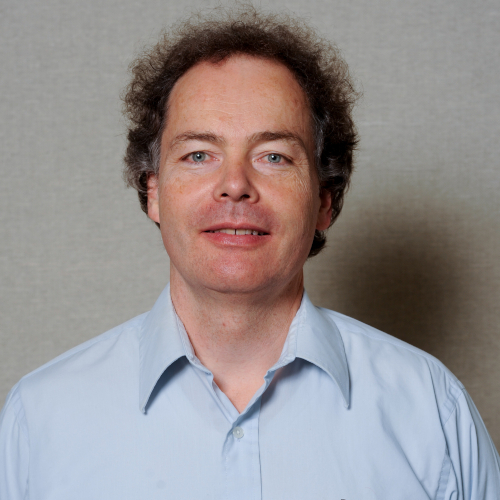
Dr. Vera Guarrera is an Associate Professor at the School of Physics and Astronomy, University of Birmingham. She holds a PhD and specializes in atomic physics, quantum systems, and fundamental physics research. Her work focuses on manipulating cold and room-temperature atomic gases, developing atomic magnetometers for metrological applications, and exploring quantum simulations using Bose-Einstein condensates. Additionally, she investigates physics beyond the Standard Model through ultra-precise clocks based on highly-charged ions. Her research bridges foundational physics inquiries with practical metrological advancements, emphasizing interdisciplinary approaches in quantum technologies. While no specific grants or advising roles are detailed, her contributions align with cutting-edge studies in atomic and particle physics.
Dr. Endrowednes Kuantama is a Lecturer in IoT/Networking at Macquarie University's School of Computing, appointed in 2023. He holds a PhD from Oradea University, Romania, as an ERASMUS MUNDUS scholar. Previously, he served as an Assistant Professor at Kyungsung University, South Korea, and a Postdoctoral Research Fellow at Macquarie University. His research focuses on autonomous drones, IoT integration, sensor fusion, and robotics control systems. He leads projects like Deep Vision in Autonomous Underwater 3D Mapping and Bonding Through Coding , and contributes to the Drone Lab, exploring aerial manipulation, SLAM algorithms, and machine learning applications. He has authored 27 publications in journals, conferences, and books, and reviews for the Drone and Aerospace Journal . His work spans drone stability analysis, control systems, and payload delivery optimization. Key projects include Deep Vision in Autonomous Underwater 3D Mapping (2025-2026) Bonding Through Coding (2024-2025) His research emphasizes drone-based solutions for logistics, security, and environmental monitoring, with recent advancements in LiDAR-based tracking, cooperative drone systems, and emergency battery services.
Associate Professor Tien-Fu Lu is a faculty member in the School of Electrical and Mechanical Engineering at the University of Adelaide, affiliated with the Faculty of Sciences, Engineering and Technology. He holds a Reader position and specializes in intelligent mechatronics, robotics, and automation systems. His work spans nano-positioning technologies, industrial robotics, agricultural automation, and mining engineering. Research Interests: - Robotics and mechatronics in agriculture (vineyard pruning, stockpile management) - Underwater robotics and autonomous systems - Energy harvesting using piezoelectric materials - Human-machine interaction through exoskeletons - Precision motion control and sensor systems Recent work focuses on automated pest detection in agriculture, real-time stockpile modeling for mining, and advanced robotic systems for industrial applications. He has secured over $12M in research funding, including major grants from CSIRO, GRDC, and SmartSat CRC. Awards: Web of Science High-Citation Paper (2018) ASPEN2015 Conference Best Paper Award StateWeb Excellence Award (2007) Grants and Supervision: He leads teams in multidisciplinary projects, supervising Masters/PhD candidates in robotics and mechatronics. Active collaborations involve industry partners like CSIRO, GRDC, and Wine Australia. Labs/Teams: - Robotics and Automation Lab - Agricultural Mechatronics Group - Mining Automation Research Cluster
Robert Wolkow is a Professor in the Department of Physics at the University of Alberta, holding the iCORE Chair of nanoscale Information and Communication Technologies. He leads the Hybrid Nano-Electronic Systems program at the National Institute for Nanotechnology and serves as Chief Technical Officer of Quantum Silicon Inc. His research focuses on atom-scale fabrication, quantum computing, and ultra-low-power electronics. Wolkow has pioneered techniques in atomic-scale device manufacturing using scanning probe microscopy and hydrogen lithography. Education: BSc (Waterloo, 1982), PhD (Toronto, 1987). Postdoctoral training at IBM Yorktown Heights and AT&T Bell Laboratories preceded his senior roles at the National Research Council of Canada. He has held leadership positions including Scientific Director of the Hitachi electron microscopy product development Centre. Research interests emphasize atomic-scale engineering of silicon surfaces, including dangling bond logic systems, quantum dots, and nanoelectronic devices. His work bridges fundamental physics with applied technologies like quantum computing and nanofabrication automation. Recent publications highlight advancements in editable atomic-scale devices, charge defect simulations, and machine learning-driven nanoscale manufacturing. Wolkow’s innovations include the first atomic-scale transistor and methods for precise atomic positioning. His labs integrate scanning tunneling microscopy, nanomanipulation, and computational modeling to explore silicon’s quantum and electronic properties at the atomic limit. Collaborations span academia and industry, driving applications from quantum sensors to next-generation computing architectures.
Professor Matthew Cartmell holds the chair of Nonlinear Dynamics at the University of Strathclyde's Department of Mechanical and Aerospace Engineering within the Faculty of Engineering. He has held academic positions at leading UK institutions including University of Edinburgh (PhD 1984, Senior Lecturer 1994-1998), University of Glasgow (James Watt Chair 2006-2012), and University of Sheffield (Chair of Nonlinear Mechanics 2012-2016). His expertise spans nonlinear dynamics, structural vibration, energy harvesting, and gravitational physics. Education: PhD in Nonlinear Structural Dynamics, University of Edinburgh (1984) Former Fellow of the Institution of Mechanical Engineers Research Interests: Nonlinear dynamical systems modeling Symbolic computational dynamics Gravitational physics experiments Space tether systems Energy harvesting technologies Recent work focuses on Foucault pendulum-based gravitational measurement instruments and advanced vibrational energy harvesting systems. He leads projects like the 'Terrestrial Measurement of Frame-dragging' and 'Symbolic Computation for Differential Equation Based Systems.' Grants & Projects: EPSRC-funded Advanced Vibration Laboratory (£63K total) Principal Investigator for multiple UKRI projects (2022-2026) Collaborations on lunar habitat design and space debris removal Labs/Teams: Leads the Advanced Vibration Laboratory at Strathclyde, fostering interdisciplinary research in structural health monitoring and nonlinear dynamics applications.
Dr. Mehmet Caner is a Professor in the Department of Agricultural and Resource Economics at North Carolina State University's College of Agriculture and Life Sciences. Previously at Ohio State University (2015-2019), he specializes in econometrics with research emphasis on empirical international finance and high-dimensional econometric testing. He serves as associate editor for multiple leading journals including Journal of Econometrics and Journal of Business and Economic Statistics. His methodological innovations focus on high-dimensional econometrics, particularly developing testing frameworks for models with large parameter spaces. Research extends to applications in financial portfolio optimization, market integration analysis, and machine learning incentive structures. Recent publications (2020-2024) demonstrate strong emphasis on LASSO-based inference, deep learning integration in factor models, and constrained portfolio analysis under high-dimensional complexity. Education: Ph.D. Economics, Brown University (1996) A.M. Economics, Brown University (1993) Bachelor of Science Business Administration, Middle East Technical University (1988) Scientific Awards: Research Award, NC State University Research Award, University of Pittsburgh
Jeff Dunne is an Associate Professor in the Department of Crop and Soil Sciences at NC State University, part of the College of Agriculture and Life Sciences. His research focuses on peanut breeding, plant genetics, and precision agriculture technologies. He leads projects on drought tolerance, herbicide resistance, and genomics-assisted breeding strategies. Dunne has developed innovative methods using drones and spectral imaging for disease detection and crop assessment. He collaborates on integrated pest management and crop rotation studies to enhance yield resilience. His work bridges traditional plant breeding with modern genomic tools to accelerate cultivar development. Key research areas include: improving peanut's resistance to leaf spot diseases, enhancing drought tolerance through genetic analysis, and developing imaging technologies for field phenotyping. He has created the 'Comrade' peanut cultivar and contributed to understanding glufosinate-resistant weed populations in North Carolina. Recent studies explore the impact of cropping sequences on nematode populations and peanut yields, as well as zinc toxicity thresholds in peanuts. Dunne's team uses UAV-based multispectral imagery to assess crop stress and employs whole-genome sequencing for marker-assisted selection in peanuts. His research portfolio includes over 50 peer-reviewed articles since 2018, with a focus on plant breeding, genomics, and agronomic challenges in southeastern US crop systems. He advises collaborative projects on sustainable pest management and climate-resilient crop varieties.
Ramsey Lewis is the Charles and Marilyn Stuber Distinguished Professor of Plant Breeding and a University Faculty Scholar at North Carolina State University. He is affiliated with the Tobacco Breeding & Genetics department, focusing on genetics, plant breeding, and molecular biology in Nicotiana species. His research emphasizes improving plant breeding methodologies, understanding disease resistance mechanisms, and manipulating plant chemistry to reduce harmful alkaloids. Lewis leads the U.S. Nicotiana Germplasm Collection and the CORESTA Series of Smokeless Tobacco Reference Products, critical resources for global tobacco research. His work integrates advanced techniques such as plant transformation, CRISPR-Cas9 gene editing, and genomic selection. Notable areas include minimizing tobacco-specific nitrosamines (TSNAs), enhancing resistance to pathogens like Phytophthora nicotianae, and optimizing alkaloid biosynthesis pathways. Recent studies explore the role of BBL enzymes in nicotine metabolism and automated nematode detection using machine learning. Publications highlight advancements in reducing nicotine levels, improving crop resilience, and refining tobacco genetics. Lewis teaches CS 413: Introduction to Plant Breeding and collaborates on projects addressing global agricultural challenges, such as nitrogen utilization efficiency and transgenic crop validation. No scientific awards are explicitly listed, but his contributions to tobacco science are widely recognized. Advising details are not provided, though his research involves graduate student involvement. His lab’s germplasm collection and reference products support broader academic and industrial efforts in crop improvement.
Dr. James Bateman is a Lecturer in the Physics Department at Swansea University, affiliated with the School of Biosciences, Geography and Physics. His research focuses on quantum optomechanics, levitated systems, and quantum measurement techniques, with contributions to projects like the MAQRO research campaign. He teaches modules such as Computational Physics I (PH-204) and Condensed Matter Physics II (PH-307). Research Interests : Dr. Bateman's work explores quantum phenomena in macroscopic systems, including optomechanical cooling, gravitational effects on quantum states, and interferometric methods for detecting dark matter and quantum collapse models. His experiments often involve levitated nanoparticles and cold atoms, pushing the boundaries of quantum technology and foundational physics. Supervision & Collaboration : He currently supervises PhD students on projects such as nanoparticle manipulation for quantum systems and optomechanical sensing technologies. Past students have worked on suppressing Rayleigh scatter and Bayesian inference in optomechanical systems. Collaborations span international teams, including MAQRO's efforts to test macroscopic quantum behavior. Labs & Teams : Dr. Bateman is part of Swansea University's quantum research groups, contributing to facilities and initiatives advancing optomechanics and quantum optics. His research aligns with the university's strategic focus on quantum technology and fundamental physics inquiries.
Professor Hsieh, Sheng-Jen holds a faculty position at Texas A&M University in the Department of Engineering Technology & Industrial Distribution, with affiliated roles in Electrical & Computer Engineering. He specializes in automation, robotics, infrared imaging, and smart system design. His research bridges engineering education and advanced manufacturing technologies, emphasizing Industry 4.0 applications and cyber-physical systems. Education includes a Ph.D. in Industrial Engineering from Texas Tech University (1995), M.S. from St. Mary's University (1989), and B.S. from National Taipei Institute of Technology (1982). He has received numerous accolades including the NSF CAREER Award, Halliburton Foundation Professorship, and multiple teaching awards. His research interests span additive manufacturing optimization, thermal stress prevention in 3D printing, and remote-access lab development for education. Key achievements include developing AI-driven systems for anomaly detection in motors and smart traffic light control algorithms. He actively contributes to educational outreach through low-cost automation kits and PLC training modules. Scientific contributions include over 100 publications, with recent work focusing on machine learning applications in manufacturing processes and educational technology innovations. He has advised multiple undergraduate research projects in mechatronics and robotic systems. Labs and collaborations involve experimental setups for thermal imaging analysis, automated material handling systems, and IoT-enabled HVAC control strategies. His work integrates cognitive task analysis to improve engineering education practices.
Vinayak Krishnamurthy is an Associate Professor and J. Mike Walker '66 Career Development Professor in Mechanical Engineering at Texas A&M University, with affiliate appointments in Computer Science & Engineering. He directs the Mixed Initiative Design Lab (MIDL), working at the intersection of computer-aided design, human-computer interaction, and artificial intelligence. Research develops computational frameworks for generative design, human-AI collaboration, geometric/topological modeling, and mixed reality interfaces. Innovations include topological interlocking systems for multi-robot additive manufacturing, statistically self-similar structures via chaos algorithms, and speech-based design tools for young learners. Recent honors include multiple ASME best paper awards and an NSF CAREER award. Teaching spans mechanical engineering and data science courses, with recognition through college-level teaching awards. Publications demonstrate strong interdisciplinary integration of computational geometry, human-centered AI, and advanced manufacturing.
Professor Hans Hallen is a faculty member in the Physics Department at North Carolina State University. He holds a BS in Engineering Physics from Cornell University (1984), and MS/PhD in Applied Physics from Cornell (1986/1991). His career includes postdoctoral work at AT&T Bell Labs (1991-1993), where he pioneered the scanning Hall probe microscope. Currently, his research focuses on nanoscale optical spectroscopy, microwave propagation, and nano-bioprobes for cellular studies. Research interests include nanoscale carrier dynamics in silicon, gradient-field Raman spectroscopy near metallic nanostructures, and novel material approaches for 3D RF wafer packaging. His work bridges physics, materials science, and engineering with applications in wireless communications and nanoscale imaging. Recent publications (2019-2023) address challenges in mmWave signal blockage prediction using machine learning, dynamic control of optical surfaces via liquid metals, and self-alignment techniques in semiconductor manufacturing. His nano-bioprobe innovations enable intracellular signal transduction studies and nuclear manipulation within cells. Professor Hallen leads interdisciplinary projects involving scanning probe microscopy, molecular deposition with nanoscale resolution, and Raman lidar techniques. His work emphasizes practical applications of fundamental physics discoveries in emerging technologies.
Peter Stephensen Lübeck is an Associate Professor in the Department of Chemistry and Bioscience at Aalborg University, Faculty of Engineering and Science. His work bridges biotechnology, food science, and sustainable resource utilization, with a strong focus on biorefinery systems and fungal-based solutions for future food and environmental challenges. Research Interests: Biorefinery Concepts: Utilizing membrane filtration and bioprocessing to extract high-value proteins from green biomass such as clover grass and lucerne. Fungal Cell Factories: Engineering fungi like Aspergillus niger and Trichoderma reesei for sustainable production of food ingredients, biochemicals, and bioactive compounds. Molecular Biology: Applying CRISPR-Cas9 and genomic tools for strain improvement and metabolic pathway optimization. Sustainable Food Systems: Developing climate-friendly food technologies through precision fermentation and upcycling of organic side-streams. Recent Research Trends: His recent publications (2020–2025) reflect a strong shift toward sustainable food innovation, particularly in extracting functional proteins from underutilized green biomass using membrane technology. He is also deeply involved in fungal biotechnology for alternative protein production, emphasizing circular economy principles. Projects like Græs4Food, SvampeMad, and UPCYFUN highlight his interdisciplinary approach integrating food science, environmental engineering, and industrial biotechnology. Scientific Contributions: Active participant in 12 major research projects, including ongoing initiatives funded through 2029. Contributor to 78 research outputs, including journal articles, posters, patents, and datasets. Public engagement through 9 media appearances discussing green transition, food innovation, and climate impact. Advising and Grants: Peter Stephensen Lübeck participates in PhD supervision and collaborates extensively across academic and industrial partners. He is involved in multiple large-scale, externally funded projects focused on sustainable food production and biorefining, such as HfBFood and BioFerment, indicating strong grant acquisition and collaborative leadership. While specific student names are not listed, his involvement in PhD supervision confirms mentoring activities. Laboratories and Research Teams: He works within the Bioresources and Process Engineering research group at Aalborg University, collaborating closely with Professor Mette Lübeck. His work spans interdisciplinary teams involving food scientists, engineers, molecular biologists, and industrial partners, particularly in projects related to fungal fermentation, protein recovery, and green biotechnology.
Mattia Silvi is a Research Fellow at the Catalan Institute of Chemical Research (ICIQ), conducting cutting-edge work in asymmetric organocatalysis and photochemical synthesis since completing his PhD in 2015. His educational background includes: PhD in Chemistry from ICIQ (defended October 15, 2015) Dr. Silvi's research pioneers photo-driven enamine activation and vinylogous reactivity control , with core expertise in stereoselective alkylation , dienal functionalization , and molecular topology manipulation . His work bridges organic synthesis with sustainable catalysis methodologies, emphasizing precision in regio- and stereochemical outcomes through innovative substrate design. Publication trends reveal a strategic focus on merging photochemistry with aminocatalysis to overcome traditional reactivity limitations, primarily advancing asymmetric synthesis within organic chemistry and sustainable catalysis frameworks. Scientific recognition: ERC Postdoctoral Fellowship His ERC-funded research operates within Prof. Paolo Melchiorre's group at ICIQ, leveraging institutional core facilities for advanced characterization. No student advisement is documented in current records, though his methodologies influence broader catalysis research at the institute. He contributes to ICIQ's Sustainable Catalysis research area through mechanistic studies of enamine photoexcitation and vinylogous iminium ion control, directly supporting the institute's molecular medicine and renewable energy initiatives.
Sergey Eliseev is a leading researcher at the Max Planck Institute for Nuclear Physics (MPIK) in Heidelberg, Germany, where he serves as a group leader for the MATS and PENTATRAP projects. His research is centered on high-precision Penning-trap mass spectrometry, enabling groundbreaking studies in neutrino physics, nuclear structure, and searches for physics beyond the Standard Model. His research interests span precision mass measurements, neutrino mass determination via electron capture in 163 Ho, tests of fundamental symmetries, and the search for new bosons and dark forces. He plays a key role in interdisciplinary collaborations such as SFB 1227 DQ-mat and IsoQuant, which aim to push the limits of precision physics. His work involves both experimental innovation and theoretical interpretation, particularly in the context of highly charged ions and atomic metrology. The recent articles highlight a strong trend toward using nonlinearities in King plots to constrain new bosons, measuring neutrino-related Q-values with eV-level precision, and probing nuclear structure through mass spectrometry of exotic isotopes. His publications frequently appear in high-impact journals such as Nature , Physical Review Letters , and Reviews of Modern Physics , often in collaboration with Klaus Blaum and other leaders in the field. He has been involved in numerous scientific advancements, including the development of ultra-stable voltage sources, cryogenic stopping cells, and digital feedback systems for ion manipulation. These technical innovations support the extreme precision required in modern atomic and nuclear experiments. As a group leader at MPIK, he mentors and collaborates with a broad team of researchers and students. Although no direct students are named in the provided text, his leadership in large collaborations implies significant advisory and team coordination roles. He has also contributed to major review articles and white papers, including one on keV sterile neutrino dark matter, indicating leadership in shaping future research directions. His laboratory work is centered around the PENTATRAP and SHIPTRAP spectrometers, which are at the forefront of high-precision mass measurements for highly charged and rare isotopes. These facilities are critical for advancing tests of fundamental physics and exploring the limits of the Standard Model.