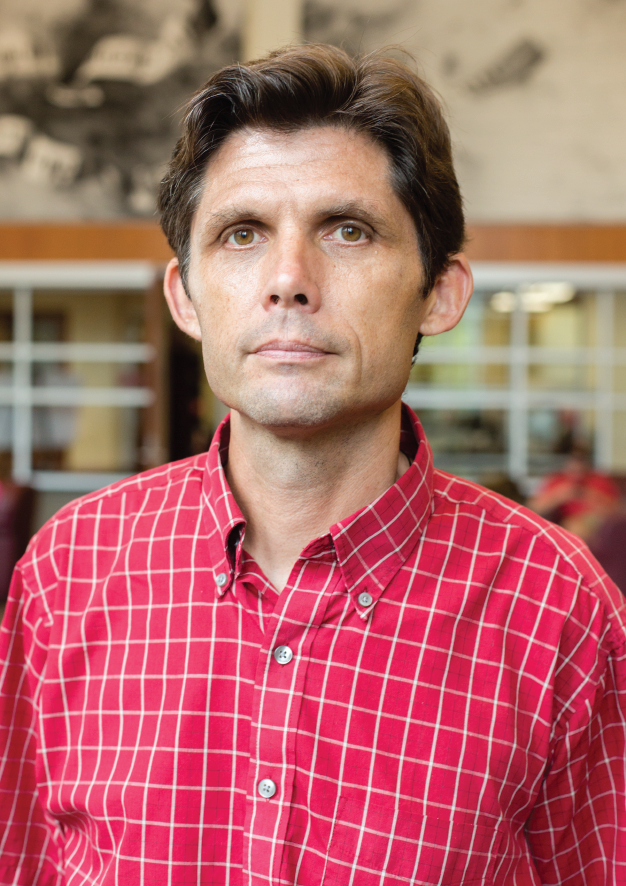
John H. Arnold is Professor of Medieval History at the University of Cambridge and Fellow of King's College. Educated at the University of York (BA History, D.Phil Medieval Studies), his academic career includes positions at University of East Anglia and Birkbeck, University of London before joining Cambridge in 2016. He holds editorial roles at Cultural and Social History, Past & Present, and directs publication series at both York Medieval Press and Cambridge University Press. Arnold's research centers on medieval religious culture, particularly lay belief, heresy, inquisition, and the history of gender. His monograph 'The Making of Lay Religion in Southern France' (2024) exemplifies this focus. Current projects investigate the social history of confession and the repression of usury. Analysis of Arnold's 15 most recent publications reveals consistent engagement with medieval religious dissent and belief systems. Key themes include: reinterpretations of heresy trials (2019), sensory dimensions of faith (2018), historiographic debates about Catharism (2016), and methodological examinations of archival sources (2022). His work frequently employs theoretical frameworks from sociology and philosophy to reinterpret medieval religious conflict. Arnold maintains active research networks through editorial leadership and supervision. His Cambridge Studies in Medieval Life and Thought series promotes innovative scholarship in medieval history.
Jamie H. Ferguson is an Associate Professor in the Department of English at the University of Houston, with a cross-appointment to the Honors College. He specializes in Renaissance and early modern literature, focusing on intersections between biblical hermeneutics, literary poetics, and translation theory. Renaissance Literature Shakespeare Studies Biblical Translation Great Books Tradition His research explores how theological debates shaped vernacular literary production in Early Modern Europe, with particular attention to textual materiality and interconfessional dialogues. Ferguson's publication record spans Latin, Italian, French, Polish, and English contexts. Recent projects include the annotated translation of Joachim du Bellay's Deffence et illustration de la langue françoyse and a forthcoming book on European Biblical Poetics . He has received multiple Martha Gano Houstoun Research Grants and been recognized with Honors College lecture awards.
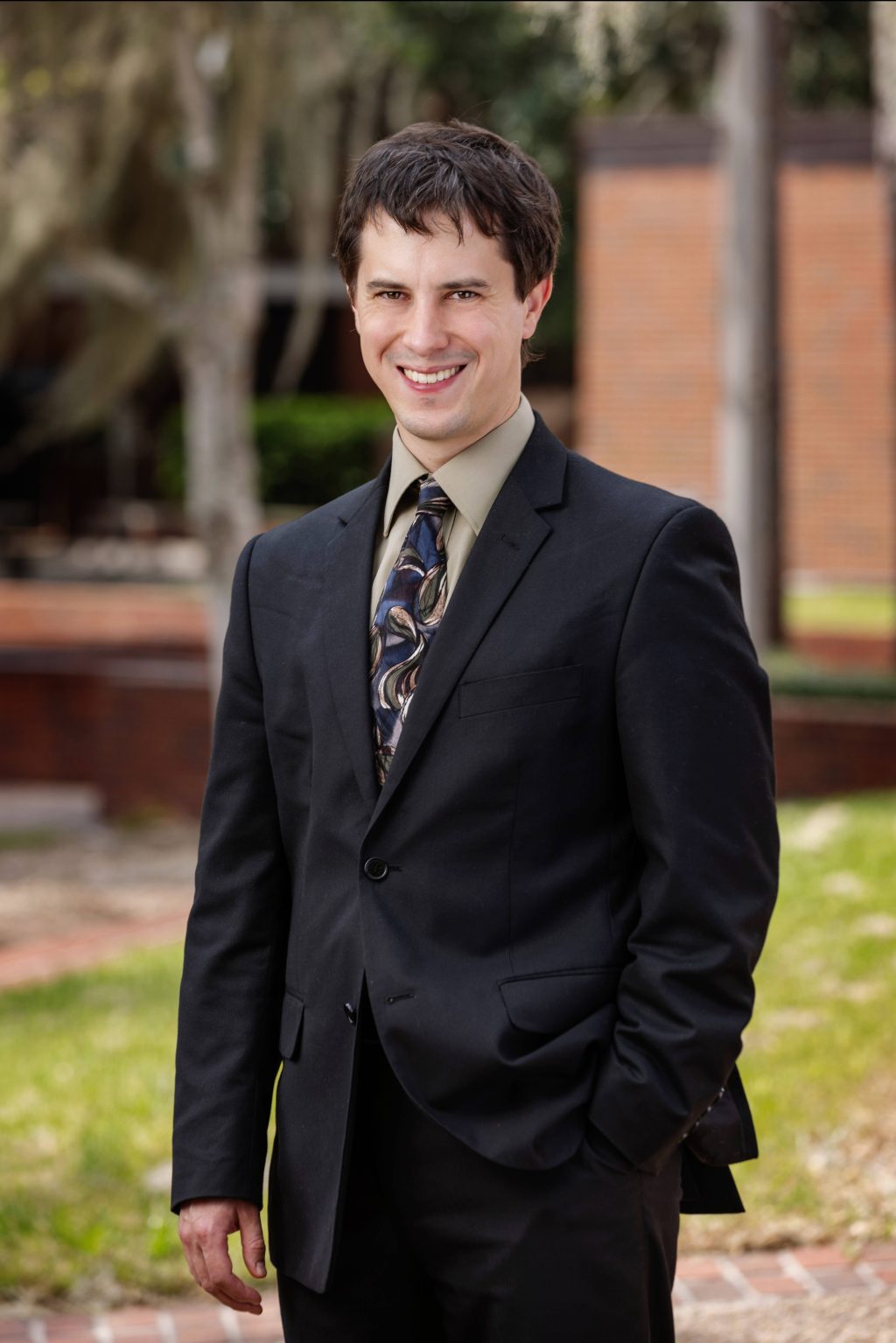
Mattias Gassman is an Assistant Professor of Humanities at the University of Florida's Hamilton School for Classical and Civic Education. His research focuses on the transformation of Roman religious ideas by Christianity, particularly in late antiquity. Previously, he held postdoctoral fellowships at the University of St. Andrews and the University of Oxford. He earned a PhD in Classics from the University of Cambridge (2017), and prior degrees from Oxford, Minnesota, and Iowa State University. His research emphasizes critical analysis of modern concepts like 'paganism' and 'secularity' through ancient lenses. His first monograph, Worshippers of the Gods (Oxford, 2020), examined fourth-century Roman religious debates. His current book project, Citizens of the Earth , analyzes Augustine's engagement with Roman religion across his works. He also co-authored a general-audience textbook on fourth- and fifth-century theological controversies. His articles explore topics such as Augustine's anti-pagan rhetoric, late antique preacher techniques, and the reception of classical texts. Recent publications appear in Journal of Early Christian Studies , Historia: Zeitschrift für Alte Geschichte , and Augustinian Studies . He teaches courses on ancient texts and religious history, including Immortality (Quest 1) and Great Books of the Ancient World .
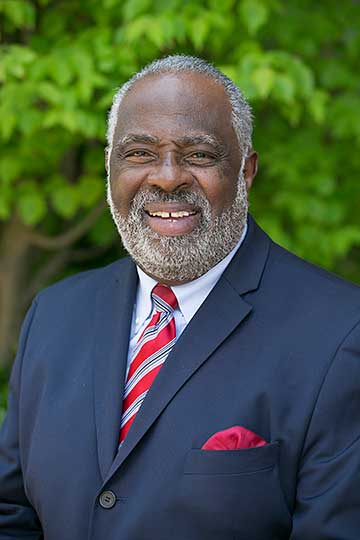
Dr. Robert Smith Jr. is the Distinguished Professor of Divinity and Dr. Charles T. Carter Baptist Chair of Divinity at Beeson Divinity School, Samford University in Birmingham, AL. He earned his PhD at The Southern Baptist Theological Seminary and has spoken at over 135 universities, seminaries, and colleges globally. Current academic rank: Professor Department: Christian Preaching Research Interests include passion in preaching, African American preaching history, Christological preaching, and theological frameworks for homiletics. His work bridges academic theology with practical ministry applications. Scientific Awards : 2017 E.K. Bailey Expository Preaching Conference Living Legend 2009 Preaching Book of the Year (Doctrine That Dances) 2008 Preaching Book of the Year (Doctrine That Dances) 1996 Southern Baptist Theological Seminary Findley B. Edge Award for Teaching Excellence Dr. Smith has authored/co-edited multiple books, advised on Christian ministry, and served as a Baptist minister for 20 years at New Mission Missionary Baptist Church. His global teaching engagements span locations including Greece, Turkey, and the Holy Land.
Inmaculada Delgado Jara is an Associate Professor of Greek Philology at the Facultad de Ciencias Humanas y Sociales, Universidad Pontificia de Salamanca, specializing in Biblical Studies and Patristics. Her academic profile shows extensive engagement with ancient Greek texts, particularly focusing on San Juan Crisóstomo, Erasmus of Rotterdam, and Septuagint studies. Her educational background includes a doctorate from Universidad Pontificia de Salamanca with the thesis "Sermones in Genesim de San Juan Crisóstomo estudio temático, estilístico y traducción" (1999), supervised by Dr. Alfonso Ortega Carmona. She is a member of the research groups "Humanismo, reformas y ciencia: del Medievo a la Ilustración" and "ICS. Innovación en Ciencias Sociales". Delgado Jara's research interests center on Greek Philology, Biblical Philology, Patristics, Septuagint Studies, Erasmus of Rotterdam studies, and San Juan Crisóstomo studies. Her scholarly work demonstrates deep expertise in ancient Greek language and literature, particularly as applied to biblical and patristic texts. She has made significant contributions to understanding the intersection of classical literature and early Christian thought. An analysis of her recent publications reveals a consistent focus on textual criticism, philological analysis of biblical and patristic works, and the reception history of classical texts in Christian contexts. Her work often bridges linguistic analysis with historical and theological interpretation, particularly examining how ancient Greek texts were transmitted, interpreted, and utilized in later periods. Her scholarly activity includes numerous books, edited volumes, and academic papers, with recent work focusing on Erasmus's biblical scholarship, San Juan Crisóstomo's homilies, and the Septuagint. Despite her extensive publication record, no specific scientific awards are mentioned in the available information. Delgado Jara is actively involved in academic supervision and research direction, as evidenced by her editorial work on major scholarly projects and her participation in academic conferences. Her work shows collaboration with numerous scholars across Spain and internationally, particularly in the fields of Biblical Studies and Renaissance Humanism.
Luca Burzelli is a Research Fellow at the University of Siegen , Faculty of Philosophy, specializing in medieval and Renaissance philosophy. His work bridges hylomorphism, element theory, and theological debates on free will and predestination. Current project: Nicholas of Cusa as Reader of Plato and Aristotle (DFG-funded) Editorial collaborations: Between Past and Modernity (2022), Chrysostom Javelli (2023) Research Themes : Comparative study of Nicholas of Cusa and Giovanni Pico della Mirandola Gasparo Contarini's theological and philosophical contributions Evolution of hylomorphic theory from Aristotle to the Renaissance Philosophical anthropology from dignitas hominis to Hegel Publications focus on Renaissance natural philosophy, theological causality, and the reception of Aristotelian and Platonic ideas. His edited works include Scritti teologici (2023) by Contarini.
Gert Partoens is a full professor at the Faculty of Arts, KU Leuven, where he serves as head of the Institute for Classical Studies. He is a member of the Latin Literature Research Group and LECTIO – KU Leuven Institute for the Study of the Transmission of Texts, Ideas and Images in Antiquity, the Middle Ages and the Renaissance. Additionally, he participates in university governance as a member (ZAP) of both the Faculty Council of Arts and the Artesraad. Professor Partoens' research focuses on Latin literature, particularly patristic and medieval texts with a specialization in Augustine studies, textual transmission, and manuscript analysis. His expertise spans: Early Christian theology and literature Manuscript studies and textual criticism Reception history of classical and patristic authors Medieval exegesis, particularly of Pauline epistles Canon formation in late antiquity His recent scholarly output demonstrates consistent engagement with Augustine's reception, particularly examining how medieval scholars interpreted and transmitted his works. Partoens has produced numerous critical editions, including volumes in the prestigious Corpus Christianorum series, and has increasingly focused on sermon corpora and homiliary collections. His methodological approach combines textual criticism with reception history to trace how classical and patristic texts were understood across different historical periods. Professor Partoens is actively involved in multiple research projects extending through 2027, including studies on canon formation mechanisms, early witnesses to semi-Pelagianism, and the transmission of Pomerius' De vita contemplativa. His work often involves international collaboration, particularly with institutions like SISMEL in Bologna, and contributes significantly to our understanding of how texts traveled and were transformed throughout the medieval period. As an educator, Partoens teaches courses on early Christian and medieval Latin language and literature, classical Latin, textual criticism, and edition techniques, training the next generation of scholars in philological methods and classical reception studies.
John Slater is a Professor in the Department of Languages, Literatures and Cultures at Colorado State University, specializing in Early Modern Hispanic Literatures, History of Science, and History of Medicine. His research focuses on knowledge production in 17th-century Spain, particularly how literature disseminated ideas about health and healing. He examines print genres like sermons and drama as vehicles for scientific and medical discourse, highlighting conflicts between religious and medical practices. Slater joined CSU in 2020 after roles at UC Davis, University of Colorado, and Indiana University. He holds a PhD from Brandeis University and a BA from Earlham College. His research explores Jesuit and Franciscan healing practices, their impact on medical reforms, and intersections between literature and science. Awards include the 2023 Interdisciplinary Scholarship Award and 2025 Excellence in Teaching Award (CLA). Key publications analyze alchemy in sermons, venereal disease in Baroque Spain, and transatlantic medicinal plant trade. His edited works include studies on Cervantes and medical drama. Slater’s pedagogical contributions include annotated editions of works by Lope de Vega, Juana Inés de la Cruz, and María de Zayas. He has been honored for innovative mentorship models and career advising. His interdisciplinary approach bridges literary analysis with historical, scientific, and cultural studies, emphasizing early modern Spain’s intellectual networks and global exchanges.
Alden Bass is a Professor in the Hazelip School of Theology at Lipscomb University. He specializes in the history and theology of early Christianity, focusing on North African figures like Tertullian, Cyprian, and Augustine. His research emphasizes biblical interpretation, preaching practices, and the intersection of theology with social issues like justice, technology, and creation care. Education : B.A. in Religious Studies, Yale University (2005) M.T.S., Vanderbilt Divinity School (2007) Ph.D. in Historical Theology, Saint Louis University (2014) Research Interests : Early Christian exegesis, Donatism, Augustine's anti-Donatist sermons, and the sociohistorical context of North African Christianity. He also explores contemporary applications of early Christian theology to modern issues like technology ethics and urban ministry. Recent Scholarly Trends : Recent work addresses historiographical shifts in studying African Christianity, including colonial-era archaeological impacts and critical theory approaches. Key themes include the role of liturgical sermons in catechesis and the political theology of early Christian communities. Awards : None explicitly listed, but his prolific peer-reviewed publications indicate scholarly recognition. Advising/Grants : No specific grants or advisees named, but his involvement in the Nurturing Communities Network reflects collaborative community-focused work. Labs/Teams : Co-founded The Lotus House neo-monastic community during his time in St. Louis, now part of the nationwide Nurturing Communities Network emphasizing intentional Christian living.
Jessica A. Boon is an Associate Professor and Director of Graduate Studies in the Department of Religious Studies at the University of North Carolina at Chapel Hill, with adjunct appointments in History and Women’s and Gender Studies. She specializes in medieval and Renaissance Catholicism, focusing on Spanish mysticism, Passion spirituality, and the intersections of gender, race, and disability in religious texts. Her work examines embodiment through medical, emotional, and material frameworks in premodern contexts. Education Ph.D. in Religious Studies, University of Pennsylvania (2004) B.A. in Humanities, Yale University (1998) Research Focus Boon investigates the physiological and cognitive dimensions of mystical experience in medieval Iberia, particularly through Castilian 'recollection' mysticism. Her current project analyzes Passion meditation as a tool for Spanish imperial identity formation, exploring pain, gender, and religious-racial dynamics. She emphasizes Christianity's interactions with Judaism, Islam, and global religions in her courses. Awards and Honors Bishko Prize (2008, 2021) for best articles in Iberian history Medieval Feminist Scholarship Article Prize (2019) ACLS Ryskamp Fellowship (2015) Javits Fellowship (1998) Multiple UNC awards for teaching and research (2013–2024) Teaching Courses include Religion and Medicine, Medieval Christian Cultures, Race/Sexuality/Disability in Christianity, and graduate seminars on theory and bodyminds.
W.J. Torrance Kirby is a Professor of Ecclesiastical History at McGill University and a Fellow of the Royal Historical Society . He has served as Director of the Centre for Research on Religion (CREOR) since 2008 and held visiting fellowships at institutions including St John’s College (Oxford), New College (Edinburgh), and the American Academy in Rome. His academic journey includes a DPhil in Modern History from Oxford University (1988) and earlier degrees in Classics from Dalhousie University. Education: BA & MA in Classics (Dalhousie), DPhil in Modern History (Oxford) Current Role: Professor, Faculty of Religious Studies, McGill University Visiting Appointments: Clare Hall (Cambridge), Princeton Centre of Theological Inquiry Dr. Kirby’s research centers on Reformation political theology , Christian Platonism , and the emergence of the early modern public sphere through rhetorical practices like Paul’s Cross sermons. He leads collaborative projects funded by SSHRC , including a 2020 Insight Grant for 'The Reception of German Mysticism in Early Modern England' and a 2009 Standard Research Grant for 'Paul's Cross and the culture of persuasion'. His work bridges patristic theology , Renaissance humanism , and transnational Reformation studies , particularly focusing on Italian and Swiss reformers like Peter Martyr Vermigli. His 15 most recent publications include the 2017 Oxford edition of Paul's Cross Sermons , analyses of Richard Hooker’s Neoplatonic jurisprudence , and studies on Reformation-era political theology across England, Switzerland, and Italy. Special attention is given to public preaching as a catalyst for religious identity transformation and civil-military dynamics in Tudor England. Scientific Distinctions include a 2011 Royal Historical Society Fellowship , a 2013 Smith College Kennedy Professorship , and ongoing McCord Fellowship at Princeton Centre of Theological Inquiry since 2019. He has supervised over 28 doctoral and master’s theses on topics ranging from medieval mysticism to early modern religious conversion . As Director of CREOR , he has organized lecture series on themes like Conversion and Modernity (2012) and Neuro-theology (2011). Current projects involve collaborations with the Forms of Conversion initiative and the Metaphysics of Conversion research group.
Eve-Marie Becker is Professor of New Testament at the University of Münster, where she has held a faculty position since September 2018. Previously, she served as Professor of New Testament Exegesis at Aarhus University in Denmark from 2006 to 2018 and held visiting positions including Distinguished Visiting Professor at Emory University. Her academic trajectory includes significant research fellowships at the Israel Institute for Advanced Studies in Jerusalem and the Alfried Krupp Kolleg at WiKo Greifswald (2024-2025). Her academic credentials include: Habilitation in New Testament at the University of Erlangen (2004) Doctor of Theology from the University of Erlangen-Nuremberg (2001) Studies in Protestant Theology at Marburg and Erlangen (1991-1997) Professor Becker's research spans multiple interconnected domains within New Testament scholarship. Her primary focus areas include the Gospel of Mark and Synoptic Gospels, Philippians and Pauline literature, literary history with emphasis on historiography and epistolography, hermeneutics, person/personality studies, and historical Jesus research. Her scholarly approach integrates historical-critical methodology with literary and cultural analysis, particularly examining early Christian texts within their ancient communication systems. Her recent publications reveal a concentrated interest in ancient letter writing traditions, especially comparative studies of Paul's correspondence alongside Roman letter writers like Cicero and Seneca. This research trajectory is reflected in major projects including 'Epistolary Visions of Transformational Leadership: Cicero - Paul - Seneca' (EVTL) and 'Cosmocracy and Pantocracy in Early Christianity (KoPaC).' Her work consistently bridges historical investigation with theological interpretation, demonstrating how early Christian writings functioned within their historical contexts while maintaining contemporary relevance. Among her notable scholarly recognitions are: Habilitationspreis from Friedrich-Alexander-Universität Erlangen-Nürnberg (2005) DAAD Postdoc Research Fellowship (2003) Doctoral scholarship from Studienstiftung des deutschen Volkes (1998) Professor Becker maintains active involvement in numerous academic organizations and editorial responsibilities. She serves as Convener of the New Testament Fachgruppe of the Wissenschaftliche Gesellschaft für Theologie (WGTh), co-editor of Meyers Kritisch-exegetischer Kommentar, and co-editor of the De Gruyter series 'Epistula.' Her editorial board memberships include prestigious journals such as New Testament Studies, Journal of Biblical Literature, and Journal for the Study of Paul and His Letters. She also contributes to church-related initiatives through her work with the Evangelical Church in Germany (EKD) and the Union Evangelischer Kirchen (UEK). At the University of Münster, Professor Becker teaches a comprehensive curriculum spanning introductory courses on the New Testament to advanced seminars on Pauline epistolography and historical Jesus research. Her teaching reflects her scholarly commitment to both textual analysis and theological interpretation of early Christian writings, preparing students for rigorous academic engagement with biblical texts.
Olaf Kramer is a Professor of Rhetoric and Knowledge Communication at the Department of General Rhetoric, Faculty of Humanities, University of Tübingen. He leads the Presentation Skills Research Center and serves as Managing Director of the Research Center for Science Communication (RCS). Since 2021, he has been the spokesperson for the RHET AI Center, focusing on artificial intelligence in science communication. Kramer is also a key editor of Science Notes magazine and the neue rhetorik / new rhetoric book series. Professor, Department of General Rhetoric, University of Tübingen Head, Presentation Skills Research Center Managing Director, Research Center for Science Communication (RCS) Spokesperson, RHET AI Center Editor, Science Notes and neue rhetorik series Education: Studied General Rhetoric, German Literature, Philosophy, and Psychology in Tübingen, Frankfurt (with Jürgen Habermas), and Chapel Hill, USA (with Lawrence Grossberg) Ph.D. (2008): Rhetoric in Goethe Habilitation (2015): Virtual Reality, with teaching authorization in General Rhetoric and German Literary Studies Olaf Kramer's research centers on science communication , communicative competence , political communication , digital rhetoric , and virtuality . His work bridges classical rhetorical theory with contemporary media and public discourse, particularly in scientific and political contexts. He investigates how knowledge is recontextualized in public communication and how digital platforms reshape rhetorical practices. The recent publications reflect a strong trend in interdisciplinary rhetoric , combining insights from law, theology, education, and digital media. His work explores the rhetorical dimensions of judicial decisions, science slams, social media, and AI, emphasizing the role of narrative, visual design, and audience engagement in shaping public understanding. The integration of virtuality and digital navigation into rhetorical theory highlights his innovative approach to modern communication challenges. Scientific Awards: No specific awards are mentioned in the provided text. Kramer actively supervises a large cohort of students and researchers, many of whom have collaborated on publications and projects. He has secured third-party funding for major initiatives like the Presentation Skills Research Center. His advisory and leadership roles extend to university governance, public engagement, and professional consulting for organizations such as the Max Planck Society and the German Foreign Office. He is deeply involved in public science communication through the Science-Notes lecture series, which he founded and moderates, and through media appearances on ZDF/3sat and RTL. His work also includes designing and leading rhetorical training programs for academic, corporate, and governmental clients, demonstrating a strong commitment to translating academic knowledge into practical applications.
Anathea Portier-Young is an Associate Professor of Old Testament at Duke Divinity School since 2011. She holds a Ph.D. from Duke University (2004), M.A.B.L. from the Graduate Theological Union/Jesuit School of Theology (Berkeley), and a B.A. from Yale University. Her research focuses on biblical prophecy, early Jewish apocalyptic literature, and second-temple historiography, with a specialization in embodiment studies as applied to religious experience and text interpretation. She is the award-winning author of *Apocalypse Against Empire* (2011) and *The Prophetic Body* (2024), exploring resistance theology and the role of the body in mediation. Educations: B.A., Yale University M.A.B.L., Graduate Theological Union/Jesuit School of Theology at Berkeley Ph.D., Duke University Research Interests: Portier-Young examines embodiment through cognitive science and materiality, addressing themes like incarceration, identity, and nonviolence in biblical texts. Her work critiques imperial domination and integrates interdisciplinary methods with social justice applications. Recent projects explore Miriam’s prophetic dance and Josephus’s portrayal of memory. Publications & Media: Over 20 peer-reviewed articles and books, including co-editing *Scripture and Social Justice*. Media features include *Religion News Service* and *WorkingPreacher.org*. Recent articles analyze Daniel’s textual fluidity and the symbolic resistance in apocalyptic narratives. Teaching & Grants: Teaches courses like *Prophecy in the Body* and *Old Testament Interpretation*. Received grants such as the Catholic Biblical Association’s *Prophecy in the Body* project (2021–2022). Active in the Duke Divinity School Women’s Center, fostering community and equity in theological education.
Dr. Alberto Descalzo is an Associate Professor of Spanish at Franciscan University. He holds a Ph.D. in Spanish Philology from the University of Salamanca (Spain), along with advanced degrees in theology and pedagogy. His research focuses on medieval Spanish preaching arts, comparative rhetorical traditions, and Cervantes' Don Quixote . He has published seminal works analyzing medieval sermon structures and the historical context of chivalric literature. Education: Ph.D., Spanish Philology – University of Salamanca M.A., Spanish Philology – University of Salamanca Licenciatura, Spanish Philology – University of Salamanca Theology Pontifical Certificate – University of Salamanca His professional contributions include a 2005 academic initiative at the Embassy of Spain's Washington, DC office, delivering a course on Cervantes' legacy to high school teachers. Fluent in multiple Romance languages and classical languages (Latin/Greek), he maintains active scholarly engagement with medieval Iberian manuscripts and religious rhetoric.