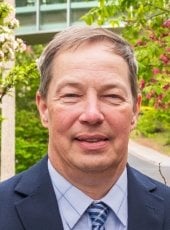
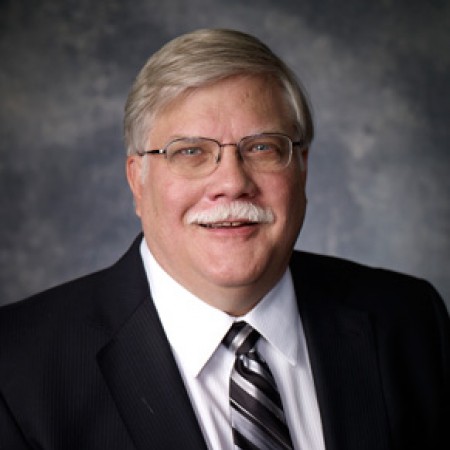
Dr. Berker Bilgin is an Assistant Professor in the Department of Electrical & Computer Engineering at McMaster University. His research focuses on next-generation electric motor drive technologies, including acoustic noise reduction, power electronics, and sustainable electrification. He leads projects sponsored by Fiat Chrysler Automobiles (FCA) and Automotive Partnership Canada (APC), and co-founded a university spin-off company. He teaches courses such as Electric Motor Drives and Switched Reluctance Machine Design. Research Focus: Electric motor drives (46% of global electricity demand), hybrid-electric powertrains, and transportation electrification. His work emphasizes high-efficiency, low-cost solutions and acoustic noise modeling for high-power-density applications like traction motors. He has 10 patents and authored a textbook on Switched Reluctance Motor Drives. Publications Trends: Recent work spans advanced motor designs, acoustic noise mitigation, and thermal/structural modeling of electric machines. Key themes include switched reluctance motor optimization, PWM control strategies, and multi-physics design approaches. Awards: Patented inventions in switched reluctance technology, textbook authorship Grants: FCA/APC-funded hybrid-electric powertrain development Labs/Teams: McMaster University spin-off company for technology commercialization
Xingyong Song is an Associate Professor at Texas A&M University's College of Engineering, affiliated with the Department of Engineering Technology and Industrial Distribution and Electrical & Computer Engineering. He holds a Ph.D. in Mechanical Engineering from the University of Minnesota (2011), and degrees from Korea Advanced Institute of Science and Technology and Harbin Institute of Technology. His research focuses on automation, machine learning, autonomous vehicles, and drilling automation. He leads the Controls and Mechatronics Research Lab, which explores machine intelligence, connected vehicles, and energy systems. Key research projects include NSF-funded work on autonomous directional drilling and powertrain optimization for autonomous vehicles. His awards include the NSF CAREER Award (2021) and NAS GRP Early Career Award (2018). He advises multiple PhD and master’s students and has published extensively in top journals like IEEE Transactions and Automatica. Dr. Song’s lab develops advanced control systems for oil/gas, automotive, and construction industries. His research spans optimal control, reinforcement learning, and mechatronics design. He collaborates with industry partners on projects like vision-based pipe inspection and catalyst filling automation.
Overview Mohamed El Baghdadi is a postdoctoral researcher at the MOBI - Electromobility Research Centre and the Department of Electrical Engineering and Power Electronics at Vrije Universiteit Brussel. His work focuses on advanced power electronics for electric vehicles, thermal management systems, and sustainable energy integration. He has led over 30 projects since 2014, including high-profile initiatives like GEARING MOBI and DESTINY. Research Interests His research spans: Electric vehicle powertrains and charging infrastructure SiC/GaN semiconductor cooling solutions Digital twin modeling for power electronics Fuel cell vehicle optimization Thermal management of high-power inverters Key Contributions Recent work includes groundbreaking advancements in: 6-phase motor drive systems Additive-manufactured cooling structures Multiport DC charging strategies Fuel cell coach powertrain design Awards Awarded the Best Paper Award (2024) and WEVJ BEST PAPER AWARD (2021) for contributions to electric vehicle technologies. Collaborations Active collaborations with industry leaders on EU-funded projects like GIANTS and SOCMAAK39, focusing on decarbonization and electromobility innovations.
Sajib Chakraborty is a Researcher at the MOBI - Electromobility Research Centre and the Department of Electrical Engineering and Power Electronics. His research focuses on condition monitoring, reliability assessment of power electronic systems, and advanced battery management systems (BMS). He has contributed to projects like HARPOONERS and FLEXMCS, aiming to optimize electric powertrain systems and vehicle-to-grid technologies. His work spans over 80 research outputs since 2018, with a strong emphasis on multi-objective optimization, physics-of-failure modeling, and digital twin technologies for electric vehicles. Collaborations include institutions in Europe and beyond, addressing challenges in renewable energy integration and high-voltage electric mobility. Advised 5 Master's theses on topics like DC-DC converter design and SiC MOSFET reliability. Active in editorial roles for IEEE Transactions on Transportation Electrification . Led projects funded by EU grants, totaling € multi-million investments. Key research themes include battery thermal management, EV charging infrastructure, and multi-physics modeling for power electronics reliability.
Antonio Tota serves as an Associate Professor at the Department of Mechanical and Aerospace Engineering (DIMEAS) at Polytechnic University of Turin. His academic career spans multiple prestigious institutions including research positions at University of Surrey and Ohio State University. His primary appointment focuses on automotive engineering with particular expertise in vehicle dynamics and control systems. Associate Professor at DIMEAS, Politecnico di Torino Researcher at University of Surrey (2018) Visiting Researcher at Ohio State University (2016) Visiting Researcher at University of Surrey (2014-2015) Dr. Tota's research focuses on automated and autonomous vehicle systems , with particular emphasis on vehicle dynamics control and electric powertrain optimization . His work bridges theoretical control algorithms with practical implementation in automotive applications. His research interests span automated vehicle systems , automotive powertrains , hybrid and electric vehicle technologies , and advanced control and optimization techniques for enhancing vehicle performance and safety. His publication record demonstrates consistent contributions to the field of vehicle dynamics and control, with recent work focusing on anti-rollover prevention for heavy vehicles, advanced suspension control techniques, and energy management for hybrid electric vehicles. His research shows a clear trajectory toward increasingly sophisticated control systems for next-generation automotive applications, particularly in the areas of autonomous driving and electrified powertrains. Gold Best Research Paper Award 2020 (IFIT 2020, IFToMM Italy) PhD Research Quality Award 2016 (awarded by Politecnico di Torino) Dr. Tota currently supervises three PhD students (Gianluca Frison, Davide Lazzarini, and Luca Zerbato) working on advanced automotive control systems. His research is supported by competitive EU funding, including the GEN1200 project (2024-2027) focused on climate, energy and mobility challenges, and the OWHEEL project investigating wheel corner concepts for automated driving comfort. His collaborative approach is evident through numerous co-authored publications with international researchers. Dr. Tota leads research activities within the Vehicle Mechanics research group at DIMEAS, focusing on experimental validation of advanced control algorithms for both conventional and electrified vehicles. His work combines theoretical development with rigorous experimental testing, maintaining strong connections with automotive industry partners.
Dr. Tanushree Roy serves as an Assistant Professor in the Department of Mechanical Engineering at Texas Tech University's Whitacre College of Engineering and is an Affiliate Faculty member at the National Wind Institute. Her research pioneers resilient human-centric smart city infrastructures through the integration of control theory, mathematical modeling, and machine learning to address critical challenges in safety, security, and resource optimization for urban systems. Her academic foundation includes: Ph.D. in Mechanical Engineering from The Pennsylvania State University (2022) M.S. in Mathematics from University of Central Florida (2015) M.E. in Electrical Engineering from Indian Institutes of Engineering Science and Technology, India (2011) B.Tech in Applied Electronics and Instrumentation from Maulana Abul Kalam Azad University of Technology, India (2009) Dr. Roy's research centers on cybersecurity , fault diagnostics , and socio-technical systems with specialized applications in smart transportation networks and battery energy storage systems. She develops innovative frameworks that merge human-centric sensing with technical measurements to combat cyberattacks and physical faults in cyber-physical-social systems, emphasizing safety-critical resilience for urban citizens. Her methodology uniquely combines model-based control with data-driven machine learning to address challenges like social data integrity, human behavior modeling, and multi-scale anomaly characterization. Analysis of her 15 most recent publications (2021-2025) reveals dominant trends in cyberattack detection for connected vehicles, thermal fault tolerance in battery systems, and socio-technical traffic modeling. Key technical approaches include Koopman operator theory for secure estimation, control barrier functions for safety certification, and redundancy-based data fusion techniques. These works consistently bridge theoretical control systems with practical smart city implementation, demonstrating strong interdisciplinary connections between transportation engineering, energy systems, and cybersecurity. No scientific awards are documented in the provided information. Dr. Roy actively mentors three PhD students—Sanchita Ghosh (since 2022), Faysal Ahamed, and Soumyoraj Mallick (both since 2024)—alongside undergraduate researcher Mercedes Hernandez. Her research is executed through the Smart Human-centric Automation Resilience (SHARE) Lab, which has secured projects including the secure autonomous mobility testbed and participates in workforce development via Texas Tech's Engineering Research Internship Experience (ERIE) program for high school students. The SHARE Lab operates at the intersection of transportation and energy systems, maintaining two primary research thrusts: resilient human-centric transportation networks and safeguarding battery energy storage infrastructure. Current projects include SUMO-based cyberattack validation for connected vehicle platoons, self-learning voltage estimation under sensor attacks, and thermal fault-tolerant battery management. The lab maintains active collaborations with national conferences (ACC, CCTA) and industry partners to advance real-world implementation of resilient smart city technologies.
Dr. José Luis Calvo Rolle serves as a Professor in the Department of Industrial Engineering at the School of Engineering, Universidade da Coruña (UDC), specializing in Systems Engineering and Automation. His research focuses on intelligent control systems, fault detection, and virtual instrumentation within the Cybernetic Science and Technology Research Group. Teaches across multiple programs including Master's in Industrial Computing and Robotics, Textile Technology, and Occupational Risk Prevention Coordinates thesis supervision across Industrial Engineering and related disciplines His research spans intelligent control systems and optimization, with significant contributions in virtual sensors, fault detection, and AI-driven modeling for industrial applications. Current projects integrate machine learning with industrial processes for naval construction, wastewater treatment, and precision livestock farming, demonstrating cross-disciplinary impact from energy systems to agricultural technology. Recent publications reveal strong trends in applying deep learning to industrial metaverse frameworks, wastewater optimization, and livestock monitoring systems. His work bridges theoretical control engineering with practical implementations in energy management, naval manufacturing, and sustainable agriculture, frequently utilizing dimensionality reduction and one-class classification techniques. Dr. Calvo Rolle actively mentors students through thesis supervision across multiple engineering disciplines and coordinates research projects with diverse funding sources including the European Commission, Spanish National Research Agency, and industrial partners like Navantia and Telefónica. His laboratory work centers on the Cybernetic Science and Technology Research Group, developing testbeds for industrial automation, virtual instrumentation, and AI-driven monitoring systems. Current initiatives include digital twin implementations for naval manufacturing and smart energy management systems.
Raine Viitala is an Assistant Professor at Aalto University's Department of Energy and Mechanical Engineering. His research focuses on mechanical vibration analysis, electromagnetic influence in rotating systems, and sustainable energy management in industrial applications. Aalto University Department of Energy and Mechanical Engineering His work spans mechanical engineering , fluid dynamics , and machine learning applications . Recent publications address torsional vibration modeling, aerostatic bearing design, and AI integration in pulp & paper industry energy systems. Viitala's research trends include digital twin technology for collaborative design, eddy current sensing for tool monitoring, and nonlinear damping solutions for mechanical systems.
David Rothamer is the Robert Lorenz Professor and Director of the Engine Research Center in the Department of Mechanical Engineering at the University of Wisconsin-Madison. As Associate Dean for Research in the College of Engineering, he leads research strategy, core facility management, and faculty recruitment. His expertise spans combustion, internal combustion engines, renewable fuels, and optical diagnostics. He earned his PhD from Stanford University (2008) and has been at UW-Madison since 2008, receiving an NSF CAREER Award in 2011. Education PhD, Mechanical Engineering, Stanford University, 2008 MS & BS, Mechanical Engineering, University of Wisconsin-Madison, 2002 & 2000 Research Interests Rothamer’s work focuses on optimizing engine performance with renewable fuels using advanced optical diagnostics. His lab develops laser-based techniques to study combustion processes in IC engines, with recent emphasis on sustainable aviation fuels and aerosol filtration during the pandemic. Awards & Recognition ASHRAE Best Paper Award (2022) for aerosol transmission research Robert Lorenz Professorship (2020) SAE Ralph R. Teetor Educational Award (2013) Grants & Collaborations Recipient of $11.5M Army funding for hybrid-electric engine research (2020). Collaborates with industry partners on fuel blending, combustion diagnostics, and emission reduction technologies. Labs & Affiliations Leads the Engine Research Center and holds an affiliation with the Nuclear Engineering & Engineering Physics department. His team operates a state-of-the-art engine lab capable of simulating extreme environmental conditions.
Topias Tyni is a Doctoral Researcher affiliated with Aalto University's School of Engineering, specifically within the Department of Energy and Mechanical Engineering. His research focuses on energy-efficient hydraulic systems, control systems, and sustainable machinery design, contributing to UN Sustainable Development Goals related to affordable and clean energy (SDG 7) and industry innovation (SDG 9). Tyni's work integrates interdisciplinary approaches combining mechanical, electrical, and mechatronic engineering. His research interests include optimizing hydraulic systems for heavy mobile machinery, downsizing electric motors through innovative gear designs, and applying CNC control systems for precision applications like inverted pendulums. His contributions address energy conservation challenges in industries such as mining and construction. Publications span peer-reviewed journals (e.g., IEEE Access) and conferences like the Scandinavian International Conference on Fluid Power (SICFP). While no awards or grants are explicitly listed, his active research profile demonstrates dedication to advancing sustainable engineering solutions.
Mirco Marchetti is an Associate Professor at the University of Modena and Reggio Emilia, affiliated with the Department of Engineering 'Enzo Ferrari'. He specializes in cybersecurity, network security, and automotive systems. His teaching responsibilities include courses on cybersecurity fundamentals, computer networks, operating systems, and automotive cyber defense. Research interests focus on intrusion detection systems (IDS), vehicular networks (VANETs), machine learning applications in cybersecurity, and automotive cybersecurity. He has contributed to projects like HackCar (automotive attack/defense testbed) and RealCAN (real-time CAN bus analysis tools). His work also explores adversarial attacks on ML-based systems and secure communication protocols for industrial and vehicular systems. Recent publications emphasize automotive cybersecurity (e.g., Mercedes-Benz infotainment system analysis, CAN bus anomaly detection), ML robustness against adversarial attacks, and zero-trust architectures. He collaborates with the SECloud research group (secloud.ing.unimore.it) and uses experimental platforms like Software-Defined Radios for security evaluations. Teaching responsibilities span multiple academic programs including Master's degrees in Computer Engineering and Artificial Intelligence Engineering. Courses emphasize practical skills in Linux/Unix administration, network configuration, and embedded system security.
Jason R. Blough is a Professor and Chair of Mechanical and Aerospace Engineering at Michigan Technological University (MTU), affiliated with the Great Lakes Research Center (GLRC). He holds a PhD from the University of Cincinnati. His research focuses on dynamic measurement problems, digital signal processing for NVH (Noise, Vibration, Harshness) analysis, and improving NVH characteristics in machinery across diverse applications—from turbine blades to snowmobiles and passenger vehicles. He leads the Clean Snowmobile Team and has pioneered order tracking algorithms for rotating machinery, commercially licensed. His work spans experimental techniques like modal analysis, transfer path analysis, and Kalman Filter development for automotive applications. Education: PhD in Mechanical Engineering, University of Cincinnati Research Highlights: Dr. Blough specializes in vibration and acoustic measurement systems, sound quality jury studies, and active noise control. His innovations include wireless microwave telemetry for rotating components and methodologies for quantifying environmental effects on noise testing (e.g., snowmobiles). He regularly teaches advanced NVH techniques in academic and industrial settings. Advising & Grants: Advisor to the Clean Snowmobile Team (MTU), focusing on sustainable vehicle design. His grants and projects address automotive NVH, powertrain dynamics, and environmental acoustics. Labs & Teams: Directs the GLRC’s NVH research initiatives, collaborating with industry partners on noise mitigation and signal processing applications.
Antti Ritari is a Postdoctoral Researcher at Aalto University's Department of Energy and Mechanical Engineering. His research specializes in optimization techniques for sustainable marine energy systems, with a focus on battery-electric vessels, hybrid power systems, and zero-emission shipping solutions. He actively collaborates on projects such as the DAZE-EVET initiative, which targets data-driven approaches to reduce maritime emissions. Research Focus: Ritari's work integrates convex optimization with naval engineering challenges. Key areas include: Design optimization for marine powertrains and energy storage Thermal management and battery systems for ships Trajectory planning and control of hybrid-electric vessels Lifecycle analysis of retrofits and alternative fuels Recent Publications: His 2022-2024 outputs demonstrate consistent focus on marine energy optimization, with methodologies spanning geometric programming, multiperiod modeling, and supervisory control systems. Thematic analysis shows 80% of works directly address decarbonization of maritime transport. Project Involvement: DAZE-EVET: Data Analytics for Zero Emission Marine (2023-2026): Developing analytics frameworks for emission reduction in marine operations.
Stephen Yurkovich is the Louis Beecherl Jr. Distinguished Chair Professor and Director of the Center for Control Science and Technology at the Erik Jonsson School of Engineering and Computer Science, University of Texas at Dallas. He holds a PhD in Electrical Engineering from the University of Notre Dame (1984) and a B.S. in Engineering Science from Rockhurst University (1978). His research focuses on system identification, nonlinear control systems, automotive control systems, energy storage, robotics, and aerospace systems. He leads initiatives to advance interdisciplinary engineering education and industry collaboration. Key Roles: Department Head of Systems Engineering, Director of Center for Control Science and Technology. Notable Awards: 2008 John R. Ragazzini Award, IEEE Fellow (2001), Honda Partnership Award (2004). His publications span energy storage systems, automotive engine control, and advanced control methodologies. He has held visiting professorships at institutions like Université Catholique de Louvain and directed programs such as the Honda-OSU Partnership. Current lab affiliations include the Energy Storage Systems Lab, advancing innovations in power systems and control technologies.
Shuai Zhao is an Assistant Professor at the AAU Energy Department, Faculty of Engineering and Science, Aalborg University. His research focuses on applying machine learning and artificial intelligence techniques to enhance reliability and condition monitoring in power electronic systems, with specific interests in lifetime estimation, fault diagnosis, and health management of critical components like capacitors and semiconductor devices. Institution: Aalborg University School: Faculty of Engineering and Science Department: AAU Energy Email: szh@energy.aau.dk His research spans multiple domains including: Physics-informed machine learning for power converter systems Remaining useful life prediction with hybrid Bayesian deep learning Thermal transient analysis and stress emulation methods IoT-enabled monitoring schemes for semiconductor devices Neural network applications in lithium-ion battery prognostics Recent publications show a strong trend toward integrating domain-specific physics with machine learning frameworks to address real-world challenges in: Power electronics reliability under operational stress Anomaly detection in multivariate time-series data Robust fault diagnosis for railway traction systems Temperature estimation in electric vehicle motors Imbalanced data handling in diagnostic systems Capacitance degradation modeling under environmental factors Current projects demonstrate collaboration with leading institutions on: AI-assisted long-term maintenance strategies Physics-informed neural network architectures Smart agricultural monitoring systems via IoT platforms Advanced particle filter methods for life prediction