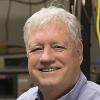
Prof. Victor Grigoras is a faculty member at the Technical University of Iași, holding the rank of Professor. He specializes in electrical engineering and computer science, focusing on signal processing, parallel architectures, and nonlinear dynamics in power systems. His research interests include smart grid technologies, renewable energy integration, and data-driven methodologies for grid optimization. He teaches courses such as 'Semnale, Circuite și Sisteme' and 'Algoritmi și Structuri Paralele de Calcul.' His research spans over 15 recent articles (2021–2025), emphasizing advancements in smart grid automation, machine learning applications in voltage quality analysis, and optimal power flow solutions for renewable integration. Notable trends include SCADA system improvements, energy storage strategies for prosumer grids, and IoT-based energy management. His work addresses challenges in grid reliability, power quality, and future urban grid resilience under high EV adoption scenarios. Prof. Grigoras has contributed to frameworks for electric vehicle charging station placement, hydropower plant optimization via data mining, and demand response mechanisms using smart metering. His methodologies often combine clustering techniques with fuzzy logic or metaheuristic algorithms to solve complex grid problems.
Antonios Papaemmanouil is the Head of the Institute of Electrical Engineering and the Competence Center for Digital Energy and Electric Power at the Lucerne School of Engineering and Architecture (HSLU). He holds an MSc from the University of Patras, Greece, and a PhD from ETH Zurich. His academic rank is Lecturer in the field of Digital Energy and Electric Power. His work focuses on digitalization of power systems, e-mobility integration, and local energy markets. Education: MSc in Electrical Engineering and Information Technology, University of Patras PhD in Power Systems Planning, ETH Zurich Research interests include smart grids, data-driven power systems, digital infrastructure management, and decentralized AI applications. He leads projects such as SWEET RECIPE, LANTERN, and ENFLATE, which address energy transition challenges. His work emphasizes grid analytics, asset management, and innovation in energy systems. Key projects include studies on e-mobility aggregation, federated learning for load forecasting, and stability validation of hydropower plants using Hardware-in-the-Loop. His research outputs span peer-reviewed articles on topics like fault detection in distribution networks and decarbonization strategies for local electricity systems. Professional roles include Track Chair at IEEE Smart Cities Conference 2022 and Co-Guest Editor for Journal MDPI Energies . He actively contributes to Swiss energy initiatives via SwissT.Net and IEEE PES Schweiz.
Ioannis John Papapolymerou serves as the interim dean of Michigan State University's College of Engineering, effective October 2024. He is also an MSU Research Foundation Professor in the Department of Electrical and Computer Engineering (ECE) and director of the MSU Space Electronics Initiative. With a career spanning over two decades, he previously chaired the ECE department for nine years, driving significant expansion and fostering diversity and inclusion. His leadership roles include participation in the Big Ten Academic Leadership Program and the Committee on Institutional Cooperation Department Executive Officer Program. Education: Ph.D. and M.S. in Electrical Engineering from the University of Michigan (1999 and 1994), and a B.S. in Electrical Engineering from the National Technical University of Athens (1993). Research Interests: Focus on RF/microwave/mm-wave/THz circuits, antennas, and packaging for wireless communication systems, sensors, and radars. He pioneered additive manufacturing techniques for RF components and has contributed to the development of flexible antennas and high-power modules. His work integrates nanomagnetic films, aerosol jet printing, and 3D-printed substrates to advance electronics. Awards: Notable recognitions include IEEE Fellow (2011), H.A. Wheeler Prize (2012), and NSF CAREER Award (2002). His research has been supported by federal agencies and industry, yielding over 450 publications, six patents, and co-founding two start-ups in RF electronics and flexible antennas. Labs & Initiatives: Leads the MSU Space Electronics Initiative, collaborating with the Facility for Rare Isotope Beams (FRIB). His lab focuses on innovations in high-frequency electronics, additive manufacturing, and vehicular communication systems.
Haitham Abu-Rub is a Professor at Texas A&M University at Qatar specializing in power systems, renewable energy integration, and power electronics. His research focuses on developing innovative solutions for grid stability, EV charging infrastructure, and intelligent control systems. He has published extensively in IEEE journals and conferences, addressing challenges in smart grids and sustainable energy systems. His work spans power converter design, fault diagnosis, and AI applications in energy management. Recent projects include decentralized PV trading systems, resilient inverter networks, and physics-informed neural networks for insulation diagnostics. Dr. Abu-Rub collaborates internationally on projects involving grid-interactive buildings, digital twins for power converters, and adaptive control techniques for electric vehicle charging.
Vladimir V. Terzija is a prominent researcher specializing in power systems engineering with a focus on smart grid technologies, synchronized measurement systems, and power system protection. His extensive publication record spans over two decades, demonstrating continuous contributions to the field of electrical power engineering across numerous IEEE journals and conferences. Terzija's research primarily centers on advanced power system monitoring, protection, and control methodologies. His work has significantly contributed to the development of synchronized measurement technology applications, fault analysis algorithms, and state estimation techniques for modern power systems. He has pioneered approaches for wide-area monitoring systems, transmission line fault analysis, and integrating renewable energy resources into power grids while maintaining stability and reliability. His research spans from fundamental power system theory to practical implementations addressing contemporary challenges in grid operation. Analysis of his recent publications reveals a strong focus on integrating artificial intelligence and machine learning techniques into power system applications, particularly for condition monitoring, anomaly detection, and predictive maintenance. His work increasingly addresses challenges posed by the energy transition, including grid stability with high renewable penetration, multi-energy system integration, and advanced control strategies for low-inertia power systems. The interdisciplinary nature of his research connects power engineering with data science, optimization theory, and cybersecurity. Throughout his career, Terzija has collaborated extensively with researchers across Europe and internationally, as evidenced by his numerous co-authored publications with institutions worldwide. His work appears consistently in top-tier IEEE publications, indicating recognition by the power engineering community. While specific awards aren't documented in the available publication records, his sustained research productivity and influence in the field suggest significant professional recognition. Terzija has supervised numerous research projects focused on power system monitoring and control, with particular emphasis on practical implementations that bridge theoretical developments with real-world grid applications. His work on WAMS (Wide Area Monitoring Systems), fault location algorithms, and state estimation techniques has contributed to advancing grid operational capabilities. The research trajectory shows increasing focus on addressing challenges associated with renewable energy integration, grid digitalization, and maintaining stability in modern power systems. His research group appears to focus on developing advanced monitoring and control systems for power networks, with particular expertise in synchrophasor technology applications. The collaborative nature of his work suggests involvement in international research consortia addressing contemporary power system challenges, particularly those related to grid stability in systems with high renewable penetration and the development of intelligent monitoring solutions for power infrastructure.
Michael Fowler is a Professor in the Department of Chemical Engineering at the University of Waterloo, cross-appointed to the Department of Mechanical and Mechatronics Engineering. His research focuses on electrochemical power systems, including battery degradation analysis, fuel cell reliability, and clean energy hubs. He leads projects like ChallengeX and EcoCar, developing fuel cell and hybrid vehicles. He teaches CHE 331 (Electrochemical Engineering) and actively supervises graduate students. His work integrates hydrogen economy concepts, renewable energy incentives, and Power-to-Gas energy storage. Key interests span polymer science, interfacial phenomena, and battery thermal management systems. Education: Ph.D. in Chemical and Materials Engineering (2003, Royal Military College of Canada), M.Sc. in Engineering Chemistry (1988, Queen's University), B.Sc. in Fuels and Materials Engineering (1986, Royal Military College of Canada). Research emphasizes modeling fuel cells, battery performance, and electrolyte materials. Recent articles explore lithium-ion battery diagnostics, aluminum-air batteries, and thermal runaway prevention. He collaborates with industries on sustainable energy solutions and advises student teams in green energy systems. His lab focuses on advanced materials for electrochemical systems and energy storage innovations. Current roles include co-faculty supervisor of vehicle design teams and director of the Waterloo Fuel Cell Research Network. He welcomes graduate applications and is involved in developing Canada’s hydrogen transition strategies. His work bridges academic research with practical applications in automotive, renewable energy, and material science sectors.
Moharram Challenger is a tenure-track Assistant Professor in the Department of Computer Science at the University of Antwerp's Faculty of Sciences. Previously, he served as an assistant professor at Ege University (2017-2018) and as a post-doctoral researcher at the University of Antwerp (2019-2020) working on Flanders Make projects PACo and DTDesign. His academic journey includes R&D leadership roles at UNIT IT Ltd. (2012-2016), post-doctoral research at Wageningen University (2016-2017), and tenure-track faculty positions at IAU-Shabestar University (2005-2009). His research spans Cyber-physical Systems , Multi-agent Systems , and Domain-specific Modeling Languages , with recent publications focusing on quantum machine learning, digital twinning, and IoT optimization. Key projects include ITEA ModelWriter, ITEA Assume, and Flanders Make initiatives. His work demonstrates strong integration of model-driven engineering with emerging technologies like quantum computing and reinforcement learning. Challenger actively contributes to the academic community as a member of IEEE and ACM . His publication record shows consistent output across top venues, with 2025 featuring significant work in quantum-enhanced learning and CPS security. Current research emphasizes practical applications in drone energy modeling, medical diagnostics, and industrial IoT systems. His advising activities focus on cyber-physical systems and agent-based modeling, supported by grants from TUBITAK and Flanders Innovation & Entrepreneurship. Key collaborations include European ITEA projects and partnerships with industrial entities through UNIT IT Ltd. Challenger maintains active development through GitHub repositories related to code refactoring, model-driven engineering, and legacy system modernization, reflecting his commitment to practical software engineering solutions.
Professor Nicol McGruer is a Professor in the Department of Electrical and Computer Engineering at Northeastern University, with an affiliation to the Mechanical and Industrial Engineering department. His primary research focuses on MEMS, NEMS, micro/nanofabrication, and related technologies such as RF MEMS, microrelays, and nanoswitches. He directs the Microfabrication Laboratory and Scanning Electron Microscopy Facility. McGruer earned his B.S. in Physics and M.S./Ph.D. in Electrical Engineering from Michigan State University. Notable awards include the Søren Buus Outstanding Research Award and the Joel and Spira Excellence in Teaching Award. His work spans projects like the PLASMID (Plasmonic Microelectromechanical Infrared Digitizer) and Zero-Power Sensor initiatives, funded by DARPA. He has authored numerous high-impact publications in journals like Nature Nanotechnology and IEEE Sensors Journal. Education: Ph.D. in Electrical Engineering, Michigan State University (1983). Research highlights include advancements in microfabrication processes, MEMS device design, and nanoscale material testing. Key collaborations include work with Prof. Matteo Rinaldi on zero-power sensor technologies.
Ian Brown is a Professor of Electrical and Computer Engineering at Illinois Institute of Technology, part of the Armour College of Engineering. He holds a Ph.D. (2009), M.S. (2003), and B.S. (1999) in Electrical and Computer Engineering from the University of Wisconsin-Madison and Swarthmore College. His research focuses on energy conversion, electric machines, and renewable energy systems, with emphasis on sensorless control, machine design optimization, and traction motor development for electric vehicles. He has extensive industry experience as a principal engineer at A.O. Smith, contributing to electric machine and drive technologies. Research interests include adjustable speed drives, high-power density motors, and applications in sustainable energy. He has advised multiple graduate students and published over 50 peer-reviewed articles in IEEE Transactions and conferences. His recent work explores superconducting circuit breakers, thermal management systems, and advanced winding designs to minimize harmonic distortions. Brown's contributions bridge academic research with industrial applications, particularly in improving energy efficiency and reliability in power conversion systems. He is affiliated with the IEEE and has contributed to journal editorials on electric machines in renewable energy. His lab focuses on experimental prototyping and simulation-driven optimization of electric drives. Current projects include developing brushless capacitive excitation systems for traction motors and analyzing driving cycle-based machine design optimization strategies. Teaching responsibilities include graduate courses on electric machines and power electronics. He maintains active collaborations with industry partners like A.O. Smith and Siemens, emphasizing translational research with commercialization potential.
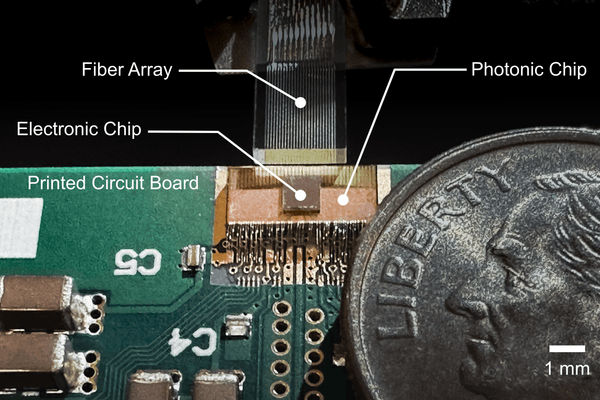
Anthony Rizzo is an Assistant Professor of Engineering at Dartmouth College, leading the Rizzo Integrated Photonic Systems Laboratory. His research focuses on integrated photonics, quantum photonics, and neuromorphic photonics, with applications in high-speed data communication, quantum computing, and energy-efficient systems. He holds a PhD in Electrical Engineering from Columbia University (2022), an MS from Columbia (2019), and a BS in Physics from Haverford College (2017). His work has been funded by organizations such as the Toyota Research Institute and the U.S. Army Research Laboratory. Key research areas include silicon photonics for ultra-low energy optical interconnects, photonic-electronic integration, and novel photonic materials like aluminum nitride. Notable achievements include the first demonstration of a Kerr comb-driven silicon photonic link and advancements in 3D photonic integration for terabit-scale data links. His lab explores applications in quantum sensing, neuromorphic computing, and visible wavelength photonics for atomic systems. Funding Sources: Toyota Research Institute, U.S. Army Research Laboratory, Thayer School of Engineering, AIM Photonics Courses Taught: ENGS 23 (Distributed Systems and Fields), ENGS 60 (Solid-State Electronic Devices) Recent publications highlight breakthroughs in ultra-low loss waveguides, scalable photonic linear neurons, and energy-efficient modulators. His work bridges fundamental photonics research with practical applications in next-generation communication and computing systems.
Donald Yeung is a Professor and Associate Chair for Undergraduate Education in the Department of Electrical and Computer Engineering at the University of Maryland , with an additional appointment as Affiliate Professor in the Department of Computer Science . His research focuses on Computer Architecture , particularly in memory systems , 3D integration , energy-efficient processors , and parallel processing . He leads projects like Monolithic 3D Integration of CPU and Main Memory and Approximate Computing . Recent work emphasizes ReRAM-based memory architectures , extreme-scale processor design , and micro-fluidic cooling solutions for 3D CPUs. His teaching includes courses like ENE 646: Computer Architecture and ENE 150: Intermediate Programming Concepts . Key achievements include the Best Paper Award at MULTIPROG-2017 and contributions to IEEE Micro and ACM Transactions . His research spans cache optimization , reuse distance analysis , and directory coherence protocols . Current grants include funding for heterogeneous microprocessor parallelism and low-power system design . Advises graduate students Yinuo Wang and Hung-Yu Yeh, and collaborates with teams like the UMIACS Technical Report Group . His lab focuses on memory-centric computing and scalable multicore systems .
Hossam H. H. Mousa is a Doctoral Researcher at Aalto University's Department of Electrical Engineering and Automation, School of Electrical Engineering. He also serves as an Assistant Lecturer at South Valley University's Department of Electrical Engineering since 2020. B.Sc. in Electrical Engineering (2017), South Valley University M.Sc. in Electrical Power and Machines Engineering (2020), South Valley University His research focuses on electrical power engineering, including maximum power point tracking (MPPT) for renewable energy, power systems analysis, energy management, and machine learning applications in grid optimization. He has published extensively on topics like hosting capacity estimation, unbalanced microgrids, and hydrogen storage integration. The 15 most recent articles emphasize modern power systems optimization through machine learning (2025), smart inverter applications in renewable integration (2025), and hydrogen storage's role in cold climate energy management (2025). Earlier works include best practice studies on capacitor allocation (2024) and photovoltaic system controls (2024), earning him the 2024 Best Paper Award in the International Journal of Electrical Power & Energy Systems. Best Paper Award (2024), International Journal of Electrical Power & Energy Systems His scholarly activities span energy conversion, microgrid stability, and applied machine learning, contributing to sustainable energy transition solutions. He has collaborated on international research books addressing distribution network hosting capacity (2025) and future energy systems challenges.
Fred Schauer is an Associate Professor in the Department of Aeronautics and Astronautics at the Air Force Institute of Technology (AFIT), part of Air University at Wright-Patterson Air Force Base, Ohio. He is a leading researcher in propulsion systems, particularly in the development and analysis of detonation-based engines such as pulsed and rotating detonation engines. His work integrates experimental testing, thermodynamic modeling, and advanced diagnostics to advance aerospace propulsion technologies. His educational background includes: BS in Mechanical Engineering, University of Dayton, 1993 Ph.D. in Mechanical Engineering, University of Illinois at Urbana-Champaign, 1998 Air War College, 2008 Dr. Schauer's research focuses on energy, propulsion, and power, with special emphasis on novel thermodynamic cycles, detonation dynamics, laser diagnostics, and flame-turbulence interactions. His work has significantly contributed to understanding and optimizing rotating and pulsed detonation engines, including performance scaling, nozzle integration, and fuel injection strategies. He has explored both conventional and bio-derived fuels to enhance efficiency and sustainability in small-scale propulsion systems. The 15 most recent publications reflect a strong trend toward experimental validation of rotating detonation engines, thermodynamic modeling, and performance optimization. These works span high-speed propulsion, combustion stability, and integration with turbines and ejectors. Keywords across these articles include aerospace engineering, propulsion, combustion, and mechanical systems, with subfields such as rotating detonation, pulsed detonation, nozzle dynamics, fuel efficiency, and thermodynamic modeling. His scientific achievements have been widely recognized: AFRL Commander’s Cup and Innovation Award Two-time winner of the AFRL Science & Technology Achievement Award ASME Airbreathing Propulsion Award Finalist for the Collier Trophy Finalist for Aviation Laureate AFRL Fellow Air Force Scientist of the Year AIAA Engineer of the Year Dr. Schauer has served as a research advisor for numerous M.S. and Ph.D. students and maintains active collaborations with AFRL, NASA, DOE, and academic institutions. His research group has published extensively and led major projects, including the AFRL in-house detonation propulsion research program from 1997 to 2019. He previously led the Propulsion and Power Advanced Concepts Group, which operated the Detonation Engine Research Facility and the Small Engine Research Laboratory, driving innovation in next-generation propulsion systems. His research labs and teams include the Detonation Engine Research Facility and the Small Engine Research Laboratory, where experimental and computational studies on advanced propulsion concepts are conducted. These facilities support high-pressure, high-speed combustion research and enable the development of practical applications for military and aerospace platforms.
Joe Charles Campbell is the Lucien Carr III Professor of Electrical and Computer Engineering at the University of Virginia. Previously, he held the Cockrell Family Regents Chair in Engineering at the University of Texas at Austin (1989–2006). His research focuses on optoelectronic devices, particularly high-performance photodetectors for fiber optics communications, including avalanche photodiodes (APDs), Si-based optoelectronics, and mid-infrared detection technologies. He has authored over 400 journal articles and 400 conference presentations, with notable contributions to low-noise avalanche photodiodes and material innovations like AlInAsSb alloys. His work emphasizes high-speed, low-noise, and radiation-tolerant photodetection systems. Education: B.S. Physics (University of Texas at Austin, 1969), M.S. and Ph.D. Physics (University of Illinois at Urbana-Champaign, 1971 and 1973). Postdoctoral research at University of Illinois (1973–1974). Early career included roles at Texas Instruments (integrated optics) and AT&T Bell Labs (optoelectronic devices). Research Highlights : Development of AlInAsSb-based APDs for single-photon counting and mid-infrared detection. Advances in high-power, high-linearity photodiodes and flip-chip bonded designs for thermal dissipation. Pioneering work in staircase avalanche photodiodes with optimized excess noise characteristics. Awards & Recognition : Member of the National Academy of Engineering (2002). Lucien Carr III Professorship (University of Virginia). Labs & Teams : Leads the Photonic Devices Group at UVA, focusing on optoelectronic materials and device fabrication. Collaborates on radiation-tolerant photodetectors and integrated photonic platforms.
Shuai Zhao is an Assistant Professor at the AAU Energy Department, Faculty of Engineering and Science, Aalborg University. His research focuses on applying machine learning and artificial intelligence techniques to enhance reliability and condition monitoring in power electronic systems, with specific interests in lifetime estimation, fault diagnosis, and health management of critical components like capacitors and semiconductor devices. Institution: Aalborg University School: Faculty of Engineering and Science Department: AAU Energy Email: szh@energy.aau.dk His research spans multiple domains including: Physics-informed machine learning for power converter systems Remaining useful life prediction with hybrid Bayesian deep learning Thermal transient analysis and stress emulation methods IoT-enabled monitoring schemes for semiconductor devices Neural network applications in lithium-ion battery prognostics Recent publications show a strong trend toward integrating domain-specific physics with machine learning frameworks to address real-world challenges in: Power electronics reliability under operational stress Anomaly detection in multivariate time-series data Robust fault diagnosis for railway traction systems Temperature estimation in electric vehicle motors Imbalanced data handling in diagnostic systems Capacitance degradation modeling under environmental factors Current projects demonstrate collaboration with leading institutions on: AI-assisted long-term maintenance strategies Physics-informed neural network architectures Smart agricultural monitoring systems via IoT platforms Advanced particle filter methods for life prediction