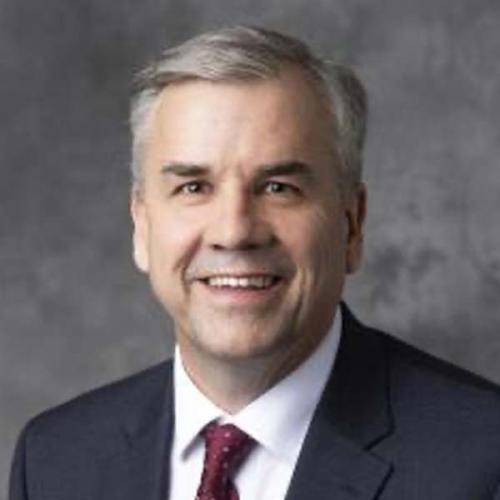
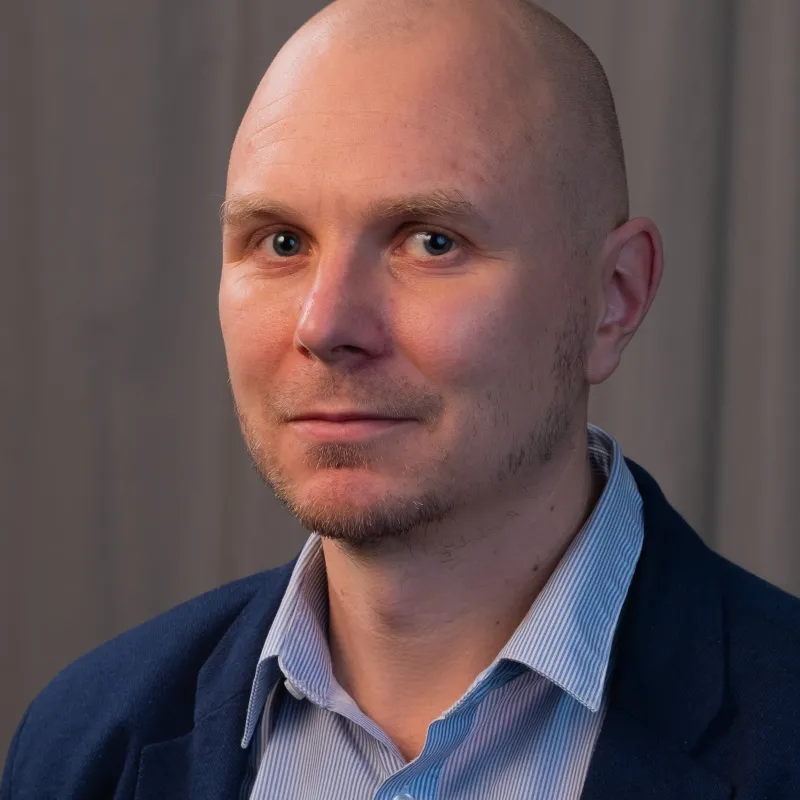
Emil Björnson is a Professor of Wireless Communications and Head of the Communication Systems Department at KTH Royal Institute of Technology since 2024. He received his Master of Science in Engineering Mathematics from Lund University (2007) and PhD in Telecommunications from KTH (2011). After postdoctoral work at SUPELEC, France (2012-2014), he held faculty positions at Linköping University (2014-2021) before returning to KTH in 2020. Research Focus: MIMO communications, reconfigurable intelligent surfaces, radio resource allocation, machine learning for communications, and energy efficiency Editorial Roles: Editor for multiple IEEE transactions and magazines His research has significantly advanced wireless communication technologies, particularly in Massive MIMO and cell-free systems. He has authored four textbooks, including Massive MIMO Networks (2017) and Introduction to Multiple Antenna Communications and Reconfigurable Surfaces (2024). Scientific awards include: IEEE Fellow Clarivate Highly Cited Researcher Wallenberg Academy Fellow Digital Futures Fellow Multiple IEEE and EURASIP awards (2014-2024)
Bryan Hubbard is a Professor at Purdue University's School of Construction Management Technology, where he has taught for over 20 years. He has taught nineteen unique courses in construction addressing a wide range of the construction curriculum, with a focus on estimating, design construction integration, and industrial construction. His educational background includes a Ph.D. in Civil Engineering from Texas A&M University and both Master's and Bachelor's degrees from Purdue University (MSE and BSME respectively). He is also licensed as a professional engineer in the State of Indiana. Professor Hubbard's research interests span multiple critical areas in modern construction: workforce development, construction supply chain management, modularization, construction safety, sustainability and energy efficiency, industrial construction, and UAS/Drone applications. His work demonstrates a strong focus on practical applications of technology to solve real-world construction challenges, particularly in sustainability and safety domains. His publications reveal consistent research activity with a recent emphasis on drone technology applications in construction and transportation, sustainability metrics for infrastructure, and knowledge management in construction companies. His work bridges the gap between academic research and industry practice, often collaborating with industry partners to address current challenges. Charles B. Murphy Outstanding Undergraduate Teaching Award (2023) Magoon Award for Excellence in Teaching Professor Hubbard has held leadership roles including Head of the School of Construction Management Technology from 2013 to 2016, during which he led curriculum transformation initiatives and oversaw the creation of the Design Construction Integration degree. He has also been granted three patents related to heat exchanger technology for cooling systems, demonstrating his ability to translate research into practical innovations. His teaching philosophy emphasizes real-world connections, with a focus on preparing students for industry challenges through practical application of fundamentals. He has led international study trips to China, Mexico, Puerto Rico, and Barcelona to broaden students' perspectives.
Mark Riley serves as Chair and Distinguished Research Professor in the Department of Physics at Florida State University, holding the Raymond K. Sheline Professorship since 2001. Education: BS: University of Liverpool, UK (1981) PhD: University of Liverpool, UK (1985) Research Interests: Professor Riley specializes in experimental nuclear physics, investigating atomic nuclei under extreme conditions (high excitation energy, angular momentum, and neutron/proton imbalances) through gamma-ray spectroscopy. His work leverages the FSU Gamma-ray Array system, Superconducting Linear Accelerator Facility, and national resources like Gammasphere—the world's most powerful gamma-ray detector array. He actively contributes to next-generation instrumentation development through the GRETINA-GRETA project and explores emergent nuclear symmetries and structural phenomena. Scientific Awards: No specific prizes, fellowships, or medals are documented in the source material. Advising and Grants: While formal student lists are absent, Riley leads experimental projects utilizing major national facilities and serves on the GRETINA-GRETA development committee, indicating substantial grant-funded research activity. Labs and Teams: He directs the Nuclear Physics Group (Experiment) at FSU, chairs the Gammasphere Users Executive Committee (serving as Chair in 2006 for the "Ten Years of Gammasphere" celebration), and operates the FSU Gamma-ray Array system for cutting-edge nuclear structure studies.
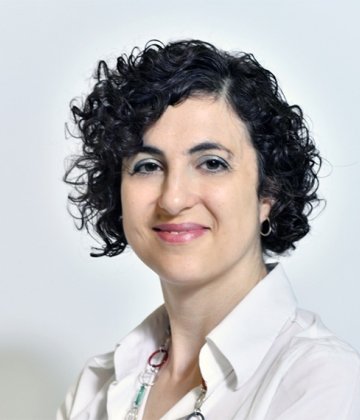
Renata Trinca Colonel serves as Associate Professor of Practice at SDA Bocconi School of Management and Adjunct Professor of Statistics at Bocconi University, where she directs Executive MBA programs and coordinates Business Data Analytics for Open Programs. With continuous engagement since 2002, she leads specialized master programs and executive education initiatives focused on data-driven decision-making across global business contexts. Her educational foundation includes a degree in Economic and Social Disciplines (D.E.S.) from Università Bocconi and the International Teachers Programme (ITP) from SDA Bocconi School of Management (2009). Trinca Colonel's research centers on business analytics applications including data visualization, marketing research methodologies, and statistical modeling for business optimization. Her work bridges theoretical frameworks with industrial implementation across energy, transportation, retail, and financial sectors, emphasizing practical translation of complex data into strategic insights for managerial decision-making. Her publication portfolio demonstrates consistent focus on analytics deployment in real-world business environments, with recurring themes in marketing research design, predictive modeling, and data visualization techniques. Recent works show increasing emphasis on hyper-complex scenario management and automotive sector applications, reflecting evolving industry demands for sophisticated analytical capabilities. Her professional recognition includes: Innovation in Teaching Award (2017-2018) from SDA Bocconi School of Management (awarded 2019) As Academic Director of Executive MBA programs and Program Director for Data Analysis courses, she maintains extensive corporate engagement through consulting projects with multinational entities including Enel Green Power, Ferrero, and Banca Mediolanum. Her industry collaborations focus on implementing data analytics frameworks, predictive modeling solutions, and market research systems across diverse operational contexts.
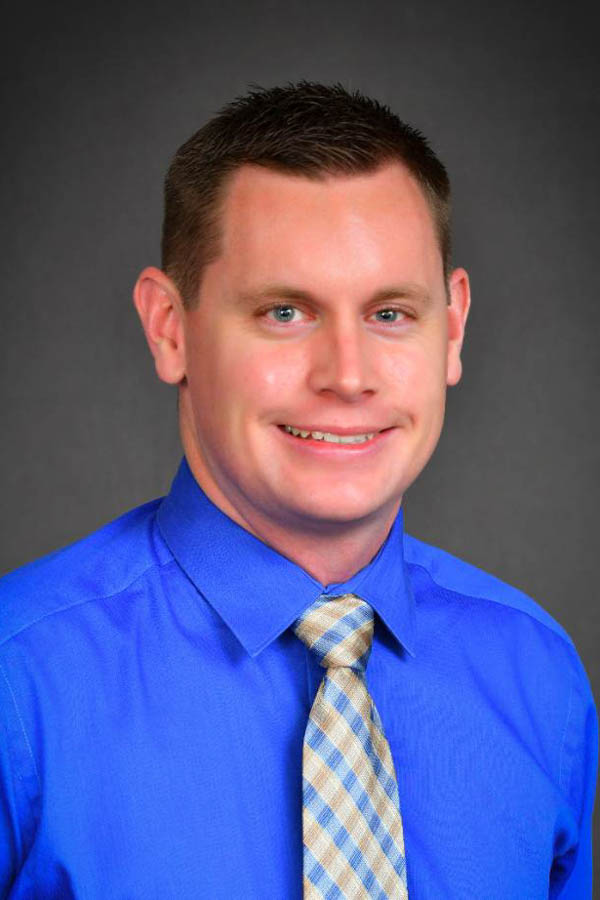
Jason Schwebke is an Assistant Professor of Accounting at Texas Tech University's Rawls College of Business. He holds a PhD from the University of Central Florida and advanced degrees from Northern Illinois University. His expertise spans taxation, data analytics, and behavioral decision-making in accounting contexts. Education: PhD in Accounting, University of Central Florida (2021) MS in Accounting Science (Tax), Northern Illinois University (2012) BS in Finance, Northern Illinois University (2010) Research Focus: Tax compliance mechanisms, tax policy implications, ethical issues in taxation, and data analytics applications in accounting education and practice. He explores topics such as taxpayer behavior in automated systems, decision-making under tax autonomy, and fraud detection through digital tools. Teaching: Specializes in taxation and data analytics courses at undergraduate and graduate levels, with notable curriculum development in Power BI and Microsoft tools integration. Professional Affiliations: Enrolled Agent (IRS), Series 65 Financial Advisor, and operates a part-time tax consultancy. Served as litigation expert in U.S. District Court (2021–2022). Honors: 2025 Texas Tech Alumni Association New Faculty Award 2025 Lyons School Research Fellowship 2024 Big XII Faculty Research Fellowship Service: Associate Editor for Accounting and the Public Interest , coordinates Rawls College's Research Workshop, and chairs PhD committee initiatives. Active in conference organizing and peer-review activities for top accounting journals.
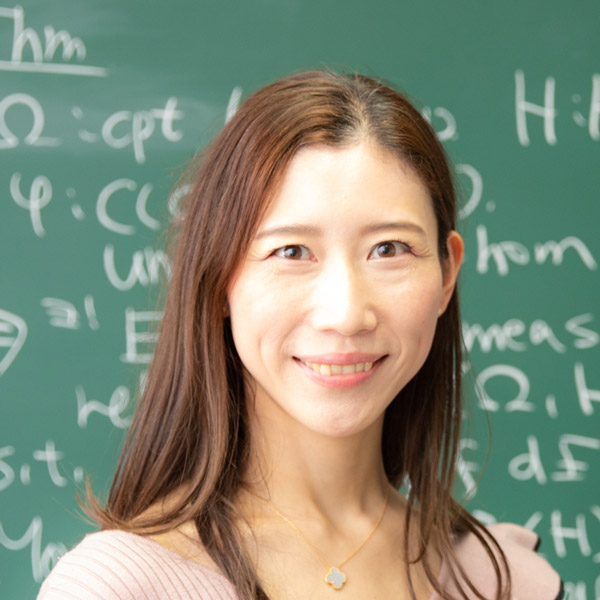
Chihiro Matsui is an Associate Professor at the Department of Mathematical Structure Theory, Graduate School of Mathematical Sciences, University of Tokyo. Her research focuses on quantum solvable models and solvable stochastic processes, leveraging algebraic structures like quantum groups and the Yang-Baxter equation to derive exact physical quantities. She has made significant contributions to understanding supersymmetry emergence in quantum field theories from non-supersymmetric spin chains and extending asymmetric exclusion processes to multi-state applications. University of Tokyo, Graduate School of Mathematical Sciences Research fields: Mathematical Physics, Quantum Integrable Systems, Stochastic Processes Her work on quantum solvable models connects many-body scattering decomposition to integrability, while her studies on multi-state asymmetric exclusion processes explore applications in traffic engineering and micromeritics through higher-dimensional Temperley-Lieb representations. Recent articles analyze weak ergodicity breaking and partially solvable quantum systems. Scientific awards include the Statphys27 Poster Award (2023), NTT Com Online Prize (2014), and a Best Poster Award Bronze Prize (2013). She serves on the editorial board of the Journal of the Physical Society of Japan since 2017.
Sami Virolainen is a Research Professor and Head of the Department of Separation Technology at LUT University's School of Engineering Sciences. His work focuses on hydrometallurgy, particularly in metal separation processes critical for the green transition and resource recovery. Education: LUT University (Chemical Engineering diploma, PhD in 2009) Research interests span separation technology for battery material recycling, rare earth element recovery, and applications in water purification, biorefinery, and Power-to-X technology. His department investigates resource-efficient methods for critical metals like cobalt, nickel, and lithium. Recent publications emphasize sustainable metallurgy , including solvent extraction, ion exchange, and nanofiltration techniques for battery waste and industrial byproducts. Key areas include multi-metal recovery , acid recycling , and rare earth purification . Virolainen leads cross-disciplinary collaborations under LUT's SCI-MAT platform, integrating separation science with economics and sustainability. He advocates for European self-sufficiency in critical metals while acknowledging market-driven challenges. Based in Lappeenranta, he has spent over two decades at LUT University, starting as a chemical engineering student in 2001. His department operates across LUT's geographical locations, including Lappeenranta, Lahti, Mikkeli, and Kouvolan campuses. Outside academia, Virolainen is connected to regional sports culture as a lifelong supporter of Finnish hockey teams like Mikkelin Jukurit and SaiPa, and currently involved with youth basketball through Catz Lappeenranta.
Dr. Susan Williams is a Senior Research Fellow at the Institute of Commonwealth Studies, School of Advanced Study, University of London. She is a historian specializing in 20th/21st-century African history, Cold War espionage, and the United Nations' role in decolonisation. Her groundbreaking research combines archival analysis, oral histories, and visual evidence to expose covert operations by Western powers in Africa. PhD, MA, BA Hons (First Class) Research Interests: Williams investigates the intersections of imperialism, nuclear weapons development, and postcolonial justice. Her work challenges conventional narratives about African state failure by documenting CIA interventions in Ghana, Congo, and UN operations during decolonisation. Key themes include: Covert neocolonial operations African nationalist movements UN's role in decolonisation Nuclear material extraction in Congo Historical memory and reparations Article Trends: Recent publications focus on CIA activities in postcolonial Africa, Dag Hammarskjöld's death investigation, and Congolese uranium's link to Hiroshima. Keywords reveal Cold War geopolitics (40%), UN history (30%), and neocolonialism (30%). Sub-fields emphasize aircraft sabotage (15%), nuclear hegemony (15%), and historical revisionism (70%). Scientific Awards: 2023 Windham-Campbell Prize for Nonfiction Advising & Grants: Supervises PhD research on Northern Rhodesian independence movements. Collaborates with UN Panel of Experts on Hammarskjöld inquiry. Recipient of multiple research grants for declassified document investigations. Labs & Teams: Works with UNA Westminster on international conferences. Collaborates with Dr. Mandy Banton on Commonwealth research seminars and joint publications. Provides historical consultancy for film productions like A United Kingdom and BBC documentaries.
Peter Bach Andersen serves as Head of Section and Senior Researcher at the Department of Wind and Energy Systems, Technical University of Denmark (DTU). Based at Elektrovej 329A in Kgs. Lyngby, he leads research in electric vehicle integration and prosumer energy systems with an ORCID identifier 0000-0002-5202-3584. His work spans grid services, battery storage, and smart charging infrastructure within DTU's EV Lab ( www.evlab.dk ). Andersen's research focuses on electric vehicle grid integration , specializing in charging infrastructure planning, battery energy storage systems, and virtual power plant concepts. His fingerprint analysis reveals dominant expertise in Electric Vehicle Engineering (100%), Battery Engineering (13%), Ancillaries (12%), and Power Engineering (11%). Current projects emphasize flexibility quantification, grid service delivery through EV clusters, and Nordic grid characteristics. His work contributes significantly to UN Sustainable Development Goals related to clean energy and sustainable cities. His publication portfolio shows strong trends toward grid-interactive EV systems with recent emphasis on conditional connection agreements, fast-charging urban impacts, and data-driven battery health prognosis. The research demonstrates increasing focus on practical implementation challenges and market integration aspects of vehicle-grid systems. Andersen actively supervises four PhD students (Menchaca, Striani, Unterluggauer, Sevdari) across projects including charging infrastructure planning, EV clustering methods, and urban charging infrastructure impacts. He leads the FLOW project (2022-2026) investigating flexible energy systems for optimal EV integration while participating in multiple EU-funded initiatives. His research group maintains strong industry connections through DTU's EV Lab, focusing on real-world validation of grid services using commercial EVs and chargers.
Mieke Cardol serves as an applied research professor in 'Disability Studies; Diversity in Participation' at the Research Centre Innovations in Care, Rotterdam University of Applied Sciences. Her work bridges academic research with practical healthcare applications, focusing on systemic barriers to inclusion and innovative solutions for marginalized populations. Dr. Cardol earned her PhD from the University of Amsterdam in 2001 with a dissertation titled 'Autonomy and participation in medical rehabilitation,' building on her foundational career as an occupational therapist in rehabilitation medicine. This clinical background informs her participatory research methodology. Her research program critically examines societal structures through the lens of Disability Studies, with core emphases on social participation, relational autonomy, and inclusive design across healthcare, education, and community settings. She challenges deficit-based models by centering lived experiences of people with disabilities, particularly in aging, youth transitions, and creative expression contexts. Analysis of her 14 most recent publications reveals a methodological commitment to participatory approaches like photovoice and narrative inquiry, with recurring themes of citizenship, ethical care practices, and co-creation of tools such as the 'My Path' instrument. Her work spans neurodiversity, cerebral palsy, mental health, and inclusive arts, consistently advocating for policy shifts toward genuine societal belonging. Dr. Cardol actively supervises master's students, honours candidates, interns, and PhD researchers while leading multiple collaborative projects including 'ST-RAW Academic Collaborative Centre' for youth care access, 'Diversity in Career Trajectories' for disability-inclusive employment, and 'Citizenship and aging with CP.' Her grant portfolio demonstrates strong partnerships with disability organizations and government bodies. She leads the 'Disability Studies; Diversity in Participation' research group, which operates as a nexus for transdisciplinary collaboration with Disability Studies in the Netherlands, BOSK/VGR disability associations, Platform EMG parent networks, Horizon/Cardea child welfare organizations, Rotterdam municipality, Yulius/Pameijer care providers, Rijndam rehabilitation centers, UWV Rotterdam, and Ghent University. This ecosystem enables real-world testing of inclusive frameworks while training future healthcare professionals.
Prof. Dr.-Ing. Katharina Schmitz serves as Institute Director and Vice Dean at the Institute for Fluid Power Drives and Systems, RWTH Aachen University. Her leadership within the Production Technology Cluster and extensive contributions to fluid power engineering establish her as a leading authority in mechanical engineering research and education. Her research spans fluid power systems, hydraulic component design, tribology, and physics-informed machine learning applications. She pioneers sustainable propulsion solutions through bio-hybrid fuels research while addressing fundamental challenges in polymer material behavior under hydraulic stresses. Current work focuses on carbon-neutral heavy-duty transportation, physics-based neural networks for lubrication modeling, and advanced control systems for electro-hydraulic actuators. Analysis of her 15 most recent publications reveals a dominant trend toward integrating physics-based modeling with deep learning to solve complex engineering problems. Her team consistently develops novel frameworks for cavitation prediction, flow rate determination, and material compatibility assessment - significantly advancing fluid power system reliability, efficiency, and digitalization. Scientific recognition includes: GfT Förderpreis 2023 for experimental and simulative investigation of partially hydrostatic relieved contacts in variable speed axial piston machines As head of the Institute for Fluid Power Drives and Systems, she leads cutting-edge research in sustainable fluid power technologies. The institute maintains strong industry partnerships while driving innovation in hydraulic component design, digital twins for condition monitoring, and next-generation propulsion systems through its position within RWTH Aachen's Production Technology Cluster.
Aida Akbarzadeh is a Senior Researcher at the Norwegian University of Science and Technology (NTNU) , specifically within the Department of Information Security and Communication Technology under the Faculty of Information Technology and Electrical Engineering . Her work focuses on cybersecurity, critical infrastructure protection, and cyber-physical systems (CPS). Research Areas: Threat modeling, digital twins for security, dependency-based risk analysis, advanced persistent threats (APT), IT/OT integration, and industrial control system vulnerabilities. Publications: Recent work includes studies on automating threat modeling, digital twin applications, APT attacks on power grids, and protocol-specific vulnerabilities (PTP, IEC 61850, IEC 60870-5-104). Collaborations: Active in interdisciplinary research with colleagues like Laszlo Erdodi, Siv Houmb, Sokratis Katsikas, and Tore Soltvedt. Labs & Groups: Member of the Critical Infrastructure Security and Resilience Group (CISaR) . Contact: aida.akbarzadeh@ntnu.no
Professor David Armstrong serves as Professor of Materials Science and Engineering at the University of Oxford and Fellow and Tutor at St Edmund Hall. His work focuses on developing materials for extreme environments including nuclear fusion reactors, aerospace systems, and energy storage applications through microstructural control and advanced mechanical characterization. His educational background includes a first degree in Materials Science from St Anne’s College, Oxford and a DPhil from Corpus Christi, Oxford investigating micromechanical properties in copper and nickel alloys. This foundational work evolved into radiation damage studies during his Culham Centre for Fusion Energy Junior Research Fellowship. Armstrong's research centers on mechanical behavior of materials under extreme conditions—high temperatures (jet engines, reactors), radiation exposure (nuclear facilities, space), and high stresses (batteries, geological systems). He develops novel testing methodologies for nanoscale mechanical properties up to 1300 K, collaborating with Rolls Royce, UKAEA, ESA, and Berkeley on fusion materials, aerospace components, and battery technologies. His work bridges fundamental micromechanics with industrial applications in energy systems. Analysis of his 2023-2025 publications reveals dominant themes in nuclear fusion materials (tungsten, ODS steels), lithium battery interfaces, and ceramic composites for extreme environments. Methodologically, his group pioneers correlative microscopy combining nanoindentation, TEM, and atom probe tomography to study irradiation effects, high-temperature deformation, and interfacial degradation across length scales. His scientific recognition includes: Culham Centre for Fusion Energy Junior Research fellowship (2009) Royal Academy of Engineering Research Fellowship (2013) Institute of Materials Minerals and Mining Grunfeld Memorial Award & Medal (2015) As an educator, Armstrong teaches core mechanical properties courses across undergraduate years and leads Fusion CDT modules on nuclear materials. He supervises numerous doctoral students while serving on the EPSRC Fusion Advisory Board and CDT management board. Current grants support micro-engineering of alloys for nuclear environments and lithium-metal battery development through industry partnerships with Rolls Royce and MicroMaterials. His research group operates advanced micromechanical testing facilities for high-temperature and irradiated materials, collaborating with UKAEA’s Culham Centre and European fusion laboratories on plasma-facing component development. Future work targets solid-state battery interfaces and radiation-resistant high-entropy alloys for next-generation fusion reactors.
Prof. Dr. Silvia von Steinsdorff serves as Professor of Comparative Democracy and the Political Systems of Eastern Europe at Humboldt University of Berlin's Institute of Social Sciences since 2009. She co-directs the Integrated Research Institute Law & Society (LSI) and holds the position of Vice Dean for Research and International Affairs at the Faculty of Humanities, Cultural, Educational and Social Sciences. Her research centers on political systems operating in the democracy-autocracy gray zone, with emphasis on de-democratization processes and institutions at the politics-law interface. Regional expertise spans Central and Eastern Europe (particularly Russia and post-Soviet states) and Turkey, examining constitutional courts, judicial independence, and authoritarian legal strategies. Current work analyzes threats to judicial autonomy across 40 Council of Europe states through the Einstein/Mercator-funded project "Judicial Autonomy under Authoritarian Attack". Publication trends reveal deepening focus on constitutional erosion mechanisms, with recent articles exploring rule of law backsliding, authoritarian parliamentary practices, and cross-national judicial reasoning patterns. Her interdisciplinary approach bridges political science and legal studies, consistently highlighting how formal institutions adapt under democratic stress. As co-founder and former director (2015-2018) of the Berlin Graduate School of Social Sciences, she has shaped doctoral training while securing major research funding. Her leadership extends to curriculum development for international Master's programs and collaborative projects with European and Turkish scholars. Current administrative responsibilities include advancing research agendas as Vice Dean and steering LSI's interdisciplinary initiatives.
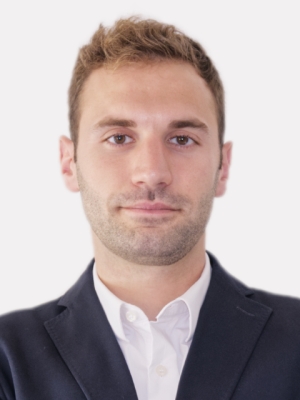
Mattia Bianchi is a Lecturer at the Department of Information Technology and Electrical Engineering, ETH Zurich, Switzerland. He is affiliated with the Automatic Control Laboratory under Prof. Florian Dörfler, with office location at ETL I 34, Physikstrasse 3, Zurich. His research focuses on developing distributed, efficient, and robust methods for decision and control problems in complex network systems, including power grids and cognitive radio networks. Bachelor’s degree in Information and Communication Engineering (2016), University of L’Aquila, Italy Master’s degree in Systems Engineering (2018), University of L’Aquila, Italy PhD in Systems and Control (2018–2023), TU Delft, The Netherlands Postdoctoral researcher (2023–present), ETH Zurich, Switzerland His methodological approach integrates operator theory, learning algorithms, game theory, and data-driven control. Key research themes include uncovering common structures in optimization and control algorithms, with applications in distributed feedback optimization, Nash equilibrium seeking, and stabilization of constrained systems. Current work explores partial-decision information frameworks and linear convergence guarantees. For detailed information on his publications, visit his Google Scholar profile . Mattia actively supervises Master’s theses and semester projects, inviting candidates to contact him with their academic credentials.