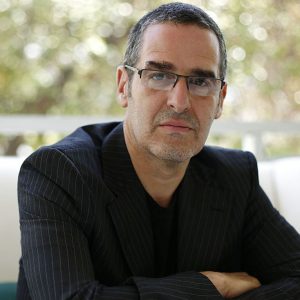
Yasuo Hasebe is a Professor at Waseda University's School of Law, with a distinguished career spanning multiple institutions including the University of Tokyo (1995-2014) and Gakushuin University (1982-1993). He has held significant roles such as Dean of the University of Tokyo's Law School (2007-2008) and leadership positions in academic organizations like the Japan Association of Constitutional Law (President, 2015-2017). Education: Graduated from the Faculty of Law at the University of Tokyo in 1979. Research Interests: Centered on public law, constitutional theory, and comparative constitutional law, with specific focus on the monarchical principle, war powers, judicial review, media regulation, and the intersection of law with political philosophy. His work examines constitutional identity in Japan, structured proportionality principles, and the historical reception of constitutional concepts like the Rechtsstaat. Recent Publications: His articles address topics such as comparative political process theory, judicial conscience in constitutional reasoning, and the evolution of broadcasting law in digital environments. These works reflect his engagement with constitutional legitimacy, global values, and the application of classical political philosophy to modern legal frameworks. Projects & Grants: Currently leads research on the monarchical principle's theoretical foundations and contemporary speech freedom challenges, funded by institutions like the Nomura Foundation and Japan Society for the Promotion of Science.
FURUZUKI, Takayuki is a Professor at Waseda University's Faculty of Science and Engineering, Graduate School of Information, Production, and Systems. He holds a PhD from Kyushu Institute of Technology and maintains the NCLab research group (http://nclab.w.waseda.jp/nclab/). His professional memberships include the Institute of Electronics, Information and Communication Engineers, Institute of Electrical Engineers of Japan, Society of Instrument and Control Engineers, and IEEE. His educational background includes a PhD in Information Science from Kyushu Institute of Technology (1994-1997), a Master's degree in Electronics Engineering from Sun Yat-Sen University (1983-1986), and a Bachelor's degree in Electrical & Electronic Systems Engineering from Sun Yat-Sen University (1979-1983). Professor FURUZUKI's research spans neural networks, genetic algorithms, system identification and control, complex systems, bioinformatics, and combinatorial optimization. His work integrates soft computing techniques with medical informatics and control systems engineering, developing innovative approaches for problems ranging from brain tumor segmentation to music information retrieval. His research methodology often combines theoretical foundations with practical applications in healthcare, energy systems, and intelligent transportation. His recent publication record shows a strong focus on sequential recommendation systems, graph neural networks for medical imaging, music information retrieval, and power systems analysis. The consistent thread across his work is the application of advanced machine learning techniques to solve complex, real-world problems across diverse domains, with particular emphasis on handling missing data, improving model efficiency, and enhancing prediction accuracy. His scientific achievements have been recognized with several prestigious awards: ISCIIA2008 Excellent Paper Award (2008) Institute of Electrical Engineers of Japan Excellent Paper Award (2001) Guangdong Province Higher Education Science and Technology Progress Second Prize (1991) Guangdong Province Higher Education Science and Technology Progress Second Prize (1989) Chinese Ministry of Education Scientific and Technological Achievements Second Prize (1986) Professor FURUZUKI has maintained continuous research activity since joining Waseda University in 2003, with significant contributions to multiple research projects spanning neural computation, soft computing, and system engineering. His work demonstrates strong international collaboration, with publications involving researchers from various institutions worldwide. His research output includes over 410 papers with 3,623 citations and an h-index of 23 according to Scopus data. The NCLab research group, which he leads, focuses on neural computation and related areas, providing a platform for interdisciplinary research that bridges theoretical foundations with practical applications in healthcare, energy systems, and intelligent transportation. His laboratory environment fosters innovation in machine learning algorithms and their application to real-world problems, with particular emphasis on developing efficient, robust solutions for complex data analysis tasks.
Sandra Robinson is an Associate Professor and Graduate Supervisor at the School of Journalism and Communication, Carleton University. Her expertise lies in algorithms and platforms, data methodologies, privacy and surveillance, and social media. She is actively involved in research and graduate supervision, with a focus on communication, culture, regulation, gender and media, and AI. Education: PhD in Sociology – Queen’s University MA in Legal Studies – Carleton University MBA in Digital Technology Management – Royal Roads University BA in Anthropology – University of Alberta Research Interests: Dr. Robinson’s research spans communication, culture, and regulation, with a strong emphasis on gender and media, algorithm studies, artificial intelligence, and platform studies. She investigates how social media platforms shape public discourse, particularly in relation to misinformation, gendered narratives, and far-right populism. Her work also explores the intersections of big data and health surveillance, legal communication, and the pedagogical implications of platform-based learning. She is particularly interested in how digital infrastructures mediate power, identity, and control. Scientific Awards: Teaching Achievement Award (2017) Faculty of Public Affairs Teaching Fellowship (2017–2019) Grants and Supervision: Dr. Robinson is a co-investigator on a 5-year SSHRC Insight grant titled Populist Publics: Memory, Populism, and Misinformation in the Canadian Social Mediascape . She is available to supervise graduate students in areas related to her research interests.
Mahima Gupta is an Assistant Professor in the Department of Electrical & Computer Engineering at the University of Wisconsin-Madison. Her research focuses on power electronics, motor drives, and power converter systems with applications in renewable energy integration and grid infrastructure. Her educational background includes: PhD in Electrical Engineering, University of Wisconsin-Madison (2019) MS in Electrical Engineering, University of Wisconsin-Madison (2015) BE in Electrical Engineering, Birla Institute of Technology & Science, Pilani (2011) Dr. Gupta's research spans multiple areas of power electronics with particular emphasis on Power Electronics Conversion & Control , Modular Multi-level Power Converters , and Motor Drive Systems . Her work addresses critical challenges in the application of Wide Band-gap Semiconductor Devices and mitigating Electromagnetic Interference Issues in modern power electronic circuits. Her research has significant implications for renewable energy integration, electric transportation, and next-generation power grid infrastructure, with a strong focus on efficiency, reliability, and power density optimization. Her recent publications demonstrate a cohesive research trajectory focused on high-performance power conversion systems, with particular attention to modular architectures, fault tolerance mechanisms, and innovative topologies that minimize energy storage requirements while maintaining high performance. Her work spans from fundamental converter designs to application-specific implementations for motor drives, wireless power transfer, and grid integration, showing increasing sophistication and real-world relevance. Dr. Gupta has received several prestigious awards including: Gerald Holdridge Teaching Excellence Award from University of Wisconsin-Madison (2018) Austrian Marshall Plan Scholar for Visiting Scholar position at Technische Universit¨at Graz, Austria (2016) Edward R. Felber Power Fellow from University of Wisconsin-Madison (2016) As a dedicated educator, Dr. Gupta advises graduate students through courses including ECE 699 (Advanced Independent Study), ECE 790 (Master's Research), and ECE 890 (Pre-Dissertator's Research). Her teaching portfolio also includes specialized courses like ECE 512 (Power Electronics Laboratory), demonstrating her commitment to both theoretical and practical aspects of power electronics education. Her research program has attracted significant scholarly attention, as evidenced by her productive publication record in top-tier power electronics conferences and journals.
Kevin Schneider is a Laboratory Fellow at Pacific Northwest National Laboratory (PNNL), a Research Professor at Washington State University (WSU), and an Affiliate Associate Professor at the University of Washington. As manager of PNNL's Office of Electricity Subsector, he leads business development, client relations, and strategic investments in R&D for the grid sector, overseeing portfolios in component design, system modeling, hierarchical controls, secure communications, and energy storage. Dr. Schneider is internationally recognized for his expertise in power system analysis, planning, and operations. His research focuses on improving grid reliability and system flexibility by harnessing advanced grid concepts at the edge of power systems, including microgrids, energy storage, electric vehicles, distributed energy resources, and smart home appliances. At WSU, he is a researcher for the WSU and PNNL Advanced Grid Institute (AGI), implementing layered control architectures to enhance operational flexibility of critical power systems. His work spans multiple disciplines within electrical engineering and power systems, with strong emphasis on practical applications for grid modernization, particularly in grid resilience, microgrid operations, and integration of distributed energy resources. Dr. Schneider is a Fellow of the Institute of Electrical and Electronics Engineers (IEEE), where he has served in multiple technical leadership roles. His scientific contributions have been recognized with significant awards: Presidential Early Career Award for Scientists and Engineers (PCASE), 2019 Fellow of the Institute of Electrical and Electronics Engineers (IEEE) Dr. Schneider earned his B.S. in Physics and M.S. and Ph.D. in Electrical Engineering from the University of Washington. He is a licensed Professional Engineer in Washington State. His research has resulted in numerous patents related to power grid technologies, including several focused on voltage and frequency stability of distribution systems. His work has substantial implications for grid modernization efforts and the development of more resilient power systems in the face of climate change and other challenges.
Imraan Faruque is an Associate Professor in the Department of Mechanical and Aerospace Engineering at Oklahoma State University (OSU), part of the College of Engineering, Architecture and Technology (CEAT). His research focuses on biologically-inspired flight control systems, engineered autonomy for unmanned aerial vehicles (UAVs), and the integration of sensory feedback mechanisms in autonomous systems. Education: Faruque holds a Ph.D. and M.S. in Aerospace Engineering from the University of Maryland (2011 and 2010) and a B.S. in Aerospace Engineering from Virginia Tech (2006). Research Interests: His work emphasizes bio-inspired solutions for aerial autonomy, including swarm coordination, gust-aware flight control, and human-autonomy interaction. Key areas include unmanned systems design, visual feedback algorithms, and adaptive control strategies derived from insect flight dynamics. Awards: He has received notable accolades such as the ONR Young Investigator Award (2019), AIAA Hal Andrews Young Engineer/Scientist Award (2017), and multiple 'Best in Session' recognitions at major conferences. His team also secured 1st Place in the International Aerial Robotics Championship (2005). Publications: Faruque’s research spans topics like orbital debris management, swarm intelligence, and tornado sensing with UAVs. His work bridges biological principles and engineering, with applications in aerospace, robotics, and environmental monitoring.
Bruce Jacob is a Keystone Professor and Full Professor in the Department of Electrical & Computer Engineering at the University of Maryland College Park's College of Engineering. His research primarily focuses on memory systems design and exascale computing architectures, with significant contributions to DRAM simulation and high-performance computing systems. Dr. Jacob received his A.B. in Mathematics from Harvard University (1988), followed by his M.S. and Ph.D. in Computer Science & Engineering from the University of Michigan (1995 and 1997 respectively). His research interests include memory systems design, exascale computing architectures, embedded systems, circuit integrity, and algorithmic composition. His recent publications demonstrate a strong focus on next-generation memory technologies, particularly ReRAM and advanced DRAM architectures. His work bridges the gap between theoretical modeling and practical implementation, with significant contributions to memory system simulation through projects like DRAMsim. His research shows a consistent trajectory toward solving the memory bottleneck problem in high-performance computing systems. Named Fellow, IEEE (2021) Multiple University of Maryland Research Leader awards (2006, 2010, 2012, 2016, 2017) Clark School of Engineering Keystone Professor (2006) National Science Foundation CAREER Award (2000) University of Maryland Award for Teaching Excellence (2004) Dr. Jacob has led significant research initiatives including the University of Maryland Exascale Systems Research and Memory-Systems Research groups. He has developed important computational artifacts such as DRAMsim (a public-domain DRAM-system simulator) and BioBench (a set of bioinformatics workloads). His work has influenced both academic research and industry practices in memory system design.
Karrie J. Koesel is an Associate Professor of Political Science at the University of Notre Dame, specializing in contemporary Chinese and Russian politics, authoritarianism, and religion-politics dynamics. She is a Wilson China Fellow (2025-26), Public Intellectuals Program Fellow, and recipient of the Aaron Wildavsky Award for best religion-politics dissertation. Her research explores how authoritarian regimes cultivate legitimacy through religious management and political education. Ph.D. in Government, Cornell University (2009) Former faculty member at University of Oregon Her work examines: Authoritarian resilience through religious cooperation/conflict Political education strategies for youth loyalty State responses to political mobilization Comparative China-Russia regime dynamics Recent publications focus on authoritarian toolkits, political socialization, and religious regulation. She is currently writing a book about political education in authoritarian regimes. Her research has received support from Minerva Research Initiative, Spencer Foundation, and Fulbright program. Scientific awards include: Wilson China Fellowship (2025-26) Ted Jelen Best Article Award (2025) Minerva Research Initiative grant (2024-26) Chiang Ching-Kuo Foundation grant (2021) Spencer Foundation grant (2016) Aaron Wildavsky Award (2010) Koesel participates in several research networks including the International Diffusion and Cooperation of Authoritarian Regimes (IDCAR) and is affiliated with Notre Dame's Keough School of Global Affairs, Kellogg Institute, and Ansari Institute for Global Engagement with Religion.
Gary T. Rochelle is a Professor holding the Carol & Henry Groppe Professorship in the McKetta Department of Chemical Engineering at The University of Texas at Austin, where he leads fundamental research in air pollution control and carbon management technologies. Education: Ph.D. in Chemical Engineering, University of California, Berkeley (1977) M.S. and B.S. in Chemical Engineering, Massachusetts Institute of Technology (1971) His research focuses on thermodynamic and kinetic phenomena in aqueous systems for CO2 capture, acid gas treating, and flue gas desulfurization. He pioneers mass transfer modeling with chemical reaction, electrolyte thermodynamics, and innovative solvent development like piperazine-based systems. Recent work emphasizes pilot-scale validation of carbon capture processes and mitigation of solvent degradation. Publication trends reveal evolving expertise from fundamental acid gas thermodynamics (1990s) toward integrated carbon management solutions, with current emphasis on process optimization, nitrosamine mitigation, and aerosol control in amine scrubbing systems. Scientific Awards: Carol & Henry Groppe Professorship in Chemical Engineering Professor Rochelle directs the Texas Carbon Management Program, advising four graduate students and two visiting researchers with funding from Department of Energy contracts (e.g., DE-AF26-99FT01029) and industry partnerships. His DOE-sponsored research established concentrated piperazine with advanced flash stripping as the benchmark amine scrubbing system. The group operates a pilot-scale CO2 capture facility at Pickle Research Campus and collaborates internationally through events like GHGT-16 and the Carbon Management Research Review, focusing on scaling carbon capture technologies for power plant retrofits.
Peng Li is a Professor in the Department of Electrical and Computer Engineering at the University of California, Santa Barbara. His research focuses on integrated circuits, brain-inspired computing, electronic design automation, and hardware machine learning systems. He holds Fellow status in the Institute of Electrical and Electronics Engineers (IEEE). His work emphasizes neuromorphic engineering, spiking neural networks, and the intersection of machine learning with analog circuit design. Education includes a PhD in Electrical and Computer Engineering from Carnegie Mellon University, an MS in Systems Engineering from Xi'an Jiaotang University, and a BS in Information Science and Engineering from the same institution. His research has been recognized with prestigious awards including the ICCAD Ten-Year Retrospective Most Influential Paper Award and multiple Design Automation Conference Best Paper Awards. Key research trends in his articles include advancements in spiking neural networks (SNNs), hardware accelerators for neuromorphic computing, Bayesian optimization for analog circuit design, and robustness in machine learning systems. He explores topics like adversarial robustness, energy-efficient architectures, and data-efficient prediction techniques. His work bridges theoretical machine learning models with practical hardware implementations, particularly in 3D integration and systolic array acceleration. Notable contributions include pioneering hybrid approaches combining formal verification with machine learning for analog circuits (HFMV framework), and innovations in neuromorphic processors such as the 3D Liquid State Machine architecture. His research also addresses challenges in semiconductor manufacturing, including wafer map pattern recognition and failure detection through semi-supervised learning and contrastive methods. Awards highlight his impactful contributions to both design automation and neural computing. His grants and collaborations likely span industry partnerships in semiconductor technology and neuromorphic computing. He leads a lab focused on next-generation hardware-software co-design for intelligent systems, emphasizing energy efficiency and scalability.
ARNALTES GOMEZ SANTIAGO is a Full Professor at the Department of Electrical Engineering, Universidad Carlos III de Madrid. His research focuses on Power Systems Control, Renewable Energy Integration, HVDC Systems, and Grid-Forming Converters. He leads projects funded by institutions like Red Eléctrica de España and the Community of Madrid. His work addresses challenges in offshore wind farm integration, energy storage systems, and converter-based grid stability. He has authored over 50 publications, including studies on grid-forming control strategies, low-frequency oscillation damping, and battery degradation modeling. He holds 4 patents related to power system control and renewable energy. Recent projects include contributions to digital power networks, green hydrogen integration, and black-start capabilities for renewable plants. His research emphasizes practical applications, such as HVDC interconnections and smart grid technologies.
Maria Sharmina is a Professor in Energy and Sustainability at The University of Manchester’s School of Engineering, affiliated with the Tyndall Centre for Climate Change Research and Policy@Manchester. She holds roles including Co-Director of Policy@Manchester, UKRI Digital Security & Resilience Theme advisor, and Sustainable Robotics Committee member at BSI. Her work focuses on low-carbon business models, circular economy, and climate policy, with leadership in projects like the £6M UKRI BuildZero programme. Education: PhD in the Tyndall Centre, background in economics and statistics. She advises governments (e.g., UK Government Office for Science, BEIS) and has served on University Senate and Departmental Research Leadership roles. Research Interests: Energy systems transformation, food-energy-water nexus, emission scenarios, and policy design. She emphasizes sustainable innovation, net-zero housing, and plastics circularity. Key projects include analyzing hydrogen’s role in decarbonization, SME compliance with plastics policies, and financing smart local energy systems. Awards: 2024 Social Responsibility Medal and Making A Difference Award for contributions to social/environmental impact via entrepreneurship. Her work bridges academia and policy, with outputs including 79 research publications and 16 projects. Grants/Consultancy: Principal Investigator on BuildZero (UKRI £6M), funded studies on community energy finance, and consultancy with Oxfam, Manchester City Council, and the Co-operative Group. Labs/Teams: Lead researcher at Tyndall Manchester, collaborates across disciplines (e.g., Digital Futures Institute) to address sustainability challenges through systemic approaches.
Dr. Salvatore Nicolosi is an Associate Professor in International and European Law at Utrecht University School of Law. He holds multiple leadership positions including founder and co-leader of the Migration Law (MiLa) Research Platform, leader of the Citizenship and Migration Building Block within RENFORCE, and coordinator of the LL.M. program in European Law. He is also a Fellow at the Netherlands Institute of Human Rights (SIM) and active in the Utrecht Center for Global Challenges. Dr. Nicolosi earned his PhD from La Sapienza University of Rome. His educational background combines European law, international human rights law, and international refugee law expertise. His research focuses on the development of the Common European Asylum System and the relationship between EU asylum legislation and international human rights instruments. His primary research interests include EU constitutional law, EU citizenship, free movement and fundamental rights, institutional matters in the EU and international organizations, and interactions between international law and the EU legal order. He examines EU institutional, law-making and enforcement dynamics in the context of Asylum and migration, with particular attention to vulnerable groups and human rights protection. His work demonstrates a strong commitment to bridging theoretical legal frameworks with practical implementation challenges. Dr. Nicolosi's extensive publication record reveals a consistent evolution in focus from foundational EU law concepts toward increasingly specialized areas of migration governance. Recent work shows growing emphasis on gender-based asylum, externalization of migration controls, and accountability mechanisms for EU border agencies like FRONTEX. His scholarship consistently addresses the tension between migration control objectives and human rights protection within the European legal framework. His notable honors include: EU Fulbright-Schuman Fellowship Michigan Grotius Research Scholar position at the Center for International and Comparative Law Dr. Nicolosi actively supervises PhD students, currently co-supervising three projects in EU law and human rights. He has participated in numerous research initiatives including the SHARED project on 'Shared Responsibility' for Integrated Border Management and the MIGROBAL project. His professional activities extend to organizing conferences such as 'The Admission and Integration of Refugees in Europe' and 'Same Old? Debating the New European Pact on Migration and Asylum.' He maintains significant institutional connections through his role as Senior Research Associate at Ghent University's Program for Studies on Human Rights in Context, Research Affiliate of the Refugee Law Initiative at the University of London, and inclusion in the List of legal experts of the EU Agency for Asylum. His work bridges academic research with practical policy implementation across multiple European and international contexts.
Mark Mazower is the Ira D. Wallach Professor of History at Columbia University, where he has established himself as a leading historian specializing in modern Greece, 20th-century Europe, and international history. He also serves as the Stavros Niarchos Foundation Director of the Columbia Institute for Ideas and Imagination in Paris, which brings together scholars with leading artists, writers, composers and filmmakers from around the world to foster innovative interdisciplinary collaboration. His educational background includes a D.Phil. from Oxford University (1988), an M.A. from Johns Hopkins University (1983), and a B.A. from Oxford University (1981). This strong academic foundation has positioned him as a preeminent historian with expertise spanning multiple historical periods and geographical regions. Mazower's research focuses on modern Greek history, 20th-century European history, and international history, with recent work examining the historical evolution of the Greek islands over the very long term. His scholarship bridges academic rigor with public engagement, as he frequently contributes commentary on international affairs and book reviews to major publications including the Financial Times , The Nation , the London Review of Books , and the New York Review of Books . In 2016, he expanded his public engagement through the film Techniques of the Body , a meditation on the refugee crisis in Greek history created with director Constantine Giannaris. His publications reveal a consistent focus on understanding the complex interplay between national histories and broader international frameworks. Mazower's work often examines how local experiences intersect with global forces, particularly in the context of war, occupation, state formation, and the development of international institutions. His approach combines deep archival research with conceptual innovation, making significant contributions to our understanding of European history, Greek history, and international relations. Mazower's scholarly achievements have been recognized with numerous prestigious awards: Gennadius Prize (2023) Honorary Citizenship from the Republic of Greece (2022) Fellow of the British Academy (2019) D. Litt., honoris causa , Catholic University of Leuven (2019) D. Litt., honoris causa , University of Athens (2015) Dido Sotiriou Award of the Hellenic Authors Society (2012) Society of Columbia Graduates Great Teacher Award (2011) Fellow, American Academy of Arts and Sciences Hitler's Empire: Trilling Award and LA Times Book Prize for History (2009) Salonica, City of Ghosts: Duff Cooper Prize (2005) As an educator at Columbia University, Mazower has mentored numerous students in the Department of History, guiding research in modern European history, Greek history, and international history. His leadership extends to directing the Columbia Institute for Ideas and Imagination in Paris, which has received significant funding from the Stavros Niarchos Foundation to support interdisciplinary collaboration between scholars and creative artists from around the world. At the Columbia Institute for Ideas and Imagination, Mazower has created a unique intellectual environment where historians work alongside artists, writers, and filmmakers to explore new approaches to understanding complex historical and contemporary issues. This innovative space reflects his commitment to bridging academic scholarship with creative expression and public engagement, fostering dialogue across disciplinary boundaries to address pressing global challenges.
Laura Dugan is the Ralph D. Mershon Professor of Human Security and Professor of Sociology at The Ohio State University. She co-leads the Global Terrorism Database (GTD) and Government Actions in Terrorist Environments (GATE) project, which are foundational datasets for understanding terrorism and government responses. Her work focuses on violence prevention policies, methodological innovation for overcoming data limitations, and the intersection of terrorism with political and social contexts. Education includes a Ph.D. and M.S. in Public Policy and Management from Carnegie Mellon University (1995–1999), an M.S. in Statistics (1998), and a B.F.A. in Applied Media Arts from Edinboro University (1987). Research interests span terrorism studies, criminological explanations for violence, government counterterrorism strategies, and methodological approaches to analyzing large-scale datasets. Her work bridges criminology, political science, and sociology, with a focus on empirically grounded analyses of terrorism’s causes and consequences. Publications emphasize terrorism’s global patterns, the efficacy of interventions, and interdisciplinary methodological advancements. Key works include analyses of the GTD’s insights into terrorism’s evolution and GATE’s revelations about government actions’ impact on terrorism. Her grants and advising involve leading large-scale projects like GTD and GATE, which are pivotal for academic and policy communities. She collaborates extensively on datasets and policy-oriented research, influencing both scholarly discourse and practical counterterrorism measures. Laura Dugan’s research teams and labs focus on maintaining and expanding these databases while exploring their applications in policy contexts, ensuring data accessibility for global researchers and practitioners.