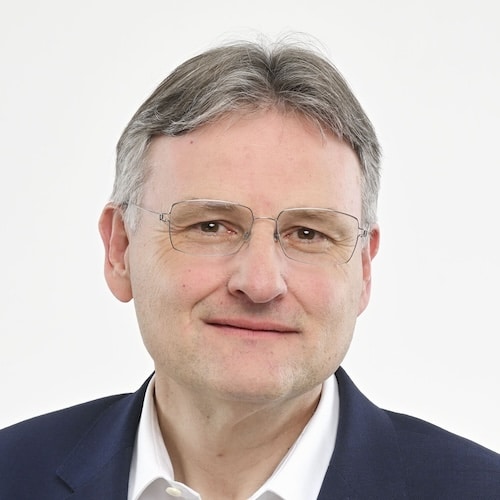
Jeppe Rich is a Professor at the Department of Technology, Management and Economics at the Technical University of Denmark (DTU). His primary research focuses on statistical and mathematical modeling applied to transport-related challenges, including transport demand modeling, discrete choice models, freight transport, cost-benefit assessments, and strategic long-term demand models. Rich holds a Mathematical Planning qualification from the University of Aarhus (1989–1995). He has held external positions as a Senior Consultant at Atkins A/S (2001–2002) and as a Researcher at the National Environmental Research Institute (1995–1998). His work aligns with UN Sustainable Development Goals related to sustainable cities and communities (SDG 11) and climate action (SDG 13). His research interests span transport policy, transportation science, and the application of advanced modeling techniques to address urban mobility challenges. Notable areas include EV infrastructure planning, bicycle network optimization, and cost-benefit analysis of transport projects. He supervises several PhD students in topics like electric freight transport, micromobility safety, and urban charging infrastructure. Rich has published extensively on transport policy, demand modeling, and sustainable mobility solutions. His work emphasizes interdisciplinary approaches to solving complex transport challenges, combining engineering, economics, and data science methodologies.
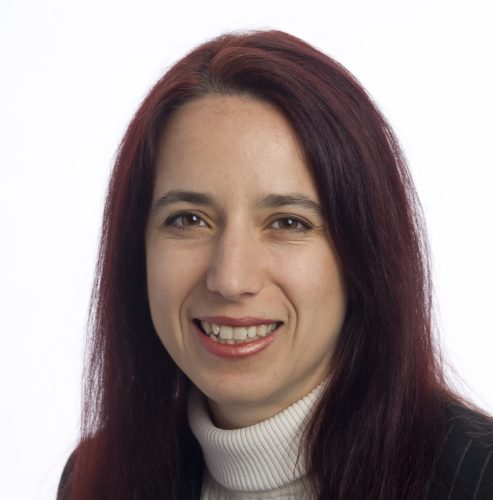
Lesia Mitridati is an Assistant Professor at the Department of Wind and Energy Systems, Technical University of Denmark (DTU). Her research focuses on optimizing energy systems, particularly in renewable energy integration, energy market design, and prosumer behavior modeling. She leads and collaborates on projects involving smart grids, distributed energy resources, and privacy-preserving market mechanisms. Her work contributes to UN Sustainable Development Goals related to affordable and clean energy. Key projects include AI-driven electricity market optimization, hydrogen-wind trading strategies, and risk-aware energy communities. She supervises multiple PhD students in areas like VPP bidding strategies and market-based heat-electricity coordination. Dr. Mitridati has published widely on energy communities, grid services, and reinforcement learning applications. Notable contributions include dynamic pricing frameworks for grid services and privacy-preserving market mechanisms. She co-organizes annual DTU summer schools on future energy systems and AI-driven optimization. Her research integrates machine learning with operational research techniques to address challenges in renewable energy integration, market design, and system resilience. Current initiatives focus on electrolyzer plant bidding strategies and feature-driven trading of renewable resources.
Juan C. Vasquez is a Professor at Aalborg University's Faculty of Engineering and Science, Department of Energy Technology, and Co-Director of the Center for Research on Microgrids (CROM). He holds a PhD in Automatic Control from the Technical University of Catalonia and has held academic positions at Aalborg University since 2011. His research focuses on microgrid control, renewable energy integration, power electronics, and smart grids. He has supervised numerous PhD and master’s students and leads projects funded by EU and national grants. Education: BS in Electronics Engineering (Autonomous University of Manizales, Colombia, 2004); PhD in Automatic Control (Technical University of Catalonia, Spain, 2009). Research interests include operation and control strategies for AC/DC microgrids, maritime microgrids, energy management systems, and IoT integration in smart grids. He has authored 648+ publications, including highly cited works, and received awards like the Young Investigator Award (2019) and Clarivate’s Highly Cited Researcher status since 2017. Key projects: EU-DREAM (Digital Services for Energy Transition), NEST (National Research Infrastructure), and ActRes (Resilience in Energy Systems). Collaborations include Virginia Tech and Ritsumeikan University.
Farshad Moradi is a Professor at the Department of Electrical and Computer Engineering at Aarhus University, specializing in neuromorphic engineering, spintronics, and biomedical device design. His work focuses on integrating advanced materials and circuits for applications in neural interfaces, energy-efficient computing, and wireless biomedical systems. Research Interests include: Spintronic-based neuromorphic computing architectures Ultra-low power analog/mixed-signal integrated circuits Ultrasonically powered implantable medical devices Neural signal processing and seizure detection systems Wireless energy transfer and structural health monitoring Key Projects (2016-2026): SPICE: Spintronic-Photonic Integrated Circuit Platform PHOTON-NeuroCom: Photonic-assisted Neuromorphic Computing Neuro-Sense: Flexible bioinspired neuroprostheses CorroSense: Self-powered corrosion monitoring HERMES: Hybrid Enhanced Regenerative Medicine Systems Recent innovations include: Ultrasonically powered optogenetic implants Low-power neural amplifiers for deep-brain interfaces Spin-torque nano-oscillator-based neuromorphic hardware Energy harvesting systems for structural monitoring
Professor Poul Alberg Østergaard is affiliated with Aalborg University's Department of Sustainability and Planning, focusing on sustainable energy planning and smart energy systems. His work aligns with UN Sustainable Development Goals, emphasizing energy transition, renewable integration, and decarbonization strategies. Professor in Energy Planning Expertise: Energy Systems Analysis, District Heating, Renewable Energy Transition Key Projects: Sustainable Heating Roadmaps, Municipal Energy Planning (e.g., Aalborg 2020-2050 Strategy) Research interests include 100% renewable energy systems, smart grids, energy storage, and policy frameworks. He has contributed to over 287 publications and 25 projects since 1996, with notable work on island energy transitions, hydrogen pathways, and district heating optimization. Media engagements highlight his role as an advisor on energy pricing, district heating dynamics, and nuclear energy debates. He organizes international conferences like the Smart Energy Systems series and collaborates globally on energy policy and modeling tools like EnergyPLAN. Labs/Teams: Member of the Sustainable Energy Planning Research Group and contributor to initiatives like the Smart Island Energy Systems (SMILE) project.
Henrik Wenzel is a Professor at the Department of Green Technology, University of Southern Denmark, and a key figure in the SDU Climate Cluster. His work focuses on integrating renewable energy systems, carbon management, and sustainable resource recovery. Active in projects like FLEX-ENVIRONMENT (smart electrolysis systems) and CARMA-Green Fuels (carbon management) Contributions to Power-to-X technologies, biogas optimization, and circular economy frameworks Research trends from his publications include: Life Cycle Assessment (LCA) of emerging energy systems Optimization of hydrogen production and regional energy parks Addressing water-conscious energy production and carbon capture challenges Scientific awards: SDU Innovation Prize (2022) TEK Innovation Prize (2022) Fyens Stiftstidendes Forskerpris (2015) Current supervision includes MSc theses on biomass resources for carbon management and global Power-to-X collaboration.
Andreas Kugi is the Scientific Director at the AIT Austrian Institute of Technology and a full professor of Complex Dynamical Systems at TU Wien (Vienna University of Technology) in the Faculty of Electrical Engineering and Information Technology, Institute of Automation and Control. He has held significant academic and leadership roles across Europe, including professorships at Saarland University and offers from TU Dresden and KIT. His research focuses on the modeling, control, and optimization of complex dynamical systems , with strong applications in mechatronics, robotics, and industrial automation . He has led major research centers such as the Christian Doppler Laboratory for Model-Based Process Control in the Steel Industry and the Center for Vision, Automation & Control at AIT. His work bridges theoretical control design and real-world industrial implementation. The recent publications reflect a consistent focus on nonlinear, hybrid, and distributed parameter systems , with applications in robotics, manufacturing, energy, and process industries. His research integrates advanced control theory with practical engineering challenges, emphasizing real-time optimization, robustness, and system efficiency. Scientific Awards: Mechatronic Systems Outstanding Investigator Award (IFAC, 2022) Goldene Stefan-Ehrenmedaille (OVE, 2023) 16 best paper awards Andreas Kugi has supervised over 50 completed PhD dissertations and has been deeply involved in research leadership, including serving as Editor-in-Chief of Control Engineering Practice (2010–2017) and Vice President of the OVE Austrian Electrotechnical Association (2017–2023). He has secured and led numerous research grants, particularly through industrial collaborations in automation and process control. He leads and contributes to major research initiatives, including the Center for Vision, Automation & Control at AIT and the Christian Doppler Laboratory , fostering interdisciplinary teams focused on industrial digitalization and smart systems.
Peter Bach Andersen serves as Head of Section and Senior Researcher at the Department of Wind and Energy Systems, Technical University of Denmark (DTU). Based at Elektrovej 329A in Kgs. Lyngby, he leads research in electric vehicle integration and prosumer energy systems with an ORCID identifier 0000-0002-5202-3584. His work spans grid services, battery storage, and smart charging infrastructure within DTU's EV Lab ( www.evlab.dk ). Andersen's research focuses on electric vehicle grid integration , specializing in charging infrastructure planning, battery energy storage systems, and virtual power plant concepts. His fingerprint analysis reveals dominant expertise in Electric Vehicle Engineering (100%), Battery Engineering (13%), Ancillaries (12%), and Power Engineering (11%). Current projects emphasize flexibility quantification, grid service delivery through EV clusters, and Nordic grid characteristics. His work contributes significantly to UN Sustainable Development Goals related to clean energy and sustainable cities. His publication portfolio shows strong trends toward grid-interactive EV systems with recent emphasis on conditional connection agreements, fast-charging urban impacts, and data-driven battery health prognosis. The research demonstrates increasing focus on practical implementation challenges and market integration aspects of vehicle-grid systems. Andersen actively supervises four PhD students (Menchaca, Striani, Unterluggauer, Sevdari) across projects including charging infrastructure planning, EV clustering methods, and urban charging infrastructure impacts. He leads the FLOW project (2022-2026) investigating flexible energy systems for optimal EV integration while participating in multiple EU-funded initiatives. His research group maintains strong industry connections through DTU's EV Lab, focusing on real-world validation of grid services using commercial EVs and chargers.
Stefan Kragh Nielsen is a Professor and Section Leader in the Department of Physics at the Technical University of Denmark (DTU), specializing in Plasma Physics and Fusion Energy. He is actively involved in experimental and theoretical research related to fusion plasma diagnostics, particularly collective Thomson scattering and microwave-based measurements in tokamak devices such as ASDEX Upgrade and Wendelstein 7-X. His research interests include: Plasma Physics and Fusion Energy Collective Thomson Scattering Fast Ion Dynamics Electron Cyclotron Resonance Heating Parametric Instabilities Microwave Diagnostics The recent publications highlight a strong focus on advanced diagnostics, nonlinear wave interactions, and fast ion behavior in fusion plasmas. His work spans theoretical modeling, experimental validation, and instrumentation development, particularly in high-frequency microwave systems for continuous plasma monitoring. Trends show increasing emphasis on reduced modeling techniques and real-time diagnostic capabilities for next-generation fusion reactors. Scientific contributions include: Development of ultrafast digitizers for microwave diagnostics Commissioning of 174 GHz CTS systems at W7-X Modeling of metaplectic geometrical optics for plasma waves Investigation of parametric decay in gyrotron beams He actively supervises multiple PhD students on topics such as non-linear processes in electron Bernstein wave heating, ion dynamics via CTS, and parametric decay instabilities in spherical tokamaks. His projects are well-funded and aligned with international fusion research goals. He has collaborated extensively with major fusion facilities including ASDEX Upgrade, Wendelstein 7-X, and JET. No formal awards are listed in the provided text. He leads a research team focused on advancing plasma diagnostic capabilities for future fusion reactors.
Gerald Englmair is an Associate Professor in the Section of Energy and Services within the Department of Civil and Mechanical Engineering at the Technical University of Denmark (DTU). He leads research and teaching initiatives in thermal energy storage, flexible heating and cooling systems, and solar energy integration at DTU campuses in Lyngby and Sisimiut. He actively contributes to international energy research collaborations, including EU-funded projects and IEA tasks. His research focuses on the experimental development, testing, and demonstration of thermal energy storage technologies, particularly those based on phase change materials (PCM) and supercooled sodium acetate trihydrate. His work enables compact, decentralized, and efficient energy storage solutions that support energy flexibility and sustainability. The recent publications highlight a strong trend in advancing the stability, performance, and real-world integration of thermal storage systems. Key areas include discharging dynamics, material degradation, and application in buildings and data centers. His research bridges engineering science with practical implementation in energy systems. Kalundborg Refinery Prize (2024) PhD Paper of the Year 2018 Innovation Award by FH Upper Austria (2015) Gerald Englmair has led multiple research projects, including EU-CETP “La-Flex”, EU "TREASURE", and IEA SHC Task 67/ES Task 40, where he serves as subtask lead and national coordinator for Denmark. He is also vice chair of the thermal energy storage working group at DaCES. His advisory roles include consultancy for public sector and international projects like STES4D in Spain. He mentors students and collaborates widely across Europe and China. He is actively involved in research networks, public outreach, and educational initiatives, including guest lectures, media appearances, and scientific advisory roles. His laboratory work focuses on experimental validation of thermal storage units and their integration into real-world energy systems.
Mohammad Hassan Khooban is an Associate Professor at the Department of Electrical and Computer Engineering, specializing in Electrical Energy Technology at Aarhus University . His research emphasizes advanced control strategies for power systems, renewable energy integration, and smart grid technology. While specific educational background details are not explicitly stated, his work demonstrates expertise in power electronics, control systems, and machine learning applications. His projects include pioneering initiatives like QuantumEcoCircuits (2024–2027) and Smart Synergy Mechanism (2023–2025), focusing on sustainable energy systems, electric vehicle charging dynamics, and resilient grid operations. His research interests span adaptive control methodologies, grid resilience under cyber threats, and the optimization of energy storage systems. He has contributed to peer-reviewed journals such as IET Renewable Power Generation and IEEE Transactions on Smart Grid , exploring topics ranging from PID controllers to fractional-order sliding mode control for unmanned aerial vehicles. No scientific awards are listed, but his work is supported through grants and collaborative projects. He is actively involved in lab initiatives related to power systems and renewable energy technologies.
Kasper Jessen is an Assistant Professor at Aalborg University's Faculty of Engineering and Science, affiliated with the Esbjerg Energy Section. He holds a Master's in Sustainable Energy Engineering (Offshore Energy Systems, 2018) and a Bachelor's in Energy Engineering (Dynamic Systems, 2016). His research focuses on sustainable energy technologies with emphasis on power electronics, microgrid stability, and solid oxide electrolysis systems. Primary research domains include: Design and control of DC microgrid infrastructure Robust power conversion for renewable energy systems Real-time simulation of electrochemical processes Advanced control algorithms for power-to-X applications Dynamic modeling of solid oxide electrolyzers His recent publications (2023-2024) demonstrate strong focus on microgrid stability solutions, real-time emulation of electrolysis systems, and advanced control schemes for power converters. Research consistently addresses renewable integration challenges through experimental validation and simulation. Currently leads or contributes to several major projects: Control and Protection of DC Microgrids (PI, ongoing since 2019) BlueBARGE : Renewable electricity for maritime applications (EU Commission, 2024-2026) Robust And Dynamic Electrolysis for Power-to-X (2024-2027) EMPOWER : Sustainable batteries for zero-emission transport (2022-2025) DynEfuel : Dynamic eFuel production technology (2023-2025)
Irena Vodenska is Professor of Finance and Director of Finance Programs at Boston University’s Metropolitan College, Department of Administrative Sciences. She holds a PhD in statistical finance and an MA in economics from Boston University, an MBA from Vanderbilt University, and a BS in computer information systems from the University of Belgrade. She is also a Chartered Financial Analyst (CFA) charter holder. Her research is at the intersection of finance, complexity science, and artificial intelligence, focusing on systemic risk modeling, ESG investments, and financial network dynamics. She has led major interdisciplinary research projects funded by the National Science Foundation, the European Commission, and the U.S. Army Research Office. PhD, Statistical Finance – Boston University MA, Economics – Boston University MBA – Owen Graduate School of Management, Vanderbilt University BS, Computer Information Systems – University of Belgrade Dr. Vodenska’s research interests include network theory in finance, systemic risk propagation, AI-powered ESG analysis, cryptocurrency price forecasting, and financial regulation. She employs big data, machine learning, and natural language processing to analyze financial news, market dynamics, and corporate sustainability. Her work investigates how climate disinformation spreads via social networks and influences public policy and governance. The recent articles highlight a consistent focus on modeling financial and economic systems using network science and AI. Trends include systemic stress testing, sentiment analysis in financial markets, cascading failures, and the interplay between macroeconomic indicators and financial networks. Her work spans econophysics, behavioral finance, public health economics, and ethical AI in fintech. National Science Foundation (NSF) research grant (2023) NSF EAGER Award (2014–2015) European Commission FET Open Grant (2012–2014) U.S. Army Research Office (ARO) Grant (2020–2021) MEXT Post-K Computer Grant, Japan (2016–2019) Alexander Hamilton Fulbright Fellowship (1994) Owen Graduate School Fellowship (1995–1996) Dr. Vodenska teaches core finance courses such as Investment Analysis and Portfolio Management, Derivatives Securities, and Financial Regulation and Ethics. She co-developed the MET AD 678 course with Professor Tamar Frankel from BU Law, emphasizing real-world case studies and ethical decision-making. Her research grants have supported innovative work in systemic risk modeling, AI for ESG, and financial network stability. She is actively involved in mentoring, conference organization, and editorial roles in leading journals. She is a key organizer of the International School and Conference on Network Science (NetSci) and the Big Data in Economics, Science, and Technology (BEST) Conference. Her lab and research team focus on complexity in financial systems, bringing together economists, physicists, computer scientists, and data analysts to study global financial stability and sustainability.
Amir Babaki is an Assistant Professor at the Institute of Mechanical and Electrical Engineering, University of Southern Denmark. His research focuses on power electronics, wireless power transfer, and high-efficiency converter design for electric vehicle applications. University: University of Southern Denmark School: Institute of Mechanical and Electrical Engineering Rank: Assistant Professor Email: amirbabaki@sdu.dk Research Interests Babaki's work centers on power electronics, specifically front-end converters, wireless power transfer (WPT), and high-frequency resonant converters. His research explores efficiency optimization in dynamic WPT systems for electric vehicles (EVs), including control strategies for power factor correction and voltage regulation. He also investigates integrated magnetic structures for misalignment tolerance and develops predictive control methods without communication or model dependencies. Research Projects He contributes to projects like HiCoMMID (2021-2024) on motor integrated drives and HPC (2024-2027) for ultra-high efficiency DC-DC converters in high-power charging. These projects intersect with automotive engineering, energy efficiency, and converter design optimization. Teaching Babaki supervises Master's theses and teaches courses in power electronics and electrical engineering, including PE2 and ELTR3 modules related to converter technologies and wireless power systems.
Christopher Cadou is a Professor and Director of Undergraduate Studies in the Department of Aerospace Engineering at the University of Maryland. He holds a B.S. in Mechanical Engineering and B.A. in History from Cornell University, and M.S. and Ph.D. in Mechanical Engineering from UCLA. His research focuses on combustion at micro and conventional scales, laser diagnostics, compact power systems, and fuel cells. He has led interdisciplinary projects in micro-gas turbine engines, microfluidics, and energy innovation. Professional affiliations include the American Society of Mechanical Engineers (ASME), American Institute of Aeronautics and Astronautics (AIAA), and The Combustion Institute. He has reviewed for journals like Combustion and Flame, and government agencies such as the National Science Foundation. His work includes pioneering infrared diagnostics for micro-combustors and developing analytical models for heat transfer in mini/microchannels. He has organized conferences including the 2009 AIAA Joint Propulsion Conference. His contributions span technical reports on microturbomachinery and scramjet inlet flows, and collaborations with industry through initiatives like the Maryland Energy Innovation Institute.