Alessandro Aliakbargolkar is a Professor at the Department of Space Systems Design under the School of Aerospace Engineering at Skolkovo Institute of Science and Technology (Skoltech). His research focuses on Federated Satellite Systems, CubeSat constellations, and Spacecraft Systems Architecture, with applications in Earth observation, messaging services, and networked satellite systems. He has an extensive publication record in these areas, including work on technology roadmapping and digital twin implementation. Key Research Areas: Satellite federation and resource sharing CubeSat constellation design Network performance optimization Integration of systems engineering models with AI Selected Trends: Recent work explores digital twin technologies for CubeSats, federated satellite network analysis, and large language model applications in spacecraft design. Publications often combine theoretical frameworks (e.g., network theory) with practical implementations (e.g., LoRa-based messaging services). ORCID Profile: 0000-0001-5993-2994
Dongwook Kim is affiliated with the Korea Advanced Institute of Science & Technology (KAIST) as a faculty member in the Department of Business and Technology Management under the College of Business. His research spans multiple domains including machine learning, robotics, signal processing, and biomedical engineering. Key contributions in Computer Vision (CNN-based semantic segmentation, 3D point cloud analysis) Significant work in Hardware Design (energy-efficient processors, neuromorphic computing) Interdisciplinary expertise in Medical Imaging (bone age assessment, retinal biomarkers) and Cybersecurity (attack detection, network analytics) Publications since 2015 demonstrate sustained innovation in AI applications , Signal Processing , and Smart City Governance . His work often integrates theoretical advances with practical implementations in real-world systems. No scientific awards or student mentorship details are explicitly documented in the provided records.
Prof. Robert Güttel is the Director of the Institute for Chemical Engineering at the University of Ulm. He is a member of the Ulm Center for Thermal and Environmental Technology (UZWR) since 2016 and serves on its executive board. His work focuses on catalytic reaction engineering, particularly in CO2 utilization, methanation, Fischer-Tropsch synthesis, and process intensification. Research emphasizes catalyst design, reaction kinetics, and reactor modeling under dynamic conditions. Educations : Not explicitly stated in the provided text. His academic career is highlighted through his leadership roles and publications. Research Interests : Güttel’s research spans heterogeneous catalysis for CO/CO2 hydrogenation, transient kinetic analysis, polymeric reactors for extraterrestrial applications, and AI-driven reactor design. His team develops advanced catalysts (e.g., Ru/TiO2, cobalt@silica core-shell structures) and investigates novel reactor concepts like fibrous structured catalysts and sorption-enhanced processes. Recent work explores in-situ methanation on Mars and the impact of light on catalytic selectivity. Publications Trends : His 2024–2025 articles focus on low-temperature methanation beyond Earth, AI-based residence time analysis, and deactivation mechanisms. Studies highlight both experimental and computational approaches to optimize catalytic systems for sustainability and industrial relevance. Awards : No specific scientific awards mentioned in the text. Grants/Labs : Leads the Institute for Chemical Engineering at Ulm, collaborating on EU-funded projects related to power-to-X technologies and extraterrestrial chemistry. Active in developing lab-scale reactor systems and industrial partnerships for catalyst testing. Labs/Teams : Directs research groups focused on catalytic reactor design, transient kinetic methods, and sustainable process engineering. Collaborates with institutions on Mars habitat resource utilization and green hydrogen production systems.
Prof. Michael Weyrich is a faculty member at the Institute of Industrial Automation and Software Engineering (IAS) within the University of Stuttgart , leading the Cluster of Excellence IntCDC . His academic rank is Professor, and he focuses on Industrial Automation , Digital Twins , and Large Language Models (LLMs) for manufacturing and automotive systems. His research explores integrating LLMs into industrial automation for adaptive control, cloud offloading of vehicle functions, and semantic interoperability via Asset Administration Shells . He investigates modular production architectures , connected vehicle systems , and synthetic data generation for autonomous machinery. Recent publications highlight LLM-driven production planning , dynamic sensor calibration , and machine learning for fault detection in electric vehicle powertrains. His work emphasizes real-time data modeling and flexible microservice orchestration .
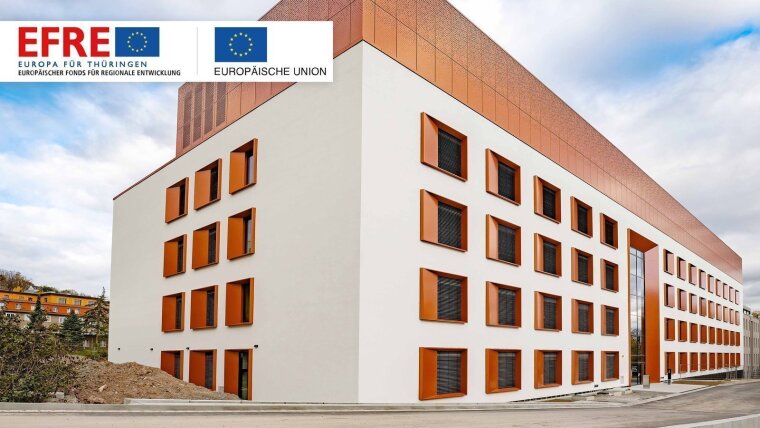
Prof. Dr. Doreen Mollenhauer serves as a Professor at Friedrich Schiller University Jena through a joint appointment with the Helmholtz Institute for Polymers in Energy Applications (HIPOLE), a collaboration between the university and Helmholtz Center Berlin for Materials and Energy (HZB). She is based in the Institute of Technical Chemistry and Environmental Chemistry within the university's research ecosystem. Her research centers on computational simulation of polymers for next-generation energy storage and conversion technologies . This work integrates molecular modeling with materials engineering to develop advanced polymers for batteries, fuel cells, and solar energy systems. The research bridges theoretical chemistry and practical energy applications, addressing critical challenges in sustainable power solutions. Prof. Mollenhauer's working group operates from Jena's new CEEC research complex (Center for Energy and Environmental Chemistry), which features state-of-the-art laboratories for collaborative energy materials research. Her dual affiliation with HIPOLE creates unique opportunities for students to access both academic and large-scale national laboratory resources. Contact: doreen.mollenhauer@uni-jena.de | Phone: +49 3641 9-48986 | Location: Philosophenweg 7a, 07743 Jena
Prof. Dr. Felix Warmer is an Assistant Professor at Eindhoven University of Technology (TU Eindhoven) and leads the Stellarator Reactor Studies (SRS) research group at the Max Planck Institute for Plasma Physics (IPP) in Greifswald. He holds a dual role, teaching at TU Eindhoven while conducting advanced fusion energy research at IPP. Current Affiliation: Max Planck Institute for Plasma Physics, Greifswald (Head of SRS Group) Academic Position: Assistant Professor, Eindhoven University of Technology Teaching: Courses include 'Fusion on the Back of an Envelope' and 'Design of a Fusion Power Plant' His educational journey began with a master's thesis at IPP Greifswald, followed by doctoral research culminating in a PhD from the Technical University of Berlin in 2016. He was awarded a prestigious Feodor Lynen Research Fellowship, enabling research at Japan's National Institute for Fusion Science. Felix Warmer's research is centered on the scientific and engineering design of stellarator-based fusion power plants. He develops innovative physical and engineering models to simulate fusion reactor components and validates these using experimental data from the Wendelstein 7-X stellarator. His work bridges theoretical modeling with real-world experimental verification, contributing to the advancement of magnetic confinement fusion technology. Although no specific recent publications are listed in the provided text, his leadership of a dedicated research group and active teaching role indicate a strong and ongoing research trajectory in fusion energy systems. Scientific Awards and Honors: Feodor Lynen Research Fellowship, Alexander von Humboldt Foundation Advising and Grants: Felix Warmer heads the SRS research group, indicating active supervision of researchers and students. While specific grant details are not mentioned, leadership of a research group at the Max Planck Institute implies involvement in major national and international funding initiatives in fusion energy. His past fellowship also reflects competitive grant support. Labs and Research Teams: He leads the Stellarator Reactor Studies (SRS) research group at the Max Planck Institute for Plasma Physics in Greifswald. This team focuses on reactor design and modeling, closely tied to the Wendelstein 7-X experiment, one of the world's most advanced stellarator devices.
Anna C. Balazs is Distinguished Professor and John A. Swanson Chair of Engineering in the Department of Chemical Engineering at the University of Pittsburgh, with an adjunct appointment in Chemistry and visiting professorships at Scripps Research Institute, UT-Austin and Oxford University. In 2025 she receives the €10,000 Gutenberg Research Award from Johannes Gutenberg University Mainz (JGU) for her pioneering theoretical work on smart soft materials. She earned an A.B. in Physics from Bryn Mawr College (1975) and a Ph.D. in Materials Science from MIT (1981), followed by post-doctoral research at Brandeis, MIT and UMass. Research interests span theoretical and computational soft-matter physics, focusing on: Statistical-mechanical modelling of polymer blends and composites Self-oscillating and chemo-responsive hydrogels Active matter, enzyme-powered swimmers and self-propelling sheets Self-healing, shape-morphing and bio-inspired materials Computer simulation of colloidal and interfacial phenomena Recent publications (2023-2025) demonstrate a clear trend toward integrating chemistry, fluid mechanics and elasticity to create life-like, autonomous soft machines. Key contributions include: Harnessing enzyme pumps to drive macroscopic sheet locomotion Designing chemically communicating micro-post arrays Creating dissipative materials with programmable, hierarchical 3-D architectures Scientific awards include: Gutenberg Research Award 2025 Polymer Physics Prize, American Physical Society SF Boys-A. Rahman Award, Royal Society of Chemistry Langmuir Lectureship Award, American Chemical Society Election to the U.S. National Academy of Sciences (2021) She serves on the Advisory Board of the DOE-BES Materials Council and on editorial boards for Langmuir , Soft Matter and Polymer Reviews . Her group collaborates closely with experimental teams world-wide, including the DFG-NSF “Confine” partnership with JGU and the CoM2Life Cluster of Excellence initiative.
Prof. Dr.-Ing. Harald Klein holds the Professorship of Plant and Process Engineering at the TUM School of Engineering and Design (Technical University of Munich). His research focuses on process engineering analysis and synthesis, particularly thermal/chemical unit operations applied to power plant technology. Develops thermodynamic substance models & simulation tools Expertise in industrial process design and optimization Collaborates on hydrogen liquefaction and biofuel production Research trends: 2016-2017 publications show emphasis on sustainable energy systems Combines traditional process engineering with modern optimization Key domains: hydrogen technology, chemical reactors, and thermal systems
David Schlipf is a Professor at the Fachbereich Energy and Life Science, Hochschule Flensburg, leading the Wind Energy Technology Institute. His expertise spans lidar-assisted control systems, floating offshore wind turbines, and aeroelastic modeling. He actively collaborates with international initiatives like IEA Wind Task 32 and contributes to projects such as the 'Lidar Knowledge Europe (LIKE)' network. His research focuses on enhancing wind turbine efficiency through advanced control strategies and sensor technology integration. He has been instrumental in developing the TorqTwin open-source framework for multibody modeling and has published extensively on topics including wind field reconstruction, load mitigation, and floating platform dynamics. His work bridges academic research with industrial applications, emphasizing practical solutions for offshore wind energy challenges. Notable projects include the evaluation of lidar-assisted control performance, optimization of floating turbine designs, and contributions to wind energy education's role in climate resilience. His research outputs span over 200 publications, highlighting his global impact in advancing renewable energy systems.
Dr. Martin Lange is part of the Project Group Ecological Epidemiology within the Department of Ecological Modelling at the Helmholtz Centre for Environmental Research (UFZ). His research focuses on computational epidemiology, particularly in wildlife and livestock systems. Key areas include disease transmission dynamics, surveillance strategies, and the development of predictive models for infectious diseases like African Swine Fever (ASF) and Bovine Viral Diarrhea Virus (BVDV). Affiliations: UFZ, Department of Ecological Modelling; EcoEpi research group. Education: PhD in Veterinary Epidemiology (2013, TU Bergakademie Freiberg). Research interests span ecological epidemiology, wildlife disease control, and the application of agent-based and individual-based models to understand pathogen spread. Notable contributions include modeling ASF in wild boar populations and BVDV eradication strategies in Ireland. Awards: Received the 2018 UFZ-Wissenstransferpreis (shared with H.H. Thulke) and the Konrad-Bögel-Nachwuchsförderpreis for his doctoral work on eco-epidemiology of wild boar diseases. Also recognized at the DACh Epidemiologietagung 2011. Publications: Over 50 peer-reviewed articles since 2006, emphasizing interdisciplinary approaches to disease modeling and environmental systems. Recent work includes digital twin frameworks for biodiversity monitoring and Python-based model coupling tools like FINAM. Labs/Teams: Active in the EcoEpi group and contributes to projects like BioDT (Biodiversity Digital Twin) and CauSES (Causation in Social-Ecological Systems).
Prof. Dr.-Ing. Jana Bochert is a faculty member at the Faculty of Sustainable Infrastructure at Technische Hochschule Ingolstadt , specializing in Construction Informatics , Construction Mechanics , and Foundations of Civil Engineering . She focuses on seismic analysis, soil-structure interaction, and structural dynamics, particularly for critical infrastructure like nuclear power plants. Email: Jana.Bochert@thi.de Phone: +49 841 9348-2393 Office: Room CN115 Research Interests Her research centers on: Seismic soil-structure interaction Wave propagation in soil under dynamic loads Development of computational methods for structural analysis Dynamic response of nuclear power plant foundations Impact of transportation and demolition on soil vibrations Finite element modeling of civil structures Publications & Research Trends Her work spans 2008–2021 , with a focus on: Seismic safety protocols for nuclear infrastructure Time-domain modeling of soil dynamics Comparison of simulation methods (2D vs 3D) Acoustic and vibration analysis in urban environments Integration of soil nonlinearities into structural design Dynamic load effects from trains and demolition
Sani Nassif is a Research Fellow at the Technical University of Munich (TUM) under the Rudolf Diesel Industry Fellowship, hosted by Professor Ulf Schlichtmann. With 28 years of experience at Bell Labs and IBM Research, he has led teams in integrated circuit modeling, simulation, statistical analysis, and optimization. Research Interests: His work bridges integrated circuit technology with cross-disciplinary applications in medicine. Key areas include variability analysis in semiconductor manufacturing, low-power circuit design, and reliability engineering for nano-scale systems. He focuses on applying machine learning and statistical methods to solve challenges in energy-efficient computing and biomedical systems. Selected Publications: His research spans circuit variability trends, leakage current modeling, and reliability frameworks for nano-era systems. Work includes foundational studies on SRAM failure analysis and CMOS scaling limitations. Scientific Awards: He is recognized as an IEEE Fellow IBM Master Inventor (75 patents) Rudolf Diesel Industry Fellow
Dr. Ivan Duric is a Research Fellow at the Department of Agricultural Markets, Agricultural Marketing and World Agricultural Trade, Leibniz Institute of Agricultural Development in Transition Economies (IAMO), Halle (Saale), Germany. Since October 2008 he has led and contributed to numerous international research projects focusing on digital transformation, trade policy, and value-chain analysis in agriculture and food systems. Education: Doctorate (Dr.) “summa cum laude” in Agricultural Economics, Faculty of Agriculture, Martin Luther University Halle-Wittenberg. Research Interests: Dr. Duric’s core expertise lies at the intersection of digital technologies and agri-food economics . His work explores how machine learning, blockchain, and immersive analytics reshape agricultural value chains, enhance transparency, and improve competitiveness. He continually investigates price transmission mechanisms , the impact of trade policy shocks (e.g., export bans, import restrictions), and pathways to strengthen food security in transition and emerging economies. Across more than forty peer-reviewed articles and policy briefs, a clear trend emerges: rigorous empirical assessment of how policy interventions and digital innovations jointly determine market outcomes—from wheat-to-bread chains in Serbia to salmon value networks spanning Norway, France and Poland. Awards & Recognition: Doctoral degree awarded “summa cum laude” (highest distinction), Martin Luther University Halle-Wittenberg. Grants & Collaborative Projects: Dr. Duric has co-ordinated or served as senior researcher in major EU and German-funded initiatives including AGRICISTRADE, AgriDigital, AGRIIMMERSE, VALUMICS, SecureFood, GERUKA, eTrust-Food, DITAC, GTRS, STARLAP, TAAST, UaFoodTrade , and the IAMO XR Lab . These projects investigate global grain trade, digital platform adoption, consumer trust, resilience of food systems, and immersive data analytics. Labs & Teams: He is a founding member and scientific lead of the IAMO XR Lab , where virtual-reality and immersive analytics are leveraged to visualize and interpret complex agricultural market data, creating new avenues for stakeholder engagement and policy dialogue.
Dr. Leandro Milhomens da Fonseca is a researcher at the Technische Universität Darmstadt, affiliated with the Institute of Nuclear Physics (IKP). His work focuses on nuclear physics, particularly in hypernuclei and neutron-rich nuclei studies. Primary research areas: Nuclear Scattering, Neutron-skin Thickness, Radioactivity, and Gamma-ray Spectrometry. Contributions to detector development, including the Time-of-flight system for R3B experiments. Published extensively on nuclear interaction cross sections and radiation safety in Brazilian building materials. His recent publications highlight expertise in both experimental nuclear physics and environmental radiation assessment. While no formal awards are listed, his involvement in international collaborations like HYDRA/R3B suggests significant contributions to the field.
Paul Repgen is a Researcher in the Department of Nonlinearity Engineering at Ruhr University Bochum's Faculty of Electrical Engineering and Information Technology. His research focuses on ultrafast laser systems, fiber optics, and nonlinear amplification techniques, with a particular emphasis on high-repetition-rate pulse generation and environmental stability of laser systems. He collaborates closely with Prof. Dr. Ömer Ilday and contributes to advancing applications in industrial laser technology and photonics. His work integrates theoretical and experimental approaches to optimize laser performance, including harmonic mode-locking mechanisms and pulse stabilization strategies inspired by Brownian particle dynamics. Key contributions include record GHz repetition rate systems in burst mode and high-energy pulse generation through controlled Kerr nonlinearity. Paul Repgen's research has led to innovations in all-fiber laser oscillators, Mamyshev-based regenerators, and thulium-doped fiber systems, demonstrating exceptional stability and power scalability. His articles reflect a strong focus on advancing ultrafast laser technology for applications in materials processing, telecommunications, and fundamental optics research.