Geert Deconinck is a full professor at KU Leuven , leading the Electrical Energy Systems and Applications (ELECTA) research group within the Department of Electrical Engineering (ESAT). He also serves as scientific leader of the EnergyVille research center's algorithms domain, focusing on smart electrical networks and thermal systems. M.Sc. and Ph.D. from KU Leuven Head of ELECTA since 2012 (10 professors, 8 postdocs, 70+ PhDs) Over 8 million EUR research budget in last 5 years 44 completed PhDs and 10 current advisees IEEE Transactions editorial board member His research spans smart grid architectures , distributed control , and cyber-physical security , with recent focus on EV-grid integration , renewable energy democratization , and multi-carrier energy systems . Current projects include: Smart Charging - E-Mobility meets Renewable Energy Early Detection and Defense Systems for Smart Grids Open-source P2P energy sharing platforms Microgrid control strategies for PV-battery systems Awarded IET Fellow and IEEE Senior Member status, his work combines machine learning with power systems engineering through both theoretical modeling and experimental validation . He has contributed over 575 publications with 9800+ Google Scholar citations.
Johan Driesen is a full Professor at KU Leuven's Faculty of Engineering Sciences, where he serves as Department Head of Electrical Energy Systems and Applications (ELECTA) and Director of the KU Leuven Institute for Energy and Society (KIEM). He also holds leadership positions at EnergyVille as Division Head and Subdivision Head. His work spans both academic and applied research in electrical energy systems. His research interests focus on renewable energy integration, power electronics, electrical drives, electric vehicles, and smart grids. Driesen's work particularly emphasizes distributed generation of electricity, with significant contributions to floating photovoltaics, offshore wind integration, and low-voltage DC systems. His research group actively investigates the optimization of grid integration for renewable energy sources and the development of advanced power electronic converters. Driesen's recent publications reveal a strong emphasis on practical applications of renewable energy systems, with particular focus on reliability analysis of low-voltage DC systems, optimization of PV-battery systems, and integration of electric vehicles with renewable energy sources. His work bridges theoretical analysis with real-world implementation challenges. Laureate prize of the Belgian Royal Society of Electrotechnics (KBVE/SRBE) 'Research and Development' for master theses 1996 2nd place in final round IEEE Region 8 Student Paper Contest 1997 in München, Germany Laureate biannual prize 'R.Sinave' of the Belgian Royal Society of Electrotechnics (KBVE/SRBE) for best PhDs 2002 Driesen has supervised numerous students and researchers, including J. Despeghel who completed work on residential PV-battery system optimization. His current research portfolio includes substantial projects such as Flux50 (working on the future energy system), solar and wind energy in the Belgian marine zone, and smart charging solutions that integrate e-mobility with renewable energy. He serves as promoter or co-promoter on multiple major research initiatives with funding extending through 2028. At EnergyVille, Driesen leads research teams working on cutting-edge energy solutions, with particular focus on DC systems, grid integration challenges, and the development of innovative power electronic solutions for renewable energy applications. His work has significant industrial relevance and practical implementation potential.
Michael Kleemann is an Associate Professor at the Faculty of Engineering Technology within KU Leuven , affiliated with the Department of Electrical Engineering (ESAT) . His research focuses on Power System Protection , Wireless Power Transfer , and Renewable Energy Integration , with a particular emphasis on inverter-based grid dynamics and fault analysis. Key Research Areas : Power system protection algorithms, capacitive wireless power transfer, fault location methods in medium voltage cables, and grid stability with high renewable penetration. Notable Projects : Lead projects on Protection of Future Distribution Grids (2021-2025), Capacitive Wireless Power Transfer (2020-2024), and Flux 50 ICON (2024-2026) for low-voltage DC grid protection. Publication Trends : Recent work explores capacitive wireless power transfer materials and control systems (2024-2025), fault detection algorithms for inverter-dominated grids (2023-2025), and machine learning applications in voltage regulation for photovoltaic-rich networks (2024). Teaching : Courses include Power System Protection (JPI322), Power Electronics (JPI0L8/JPI318), and Capacitive Wireless Transfer topics in graduate seminars.
Hakan Ergun serves as an Associate Professor at KU Leuven's Faculty of Engineering Science within the Department of Electrical Engineering (ESAT). He leads the Subdivisie EnergyVille Electa - Ergun and holds key roles in EnergyVille initiatives, including membership in the Division EnergyVille and the Council of the Faculty of Engineering Science. His research focuses on power systems engineering with specialization in HVDC grid technology, renewable energy integration, and stochastic optimization. Current projects include predictive maintenance for wind farms, congestion management for offshore HVDC grids, and development of hybrid AC/DC grid software tools. His work addresses critical challenges in grid resilience, uncertainty modeling, and multi-national offshore grid coordination. Recent publications demonstrate strong trends in hybrid AC/DC grid optimization under uncertainty, with emphasis on stochastic programming, polynomial chaos expansion, and risk-based operational models. Key themes include offshore grid protection, frequency stability with energy storage, and spatio-temporal variability in power system planning. Ergun actively supervises doctoral candidates including K. Phillips and C.K. Jat. His research portfolio includes significant EU-funded projects such as CROCODILE (Cross-border Coordination of Offshore Grids) and advanced HVDC grid development initiatives with multi-year funding through 2028-2029. He directs the EnergyVille Electa subdivision focused on electrical energy systems applications, collaborating with industry partners on real-world grid implementation challenges. Current work emphasizes practical solutions for multi-GW offshore energy hubs and resilient power systems leveraging HVDC transmission flexibility.
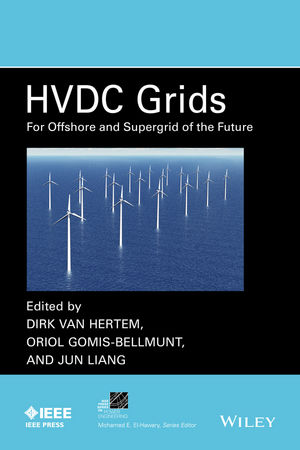
Professor Dirk Van Hertem is a faculty member at KU Leuven, Belgium, where he leads the Energy Transmission Competence Hub (ETCH) within the ELECTA division. He earned his M.Eng. (2001) from KHK Geel, M.Sc. (2003) and PhD (2009) from KU Leuven, and held a postdoctoral position at KTH Royal Institute of Technology (2010). His research focuses on power system planning, operation, and control, particularly for future transmission systems involving HVDC grids, offshore energy infrastructure, and supergrid concepts. Key research areas include: HVDC grid protection Underground power systems Cost-effective resilient energy supply Renewable energy integration Hybrid AC/DC system optimization He co-edited the seminal book HVDC GRIDS: For Offshore and Supergrid of the Future with researchers from UPC Barcelona and Cardiff University. His team includes 12 postdoctoral researchers and 24 PhD students working on topics ranging from grid restoration algorithms to cable fault localization and digital twin applications. Scientific distinctions: Fellow of the IEEE (PES, IAS) Active member of Cigré Principal investigator in multiple EU-funded projects Teaching responsibilities include advanced power system courses co-taught with senior professors. Regular PhD and postdoc vacancies are available through KU Leuven's job portal and the ETCH website.
Elise Delhaise is a Lecturer at the University of Namur's Faculty of Law and affiliated with the Namur Digital Institute and Centre de Recherche Information, Droit et Societe. Her work spans criminal law, cybersecurity, and counter-terrorism frameworks within European and Belgian contexts. Her research focuses on: Criminal procedure adaptations during exceptional circumstances (particularly counter-terrorism) Digital-era legal challenges including revenge porn, hospital cybersecurity, and AI ethics Gender-based violence legislation and victim protection mechanisms Professional secrecy in healthcare and cross-institutional data sharing Recent publications analyze evolving jurisprudence in Belgian criminal courts, hospital cyber vulnerabilities, and European counter-terrorism cooperation. Notable activities include conference participation on criminal code reform (2023), AI ethics workshops (2024), and expert media commentary on child rights, terrorism aftermath, and pandemic restrictions. She contributes to the Centre Vulnerabilites et societes research collective examining societal security challenges.
Thibaut Vandervelden is a Researcher at Vrije Universiteit Brussel's Faculty of Engineering, Department of Electronics and Informatics. His work focuses on hardware security, embedded systems, and cryptographic implementations for resource-constrained environments. With an h-index of 4, he has produced significant research output since 2019, primarily in Sensors, IEEE Access, and Future Generation Computer Systems. His research interests center on practical security implementations for IoT devices and embedded systems, with particular expertise in Rust programming for secure embedded development, cryptographic protocol optimization, and network security for low-power wireless networks. His work bridges theoretical security concepts with practical implementation challenges in constrained environments. Analysis of his recent publications reveals a strong trend toward secure embedded systems development, with increasing focus on Rust programming language applications, zero-knowledge proofs for privacy-preserving systems, and optimization of cryptographic operations for IoT devices. His research demonstrates consistent collaboration with colleagues including Ruben De Smet, An Braeken, and Kris Steenhaut. Scientific recognition includes: IACR RWC'21 Cryptohackathon on Functional Encryption: 2nd prize (2021) Vandervelden actively participates in research community building through organizing workshops like RustIEC and presenting at events focused on embedded systems security. His work has been referenced in Wikipedia pages and garnered attention across academic and professional platforms, with media contributions on cybersecurity research in Flanders. He leads and participates in research teams focused on wireless community development and the Internet of Batteryless Things, contributing to both theoretical frameworks and practical implementations in hardware security.
Quentin Van Enis is a legal scholar and practitioner specializing in Media Law, Information Technology Law, and Human Rights Law. He serves as a visiting lecturer at the University of Namur's Faculty of Law, where he teaches Media Law for the 2023-2025 academic period. Professionally, he currently serves as a judge at the French-speaking Court of First Instance in Brussels since June 2023, following his role as a legal adviser at the European Court of Human Rights in Strasbourg (2019-2022). Doctorate in Legal Sciences, University of Namur, 2014 Complementary Master's Degree in Human Rights, FUSL, 2009 (highest distinction) Master in Law, UCL, 2007 (highest distinction) Erasmus Exchange, University of Salamanca, 2007 Bachelor in Law, FUSL, 2004 (highest distinction) Certificate of Aptitude to Practice Law (CAPA), Brussels Bar, 2015 Van Enis's research focuses on the critical intersection of law, media, and digital technologies. His work examines how traditional legal frameworks adapt to the rapidly evolving digital landscape, particularly regarding freedom of expression, media regulation, and human rights protection online. His doctoral thesis, 'Press Freedom in the Digital Era' (2014), established his expertise in how legal systems address transformations in the media landscape brought about by the internet. His scholarship consistently explores the tension between technological innovation and fundamental rights protection. His recent scholarly output reveals a clear trajectory from traditional media law toward broader digital rights issues within the European human rights system. Publications from 2019-2023 demonstrate increasing focus on platform regulation, whistleblower protection, and the evolving relationship between privacy, expression, and democracy in the digital sphere. His work shows particular attention to how European legal institutions respond to internet-driven challenges to established rights frameworks. Van Enis maintains active engagement with professional legal practice alongside his academic work. He served as a lawyer at the Brussels Bar (2014-2018) and was a member of the Belgian Journalistic Ethics Council (CDJ) from 2015-2019. In 2017, he was appointed as an expert in New Technology Law for the French-speaking chambers of the Legislation Division of the Belgian Council of State. He contributes significantly to legal education through his role as a regular trainer for AJPro trainings organized by the Association of Professional Journalists and previously as a visiting professor at the Catholic University of West Africa in Abidjan (2015). His work with the Namur Digital Institute (NADI) and Center for Research on Information, Law and Society (CRIDS) connects his scholarship with broader digital transformation research initiatives.
Serge Gutwirth is a Professor at Vrije Universiteit Brussel (VUB) in Belgium, affiliated with the Law, Science, Technology & Society research group and the Metajuridica/Fundamental Rights Centre. His academic career spans several decades with over 300 publications across diverse legal fields. His research focuses on the intersection of law with technology, human rights, and environmental issues. Key areas include: Privacy & Data Protection International Human Rights Legal Theory Criminal Law and Procedure Environmental Law and Commons Law & Technology Gutwirth's scholarly work demonstrates an evolving trajectory from traditional legal scholarship to contemporary issues at the intersection of law, technology, and ecological challenges. His recent publications show a particular interest in how legal frameworks interact with commons-based approaches to resource management, especially in the context of climate change. He has made significant contributions to understanding the balance between security and privacy, particularly in digital contexts. His notable scientific awards include: Francqui Chair 2019-2020: Ecologie(s) du droit IBM-Belgium award for computer science 1994 J. SEGERS award (1982-84) Sandersqualification 2002-2004 Gezaghebbend Panel voor de uitbouw van het Vlaams Academisch Bibliografisch Bestand Professor Gutwirth has supervised numerous doctoral students whose research spans privacy law, data protection, criminal justice, and environmental law. His current research projects extend until 2028, with significant involvement in EU-funded initiatives focused on data protection, cybersecurity, and the ethical use of emerging technologies. He maintains an active role in public discourse through op-eds in major Belgian media outlets, engaging with contemporary legal and societal challenges.
Jean-Michel Dricot is an Associate Professor at the Université libre de Bruxelles (ULB) , where he has been affiliated since 2010. He is a founding member of the Belgian Master of Sciences in Cybersecurity (2016) and the ULB Cybersecurity Research Center (2017) . Education: M.Sc. in Computer Engineering (2001), PhD in Engineering (2007) from ULB His research focuses on cybersecurity for mobile/wireless networks and IoT , with expertise in network security , PUFs , and adversarial machine learning . Recent publications highlight interdisciplinary work on smart grid security , blockchain-based systems , and IoT privacy . Key article trends include: PUFs for authentication , adversarial attack mitigation , smart grid cryptography , and blockchain privacy . He has supervised multiple theses on topics like CubeSat security , Modbus/TCP protection , and ICS protocol analysis .
Piet Termonia is an Associate Professor at Ghent University in the Department of Physics and Astronomy within the Faculty of Sciences. His work focuses on meteorology, climatology, and numerical weather prediction systems with strong connections to the Royal Meteorological Institute of Belgium. Termonia's research interests include: Numerical Weather Prediction and Climate Modeling Regional Climate Downscaling Urban Climate Modeling Atmospheric Dispersion Modeling Extreme Weather Events Analysis Climate Services Development His research spans both theoretical meteorological development and practical applications for climate adaptation. Termonia has made significant contributions to the ALARO model used in the EURO-CORDEX framework for regional climate modeling across Europe. His work addresses critical challenges in representing extreme weather events, urban climate effects, and developing reliable climate services for policymakers and stakeholders. Termonia has supervised numerous PhD students in climate science, including Wenqiang Zhang (2024), Michiel Van Ginderachter (2023), and Fengqi Cui (2023). He leads research on climate extremes, particularly flood-drought transitions, precipitation modeling, and the application of machine learning in weather forecasting systems. As a key contributor to the CORDEX.be initiative, Termonia has helped establish Belgium's foundation for climate services. His collaborative work extends across European institutions, with frequent co-authorship with Rafiq Hamdi, Bert Van Schaeybroeck, and Steven Caluwaerts on projects related to urban climate modeling, extreme events, and climate change impacts.
Dr. Thorsten Winkelmann serves as an Assistant Professor at the Institute of Political Science within the Department of Social Sciences and Philosophy at Friedrich Alexander University Erlangen-Nuremberg (FAU). His research focuses on infrastructure policy, political extremism, and federalism, with particular attention to societal resistance against energy infrastructure projects and movements like the Reichsbürger. Dr. Winkelmann completed his academic credentials with a doctoral thesis around 2008 on cross-border leasing contracts, a Magister thesis in 2014 on public infrastructure deficits, and achieved his Habilitation in 2022 with the work "Die 'bewegte' Republik: Zum Stillstand verdammt? Neue Soziale Bewegungen in der Infrastrukturpolitik" (The 'Restless' Republic: Condemned to Standstill? New Social Movements in Infrastructure Policy). His research spans infrastructure policy challenges, political extremism analysis, federalism studies, and South African politics. A recurring theme examines how societal movements influence infrastructure planning and implementation. His work on the Reichsbürger movement has gained prominence as concerns about right-wing extremism have increased in German society. He frequently collaborates with colleagues including J. Zimmermann, E. Fellner, and D. Spiegl on infrastructure and public administration topics. Analysis of his recent publications (2022-2025) reveals consistent focus on infrastructure policy challenges, with increasing attention to energy transition issues. His work demonstrates interdisciplinary connections between political science, public administration, and energy policy, particularly examining how legal frameworks shape public project implementation and how societal resistance affects infrastructure development. Dr. Winkelmann has contributed to edited volumes and special journal issues, including serving as Special Editor for "Infrastruktur und Infrastrukturpolitik" in the journal "Der moderne Staat" (2018). His collaborative research with Zimmermann on public audit and infrastructure development represents significant contributions to understanding practical governance challenges. His office is located in Room 00.025 at Kochstr. 4, 91054 Erlangen, with office hours Wednesdays and Thursdays from 10:00-11:00 via Zoom. He can be reached at thorsten.winkelmann@fau.de.
Louis Wehenkel is a full Professor of Stochastic Methods at the Department of Electrical Engineering and Computer Science, University of Liège, Belgium. He joined the faculty in 1998 and has held leadership roles, including Chair of the Department (2011–2014) and Director of the Montefiore Institute’s Research Unit (2016–2022). His work bridges machine learning, stochastic simulation, and optimization, with applications in electric power systems, bioinformatics, and industrial control. Education: Master's (1986), Ph.D. (1990), and Thèse d'agrégation (1994) from the University of Liège. Research Interests focus on: Machine learning (tree-based models, graphical models, reinforcement learning) Electric power systems reliability and decision-making under uncertainty Bioinformatics and computational systems biology Stochastic optimization for complex systems Publications emphasize probabilistic approaches to power systems, tree ensemble methods, and interdisciplinary applications in energy, biology, and industrial control. Scientific Awards : 2024 Elected Member, Academia Europaea 2019 SIMONS Foundation Fellowship 2007 Emeritus Member, SEE 1996 SIEMENS Belgium Prize 1987 IBM Belgium Prize Advising and Grants : He served as Scientific Advisor for the GARPUR European FP7 project (2013–2017) and spent sabbatical periods at the Isaac Newton Institute (Cambridge, UK) and RTE-France’s R&D division (2019). Labs and Teams : He leads research at the Montefiore Institute, University of Liège, focusing on data-driven methods for power systems and bioinformatics.
Ana Pop Stefanija is a postdoctoral researcher at the Vrije Universiteit Brussel within the Studies in Media, Innovation and Technology program, specializing in Communication Sciences. Her work focuses on the ethical and societal implications of AI, data governance, and algorithmic systems. She holds a PhD in Media Studies (2024) and has conducted extensive research on data privacy, algorithmic fairness, and digital sovereignty. Her academic contributions include groundbreaking studies on AI co-creation frameworks, reflexive algorithm design, and the intersection of technology with human agency. She has authored 18 peer-reviewed publications, including a doctoral thesis exploring the programming of meaningful human agency in algorithmic systems. Key research themes include: Data asymmetries and power dynamics in algorithmic governance Decentralized personal data systems (e.g., Solid protocol) Gender bias in job advertising algorithms Citizen participation in tech policy-making She has received prestigious awards including the 2021 Virtual Clinic Fellowship and the 2019 CP&T Emerging Scholar Award. Ana actively participates in interdisciplinary collaborations, serving as a peer reviewer for journals like Big Data & Society and presenting at global conferences such as EASST/4S. Her work bridges academic research with practical applications through projects like the FLAnders Mobile ENacted Citizen Observatories and contributions to the European Commission's digital governance initiatives.
François Xavier is a Lecturer in Administrative Law at the Faculty of Law of the Catholic University of Louvain (UCLouvain), where he has been affiliated since 2018. He is also a member of the Vulnerabilities and Societies Research Center, focusing on intersections between security, fundamental rights, and religious freedoms. Bachelor of Laws (University of Namur, 2014) Master of Laws (Catholic University of Louvain, 2016) Doctorate in Legal Sciences (Catholic University of Louvain, 2024) His research centers on public law, with emphasis on administrative law , fundamental rights , and religious radicalization . He explores tensions between security imperatives (e.g., counter-terrorism policies) and constitutional protections for religious beliefs, data privacy, and foreigners' rights. His recent work analyzes municipal governance and integrity investigations in Belgium. Publications highlight comparative administrative law , pandemic-related rights restrictions , and evolving police powers . Collaborations with Professor Marc Nihoul and Professor Stéphanie Wattier underpin his scholarship. Activities include participation in international conferences on religious diversity (e.g., 6th ICLARS Conference, 2022), seminars on prison religion policies, and visiting research at Universite d'Evry Val d'Essonne (2022). His work contributes to legal frameworks addressing modern societal challenges.