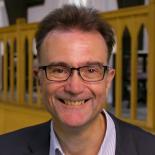
Salman Durrani is a Professor and Associate Director Education at the School of Engineering, Australian National University. He holds a PhD in Electrical Engineering from the University of Queensland and a BSc (First Class Honours) from the University of Engineering & Technology, Lahore, Pakistan. His research spans Internet of Things networks, satellite/UAV communications, machine learning applications in wireless systems, early wildfire detection, and backscatter communications. Current projects focus on terahertz communication security, UAV-assisted networks, and IoT-based environmental monitoring. His recent publications demonstrate strong emphasis on wireless security, terahertz technology optimization, UAV network design, and IoT applications for environmental protection. Technological innovations include novel beamforming techniques and lightweight authentication protocols. AI 2000 Internet of Things Most Influential Scholar (2020, 2022, 2023) IEEE ComSoc Asia Pacific Outstanding Paper Award (2016) Australian Council of Graduate Research Excellence Award (2019) ANU Vice-Chancellor's Awards for Supervision (2018) and Education (2012) He has supervised 15 PhD students to completion and secured $1.9M in research funding as chief investigator for six grants. Current projects include participation in the ANU Optus Bushfire Research Centre of Excellence.
Liliane Abboud is an Assistant Professor in Marketing at the University of Surrey, affiliated with the Surrey Business School and the Surrey Institute for People-Centred Artificial Intelligence (PAI). Her roles include teaching and research in marketing, with a focus on integrating technology and ethical practices into service environments. Education: She holds a PhD, MSc, and BBA, and is a Fellow of the Higher Education Academy (FHEA). Her research interests center on customer experience technology, wellbeing in services, power dynamics, and actor engagement strategies. Recent work explores collective ethics in academia and service ecosystems' management. Teaching includes postgraduate Services Marketing and undergraduate courses like Capturing Market Insights and Research in Marketing. She supervises PhD students Tariq Alwashah and Heer Paleja, focusing on AI-driven consumer decision-making and service technology. Awards: Certified Management and Business Educator (CMBE). Research highlights include studying low-power customers' wellbeing, third-party roles in service encounters, and strategies to enhance end-user experiences in complex service ecosystems. Labs/Teams: Active contributor to the Surrey Institute for People-Centred AI (PAI), exploring ethical AI applications in marketing and service systems.
Mesut Baran is a Professor in the Department of Electrical and Computer Engineering at North Carolina State University. He focuses on applying computer, control, and system analysis techniques to power system operation and planning, particularly in smart power distribution systems and distributed energy resource integration. His research emphasizes grid resilience, renewable energy integration, and advanced grid technologies. Education: Ph.D. in Electrical Engineering, University of California, Berkeley (1988) Master's in Electrical Engineering, Middle East Technical University, Turkey (1981) Bachelor's in Electrical Engineering, Middle East Technical University, Turkey (1979) Research interests include power electronics, smart grid technologies, distributed energy resource management, and grid resilience. His recent work addresses challenges in EV charging impacts, fault tolerance, and microgrid coordination. Baran has contributed to IEEE standards and received prestigious awards, including the IEEE Fellow designation (2010) and the William F. Lane Outstanding Teaching Award (2017). Publications highlight advancements in distribution system state estimation, fault mitigation, and microgrid management. Collaborations with industry (e.g., Strata Solar) and federal grants ($3.1M DOE award) underscore his applied research impact. He teaches foundational courses like ECE200 and advises on FREEDM Systems Center projects.
Zeljko Pantic is an Associate Professor in the Department of Electrical and Computer Engineering at North Carolina State University. He holds a Ph.D. from NC State (2013) and B.S./M.S. degrees from the University of Belgrade (1998/2007). Before joining NC State in 2019, he served as an Assistant Professor and Associate Director of the Electric Vehicle and Roadway Research Facility at Utah State University. He is actively involved in editorial roles for IEEE Transactions on Transportation Electrification and serves on the IEEE IAS Transportation Systems Committee. Education: Ph.D., Electrical Engineering, North Carolina State University (2013) M.S., Electrical Engineering, University of Belgrade (2007) B.S., Electrical Engineering, University of Belgrade (1998) Research: Dr. Pantic specializes in electrified transportation systems, wireless power transfer (WPT), power converter design, and DC microgrid technologies. His work addresses challenges in EV charging infrastructure, magnetic circuit optimization, and energy conversion principles for transportation electrification. Recent projects include autonomous wireless charging systems for UAVs, marine DC microgrids, and road-embedded DWPT solutions. Awards & Recognition: 2019 IEEE JESTPE Second Prize Paper Award 2017 Outstanding Teacher of the Year (USU) 2012 NC State Mentored Teaching Assistantship Award Advisees & Grants: While specific student names are not listed, Dr. Pantic has advised graduate students on projects spanning WPT systems, EV infrastructure, and battery management. His work has been supported by grants focusing on dynamic charging, magnetic materials, and autonomous observatory nodes. Labs & Facilities: He leads research at NC State's Electric Vehicle and Roadway facility, focusing on roadway-integrated wireless charging and high-power WPT systems. Collaborations include ocean observatory development and autonomous system integration.
Don B. Russell is a distinguished Professor of Electrical & Computer Engineering at Texas A&M University, holding the Harry E. Bovay, Jr. Chair and Regents Professor title. He is a member of the National Academy of Engineering and a Fellow of multiple professional organizations. His research focuses on power system automation, protection, and real-time diagnostics, with a strong emphasis on waveform analytics for fault detection and wildfire mitigation. Russell leads the internationally recognized Power System Automation Laboratory, supported by sponsors like the National Science Foundation and Texas A&M's Energy Resources Program. Educational Background: Ph.D., Electrical Engineering, University of Oklahoma (1975) M.E., Electrical Engineering, Texas A&M University (1971) B.S., Electrical Engineering, Texas A&M University (1970) Research Interests: Power system protection and control Incipient failure detection via waveform analysis Forensic engineering and wildfire prevention Engineering ethics and professionalism Smart grid technologies and automation Awards and Honors: IEEE Millennium Medal (2000) R&D 100 Award (Digital Feeder Monitor) Outstanding Engineering Achievement Award (NSPE) 6 Distinguished Achievement Award (Texas A&M) Grants and Sponsors: The lab collaborates with TXU Energy, NSF, ONR, and industry partners to advance power system reliability and safety. His work has led to commercialized technologies like high-impedance fault detection relays. Labs and Teams: The Power System Automation Lab specializes in real-time data capture and fault analysis, with global recognition for reducing wildfire risks and improving distribution network resilience.
Hui Cao is the John C. Malone Professor of Applied Physics, Professor of Physics, and Professor of Electrical Engineering at Yale University. Her research focuses on mesoscopic physics, complex photonic materials, nanophotonics, and biophotonics, with experimental investigations into unconventional lasers, coherent light control, and disordered photonic systems. She leads a lab exploring applications in speckle-based imaging, deep-tissue optics, and chip-scale spectrometers. Education: Ph.D. in Physics from Stanford University (1997). Awards include the William E. Lamb Medal (2015), Guggenheim Fellowship (2013), and fellowships from the American Physical Society and Optical Society of America (2007). Research emphasizes random lasers, microcavity lasers, and wavefront shaping to control light in diffusive media. Key innovations include a disordered photonic chip spectrometer and methods to suppress nonlinear instabilities in fiber amplifiers. Awards: 12 major honors including AAAS Fellowship and multiple endowed professorships Patents: 3 core photonic technologies including random laser imaging and fiber amplifier control systems Lab Activities: Developing novel optical devices leveraging disorder and nonlinear effects
Daniel C. Ludois is a Professor of Electrical and Computer Engineering at the University of Wisconsin–Madison, College of Engineering, where he also serves as the Research & Innovation Director for the Wisconsin Electric Machines and Power Electronics Consortium (WEMPEC). He holds the distinguished title of Jim and Anne Sorden Professor and is an H.I. Romnes Faculty Fellow, reflecting his leadership in research and education. Dr. Ludois earned his Ph.D. in Electrical Engineering from UW–Madison in 2012 and a B.S. in Physics from Bradley University in 2006. His research focuses on advancing power conversion technologies, particularly through electrostatic machines, capacitive wireless power transfer, wound field synchronous machines, and integrated power electronics. He teaches core courses such as ECE 411 (Introduction to Electric Drives), ECE 711 (Dynamics and Control of AC Drives), and ECE 713 (Electromagnetic Design of AC Machines). Power Electronics Wireless Power Transfer (Capacitive Coupling) Electrostatic Machines (Copper-Free, Steel-Free Motors) Sustainable Electric Machine Design High-Frequency and High-Voltage Power Conversion Brushless Excitation Systems Integration of Inductors and Capacitors His recent publications emphasize high-torque electrostatic machines using dielectric liquids, capacitive power transfer for aerial platforms and rotating machinery, and innovative inverter topologies. These works reflect a strong trend toward sustainable, high-performance electric machines that reduce reliance on rare-earth materials and traditional conductive components. Dr. Ludois has received numerous honors, including: NSF CAREER Award (2015) Moore Inventor Fellowship (2017) DOE InDEEP Competition Phase I & II Awards (2024) H.I. Romnes Faculty Fellow (2023) Vilas Faculty Early Career Investigator Award (2022) Wisconsin Alumni Research Foundation (WARF) Innovation Award (2012) He has mentored a highly entrepreneurial group of students, several of whom have founded startups such as H3X (Forbes 30 Under 30) and C-Motive Technologies, which he co-founded to commercialize electrostatic power conversion devices. His team has secured significant recognition, including multiple Grainger Power Engineering Fellowships and IEEE best paper awards. Dr. Ludois leads a vibrant research lab focused on next-generation power systems, with funding from federal agencies and industry partners, driving innovation in electric transportation, renewable energy, and industrial automation.
Nicola Paltrinieri is a Professor of Risk Assessment at the Department of Mechanical and Industrial Engineering, NTNU (Norway), and an Adjunct Professor at the University of Bologna (Italy). His expertise spans risk assessment, hydrogen technologies, process safety, and data-driven safety management. He holds Chartered Engineer and Chartered Scientist certifications and has served on editorial boards for journals like Safety Science and Journal of Risk Research . Education: PhD in Environmental, Safety and Chemical Engineering (University of Bologna, 2012) Master’s in Chemical and Process Engineering (University of Bologna, 2008) Research Interests: Focuses on hydrogen infrastructure safety, Natech accident analysis, risk-based inspection strategies, and AI integration in safety systems. His work emphasizes sustainable energy transitions and mitigating risks in emerging technologies like hydrogen. Key Projects (2022-2026): H2Glass : Decarbonizing glass and aluminum sectors via hydrogen HyInHeat : Hydrogen technologies for industrial heating HYDROGENi : Norwegian research center for hydrogen/ammonia Awards: Onsager Fellowship (2016–2021) Frank Lees Medal (2012) for safety-related publications Grants & Leadership: Head of NTNU Energy Team Hydrogen, coordinator for EU-funded projects like SUSHy , and active in international risk committees (e.g., EFCE, ESRA). His work bridges academia and industry, with over 8 PhD examinations supervised. Labs/Teams: Leads the NTNU Energy Team Hydrogen and collaborates on initiatives like SH2IFT-2 for safe hydrogen fuel handling. His research group focuses on AI-driven risk analysis and hydrogen infrastructure resilience.
Univ.-Prof. Dr. Dorothee Bohle is a Professor of Comparative Politics focusing on Southeast and Eastern Europe at the University of Vienna's Department of Political Science. Previously, she held positions at the European University Institute (Florence) and the Central European University (Budapest). She specializes in comparative political economy, institutional political economy, and welfare state analysis, with a focus on capitalist diversity in Europe's periphery. Education includes studies at Hamburg, Paris, and Berlin, followed by a PhD from the Free University of Berlin (2001). Her career includes roles as Dean of Post-Graduate Studies at the European University Institute and leadership in the Max Weber Programme. Research interests encompass the political economy of crises (e.g., financial crisis, pandemic responses), East Central Europe's socio-economic dynamics, housing regimes, and FDI-led growth models. She critiques neoliberal policies and explores resilience in peripheral economies. Her work bridges theoretical frameworks (e.g., varieties of capitalism) with empirical studies of EU integration impacts. She contributes to debates on democratic erosion and authoritarian trends in post-socialist states.
Dr. John Shepherd is an Associate Professor in the School of Science at RMIT University, specializing in applied mathematics, numerical and computational mathematics, and their applications in engineering and environmental systems. His research focuses on analyzing nonlinear problems, particularly in bioreactor dynamics, fluid mechanics, and nuclear energy policy. He has contributed to studies on anaerobic digestion models, reactor stability, and the role of nuclear energy in climate change mitigation. Education: Doctorate in Applied Mathematics (not explicitly stated in text, inferred from title). His work bridges theoretical analysis and real-world applications, such as optimizing methane production in waste digesters and evaluating environmental policies for nuclear energy. He actively supervises research projects, including the analysis of anaerobic digester dynamics. Dr. Shepherd’s publications span interdisciplinary topics, emphasizing the intersection of mathematics, engineering, and environmental science. He engages with policy discussions on nuclear energy’s role in decarbonization, advocating for its integration into clean energy strategies. His research highlights the importance of multiscale analysis in understanding complex systems like bioreactors and fluid flows. Collaborations involve industry and international institutions, reflecting his commitment to practical solutions for sustainability challenges.
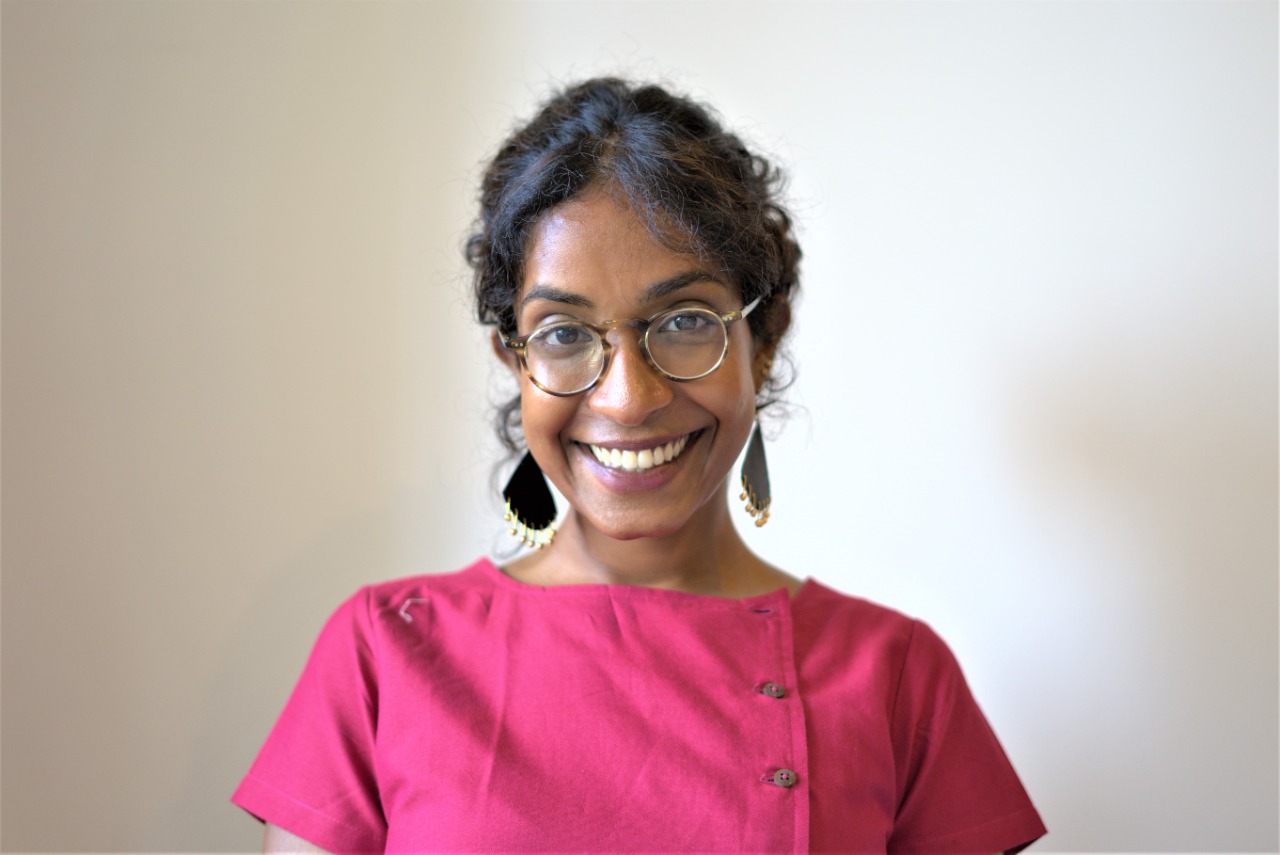
Tamara Fernando is an Assistant Professor in the Department of History at Stony Brook University, State University of New York (SUNY). She holds a PhD from the University of Cambridge (2022) and specializes in the environmental, labor, and scientific histories of the Indian Ocean world, with regional focus on Sri Lanka, the Persian Gulf, and South Asia during the 19th and 20th centuries. Her research interests include: Environmental History of the Indian Ocean Colonial Science and Knowledge Production Maritime Labor Systems Transregional and Global History History of Empire and Ecology Her current book projects are Shallow Blue Empire: Knowing the Littoral across the Indian Ocean , a transnational history of the pearling industry, and Submarine Futures: Science and Expertise in the Indian Ocean 1872–2004 , which explores shipwrecks, nuclear submarines, and deep-sea ports as sites of scientific and political engagement. Her work combines archival research with interdisciplinary methodologies from science and technology studies, environmental humanities, and postcolonial theory. Her recent publications in journals such as Past & Present , Comparative Studies in Society and History , and History of Science examine topics like the mapping of oyster beds, multispecies histories of pearl fisheries, and the entanglement of disease and labor under colonialism. She also engages in public scholarship through outlets like Hypocrite Reader , Himal Southasian , and Borderlines , where she writes on settler tourism, water governance, and colonial legacies in Sri Lanka. She has no listed scientific awards in the provided texts. She advises students, though no current advisees are named. Her collaborative work includes co-authored articles on mollusks and human difference, and evolution in South Asia. She is affiliated with: Stony Brook University, Department of History Personal website: tamarasfernando.com Twitter: @TamaraFernando3
Professor Alasdair McDonald holds the Chair in Renewable Energy Technology at the School of Engineering, University of Edinburgh . His work focuses on the integrated electrical-magnetic-mechanical modeling and design of large electrical machines for offshore renewable energy systems , particularly wind turbine powertrains . He previously served as a Lecturer, Senior Lecturer, and Reader in Wind Turbine Technology at the University of Strathclyde. Education: PhD in Structural Analysis of Low-Speed, High-Torque Generators (University of Edinburgh, 2008) MEng (Hons) in Integrated Electrical & Mechanical Engineering (University of Durham, 2004) Research Interests: Design of permanent magnet electrical machines for wind and marine energy Lightweight generator structures and advanced manufacturing methodologies Condition monitoring using SCADA and vibration data Cost of energy optimization for offshore renewables Projects: STREAM 1: Innovations in Forth/Tay Offshore Wind Clusters (EPSRC, 2025-2029) Wind2DC: Medium Voltage DC Power Take-Off Systems (EPSRC, 2023-2026) PV054: Modular Generators for Floating VAWTs (EPSRC & SeaTwirl AB, 2023) Media Contributions: Quoted in research media about floating hydrogen production systems (2025)
Dr. Yu Zhong is an Assistant Professor in the Department of Materials Science and Engineering at Cornell University's College of Engineering, where he leads the Yu Zhong Group. His research laboratory focuses on the design and synthesis of novel soft materials and nanomaterials for applications in electronics, energy, healthcare, and sustainability. As a principal investigator, he oversees a dynamic research team comprising postdoctoral associates, graduate students, and undergraduate researchers working on cutting-edge materials science projects. Dr. Zhong received his educational training at prestigious institutions, earning his B.S. in Chemistry from the University of Science and Technology of China (USTC) in 2011, followed by a Ph.D. in Chemistry from Columbia University in 2017 under the supervision of Prof. Colin Nuckolls. His doctoral research centered on designing contorted molecules for electronic and energy applications including organic solar cells, photodetectors, and gas sensors. He then conducted postdoctoral research at the University of Chicago in Prof. Jiwoong Park's group, where he worked on the design and synthesis of 2D polymers for ultrathin electronic circuits and energy conversion. Dr. Zhong's research program spans three primary directions: (1) the bottom-up synthesis of ultrathin nanoporous membranes using techniques like laminar assembly polymerization (LAP) for applications in water desalination, nanofiltration, and gas separation; (2) the study of transport behaviors in hybrid organic-inorganic 2D heterostructures created through layer-by-layer assembly for use in optical, electronic, and thermal management devices; and (3) the development of mixed ionic-electronic materials for bio-inspired and bioelectronic devices. His group employs advanced synthesis methods including organic/polymer synthesis, supramolecular and reticular chemistry, and 2D materials characterization to explore novel scientific phenomena and technological applications. An analysis of Dr. Zhong's recent publications reveals a strong focus on the synthesis and characterization of 2D polymers and organic-inorganic hybrid materials. His work bridges fundamental materials science with practical applications in energy conversion, electronics, and separation technologies. A notable trend is his development of innovative synthesis techniques like laminar assembly polymerization that enable precise control over material structure at the molecular level, leading to breakthroughs in areas such as lithium-ion transport, osmotic power generation, and ultra-narrowband photodetection. Dr. Zhong's scientific achievements have been recognized with several prestigious awards: Pegram Award for Meritorious Graduate Research, Columbia University (2016) Camille and Henry Dreyfus Postdoctoral Fellowship, Dreyfus Foundation (2016) Arun Guthikonda Memorial Fellowship, Columbia University (2015) Jack Miller Award for Excellence in Teaching, Columbia University (2014) As an advisor, Dr. Zhong mentors a diverse group of researchers including postdoctoral associate Qiyi Fang, multiple Ph.D. students (Yuhe Zhang, Kaushik Chivukula, William Xie), M.S. students, and undergraduate researchers. His group has secured funding for research on soft and nanomaterials, with projects spanning organic electronics, 2D materials synthesis, and biomimetic membranes. Dr. Zhong actively seeks motivated graduate students and postdoctoral fellows to join his research team, emphasizing the importance of interdisciplinary collaboration in advancing materials science. The Yu Zhong Group operates state-of-the-art laboratories in Bard Hall at Cornell University, equipped for organic synthesis, materials characterization, and device fabrication. The research team works collaboratively across disciplines, partnering with experts in physics, chemistry, and engineering to tackle complex challenges in materials science. Current projects focus on developing novel synthesis methodologies and exploring structure-property relationships in soft materials to enable next-generation electronic, energy, and healthcare technologies.
Patrik Hilber is a Professor at KTH Royal Institute of Technology, working in the Division of Electromagnetic Engineering and Fusion Science within the School of Electrical Engineering and Computer Science (EECS). He serves as Deputy Director of First and Second Cycle Education at EECS and heads the QED AM research group. He is also a board member of YH-electrical engineering. Research Interests: His research focuses on reliability engineering, asset management, maintenance optimization, and smart grid technologies in electric power systems. Key areas include transmission and distribution systems, dynamic line and transformer rating, wind power integration, multiobjective optimization, condition monitoring, and data quality in power systems. He applies advanced modeling and data-driven approaches to improve power system planning, operation, and resilience. The recent trends in his publications (2020–2025) highlight a strong emphasis on dynamic rating technologies (DLR and DTR), data quality and machine learning applications in outage analysis, reliability-centered planning for wind farms and distribution systems, and the integration of renewable energy and electric vehicles. His work bridges theoretical modeling with practical utility applications. Teaching and Academic Leadership: He is examiner and course responsible for several degree projects in electrical engineering, power systems, and energy innovation. He also teaches courses on reliability evaluation, asset management, and innovation in electric power engineering. Publications and Books: He has authored a book titled Reliability Analysis and Asset Management Applied to Power Distribution (2014) and a book chapter on cable segment replacement optimization. His scholarly output includes numerous peer-reviewed articles in leading journals such as IEEE Transactions on Power Systems , Reliability Engineering & System Safety , and Applied Energy . Education: He holds a Ph.D. (2008), a Licentiate degree (2005), and an M.Sc. (2000), all from KTH. He became a Docent (Associate Professor) in 2014.
Professor Simon Deakin is a Fellow and Director of Studies in Law at Peterhouse, University of Cambridge, specializing in private law (tort and contract law) and labour law. He teaches on the undergraduate Law Tripos and the LLM programme, with research focusing on law and economics, artificial intelligence, and historical legal analysis. Current research on Is Law Computable? and AI ethics Co-editor of computational law essay collection Developed Cambridge Leximetric Database for quantitative legal analysis His research spans tort law, corporate governance, digital economy regulation, and sustainability. Recent work explores the Anthropocene's legal implications and labour law's computational approaches. Scientific awards include the Cambridge Students' Union teaching prize (2023) He supervises doctoral students annually and contributes to legal education through widely used textbooks. As a Centre for Business Research (CBR) affiliate, he advances data-driven analysis of global labour regulation.