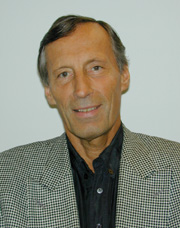
R. Jayakrishnan , a Professor in the Department of Civil and Environmental Engineering at the Samueli School of Engineering , University of California, Irvine, is a leading researcher in transportation systems engineering. Ph.D., University of Texas, Austin, Civil Engineering, 1992 M.S., University of Texas, Austin, Civil Engineering, 1987 B.S., Indian Institute of Technology, Madras, India, 1985 His research focuses on dynamic traffic assignment , urban traffic simulation , and real-time information systems to improve congested traffic corridors. He is developing advanced dynamic simulation-assignment models for urban traffic networks. Recent publications highlight his contributions to: Crowdsourced delivery optimization using decomposition heuristics Eco-driving algorithms with V2I communication Multi-furniture placement applications via augmented reality Subscription mobility services cost-benefit analysis Agent-based lane-changing coordination systems These works demonstrate his interdisciplinary approach combining transportation engineering, optimization algorithms, and emerging technologies like AR and connected vehicles.
Filip Sondej is a Researcher at the Department of Cognitive Science within the Faculty of Philosophy at Jagiellonian University in Krakow, Poland. His work bridges cognitive science and artificial intelligence, focusing on critical safety aspects of modern language models and multi-agent systems. His primary research interests include AI safety, LLM unlearning techniques, Chain-of-Thought faithfulness, AI conflict resolution, and digital sentience. Sondej's work addresses fundamental challenges in ensuring that increasingly powerful language models behave safely and align with human values. Analysis of Sondej's publication record reveals a strong interdisciplinary focus combining cognitive neuroscience methodologies with AI safety research. His recent work demonstrates a clear trajectory from traditional cognitive neuroscience investigations toward cutting-edge AI safety mechanisms, particularly in developing methods for removing unsafe behaviors from language models while maintaining functionality. The publications show sophisticated integration of neural network analysis with human cognitive processes. Sondej collaborates extensively with researchers including Anna Grabowska and Magdalena Senderecka, appearing as co-author on multiple publications in high-impact journals such as NeuroImage, Cerebral Cortex, and Journal of Cognitive Neuroscience. His research program bridges theoretical cognitive science with practical AI safety applications.
David Lentink is a Full Professor of Biomimetics at the University of Groningen , leading the Biomimetics Group within the Faculty of Science and Engineering. His research bridges biomechanics, aerospace engineering, and robotics, focusing on avian flight mechanics and bio-inspired aerial robotics . Previously at Stanford University, he pioneered the development of the Aerodynamic Force Platform and low-turbulence wind tunnels for animal flight studies. Education : PhD in Aerospace Engineering (Stanford), MSc in Mechanical Engineering (Delft), BSc in Mechanical Engineering (Delft). Research Interests : Understanding bird flight biomechanics to design advanced drones, studying evolutionary adaptations in flight, and developing biohybrid robots with real feathers. Scientific Awards : Dutch Academic Year Prize for the Flight Artists (2013). World Economic Forum Young Scientist under 40 (2013). Alumnus of the Young Academy of The Royal Netherlands Academy of Arts and Sciences. Labs : The Lentink Lab at Groningen’s Linnaeusborg campus integrates bird aviaries, wind tunnels, and maker spaces for bio-inspired robotics development. His team collaborates globally with institutions like Stanford, TU/e, and Sorama.
Dimitrios Konstantinidis serves as Associate Professor and Vice Chair for Undergraduate Studies in the Department of Civil and Environmental Engineering at the University of California, Berkeley. His expertise spans earthquake engineering and engineering mechanics with emphasis on seismic safety of critical infrastructure. Education: Ph.D. in Civil & Environmental Engineering, UC Berkeley (2008) M.S. in Civil & Environmental Engineering, UC Berkeley (2001) B.S. in Civil & Environmental Engineering, UC Berkeley (1999) His research integrates experimental testing and mathematical modeling to advance seismic isolation technologies, improve nonstructural component performance, and enhance resilience of hospitals and power plants. He pioneered methodologies for characterizing rubber bearings in protective systems, documented in his authoritative book Mechanics of Rubber Bearings for Seismic and Vibration Isolation . His work directly informs modern design codes through practical engineering solutions. Professor Konstantinidis secured a PEER grant for pioneering seismic isolation research in February 2025. He actively mentors graduate students through individual research courses (CIVENG 299/601) and teaches core subjects including Engineering Dynamics (CIVENG 126) and Earthquake Protective Systems (CIVENG 223).
Howard Chiang is a Professor of East Asian Languages & Cultural Studies at the University of California, Santa Barbara, holding the Lai Ho & Wu Cho-liu Endowed Chair in Taiwan Studies. He specializes in queer Asian Pacific history, transgender studies, and the history of the human sciences, particularly psychoanalysis and cultural psychiatry. His research bridges transnational and decolonial frameworks, examining how geopolitical contexts shape knowledge production. Chiang is the Editor-in-Chief of the Global Encyclopedia of LGBTQ History and editor of multiple book series, including Global Queer Asias . He has held leadership roles, such as Founding Chair of the Society of Sinophone Studies, and taught at NYU, the University of Warwick, and UC Davis. Chiang’s academic contributions include award-winning monographs like Transtopia in the Sinophone Pacific (2021) and After Eunuchs (2018), which explore transgender history and the transformation of gender norms in modern China. His current projects include The Confucian Freud , examining psychoanalysis in transpacific contexts. His work has been supported by grants from the National Humanities Center, Wellcome Trust, and others. Education: Ph.D., Princeton University Awards: Bonnie and Vern L. Bullough Book Award, Dartmouth Medal, Lambda Literary Award finalist Publications: Over 20 authored/edited volumes, including Keywords in Queer Sinophone Studies and Sinoglossia Grants: Arts and Humanities Research Council, Chiang Ching-kuo Foundation, George A. and Eliza Gardner Howard Foundation Chiang’s teaching focuses on critical Taiwan studies, medical humanities, and Sinophone studies. He directs UCSB’s Center for Taiwan Studies and actively contributes to interdisciplinary dialogues on queer theory, geopolitics, and decolonial methodologies.
Shie Mannor is a Professor at the Technion - Israel Institute of Technology in the Department of Electrical Engineering. He also holds a visiting professorship at Cornell-Tech in New York City and is affiliated with the Technion Machine Learning Center and the Grand Technion Energy Program . Key Research Interests: Machine Learning: Theory, algorithms, and applications to high-dimensional data and dynamics modeling. Reinforcement Learning and Markov Decision Processes: Adaptive control in large stochastic systems. Learning and control under uncertainty: Robust/stochastic optimization frameworks. Game Theory: Stochastic, dynamic, and network games applied to power markets and resource allocation. Multi-agent systems: Online learning and designing economic systems with optimal equilibria. Power Grid: Data-driven reliability, pricing, and decision-making in smart grids (e.g., EU-funded GARPUR project). Applications: Communication network optimization, mobile health, LDPC codes, and large-scale optimization problems. He actively seeks postdocs, graduate, and undergraduate students with strong mathematical or programming skills for projects in mobile phone programming and complex system optimization. Contact: shie.mannor@ee.technion.ac.il | Phone: ++972-4-829-3284
Enoch Yeung is an Associate Professor in the Department of Mechanical Engineering at the University of California, Santa Barbara (UCSB). His research focuses on systems biology, control systems, machine learning, and data mining, with a particular emphasis on understanding how mechanical forces in DNA regulate gene dynamics and cell fate. He leads projects on distributed biological computing, data-driven control architectures, and synthetic biological systems design, supported by funding from DARPA, NSF, and the U.S. Army. Yeung holds a PhD in Control and Dynamical Systems from the California Institute of Technology and a BS in Mathematics from Brigham Young University. His work integrates methods from DNA biophysics, synthetic biology, microfluidics, and control theory to study genome organization and cellular decision-making. Recent projects include the DARPA Living Foundries program, the NSF Molecular Programming Project, and the AFOSR Biological Research Initiative. He has received numerous awards, including the NSF Early CAREER Award and Young Investigator Award from the U.S. Army. His lab conducts interdisciplinary research, including a 2024 Summer Synthetic Biology Workshop for high school students. Key research themes include DNA supercoiling dynamics, biophysical feedback control in cells, and scalable Koopman operator methods for analyzing complex biological systems. Lab Focus: Biological Control Lab explores DNA mechanics, synthetic biology, and data-driven modeling. Grants & Collaborations: PI on multi-institutional programs involving PNNL, DARPA, and NSF. Advisory Roles: Served on panels for DARPA, NIST, and the National Defense University.
Dr. Ali Grami is an Associate Professor in the Department of Electrical, Computer and Software Engineering at Ontario Tech University, within the Faculty of Engineering and Applied Science. He holds a PhD in Electrical Engineering from the University of Toronto (1986), an MEng from McGill University (1980), and a BSc from the University of Manitoba (1978). His research focuses on satellite communications, digital transmission systems, and wireless networks. He has extensive industrial experience, including roles at Telesat Canada and Nortel Networks, and has contributed to pioneering projects like Canada's Anik-F2 Ka-Band satellite system. Dr. Grami has authored several textbooks, including Introduction to Digital Communications and Discrete Mathematics: Essentials and Applications . His work spans theoretical advancements (e.g., beamforming algorithms, spectrum access protocols) and practical applications in broadband satellite systems and cognitive radio networks. Awards include the United Nations TOKTEN Award (1995) and Nortel Award of Excellence (1989). He has designed academic programs at Ontario Tech, including the BEng, MASc/MEng, and PhD in ECE, and contributed to IT security programs. His teaching spans undergraduate and graduate courses in digital transmission, communication systems, and signal processing.
Inbar Fijalkow is a Full Professor at the National School of Electronics and Computer Science (ENSEA) within CY Cergy Paris University. She is a member of the ETIS Research Unit (UMR 8051), focusing on signal processing for wireless communications, optimization, and machine learning applications. Her research bridges theoretical advancements with practical implementation in emerging communication systems. Education & Career: PhD in Signal Processing from TelecomParisTech (1993) Postdoctoral Fellow at Cornell University (1994–1995) Professor at ENSEA since 1999 Former Head of ETIS Research Unit (2004–2013) Research Interests: Signal processing for wireless communications Optimization techniques in massive MIMO and NOMA systems Machine learning applications in communication systems Nonlinear effects mitigation in high-power amplifiers Community & Awards: Member of CoNRS Section 7 (National Committee for Scientific Research) Chevalier de l’Ordre National du Mérite (2015) Founder of the CY Alliance Women in Science Prize (2017) Recent Projects: Active in ANR-funded initiatives (e.g., EcoBioH2, AI4code) and EU projects (e.g., PERSEUS). Her work emphasizes sustainability and AI-driven communication systems. Teaching: Teaches signal processing and wireless communications at ENSEA. Supervises PhD students and master’s theses in communication systems and signal processing.
Dr. Nai-Ching Chi is a tenured Associate Professor at the University of Iowa College of Nursing. She is a nurse scientist and informaticist conducting pioneering research at the intersection of data science, technology, and health, focusing on dementia care, multimorbidity management, pain management, family caregiving, and healthy aging. PhD in Biobehavioral Nursing and Health Informatics (University of Washington) MS in Clinical Informatics and Patient-Centered Technologies (University of Washington) MSN (University of California, San Francisco) BSN (Tzu Chi University, Taiwan) Dr. Chi's research integrates advanced data science and AI to develop digital interventions for vulnerable populations. Notable projects include the PACE-app for dementia caregiver pain management, AI-powered nursing communication tools, and NIH-funded studies on multimorbidity patterns in Alzheimer's patients. Her work informs clinical guidelines and leverages predictive modeling for early risk detection. Recent publications focus on AI-driven pain assessment, machine learning in multimorbidity analysis, usability of caregiving apps, and rural age-friendly ecosystems. Her work spans comorbidity indices, geriatric pain, and health informatics innovations. National Academy of Medicine Emerging Leader Forum nomination NIA Butler-Williams Scholar NIA Aging Initiative MCCs Scholar Hospice and Palliative Nurses Association Emerging Leader Award Dr. Chi mentors students in aging research and technology-driven healthcare. She serves on editorial boards, grant review panels, and university committees, while volunteering in nursing homes and international medical missions.
Rasmus Bjørk is a Professor at the Technical University of Denmark (DTU) in the Department of Energy Conversion and Storage. His research focuses on advanced materials for energy systems, particularly in magnetocaloric and elastocaloric cooling, magnetic materials, and additive manufacturing for functional devices. His work contributes to the UN Sustainable Development Goals, especially in affordable and clean energy. PhD Supervision: Active projects include energy storage using topological spin textures, magnetothermal waste heat harvesting, and bio-magnetometers. Key Research Areas: Magnetic refrigeration, energy harvesting, and freeze-casting of functional materials. Recent advancements include 3D-printed elastocaloric coolers and studies on magnetoresistive devices. His team develops novel techniques for optimizing magnetic systems and energy conversion processes. He has published over 160 articles and led projects on regenerator design, magnetic bearings, and sensor technologies. Collaborations span multiple countries and disciplines. Notable contributions include pioneering work on freeze-casting for biomaterials and the MagTense micromagnetic framework. His research bridges theoretical modeling and practical applications in sustainable energy solutions.
Dr. Rico Ihle is an Associate Professor at Wageningen University's Agricultural Economics and Rural Policy Group, affiliated with the Wageningen School of Social Sciences (WASS). He holds a PhD from Georg-August-Universität Göttingen and is also an Adjunct Professor at Universitas Padjadjaran in Indonesia. His research focuses on achieving SDG2 (Zero Hunger), food system sustainability, and resilience in regions like the EU, Indonesia, and the Middle East. He teaches courses on econometrics, agricultural policy, and EU food systems, and has organized study tours to Slovakia, Morocco, Hungary, and Munich. He supervises 5 PhD students and advises numerous BSc/MSc students. Education & Career: PhD in Agricultural Economics, Georg-August-Universität Göttingen (Germany) Adjunct Professor at Universitas Padjadjaran (Indonesia) Elected Secretary General of the International Network for MBA Agribusiness and Commerce (AgriMBA) in 2024 Research Interests: Economic analysis of agricultural markets and food prices Effects of political conflict on food systems EU agricultural policy and sustainability transitions Food security and resilience in developing regions Quantitative methods including time-series econometrics Recent Work: His 2025 publications explore food waste reduction in school canteens and household resilience in West Africa. He also leads projects like ClimAgri4Ukraine for post-war agricultural recovery. He has co-authored over 100 conference contributions and serves as an associate editor for Food Security . Grants & Networks: Principal investigator for the Genetically Modified Food in Dutch Grocery Shelves project (COGEM) Member of the International Agricultural Trade Research Consortium (IATRC) Co-organizer of webinars on global food markets and Ukraine's agrarian policies Labs/Teams: Leads Work Package 4 of the e-AgriMBA project and collaborates with institutions like the Kyiv School of Economics and OECD.
James Dixon is a Professor and Director of Ecological Psychology at the University of Connecticut, where he leads the Department of Psychological Sciences and directs the Center for the Ecological Study of Perception & Action (CESPA). CESPA fosters interdisciplinary research across optics, acoustics, movement science, and nonlinear dynamics, establishing UConn as a pioneer in ecological psychology. Research Focus Dr. Dixon investigates the self-organizing principles underlying perception, action, and cognition, with emphasis on thermodynamic foundations of behavior. His work bridges psychology, physics, and complex systems theory: Self-organization in biological and non-living dissipative systems Fractal dynamics in cognitive processes Inter-entity coordination across scales End-directed evolution in complex systems Publication Trends His publications (2009-2016) converge on emergent phenomena in complex systems, with recurring themes of self-organization, entropy, and coordination dynamics. Recent work emphasizes thermodynamic principles in behavioral emergence, while earlier studies explore representational change and insight through nonlinear models. Leadership & Academic Environment As CESPA Director, he oversees collaborative research spanning 10+ specialties. The center’s ethos integrates ecological principles with physics and development, maintaining UConn’s legacy in perception-action science since its founding by J.J. Gibson.
Einar Hope is a renowned academic and policy expert with significant contributions to energy economics and competition policy. He held the position of Professor of Energy Economics at the Norwegian School of Economics and Business Administration from 1999 to 2005. Prior roles include Director of the Norwegian Competition Authority (1995–1999) and CEO of the Foundation for Research in Economics and Business Administration (1991–1995). His work focuses on the intersection of competition policy, regulatory frameworks, and energy markets, with international recognition in Northern Europe. Education: Graduated as siviløkonom (Norwegian economics degree). Research Interests: Einar’s scholarship spans energy economics, electric power grid policy, industrial organization, and the interplay between competition policy and sector-specific regulations. He emphasizes practical policy adjustments in deregulated markets, particularly in the context of European energy systems. His theoretical approaches and international case studies have influenced policy design in power grids. Key Achievements: Recipient of the Knight of the 1st Order of the Royal Norwegian St. Olav’s Order (2008) Shell Prize in Economics for petroleum research (1979) Professional Affiliations: President of the International Association for Energy Economics (2009) Member, Editorial Boards of the International Journal of the Economics of Business and Energy Journal Co-founder and former chairman of the Energy Forum, Bergen Member of Scientific Council, Nansen Environmental and Remote Sensing Center Labs/Teams: His work is associated with interdisciplinary teams addressing energy policy and competition dynamics, notably through collaborations with institutions like the Christian Michelsen Institute and the Central Bureau of Statistics, Norway.
Ying-Cheng Lai is a Regents' Professor in the School of Electrical, Computer and Energy Engineering at Arizona State University (ASU), where he has been a full-time faculty member since 2005. He holds affiliations with the Center for Biodiversity Outcomes and the Center for Biological Physics. Previously, he served as the Sixth Century Chair in Electrical Engineering at the University of Aberdeen (2009–2017) and returned to ASU as the ISS Endowed Professor (2014–present). His academic journey includes a BS and MS in Optical Engineering from Zhejiang University (1982–1985), followed by MS and PhD in Physics from the University of Maryland, College Park (1989–1992). He completed a postdoctoral fellowship in Biomedical Engineering at Johns Hopkins University School of Medicine (1992–1994). His research focuses on Nonlinear Dynamics and Chaos , Machine Learning applied to complex systems, Relativistic Quantum Chaos , Complex Networks , Mathematical Biology , and Theoretical Ecology . He explores topics such as quantum scars in Dirac materials, synchronization control in networks, and early warning signals for ecological tipping points. His work integrates data analysis techniques with interdisciplinary applications in healthcare, climate science, and cybersecurity. His recent publications highlight advancements in machine learning-driven predictions for critical transitions, quantum transport modeling in graphene, and cybersecurity strategies for power grids. These trends reflect his commitment to bridging theoretical physics with applied engineering solutions. Awards: Regents Professor (ASU's highest faculty honor, 2021) Vannevar Bush Faculty Fellowship (DoD, 2016) Corresponding Fellow of the Royal Society of Edinburgh (2018) Foreign Member of Academia Europaea (2020) Fellow of AAAS (2020) Fellow of the American Physical Society (1999) Ying-Cheng Lai has advised 24 PhD and 20 MS students, supported 15 postdocs, and secured funding from agencies like DOD (AFOSR, ARO, Navy-ONR), NSF, and the National Academies. His grants include projects on quantum billiard systems, sensor applications, and network resilience in multilayer ecological frameworks. He runs a research group focused on advanced topics in electrical engineering and interdisciplinary physics.