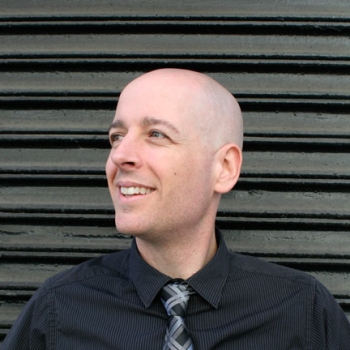
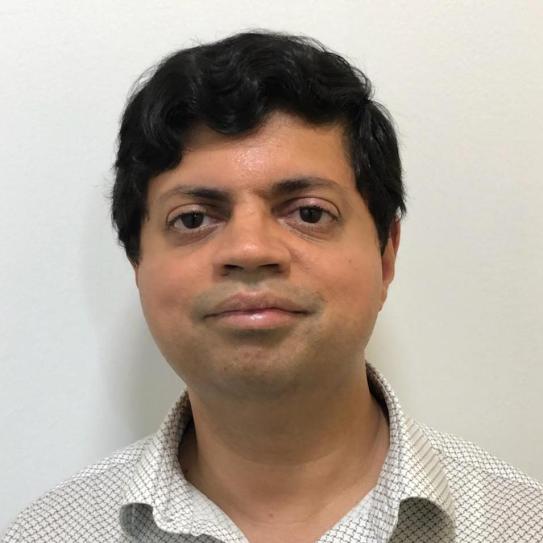
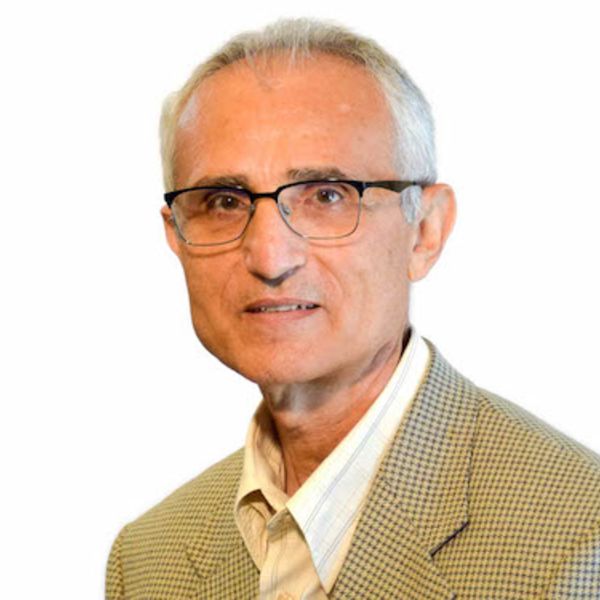
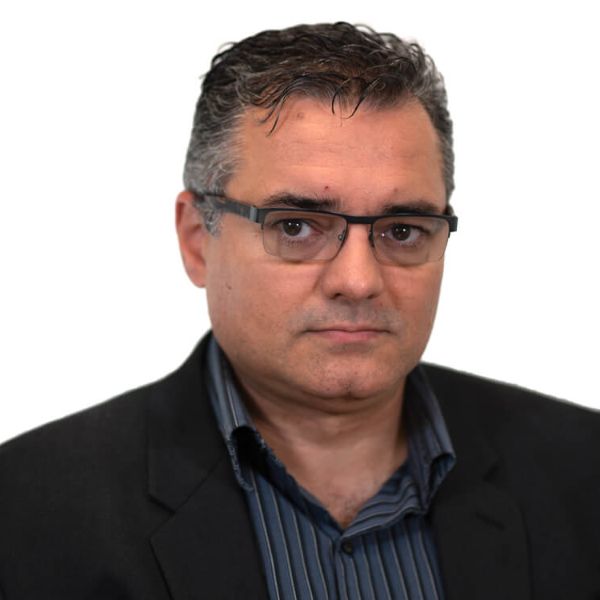
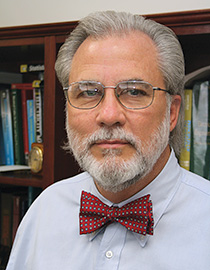
Salman Durrani is a Professor and Associate Director Education at the School of Engineering, Australian National University. He holds a PhD in Electrical Engineering from the University of Queensland and a BSc (First Class Honours) from the University of Engineering & Technology, Lahore, Pakistan. His research spans Internet of Things networks, satellite/UAV communications, machine learning applications in wireless systems, early wildfire detection, and backscatter communications. Current projects focus on terahertz communication security, UAV-assisted networks, and IoT-based environmental monitoring. His recent publications demonstrate strong emphasis on wireless security, terahertz technology optimization, UAV network design, and IoT applications for environmental protection. Technological innovations include novel beamforming techniques and lightweight authentication protocols. AI 2000 Internet of Things Most Influential Scholar (2020, 2022, 2023) IEEE ComSoc Asia Pacific Outstanding Paper Award (2016) Australian Council of Graduate Research Excellence Award (2019) ANU Vice-Chancellor's Awards for Supervision (2018) and Education (2012) He has supervised 15 PhD students to completion and secured $1.9M in research funding as chief investigator for six grants. Current projects include participation in the ANU Optus Bushfire Research Centre of Excellence.
Pietro Liò is Full Professor in the Department of Computer Science and Technology at the University of Cambridge, where he leads research in Artificial Intelligence and Computational Biology as part of the AI group and the Cambridge Centre for AI in Medicine. He holds additional affiliations as Fellow and Council member of Clare Hall College, member of Ellis (European Lab for Learning & Intelligent Systems), and member of Academia Europaea. Professor Liò earned dual PhDs in Complex Systems and Non Linear Dynamics from the University of Florence and in Theoretical Genetics from the University of Pavia, Italy. His educational background bridges theoretical computer science with biological sciences, forming the foundation for his interdisciplinary research approach. His research focuses on developing Artificial Intelligence and Computational Biology models to understand disease complexity and advance personalized medicine. Current work emphasizes Graph Neural Network modeling for integrating multi-scale, multi-omics, and multi-physics data; combining deep learning with mechanistic approaches; explainability in medical AI; and developing AI-based medical digital twins and personal decision support systems. His work spans from fundamental algorithm development to clinical applications, with particular emphasis on translating computational advances into medical solutions. Analysis of his recent publications reveals strong activity in geometric deep learning , explainable AI for healthcare , and multi-omics integration , with increasing focus on clinically applicable tools that maintain both predictive power and interpretability. Member of Academia Europaea Listed among Top Italian Scientists by VIA-Academy Professor Liò has mentored over 40 PhD students and postdoctoral researchers, including notable names such as Petar Velickovic, David Buterez, and Chaitanya Joshi. His research is supported through collaborations with the Cambridge Centre for AI in Medicine and various international partnerships. He serves on departmental committees including Student Complaints and Postdoc Mentoring, and has completed equality and diversity training essentials. He leads research within the Artificial Intelligence group at Cambridge, focusing on creating computational frameworks that bridge biological complexity with clinical applications through advanced machine learning techniques.
David Darts is a Global Network Associate Professor of the Arts at New York University's Steinhardt School of Culture, Education, and Human Development. He directs the Laboratory of the Future Present, an artistic research studio exploring speculative design and societal issues through interactive media. His work spans installations, curatorial projects, and public interventions addressing themes like personal space, environmental interaction, and decentralized digital collaboration. Education details are not explicitly provided, but his professional roles and projects indicate extensive involvement in academic and creative spheres. Research interests include interactive technology, public art, and speculative design. His notable projects include the Personal Space Suit (2024), PirateBox (2011–2019), and the Nomad Lab exhibition (2020). His exhibitions and projects have been featured in venues like Alserkal Avenue (Dubai), NYU Abu Dhabi, and the Conflux Festival (New York). Awards or grants are not mentioned, but his work has received international media coverage in outlets like New Scientist and Wired Italia . Advising and grants: While no formal advisees are listed, Darts has curated exhibitions and collaborative projects involving artists and researchers. His work often involves interdisciplinary teams, such as the Playable Sculpture project with multiple artists. Labs/Teams: Directs the Laboratory of the Future Present and collaborates with institutions like Baltan Laboratories and NYU Abu Dhabi.
Prashanth Krishnamurthy is a Research Scientist in the Department of Electrical and Computer Engineering at New York University Tandon School of Engineering. His research focuses on robotics, control systems, and cybersecurity, particularly in cyber-physical systems such as power grids and embedded devices. He holds a Ph.D. in Electrical Engineering from NYU. Key research areas include hardware security (e.g., detecting Trojans in chips), anomaly detection in critical infrastructure, and resilient control strategies for robotic systems. He has led or contributed to projects funded by the U.S. Department of Energy (DOE), Office of Naval Research (ONR), and others, including the Tracking Real-time Anomalies in Power Systems (TRAPS) initiative and hardware Trojan detection using short-term aging phenomena. Education: Ph.D., Electrical Engineering, NYU His work bridges theoretical advancements and practical implementations, such as developing FPGA-based testbeds for hardware security validation and creating AI-driven cybersecurity tools like the CRAKEN LLM agent. Collaborators include institutions like SRI International, Karlsruhe Institute of Technology, and the NYU Center for Cybersecurity. Grants include a $1.94M DOE grant for TRAPS and a $359K DURIP grant for hardware Trojan detection. His technical contributions span control systems, anomaly detection algorithms, and cybersecurity frameworks for embedded systems. He is actively involved in advancing secure cyber-physical systems through innovations in real-time monitoring, robust control mechanisms, and AI-augmented security solutions.
Mesut Baran is a Professor in the Department of Electrical and Computer Engineering at North Carolina State University. He focuses on applying computer, control, and system analysis techniques to power system operation and planning, particularly in smart power distribution systems and distributed energy resource integration. His research emphasizes grid resilience, renewable energy integration, and advanced grid technologies. Education: Ph.D. in Electrical Engineering, University of California, Berkeley (1988) Master's in Electrical Engineering, Middle East Technical University, Turkey (1981) Bachelor's in Electrical Engineering, Middle East Technical University, Turkey (1979) Research interests include power electronics, smart grid technologies, distributed energy resource management, and grid resilience. His recent work addresses challenges in EV charging impacts, fault tolerance, and microgrid coordination. Baran has contributed to IEEE standards and received prestigious awards, including the IEEE Fellow designation (2010) and the William F. Lane Outstanding Teaching Award (2017). Publications highlight advancements in distribution system state estimation, fault mitigation, and microgrid management. Collaborations with industry (e.g., Strata Solar) and federal grants ($3.1M DOE award) underscore his applied research impact. He teaches foundational courses like ECE200 and advises on FREEDM Systems Center projects.
Zeljko Pantic is an Associate Professor in the Department of Electrical and Computer Engineering at North Carolina State University. He holds a Ph.D. from NC State (2013) and B.S./M.S. degrees from the University of Belgrade (1998/2007). Before joining NC State in 2019, he served as an Assistant Professor and Associate Director of the Electric Vehicle and Roadway Research Facility at Utah State University. He is actively involved in editorial roles for IEEE Transactions on Transportation Electrification and serves on the IEEE IAS Transportation Systems Committee. Education: Ph.D., Electrical Engineering, North Carolina State University (2013) M.S., Electrical Engineering, University of Belgrade (2007) B.S., Electrical Engineering, University of Belgrade (1998) Research: Dr. Pantic specializes in electrified transportation systems, wireless power transfer (WPT), power converter design, and DC microgrid technologies. His work addresses challenges in EV charging infrastructure, magnetic circuit optimization, and energy conversion principles for transportation electrification. Recent projects include autonomous wireless charging systems for UAVs, marine DC microgrids, and road-embedded DWPT solutions. Awards & Recognition: 2019 IEEE JESTPE Second Prize Paper Award 2017 Outstanding Teacher of the Year (USU) 2012 NC State Mentored Teaching Assistantship Award Advisees & Grants: While specific student names are not listed, Dr. Pantic has advised graduate students on projects spanning WPT systems, EV infrastructure, and battery management. His work has been supported by grants focusing on dynamic charging, magnetic materials, and autonomous observatory nodes. Labs & Facilities: He leads research at NC State's Electric Vehicle and Roadway facility, focusing on roadway-integrated wireless charging and high-power WPT systems. Collaborations include ocean observatory development and autonomous system integration.
Don B. Russell is a distinguished Professor of Electrical & Computer Engineering at Texas A&M University, holding the Harry E. Bovay, Jr. Chair and Regents Professor title. He is a member of the National Academy of Engineering and a Fellow of multiple professional organizations. His research focuses on power system automation, protection, and real-time diagnostics, with a strong emphasis on waveform analytics for fault detection and wildfire mitigation. Russell leads the internationally recognized Power System Automation Laboratory, supported by sponsors like the National Science Foundation and Texas A&M's Energy Resources Program. Educational Background: Ph.D., Electrical Engineering, University of Oklahoma (1975) M.E., Electrical Engineering, Texas A&M University (1971) B.S., Electrical Engineering, Texas A&M University (1970) Research Interests: Power system protection and control Incipient failure detection via waveform analysis Forensic engineering and wildfire prevention Engineering ethics and professionalism Smart grid technologies and automation Awards and Honors: IEEE Millennium Medal (2000) R&D 100 Award (Digital Feeder Monitor) Outstanding Engineering Achievement Award (NSPE) 6 Distinguished Achievement Award (Texas A&M) Grants and Sponsors: The lab collaborates with TXU Energy, NSF, ONR, and industry partners to advance power system reliability and safety. His work has led to commercialized technologies like high-impedance fault detection relays. Labs and Teams: The Power System Automation Lab specializes in real-time data capture and fault analysis, with global recognition for reducing wildfire risks and improving distribution network resilience.
Hui Cao is the John C. Malone Professor of Applied Physics, Professor of Physics, and Professor of Electrical Engineering at Yale University. Her research focuses on mesoscopic physics, complex photonic materials, nanophotonics, and biophotonics, with experimental investigations into unconventional lasers, coherent light control, and disordered photonic systems. She leads a lab exploring applications in speckle-based imaging, deep-tissue optics, and chip-scale spectrometers. Education: Ph.D. in Physics from Stanford University (1997). Awards include the William E. Lamb Medal (2015), Guggenheim Fellowship (2013), and fellowships from the American Physical Society and Optical Society of America (2007). Research emphasizes random lasers, microcavity lasers, and wavefront shaping to control light in diffusive media. Key innovations include a disordered photonic chip spectrometer and methods to suppress nonlinear instabilities in fiber amplifiers. Awards: 12 major honors including AAAS Fellowship and multiple endowed professorships Patents: 3 core photonic technologies including random laser imaging and fiber amplifier control systems Lab Activities: Developing novel optical devices leveraging disorder and nonlinear effects
Daniel C. Ludois is a Professor of Electrical and Computer Engineering at the University of Wisconsin–Madison, College of Engineering, where he also serves as the Research & Innovation Director for the Wisconsin Electric Machines and Power Electronics Consortium (WEMPEC). He holds the distinguished title of Jim and Anne Sorden Professor and is an H.I. Romnes Faculty Fellow, reflecting his leadership in research and education. Dr. Ludois earned his Ph.D. in Electrical Engineering from UW–Madison in 2012 and a B.S. in Physics from Bradley University in 2006. His research focuses on advancing power conversion technologies, particularly through electrostatic machines, capacitive wireless power transfer, wound field synchronous machines, and integrated power electronics. He teaches core courses such as ECE 411 (Introduction to Electric Drives), ECE 711 (Dynamics and Control of AC Drives), and ECE 713 (Electromagnetic Design of AC Machines). Power Electronics Wireless Power Transfer (Capacitive Coupling) Electrostatic Machines (Copper-Free, Steel-Free Motors) Sustainable Electric Machine Design High-Frequency and High-Voltage Power Conversion Brushless Excitation Systems Integration of Inductors and Capacitors His recent publications emphasize high-torque electrostatic machines using dielectric liquids, capacitive power transfer for aerial platforms and rotating machinery, and innovative inverter topologies. These works reflect a strong trend toward sustainable, high-performance electric machines that reduce reliance on rare-earth materials and traditional conductive components. Dr. Ludois has received numerous honors, including: NSF CAREER Award (2015) Moore Inventor Fellowship (2017) DOE InDEEP Competition Phase I & II Awards (2024) H.I. Romnes Faculty Fellow (2023) Vilas Faculty Early Career Investigator Award (2022) Wisconsin Alumni Research Foundation (WARF) Innovation Award (2012) He has mentored a highly entrepreneurial group of students, several of whom have founded startups such as H3X (Forbes 30 Under 30) and C-Motive Technologies, which he co-founded to commercialize electrostatic power conversion devices. His team has secured significant recognition, including multiple Grainger Power Engineering Fellowships and IEEE best paper awards. Dr. Ludois leads a vibrant research lab focused on next-generation power systems, with funding from federal agencies and industry partners, driving innovation in electric transportation, renewable energy, and industrial automation.
Dr. Hak-Keung Lam is a Reader in the Department of Engineering at King's College London, part of the Faculty of Natural, Mathematical & Engineering Sciences. He holds an IEEE Fellowship and has been a Clarivate Web of Science Highly Cited Researcher since 2018. His research focuses on fuzzy control systems, neural networks, stability analysis, and their applications in biomedical and engineering domains. Education: Dr. Eng. (2000), B. Eng. (1995), both from Hong Kong Polytechnic University. Research Interests: Fuzzy modeling, neural network-based control, computational intelligence, machine learning, and biomedical applications such as ECG/EEG signal classification. His work bridges theoretical advancements with practical implementations in robotics, autonomous systems, and healthcare technology. Publications: Over 480 publications (as of 2023) in top-tier journals and conferences, with a focus on control systems, fuzzy logic, and intelligent systems. Recent work includes fault-tolerant control, cyber-physical systems, and explainable AI. Awards: IEEE Fellow (2019), 1st Place in PhysioNet Computing in Cardiology Challenge (2022). Grants/Projects: Active projects include fuzzy control system stabilization, autonomous robots in healthcare environments, and networked control of robotic systems. Labs/Teams: Center for Robotics Research, contributing to solutions for societal challenges through robot-centric approaches.
Professor Alasdair McDonald holds the Chair in Renewable Energy Technology at the School of Engineering, University of Edinburgh . His work focuses on the integrated electrical-magnetic-mechanical modeling and design of large electrical machines for offshore renewable energy systems , particularly wind turbine powertrains . He previously served as a Lecturer, Senior Lecturer, and Reader in Wind Turbine Technology at the University of Strathclyde. Education: PhD in Structural Analysis of Low-Speed, High-Torque Generators (University of Edinburgh, 2008) MEng (Hons) in Integrated Electrical & Mechanical Engineering (University of Durham, 2004) Research Interests: Design of permanent magnet electrical machines for wind and marine energy Lightweight generator structures and advanced manufacturing methodologies Condition monitoring using SCADA and vibration data Cost of energy optimization for offshore renewables Projects: STREAM 1: Innovations in Forth/Tay Offshore Wind Clusters (EPSRC, 2025-2029) Wind2DC: Medium Voltage DC Power Take-Off Systems (EPSRC, 2023-2026) PV054: Modular Generators for Floating VAWTs (EPSRC & SeaTwirl AB, 2023) Media Contributions: Quoted in research media about floating hydrogen production systems (2025)
Dr. Yu Zhong is an Assistant Professor in the Department of Materials Science and Engineering at Cornell University's College of Engineering, where he leads the Yu Zhong Group. His research laboratory focuses on the design and synthesis of novel soft materials and nanomaterials for applications in electronics, energy, healthcare, and sustainability. As a principal investigator, he oversees a dynamic research team comprising postdoctoral associates, graduate students, and undergraduate researchers working on cutting-edge materials science projects. Dr. Zhong received his educational training at prestigious institutions, earning his B.S. in Chemistry from the University of Science and Technology of China (USTC) in 2011, followed by a Ph.D. in Chemistry from Columbia University in 2017 under the supervision of Prof. Colin Nuckolls. His doctoral research centered on designing contorted molecules for electronic and energy applications including organic solar cells, photodetectors, and gas sensors. He then conducted postdoctoral research at the University of Chicago in Prof. Jiwoong Park's group, where he worked on the design and synthesis of 2D polymers for ultrathin electronic circuits and energy conversion. Dr. Zhong's research program spans three primary directions: (1) the bottom-up synthesis of ultrathin nanoporous membranes using techniques like laminar assembly polymerization (LAP) for applications in water desalination, nanofiltration, and gas separation; (2) the study of transport behaviors in hybrid organic-inorganic 2D heterostructures created through layer-by-layer assembly for use in optical, electronic, and thermal management devices; and (3) the development of mixed ionic-electronic materials for bio-inspired and bioelectronic devices. His group employs advanced synthesis methods including organic/polymer synthesis, supramolecular and reticular chemistry, and 2D materials characterization to explore novel scientific phenomena and technological applications. An analysis of Dr. Zhong's recent publications reveals a strong focus on the synthesis and characterization of 2D polymers and organic-inorganic hybrid materials. His work bridges fundamental materials science with practical applications in energy conversion, electronics, and separation technologies. A notable trend is his development of innovative synthesis techniques like laminar assembly polymerization that enable precise control over material structure at the molecular level, leading to breakthroughs in areas such as lithium-ion transport, osmotic power generation, and ultra-narrowband photodetection. Dr. Zhong's scientific achievements have been recognized with several prestigious awards: Pegram Award for Meritorious Graduate Research, Columbia University (2016) Camille and Henry Dreyfus Postdoctoral Fellowship, Dreyfus Foundation (2016) Arun Guthikonda Memorial Fellowship, Columbia University (2015) Jack Miller Award for Excellence in Teaching, Columbia University (2014) As an advisor, Dr. Zhong mentors a diverse group of researchers including postdoctoral associate Qiyi Fang, multiple Ph.D. students (Yuhe Zhang, Kaushik Chivukula, William Xie), M.S. students, and undergraduate researchers. His group has secured funding for research on soft and nanomaterials, with projects spanning organic electronics, 2D materials synthesis, and biomimetic membranes. Dr. Zhong actively seeks motivated graduate students and postdoctoral fellows to join his research team, emphasizing the importance of interdisciplinary collaboration in advancing materials science. The Yu Zhong Group operates state-of-the-art laboratories in Bard Hall at Cornell University, equipped for organic synthesis, materials characterization, and device fabrication. The research team works collaboratively across disciplines, partnering with experts in physics, chemistry, and engineering to tackle complex challenges in materials science. Current projects focus on developing novel synthesis methodologies and exploring structure-property relationships in soft materials to enable next-generation electronic, energy, and healthcare technologies.
Patrik Hilber is a Professor at KTH Royal Institute of Technology, working in the Division of Electromagnetic Engineering and Fusion Science within the School of Electrical Engineering and Computer Science (EECS). He serves as Deputy Director of First and Second Cycle Education at EECS and heads the QED AM research group. He is also a board member of YH-electrical engineering. Research Interests: His research focuses on reliability engineering, asset management, maintenance optimization, and smart grid technologies in electric power systems. Key areas include transmission and distribution systems, dynamic line and transformer rating, wind power integration, multiobjective optimization, condition monitoring, and data quality in power systems. He applies advanced modeling and data-driven approaches to improve power system planning, operation, and resilience. The recent trends in his publications (2020–2025) highlight a strong emphasis on dynamic rating technologies (DLR and DTR), data quality and machine learning applications in outage analysis, reliability-centered planning for wind farms and distribution systems, and the integration of renewable energy and electric vehicles. His work bridges theoretical modeling with practical utility applications. Teaching and Academic Leadership: He is examiner and course responsible for several degree projects in electrical engineering, power systems, and energy innovation. He also teaches courses on reliability evaluation, asset management, and innovation in electric power engineering. Publications and Books: He has authored a book titled Reliability Analysis and Asset Management Applied to Power Distribution (2014) and a book chapter on cable segment replacement optimization. His scholarly output includes numerous peer-reviewed articles in leading journals such as IEEE Transactions on Power Systems , Reliability Engineering & System Safety , and Applied Energy . Education: He holds a Ph.D. (2008), a Licentiate degree (2005), and an M.Sc. (2000), all from KTH. He became a Docent (Associate Professor) in 2014.
Lisa Wills serves as Assistant Professor of Computer Science at Duke University's Trinity College of Arts & Sciences and holds a joint appointment in Electrical and Computer Engineering at the Pratt School of Engineering since 2019. Her research bridges computer architecture and domain-specific applications, with a focus on hardware acceleration for computationally intensive fields. Dr. Wills earned her Ph.D. from Columbia University in 2014. Her academic journey reflects a deep commitment to advancing hardware-software co-design methodologies for real-world computational challenges. Her research centers on developing efficient hardware accelerators for big data analytics, particularly in genomics, graph processing, and database systems. She pioneers frameworks that simplify accelerator deployment while tackling critical bottlenecks in genomic data analysis, protein structure prediction, and privacy-preserving computing. Current work focuses on hardware-aware machine learning systems and energy-efficient architectures for emerging AI applications. Analysis of her publication record reveals a clear trajectory: from foundational work in database processing units (2014-2016) to specialized genomic accelerators (2019-2021), then evolving toward ML-enhanced design automation (2022-2023) and cutting-edge architectural abstractions (2024-2025). Her research consistently targets the intersection of hardware efficiency and domain-specific computational demands, with increasing emphasis on AI/ML workloads. Google ML and Systems Junior Faculty Award (2025) Dr. Wills actively mentors doctoral students including Chris Kjellqvist (lead architect of Beethoven accelerator framework), Mason Ma (PyTFHE FHE framework), and Mansi Choudhary (COCOSSim accelerator simulator). Her research is supported by significant grants including the NSF AI Institute: Athena ($20M, 2021-2027), Meta-funded ProSE accelerator project (2023-2026), and NSF CAREER award (2021-2026), totaling over $25M in active funding. She directs the APEX Lab (Application-driven Programmable Efficient Accelerated Systems), which develops open-source frameworks like Beethoven for FPGA/ASIC accelerator deployment and focuses on lowering barriers for non-hardware researchers to leverage custom acceleration in genomics, AI, and big data applications.
Dr. Hooman Foroughmand Araabi is a Senior Lecturer in Urban Planning and Design at the University of the West of England (UWE) , affiliated with the Faculty of Environment and Technology and the Department of Architecture and the Built Environment . His work bridges critical theory and creative urban design, focusing on the alignment of criticality and creativity to enhance public spaces. Research Interests: Urban design theory, inclusivity in the built environment, decolonising urbanism, beauty in urban design, and governance of design. He also explores urbanism in Iran and the Middle East, emphasizing sociopolitical frameworks and localized design knowledge. Publication Trends: His 15 most recent articles (2011–2025) highlight themes like urban design theory, critical methodologies, participatory design, and regional urbanism. Notably, he develops a Deleuzoguattarian approach for urban design and examines the ethics of beauty in public spaces.