Jens Lienig has been a Professor at Technische Universität Dresden since 2002, where he directs the Chair of Development and Design of Precision Engineering and Electronics. His research spans Electronic Design Automation (EDA), electromigration analysis, 3D IC design, constraint-driven methodologies, and precision device development. He holds memberships in IEEE, VDE/VDI GMM, and technical committees, and has led conferences like ISPD 2021 as General Chair. Research interests focus on: Reliability Engineering : Electromigration-aware IC design, thermal/stress modeling in interconnects. Advanced Design Automation : 3D physical design algorithms, analog layout generators, constraint propagation. Precision Devices : MEMS sensors, peristaltic pumps, SAW motors, pyroelectric detectors. Recent articles (2019–2025) emphasize electromigration robustness, aerosol sensor signal processing, and open-source EDA tools. Over 15 doctoral students have completed under his supervision, including dissertations on electromigration, MEMS, and infrared sensors.
Matthew Goeckner is a Professor at the University of Texas at Dallas, with appointments in the Department of Physics (School of Natural Sciences and Mathematics) and affiliations in Electrical Engineering, Mechanical Engineering, Materials Science and Engineering, and Science and Mathematics Education (all within the Erik Jonsson School of Engineering and Computer Science). He is an active researcher, educator, and administrator, contributing significantly across disciplines. His educational background includes a Ph.D. in Physics from the University of Iowa (1990), a Postdoctoral Fellowship at the University of Wisconsin’s Engineering Research Center for Plasma Aided Manufacturing (1994), an M.S. in Physics from UCLA (1984), and dual B.S. degrees in Physics and Mathematics from Southern Illinois University (1983 and 1982, respectively). Goeckner's research focuses on low-temperature plasmas, particularly their complex chemical dynamics in industrial applications such as semiconductor etching and deposition. He emphasizes experimental validation of plasma models, identifying limitations in electron energy distributions and reaction databases. His work bridges fundamental plasma physics with engineering applications. In parallel, he is a leader in science and engineering education, having restructured curricula, improved student success metrics (including GPA increases and reduced withdrawal rates), and championed active learning and metacognitive development across STEM programs at UTD. His recent publications (2024) reflect ongoing innovation in plasma diagnostics, machine learning for plasma prediction, and power analysis in moderate-pressure discharges—showcasing a sustained research trajectory focused on understanding and controlling complex plasma systems. These works span experimental methods, computational modeling, and real-world applicability in industrial processing. Fellow of the American Vacuum Society (2016) UT System Regent's Teaching Award (2013) UTD President's Teaching Award (2012) Outstanding Service Award, Jonsson School (2007) William C. Ballowe Sr. Award (1982) Goeckner has advised numerous M.S. and Ph.D. students in Mechanical and Electrical Engineering and continues to mentor postdoctoral scholars. He has led major educational initiatives, including curriculum mapping for STEM courses and the development of a successful freshman seminar adopted university-wide. His administrative service includes interim and associate head roles in Mechanical Engineering and leadership in rebuilding the Mathematical Sciences department. He has also overseen the construction of new teaching laboratories and facilities. He is affiliated with researchers at UTD and local community colleges and has delivered numerous invited talks internationally on plasma chemistry and nanotube growth. His work is supported by collaborative projects and service on state and national education committees, reflecting his broad impact on both research and academic policy.
Nicola Delmonte is an Associate Professor in the Department of Engineering and Architecture at the University of Parma, Italy. His academic and research career has been centered on power electronics, renewable energy systems, smart grids, and the reliability of electronic components, with applications in energy conversion and IoT technologies. PhD in Electronic Engineering, University of Parma (2003–2005) Master Degree in Electronic Engineering, University of Parma (1995–2002) His research interests focus on the design, modeling, and reliability of power electronic systems for renewable energy integration. He has led and contributed to numerous research projects including the EU-funded H2020 Sharc25, MARINET’s MORE project on ocean energy, and regional initiatives like FIL 2014 on DC Nano-Smart-Grids. His work bridges theoretical modeling with practical innovation, including the development of energy-harvesting piers and wireless monitoring systems for agriculture. The recent publications reflect a strong trend in energy systems modeling, thermal management of power electronics, and advanced instrumentation. Key themes include FEM-based thermal design, adaptive control for battery charging, laboratory-scale geophysical imaging, and integrated building energy models. These works span disciplines such as power electronics, renewable energy, and applied physics. Best Poster Award at GE 2012 for thermal modeling of converters 2nd place in the 2011 International Competition on Renewable Energy for Smaller Islands with the 'e-piers' concept Delmonte has supervised research teams and served as principal investigator on multiple grants, including projects funded by the European Commission, Regione Emilia Romagna, and national research programs (PRIN, COFIN). He teaches a range of courses in electronics and energy conversion across undergraduate and graduate programs in Computer, Electronic, and Communications Engineering, as well as Mechanical Engineering. He is a member of IEEE and the Order of Engineers of Parma, and has acted as a reviewer for journals such as Microelectronics Reliability and Transactions on Device and Materials Reliability. He is involved in experimental and applied research labs focusing on power electronics, smart grids, and renewable energy systems. His team has developed platforms for high-frequency characterization of semiconductor modules and testing of ocean energy harvesting devices. Current efforts include the development of 3D-printed cooling solutions and intelligent control systems for modular power converters.
Khai Ngo is a Professor in the Electrical and Computer Engineering Department at Virginia Tech and a member of the Center for Power Electronics Systems (CPES). His research focuses on high-density integration and packaging of power electronics components for sustainable energy systems. Education: B.S. in Electrical and Electronics Engineering, California State Polytechnic University, Pomona (1979) M.S. in Electrical and Electronics Engineering, California Institute of Technology (1980) Ph.D. in Electrical and Electronics Engineering, California Institute of Technology (1984) His work targets integration technologies for power electronics systems through three building blocks: AIPEM, PIPEM, and FIPEM modules , with a focus on electro-magneto-thermal structures, thermal reliability, and wide bandgap semiconductors. Research spans high-frequency converter design, distributed magnetic structures, and MEMS-based integration. Teaching includes courses on power electronics, energy systems, packaging, and integrated product-process design. He has developed design-oriented models for high-temperature electronics (up to 250°C) and pioneered magnetic materials with low loss for MHz-range converters. Scientific Recognition: IEEE Fellow
Prof. Volker Hinrichsen is a Full Professor at Technische Universität Darmstadt, leading the High-Voltage Laboratories in the Department of Electrical Engineering and Information Technologies. He has held this role since 2001, focusing on advancing high-voltage technologies and their applications. Prior to his academic position, he spent 12 years at Siemens AG in R&D roles, including Director of Surge Arrester Development and high-voltage testing engineer. His research emphasizes lightning and overvoltage protection, novel insulation materials, high-voltage circuit breaker performance, and condition monitoring systems. Key areas include MO varistor energy handling, superconducting system switching, and sensor development for arc rotation and field emission measurements. He also specializes in high-current testing methodologies involving power semiconductors. Prof. Hinrichsen’s career spans over 30 years in high-voltage engineering, bridging industry and academia. His leadership in TU Darmstadt’s High-Voltage Laboratories ensures cutting-edge contributions to electrical power system reliability and safety.
Bogdan M. Wilamowski is a Professor and Director of the Alabama Nano/Micro Science and Technology Center (ANMSTC) at Auburn University's College of Engineering, Department of Electrical and Computer Engineering. He holds the Alumna Professor title and leads cutting-edge research in microelectronics and intelligent systems. MS in Computer Engineering, 1966 PhD in Neural Computing, 1970 Dr. Habil. in Integrated Circuit Design, 1977 Full Professor title awarded by the President of Poland, 1987 His research spans semiconductor devices and sensors, analog and mixed-signal processing, and computational intelligence. He has pioneered work in neural networks, intelligent control, and microelectronic fabrication, with applications in industrial electronics and embedded systems. His academic leadership includes editorial roles in top IEEE journals and co-editing the CRC Book Series in Industrial Electronics. The recent publications highlight a sustained focus on analog signal processing, neural networks, microelectronic fabrication, and computational intelligence. These works reflect a strong integration of theoretical development with practical engineering applications, particularly in circuit design, sensor systems, and intelligent automation. The trend shows continued innovation in both analog electronics and AI-driven microsystems. IEEE Fellow Honorary Member of the Hungarian Academy of Sciences Commander Cross of the Order of Merit of the Republic of Poland (2008) Dr. Wilamowski has advised approximately 150 graduate students and has authored 9 books and over 300 refereed publications. He has held editorial leadership as Editor-in-Chief of IEEE Transactions on Industrial Electronics (2008–2010) and IEEE Transactions on Industrial Informatics (2011–2013). His research has been supported by extensive collaborations and institutional leadership, including directing research centers at Auburn and Idaho. He has also led major professional initiatives within IEEE, contributing significantly to the global engineering community. He leads the Alabama Nano/Micro Science and Technology Center (ANMSTC), a multidisciplinary research hub focused on advancing microelectronics, nanotechnology, and intelligent systems. The center fosters collaboration across academia and industry, supporting innovation in semiconductor devices, analog circuits, and computational intelligence applications.
Diego Ramirez Muñoz is a full Professor in the Department of Electronic Engineering at the School of Engineering, University of Valencia, Spain. His work is centered on advanced electronic instrumentation, sensor design, and signal conditioning systems, with a focus on magnetoresistive and perovskite-based technologies. He is a key member of the LEII (Laboratory of Industrial Electronics and Instrumentation) research group. Research Interests: His research spans electronics technology, sensor development, current and power measurement, analog front-end design, and sensor systems for extreme environments such as space. He has made significant contributions to the understanding and application of tunnel magnetoresistance (TMR), giant magnetoresistance (GMR), and perovskite materials in photodetection. His work bridges fundamental device physics with practical engineering applications in energy, industrial monitoring, and IoT. Publication Trends: Over the past decade, his publications demonstrate a consistent focus on magnetoresistive sensors, temperature compensation techniques, wireless sensor networks, and novel analog conditioning circuits. Recent works (2024) extend into perovskite photodetection and cooperative engineering education, reflecting both technical depth and pedagogical engagement. Scientific Awards: No awards explicitly mentioned in the provided text. Advising and Grants: He supervised the PhD thesis of Dr. Enrique J. Dede García-Santamaría. While specific grants are not listed, his long-standing research output and leadership in the LEII group suggest sustained project funding. His involvement in educational innovation projects indicates participation in teaching-focused grants. Labs and Teams: He is affiliated with the LEII (Laboratory of Industrial Electronics and Instrumentation), a research group focused on industrial electronics, sensor systems, and instrumentation. The group develops smart sensors, wireless networks, and robust electronic systems for industrial and space applications.
Jesus A del Alamo is the Donner Professor and Mac Vicar Faculty Fellow in the Department of Electrical Engineering and Computer Science (EECS) at the Massachusetts Institute of Technology (MIT), a position he has held since joining the faculty. His primary affiliation is with the School of Engineering. As part of his roles, he leads the Xtreme Transistors Group, a research team focused on advancing semiconductor and nanoelectronics technologies. His research interests span semiconductor devices, nanoelectronics, quantum transport phenomena, and ferroelectric materials. He has pioneered work in ultra-scaled transistors, III-V semiconductor integration, and memristive systems. Key areas include vertical nanowire tunneling transistors, ferroelectric field-effect transistors (FeFETs), and neuromorphic hardware leveraging ionic synapses. Dr. del Alamo has been recognized for his contributions with prestigious titles such as the Donner Professorship and Mac Vicar Fellowship, as well as the 2019 MRS Fellow distinction. His work intersects device physics with practical applications in high-frequency electronics, low-power computing, and energy-efficient memory systems. His research outputs reflect a strong focus on semiconductor scaling, with recent studies addressing challenges in nanoscale device fabrication and reliability. He has collaborated extensively on initiatives to reassert U.S. leadership in microelectronics through academic-industry partnerships, as highlighted in papers like "Reasserting U.S. Leadership in Microelectronics" (2022). As an educator and mentor, he has advised numerous graduate students and postdoctoral researchers in semiconductor device engineering. His contributions to the field are further reflected in his editorial roles, including serving as Editor-in-Chief of IEEE Electron Device Letters (EDL).
Professor Bongtae Han is a Keystone Professor in the Department of Mechanical Engineering at the University of Maryland, College Park, and directs the Laboratory for Optomechanics and Micro/nano Semiconductor/Photonics Systems (LOMSS). His research focuses on semiconductor packaging reliability, experimental mechanics, and advanced material characterization. He holds affiliations with the Brain and Behavior Institute and has expertise in thermal management, moisture diffusion, and failure prognostics. Education: Ph.D. (Virginia Tech, 1991), M.S. (1983) and B.S. (1981) in Energy Resources Engineering from Seoul National University. Research interests include advanced material characterization, reliability analysis of semiconductor packaging, adhesion analysis at critical interfaces, and experimental micro/nano-mechanics. His work spans automotive electronics, LED reliability, and cryogenic cooling systems. He has pioneered techniques like FBG sensor-based material testing and hybrid modeling for uncertainty analysis. Notable awards include Fellowships from SEM and ASME, and recognition for contributions to LED technologies and packaging reliability. His lab (LOMSS) addresses design challenges for advanced semiconductor systems, emphasizing warpage prediction and material property characterization. Key Projects: Warpage prediction models, fiber Bragg grating sensor systems, and thermal analysis of high-power LEDs.
Dr. Jens Tomm is a Senior Researcher at the Max Born Institute for Nonlinear Optics and Short Pulse Spectroscopy (MBI), where he has been since 1995. His work focuses on high-power semiconductor lasers, optoelectronic device limitations, and material characterization. He collaborates with industry partners like Osram and Lumentum, studying GaN-based devices and degradation mechanisms. Key projects include analyzing catastrophic optical damage, carrier dynamics in quantum wells, and luminescence properties of materials like ZnSe and MgAl2O4. Education: PhD in Physics (1984, Humboldt University), Diplom (1982). Previous roles include visiting professorships at Georgia Tech (1993–1995) and RIKEN (1999). Author of books on optoelectronic semiconductors and quantum-well laser packaging. His research spans semiconductor materials science, laser physics, and device reliability. Recent work emphasizes UV LEDs, infrared solid-state lasers, and nanoscale heterostructures. Key Projects: Catastrophic optical damage analysis, GaN-based laser reliability, quantum well recombination studies. Collaborations: BMBF projects (e.g., BlauLas), industry partnerships with Osram, Dilas, and Lumentum. Techniques: Photoluminescence, transient spectroscopy, cathodoluminescence, Raman spectroscopy. Publications focus on semiconductor laser physics, material degradation, and optoelectronic device optimization. Over 100+ peer-reviewed articles and two Springer/McGraw-Hill books highlight his contributions to the field.
Kaitlyn VanSant is a Researcher III in the Chemistry and Nanoscience department at the National Renewable Energy Laboratory (NREL), focusing on advanced solar cell technologies for terrestrial and space applications. Her work spans materials science, reliability testing, and tandem photovoltaic device development. PhD in Materials Science from Colorado School of Mines MS in Physics from Portland State University BS in Physics-Astronomy from Whitman College Her research interests include: Reliability of perovskite-on-silicon tandem devices III-V and perovskite solar cells for space environments Light-induced degradation in silicon materials Low-temperature fabrication techniques Thermal performance optimization in orbital conditions Hybrid tandem photovoltaic systems Recent publications highlight her expertise in perovskite solar cells for space missions (e.g., Geosynchronous Orbit, International Space Station) and III-V semiconductor device design. She has published extensively on tandem cell architecture, surface science, and environmental testing. NASA Postdoc Program Fellowship She collaborates with NASA's Glenn Research Center and has contributed to 30+ research outputs over her career, including peer-reviewed articles, technical reports, and conference posters.
Frank Hinrichsen is a Professor in Electrical Power Engineering at Flensburg University of Applied Sciences since March 2014. His work focuses on power electronics , medium-voltage converters , and grid integration of renewable energies . He has industry experience in hardware development for renewable energy converters. PhD in resonant inverters from Technical University of Braunschweig Former head of hardware development at a Flensburg-based renewable energy company Research interests include: Power electronics for renewable energy systems Drive engineering and control circuits High-voltage converter technologies His publications emphasize modular multilevel converters , SiC semiconductor applications , and resonant inverter designs for renewable energy systems. Key themes include grid stability, industrial power conversion, and scalable energy technologies. He leads the E³Lab (Embedded Systems) and advises students in sustainable energy systems. No scientific awards were explicitly mentioned in the texts.
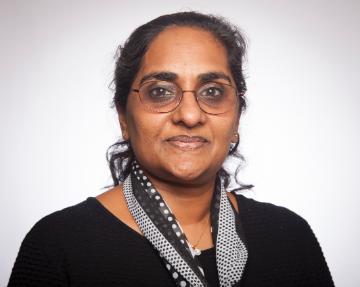
Shoba Krishnan is a Professor in the Department of Electrical and Computer Engineering at Santa Clara University's School of Engineering. Her work spans analog and mixed-signal integrated circuit design, carbon nanotube interconnect modeling, and engineering education initiatives. Education: B. Tech., Jawaharlal Nehru Technological University (1987) M.S., Michigan State University (1990) Ph.D., Michigan State University (1993) Her research focuses on high-speed data communication ICs, particularly clock/data I/O circuits, and explores carbon nanotubes as interconnect materials. She's expanding into bio-engineering instrumentation and renewable energy power electronics. Publications highlight work on low-power high-speed drivers, carbon nanotube via resistance analysis, microwave frequency modeling, and BIST structures for transceivers. She advises IEEE and Engineers Without Borders chapters at SCU.
Poria Fajri is an Associate Professor at the University of Nevada, Reno . His research focuses on electric and hybrid electric vehicles, renewable energy systems, and advanced power electronics control. Electric and hybrid electric vehicles Plug-in Hybrid Electric Vehicle (PHEV) and Vehicle-to-Grid (V2G) technology Wind and solar power generation technologies Optimal control of power electronic devices utilized in renewable energy generation Automotive/aerospace power electronics and motor drives Energy management in hybrid systems Mechatronics and robotics Recent publications highlight his work on machine learning applications for power consumption modeling and motor fault detection, hybrid ML-digital twin frameworks for cyberattack differentiation, and GaN-based inverter optimization. His research spans grid resilience, autonomous vehicle energy efficiency, and cybersecurity in smart distribution systems. Key article trends include integrating machine learning with energy systems, advancing V2G technologies, and addressing cybersecurity challenges in smart grids. His work on regenerative braking optimization and power electronics for renewable energy systems demonstrates a focus on sustainable transportation and grid stability.
Assoc. Prof. Dr. Osman ÇİÇEK is a full-time academic at Kastamonu University's Faculty of Engineering and Architecture , Department of Electrical and Electronics Engineering. He holds a Ph.D. (2016) and MSc (2013) in Electrical and Electronics Engineering from Karabük University. Research Focus: MEMS, Semiconductors, Nanotechnology Key Projects: TÜBİTAK-funded flexible piezoelectric sensors, BAP projects on graphene-PVP diodes, ZnO nanorod photovoltaics Collaborations: Extensive work with Şemsettin Altındal (Gazi University), Sedat Kurnaz (Kastamonu University), and international researchers His recent publications highlight advancements in semiconductor heterojunctions, photodiode design, and renewable energy systems. He serves as an Assistant Editor for Kastamonu University Journal of Engineering and Science and has contributed to 46 publications with 654 Google Scholar citations. Teaching experience spans courses like Digital Electronics, Photovoltaic Systems, and Sensor Technology.