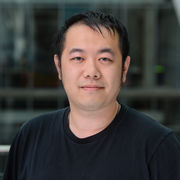
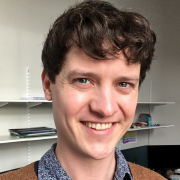
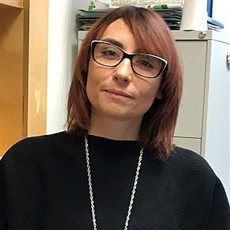
Prof. Dr. Martin Vinck is a Professor at the Donders Centre for Neuroscience in the Department of Neurophysics , Radboud University. He is also a Research Group Leader at the Ernst Strüngmann Institute for Neuroscience and a faculty member at the International Max Planck Research School for Neural Circuits . Current affiliations: Radboud University, ESI Frankfurt, Max Planck Research School Positions: Professor, Research Group Leader, Review Editor for eLife Research Interests span computational and systems neuroscience, focusing on predictive processing in biological and artificial neural networks. His lab investigates: How distinct excitatory/inhibitory neurons regulate plasticity and flexible information processing Neural ensemble coding via spatio-temporal patterns and spike sequences Self-supervised learning mechanisms using spatial/temporal predictions Gamma oscillations, synchronization, and their role in visual encoding Scientific Contributions include developing algorithms for high-dimensional neural data analysis, co-supervising key studies on interneuron dynamics, and pioneering work on predictive coding in V1. His grants include the ERC Starting Grant (2019) and VIDI Grant (2024) . Lab Members include PhD students Jinke Liu, Jahan Esfandiarii, Athanasia Tzanou and alumni Irene Onorato, Marius Schneider, Ana Clara Silveira Broggini . He actively promotes open science , develops the Spike Toolbox , and reviews for journals like Neuron, eLife, PLoS Computational Biology .
Dr. Emmanuel Aboagye-Nimo is a Chartered Construction Manager (MCIOB) and Senior Lecturer in Construction Management at Birmingham City University's School of Construction and the Built Environment. He teaches diverse Built Environment modules and supervises undergraduate to doctoral researchers, leveraging his background in Quantity Surveying and Construction Management. His research spans critical areas including: Construction Safety and Health in small/micro firms Decolonizing occupational safety management Sustainability practices (e.g., Earthship buildings) Psychosocial wellbeing of construction workers Equality initiatives for BAME communities Waste management in urban contexts Analysis of his 2022-2025 publications reveals dominant trends in Ghanaian construction safety culture, mental health interventions, and sustainability decision-making. His work uniquely bridges Sub-Saharan African contexts with UK industry practices, emphasizing tacit safety knowledge in small teams and systemic equity reforms. Scientific awards: None documented in source materials. He actively supervises students across academic levels and consults with construction firms on safety practices and equality policies. His former role as Chair for Race Ethnicity and Cultural Heritage at Nottingham Trent University demonstrates sustained commitment to workplace transparency and wellbeing initiatives, though specific grant funding remains unreported.
Tadeusz Wojtych is a researcher in Central and Eastern European history, focusing on the intersection of digital and physical commemoration through museums, textbooks, and cultural artifacts. He earned his PhD from the University of Cambridge (2023) with research funded by the AHRC DTP Centre for East European Language-Based Area Studies (CEELBAS), following an MA in Modern European History (Cambridge, 2018) and a BA in Modern History and Russian (St Andrews, 2017). His work explores how online museums democratize historical narratives and challenge state-funded national agendas, while revealing persistent digital divides. Wojtych's research spans six case studies in Germany, Poland, and Russia, analyzing the role of NGOs and individuals in shaping transnational memory. He has published peer-reviewed articles on digital museology and Soviet cultural reception, and he has organized academic conferences on topics like 'Soviet Materialities' at Cambridge. His methodology combines close reading of exhibitions, interviews with curators, and quantitative visitor analysis, concluding that online museums paradoxically reinforce existing power structures despite their potential for inclusivity. As a supervisor for undergraduate papers at Cambridge and UCL's School of Slavonic and East European Studies, he taught modules on European history and Russian culture. His work bridges diplomatic history, global history, and digital humanities, with a focus on Central and Eastern Europe.
Youngjoong Joo serves as a Professor in the Department of Electrical and Computer Engineering at the University of Texas at San Antonio (UTSA), housed within the Margie and Bill Klesse College of Engineering and Integrated Design. His academic foundation includes a Ph.D. from the Georgia Institute of Technology (1999), which anchors his technical expertise in integrated circuit design and sensor systems. Ph.D., Georgia Institute of Technology, 1999 Joo's research spans CMOS analog and mixed-signal circuits, low-power systems, smart camera architectures, optical/UWB transceivers, RFID, and smart sensor networks. His work consistently bridges theoretical circuit design with practical applications in imaging, wireless communications, and biomedical sensing. Notable contributions include self-reset CMOS image sensors achieving >105dB dynamic range, gold nanorod-enhanced SPR biosensors, and energy-efficient UWB transceivers for sub-GHz applications. His methodologies emphasize noise reduction, dynamic range optimization, and nanoscale integration for real-world deployment. Analysis of Joo's 15 most recent publications reveals a strong focus on CMOS-based sensor and transceiver systems , with 60% targeting imaging applications (e.g., high-dynamic-range sensors) and 40% addressing wireless communications (UWB/RFID). Key trends include nanomaterial integration for biosensing (2010-2013), precision pulse-shaping for UWB (2006-2012), and architectural innovations for low-power operation. His work consistently appears in IEEE journals and conferences, demonstrating sustained impact in circuit design. While no formal advising relationships or grant details are explicitly documented in the source material, Joo's extensive publication record (12+ peer-reviewed journal articles and 20+ conference papers since 2000) indicates active research leadership. His collaborations span institutions including Georgia Tech and industry partners, focusing on heterogeneous integration of optical/electronic systems. Joo maintains laboratory facilities for CMOS sensor development and UWB transceiver prototyping, with documented work on focal-plane arrays, optical interconnects, and nanoscale biosensors. His lab bridges VLSI design, electromagnetic modeling, and system-level validation for applications ranging from emergency response RFID to medical diagnostics.
Pedro P. Irazoqui is an Assistant Professor at the Weldon School of Biomedical Engineering at Purdue University, where he has been affiliated since June 2005. His research focuses on the design and clinical application of modular application-specific integrated circuits (ASICs) for biological implants and neural prosthetic devices. Education: B.Sc. and M.Sc. in Electrical Engineering, University of New Hampshire (1997, 1999) Ph.D. in Neuroengineering, University of California at Los Angeles (2003) Dr. Irazoqui’s lab specializes in developing implantable systems for sensing biological activity, actuating cellular/system responses, data transmission, and powering wireless modules. These technologies enable novel experiments and treatments for neural disorders such as epilepsy , spinal cord injury , and glaucoma . His work bridges analog ASIC design with clinical applications in bioelectricity. Prior to Purdue, he served as a Research Scientist at Duke University’s VLSI Design Center and co-founded Triangle Biosystems Inc., where he led analog ASIC development for neural recording/stimulating systems.
Nicola Maria Dusi is an Associate Professor in the Department of Communication and Economics at the University of Modena and Reggio Emilia (UNIMORE). She specializes in semiotics of cinema and media, with a focus on contemporary television series, intermediality, and transmedia storytelling. Her academic work bridges theoretical frameworks with practical analysis of audiovisual media products. Dr. Dusi's research interests encompass multiple dimensions of media studies. She investigates how contemporary television series construct narrative meaning through complex storytelling techniques, with particular attention to the interplay between fiction and documentary elements. Her work on intermediality explores how different media forms interact and transform content across platforms. She has conducted extensive research on the representation of historical events in television miniseries, notably analyzing the Chernobyl TV series as a case study of cultural memory construction. Her scholarly contributions also include studies on biopics, autism representation in media, and the semiotics of cinema archives. She approaches these topics through socio-semiotic frameworks that examine both textual structures and audience reception. Her recent publications reveal a consistent focus on contemporary media phenomena, particularly the evolution of television seriality in the streaming era. She examines how modern TV series negotiate between factual and fictional elements, creating complex narrative ecosystems that extend beyond the screen through paratexts and fan engagement. Her work on Chernobyl demonstrates how a TV miniseries functions as both historical representation and cultural commentary, blending documentary approaches with dramatic storytelling. She also explores more technical aspects of media representation, such as the aesthetics of blurred vision and data moshing in digital media, analyzing how these techniques affect meaning construction and viewer experience. Dr. Dusi is actively involved in teaching courses directly related to her research expertise. She teaches 'Semiotics of Cinema and Media' for Communication Sciences students, covering theoretical frameworks and analytical methods for examining audiovisual texts. Her course includes modules on basic semiotic theories, analysis of cinema and media, and specialized topics in contemporary media studies. She also teaches 'Intermediate Languages' for the Master's Degree in Advertising, Digital Communication, and Business Creativity. Her teaching emphasizes both theoretical knowledge and practical application, incorporating current media examples to illustrate concepts and encouraging students to develop critical analytical skills for understanding complex media phenomena.
Jin Mo Chung is a Professor and Chair at the University of Texas Medical Branch (UTMB), holding the Cecil H. and Ida M. Green Distinguished University Endowed Chair in Neuroscience and Cell Biology. His work focuses on chronic pain mechanisms, particularly neuropathic pain, where he developed the foundational 'spinal nerve ligation (SNL) Chung Model' for testing analgesics. With over 160 peer-reviewed publications and 23,000 citations, his research has been NIH-funded for 35 years, including multiple R01 and Program Project Grants. Education: BS in Physics, Sogang University PhD in Physiology, Loyola-Stritch School of Medicine Post-Doctoral in Neurophysiology, Loyola-Stritch Post-Doctoral in Somatosensory Neurophysiology, UTMB Chung's research spans synaptic plasticity in pain pathways, reactive oxygen species (ROS) in chronic pain, and treatment strategies for conditions like spinal cord injury, diabetic neuropathy, HIV infection, and chemotherapy-induced pain. He has pioneered animal models for pain research and explored interventions like spinal cord stimulation, antioxidant therapy, and electroacupuncture. The 15 most recent articles reflect a focus on pain neurobiology, ROS signaling, neuroinflammation, and neuromodulation techniques. Key subfields include FGF13 in diabetic neuropathy, Wnt5a signaling in HIV-related pain, opioid-induced hyperalgesia, circadian regulation of chemotherapy pain, and neuron-type-specific spinal cord stimulation. Scientific Contributions: Developed the 'Chung Model' of spinal nerve ligation Over 160 peer-reviewed publications NIH R01 and Program Project Grants (35 years) Co-editor of Encyclopedia of Pain Chung has mentored 30 postdoctoral fellows and 22 visiting scientists. He co-founded the Association of Korean Neuroscientists and led the Gulf Coast Consortium and Texas Pain Research Consortium. His work connects basic science to clinical applications, with global impacts on analgesic drug development.
Dr. Nikki Fairchild is an Associate Professor in Creative Methodologies and Education at the University of Portsmouth's School of Education, Languages and Linguistics. She serves as the institutional lead for the Education Unit of Assessment in the REF2029 entry. Education: PhD in Early Childhood Education and Care (University of Southampton), MA in Education (University of Chichester), PG Cert in Higher Education, BSc in Biology (University of Nottingham). Research Areas: Critical feminist materialism, posthumanist theory, research-creation, and qualitative methodologies applied to early childhood education and care (ECEC). Her work explores place-space relationality, temporal disruptions, and more-than-human subjectivities. Her recent publications focus on posthumanist pedagogies, hauntological approaches to education, and innovative methods for qualitative inquiry. She co-founded the international CG Collective, which challenges traditional academic conference formats to reimagine knowledge production. Her book Place-Space Methodologies will expand these frameworks further. Scientific Awards: AERA International Travel Award (2019) AERA Qualitative Research SIG Outstanding Book Award (2023) Anna Craft Creativities in Education Prize (2020) Fairchild teaches on the Professional Doctorate in Education and leads modules on research proposal writing and dissemination. She is a Senior Fellow of the Higher Education Academy and contributes to the UN Sustainable Development Goal for Quality Education.
Jan Bergmans is a Full Professor in the Department of Electrical Engineering at Eindhoven University of Technology (TU/e). He leads the Signal Processing Systems group and holds professorships at multiple research centers including the Eindhoven MedTech Innovation Center (e/MTIC), Center for Care & Cure Technology Eindhoven, NeuroPlatform, EAISI Health, and EAISI Foundational. With approximately 35 years of experience in signal processing theory and applications, Bergmans focuses on developing computationally efficient signal analysis techniques for healthcare, wireless communication, surveillance, and intelligent lighting applications. Bergmans' educational background includes: MSc in Electrical Engineering from Eindhoven University of Technology (1981) PhD in Electrical Engineering from Eindhoven University of Technology (1987) His research interests center around signal processing and data analytics theories, algorithms, architectures, and systems. Bergmans develops mathematical models that incorporate domain-specific knowledge, such as propagation models for radio communication channels or pathophysiological models for clinical decision support systems. His work emphasizes creating powerful yet computationally efficient signal analysis techniques, with significant applications in healthcare technology and medical diagnostics. The integration of engineering principles with clinical needs is a hallmark of his research approach, enabling practical solutions that address real-world medical challenges. Analysis of Bergmans' recent publications reveals a strong focus on medical signal processing, particularly in ECG and fetal monitoring applications. His work combines advanced signal processing techniques like adaptive Kalman filtering with practical healthcare applications. There's also significant research in visible light communications and sensor network technologies, showing the breadth of his expertise across different application domains of signal processing. The consistent theme across his work is developing computationally efficient algorithms that incorporate domain-specific knowledge to solve practical engineering problems. Scientific recognition includes: Senior Member of the IEEE Author of numerous papers and 2 books Holder of approximately 40 US patents Bergmans has established smooth collaborations with strategic industrial and clinical partners, including Philips Research and multiple hospitals in the Eindhoven region. He co-manages BrainBridge, the strategic collaboration between TU/e, Philips Research, and Zhejiang University (China). His research group has secured numerous projects, including recent third-tier projects like MEDEIA, PISANO SPS, and RAISE projects focusing on medical engineering innovations and robust AI for radar signal processing. As a key figure in the Signal Processing Systems group and one of the founders of the Eindhoven MedTech Innovation Center (e/MTIC), Bergmans plays a central role in bridging academic research with industrial and clinical applications. His leadership extends to managing multiple research teams working on healthcare technology, wireless communications, and sensor systems, fostering an environment where theoretical signal processing advances translate into practical medical and technological solutions.
Suleiman Sharkh is Professor of Electrical Machines and Drives at the University of Southampton within the Faculty of Engineering and Physical Sciences. His primary affiliation is with the Department of Electrical and Electronic Engineering, where he leads research in critical energy technologies. His work spans multiple interdisciplinary groups including Mechatronics Southampton, the Southampton Marine and Maritime Institute, Ocean Energy research, and Maritime Decarbonisation initiatives. Professor Sharkh's research focuses on electric machines, power electronics, and microgrids , with specialized expertise in battery management systems, energy harvesting, and electromagnetic field effects on aquatic life. His current projects investigate novel power electronic converters for grid-battery interfaces, hybrid dual-chemistry battery characterization, multi-degree-of-freedom actuators for vibration control, and electromagnetic guidance systems for fish migration. His work bridges theoretical innovation with commercial applications in marine propulsion, renewable energy integration, and electric vehicle infrastructure. Analysis of his recent publications reveals strong trends in electrification of marine systems (rim-driven thrusters, tidal turbines), advanced battery-grid interfaces (electrochemical impedance spectroscopy, hybrid chemistries), and bioelectromagnetic applications (fish behavior studies). His work consistently addresses real-world challenges in energy security, system reliability, and environmental sustainability through rigorous experimental validation. Scientific Awards The Engineer Energy Innovation and Technology Award (2008) for rim-driven marine thrusters Royal Academy of Engineering ExxonMobil Teaching Excellence Award (2013) Professor Sharkh actively supervises five PhD students while leading major research projects funded by EPSRC, Innovate UK, and industry partners. His current grants include the FEVER project on electric vehicle networks, Shark S research exchanges with China/India, and investigations into electromagnetic effects on eel migration. His laboratory work focuses on high-speed electrical machines, battery characterization rigs, and electromagnetic field exposure systems for biological studies. Future work emphasizes maritime decarbonization through integrated power electronics and machine design for zero-emission vessels.
Dr. Tiantai Deng is a Lecturer in Electronics and Digital Systems at the School of Electrical and Electronic Engineering , University of Sheffield (since 2021). His industrial background includes a senior research engineer role at HiSilicon/Huawei , where he focused on hardware architecture design for CNN, GEMM, and image/video processing on FPGAs/ASICs. Education: BEng, MSc, PhD Research interests span FPGA-based hardware acceleration , sparse processing architecture for CNN/GEMM, number system design , approximation computing , and high-level design environments . His work integrates algorithm-hardware co-optimization for efficiency in AI and mathematical computing. Recent publications emphasize neurodynamic systems for opinion modeling, parallel processing elements for ODE/AI acceleration, and low-power FPGA implementations for clustering/modulation classification. Earlier work addressed combustion dynamics and image processing pipelines. Contact: t.deng@sheffield.ac.uk | Office: G108, Sir Frederick Mappin Building, Sheffield S1 3JD | ORCID 0000-0003-4507-5746
Dr. Stephen Henthorn is a Lecturer in Wireless Communications at the University of Sheffield , affiliated with the School of Electrical and Electronic Engineering and the Department of Electronic and Electrical Engineering. His research focuses on energy-efficient wireless systems, leveraging metamaterials and reconfigurable intelligent surfaces for next-generation communication networks.
Dr Emma A. Foster is an Associate Professor in International Politics at the Department of Political Science and International Studies, School of Government, University of Birmingham. She co-convenes the Gender and Feminist Theory Group and is a member of the Birmingham Plastics Network. PhD in Political Science (University of Birmingham, 2008) BA in Political Science (Queen Mary, University of London) Emma’s research focuses on gender and sexuality studies, (de)policiticisation, sustainable development policy, and the intersection of queer ecology with international relations. She explores how environmental governance reproduces sexual norms and the challenges of depoliticisation in development and British politics. Her publications span journals like Globalizations , Feminist Theory , and British Journal of Politics and International Relations , with recent work on queer-green collaborations and ecofeminism. She supervises PhD students in environmental politics, gender studies, and queer theory. Senior Fellow of the Higher Education Academy (SFHEA) Emma contributes to curriculum development and teaching innovation, co-convening undergraduate modules like Understanding Politics and Environment and Climate Politics , as well as postgraduate courses in Sexuality and Gender Studies. She is involved in interdisciplinary projects addressing plastics sustainability and employs Foucauldian frameworks to analyze political and environmental dynamics.
Sohail Umer is a University Lecturer in the Department of Electrical Technology at UiT The Arctic University of Norway, specializing in power electronics and energy systems. His work focuses on improving power quality, control techniques, and energy efficiency in standalone and grid-connected systems. Research group: Electromechanical Systems Project: DeHigh His research explores advanced control strategies for power electronic converters, particularly Current Source Converters and Modular Multilevel Converters, with applications in renewable energy integration, microgrids, and smart grid technologies. Recent publications highlight innovations in adaptive modulation techniques, overlap-time mitigation, and hybrid PV-battery systems. Key themes include energy storage optimization, distributed generation, and converter design for standalone applications. Collaborations span institutions like UiT and include co-authors such as Trond Østrem, Bjarte Hoff, and Andrei Blinov. His work addresses challenges in renewable energy systems, including grid stability, harmonic reduction, and multi-port converter efficiency.
Katharina Opalka is a theologian at the Protestant Theological Faculty of the University of Bonn, holding a 50% professorship for Systematic Theology/Dogmatics and Ethics since April 2024 in a shared position with Prof. Folkart Wittekind. She specializes in spirituality (particularly Taizé practices), narrativity, performance theories, empirical systematic theology, Christology, existential theology (Paul Tillich), and 19th-century theology (Albrecht Ritschl). Her habilitation project "The Ambiguity of Candlelight" explores spirituality through the cross narrative in Tillich's sermons and Taizé, with venia legendi scheduled for May 14, 2025. She previously served as a pastor in substitute service (2023-2024) and received the Annemarie-Schimmel Fellowship (2022-2023). University of Bonn (Dr. theol., 2020) Evangelical Theology studies at Marburg and Göttingen (2005-2011) 2. Theologisches Examen (2014) Theological training at Predigerseminar Loccum Her research focuses on theology's functional capacity in interdisciplinary discourse, examining how theological concepts like humility, patience, and prayer operate within collective contexts while preserving divine transcendence. Key works explore Albrecht Ritschl's theology through narrative and performative frameworks, analyze Taizé spirituality's atmospheric effects, and investigate resilience through Christological narratives. Her publications span theological ethics, biblical hermeneutics, and contemporary spiritual practices. Recent publications include monographs on humility's performance in Ritschl's theology (2021), analyses of Taizé's spiritual music (2023), explorations of resilience in grief processes (2023), and critiques of divine omnipotence (2017). She engages with Paul Tillich's existential theology, Ricoeur's hermeneutics, and interdisciplinary approaches to theological concepts. Annemarie-Schimmel-Fellowship (2022-2023) Member of Wissenschaftliche Gesellschaft für Theologie (since 2025) Advisory board member of Haus der Stille der EKiR (since 2021) Active in Luther-Gesellschaft (since 2015), European Society for Philosophy of Religion (2014-2018), Deutsche Gesellschaft für Religionsphilosophie (since 2013) Opalka contributes to theological education through courses on dogmatics, systematic theology, and pneumatology at Bonn and Cologne Universities. She co-leads seminars with Prof. Cornelia Richter and Prof. Folkart Wittekind, including doctoral colloquia and interdisciplinary modules with sociology departments. Her teaching certificate includes 240 academic units in pedagogical innovation and academic advising.