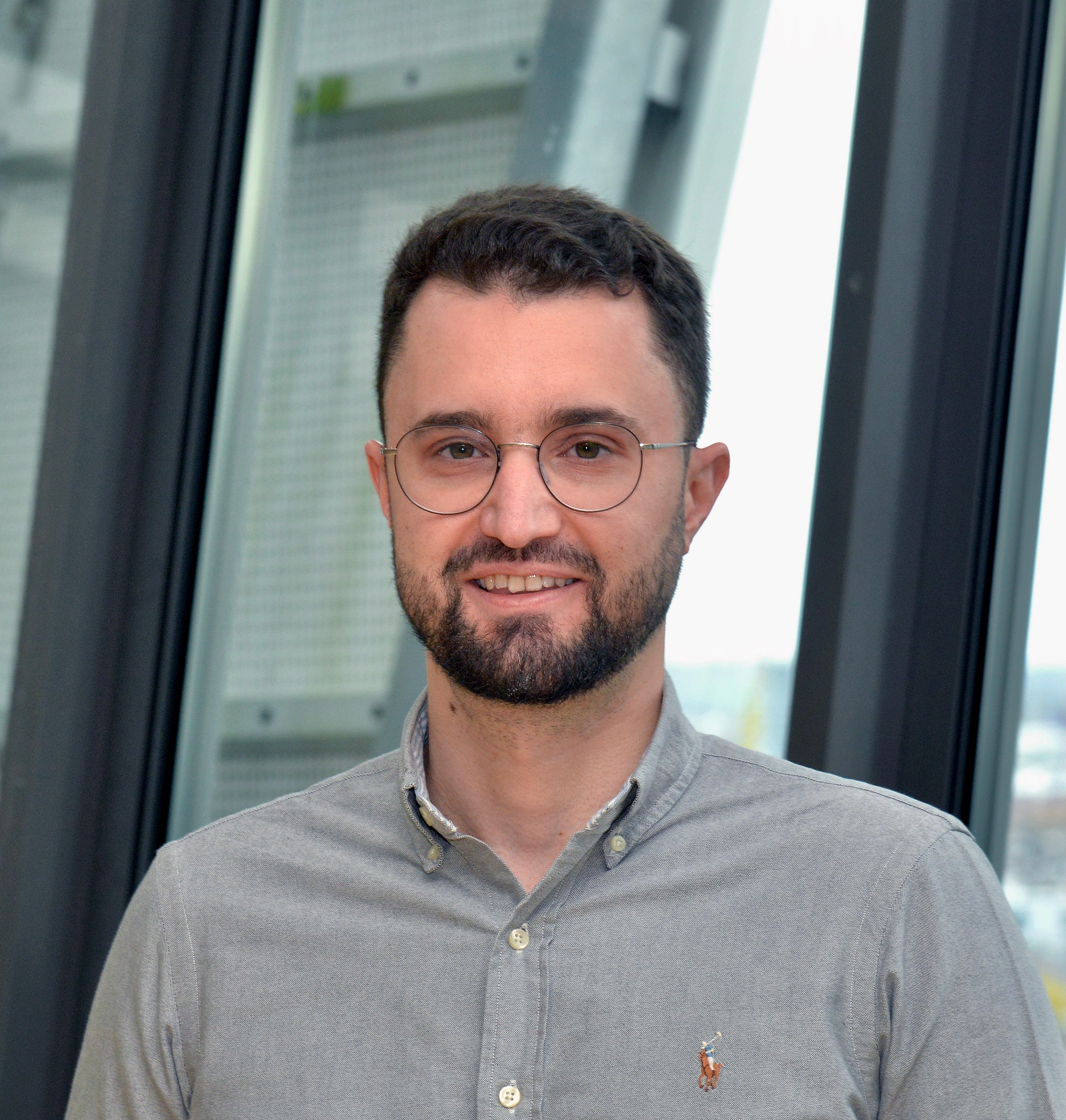
Prof. Stefan Leutenegger is a tenure-track Assistant Professor at Technische Universität München (TUM), leading the Machine Learning for Robotics group within the TUM School of Computation, Information, and Technology. Previously, he held roles as Senior Lecturer (2018–2021) and Lecturer (2014–2018) at Imperial College London's Dyson Robotics Lab, where he founded the Smart Robotics Lab. He earned his PhD (2014) from ETH Zurich, focusing on autonomous solar-powered aircraft navigation, and holds BSc (2006) and MSc (2009) in Mechanical Engineering from ETH Zurich. His research centers on mobile robotics, particularly enabling robots (e.g., drones) to perceive and navigate complex environments using machine learning and sensor data fusion. Key focus areas include SLAM, event-based vision, 3D reconstruction, and autonomous exploration. He has pioneered algorithms like BRISK (2011), OKVIS (2014), and ElasticFusion (2016), advancing real-time robotics perception. Notable Awards: Imperial College President's Award (2018), Best ECCV Paper (2016), ETH Medal for Dissertations (2015). Labs: TUM's Machine Learning for Robotics Group, Imperial's Smart Robotics Lab. Publications: Over 100 papers, including seminal works in CVPR, ECCV, and Robotics: Science and Systems. Current projects include DigiForests (forest inventory via robotics), aerial additive manufacturing, and object-centric semantic mapping. His work bridges theory and practice, with applications in autonomous drones, construction robotics, and human-robot interaction.
Celestine Mendler-Dünner is a Principal Investigator at the ELLIS Institute in Tübingen, co-affiliated with the Max Planck Institute for Intelligent Systems and the Tübingen AI Center. She leads the Algorithms and Society research group, focusing on machine learning in social contexts and the role of prediction in digital economies. Her work bridges theoretical machine learning with practical societal impact, developing tools for safe, reliable, and equitable AI ecosystems. Her educational background includes a PhD from ETH Zurich in collaboration with IBM Research, followed by an SNSF postdoctoral fellowship at UC Berkeley hosted by Moritz Hardt. She was previously a group leader at the Max Planck Institute for Intelligent Systems before joining the ELLIS Institute. Mendler-Dünner's research spans several interconnected themes including performative prediction (where predictions change the behavior they aim to predict), algorithmic collective action (how participants can steer AI systems toward common goals), and the role of LLMs in social science research. Her work combines theoretical foundations with practical implementations, addressing challenges in interactive machine learning, optimization in dynamic environments, and context-specific evaluation of AI systems. She particularly examines how algorithmic predictions mediate services and platforms at societal scale, exploring concepts of economic power in digital markets. Her publication record shows a clear evolution from system-aware machine learning algorithms (including foundational work on IBM Snap ML) toward increasingly sociotechnical questions at the intersection of machine learning, economics, and policy. Recent work focuses on measuring performative power in digital economies, evaluating LLMs as risk scores, and developing frameworks for algorithmic collective action in recommender systems and labor markets. Among her notable recognitions are the ETH Medal for her dissertation, the IBM Research Division Award, the Fritz Kutter Award, and the IBM Eminence and Excellence Award. She is an ELLIS Scholar, a fellow of the Elisabeth-Schiemann-Kolleg, and affiliated with several prestigious research programs including the International Max Planck Research School for Intelligent Systems and the Max Planck ETH Center for Learning Systems. ETH Medal (dissertation award) IBM Research Division Award Fritz Kutter Award IBM Eminence and Excellence Award SNSF Early Postdoc Mobility Fellowship Mendler-Dünner actively mentors the next generation of researchers, advising PhD student Patrik Wolf and supervising research interns including Joachim Baumann, Haiqing Zhu, and Anna Badalyan, as well as Master's student Dorothee Sigg. She serves as core faculty for the International Max Planck Research School and associated faculty for the Max Planck ETH Center for Learning Systems. Her group has secured significant research funding through fellowships and institutional support, enabling work on projects like Powermeter (measuring search engine influence) and Snap ML (resource-efficient machine learning library with over 1 million PyPI downloads). She leads the Algorithms and Society research group, which examines machine learning as part of broader sociotechnical ecosystems. The group explores human-population interactions with algorithmic systems and incorporates these insights into learning system fundamentals. Current projects include investigating economic incentives in digital platforms, developing tools for systematic LLM evaluation in social science contexts, and creating frameworks for collective action in algorithmic systems. Mendler-Dünner also co-organizes the Algorithmic Collective Action workshop at NeurIPS 2025, demonstrating her leadership in emerging research directions at the AI-society interface.
Prof. Alois Christian Knoll is a full professor at the Technical University of Munich (TUM) in the School of Computation, Information and Technology. His academic career includes roles at Bielefeld University and leadership in major EU initiatives like the Human Brain Project and ECHORD++. He specializes in robotics, AI, and autonomous systems, with a focus on medical robotics, sensor-based systems, and neuromorphic engineering. Knoll has supervised over 100 doctoral theses and authored/co-authored over 1,000 publications. Education: Diploma in Electrical Engineering (University of Stuttgart, 1985); PhD in Computer Science (Technical University of Berlin, 1988); Habilitation (TU Berlin, 1993). He has been at TUM since 2001, leading the Robotics, AI, and Real-Time Systems department. Research interests span autonomous systems, neuro-IT integration, and traffic simulation. Key projects include fortiss (Bavarian State Institute for Computer Science) and TUM-CREATE (Singapore collaboration). Awards include IEEE Fellow, University of Tokyo Fellow, and the Carl-Ramsauer-Prize (1990). Current roles include editorships in robotics journals, leadership in EU flagship projects, and teaching across multiple programs. His work bridges computer science, neuroscience, and engineering, with applications in healthcare, automotive systems, and urban mobility.
Christopher Morris is a tenure-track Assistant Professor at RWTH Aachen University and a DFG Emmy Noether fellow. He leads the Learning on Graphs (LoG) research group, focusing on machine learning methods for structured data, particularly graph neural networks. His work bridges machine learning, computer science theory, and discrete mathematics, addressing challenges in generalization, expressivity, and algorithmic efficiency. Education: PhD in Computer Science from TU Dortmund University (advised by Petra Mutzel and Kristian Kersting), postdoctoral research at Mila - Quebec AI Institute (Siamak Ravanbakhsh) and McGill University, and Polytechnique Montréal (Andrea Lodi). Research interests emphasize graph machine learning, including generalization theory, combinatorial optimization, and scalable graph embeddings. Notable contributions include analyzing Weisfeiler-Leman algorithms' impact on GNNs' expressivity and generalization (VC dimension connections). Awards: DFG Emmy Noether Fellowship. Supervises six PhD students in Aachen. Active in teaching, offering courses on graph-based machine learning foundations and applications since 2022. Labs/Teams: LoG group at RWTH Aachen, collaborating with institutions like Mila and Polytechnique Montréal. Erdős number 3 through Petra Mutzel’s collaboration network.
Holger Fröning is a full professor at Heidelberg University’s Institute of Computer Engineering (ZITI), where he leads the Hardware and Artificial Intelligence (HAWAII) Lab. His research focuses on embedded machine learning , high-performance computing , and hardware-software co-design , with emphasis on resource efficiency, power optimization, and emerging architectures like analog , photonic , and resistive memory systems. He has held leadership roles including Managing Director of ZITI (2023–present) and Dean of Studies for Computer Science (2019–2022) , and has collaborated with institutions such as NVIDIA Research, Chinese Academy of Sciences, and Graz University of Technology. Research Trends : His recent publications explore Bayesian neural networks , green machine learning , analog computing noise mitigation , and GPU/FPGA optimization . Articles highlight photonic computing for AI , memory-efficient training , and hardware-aware DNN compression . Scientific Awards : 2025 HiPEAC Paper Award (Nature Computational Science) 2014 Google Faculty Research Award Multiple Best Paper Awards (IPDPS, ICPP, ECML-PKDD workshops) Leadership & Service : Organized workshops (WEML, ITEM, F4HD), chaired tracks at EuroPar and ISC, and served on program committees for ICPR, ECAI, and FPL. Education & Affiliations : PhD and MSc from University of Mannheim (2007/2001). Sponsors include DFG, FWF, FFG, NVIDIA, SAP, and XILINX.
Toby Jia-Jun Li is an Assistant Professor in the Department of Computer Science and Engineering at the University of Notre Dame, where he leads the SaNDwich Lab. He also serves as the Director of the Human-Centered Responsible AI Lab in the Lucy Family Institute for Data & Society and is a Faculty Fellow at the Institute for Educational Initiatives (IEI). Previously, he was affiliated with Carnegie Mellon University's Human-Computer Interaction Institute (HCII) and GroupLens Research. Dr. Li's research spans the intersection of Human-Computer Interaction (HCI), End-User Software Engineering, Machine Learning (ML), and Natural Language Processing (NLP), with recent work focusing on addressing societal challenges in the future of work through human-AI collaborative approaches. His work has resulted in over 40 publications at premier venues including CHI, UIST, CSCW, ACL, and ICSE, with 8 papers winning Best Paper or Honorable Mention awards. His recent publications demonstrate a strong focus on human-AI collaboration across various domains, including code understanding, privacy, accessibility, and creative tools. The work shows a trajectory toward increasingly sophisticated integration of human-centered design with AI capabilities, particularly using large language models to enhance human productivity and address societal challenges. Google Research Scholar Award recipient Recipient of Yahoo! Fellowship ($100,000/year) Best Paper Award at UIST 2020 Best Paper Honorable Mention Award at CHI 2021 Best Paper Award at CSCW 2024 Best Paper Award at CHI 2025 Dr. Li actively mentors Ph.D. students and has established collaborations with Google, Microsoft Research, IBM Research, Adobe, Verizon, and J.P. Morgan. His research has been supported by NSF, Google Research Scholar Program, AnalytiXIN Initiative, Yahoo! InMind project, and J.P. Morgan. He is currently recruiting Ph.D. students and undergraduate researchers for his SaNDwich Lab, which focuses on developing interactive systems to empower individuals to create, configure, and extend AI-powered computing systems.
Chita R. Das is a Professor at Pennsylvania State University, known for extensive contributions in computer architecture, machine learning, and high-performance computing. Their research focuses on optimizing hardware-software co-design for edge computing, cloud infrastructure, and energy-efficient systems. Key areas include FPGA acceleration, GPU optimization, and serverless computing frameworks. Das collaborates frequently with institutions like AMD and Intel, addressing challenges in parallel computing and distributed systems. Their work bridges theoretical advancements with practical applications in recommendation systems, bioinformatics, and real-time video processing. Research interests span across hardware acceleration techniques, cloud resource management, and sustainable computing. Notable projects include adaptive training frameworks for intermittent power environments and neural-augmented game streaming for mobile platforms. Das's publications often address performance bottlenecks in modern architectures and propose novel solutions for latency and energy efficiency. Recent articles highlight innovations in serverless computing cost optimization, low-bandwidth VR streaming, and FPGA-based bioinformatics tools. Their contributions are characterized by interdisciplinary approaches combining computer architecture with machine learning and embedded systems.
Prof. Dr. Mirko Hornung is a Professor of Aircraft Design at the TUM School of Engineering and Design, Technische Universität München. His research focuses on conceptual aircraft design, integration of propulsion systems, and evaluation of aviation technologies in operational contexts. Education and Career: PhD in Aeronautical Engineering from the University of the Bundeswehr (2003), awarded a research prize for work on reusable space transport systems. 2003–2009: Worked at Airbus Group (EADS) on military air systems, propulsion integration, and program management. Executive Director of Research & Technology at Bauhaus Luftfahrt, a think tank for long-term aviation developments. Research Interests: Aircraft design optimization, including hybrid energy systems, electric propulsion, and UAV technologies. Environmental sustainability in aviation, such as hydrogen-powered aircraft and lifecycle assessment. Aerodynamic and structural analysis, including flutter suppression and composite materials. Key Publications Highlight Trends: Focus on hybrid-electric and hydrogen propulsion for reducing environmental impact. Advancements in UAV design, including morphing wings and autonomous systems. Integration of AI-driven tools for propulsion optimization and lifecycle analysis. Scientific Awards: EADS Promotion Award (1995) Research Prize for Thesis on Reusable Space Transport Systems (2003) Advising & Grants: Directs research at Bauhaus Luftfahrt, collaborating on future aviation concepts. Engaged in interdisciplinary projects like FLEXOP UAV demonstrator and Ce-Liner eMobility studies. Labs/Teams: Active in the Aircraft Design Professorship at TUM and leadership roles at Bauhaus Luftfahrt, focusing on next-generation aviation technologies.
Rudolf Neu serves as Professor at the Technical University of Munich (TUM) within the School of Engineering and Design, holding a dual appointment as head of an independent research group at the Max Planck Institute for Plasma Physics (IPP) since 2014. His expertise centers on plasma-material interactions critical for fusion energy development. His academic foundation includes: Physics studies at University of Tübingen Doctorate in Nuclear Physics (1992) Habilitation in Experimental Physics at University of Tübingen (2004) Professor Neu's research pioneers tungsten-based materials for fusion reactor first walls, addressing extreme thermal and plasma conditions in devices like ASDEX Upgrade and ITER. His work bridges materials science and plasma physics to solve erosion, impurity control, and component longevity challenges essential for viable fusion power. Publication trends reveal progressive refinement from experimental ASDEX Upgrade studies (2009-2013) toward advanced tungsten solutions for DEMO reactors (2016), consistently targeting plasma-facing component durability. This trajectory demonstrates strategic alignment with international fusion roadmap milestones. Key recognition includes: Highly Cited Researchers designation (ISI Engineering category, 2014) His leadership spans critical fusion initiatives including JET task force coordination (2011-2012) and EFDA's ITER Physics Department direction (2012-2013), establishing him as a central figure in Europe's fusion research infrastructure.
Peter Benner is a Professor and Director at the Max Planck Institute for Dynamics of Complex Technical Systems in Magdeburg, where he leads the Computational Methods in Systems and Control Theory group. He also holds an Honorarprofessor position for Mathematics at Otto-von-Guericke Universität Magdeburg since 2011. Benner has previously served as Managing Director of the Max Planck Institute during multiple periods (2013-2014, 2021-2022, and 2025-2026), demonstrating his leadership in the field. Benner's research focuses on Scientific Machine Learning, Numerical Linear and Multilinear Algebra, Model Order Reduction and Reduced-order Modeling, Numerical Methods in Systems and Control Theory, PDE Constrained Optimization, High-performance and Power-aware Computing, and Mathematical Software development. His work bridges theoretical mathematics with practical engineering applications, particularly addressing challenges in large-scale dynamical systems. Analysis of his recent publications reveals a strong emphasis on developing efficient computational methods for complex systems. Benner has pioneered approaches combining model order reduction with tensor methods to tackle high-dimensional problems in uncertainty quantification and PDE-constrained optimization. His work shows a consistent trend toward integrating data-driven techniques with traditional model-based approaches, particularly for nonlinear and parametric systems. Throughout his career, Benner has actively mentored students and collaborated with researchers worldwide, delivering numerous invited talks at prestigious institutions and conferences across Europe, North America, and Asia. His research has received significant funding, supporting the development of mathematical software and computational methods for industrial applications. Benner leads the Computational Methods in Systems and Control Theory department at the Max Planck Institute, which focuses on developing and implementing advanced numerical methods for large-scale dynamical systems. The group maintains strong connections with both theoretical mathematics and practical engineering applications, particularly in fluid dynamics, energy systems, and control theory.
Prof. Dr. Christian Breitsamter is a Professor at the Technische Universität München (TUM), leading the Chair of Aerodynamics and Fluid Mechanics within the TUM School of Engineering and Design. He has held this position since 2007 and has been a member of key committees such as the ICAS Programme Committee and STAB-Programmleitung. His research focuses on aerodynamics of aircraft and rotorcraft configurations, including vortex dynamics, aeroelasticity, and fluid-structure interaction. Education: PhD in Aerodynamics (1997) Master’s in Aerospace Engineering (1989) Research Interests: Prof. Breitsamter’s work spans experimental and numerical studies of high-agility aircraft, helicopter aerodynamics, and advanced wing designs. Key areas include leading-edge vortices, gust load mitigation using flexible wings, and flow control techniques. His group investigates cutting-edge topics like deep learning for buffet prediction and hybrid neural networks for aerodynamic modeling. Awards: Willy Messerschmitt Preis (1999) AIAA Associate Fellow (2007) Advising & Grants: While specific student names are not listed, his research involves collaborative projects with industry partners (e.g., RACER Compound Helicopter) and EU initiatives like the FURADO program. His team contributes to the NFDI4ING infrastructure for engineering data. Labs/Teams: Active in the Aerodynamics Wind Tunnel facilities (Windkanäle A/B/C) and leads the SAGITTA flying wing demonstrator project. His group also explores membrane wings and elasto-flexible morphing technologies.
Vijay Laxmi is a Professor in the Department of Computer Science and Engineering at Malaviya National Institute of Technology (MNIT) Jaipur, India. With over a decade of active research publication from 2014-2024, Dr. Laxmi has established themselves as a prominent researcher in network security, Android security systems, and Network-on-Chip architectures. Their work demonstrates consistent collaboration with Manoj Singh Gaur and numerous doctoral students at MNIT Jaipur. Dr. Laxmi's research interests span Network Security, Android Security, Malware Analysis, Network-on-Chip Architectures, Routing Protocols, Side-Channel Attacks, Wireless Networks, and Mobile Security. Their work bridges theoretical security frameworks with practical implementations, particularly in mobile and embedded systems. Recent publications indicate a growing focus on AI-based security approaches including GAN applications for fuzzing and deep learning for image dehazing. The research trajectory shows increasing sophistication in security analysis techniques, evolving from basic malware detection to advanced side-channel attack analysis and sophisticated network security protocols. Recent publications demonstrate expertise in both theoretical frameworks and practical implementations with applications in real-world security challenges. Dr. Laxmi has mentored numerous graduate students including Vineeta Jain, Anugrah Jain, Sonal Yadav, Mohit Singh, and Gaurav Singal, who appear as co-authors across multiple publications. Their collaborative network extends to researchers at international institutions, indicating strong academic connections beyond their home institution.
Prof. Dr. Amelie Hagelauer holds a professorship in Micro- and Nanosystem Technology at the TUM School of Computation, Information and Technology, Technical University of Munich. Her work focuses on advanced electronics and systems integration across quantum computing hardware, resistive memory technologies, and high-frequency RF systems. She has contributed to innovations in superconducting qubit readout architectures, multi-level RRAM designs, and 3D-integrated CMOS-compatible quantum devices. Research interests span quantum hardware design, nanoelectronic devices, RF front-end systems, and emerging memory technologies. Her work emphasizes practical implementation challenges such as low-power operation, high-voltage handling in RF switches, and wafer-scale fabrication processes. Recent projects include D-band radar systems, energy-efficient 60 GHz transceivers, and antenna tuning solutions for 5G applications. Publications from 2023-2025 showcase advancements in resistive switching device characterization, mitigation of TLS losses in superconducting qubits, and reconfigurable AI accelerators using RRAM-based digital twins. Her work bridges theoretical device physics with practical integrated circuit design, addressing scalability and reliability in next-gen electronics. Awards and grants: None explicitly listed in provided texts. Active collaborations include EU-funded projects on quantum computing platforms and TUM's Electronic Photonic Integration initiatives. Leads research teams in microsystem technology with emphasis on cross-disciplinary approaches combining CMOS processes, MEMS, and quantum engineering.
Prof. Dr. Dominik Schwarz is a faculty member at the Faculty of Physics , Bielefeld University. His research focuses on Cosmology and Particle Physics , particularly in the areas of Dark Energy , Dark Matter , Cosmological Inflation , and Large-Scale Structure Formation . He contributes to projects like the International LOFAR Telescope Consortium and the SFB-TRR 211 on strongly interacting matter. APART Fellow of Austrian Academy of Sciences Humboldt Fellow CERN Fellow His recent work explores the cosmic dipole anisotropy , axion density perturbations , and multi-wavelength cosmic web mapping . He also advances data science infrastructure through the PUNCH4NFDI consortium.
Wolfgang Porod is a Professor of Electrical Engineering and holder of the Frank M. Freimann Chair at the University of Notre Dame. He is also a Hans Fischer Senior Fellow at the TUM Institute for Advanced Study (TUM-IAS) since 2009, affiliated with the Nanoimprint and Nanotransfer Focus Group led by Paolo Lugli. His research focuses on nanoelectronics and quantum devices, notably co-inventing the Quantum-Dot Cellular Automata (QCA) framework, a molecular-scale information processing paradigm. Porod earned his Diplom (M.S.) and Ph.D. from the University of Graz, Austria, and held postdoctoral roles at Colorado State and Arizona State Universities before joining Notre Dame in 1986. He directs Notre Dame’s Center for Nano Science and Technology, advancing interdisciplinary nanotechnology research. His academic accolades include Fellowships from the AAAS (2005) and IEEE (2001), and teaching awards such as the Kaneb Teaching Award (2005) and the Ruth and Joel Spira Award (2000). Porod’s work bridges quantum physics and engineering, with applications in low-power computing, spintronics, and nanoscale device fabrication. At TUM-IAS, he collaborates on nanoimprint lithography and nanotransfer technologies, advancing scalable nanomanufacturing methods.