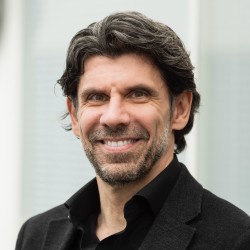
Konstantinos Nikitopoulos is a Professor at the Institute for Communication Systems, University of Surrey, and Director of the Wireless Systems Lab. He leads research in next-generation wireless communications, including Open RAN, non-linear processing, and neuromorphic computing. His work focuses on advancing MIMO systems, energy-efficient architectures, and practical implementations of 5G/6G standards. He has attracted over £11M in grants, including the HiPer-RAN and NL-COMM projects, and received awards for innovation and teaching. Education : PhD from National and Kapodistrian University of Athens Postdoctoral roles at RWTH Aachen University, UC Irvine, and UCL Research Interests : Non-linear signal processing for 6G systems Massively parallel algorithms and hardware acceleration Open RAN architectures and standard-compliant PHY design Unconventional computing (neuromorphic, quantum annealing) Awards : 2024 Innovator of the Year (University of Surrey) EPSRC First Grant (2021) Incremental Innovation Award (UK Department for Science, 2023) Grants & Projects : HiPer-RAN (£7.8M, DSIT) NL-COMM (£904K, Innovate UK) Tbps Communication System (£520K, Industry) Labs & Teams : Leads the Wireless Systems Lab and contributes to the 5G/6G Innovation Centre’s “Theory and Practice of Advanced Concepts” work area.
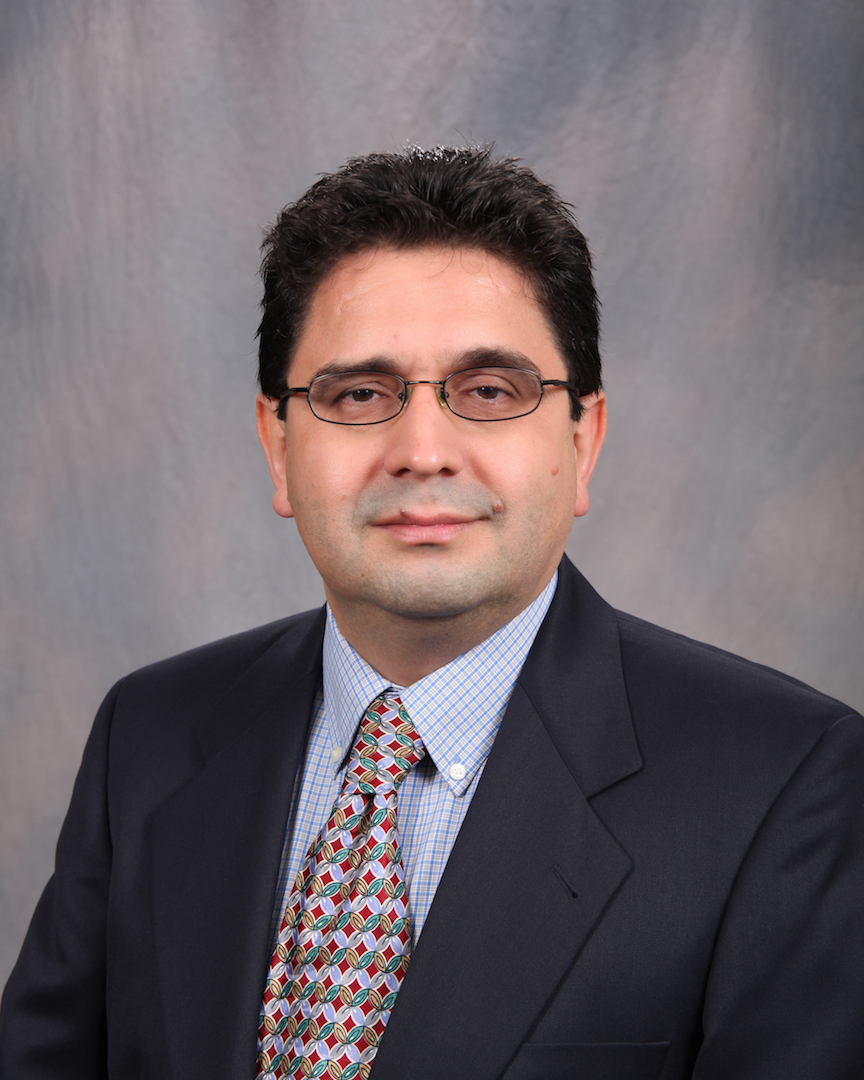
Aydin Karsilayan is an Associate Professor and Director of Undergraduate Programs in the Department of Electrical and Computer Engineering at Texas A&M University, affiliated with the College of Engineering. He holds a Ph.D. (2000) from Portland State University and B.S./M.S. degrees (1993/1995) in Electrical Engineering from Bilkent University. His research focuses on radio frequency circuits , baseband systems , and signal processing , with contributions to energy harvesting for medical devices, wireless power transmission, and robust communication systems. Notable work includes high-efficiency CMOS rectifiers, blocker-tolerant ADC designs, and interference-resilient transceivers. His recent publications (2019–2023) emphasize RF circuit optimization , low-power analog design , and mixed-signal systems . Key trends include improving ADC resilience to blockers, enhancing rectifier efficiency for wireless power, and developing tunable filters for 5G/cognitive radio applications. Awards: Outstanding Ph.D. Student Award (Portland State University) Memberships: IEEE, Tau Beta Pi, Eta Kappa Nu His advising and grants focus on graduate research in analog/mixed-signal circuits. He has contributed to lab initiatives in energy harvesting and high-frequency receiver design at Texas A&M.
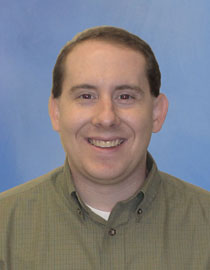
Sam Palermo is Professor and J.W. Runyon Jr. Professor in the Department of Electrical and Computer Engineering at Texas A&M University's College of Engineering. He holds a Ph.D. from Stanford University and M.S./B.S. degrees from Texas A&M University. Palermo's research develops: High-speed electrical/optical interconnect circuits Clock generation/recovery systems (PLL/DLL/CDR) Variability-tolerant analog/mixed-signal ICs Energy-efficient wireline communications His publications demonstrate consistent innovation in integrated circuit design for optical communications, with recent work on silicon photonic transceivers, jitter-robust multicarrier systems, and radiation-hardened oscillators. Research bridges high-frequency circuit design with advanced photonics integration. Palermo has contributed to optical interconnect standards and developed testbeds for tera-scale computing interfaces. His work on CMOS-photonic integration has enabled high-bandwidth interconnects for data centers and HPC systems. He serves on technical committees for IEEE conferences including the International Solid-State Circuits Conference and Custom Integrated Circuits Conference (CICC).
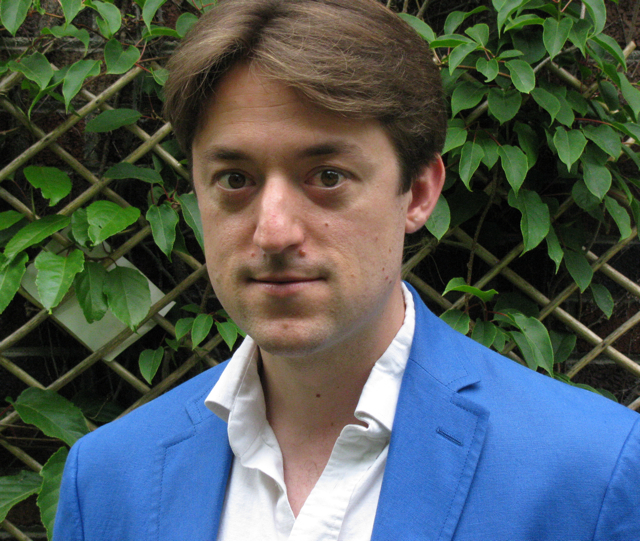
Seth Pettie is a faculty member in the Department of Electrical Engineering and Computer Science (EECS) at the University of Michigan. His research focuses on algorithms, graph theory, distributed computing, and data structures, with significant contributions to problems like minimum spanning trees, Davenport-Schinzel sequences, and energy complexity in radio networks. Research Interests : Algorithms, graph theory, distributed systems, combinatorics, and computational complexity. Students : Mentored numerous PhD students and postdocs, including Dingyu Wang, Shang-En Huang, and Yi-Jun Chang, some of whom have won prestigious awards like the Principles of Distributed Computing Doctoral Dissertation Award. Scientific Contributions : Authored over 15 recent articles (2021–2025) on topics spanning connectivity labeling, fraud detection, extremal combinatorics, and energy-efficient distributed algorithms. His work often bridges theoretical insights with practical applications in databases and network optimization. Awards : Recipient of the Outstanding Dissertation Award (2004) and Best Student Paper Award at ICALP 2002. His students have also received recognition for their work. Professional Service : Organized workshops (e.g., Dagstuhl, Bertinoro) and served on steering/editorial/program committees for major conferences like SODA, STOC, and PODC.
Professor Raviraj Adve is affiliated with the University of Toronto , working in the Department of Electrical and Computer Engineering and cross-listed with the Electromagnetics Group . He holds a PhD in Electrical Engineering from Syracuse University (1996) and previously worked at Research Associates for Defense Conversion Inc. (1997–2000). Education: B.Tech, Indian Institute of Technology Bombay (1990) PhD, Syracuse University (1996) Research Interests span two main areas: Wireless Communications (heterogeneous networks, massive MIMO, cooperative communication, resource allocation) and Radar Signal Processing (waveform diversity, space-time adaptive processing, HF radar systems). His work emphasizes practical algorithm development for real-world constraints. Scientific Contributions include 15 recent articles covering cooperative networks , radar clutter modeling , low-complexity MIMO algorithms , and molecular communication . Notable awards: IEEE Fellow (2017), Young Radar Engineer of the Year (2009), and multiple teaching awards. Leadership Roles: Vice-chair of IEEE Radar Systems Panel, Associate Editor for IEEE Trans. on Aerospace and Electronic Systems , and editorial board member for IET Trans. on Radar, Sonar and Navigation .
Dr. Chao Xu is a Senior Lecturer at the Next Generation Wireless Research Group within the Faculty of Physical Sciences and Engineering at the University of Southampton. His work bridges cutting-edge wireless communication technologies with quantum security and machine learning advancements. PhD in Wireless Communications (University of Southampton, 2015) His research spans space-air-ground integrated networks (SAGINs), reconfigurable intelligent surfaces (RIS), and quantum key distribution (QKD). Key projects include holographic MIMO systems and OTFS modulation for THz channels, emphasizing integrated sensing and communication frameworks. Recent publications highlight innovations in optical RIS for secure QKD, near-field transceiver design, and machine learning-aided detection techniques. These works reflect interdisciplinary trends merging wireless systems with quantum cryptography and AI-driven optimization. IEEE Communications Society Best M.Sc. Student (2009) Chinese Government Award for Outstanding Self-Financed Student Abroad (2012) Dean's Award, University of Southampton (2017) MSCA Global Postdoctoral Fellowship (2023, 100/100 score) Dr. Xu supervises PhD students in wireless communications and actively contributes to the Next Generation Wireless Research Group's advancements in 6G technologies and non-terrestrial networking.
Prof. Robert Staszewski is a Full Professor at the School of Electrical and Electronic Engineering, University College Dublin (since 2014) and a Visiting Full Professor at Delft University of Technology (since 2009). His academic journey began with a PhD from University of Texas at Dallas (2002), preceded by MSEE (1992) and BSEE (1991) degrees. He previously worked at Alcatel (1991–1995) and Texas Instruments (1995–2009), where he co-founded the Digital RF Processor (DRP) group and served as CTO (2007–2009). Research Focus : Nanoscale CMOS architectures, quantum computing hardware, millimeter-wave PLLs, and low-power IoT RF circuits. Recent Publications : 15 most recent works span quantum dots in 22nm FDSOI, harmonic predistortion in ADPLLs, ultra-low-jitter charge-sharing PLLs, and RF reuse strategies for IoT. Scientific Contributions include 6 books, 11 book chapters, 150+ journal papers, and 210 US patents. His Equal1 Labs co-founded in 2014 aims to build the first single-chip CMOS quantum computer. Awards: 2012 IEEE Circuits and Systems Industrial Pioneer Award IEEE Fellow (2009) Teaching Leadership : Coordinates advanced modules in Analogue Integrated Circuits , Mixed-Signal Circuits , and Quantum Computing (2014–2025). Supervises PhD thesis projects in nanoscale RF and quantum systems.
Walter Leon-Salas, Ph.D. is an Associate Professor at the School of Engineering Technology at Purdue University, where he directs the tinyLab research group focused on the integration of electronic circuits with sensors and wireless communications. He received his B.Sc. in electronic engineering from Universidad Nacional de San Agustín in Peru, and his M.Sc. and Ph.D. in electrical engineering from the University of Nebraska-Lincoln in 2001 and 2006, respectively. His educational background includes: B.Sc. in Electronic Engineering, Universidad Nacional de San Agustín, Arequipa, Peru M.Sc. in Electrical Engineering, University of Nebraska-Lincoln (2001) Ph.D. in Electrical Engineering, University of Nebraska-Lincoln (2006) Dr. Leon-Salas' research focuses on low-power analog design, CMOS image sensors, solar energy harvesting, optical communications, and data compression. His work explores innovative ways to integrate electronic circuits with sensors and wireless communication systems, particularly through energy harvesting techniques that allow devices to operate with minimal external power sources. His research group has developed novel applications including Optical Frequency Identification (OFID) technology using solar cells for wireless communication, wireless soil health monitoring systems, and reconfigurable energy-harvesting CMOS image sensors. His recent publications (2023-2025) show a strong trend toward sustainable energy applications, particularly in the areas of solar cell-based optical communications, environmental monitoring systems, and energy-efficient technologies for agricultural and high-altitude applications. His work bridges electrical engineering with environmental sustainability, food-water-energy nexus research, and practical IoT implementations. His scientific achievements have been recognized with several prestigious awards: National Science Foundation CAREER Award (2011) Outstanding Faculty in Discovery, School of Engineering Technology, Purdue University (2014) Leadership Excellence Achievement Program (LEAP) Award from the Missouri Society of Professional Engineers (2011) Outstanding Doctoral Dissertation Award from UNL College of Engineering (2007) Best runner up live demo award at IEEE ISCAS conference (2018) Dr. Leon-Salas actively mentors students at all levels, from undergraduates to post-doctoral researchers, and has secured significant grant funding for his research. He serves as Co-Director of the Arequipa Nexus Institute for Food, Energy, Water and the Environment and as Secretary of the IEEE Sensory Systems Technical Committee. His teaching responsibilities include Analog IC Design, Mixed-Signal IC Design, Logic Design, Advanced Digital Design, and Digital Signal Processing courses. His tinyLab research group maintains several active projects including Optical Frequency Identification (OFID), Wireless Soil Health Monitoring, Solar Radiation Sensors, Circuit Printing, Reconfigurable Energy-Harvesting CMOS Image Sensors, RFID-based Corrosion Sensor, Optical Stimulator for Fruit Flies, and LED Lighting Testing for Airport Taxiways.
Élie Awwad is an Associate Professor (Maître de Conférences) in Optical Communications at Télécom Paris, part of Institut Polytechnique de Paris. He leads research in the Optical Telecommunications (GTO) group within the Information Processing and Communication Laboratory (LTCI) under the Department of Communications and Electronics (Comelec). He joined Télécom Paris in 2019 after working as a Research Scientist at Nokia Bell Labs. He holds M.Eng. degrees in Electrical Engineering from Lebanese University and Telecom Engineering from Télécom Paris (2011), and a PhD in Communications and Electronics from Télécom Paris (2015). His research focuses on optical fiber communications and sensing systems, specializing in: Telecommunication Systems Optical Fiber Sensors Digital Signal Processing Distributed Acoustic Sensing (DAS) Nonlinear interference mitigation Novel optical sensing interrogators His publications demonstrate strong emphasis on distributed fiber sensing techniques (especially phase-sensitive OTDR), coherent MIMO processing, machine learning for optical networks, and free-space optical communications. Recent work integrates quantum cascade laser technology and chaotic encryption methods with optical transmission systems. He currently supervises multiple PhD students and has secured research funding through national CIFRE agreements, ANR SAFER project, CIEDS FIBROUS project, and Celtic-Next AI-NET initiative. His lab focuses on developing advanced monitoring solutions for optical networks and improving distributed sensing capabilities over telecom infrastructure.
Laila Fighera Marzall is an Assistant Research Professor at the University of Colorado Boulder, specializing in Electromagnetics, RF & Microwaves. Her research focuses on broadband phased arrays, active circulators, and MMIC power amplifiers, with expertise in non-reciprocal devices and high-frequency RF components. She holds a Ph.D. in Electrical Engineering from CU Boulder (2009 M.Sc. from Aeronautics Institute of Technology, Brazil; 2014 MBA from Fundação Getúlio Vargas). Her work emphasizes innovative solutions for phased array systems, including tunable Butler matrices and GaN-based components. Recent projects include full-duplex front-ends, bio-inspired antennas for WBAN, and Rydberg atom RF receivers. She is a Senior IEEE Member and URSI Associate Member. Key research trends in her articles include advancements in phased array architectures, non-reciprocal device integration, and high-frequency MMIC designs. Her contributions span both theoretical modeling and practical implementations in biomedical and quantum sensing applications. Marzall collaborates on grants advancing RF/microwave technologies for communication systems and has pioneered bio-inspired antenna designs. Her lab focuses on integrating active components with next-generation phased arrays, addressing challenges in bandwidth, power efficiency, and signal integrity.
Konstantinos Voudouris is a full Professor in the Department of Electrical and Electronics Engineering at the University of West Attica, Athens, Greece. Previously, he served as a full Professor at the Higher Colleges of Technology in Abu Dhabi (2015-2018) and as a Professor at the Technological Institute of Athens (2004-2015). His career spans academia, industry, and government, including roles as telecoms expert at OTE, technical advisor to the Greek Ministry of Transports and Telecommunications, and Embassy Counsellor to the EU for Telecommunications. Education: PhD in Wireless Telecommunication Systems, University of Bradford, UK Professor Voudouris's research focuses on wireless communications with emphasis on 5G/6G networks, millimeter-wave technology, antenna design, and relay networks. His work includes developing relay stations for WiMAX networks, 60 GHz transceivers, and RF energy harvesting systems. He has led significant projects such as the FP7 ICT REWIND project (5.5M€) and the WiCEAR group in the NexGenMiliwave project, demonstrating expertise in both theoretical and applied telecommunications engineering. His publication record (2024-2014) reveals consistent innovation in wireless power transfer, antenna array optimization, substrate integrated waveguide technology, and green RF solutions for mobile networks. Key trends include reducing mutual coupling in antenna arrays, enhancing industrial wireless sensor networks through distributed fusion, and developing sustainable energy harvesting techniques for 5G infrastructure. No scientific awards are listed in the provided documentation. Professor Voudouris has supervised numerous diploma and PhD theses while coordinating major research initiatives including the FP7 ICT REWIND project. He serves on the University of West Attica Quality Assurance Committee and has held significant administrative roles including chairing the Promotions Committee at HCT, coordinating the ERASMUS program, and managing the internship office for the Electronic Engineering Department. He leads the WiCEAR research group and has developed electromagnetic wave transmission prediction software to enhance laboratory instruction for electronic engineering students, demonstrating commitment to both research innovation and educational advancement.
Mohammad Kazemi is a Marie Curie Research Fellow at the Department of Electrical and Electronic Engineering, Faculty of Engineering, Imperial College London. His research focuses on wireless communications, machine learning applications in communication systems, and massive random access systems. He holds a PhD from Amirkabir University of Technology (2017), and has held research positions at Bilkent University (2019-2023) and Amirkabir University's MMWCL lab (2017-2019). He served as Editorial Assistant for IEEE Transactions on Communications (2020-2023). Education: B.S. and M.S. in Electrical Engineering, K.N. Toosi University of Technology (2007, 2010) PhD in Electrical Engineering, Amirkabir University of Technology (2017) His research interests emphasize practical solutions for massive machine-to-machine (M2M) communications through EU-funded DeepMARA project. Key areas include fundamental limits of deletion/insertion channels, federated edge learning architectures, and secure mmWave communications. He explores applications in smart healthcare and transportation sectors using AI-driven communication frameworks. Projects & Grants: DeepMARA: EU/UKRI-funded project developing reinforcement learning-based strategies for massive random access systems Over-the-air federated learning with hierarchical clustering Labs & Teams: Member of the Information Processing and Communications Lab (IPC-Lab) at Imperial College London.
Jocelyn FIORINA is a Full Professor and ViceDean of International Affairs at CentraleSupélec. She is affiliated with the Laboratoire des signaux et systèmes (L2S), where she leads research in telecommunications and signal processing. Her academic titles include HDR (Habilitation to Direct Research) and Engineer qualifications. Her research focuses on wireless communication systems, ultra-wideband (UWB) technologies, and advanced signal processing techniques. Key areas include indoor localization, federated learning for communication constraints, time reversal methods in UWB networks, and multi-armed bandits for network optimization. She has authored over 20 peer-reviewed articles and two books, including Cognitive Radio and Networking for Heterogeneous Wireless Networks (Springer, 2015). Recent work emphasizes federated learning strategies under communication limits (2024), adaptive K-nearest neighbor positioning (2022), and UWB beamforming (2013). Her contributions span theoretical analysis, algorithm design, and practical implementations in ad-hoc networks and sensor systems. As ViceDean, she oversees international collaborations and academic partnerships. Her lab, L2S, is part of Paris-Saclay University’s research ecosystem, focusing on energy, industry 4.0, and healthcare applications. She actively participates in workshops and conferences, including IEEE Vehicular Technology Conferences and the International Conference on Ultra-Wideband (ICUWB).
Dr. Vlad Marsic is an Assistant Professor specializing in RF engineering and semiconductor technologies. He is affiliated with the Centre for E-Mobility and Clean Growth, focusing on experimental and theoretical research in magnetic sensors, GaN transistors, and energy harvesting systems. His work contributes to UN Sustainable Development Goals related to clean energy and infrastructure innovation. Education: BEng in Communication Engineering, Faculty of Electronics and Telecommunications, 'Gh. Asachi' University, Romania (2002) MSc in Low Power RF Sensing, School of Applied Sciences, Cranfield University, UK (2012) EngD in RF Communication and Location Services, Warwick Manufacturing Group (WMG), University of Warwick, UK (2019) Research Interests: RF Technologies: Wireless networks, power line communication (PLC), and remote sensing Semiconductor Devices: GaN transistors, Hall-effect sensors, and switching behavior analysis Energy Systems: Li-ion battery diagnostics and energy harvesting Research Trends: His publications (2021–2025) emphasize advancements in GaN-based sensor integration, magnetic field analysis, and battery diagnostics. Recent work addresses challenges in sensor sensitivity, noise mitigation, and energy-efficient communication systems. Awards: Best Paper Award (multiple conferences in RF experimental and modelling domains) Grants and Labs: Involved in collaborative projects with industry partners, focusing on smart infrastructure and clean energy technologies. Active in interdisciplinary teams developing novel sensing and communication solutions. Key Collaborations: Engaged with institutions across the UK and international partners in electromagnetic simulation, semiconductor design, and sustainable energy systems.
Dr. Vladimir Milovanović is an Associate Professor at the Faculty of Engineering, University of Kragujevac, Serbia, holding a position as Chair of the Department of Electrical Engineering and Computer Sciences. His academic career is anchored in interdisciplinary research at the intersection of electrical engineering, computer science, and biomedical applications. His research focuses on hardware design, radar sensor systems, biomedical signal processing, and machine learning applications. Notable areas include CMOS circuit design, FPGA-based implementations, and parameterizable hardware generators for signal processing tasks. He also explores medical imaging analysis using deep learning techniques for conditions like disc hernia diagnosis. Recent work emphasizes radar technology (FMCW transceivers, signal processing architectures), embedded systems (FPGA development, IP core utilization), and high-performance streaming data algorithms. His publications span over two decades, demonstrating expertise in analog/digital circuit design, comparative classifier analysis in biomedical contexts, and hardware-software co-design methodologies. Dr. Milovanović collaborates with industry on energy-efficient MIMO arrays and semiconductor gas sensors. His contributions include open-source HDL models for digital signal processors and comparator circuits optimized for low-power and high-speed applications.