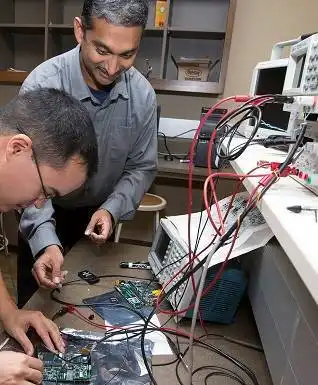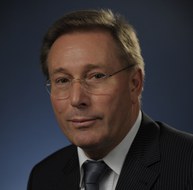
Prof. Dr. Wolfgang Lippmann is a Senior Scientist at the Institute of Process Engineering and Environmental Technology, Chair of Hydrogen and Nuclear Energy at Technical University of Dresden. He has maintained continuous affiliation with TU Dresden since 1974, progressing from student to professorial status, with his current role beginning in 2021 after decades as Scientific Staff member. From 2017-2020, he served as Substitute Chair for Prof. Antonio Hurtado during Hurtado's tenure as Vice-Rector for University Development. His academic journey includes: 1974-1978: Studies of energy technology at Technical University of Dresden 1978-1983: Scientific assistant at Chair of Nuclear Energy Technology 1984: PhD on reactor containment stress analysis during cooling loss scenarios 1989: Post-doctoral thesis on pressurized-water reactor containment stress Lippmann's research bridges nuclear engineering with hydrogen technologies through innovative laser-based applications. His work spans reactor safety analysis, high-temperature ceramic materials, and nuclear-hydrogen system integration. He has pioneered laser joining techniques for silicon carbide ceramics in nuclear applications, developed laser decontamination systems for nuclear decommissioning, and conducted safety analyses of hydrogen systems coupled with nuclear power plants. His research integrates fundamental materials science with practical engineering solutions for next-generation energy systems. Analysis of his recent publications reveals three dominant research thrusts: nuclear-hydrogen integration (particularly PEM electrolysis coupled with nuclear plants), laser-based nuclear technologies (decontamination and ceramic joining), and advanced safety analysis of energy systems. His work demonstrates increasing focus on cross-sector energy integration while maintaining strong foundations in nuclear materials and safety engineering. Lippmann leads multiple significant research initiatives including TE-Cer (ceramic composites for thermo-electrical systems), F-Bridge (GEN IV fuel design), MANOLA (laser ablation systems), eJoin and CeraJoin (ceramic joining technologies), DELTA (integrated electrolyzer-hydrocarbon systems), LaDECO (laser decontamination), TE-K-SYSTEM (thermoelectric modules), and SYNKOPE-flex (energy carrier coupling). His laboratory at George-Bähr-Straße 3b in Dresden houses specialized equipment for laser processing, materials characterization, and thermal testing of nuclear components.