Rasmus Løvenstein Olsen is an Associate Professor at Aalborg University’s Department of Electronic Systems, part of The Technical Faculty of IT and Design. His research focuses on smart grids, energy systems, and cybersecurity in distribution networks. Key areas include distribution grid modeling, smart meter optimization, and anomaly detection in electrical systems. Education: Not explicitly detailed in the provided text, but his academic role implies advanced degrees in Electrical Engineering. His research interests revolve around enhancing grid resilience, improving state estimation techniques, and leveraging data analytics for energy systems. He collaborates on projects like Data Analytics in Smart Distribution Grids and ReDistXAI , addressing challenges in renewable integration and cyber-physical security. Publications span anomaly detection algorithms, cyber-physical control systems, and stochastic network modeling. His work emphasizes practical applications, such as optimizing smart meter deployment and securing grid communication networks. Grants/Projects: 12+ projects, including EU-funded initiatives like Net2DG and RemoteGRID . Awards: None explicitly listed in the text. Labs/Teams: Involved in the Wireless Communication Networks and Green Digital Energy Systems research groups.
Nathan Beckmann is a Courtesy Professor in the Department of Electrical and Computer Engineering at Carnegie Mellon University, part of the College of Engineering. His research focuses on computer architecture, embedded systems, energy-efficient computing, and memory hierarchy design. He explores topics such as dataflow architectures, near-data computing, and cache optimization to enhance performance and reduce energy consumption in modern systems. His work spans both theoretical and applied aspects, including hardware-software co-design for reconfigurable systems, low-power IoT architectures, and novel caching strategies for emerging memory technologies like flash and MRAM. Key contributions include frameworks for ultra-low-power CGRAS, energy-minimal dataflow SoCs, and sustainable caching solutions. Dr. Beckmann's recent articles emphasize innovations in spatial dataflow programming models, task parallelism control, and polymorphic cache hierarchies. His research often targets real-world applications in edge computing, embedded systems, and high-performance datacenters.
Philip B Godfrey is a Professor holding multiple appointments at the University of Illinois Urbana-Champaign. He is affiliated with the Siebel School of Computing and Data Science, the Department of Electrical and Computer Engineering, the Information Trust Institute, and the Coordinated Science Lab. His research focuses on networking, low-latency systems, and extended reality (XR) technologies, with contributions to cellular networks, wireless communication, and distributed systems architecture. Godfrey's work addresses critical challenges in data center optimization, network reliability, and real-time systems. He has pioneered techniques for latency reduction in Wi-Fi and cellular networks, as well as offloading computation for XR devices to enhance user experience. His recent projects include CellReplay for cellular network testing and CAPA for high-availability cluster networks. Research Highlights: Time-sensitive networking, low-latency protocols, XR system optimization, and distributed network architectures. Awards: NSF CAREER Award (2012), SIGCOMM Rising Star Award (2015), and Sloan Research Fellowship (2014). His collaborative efforts span academia and industry, with notable contributions to the design of fault-tolerant systems and real-time networking protocols. Godfrey's work bridges theoretical advancements with practical implementations in high-performance computing environments.
Matthew Hall is a Professor in the Department of Mechanical Engineering at the University of Texas at Austin, holding the Louis T. Yule Fellowship in Engineering. He has been on the College of Engineering faculty since 1991, specializing in engine combustion processes, emissions reduction, and alternative fuels. His research includes engine controls, optical measurement techniques, spark ignition characterization, waste heat recovery, and lithium ion battery safety. He has published over 150 technical articles and serves as an Associate Editor for the Society of Automotive Engineers' International Journal of Engines. Key research areas include improving diesel engine efficiency via the Rotating Liner Engine (RLE) technology (reducing fuel consumption by up to 35% at idle), optimizing thermoelectric generators for vehicle exhaust heat recovery, and exploring ammonia as a low-carbon fuel. He also investigates combustion-energized thermoelectric systems to extend drone flight range. Notable awards include Fellow of the Society of Automotive Engineers. His teaching focuses on thermodynamics, including power cycle modeling and HVAC systems. Recent publications emphasize cold start emissions, spark plug energy deposition, and ammonia-coal co-firing for emissions control. His work spans experimental studies, computational modeling, and interdisciplinary applications in energy sustainability.
Joel P. Flynn is an Assistant Professor of Economics at Yale University and a Faculty Research Fellow at the National Bureau of Economic Research (NBER). He holds a Ph.D. in Economics from MIT (2023) and a B.A. in Economics from the University of Cambridge (2017). His research focuses on macroeconomic theory, mechanism design, and business cycle analysis, with particular emphasis on strategic interactions, pricing mechanisms, and policy design. His work spans topics such as nonlinear pricing, fiscal policy in networked economies, and the design of adaptive priority mechanisms in centralized markets. Flynn’s recent publications appear in top journals like the Journal of Economic Theory , American Economic Review , and Theoretical Economics . His research often combines rigorous theoretical frameworks with empirical relevance, addressing questions of market efficiency, policy effectiveness, and behavioral dynamics. His current projects include analyses of attention cycles, dynamic unravelling in markets, and the role of narratives in shaping macroeconomic outcomes. Flynn has collaborated with prominent economists such as Karthik Sastry, Roberto Corrao, and Alexis Akira Toda. His work frequently intersects with policy-relevant questions, particularly in areas of fiscal and monetary policy, market design, and technological change.
Prof. Rabih Bashroush is a Professor of Digital Infrastructure at the University of East London (UEL), affiliated with the Architecture, Computing & Engineering research institute. His expertise spans information security management, data center optimization, and energy-aware software architectures. He leads research on sustainable computing practices, server lifecycle management, and cybersecurity frameworks. His work often addresses practical challenges in IT infrastructure, including hardware refresh strategies, cloud resource allocation, and predictive security modeling. Notable contributions include developing the ALI Architecture Description Language and frameworks for variability management in software product lines. Research interests integrate technical and economic dimensions, focusing on cost-effective solutions for organizations. His publications emphasize real-world applications, such as ROI analysis for data center upgrades and ISO 27001 compliance strategies.
Gwan Choi is an Associate Professor in the Department of Electrical and Computer Engineering at Texas A&M University, affiliated with the College of Engineering. His research focuses on fault-tolerance, verification simulation, high-performance VLSI circuits, radiation testing, design for dependability, and software engineering. He holds a Ph.D., M.S., and B.S. in Electrical and Computer Engineering from the University of Illinois at Urbana-Champaign (1988–1994). Education: Ph.D., Electrical and Computer Engineering, University of Illinois at Urbana-Champaign (1994) M.S., Electrical and Computer Engineering, University of Illinois at Urbana-Champaign (1989) B.S., Electrical and Computer Engineering, University of Illinois at Urbana-Champaign (1988) Research Interests: Dr. Choi’s work spans fault-tolerant computing, radiation-hard electronics, and high-performance VLSI design. He has contributed to LDPC decoding architectures, MIMO communication systems, and energy-efficient circuit designs. His research emphasizes practical implementations in aerospace and embedded systems. Awards: National Science Foundation (NSF) Career Award (1997) Labs & Activities: He has collaborated with NASA Langley Research Center as a visiting scientist and contributed to industry through roles at Cray Research and Tandem Computers. His work bridges academic research with real-world applications in fault tolerance and low-power systems.
Volker Wouters is a Lecturer at the Lucerne School of Engineering and Architecture (HSLU T&A), affiliated with the Institute of Building Technology and Energy (IGE) and the Center for Integrated Building Technology. His academic role focuses on teaching and research in electroengineering for buildings, energy systems, and sustainable technologies. He holds professional certifications including Dipl. El. Ing. HTL/SIA, NDS Wirtschaftsingenieur FH, and Zertifikat Hochschuldidaktik. He has extensive industry experience as a partner and technical leader in engineering firms like Partner Ingenieure AG and HKG Engineering AG. His teaching and research emphasize electrical systems in buildings, energy demand analysis, backup power solutions, lightning protection, photovoltaics, and electromobility. Professional affiliations include SIA (member of multiple commissions), VDI, SWKI (Technical Board member), and Swiss gee. His research projects include EnTeR (Energy Transition Regulation) and studies on building automation energy consumption. He actively contributes to industry standards through involvement in technical committees.
Dr. Eva Maleviti is an Assistant Professor and Program Coordinator for the Master of Science in Aviation & Aerospace Sustainability at Embry-Riddle Aeronautical University's College of Aviation. She holds a Ph.D. in Environment and Sustainability from the University of Surrey and has over 14 years of experience in higher education across the UK, USA, and Greece. Her expertise includes sustainable aviation systems, emissions auditing, and corporate sustainability strategies. She has served as an academic coordinator at the Hellenic Aerospace Industry and as a technical expert for ICAO's CORSIA scheme. Her research focuses on sustainable aviation infrastructure, environmental management in aerospace facilities, and organizational change for net-zero goals. Education: Ph.D. in Environment and Sustainability, University of Surrey M.S. in Sustainable Development, University of Surrey Graduate Certificate in Aviation Maintenance, Embry-Riddle Aeronautical University Bachelor in Physics, University of Patras Research Interests: Dr. Maleviti's work emphasizes sustainable aviation practices, emissions reduction, and organizational sustainability frameworks. She explores topics such as: Aviation Training Organizations' (ATO) net-zero strategies Employee perspectives on environmental management Energy optimization in buildings and aviation facilities Sustainable aviation fuels and lifecycle analysis Awards: Adjunct Faculty of the Academic Year 2020-2021 Emerging Faculty of the Academic Year 2022-2023 Teaching and Advising: Dr. Maleviti currently teaches courses such as Sustainable Aviation Organizations, Aviation Sustainability Policy, and Sustainable Aviation Technologies. She has advised students in capstone projects and sustainability-related coursework. Certifications and Memberships: Private Pilot License (PPL-A) Lead Auditor for ISO 9001 and AS 9100D Member of the Royal Aeronautical Society (MRAeS)
Dawid Hanak is a Professor at Teesside University, focusing on decarbonization technologies within the Net Zero Industry Innovation Centre. His research emphasizes carbon capture, utilization, and storage (CCUS), particularly using calcium looping and thermochemical processes. He explores strategies to transform fossil fuel-based systems into low-carbon or negative-emission technologies, with applications in power generation, industrial clusters, and renewable energy integration. Key research areas include CO2 capture via calcium looping, biomass utilization for negative emissions, and techno-economic feasibility of renewable energy systems. He has published extensively on topics like solar photovoltaic systems, energy efficiency optimization, and machine learning for anomaly detection in industrial settings. His work bridges experimental analysis, computational modeling, and policy-related stakeholder engagement. Recent studies highlight his focus on hybrid energy systems, demand response strategies, and decarbonization pathways for industrial sectors. His publications often address real-world implementation challenges, such as cost-benefit analyses and scalability of CCUS technologies. Hanak is actively involved in guiding PhD students and collaborates across disciplines to advance net-zero solutions.
Murray Thomson is a Senior Lecturer in Electrical Networks and Systems at CREST (Centre for Renewable Energy Systems Technology), part of the School of Electronic, Electrical & Systems Engineering at Loughborough University. His research focuses on integrating renewable energy into power systems, including low-voltage distribution networks and flexible demand management for grid balancing in low-carbon systems. He holds a BSc and PhD in relevant fields. His work emphasizes high penetrations of wind, marine, and solar power, alongside energy storage solutions and smart grid technologies. Notable contributions include techno-economic analyses of offshore wind and solar systems, evaluations of energy storage for decarbonization, and studies on heat pumps and insulation in UK decarbonization efforts. Recent research highlights include investigating battolyser technology for hydrogen production, analyzing non-technical electricity losses, and exploring microgrid design for energy access in rural areas. His work intersects technical feasibility with policy implications, particularly in achieving net-zero targets. Dr. Thomson's publications span over two decades, addressing demand modeling, grid integration challenges, and the evolving role of smart meter data. Despite no listed awards, his contributions are recognized through extensive peer-reviewed outputs. He leads research at CREST, focusing on innovative solutions for sustainable energy systems without explicitly noted grants or advising roles.
Pavle Dakić is a researcher at Singidunum University, affiliated with the Faculty of Informatics and Computing and the Department of Electrical Engineering and Computing. He holds a doctoral degree in Applied Informatics from the Slovak University of Technology (2020-2024) and another doctoral degree in Electrical Engineering and Computing from Singidunum University (2015-2024). His research focuses on autonomous vehicles, cybersecurity, IoT/IIoT systems, and software compliance in automotive and healthcare sectors. He is actively involved in publishing peer-reviewed articles and conference papers, with recent work exploring AI-driven solutions for parking systems, cybersecurity in IoT environments, and the economic impacts of global market changes on automotive manufacturing. Pavle has collaborated on projects addressing standards compliance, fake news mitigation in online communities, and energy efficiency in autonomous vehicles. Education: Doctoral studies in Applied Informatics: Slovak University of Technology (2020-2024) Doctoral studies in Electrical Engineering and Computing: Singidunum University (2015-2024) Master’s in Contemporary Information Technologies: Singidunum University (2014-2015) His research interests span advanced topics such as intrusion detection systems for autonomous vehicles, software quality control using black-box testing, and the intersection of artificial intelligence with call-center optimization in automotive retail. Pavle has contributed to interdisciplinary projects, including analyses of agro-food production potential in Serbia and wage stability in the Republic of Srpska. His work emphasizes practical applications of technology in compliance, sustainability, and industry standards.
Francesco Paolo Deflorio is an Associate Professor in the Department of Environmental, Land and Infrastructure Engineering (DIATI) at the Polytechnic University of Turin , where he has been active since 2018. He is affiliated with the CARS@PoliTO Interdepartmental Center for Automotive Research and Sustainable Mobility and teaches courses such as Models and Technologies for Traffic and Transport , Simulation Tools for Transport Systems , and Traffic Observation, Simulation, and Regulation across various engineering programs including Civil, Mechanical, Automotive, and Environmental Engineering. He is a member of the PhD collegium in Civil and Environmental Engineering and supervises several doctoral candidates. Education: PhD in Automation and Computerization of Transport, Polytechnic University of Turin Master of Science in Civil Engineering, Polytechnic University of Bari His research focuses on transportation systems engineering , with emphasis on intelligent transport systems (ITS), electric mobility, sustainable logistics, traffic modeling, and simulation. He has made significant contributions to dynamic route guidance, wireless sensor networks for traffic safety, and in-motion charging for electric vehicles. His recent work explores autonomous vehicle integration, energy efficiency in freight transport, and smart road technologies. The analysis of his recent publications reveals a consistent trend toward sustainable and intelligent mobility systems , combining engineering modeling with real-world applications in urban and freight transport. His work bridges theoretical simulation with practical ITS deployment, particularly in energy-efficient and safety-enhancing technologies. Scientific Participations: President, Italian Association for Traffic and Transport Engineering – Piedmont and Aosta Valley Section (2012–2018) Full Member, Italian Society of Transport Teachers (SIDT) (2006–present) He leads numerous research initiatives, including the EPIGNOSIS project under the PNRR, and has served as scientific manager for over 20 funded research and commercial projects related to vehicle energy efficiency, traffic control, and smart mobility. He advises doctoral students on topics such as autonomous vehicle integration and electric mobility modeling. His research is supported by collaborations with regional authorities, industry partners, and foundations. Labs and Research Centers: Member, CARS@PoliTO – Center for Automotive Research and Sustainable Mobility Involved in the CLIK Laboratory (“Contamination Lab and Innovation Kitchen”) for innovative teaching challenges
Ashok BANDI is a Researcher at the Signal Processing & Satellite Communications group (SIGCOM) within the Interdisciplinary Centre for Security, Reliability and Trust (SnT) at the University of Luxembourg. His research focuses on Sparse Signal Recovery and Wireless Communications, particularly in structured sparsity modeling and signal recovery in communication systems. Education: Master’s degree from National Institute of Technology (NIT Trichy), India (2012). Research Interests: Design of physical layer systems for WLAN standards (802.11a/n/ac). Development of efficient algorithms for structured sparse signal recovery in satellite and wireless communication systems. Integration of sparsity principles into on-board beamforming for high-throughput satellite systems. Advisors: Prof. Björn Ottersten and Dr. Bhavani Shankar MYSORE RAMA RAO. Labs/Teams: Part of the Signal Processing & Satellite Communications (SIGCOM) research group led by Prof. Björn Ottersten.
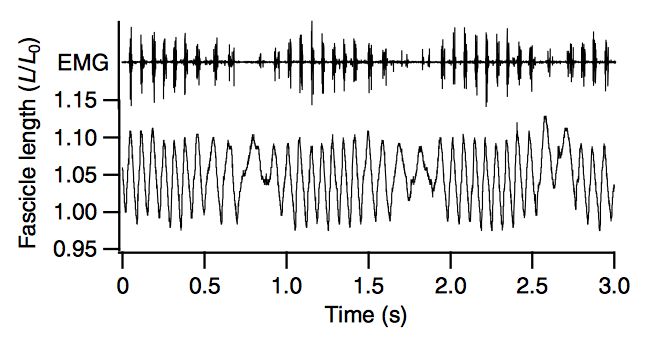
Graham Askew is an Associate Professor in the School of Biomedical Sciences at the University of Leeds, Faculty of Biological Sciences. His research integrates biomechanics, muscle physiology, and energetics to understand animal locomotion across diverse species. He is actively involved in postgraduate research supervision and leads a dynamic lab focused on the mechanics of movement. Education: BSc in Biology, University of Leeds (1992) PhD in Skeletal Muscle Physiology, University of Leeds (1995) Postdoctoral Research, Northeastern University (Boston) and University of Cambridge His research interests lie at the intersection of biomechanics and physiology , particularly in how muscles generate power and consume energy during locomotion. He uses integrative approaches combining in vivo measurements, respirometry, sonomicrometry, and infrared thermography to study animal flight, running, and swimming. His work spans from molecular muscle function to whole-organism performance, with ecological and evolutionary implications. The recent publications reflect a strong trend in comparative biomechanics , focusing on power generation in bird flight, metabolic costs in ants and armoured humans, and efficiency in jet-propelled nautilus. His work often bridges biological principles with real-world or historical applications, resulting in broad scientific and public impact. Scientific Recognition: Featured in The New York Times (2018) for nautilus propulsion study Highlighted in Inside JEB multiple times Research covered by BBC, Science Magazine, Huffington Post, Audubon, and others Dr Askew has secured continuous funding from the BBSRC and leads collaborative projects with institutions including Bangor University, University of Hull, and University of Liverpool. He supervises postgraduate students and promotes research opportunities in muscle performance, flight biomechanics, and scaling of locomotor function. He is also involved in developing computational models for musculoskeletal research aligned with 3Rs principles. His lab, part of the Sport and Exercise Sciences and Cardiovascular and Exercise Sciences research groups, emphasizes experimental validation and interdisciplinary collaboration. Ongoing projects include insect flight mechanics, bird flight energetics, and computational modeling of rabbit mastication.