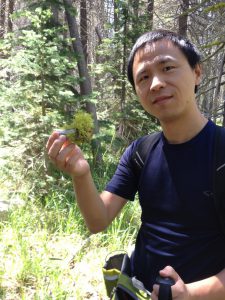
Francis Rayns is an Associate Professor (Research) at the Centre for Agroecology, Water and Resilience, Coventry University. His research focuses on sustainable soil management, particularly the use of green manures, waste materials (compost, digestate, biochar), and alternatives to plastics in agriculture. He actively promotes citizen science to improve agricultural practices and has collaborated on projects addressing agroforestry, urban soil remediation, and plastic reduction in farming. Education: PhD in Biotechnology (Somatic embryogenesis) from De Montfort University and BSc in Applied Biology from University College North Wales. Notable projects include UNDERTREES (agroforestry ecosystem services), REPAS (citizen science for plastic reduction), and SOIL NEXUS (urban soil care). He leads research on peat-free growing media, crop rotation impacts, and biodegradable alternatives to plastics. Publications span topics like soil microbial health, biostimulant efficacy, and historical trends in crop mineral content. His work emphasizes interdisciplinary approaches to solve agricultural challenges, blending environmental science with practical farming solutions.
John Dearnaley is Associate Professor and Head of the School of Agriculture and Environmental Science at the University of Southern Queensland. His research specializes in plant-microbe interactions, particularly mycorrhizal symbioses in Australian orchids and medicinal plants, fungal taxonomy, and antimicrobial properties of endophytes. Research investigates fungal diversity in dry rainforest ecosystems, bioactive compounds from endophytic fungi, and conservation applications. Current projects include fungicide resistance in crop pathogens and ecological restoration using native fungi. Teaches courses in Australian biota, plant-microbe interactions, and medical microbiology. Supervises doctoral candidates studying symbiotic fungi, disease resistance, and rainforest ecology.
Lawrence E. Datnoff is Professor and Head of the Department of Plant Pathology and Crop Physiology at Louisiana State University's College of Agriculture. His research focuses on mineral nutrition and plant disease interactions, particularly silicon-mediated disease resistance. Education: PhD in Plant Pathology, University of Illinois (1985) MS in Plant Pathology, Virginia Polytechnic Institute and State University (1981) BS in Horticulture and Plant Pathology, University of Georgia (1976) Dr. Datnoff investigates silicon's role in suppressing soilborne and foliar diseases of rice, turf, and vegetables. His work explores interactions between silicon and fungicides, host resistance enhancement, and mechanisms of silicon-mediated disease resistance against pathogens like Magnaporthe grisea (rice blast) and Colletotrichum species. Recent publications (2007-2023) demonstrate silicon applications across diverse crops including hemp, turfgrass, citrus, and ornamentals. Research trends include sustainable disease management, soil silicon dynamics, and global implementation of nutritional disease control strategies. Dr. Datnoff teaches Fundamentals of Plant Pathology, training graduate students in pathogen biology, disease diagnosis, and management principles. He has supervised 8 PhD, 5 MS, and 3 Doctor of Plant Medicine students while hosting international research scholars.
Prof. Beat Keller is a Professor and Head of Molecular Plant Biology and Phytopathology at the University of Zurich's Department of Plant and Microbial Biology (Faculty of Science). His research focuses on molecular mechanisms of disease resistance in wheat against fungal pathogens like Blumeria graminis (powdery mildew) and leaf rust. Key areas include NLR immune receptors, effector proteins, and translational breeding for durable resistance. His group integrates genomics, genetics, and evolutionary biology to identify resistance genes in wheat landraces and wild relatives, leveraging genebanks for crop improvement. Recent work includes the AGENT project exploring Swiss wheat landraces for mildew resistance via k-mer-based GWAS, cloning non-canonical resistance genes like Pm4 and WTK4, and analyzing pathogen co-evolution. He teaches courses like 'Form und Funktion der Pflanzen' and supervises numerous PhD students. His work is funded by EU Horizon 2020 and other grants, emphasizing practical applications in agriculture.
Michelle M. Moyer is a Professor and Viticulture Extension Specialist at Washington State University (WSU), affiliated with the Department of Viticulture and Enology, and holds affiliate appointments in the Department of Horticulture and Department of Plant Pathology at WSU, as well as an adjunct position at Oregon State University’s Department of Botany and Plant Pathology. She is based at the WSU Irrigated Agriculture Research and Extension Center (IAREC) in Prosser, WA. Ph.D. in Plant Pathology – Cornell University (2011) B.Sc. in Genetics and Plant Pathology – University of Wisconsin-Madison (2005) Dr. Moyer’s work integrates 70% Extension and 30% applied research, focusing on viticulture and grape disease management. Her research interests include powdery mildew control, fungicide resistance, integrated pest management (IPM), sprayer technology, nematode management, cold hardiness, cover crops, and sustainable vineyard systems . She emphasizes developing science-based resources and proactive engagement with growers, consultants, and industry stakeholders. Her recent publications reflect a strong trend in fungicide stewardship, alternative disease management technologies (e.g., UV-C), rapid pathogen monitoring, and extension education strategies . Much of her work centers on practical solutions for Pacific Northwest vineyards, particularly in Eastern Washington. Notable scientific awards include: American Phytopathological Society: Excellence in Extension Award (2024) WSU CAHNRS Team Interdisciplinary Award (2024) TOAST WA! Emerging Leaders Award (2023) WSU CAHNRS Faculty Excellence in Extension Award (2023) American Society for Enology and Viticulture Best Paper – Viticulture (2022) American Society for Enology and Viticulture Extension Distinction Award (2020) Dr. Moyer has advised multiple graduate students and leads a research team focused on applied viticulture challenges. She is the Project Director for the USDA-NIFA-SCRI funded "FRAME" network on pathogen monitoring. She also contributes significantly to extension through publications, newsletters, workshops, and leadership roles, including serving as President (2023–2024) and Interim President (2024–2025) of the American Society for Enology and Viticulture. She is actively involved in national and state-level organizations related to viticulture, extension, and plant pathology. Her lab includes research technicians, undergraduate interns, and former personnel who have gone on to impactful careers in viticulture and extension. She has led or co-led numerous extension publications, field guides, and educational programs, including the Viticulture Certificate Program at WSU.
Dr. Li Yang is an Associate Professor in the Department of Plant Pathology at the University of Georgia's College of Agricultural & Environmental Sciences. Their research focuses on molecular mechanisms of plant immunity, plant growth-defense crosstalk, and plant disease management tools. Education : PhD in Genetics (University of Pennsylvania, 2011), MPhil in Plant Biology (Shanghai Jiao Tong University, 2005), BA in Biotechnology (Shanghai Jiao Tong University, 2002) Research interests span plant immunity regulation, stress-induced developmental changes, and microbial interactions. Key projects include salicylic acid signaling in regeneration suppression, calcite-dissolving bacteria for soil calcium mobilization, and age-dependent resistance mechanisms. Current work explores proteomic aspects of pattern-triggered immunity and spatial regulation of defense responses. The Yang Lab recently published 7 articles in 2024-2025 covering topics from evaporative cooling signals to wound healing and proteomic landscapes of immunity. Their 2023 publications focused on developmental-immunity tradeoffs, while 2022 work included novel cultivation systems for peanut pod studies. Scientific Awards Graduate School Summer Research Grant (awarded to Carter) 2nd place in Cleantech Symposium poster competition (Alan Peper) 2nd/3rd places at Plant Center Spring Symposium (Joseph Balem, Mariah Lee Arnold) Dr. Yang supervises an active research group with notable advisees including Alan Peper (published on bacterial communities), Sorrel Tran (root regeneration research), Lanxi Hu (age-related resistance), and postdoc Feng Kong (plant development-defense interplay).
Prof. Dr. Markus Pauly serves as Head of the Institute for Plant Cell Biology and Biotechnology at Heinrich Heine University Düsseldorf since January 2016, leading research at the interface of plant development and metabolism. His work focuses on plant cell wall biosynthesis and its role in structural integrity, defense, and microbial interactions. His research spans plant cell wall biology , metabolomics , and plant-microbe interactions , with specific expertise in xyloglucan and heteromannan synthesis, lignin deposition mechanisms, and metabolic networks of plant microbiota. Key methodologies include biochemical characterization, genetic analysis, and data-driven approaches to understand carbon flow from photosynthesis to cell wall components. Analysis of his 2016-2023 publications reveals a consistent focus on cell wall polysaccharide biosynthesis, with increasing emphasis on plant-fungal symbiosis and immune subversion mechanisms. His work demonstrates how pathogens exploit cell wall enzymes and how specific proteins regulate wall composition during development and stress responses. As institute head, Pauly oversees the Plant Metabolism and Metabolomics Facility and Imaging Platform within CEPLAS (Cluster of Excellence on Plant Sciences). He has mentored PhD students, including one who became a professor, and advises young scientists to 'keep your options open' while maintaining active research engagement through participation in initiatives like CEPLAS and eSports.
Prof. Thomas Wicker is a Professor at the University of Zurich's Department of Plant and Microbial Biology, affiliated with the Mathematisch-naturwissenschaftliche Fakultät (Faculty of Mathematics and Natural Sciences). His research focuses on molecular plant biology, phytopathology, and genome evolution with an emphasis on transposable elements (TEs) and their role in genomic dynamics. Wicker leads the Molecular Plant Biology/Phytopathology group, developing computational tools for genome analysis and contributing to projects like the TREP database for transposable elements. His work integrates comparative genomics and bioinformatics to study plant-pathogen interactions, particularly in wheat and its fungal pathogens like powdery mildew. He also explores metagenomics of lichens and contributes to crop improvement through genomic studies. Education details are not explicitly stated in the provided texts, but his academic career includes positions as a Privatdozent (2011) and Titularprofessor (2021). His research has led to over 100 publications, including landmark studies on pathogen genome evolution and wheat resistance mechanisms. Collaborations include projects on einkorn wheat genomics and international efforts to map disease resistance genes. Wicker's lab develops publicly available bioinformatics software for genomic analysis, underscoring his commitment to open science. His work bridges fundamental research and applied agriculture, addressing challenges in crop resilience and genetic diversity. Wicker's scientific contributions include identifying mechanisms of TE-driven genome evolution, analyzing effector genes in pathogens, and tracing the global spread of plant diseases linked to historical human activity. His team's studies on wheat powdery mildew revealed hybridization events influencing pathogen adaptation, while metagenomics work on lichens explores symbiotic complexity. Teaching responsibilities include courses on plant biology and research internships, reflecting his engagement in training the next generation of scientists.
Dr. Kathryne L Everts is a Professor and Director of the Wye Research and Education Center and the Harry Hughes Center for Agro-Ecology at the University of Maryland. She specializes in plant pathology and sustainable agricultural practices. Her research focuses on economically significant vegetable diseases in the mid-Atlantic region, including soilborne diseases like Fusarium wilt and white mold, as well as foliar diseases such as downy mildew and powdery mildew. She develops disease management strategies integrating cover cropping, biological soil amendments, and fungicide reduction practices. Education: Ph.D., Plant Pathology, Michigan State University M.S., Plant Pathology, Colorado State University B.S., Plant Pathology (with Distinction), Colorado State University Research Interests: Her work emphasizes sustainable disease management through translational research. Key projects include studying Sclerotinia sclerotiorum diversity on lima beans, Salmonella-Fusarium interactions on melons, and forecasting systems like MelCast for gummy stem blight. Her extension programs deliver region-specific disease management tools to farmers. Awards: 2018 Career Distinguished Service Award (Delaware Fruit & Vegetable Growers Association) 2016-2017 ADVANCE Leadership Fellow (UMD) 2011 Potomac Division APS Distinguished Service Award Grants & Outreach: Dr. Everts bridges research and practice through grants supporting sustainable agriculture and extension initiatives. She collaborates with regional growers to implement eco-friendly disease control methods.
Kristine Buckland is an Associate Professor at Oregon State University's North Willamette Research and Extension Center (NWREC), where she focuses on sustainable agriculture, soil health, nutrient cycling, and agricultural systems analysis. Her work bridges horticulture and agronomy through research on vegetable crops and specialty seed systems. Ph.D. in Plant Science, Utah State University (2016) M.S. in Plant Science, Utah State University (2011) B.S. in Aeronautical Engineering, United States Air Force Academy (1998) Her research integrates integrated pest management, UV-C lighting for disease control, and drone technology in agriculture. She has published extensively on topics including powdery mildew in greenhouse tomatoes , cabbage maggot control , and quinoa production systems . Scientific recognition includes: Apogee Instrument-Campbell Scientific Graduate Fellowship (2015) Devere McCallister Scholarship (2015) ASA/SSSA/CSSA Mott Award nominee (2015) Elva Acklam and Avril Stark Scholarships (2014–2015) Distinguished Graduate, Air Force Undergraduate Pilot Training (2000) Kristine has served as a research mentor for 12 undergraduate students at Utah State University (2013–2015) and previously worked as an Instructor/Evaluator Pilot in the United States Air Force (2004–2009). She contributes to Oregon's specialty crop industry through extension publications like Enterprise Budgets for organic vegetables and the Bee Protection Protocol for pollinator safety.
Santa Olga Cacciola is a Full Professor of Plant Pathology at the University of Catania , Italy, with over 30 years of experience in plant pathology, molecular diagnostics, and sustainable disease management. She is internationally recognized for her expertise in Phytophthora diseases, citrus pathology, and bioremediation strategies using fungi and oomycetes. She has coordinated and participated in numerous EU and international projects, including PRIMA, PROMETEO, and COST Actions, and has served on editorial boards of leading journals such as Plant Disease , Plants (MDPI) , and Journal of Fungi . Education and Career: PhD in Plant Pathology – University of Bari Postdoctoral fellowships: University of Bern (Roche Foundation), Johns Hopkins University (NIH), and SCRI UK (OECD/OECE) Associate Professor – University of Palermo (1998–2008) Full Professor – University of Catania (2008–present) National Habilitation as Full Professor – ASN 2012 & 2013 Research Interests: Her research spans plant pathology , molecular diagnostics , bioremediation , and biological control . Key areas include: Phytophthora and fungal diseases of citrus and Mediterranean crops Molecular phylogeny and diagnostics of plant pathogens Metagenomics of plant pathogens Colletotrichum anthracnose on olive Genetic variability of pathogen populations Bioremediation using filamentous fungi Plant-pathogen-antagonist molecular interactions Scientific Awards and Recognitions: Fulbright Grant (2017–2018) VQR Evaluation: Score 1 (Excellent) Top Scientist Award – University of Catania (2005–2009) Research evaluation excellence – Italian National Agency Advising and Grants: She has supervised numerous PhD and Master’s students and has served on doctoral committees across multiple universities. She has coordinated or participated in over 20 national and international projects, including PRIMA, PROMETEO, COST Actions, and Erasmus+. Labs and Teams: She leads a research group at the Department of Agriculture, Food and Environment (Di3A) , University of Catania, and collaborates extensively with international institutions such as UC Berkeley, Johns Hopkins, USDA, and The James Hutton Institute.
Dr. Amparo Monfort is a researcher at the Institut de Recerca i Tecnologia Agroalimentàries (IRTA) and affiliated with the Centre de Recerca en Agrigenòmica (CRAG) . She specializes in Rosaceae genomics with a focus on strawberry and melon species. Genomics and Biotechnology Program member Expert in resistance gene mapping and functional genomics Research Interests : Genetic analysis of disease resistance (powdery mildew, anthracnose) Development of genomic tools for polyploid crops Functional characterization of fruit quality traits Comparative genomics across Rosaceae species Transposable element analysis in plant genomes Key Publications Trends : Focus on GWAS for strawberry resistance, SSR marker development, resistance gene homologs in melon, and polyploid genomic resources. Works bridge Arabidopsis model systems with applied crop improvement. Scientific Contributions : Development of NIL collections for trait analysis Creation of high-density SNP arrays for strawberry Elucidation of melon resistance gene clusters Advancing polyploid genomic prediction models Collaborative Networks : Works with international teams across Spain, Italy, USA, and Sweden. Collaborates on projects involving strawberry, melon, peach, and Rubus species.
Dr. Garima Bhatia is a Research Fellow at the Australian National University's Research School of Biology within the Division of Plant Sciences. She is an active member of the Pogson Group focusing on chloroplast-to-nuclear signaling mechanisms related to light, drought, and carotenoid pathways. Her office is located in Room 1.028, Level 1 of the Linnaeus Building. Her research centers on molecular plant-pathogen interactions, with specialization in grapevine ( Vitis vinifera ) defense mechanisms against powdery mildew ( Erysiphe necator ) and downy mildew ( Plasmopara viticola ). She employs genome-wide approaches to study NBS-LRR gene families and long non-coding RNAs (lncRNAs) in disease resistance and abiotic stress responses. Her work extends to Brassica juncea (Indian mustard) for heat and drought tolerance mechanisms. Analysis of her 9 publications (2017-2021) reveals consistent focus on plant molecular genetics, with 60% of output addressing fungal pathogen resistance through genomic and transcriptomic approaches. Key trends include lncRNA-mediated regulatory networks (44% of publications) and genome-wide characterization of defense gene families (33%). Dr. Bhatia is registered to supervise research students but no specific advisees are listed in available records. She maintains an active research profile with 333 Scopus citations and an h-index of 9. Her laboratory work within the Pogson Group integrates chloroplast signaling pathways with nuclear gene expression during environmental stresses, utilizing advanced genomic techniques to dissect plant immune responses.
Irena Jakobson is a Research Fellow at Tallinn University of Technology's School of Science, Department of Chemistry and Biotechnology. She holds a Doctor's Degree (2019) and a Research Master's Degree (2007), both from Tallinn University of Technology. Her career spans over three decades in plant genetics, focusing on wheat genetics, introgressive line analysis, and disease resistance. Current Position: Research Fellow (0.90 FTE) Education: PhD (2019), MSc (2007), Post-graduate studies (1984–1987) Research interests include wheat genetics, QTL analysis, and molecular markers for pre-breeding lines. She has supervised three graduate students and contributed to projects like the Plant Breeding Program 2020–2030 and Molecular Techniques for Crop Breeding. Key projects include developing the spring wheat variety 'Mireete' and analyzing genetic diversity in Estonian wheat varieties. Her work bridges fundamental research and practical crop improvement.
James Abbott is a Senior Lecturer and Data Analysis and Bioinformatics Group Manager at the University of Dundee, School of Life Sciences. He holds a PhD in Plant Molecular Biology from the same institution and a Postgraduate Certificate in Academic Practice. His research focuses on computational biology, genomic projects in plants and microbiology, and bioinformatics applications. Abbott’s work includes contributions to the tomato genome sequencing project, rhizosphere microbiota studies, and metagenomic research. He leads the Data Analysis Group and is the Open Research Lead for the School of Life Sciences. Research interests span genomic analysis, microbial ecology, and computational methods for biological questions. He has been recognized with awards such as the Fellow of the Royal Society of Biology (2024) and the Brian Cox Prize for Public Engagement (2023). Teaching responsibilities include modules like Applied Bioinformatics and Advanced Technology Platforms. Abbott collaborates on projects like the Dundee Resource for Sequence Analysis and Structure Prediction (DRSASP) and leads international studies on microbiota and bioinformatics tools.