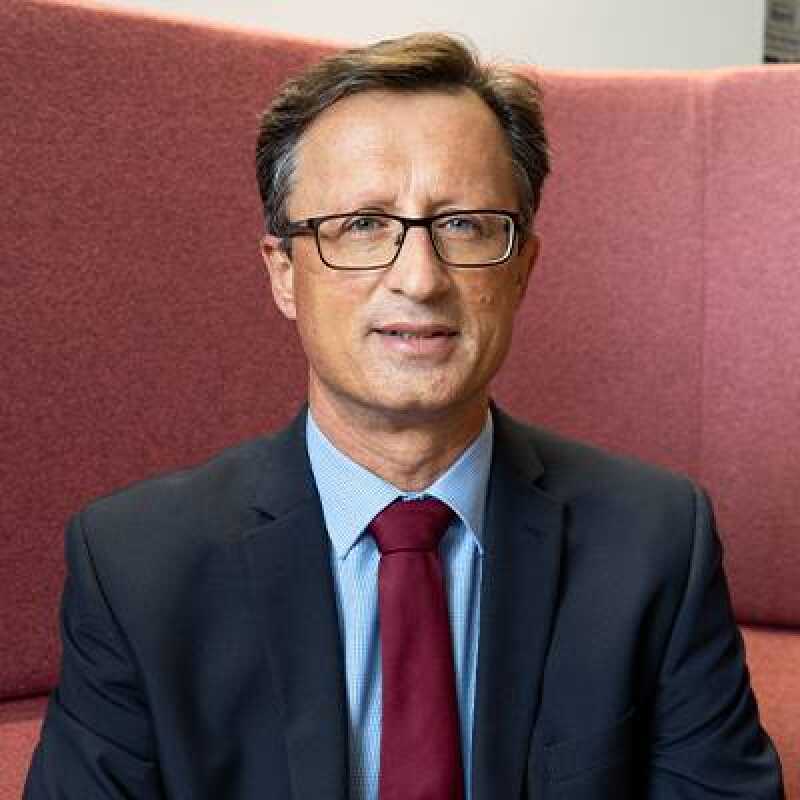
Dr. Epameinondas Katsikas is a Senior Lecturer in Accounting at Kent Business School, University of Kent, with a focus on management accounting, institutional change, and public sector accounting. He holds a BSc in Accounting from Strayer University, an MBA from Leicester University, and a PhD in Accounting from Durham University Business School. Research interests include management accounting change, performance measurement, and accounting innovations in public sector organizations Teaching spans management accounting, financial accounting, and financial statement analysis Supervision topics cover CSR, public sector accounting, and management control systems His work has been published in international peer-reviewed journals and presented at conferences. Key research trends include institutional dynamics in financial systems, CSR impacts, and ESG policy analysis.
Tara M. Sinclair is Professor of Economics and International Affairs and Chair of the Department of Economics at the George Washington University. She is also affiliated with the Elliott School of International Affairs through the Institute for International Economic Policy and the Institute for European, Russian, and Eurasian Studies. Additional affiliations include the GW Institute of Public Policy Research, the Regulatory Studies Center, and GW-CIBER. Sinclair has held influential public sector roles, including Deputy Assistant Secretary for Macroeconomics at the U.S. Department of the Treasury (2022–2024) and founding Chief Economist at Indeed Hiring Lab. PhD in Economics, Washington University in St. Louis (2005) AM in Economics, Washington University in St. Louis (2001) BA in Foreign Languages, Wheaton College (1996) Her research centers on macroeconomic fluctuations, labor market dynamics, forecasting, and the application of big data to economic analysis. She employs econometric and time series methods to model business cycles, evaluate forecast accuracy, and assess policy impacts. Her work connects academic research with real-world decision-making, particularly in labor markets and monetary policy. Sinclair frequently uses online job posting data to generate timely insights into employment trends. Her recent publications focus on post-pandemic labor market transformations, remote work persistence, forecast evaluation, and regulatory economics. She has published in top journals such as Labour Economics , Journal of Applied Econometrics , Oxford Bulletin of Economics and Statistics , and International Journal of Forecasting . Her research leverages real-time data to analyze topics like unemployment insurance claims, job mismatch, and global hiring trends. Scientific recognition includes membership in the Conference on Research in Income and Wealth (CRIW), the Federal Forecasters Consortium Governing Board, and authorship at VoxEU. She has served as a Special Government Employee on the Bureau of Labor Statistics Technical Advisory Committee. She advises and collaborates with numerous researchers and institutions. Her leadership roles include directing the GW Center for Economic Research (former) and leading research initiatives at Indeed Hiring Lab. She teaches graduate and undergraduate courses in macroeconomics and econometrics, and is frequently cited in major media outlets including the New York Times , Wall Street Journal , and Financial Times , and appears on networks such as CNN, NPR, and Bloomberg. Her research team includes collaborators from Federal Reserve Banks, international organizations, and academic institutions. She leads projects funded by GW-CIBER and contributes to policy reports for the U.S. Treasury and Indeed Hiring Lab.
Stephani L. Wrabel is a Senior Policy Researcher at the RAND Corporation and Professor of Policy Analysis at the RAND School of Public Policy. She conducts influential research on education policy, social and emotional learning, and defense-funded youth programs, with her work shaping both federal and state policies. Institution: RAND Corporation School: RAND School of Public Policy Position: Professor of Policy Analysis Email: Stephani_Wrabel@rand.org Education: Ph.D. in Urban Education Policy, University of Southern California M.Ed., University of Florida B.A., Boston University Her research focuses on improving educational outcomes for students and military-connected populations through rigorous evaluation and policy analysis. She specializes in standards-based accountability, educational equity, program evaluation, and social and emotional learning. Her work often centers on vulnerable youth, including those in the National Guard Youth ChalleNGe and JROTC programs, and she has led major federal evaluations, including for the U.S. Department of Education’s Center to Improve SEL and School Safety. Analysis of her recent publications shows a consistent focus on youth development, military-civilian integration, educational equity, and evidence-based policy. Her research spans program evaluation, technical assistance frameworks, and longitudinal impact studies, with a strong emphasis on practical, policy-relevant findings. She frequently publishes both comprehensive reports and executive summaries to reach diverse stakeholders. Scientific Awards: No awards listed in the provided text. Wrabel leads major research initiatives and serves as principal investigator on defense-funded education studies. Her work involves collaboration with federal agencies, education departments, and military organizations. She has developed practical tools for program evaluation, particularly for Marine and Family Division programs, supporting effective resource use and program improvement. Her leadership in large-scale evaluations demonstrates significant grant and project management experience. She is actively involved in research teams focused on education reform and military youth programs. Her work with the Center to Improve Social and Emotional Learning and School Safety involved a multi-year technical assistance network, indicating leadership in collaborative, interdisciplinary teams.
Louisa Foss-Kelly is a Professor and Coordinator of the Counselor Education and Supervision Program at Southern Connecticut State University. Her work bridges clinical practice, counselor education, and legislative advocacy, with a focus on poverty-related counseling and professional identity development. Education: Ph.D. in Counseling from Kent State University Research Interests : Counseling people living in poverty via the I-CARE Model Legislative advocacy for professional counseling Substance abuse prevention in school counseling Graduate counseling student experiences Multicultural and socioeconomic competence Article Trends emphasize poverty interventions (I-CARE Model), counselor education innovations, and legislative advocacy. Her work spans qualitative research, clinical tools, and policy-focused studies. Leadership Roles include: President, Connecticut Counseling Association 2023-2024 President, Chi Sigma Iota Honor Society Grants highlight SBIRT training, evidence-based practices, and addictions counseling program development. She collaborates with researchers like Margaret Generali on poverty and counselor training initiatives.
Krisztina Kis-Katos serves as Professor for International Economic Policy at the University of Göttingen's Department of Economics, a position she assumed in 2016. She holds prominent leadership roles including Chairwoman of the Standing Field Committee of Development Economics of the German Economic Association (Verein für Socialpolitik) and Chairwoman of the Scientific Advisory Board of the RWI Leibniz Institute for Economic Research. Her institutional affiliations extend to research fellowships at IZA and RWI, along with editorial positions at the Journal of Labour Market Research, European Journal of Political Economy, Bulletin of Indonesian Economic Studies, and Journal of Development Studies. Professor Kis-Katos earned her Economics education in Szeged and Konstanz, attended the Swiss Doctoral Program at the Study Center Gerzensee, and received her doctoral degree from the University of Freiburg in 2010. Her scholarly work spans applied development economics and political economy with particular focus on how (de-)globalization and macroeconomic processes affect social and economic outcomes including labor markets, firm performance, land use change, deforestation, and conflict. Her research portfolio reveals consistent thematic threads across recent publications: the intersection of environmental concerns with economic development (particularly deforestation and palm oil in Indonesia), the gendered impacts of trade liberalization, the socioeconomic effects of pandemics like COVID-19, and the complex relationship between governance, corruption, and economic outcomes. Methodologically, her work combines rigorous econometric approaches with innovative data sources including satellite imagery and high-frequency power usage data. Teaching prize for the best doctoral course in RTG 1723, University of Göttingen (2019) Teaching prize of the Student Union of Economics of the University of Freiburg (2014) BMZ/GIZ Public Policy Award (2013) Friedrich-August-von-Hayek-award (2011) Excellence award of the KfW Development Bank (2011) Professor Kis-Katos leads multiple significant research initiatives including the BMZ-DEval funded evaluation of Madagascar's forest restoration program, the DFG-funded Thailand-Vietnam Socioeconomic Panel, and the DFG Research Training Group on Sustainable Food Systems. Her advisory role extends to supervising doctoral candidates through these projects and previously serving as spokesperson for the Research Training Group 1723 on Globalization and Development. Her substantial grant portfolio demonstrates strong research leadership across international collaborations involving institutions in Germany, Indonesia, Thailand, Vietnam, and the United States. Her work connects closely with the Collaborative Research Centre 990 on Ecological and Socioeconomic Functions of Tropical Lowland Rainforest Transformation Systems in Sumatra, Indonesia, reflecting her deep engagement with environmental-economic research questions in Southeast Asia. She also contributes to interdisciplinary teams through projects like PlanetHealth examining global land-use impacts of the COVID-19 pandemic.
Dr. Sharon Stevelink is an Associate Professor (Reader) in Epidemiology at the Institute of Psychiatry, Psychology & Neuroscience, King’s College London. She holds a part-time secondment to the Scottish Government’s Office of the Chief Social Policy Adviser, focusing on poverty trends in rural communities. Her research spans military health, occupational mental health, and welfare systems, with key projects including studies on veterans’ transition, healthcare workers’ mental health during the pandemic, and data linkage of benefits and health records. She is a Co-Principal Investigator on a long-term military mental health cohort and leads the NHS CHECK study on pandemic impacts. Education: PhD in Health-Related Stigma (VU University Amsterdam), MSc Epidemiology (London School of Hygiene & Tropical Medicine) Research Interests: Work and health, military health, data linkage, emergency responders, welfare system analysis Dr. Stevelink’s research emphasizes interdisciplinary collaboration, including with the Department for Work and Pensions and Scottish Government. She was appointed to the Industrial Injuries Advisory Council in 2023. Her work addresses systemic issues in mental health service access, welfare policies, and occupational health disparities. Key projects include the SUSTAIN study on female veterans’ transition challenges and the CPRD study analyzing veterans’ primary care needs. She also leads the NIHR Advanced Fellowship examining welfare system impacts on mental health service users. Her contributions span 147 publications, 31 projects, and three scientific awards.
Lincoln Quillian is Chair and Professor of Sociology at Northwestern University, holding the Gordon S. Fulcher Professorship of Decision-Making. He earned his Ph.D. from Harvard University in 1997 and previously taught at the University of Wisconsin. His research focuses on racial discrimination, residential segregation, urban sociology, and quantitative methods. Key projects include a meta-analysis of global hiring discrimination and analyses of residential mobility patterns. Education: Ph.D. in Sociology, Harvard University (1997) Research Interests: Racial discrimination, urban inequality, quantitative methods, and policy impacts on housing and labor markets. His work combines experimental and observational approaches to address systemic inequities. Recent publications examine persistent racial discrimination in hiring and housing across countries and time. He teaches advanced statistical methods and urban sociology courses. At Northwestern, Quillian chairs the IPR’s Neighborhoods and Community Safety program, emphasizing policy-relevant research. His findings inform debates on segregation, economic inequality, and anti-discrimination policies.
Nina Bandelj serves as a Professor in the Department of Sociology at the University of California, Irvine, where she is an active affiliate of the Center for Organizational Research (COR). Her research bridges economic sociology and family studies, examining how money, debt, and market logics permeate intimate social relations. She frequently participates in COR initiatives like the Academic Speed-Dating events held in Social Sciences Plaza B, fostering interdisciplinary collaboration among scholars. Bandelj's research centers on three interconnected domains: (1) the economization of family life , analyzing how parenting transforms into human capital investment through debt-financed childcare and education; (2) cross-national inequality , investigating ethnic marginalization in Eastern Europe and gender pay gaps within workplaces; and (3) money's social meaning , exploring emotional economies of modern parenting and the valuation of 'priceless' social domains. Her work consistently challenges the 'hostile worlds' thesis by demonstrating how economic and intimate spheres co-constitute each other. Recent publications reveal intensifying focus on debt-driven middle-class parenting (e.g., mortgage debt tied to childrearing) and commodified childhood (e.g., pricing early education), while maintaining strong comparative analysis of postsocialist economies. This trajectory reflects broader shifts in economic sociology toward studying financialization's penetration into familial spheres. Bandelj actively cultivates scholarly communities through COR events and writing initiatives like 'U See I Write,' emphasizing collaborative knowledge production. Her work demonstrates how micro-level family economies scaffold macro-level policy failures, particularly regarding America's family-hostile welfare state.
Yogi Vidyattama is an Associate Professor at the Canberra School of Politics, Economics and Society, University of Canberra. He specializes in spatial microsimulation modeling, economic growth, income distribution, and fiscal decentralization. Previously affiliated with the University of Indonesia, he contributed to regional economic analysis in Indonesia. His research focuses on linking economic policies with spatial outcomes, including corruption determinants, healthcare access, and disaster resilience. Education: PhD in Patterns of Provincial Economic Growth from Australian National University (2008), Master's from ANU (2003), and Bachelor's in Fiscal Decentralisation from University of Indonesia (2000). Research interests include microsimulation modeling, regional economic disparities, and policy impacts. He has led 49 projects, including studies on electric vehicle policy, disaster capability mapping, and regional fast rail economic impacts. His work contributes to UN SDGs related to economic growth, inequality reduction, and disaster resilience. Publications span over 117 outputs, analyzing topics like Indonesia's regional corruption, Australian housing crises, and pandemic policy effects. Awards and recognitions are unspecified, but his roles in executive councils of ANZRSAI and PRSCO highlight peer recognition. Advised 10 students and maintains NATSEM's spatial models and GIS systems.
Annelies Zoomers is a Professor of International Development Studies at Utrecht University's Faculty of Geosciences. Her research focuses on climate change, land governance, migration, and sustainable livelihoods. She co-founded the Netherlands Land Academy (LANDac) and the Shared Value Foundation, and served as Chair of WOTRO Science for Global Development (2019–2022). Her current projects include the EU-funded 'Welcoming Spaces' initiative, which explores integrating migrants into shrinking European regions, and 'Diamonds in the Delta,' addressing climate resilience in delta cities. Zoomers has extensive experience in policy咨询 for global organizations like the World Bank and ILO, and has authored over 200 publications. She is a member of the Dutch Advisory Council on International Affairs (AIV). Her work bridges academic research with practical solutions for inclusive development, emphasizing participatory approaches to land governance and migration policy.
Veronique Munoz-Darde is Professor of Philosophy at University College London (UCL) since 1994 and concurrently at UC Berkeley since 2009. Her primary institutional affiliations are with the Department of Philosophy in UCL's Faculty of Arts and Humanities and Berkeley's College of Letters and Science. She holds a PhD from the European University Institute (1994) and maintains active transatlantic academic engagement. Her research centers on practical reasoning, ethics, and political philosophy with specific focus areas including: aggregation and numbers in practical reasoning; transitivity of 'better than'; social significance of risk; justification of taxation; nature of regret; social goods like universities and museums; and political ideals of equality, fraternity, and solidarity. Her work bridges abstract ethical theory with concrete political applications, particularly through Rawlsian frameworks. Analysis of her 15 most recent publications reveals consistent engagement with foundational questions of justice through multiple lenses: contractualist thought (Rawls, Scanlon), value theory, institutional design, and moral psychology. Key thematic clusters include the critique and development of egalitarian frameworks, analysis of political emotions (fraternity, regret), and examination of social goods under austerity. Her methodology combines conceptual rigor with attention to real-world political constraints. She has held visiting positions at Harvard University and the École des Hautes Études en Sciences Sociales. Her major publications include the monograph La justice sociale: le libéralisme égalitaire de John Rawls (2001) and the forthcoming The Regulation of Intimacy . Current teaching includes seminars on Equality, Hume's Treatise, Raz's Morality of Freedom, Contractualist thought, and Regulation of Intimacy at both institutions. Her research addresses Sustainable Development Goals 1 (No Poverty), 4 (Quality Education), 5 (Gender Equality), and 10 (Reduced Inequalities), demonstrating commitment to philosophy's practical social relevance. She maintains active scholarly presence through ORCID (0000-0002-3718-0936) and Academia.edu.
Mohammad Reza Farzanegan is Professor of Economics of the Middle East and Chair of the Research Group at the Center for Near and Middle Eastern Studies (CNMS) of the Philipps-University of Marburg in Germany. He serves as program director for the International Master's program in Economics of the Middle East, shaping academic pathways for students specializing in Middle Eastern economic studies. Professor Farzanegan's research spans the political economy of oil, demographic transitions, political economy of sanctions and conflict, and empirical institutional economics. His work examines how resource rents, political institutions, and external sanctions shape economic outcomes in the Middle East, with special attention to Iran's unique historical and institutional context. His methodological approach combines rigorous quantitative analysis with deep contextual understanding of Middle Eastern political economies, frequently employing advanced econometric techniques including Vector Autoregression models, synthetic control methods, and panel data analysis. Analysis of Professor Farzanegan's recent publications reveals a consistent focus on the political economy of the Middle East, particularly Iran. His research spans multiple dimensions including energy economics, conflict studies, development economics, and institutional analysis. A notable trend is his application of innovative methodologies to study the impact of sanctions, resource rents, and political institutions on economic outcomes in the region, often using novel data sources such as newspaper coverage to construct indices of corruption and internal conflict. Alexander von Humboldt Georg Forster Research Fellowship (2010-2012) Professor Farzanegan has secured research funding from prestigious organizations including DAAD, which currently supports his project on the Political Economy of Natural Resources at CNMS in collaboration with Iranian institutions. Through his leadership at CNMS, he fosters interdisciplinary research on the Middle East and maintains active collaborations with academic and research institutions across the region, particularly in Iran. His scholarly contributions have established him as a leading expert on Iran's political economy and the broader economic dynamics of the Middle East. As an educator, he directs the International Master's program in Economics of the Middle East, shaping the next generation of scholars and policymakers with specialized knowledge of the region's economic challenges and opportunities. His work bridges academic research and policy relevance, contributing to understanding of critical issues affecting the Middle East's economic development.
Paul Hastings is a Professor of Psychology at the University of California, Davis. He leads the Healthy Emotions, Relationships and Development Lab, focusing on developmental psychophysiology, prosocial behavior, and stress-related mechanisms in child and adolescent mental health. His research integrates neurobiological, psychosocial, and cultural factors to understand resilience and risk in diverse populations, including LGBTQ+ youth, Mexican-origin families, and populations affected by global health challenges like the iLiNS-DYAD-Ghana trial. Research interests include prosocial development, stress physiology, family dynamics, and the biological embedding of social inequities. He has extensively studied the impact of adversity (e.g., poverty, trauma, pandemic stress) on children’s emotional and physiological outcomes. Recent work explores how cultural values, caregiving unpredictability, and nutritional interventions influence developmental trajectories. His articles highlight themes like neurobiological correlates of psychopathology, the role of prosociality in pediatric health, and the intersection of social disadvantage with immune and endocrine systems. Key findings include associations between parasympathetic activity and antiviral gene expression, and how family thriving during crises buffers children’s well-being. Students advised include R. T. Hodge, L. C. Partington, and E. Ugarte. His lab collaborates on international projects such as follow-ups of lipid-based nutrient supplement trials in Ghana and studies of stress responses post-displacement in Jordan. He emphasizes translational research to improve interventions for vulnerable youth, integrating biopsychosocial frameworks with community-focused approaches. Current projects investigate biomarkers of resilience, cultural protective factors, and the neurobiology of moral emotions in ethnic minority children.
Catherine Bert is a Researcher affiliated with the University of Namur (UNamur), based in the Center for Vulnerabilities and Societies Transitions within the Philosophical Space of Namur. She holds a Doctorate in Philosophy (UNamur) and multiple diplomas in Sociology, International Relations, and Comparative Politics from Université catholique de Louvain (UCL). Her academic roles include being a Professor of Philosophy, Ethics, Anthropology, and Sociology at the IES Parnasse-Deux-Alice in Brussels, a member of the ethics committee at CHR de la Haute Senne, and an editorial board member of the journal Les politiques sociales . Research Interests: Dr. Bert specializes in clinical ethics, bioethics, and pandemic-related healthcare ethics. Her work intersects with sociological and anthropological perspectives, focusing on solidarity practices, care ethics, and gender-based violence in medical contexts. She actively contributes to the United Nations Sustainable Development Goals, particularly in eradicating poverty and promoting health equity. Projects & Activities: She has led or collaborated on projects like the 'Universality of Values in Bioethics' and 'Virtue Ethics in Care Practices Analysis'. Her research spans ethical dilemmas in healthcare, including reproductive rights and pandemic response. She frequently participates in workshops, conferences, and colloquia on ethics and healthcare, such as the 'Certificat interUniversitaire en Éthique des Soins de Santé (CUESS)'. Publications: Her recent work addresses solidarity initiatives, crisis care ethics, and gender violence in reproductive healthcare. She also explores molecular mechanisms in skin diseases, including fungal infections and epidermal barrier dysfunction. Affiliations & Roles: Beyond academia, she advises on ethical committees and editorial boards, emphasizing translational ethics into policy and practice.
Paul A. Toro is a Professor of Psychology at Wayne State University and Director of the Research Group on Homelessness and Poverty. He has conducted extensive research on homelessness over 30 years, focusing on adults, families, and youth. His work includes cross-national studies, longitudinal designs, and policy advocacy. He holds a Ph.D. in Clinical/Community Psychology from the University of Rochester (1983). Education: Ph.D. in Clinical/Community Psychology, University of Rochester, 1983, with minors in Social and Developmental Psychology. Research interests prioritize understanding homelessness causes, mental health correlates, and intervention efficacy. His studies compare U.S. and European populations, analyze public opinion, and evaluate foster care transitions. He has authored/co-authored over 60 peer-reviewed articles and book chapters. Key contributions include identifying homelessness typologies, assessing program effectiveness for at-risk youth, and informing national policy. He collaborates with the National Alliance to End Homelessness and has advised on international prevention programs. Courses taught include Abnormal Psychology and Research Methods in Psychology.