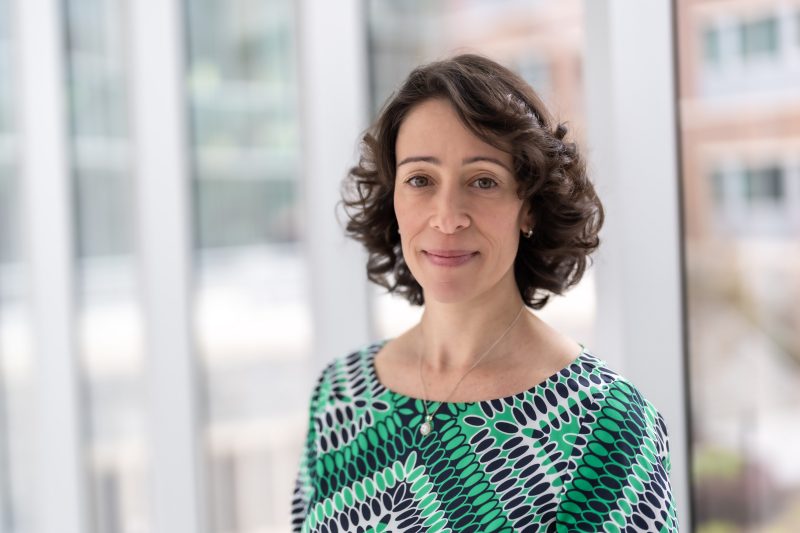
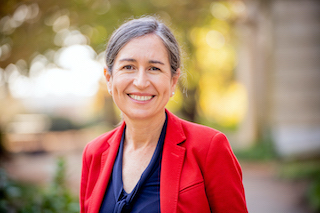
Steven Threadgold is an Associate Professor in Sociology and Anthropology at the School of Humanities and Social Sciences, University of Newcastle. His work bridges critical youth studies, class analysis, and financialization processes. Director, Newcastle Youth Studies Centre Digital Editor, Journal of Youth Studies Editorial Board Member: The Sociological Review , DIY, Alternative Cultures and Society , Journal of Applied Youth Studies Research Interests center on: Class formation through affective economies Youth financial practices with fintech platforms Gentrification and hospitality labor Bourdieu's theory in reflexive modernity DIY cultures and precarious creativity Recent Publications examine how digital finance reshapes youth futures, affective labor in service industries, and algorithmic class reproduction mechanisms. His 2024 work on Indebtpending analyzes debt temporalities, while Hospitality Workers and Gentrification (2024) explores cultural capital in urban transformation. Awards & Recognition : 2020 Raewyn Connell Prize for Best First Book Multiple Well Regarded Lecturer Awards University Medal and Australian Postgraduate Award Teaching includes courses on youth culture, popular music sociology, consumption theory, and sociological foundations. He supervises research on class transitions, affective labor, and financialized futures.
Mari Aaltonen is an Adjunct Professor (Title of Docent) in Health Sciences, holding a PhD (Doctor of Health Sciences) since 2008. Her research focuses on gerontology and health services for aging populations, with extensive work using register-based studies in Finland. Research Interests: Her work centers on: Long-term care systems and dementia care pathways Health service utilization patterns among oldest-old populations Impact of COVID-19 on institutionalized elderly Care poverty and social inequalities Mortality predictors and comorbidity in aging Publication Trends: Recent articles (2025) demonstrate methodological consistency in register-based cohort studies and survival analysis, with thematic focus on: Loneliness mortality risks in home care Emergency healthcare utilization predictors Dementia-comorbidity interactions Care poverty among vulnerable elderly groups Academic Activities: Includes supervision of doctoral candidates and master students, international research collaborations (Canada, New Zealand), and frequent conference presentations on gerontological health services research.
Roberta Freitas-Lemos, Ph.D., is an Assistant Professor at the Fralin Biomedical Research Institute at VTC and in the Department of Psychology within the College of Science at Virginia Tech. She leads the Freitas-Lemos Lab and is affiliated with the Center for Health Behaviors Research, Addiction Recovery Research Center, and Cancer Research Center – Roanoke. Her research focuses on behavioral economics, tobacco use, health disparities, and policy interventions to reduce cancer risk and promote health equity. Ph.D., Behavioral Sciences, University of Brasília Professional Degree in Public Management, Cândido Mendes University Master's Degree, Experimental Psychology: Behavior Analysis, Pontifical Catholic University - São Paulo B.A., Psychology, Pontifical Catholic University - São Paulo B.A., Sports Sciences, University of São Paulo Dr. Freitas-Lemos investigates how tax policies, marketing, product characteristics, and regulatory changes influence consumption of tobacco, alcohol, cannabis, and ultra-processed foods, particularly among underserved populations. She uses the Experimental Tobacco Marketplace to simulate policy impacts and forecast behavioral responses. Her work aims to inform equitable public health policies that reduce preventable deaths and cancer disparities. Her recent publications focus on delay discounting, vaccine hesitancy, flavor restrictions, menthol bans, and socioeconomic disparities in tobacco use. She examines how policies affect purchasing behavior, substitution patterns, and psychological distress, with a strong emphasis on social justice and health equity. Five-year, $680,000 Career Development Award from the National Cancer Institute Dr. Freitas-Lemos has mentored research teams and collaborated extensively with experts like Warren Bickel. She has secured grant funding to develop novel tax proposals based on abuse liability models and to project long-term cancer outcomes. She serves on editorial boards and as a reviewer for journals in tobacco control, addiction, and behavioral science, and consults for institutions including Virginia Commonwealth University and Brazil’s Ministry of Health. Her lab is actively involved in training researchers and developing scalable methods to assess policy impacts. She has also contributed to book chapters on behavioral science in public policy and social change.
Gaia BERTARELLI is an Assistant Professor (Tenure-Track) in Social Statistics at the Department of Economics, Ca' Foscari University of Venice. She holds a PhD in Statistics from the University of Milan-Bicocca (2015), with earlier degrees in Mathematics (Bachelor) and Biostatistics (Master). Her research focuses on small area estimation (SAE), robust statistics, latent variable models, and multidimensional poverty measurement, with applications in health systems, gender inequality, and sustainable well-being. She collaborates with institutions like ISTAT (Italian National Institute of Statistics), FAO, and Save the Children ONLUS, and has been involved in EU-funded projects since 2018. Education: Bachelor's in Mathematics, University of Milan-Bicocca Master's in Biostatistics and Experimental Statistics, University of Milan-Bicocca PhD in Statistics, University of Milan-Bicocca (2015) Research Interests: Her work integrates statistical methodology with real-world challenges, emphasizing poverty measurement, health systems analysis, and gender inequality. She develops SAE models to assess multidimensional poverty and policy effectiveness, particularly in official statistics. Her recent projects include measuring educational poverty, analyzing healthcare disparities in aging populations, and evaluating digital health interventions. Editorial Roles: Associate Editor, Statistical Methods & Applications (2024–) Editor of 'Book and Software' section, The Survey Statistician (2024–) Professional Activities: Member of the S2G group (SIS) on Methodologies for Sample Surveys (2024–2025) Past coordinator of y-SIS (Young Italian Statisticians) and YSE (Young Statisticians Europe) Labs/Teams: She contributes to the Research Institute for Social Innovation at Ca' Foscari, focusing on interdisciplinary social science research.
Mari Rege is a Professor of Economics at the University of Stavanger, affiliated with the UiS School of Business and the Department of Economics and Finance. She is an active researcher in labor economics, education, child development, and social mobility, with a strong empirical focus on field experiments and register data. University: University of Stavanger School: UiS School of Business Department: Department of Economics and Finance Email: mari.rege@uis.no Office: EOJ SV-231 Her research centers on how early childhood interventions, family dynamics, and educational policies shape long-term outcomes. She investigates topics such as the gender gap in education, teacher-student ratios, socio-emotional learning, and the intergenerational transmission of inequality. Her work often bridges economics with psychology and education policy. Recent publications reveal a consistent focus on experimental and quasi-experimental designs, particularly in early childhood education. She has led or contributed to major field experiments on structured curricula, playful learning, and teacher training. Her interdisciplinary approach integrates behavioral economics with public policy evaluation, with frequent co-authorship with scholars in education and psychology. Mari Rege actively supervises PhD students, including Andreas Østbø Fidjeland and Maximiliaan Willem Pierre Thijssen, and has secured research funding for large-scale educational interventions. She is a frequent contributor to public discourse, writing opinion pieces on child poverty, menopause in the workplace, and curriculum reform in early education. She is involved in multiple research initiatives, including the SELMA project on socio-emotional learning in early childhood, and has co-authored several books and dissemination materials aimed at practitioners and policymakers. Her work emphasizes translating research into actionable policy and practice, especially in the Norwegian context.
Dr. Hassan Vatanparast is a Professor at the University of Saskatchewan, specializing in Nutritional Epidemiology , Public Health Nutrition , and Food Security for at-risk populations including immigrants, refugees, and Indigenous communities. Research focuses on Global Health , Vitamin D and Chronic Diseases , and Dietary Interventions . Teaches courses: NUTR 350 , NUTR 811 , and PUBH 854 . Recent grants (2018-2021) include projects on bone health , pulse consumption , and school food policies . Develops tools like MenuPlanPro and Plate Waste Apps for nutrition monitoring. His work spans nutritional disparities , policy evaluation , and community-based interventions , particularly during crises like the COVID-19 pandemic and Taliban takeover .
Alexandre Janiak serves as Associate Professor of Economics at the Institute of Economics, Pontifical Catholic University of Chile (PUC), where he conducts research at the intersection of macroeconomics and labor economics. His work addresses critical policy issues including minimum wage impacts, inflation dynamics, and labor market institutions. His educational background includes a Ph.D. in Economics from ECARES, Free University of Brussels (Belgium) and Sciences-Po Paris (France). This dual European training informs his comparative approach to economic policy analysis. Research interests center on empirical and theoretical investigations of labor market frictions, with recurring themes in minimum wage effects, unemployment dynamics, and inflation-welfare relationships. His methodology combines structural modeling with microdata analysis to evaluate policy interventions across diverse economic contexts. Publication trends reveal consistent focus on labor market institutions since 2008, evolving from European mobility studies toward contemporary issues like pandemic responses (2020-2021) and inflation risk (2024). His work appears in top-tier journals including Journal of Monetary Economics , European Economic Review , and Economic Journal , demonstrating sustained scholarly impact in macro-labor economics. No scientific awards were documented in the source materials. Collaborative patterns dominate his research output, with frequent co-authorship involving Sofia Bauducco (minimum wage studies), Paulo Santos Monteiro (automatic stabilizers), and Etienne Wasmer (mobility research). While specific grant funding isn't detailed, his working papers indicate active engagement with policy-relevant research questions, particularly through the IE-PUC Working Paper series. The text provides no information about laboratory facilities or dedicated research teams, though his institutional affiliation with PUC's Institute of Economics suggests participation in broader departmental research initiatives.
Dr. Eugene Mohareb is an Associate Professor in Sustainable Urban Systems at the University of Reading, where he leads the Sustainable & Equitable Resource Consumption (SERC) group. His research focuses on quantitative sustainability assessments of urban systems, specializing in life cycle analysis of energy and food systems, greenhouse gas mitigation strategies, and adoption of low-carbon technologies. He directs multiple courses including Statistical Analysis, Sustainable Built Environments, and Carbon Management. Dr. Mohareb holds a PhD in Civil (Environmental) Engineering from the University of Toronto, an MSc in Biological (Food) Engineering from the University of Guelph, and a BSc in Biological (Food) Engineering from the same institution. He is affiliated with the International Society for Industrial Ecology. His research examines urban sustainability through three primary lenses: life cycle sustainability assessment of built environments, domestic retrofit adoption patterns, and sustainability metrics for food systems. Key projects include FoodSEqual, HiFi Bread, and BBSRC-funded assessments of biobased food system transitions. His work with Toast Brewing exemplifies industry collaborations to quantify carbon benefits of circular economy approaches. Mohareb's publications demonstrate strong thematic coherence around urban decarbonization, with recent expansions into social dimensions of sustainability in developing contexts. His 15 most recent articles (2022-2025) cluster around six domains: waste management innovations, energy retrofit behavior, urban metabolism modeling, climate adaptation strategies, food-energy systems, and renewable technology adoption in rural areas. This reflects an evolution from foundational urban GHG accounting toward applied socio-technical transitions. He leads the SERC research group, collaborating with academic and industry partners to develop evidence for low-carbon societies. Current projects investigate decentralized waste systems, solar adoption impacts on rural livelihoods, and urban heat resilience frameworks.
Tewise Yurena Ortega González serves as Assistant Professor in the Department of Basic Legal Sciences at the University of Las Palmas de Gran Canaria, actively contributing to the GIR ECOAQUA research group focused on tourism, land use planning, and environmental sustainability. Her academic profile bridges classical Roman jurisprudence with contemporary legal challenges in technology and social justice. Her research spans Roman Law, Legal History, and the intersection of Artificial Intelligence with legal systems, examining historical continuities in child protection, gender violence, and environmental management. Key interests include algorithmic bias in justice systems, AI ethics in legal education, and the application of ancient Roman administrative strategies to modern environmental crises, particularly water heritage conservation and disaster management. Recent publications reveal a strong thematic trajectory connecting antiquity to digital age challenges, with 15+ publications (2023-2025) exploring AI's role in legal education, cinematic representations of law, and Roman legal frameworks applied to modern issues like flood control and child abandonment. Her work consistently demonstrates interdisciplinary methodology across law, history, and technology studies. Ortega González actively supervises bachelor's theses through structured mentorship, guiding students on topics ranging from Roman marriage practices to modern disability law. Her academic leadership extends to the GIR ECOAQUA research group and Institute of Sustainable Aquaculture Research, where she develops interdisciplinary approaches to environmental law and sustainable resource management.
Gaurav Datt serves as an Associate Professor in the Department of Economics at Monash University and holds the position of Deputy Director at the Centre for Development Economics and Sustainability. He joined Monash University in August 2011 after accumulating over twenty years of research and operational experience in the development sector. His professional background includes research positions at the World Bank and the International Food Policy Research Institute (IFPRI) in Washington D.C., with recent work at the Poverty Reduction and Economic Management Department of the World Bank's East Asia and South Asia Regions based in Sydney and Kathmandu. Dr. Datt's research interests span across multiple critical areas of development economics. His work primarily focuses on poverty analysis, income distribution patterns, and social policy frameworks. His research portfolio encompasses a diverse geographical scope including India, China, Egypt, Laos, Mozambique, Myanmar, Nepal, Papua New Guinea, the Philippines, Sri Lanka, and Timor-Leste. His recent scholarly output demonstrates a strong emphasis on contemporary development challenges, with particular attention to the economic impacts of the COVID-19 pandemic, environmental economics as it relates to health outcomes, and innovative approaches to poverty measurement. His publication trends reveal a consistent focus on empirical development economics, with recent work examining the intersection of environmental factors and health outcomes, gendered economic impacts of policy interventions, and migration dynamics during global crises. His research methodology typically employs rigorous econometric analysis of large-scale household survey data to address pressing development questions. Dr. Datt actively supervises PhD students and leads multiple significant research initiatives. His current projects include the SPIA Country Study examining agricultural innovation dynamics in both South and North India, Poverty Research Frontiers for Asia and the Pacific funded by the Asian Development Bank, and studies on gendered impacts of SME policy responses to the COVID-19 pandemic across Southeast Asia. As Deputy Director of the Centre for Development Economics and Sustainability, Dr. Datt contributes to a vibrant research ecosystem focused on addressing critical development challenges through interdisciplinary approaches. His work directly contributes to several UN Sustainable Development Goals, particularly those related to poverty reduction, economic inequality, and sustainable development pathways.
Susana Ferreira is a Professor in the Department of Agricultural & Applied Economics within the University of Georgia's College of Agricultural and Environmental Sciences. Based at 314D Conner Hall in Athens, Georgia, she maintains an active research program examining the economic dimensions of environmental change with contact available via sferreir@uga.edu and 706-542-0086. Her academic foundation includes advanced training from the University of California, San Diego: Ph.D. in Economics (2004) M.A. in Economics (2002) B.S. from Universidad de Navarra, Pamplona, Spain (1997) Dr. Ferreira's research centers on environmental and natural resource economics with distinctive focus on non-market valuation of ecosystem services. She investigates how environmental changes impact human wellbeing through interdisciplinary lenses connecting economic systems, public health, and ecological processes. Her methodological approach frequently employs applied econometrics to analyze life satisfaction data, satellite nightlights metrics, and contingent valuation surveys, particularly examining externalities not captured by conventional markets. Analysis of her 2022-2025 publications reveals consistent thematic threads: valuation of natural infrastructure (especially flood mitigation services), climate policy acceptability across European contexts, innovative measurement of environmental health impacts, and economic analysis of disease-environment interfaces. Her work demonstrates methodological versatility through applications of hedonic pricing, spatial econometrics, and behavioral frameworks to diverse settings from Florida coastlines to Indian fisheries. No scientific awards or honors were documented in the available materials. While specific student names and grant details weren't provided, her extensive publication record indicates active graduate supervision and substantial research funding. Her international collaborations—evident in studies spanning Gujarat, Florida, and African disease hotspots—suggest robust research partnerships and likely support from agencies like NSF or USDA. Future work appears oriented toward refining non-market valuation techniques and deepening analysis of climate adaptation economics. Information regarding dedicated laboratories or formal research teams was not included in the source documentation.
Gaaitzen de Vries is a researcher at the University of Groningen's Faculty of Economics and Business, affiliated with the Global Economics & Management department. His work focuses on global value chains, structural economic change, industrialization in developing countries, and productivity dynamics. He has extensively studied trade patterns, labor market impacts of technology, and economic transformation frameworks.
Roman Dzambazovic is an Associate Professor and Head of the Department of Sociology at the Faculty of Arts, Comenius University in Bratislava. He has been working at the university since 1996, initially as an assistant professor until 2022 when he was promoted to associate professor. He has served as Head of Department since 2019 and is also the webmaster of the department website. His educational background includes: 1996: Mgr. in Sociology, Faculty of Arts, Comenius University in Bratislava 2006: PhD. in Sociology, Faculty of Arts, Comenius University in Bratislava 2022: Scientific qualification degree IIa, Slovak Academy of Sciences 2022: Associate Professor title in Sociology, Faculty of Arts, Comenius University in Bratislava Roman Dzambazovic's research focuses on social inequalities, social stratification and mobility, family sociology, intimacy and sexuality, youth subcultures, adolescence, and social deviance. His work often examines how socioeconomic factors influence family formation, educational pathways, and social mobility in Slovak society. He has conducted extensive research on poverty, social exclusion, and demographic trends in Slovakia, with particular attention to Roma communities and youth transitions to adulthood. His approach combines theoretical frameworks with empirical data from national surveys and international comparative research projects. His recent publications show a strong focus on residential homogamy, educational inequalities, youth transitions to adulthood, and social stratification in Slovakia. His work demonstrates consistent engagement with both theoretical sociological frameworks and empirical data analysis, often participating in international comparative research projects. The articles reveal a trajectory of increasingly sophisticated methodological approaches and theoretical integration across his career. His scientific awards include: Rector's Award of Comenius University in Bratislava for pedagogical and research activities (2008) Scholarship from Educational Foundation of Jan Hus (2006) Award from Literary Fund for scientific and professional literature in social sciences (2015) A. Hirner Award for best sociological work - Second place (2020) Commemorative Letter from Comenius University in Bratislava (2022) Professor Dzambazovic has supervised 61 bachelor's theses and 54 master's theses, and currently supervises 7 bachelor's, 4 master's, and 3 doctoral students. He has been involved in numerous research projects, including APVV, VEGA, and Horizon 2020 grants, focusing on educational paths of young people, social stratification, and cultural heritage. His most significant projects include 'Educational paths of young people - factors and mechanisms of their choice' (APVV 2021-2025), 'Close relatives? Slovakia and the Czech Republic in the context of international comparative research' (APVV 2019-2023), and 'Cultural Heritage and Identities of Europe's Future' (Horizon 2020 2018-2021). He is an active member of the academic community, serving as Vice-President of the Slovak Sociological Society (2018-2022), member of the editorial board of the journal Sociológia since 2018, and representative of Slovakia in the International Social Survey Programme (ISSP) since 2004. He is also a founding member of the Slovak Social Data Archive (SASD) team and has participated in numerous international research collaborations across Europe.
David C Schalliol is an Associate Professor of Sociology and Anthropology at St. Olaf College , with specialized roles as Director of Africa and the African Diaspora and Race Matters Learning Community. He combines sociological research with documentary photography to examine community dynamics, social structures, and spatial relationships. PhD and MA from The University of Chicago Bachelor's degree from Kenyon College His research focuses span multiple domains: Urban Sociology: Analyzing housing transformation, industrial legacies, and placemaking practices Visual Sociology: Using photography to document architectural isolation and urban change Environmental Systems: Exploring Mississippi Watershed connections and urban water relationships Key projects include: Isolated Building Studies (Tokyo-based UTAKATADO, 2020) The City Creative with Michael Carriere (University of Chicago Press, 2021) Mississippi Watershed Photography Fellowship (Exhibit Columbus, 2020-21) His work has received support from: Graham Foundation for Advanced Studies in the Fine Arts European Union funding National Public Housing Museum commission Scientific and artistic recognitions include: International Digital Emmy for Non-Fiction (2018) Exhibition in Chicago Architecture Biennial Featured in MAS Context publications Recent publications analyze: Urban agricultural history in Milwaukee (2024) Post-industrial community transformations (2023) Coastal urban development conflicts (2021)
Vibhor Saxena is a Lecturer in Economics at the Business School of the University of St Andrews, UK. His research bridges development economics, applied econometrics, and energy ethics, focusing on global south challenges such as energy inequality, gender disparities, and microfinance dynamics. He actively supervises postgraduate students and collaborates on interdisciplinary projects addressing health systems, pandemic resilience, and sustainable development goals. Research Focus: Development economics, energy poverty, son preference, and financial inclusion Projects: SFC GCRF grant on pandemic diagnostics, EPSRC-funded food security research Collaborations: Cross-country studies in India, Bangladesh, Uganda, Kenya, and the UK Activities: External examiner roles (University of Glasgow, Liverpool), invited talks on energy access and health systems Contact: vs57@st-andrews.ac.uk | ORCID: 0000-0001-9411-5527