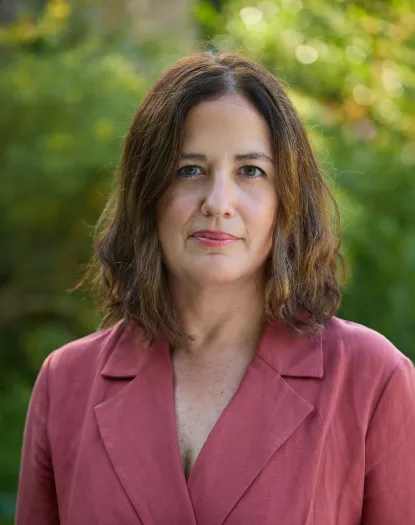
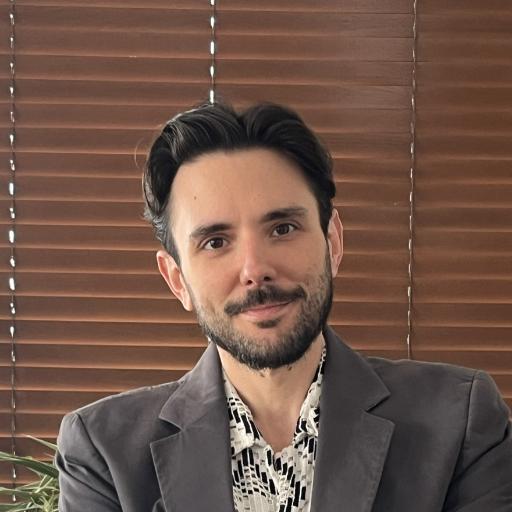
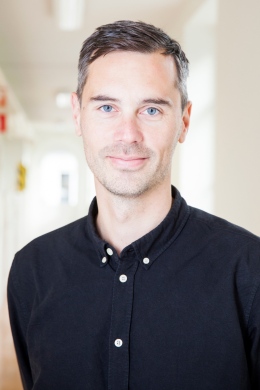
Elisabet Langmann serves as Associate Professor and Department Head at Södertörn University, Sweden, specializing in Teacher Training with research bridging educational philosophy and classroom practice. Her work critically examines ethical dimensions of schooling and democratic values implementation. Langmann holds a PhD in Educational Philosophy from Örebro University (2013), where her dissertation explored pedagogical approaches to teaching tolerance while avoiding student marginalization. Her academic journey reflects deep engagement with continental philosophy and didactic theory. Her research centers on ambiguities in democratic values (tolerance, justice, responsibility) and their classroom implications, investigating how value conflicts manifest and how supportive teaching climates emerge. Methodologically, she integrates empirical classroom observations with philosophical analysis, drawing from phenomenology and critical theory to examine sensory, affective, and ethical dimensions of learning environments. Analysis of her 2021-2025 publications reveals three evolving trajectories: sustainability education exploring climate change pedagogy; sensory-phenomenological approaches to classroom climate; and continued refinement of tolerance education frameworks. These strands converge in examining how affective dissonance and bodily experiences shape ethical learning. Langmann actively secures research funding including two Swedish Research Council projects (2020-2023): as project leader for "Forms of Upbringing" investigating bodily dimensions in value conflict resolution, and as co-investigator in "How can schools reduce unequal educational opportunities?" examining school culture in disadvantaged areas. She mentors junior researchers through international networks rather than formal student supervision. She contributes significantly to academic infrastructure as board member of the Nordic Society of Philosophy of Education, co-convenor for NERA/EERA educational philosophy networks, and peer reviewer for 12+ journals including Studies in Philosophy and Education. Her leadership extends to international research collectives like PEDST and SCAPE, focusing on democratic sustainability transitions and cultural conflicts in education.