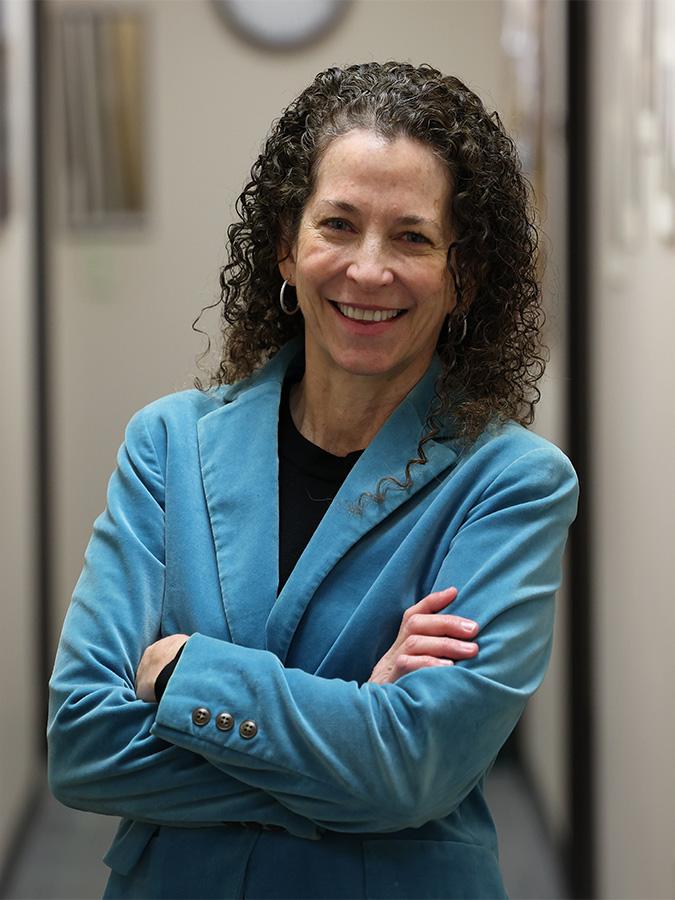
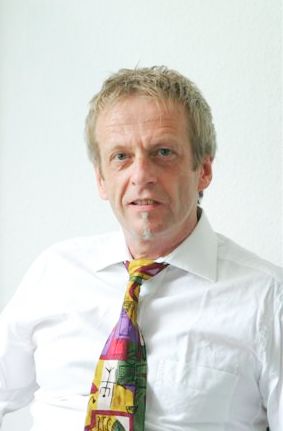
Joshua Landis is the Sandra Mackey Chair and Professor in Middle East Studies at the University of Oklahoma’s David L. Boren College of International Studies. He serves as Director of the Center for Middle East Studies and the Farzaneh Family Center for Iranian and Persian Gulf Studies. Landis specializes in Syrian politics, Middle Eastern conflict dynamics, and regional security. His work includes analyzing the Assad regime’s resilience, US foreign policy in the Middle East, and the geopolitical implications of regional conflicts. Education: B.A. from Swarthmore College, M.A. from Harvard University, Ph.D. from Princeton University. He has lived extensively in the Middle East, including 15 years in the region and four in Syria. Research Interests: Syrian political history, authoritarian regimes, regional diplomacy, and the impact of sanctions. Landis writes the influential Syria Comment blog and frequently appears in media such as NPR, BBC, and Foreign Affairs . Awards: Three Fulbright grants and numerous teaching awards. Past roles include President of the Syrian Studies Association. Grants and Media: His analysis on Syria’s civil war, US policy failures, and regional alliances has shaped academic and policy debates. Recent media highlights include discussions on the fall of Assad’s regime and Middle East security dynamics on NPR and Politico Magazine .
Margrethe C. Stang is an Associate Professor in the Department of Art and Media Studies at the Norwegian University of Science and Technology (NTNU), Faculty of Humanities. Her work focuses on medieval Norwegian art, particularly painting and sculpture from the High Middle Ages (c. 1200–1350), with a strong emphasis on religious imagery, patronage, and cultural heritage. Her research interests include: Medieval church art and iconography St. Olav and royal saint representations Function of religious imagery in liturgical practice Patronage in medieval Norway Antisemitism and representation of minorities in medieval art Altar frontals and stave church furnishings Interdisciplinary approaches combining art history, archaeology, and theology Her recent publications reveal a consistent scholarly engagement with medieval Scandinavian art, particularly through themes of cultural identity, religious symbolism, and visual polemics. She has edited and contributed to key anthologies such as The Medieval Scandinavian Art Reader and has published extensively on topics like the manticore in Urnes stave church and the representation of Jews and Muslims in Norwegian church art. She has supervised numerous master’s students whose theses focus on medieval art, church furnishings, and cultural heritage. Notable students include Alexander Asphaug Rauboti, Morten Spjøtvold, and Siv Brobakken. Her scientific contributions are complemented by active public dissemination, including participation in the grubleseminar series and regular commentary in journals such as Fortidsvern and Aftenposten . She also serves as Chairman of the Nordenfjeldske Kunstindustrimuseum's foundation board, underscoring her leadership in cultural heritage preservation. She teaches courses on European art and architecture from antiquity to the modern era and continues to mentor students on topics related to Nidaros Cathedral, medieval sculpture, and 19th-century restorations.
Patrick J. Deneen is Professor of Political Science and holds the David A. Potenziani Memorial College Chair of Constitutional Studies at the University of Notre Dame . He joined the faculty in 2012 as Associate Professor and was promoted to full Professor in 2018. Prior academic appointments include Georgetown University (2005–2012), where he held the Markos and Eleni Tsakapoulos-Kounalakis Chair in Hellenic Studies and founded the Tocqueville Forum, and Princeton University (1997–2005) as Assistant Professor of Government. His educational background includes a B.A. in English Literature from Rutgers University, where he graduated summa cum laude , and a Ph.D. in Political Science, also from Rutgers, under Wilson Carey McWilliams. His dissertation, The Odyssey of Political Theory , received the American Political Science Association’s Leo Strauss Award for Best Dissertation in Political Theory in 1995. Research Interests: Political Theory Liberalism and Conservatism Critics of Modernity American Political Thought Tocqueville and Democratic Theory Constitutionalism and Religion in Public Life Deneen’s scholarship critically examines the philosophical foundations of liberalism, arguing that its internal logic undermines the very civic institutions—family, church, community—that sustain a free society. His influential book Why Liberalism Failed (2018) has been translated into over twenty languages and praised by figures across the ideological spectrum, including former President Barack Obama. His 2023 follow-up, Regime Change , calls for a new conservative elite rooted in local communities and pre-postmodern values. Scientific Awards and Honors: APSA Leo Strauss Award (1995) APSA Honorable Mention for Best First Book (2000) Research Fellowships: Princeton University, Earhart Foundation, Institute for Advanced Study at the University of Virginia Advising and Grants: While specific student advisees are not listed, Deneen has held leadership roles in academic programs, including serving as Interim Director of the Minor in Constitutional Studies (2014–2015) and Acting Director of the Center for Ethics and Culture (Spring 2018). He has received multiple research fellowships supporting his work on political theory and American constitutionalism. He is affiliated with the Tocqueville Program for Inquiry into Religion and American Public Life and serves on editorial boards including Perspectives on Political Science and American Political Thought . Labs and Teams: At Georgetown, Deneen founded the Tocqueville Forum on the Roots of American Democracy, which became a vibrant center for interdisciplinary reflection on American political culture. At Notre Dame, he contributes to the Tocqueville Program and the Minor in Constitutional Studies, fostering dialogue on religion, constitutionalism, and civic life.
Dr. Candi Cann is a leading scholar in Baylor Interdisciplinary Core (BIC) and the Religion Department at Baylor University . As a Professor of Religion , she specializes in death, dying, and grief , particularly digital memorialization and cross-cultural death practices . Ph.D. & A.M. in Comparative Religion, Harvard University M.A. in Asian Religions, University of Hawai'i at Manoa B.A. in Asian Studies & English, St. Andrews, NC Her research explores death technologies , virtual afterlives , and food's role in mourning rituals . She has authored three seminal books and numerous articles tracing the evolution of memorialization practices from medieval corpse cakes to contemporary social media profiles. Recent work includes pandemic-related studies on collective grief and virtual funeral adaptations . She serves as Director of Baylor in Korea and has received prestigious awards like the Fulbright Scholarship (2022-23) and Louisville Institute Grant (2020). Keynote Speaker on death studies Advisory roles for Option B and NHPCO Consultant for deathandreligionrcover.com
Dr. Grzegorz Gil serves as an Assistant Professor at the Department of International Relations within the Faculty of Political Science and Journalism at Maria Curie-Skłodowska University (UMCS) in Lublin, Poland. His academic profile is complemented by expert roles with Team Europe Direct (2023–present) and Team Europe (2017–present), where he provides insights on international affairs. PhD in Political Science (2010) - Dissertation: "State Failure in Post-Cold War International Environment" MA in International Relations (2005) - Thesis: "Failing States in Africa" Dr. Gil specializes in state failure and post-conflict reconstruction , with fieldwork focused on Somalia. His research spans political stability , asymmetric threats , and security regimes . Publications reveal consistent engagement with statebuilding challenges in Libya, Afghanistan, and the Asia-Pacific region. Recent article trends show increasing focus on regional integration (ASEAN-EU relations), Eastern European subversion (Russia-Ukraine dynamics), and political sanctity as a conceptual framework. His 2024 works examine statehood recognition , sports diplomacy , and legal foundations of international security . Dr. Gil teaches courses on international security systems , failed states , humanitarian operations , and Australia's foreign policy . He mentors the Oxford-Style Debating Circle at UMCS and serves as juror in national academic debate championships.
Dr. Leila Almazova is a Research Fellow at the Leibniz Center Moderner Orient, specializing in Islamic education, Muslim philosophy, and state-religion dynamics in post-Soviet contexts. Her current project, The Search of a 'New Orthodoxy': Islamic Education in Post-Soviet Tatarstan , examines shifts in religious authority and state influence on Islamic pedagogy in Tatarstan from the 1990s to the 2020s. Her work intersects with broader themes of secularism, traditional values, and responses to global Islamic movements. At ZMO, she contributes to the 'Religion and Intellectual Culture' research unit, analyzing transregional connections and local adaptations of Islamic traditions. Focus on state centralization and conservative religious elites Investigates federal/republican policy tools in religious education Examines community responses to international Islamic influences Scientific Awards Fulbright Grant (2010) for collaborative research in the U.S. Previously, she served as Executive Director at the Resource Center for Islamic Education Development at Kazan Federal University (2012-2016) and translated Ziyaedtin Kamali's seminal work into Russian (forthcoming, 2024).
Itamar Ben Ami is an Affiliated Researcher at the Dubnow Institute and a member of the focal project »Turning Object into Subject. Communicating Jewish Everyday Culture in Germany.« His work bridges the intersections of modernity, religion, state, and secularism in the 20th century, with a focus on Orthodox and ultra-Orthodox Jewish political theology. Education : PhD from Hebrew University of Jerusalem; graduate of ultra-Orthodox Yeshiva world. Awards : Recipient of Posen Society of Fellows, Minerva Stiftung, and Rothschild Post-doctoral Fellowships. Teaching : Former research fellow and lecturer at Humboldt University of Berlin. Research interests center on Modern Jewish Thought , Political Theology , and Religion-State Dynamics . His recent work explores Jewish material culture, such as the kippah's symbolic role in public spaces. He contributes to projects analyzing Jewish burial practices and Habsburg-era trafficking investigations, though these are collaborative efforts rather than his sole authorship.
Dietrich Reetz is a Senior Research Fellow at the Zentrum Moderner Orient (ZMO) and an external faculty member at the Department of Political Science, Free University Berlin. His research focuses on global Muslim identities, with a regional emphasis on South and Central Asia, Europe, and transnational networks. He has led major projects like the BMBF-funded Competence Network Crossroads Asia (2011–2016) and the DFG-funded Bridging the gap: Blending Islamic and secular education (2006–07). Reetz also serves as a Principal Investigator at the Berlin Graduate School of Muslim Cultures and Societies since 2008. Research Interests : Reetz’s work intersects political science, Islamic studies, and ethnic identity formation in colonial and post-colonial contexts. He examines transnational Muslim networks, religious reform movements, and conflicts in South Asia. His projects include studies on the Tablīghī Jamā`at and Da`wat-i Islāmī in Europe, and historical analyses of ethno-religious movements in pre-1947 India. Publications & Projects : Reetz has authored articles on South Asian political Islam, Sikh identity, and Hindu-Muslim conflicts. His edited volumes include South-South Linkages in Islam (2007) and Sendungsbewußtsein oder Eigennutz (2001). His research has been funded by the German Research Foundation (DFG) and the Federal Ministry for Education and Research (BMBF). Teaching & Academic Roles : He taught seminars on ethno-religious movements at Humboldt University Berlin (2007) and Free University Berlin, covering topics like alternate globalities in Muslim networks. Reetz holds a Habilitation from Free University Berlin (2003), published as Islam in the Public Sphere: Religious Groups in India, 1900–1947 (Oxford University Press, 2006).
Prof. Dr. Patrick Becker holds the Professorship for Fundamental Theology and Religious Studies at the Faculty of Catholic Theology, University of Erfurt . He serves as Academic Dean and holds multiple institutional roles, including Member of the Performance Pay Commission and Chair of the Internal Accreditation Commission . His work bridges theology with interdisciplinary concerns like science-religion dialogue, cultural sensitivity, and modernization challenges. Becker’s research focuses on religious fundamentalism , postmodern theological epistemology , evolutionary approaches to religion , and Christian social ethics . He explores tensions between naturalistic worldviews and transcendent meaning , with recurring interests in ambiguity tolerance , neuroscience implications , and interdisciplinary education models . His recent publications emphasize religious nationalism and technological determinism , while earlier work addressed apocalypticism , development paradigms , and theological responses to climate change . Becker actively contributes to science-religion discourse , educational reform , and interfaith dialogue . He is a founding member of the International School for Intercultural Philosophy , serves on scientific advisory boards (e.g., Würzburg Theological Distance Course), and participates in European academic networks like the European Society for Catholic Theology and European Academy of Religion . His work appears in journals such as Zygon: Journal of Religion and Science and HAPÁG Journal .
Mikko Ketola is a Senior University Lecturer in Church History at the Department of Church History, Faculty of Theology, University of Helsinki. He serves as a supervisor for the Doctoral Programme in Theology and Religious Studies and holds the title of Docent. His research focuses on Baltic church history, particularly the Estonian Evangelical-Lutheran Church during the interwar period and World War II. He explores ecumenical relations between Lutheran and Catholic churches in Finland and contributes to the history of the Catholic Church in the 20th and 21st centuries. Current project: Monograph on the Estonian Evangelical-Lutheran Church during WWII Collaboration: RETOPEA EU project (2018–2022) on religious tolerance Research areas: Lutheran-Catholic relations, Vatican diplomacy, Baltic religious movements His recent publications include analyses of Lutheran-Catholic ecumenism, Reformation commemorations, and Freemasonry. Articles span historical sociology, religious politics, and cultural studies. Scientific Awards 2023 Teologisen tiedekunnan kannustinpalkkio 2022 Tiedeyhteisön kultainen ansiomerkki (30 years of service) 2018 Kotimaan uskontojournalismipalkinto (for Vartija-lehti) As an editor and reviewer, Ketola contributes to journals like Vartija , Jahrbücher für Geschichte Osteuropas , and Ennen ja nyt . He has participated in 118 activities, including public talks, peer reviews, and doctoral supervision.
Dr. Amy King is a Senior Lecturer in Modern European History at the University of Bristol, specializing in the history and memory of the Italian far right over the past hundred years. She is based in the Department of History (Historical Studies) within the Faculty of Arts, where she conducts research on fascism, neofascism, and the ways historical memory shapes contemporary politics. Dr. King completed her PhD at the University of Bristol in 2019 with a dissertation titled 'Italy's secular martyrs: the construction, role and maintenance of secular martyrdom in Italy from the twentieth century to the present day,' supervised by Professors Bull and Foot. This foundational work established her expertise in how martyrdom narratives function within political movements. Her research explores how memory and commemoration practices construct and maintain far-right identities across time. Dr. King examines the Rogo di Primavalle attack, the memory of Giacomo Matteotti, and transnational martyr narratives to understand how historical events are instrumentalized by contemporary political movements. She investigates how narratives of sacrifice connect institutional far-right challenges from the Movimento Sociale Italiano in the 1970s to Fratelli d'Italia today. Dr. King's publications reveal a consistent focus on the intersection of historical memory and contemporary politics. Her work spans academic monographs, journal articles, public commentary in Time magazine, and innovative digital projects like 'Where Monsters Are Born,' an archive of neofascist posters. A recurring theme is examining how historical memory practices influence current political developments globally. Wolfsonian Fellowship - The Wolfsonian, Miami (2024) Jinty Nelson Teaching Fellowship (Royal Historical Society) (2023) American Association for Italian Studies First Book Prize (2024) Royal Historical Society Teaching Fellowship Fellowship from The Wolfsonian Award from Hope Not Hate Dr. King actively supervises PhD students and has received multiple research grants, including for 'Up the Feeder Down the Mouth: Voices and Silences in the Archive' (2023-2024) and 'Presente!: The Afterlives of Italy's Far-Right Dead' (2025). She co-founded 'Where Monsters Are Born,' an educational resource analyzing neofascist propaganda. Her Jinty Nelson Teaching Fellowship supported innovative antifascist zine-making workshops, leading to an invitation to present her work to UNESCO in April 2025 on 'Reinforcing Education for Dignity, Equality and Mutual Respect in a New Era.' Dr. King leads the Bristol Dockers Oral History Project and has presented her work at major institutions including the American Historical Association conference, Columbia University, and the London School of Economics.
Hussein Rashid is an Adjunct Assistant Professor in the Department of Religion at Harvard University, specifically affiliated with Harvard Divinity School. He has taught at multiple institutions including Hofstra University, Fordham University, Iona College, and Columbia University, demonstrating a broad academic presence across the Northeastern United States. His educational background is deeply rooted in elite institutions: he earned a PhD and MA in Near Eastern Languages and Cultures from Harvard University, an MTS from Harvard Divinity School, and a BA in Middle Eastern Studies from Columbia University. His academic journey reflects a strong interdisciplinary foundation in Islamic studies, theology, and cultural analysis. Hussein Rashid’s research focuses on Muslims in America, especially their interactions with popular culture—such as music, comics, film, and digital media. He explores themes like Muslim identity, Shi’i justice theology, interfaith dialogue, and the racialization of Muslims. His work bridges academic scholarship and public engagement, often addressing contemporary social issues like Islamophobia, #BlackLivesMatter, and religious literacy. His recent publications reveal a consistent engagement with religion in modern media and cultural expression. Trends include the use of superheroes as metaphors for Islamic ethics, the role of music (like qawwali) in American Muslim identity, and the complexities of interfaith and intra-Muslim relations. His co-edited volume Islam in North America (2024) represents a major contribution to the field, synthesizing diverse perspectives on race, gender, and sexuality in Muslim communities. Ariane de Rothschild Fellowship in Social Entrepreneurship Fellow, American Muslim Civic Leadership Institute Term Member, Council on Foreign Relations Fellow, Institute for Social Policy and Understanding Hussein Rashid has been actively involved in public scholarship and advisory roles. He has served on editorial boards for Religion Dispatches , The Islamic Monthly , and CyberOrient , and is currently on advisory boards for the Doris Duke Foundation for Islamic Art, Sacred Matters, Anikaya Dance Theater, and the Tanenbaum Center. He has received grants and fellowships supporting civic leadership and interfaith work. He mentors emerging scholars and collaborates with students on publications, though specific advisees are not named. He is also involved in media projects, including podcasts and videos, often focusing on religion and pop culture. He is associated with several intellectual and creative collectives, including Anikaya (which he chairs), the Interfaith Center of New York, and the Graymalkin Lane podcast. His current work includes exploring the role of technology in teaching religion and contributing to public understanding of Islam through accessible platforms.
Shoshana Keller is the William R. Kenan Jr. Professor of Russian and Eurasian History at Hamilton College, where she has been teaching since her 1995 appointment. She directs the Middle East/Islamicate Worlds Studies program and holds affiliations with the Association for Slavic, East European, and Eurasian Studies as well as the Central Eurasian Studies Society. Education Ph.D. and M.A. in History from Indiana University B.A. in History from Carleton College Her research focuses on Soviet Central Asian history, particularly the USSR's multi-national statecraft, religious suppression policies, and the intersection of labor systems with national identity formation. She explores themes like: Historical narrative construction in post-colonial education systems Manual labor economics in Khrushchev-era Uzbekistan Modern childhood as a nation-building tool in Soviet Central Asia Geospatial mapping of Kazakhstani migration patterns Her publications reveal trends in Soviet colonial governance, cultural erasure, and resilience of local identities, with keywords spanning History , Migration Studies , Religious Suppression , and Economic Sociology . Scientific Awards Dean’s Scholarly Year Achievement Award (2021) Class of 1963 Faculty Fellowship (Summer 2020) IREX Short-term Travel Grant (Alternate, Spring 2011) Social Science Research Council Fellowship (2005–09) Keller has advised honors theses on topics ranging from postwar pronatalism in the USSR to immigrant Russian churches in America. She also served as Principal Investigator for the "Histories of Central Asia" teaching resource tool and created open-access lecture materials on Central Asian history.
Tamara Sears is Associate Professor of Art History at Rutgers, The State University of New Jersey , where she specializes in the art and architectural history of South Asia, with additional expertise in medieval studies, religious art, colonial historiography, environmental history, and transregional cultural exchange. Education: Ph.D., History of Art, University of Pennsylvania, 2004 B.A., Wesleyan University, 1996 Her research explores the intersections of political power, religion, and sacred architecture, particularly in medieval India. She investigates how landscapes, mobility, and environmental factors shape artistic and architectural expression. Her work also engages with colonial archaeology, revivalism, and the politics of secularism in modern temple architecture. Sears employs interdisciplinary methods, drawing from archaeology, geography, religious studies, and postcolonial theory to analyze cultural production. Her publications include the award-winning book Worldly Gurus and Spiritual Kings: Architecture and Asceticism in Medieval India (Yale University Press, 2014), which won the PROSE Award in Architecture and Urban Planning. She has published extensively in leading journals such as The Art Bulletin , Ars Orientalis , and postmedieval , with recent articles focusing on seismic ecologies, pilgrimage routes, and the materiality of travel. Her recent edited volume Paper Trails: Modern Indian Works on Paper from the Gaur Collection (2022) highlights modern Indian drawing practices. Selected Awards and Fellowships: PROSE Award in Architecture and Urban Planning Fulbright-Nehru Senior Research Fellowship (2012) National Humanities Center Fellowship (2016) Dumbarton Oaks Fellowship (2015–2016) Clark Art Institute Fellowship (2017) J. Paul Getty Trust Postdoctoral Fellowship (2008–2009) Sears has received significant research support from the Fulbright Program, the J. Paul Getty Foundation, the National Humanities Center, Dumbarton Oaks, and the Clark Art Institute. She is currently completing a second book on architecture, environmental history, and travel, and beginning a third on architectural revivalism and secularism in 20th-century temples. She teaches courses such as Art of India, Introduction to Asian Art, and Nature, Landscape, and Environmental Art History. She is also active in professional service, having been elected Vice President of the American Council for Southern Asian Art (ACSAA), with a future term as President (2026–2030). She is affiliated with the Department of Art History and conducts research in collaboration with international scholars and institutions. There is no indication of retirement or former status, confirming her active position in the academic community.
Hossein Mojtahedi is a Lecturer and External PhD Candidate at the Faculty of Law , VU Amsterdam , affiliated with the Criminal Law and Criminology department and the A-LAB research group. He holds multiple MScs in International Crimes, Conflict & Criminology (Cum Laude) and Criminal Law and Criminology (Summa Cum Laude), alongside a Bachelor's in Law (Summa Cum Laude). Research Focus: Transitional Justice, Radicalization Prevention, Islamic Law Application, and Peacebuilding in Post-IS Iraq Teaching: MSc International Crimes, Conflict & Criminology and Law in Society Bachelor’s program His PhD project “Transitional Justice and Prevention of Radicalization in Iraq’s post-IS Landscape” combines legal doctrinal analysis with empirical research to develop locally-driven justice mechanisms. He actively contributes to academic discourse through conferences, peer review, and publications, emphasizing tensions between DDR programs and transitional justice, integration of Islamic law into liberal frameworks, and secularization as counterterrorism strategy. Selected Scientific Awards: Holland Scholarship Programme (2018) VU Fellowship Programme (2018)