Johann R. Montozzi-Wood is an Assistant Professor of the Practice of Theater Studies at Duke University's Trinity College of Arts & Sciences. They hold an MFA in European Devised Performance (Columbia College Chicago) and MA in Theatre Studies (University of South Florida). Their work bridges performance art, critical race theory, and queer epistemologies. Current positions: Duke faculty since 2022, Story+ Project Leader (2023) Recent credits: 2020 Ostrander Award-winning performance in Jelly’s Last Jam Research focuses: Black queer performance, psychogeography, and ecologies of ritual Recent publications include chapters on Baldwinian 'strangeness' and queer devised performance, with current research exploring transnational migration through the Grandfathered In project. Teaching: Offers courses in acting, devised theater, and climate change manifestos Professional activities: Artist-in-residence at University of Vermont Berlin
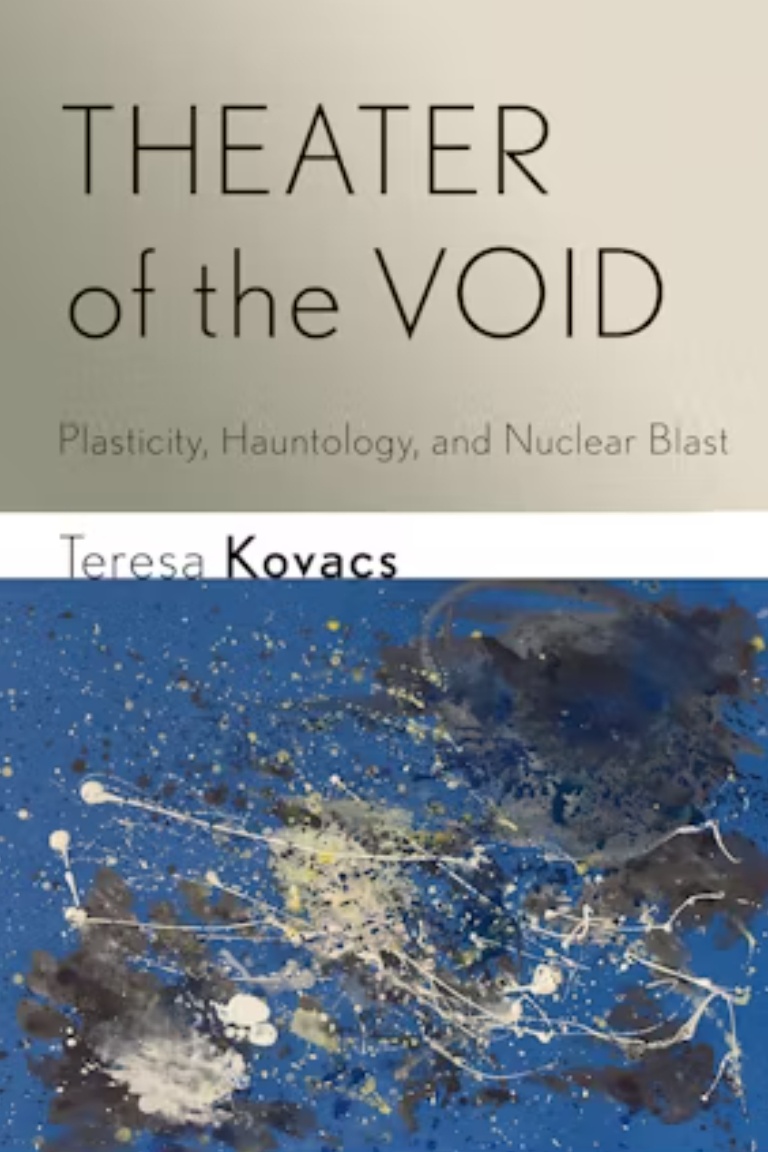
Teresa Kovacs is an Assistant Professor of Germanic Studies at Indiana University Bloomington, where she also serves as Director of the Institute of German Studies. She holds affiliate faculty positions in Cultural Studies and Environmental Futures, and is an Adjunct Assistant Professor in Theatre, Drama and Contemporary Dance. Her academic work bridges multiple disciplines with a focus on contemporary German-language theater and performance studies. Education: Ph.D. from University of Vienna Teresa Kovacs is a scholar trained in literature, theater, film, and media studies with expertise in theater theory, the politics of aesthetics, the comedic, theater and the sciences, transcultural theater, and questions of aesthetics for/of the (post-)Anthropocene. Her research predominantly focuses on German-language theatre in the 20th and 21st century. She explores how theatrical forms investigate the groundlessness of being as revealed in our techno-scientific age, particularly examining concepts like the void to describe theater that generates energy from the absence of determinate being. Her work challenges traditional understandings of postdramatic theater by connecting it to scientific thinking and environmental concerns. Her publications reveal a strong focus on contemporary German theater, particularly examining works by Heiner Müller, Elfriede Jelinek, Christoph Schlingensief, and René Pollesch. Kovacs demonstrates how contemporary German theater has remained entangled with scientific thinking about quantum physics, biology, and the environment, investigating how theatrical forms transform fundamental categories of time, space, and causality in light of the ontological and epistemological shifts of the nuclear age and the Anthropocene. Her work positions theater as a vital space for reimagining possibilities in an age of ecological crisis. Professional Activities: Director of the Institute of German Studies Organizes conferences and workshops at IU Bloomington and beyond (e.g., 'Diffractive World-Making') Brings guest artists and scholars to IU Bloomington (e.g., Berlin-based director Jürgen Kuttner) Maintains dialogue with directors and authors (e.g., conversation with German director Thomas Oberender) Supports student participation in conferences and workshops in the US and abroad Hosts a weekly Colloquium connecting graduate students and faculty from German Studies, Comparative Literature, English, and the Media School Teresa Kovacs is deeply committed to mentoring graduate and undergraduate students working in theater, performance, dance, 20th and 21st century literature, film, media, environmental humanities, and theories of the Anthropocene. She has chaired PhD theses on theater and migration, theater and the commons, theater and/as assembly, madness and drama, and theater in the Anthropocene. She conceives academic work as a collective, collaborative practice and actively supports students in creating their scholarly networks and publication projects beyond conventional academic outlets.
Dr Joseph Dunne-Howrie serves as MFA Programme Director at Rose Bruford College, where he teaches across multiple postgraduate programs with a focus on second-year students. His academic work bridges performance practice with critical engagement in contemporary political and technological landscapes. His educational background includes a PhD from the University of Lincoln (2011-2015) titled 'Regenerating the Live: The Archive as the Genesis of a Performance Practice,' an MA in Theatre Practice with Distinction from the University of Exeter (2008-2009), and a BA (Hons) in Drama with First Class Honors from the same institution (2003-2006). He also holds a Postgraduate Certificate in Learning and Teaching in Higher Education from Rose Bruford College (2020-2022) and is a Fellow of the Higher Education Academy (2012). Dunne-Howrie's research centers on political, digital, and participatory performance practices that respond to technological accelerationism, the climate crisis, and political extremism. His current investigations focus on extreme right-wing politics and free-speech culture wars, examining how the identities of 'the people' and 'the elite' become present as political subjects through performance. His expertise spans performative writing, practice research paradigms, archives and performance documentation, performance art, immersive theatre, intermediality, interactive media, and postdramatic plays. His recent publications reveal a consistent focus on the intersection of digital culture and political performance, with particular attention to internet theater, far-right political movements, and the culture wars. The work demonstrates evolving concern with how performance practices document and respond to the historical consciousness of the contemporary moment, especially regarding technological shifts and political extremism. Fellow of the Higher Education Academy (2012) Dunne-Howrie actively supervises PhD research in political, digital, and participatory performance. He leads the interdisciplinary Gaming Democracy project, which explores the infiltration of extreme right-wing politics within the video game sector through participatory performance strategies. His professional practice includes convening conferences and events for DocPerform and Gaming Democracy projects, and he serves as co-convener for the TaPRA working group Performance & New Technologies. He maintains significant external collaborations, including serving on the steering committee for Hydrocracker (advising on interactive and political theater) and maintaining a long-term partnership with ZU-UK Theatre and Digital Arts company on projects including Audience as Document and the ACE-funded Elevate Labs – Body Brain Bingo. His international research extends to practice projects in Brazil, Greenland, and Finland.
Assoc. Professor Margaret Hamilton is an Associate Professor and Discipline Leader in Performance and Theatre at the School of the Arts, English and Media, University of Wollongong. She holds leadership roles including Head of Postgraduate Studies (2023–present) and has extensive experience in arts policy development and cultural diplomacy. Her research focuses on contemporary theatre in Australia and Europe, particularly exploring neoliberalism’s impact on artistic critique. Hamilton’s work includes contributions to the UNESCO-recognized AusStage database and authorship of Transfigured Stages (2011). She has held roles at the Australian Embassy in Berlin, managing arts diplomacy programs, and collaborated with major European institutions like the Hebbel Theater and Berliner Festspiele. Education: PhD (2006) from the University of New South Wales under Prof. Hans-Thies Lehmann, renowned for her thesis on postdramatic theatre in Australia. Research interests span digital humanities, international cultural policy, and postdramatic theatre aesthetics. She has secured ARC grants for AusStage development and led projects on Robert Wilson’s aesthetic innovations. Awards include the Marlis Thiersch Prize (2019) and UNESCO recognition for AusStage (2021). Her teaching focuses on contemporary theatre theory and practice, with courses like Contemporary Theatre & Text and Theatre, Politics & Spectatorship . Hamilton supervises PhD students in topics ranging from AI ethics in performance to meat culture critiques. Key grants include ARC Linkage Infrastructure grants for AusStage phases 5–7 (2014–2023) and a Small Grant on Robert Wilson’s Watermill Centre (2007). Labs/Teams: AusStage Management Committee member, contributing to live performance data infrastructure. Active in international theatre networks including the International Federation of Theatre Research.
Carolina Jinde is an Assistant Professor of Film and Media at the Department of Film and Media, University of Arts and Design Crafts (Uniarts). Her work bridges artistic practice with academic research, focusing on interdisciplinary projects that explore sound, performance, and media as critical tools for cultural inquiry. She has collaborated with institutions like the Reality Research Center and participated in festivals such as Moving in November. Her recent artistic outputs and conference papers investigate themes such as time, voice, and audience engagement in multimedia contexts. Her research interests include sound art, experimental media, and the intersections between film, performance, and digital culture. Notable projects include Listening to a process (2024), Månsalong (2024), and AUDIENCE BODY (2022). Her doctoral thesis ENHEAR (2022) explores sound as a philosophical and methodological framework. Jinde’s publications frequently appear in artistic outputs and conference proceedings, reflecting her commitment to innovative, practice-led research.
Dr N. Eda Erçin serves as a Lecturer in Contemporary Theatre and Performance at the School of the Arts, York St John University since 2022. With a practice-based PhD in Drama from the University of Exeter and MA in Performance Studies from Southern Illinois University Carbondale, her work bridges psychophysical performance, postdramatic theatre, and ecological justice. PhD in Drama (University of Exeter, 2017) MA in Performance Studies (Fulbright Scholar, SIUC, 2012) BA in Sociology with Political Science minor (METU, 2009) Her research explores intersections between body, ecology, identity, and performance , employing phenomenological, autoethnographic, and audiovisual methodologies. She contributes to international projects like the AHRC-funded Judaica Project: A Laboratory of Songwork and co-edits key journals in the field. Recent works examine ecoperformance through multimedia installations and digital adaptations of literary texts during global crises. As coordinator of Year 1 modules and supervisor for MA projects, she leads interdisciplinary collaborations in the university's Living Lab network. Member, Embodied Research Working Group (IFTR) Assistant Editor, Theatre, Dance and Performance Training Journal Blog Co-founder, Urban Research Theater
Professor Anne Fleig holds a position in Modern German Literature at the Institute for German and Dutch Philology within the Department of Philosophy and Humanities at Freie Universität Berlin. She has served as President of the Heinrich von Kleist Society since 2021 and is actively involved in multiple major research initiatives including Collaborative Research Center 1171 'Affective Societies' and Excellence Cluster 'Temporal Communities.' Her research focuses on literature around 1800, contemporary literature post-1989, gender studies, drama and theater history, and the history and aesthetics of sport. Fleig employs affect theory and transcultural perspectives to analyze how literary texts articulate belonging and non-belonging, particularly in Berlin's urban context. Her recent publications demonstrate a strong engagement with contemporary German literature, multilingualism, and affective topographies. Fleig's work consistently bridges historical literary analysis with contemporary social issues, particularly regarding gender, migration, and urban space. President of Heinrich von Kleist Society (2021-present) Member of board for Graduate School 'Normativity, Critique, Change' Member of mentoring committee at Institute for German and Dutch Philology Board member of SFB 1171 'Affective Societies' Fleig leads Project A03 'Geteilte Gefühle' within SFB 1171, investigating transcultural Berlin literature since the 1970s and its articulation of belonging. She also contributes to the EXC 2020 'Temporal Communities' project on the historical development of monolingualism. Her work connects literary scholarship with broader societal questions about pluralism and affective communities.
Prof. Dr. Annemarie Matzke is Professor for Experimental Forms of Contemporary Theatre at the Institute for Media, Theatre and Popular Culture within the Cultural Studies & Aesthetic Communication faculty at the University of Hildesheim. She has held this position since October 2009 and has been deputy spokesperson of the DFG Research Training Group 'Aesthetic Practice' at the University since 2019. Previously, she served as president of the Society for Theatre Studies from 2016 to 2019. Her academic journey began with studies in Applied Theatre Studies at Justus Liebig University in Giessen. From 1998-2001, she received a DFG doctoral scholarship at the University of Hildesheim's graduate school 'Authenticity as Representation,' completing her dissertation on 'Forms of Self-Drama in Contemporary Theatre.' She then worked as a research associate at the University of Hildesheim (2001-2004) and the Free University of Berlin (2004-2009), where she received her habilitation in 2009 with a dissertation on 'Working in the Theatre: A Discourse History of Rehearsal.' Matzke's research focuses on theatre rehearsal history and theory, institutional criticism in theatre, 20th and 21st century theatre and performance art, postdramatic theatre, gender performances, theatrical spatial concepts, and contemporary performance practices. Her work bridges academic research with practical artistic engagement, particularly through her long-standing membership in the performance collective She She Pop since 1994. An analysis of her recent publications reveals a consistent focus on the epistemological dimensions of theatrical practice, particularly how knowledge is generated through rehearsal processes and performance creation. Her work demonstrates a strong interest in the relationship between media technology and performance, the professional identity of contemporary performers, and the material exploration in theatrical practice. She consistently examines theatrical work through the lens of contingency, planning, and collective creation. Friedrich Luft Prize (2011) for 'She She Pop and her fathers: Testament' Wild Card/Ruhr from the Favoriten Theater Festival (2010) George Tabori Prize (2016) for She She Pop Berlin Theater Prize (2019) for She She Pop War Blinded Radio Play Prize (2012) for 'Testament' radio play Matzke maintains an active relationship between academic research and artistic practice through her ongoing collaboration with She She Pop, which has produced internationally recognized works including 'She She Pop:Live' (1999), 'Bad' (2002), 'Why don't you dance?' (2004), 'The relevance show' (2007), 'Testament' (2010), 'Oratorium' (2018), and 'Hexploitation' (2020). These productions have been invited to prestigious festivals including Theatertreffen and Impulse Festival. Her scholarly work is deeply informed by this practical engagement, creating a productive dialogue between theory and practice in contemporary theatre.
Prof. Kate Bredeson is a Professor of Theatre at Reed College, specializing in theatre as a tool for radical activism and protest. Her research focuses on 20th-century performance, particularly May '68 France and queer/drag practices. She has authored four books, including Occupying the Stage: The Theater of May '68 (2018) and Lamp Back: Plays and Other Grievances (forthcoming 2026). She holds an MFA and PhD in Dramaturgy from Yale. Awards include Fulbright, NEH, and Beinecke fellowships. She advises student Thalia Wolff and collaborates with choreographer Tahni Holt. Bredeson teaches courses like Gender and Theatre and Playwriting , emphasizing intersectional feminism and social justice. She has held residencies globally, including Camargo Foundation (France) and Rockefeller Foundation Bellagio Center (Italy). As Vice President for Awards at the American Society for Theatre Research, she advocates for theatre scholarship. Affiliations: Reed College, American Society for Theatre Research (ASTR), Portland's Risk/Reward Research Interests: Activist theatre, postdramatic forms, queer performance, dramaturgy Grants: NEH Summer Stipend, Furthermore Foundation Grant, Ruby-Lankford Research Award Key Publications: The Diaries of Judith Malina (2026), The Inheritor (2024), essays in PAJ , Theatre Journal , and Theatre Survey Her work bridges academic scholarship and practice, with dramaturgical collaborations at the Guthrie Theater, Yale Repertory, and Court Theater. She explores how performance disrupts power structures, notably in gender studies and decolonial frameworks.
Héctor Álvarez is an Assistant Teaching Professor in the Department of Theater Studies at Emory University. He holds an MFA from California Institute of the Arts, an MA from University College London, and a BA from Macalester College. His work focuses on interdisciplinary performance addressing incarceration, oppression, and identity through theater, film, and opera. He founded Stupleme, a collective supporting BIPOC and immigrant artists, and served as Executive Director of Still Point Theater Collective (2017-2019). Currently based at Emory, he also held residencies at Lehigh University and North Park University. Research interests include experimental performance forms, intersectional narratives of marginalized communities, and the ethical dimensions of artistic creation. His work frequently engages with historical trauma, disability representation, and socially engaged art practices. Notable awards include the 2022 Princess Grace Award, Watson Fellowship, and Humanity in Action Senior Fellowship. Recent projects include the opera Here Be Sirens and the pandemic-era film adaptation of We’re Gonna Die , recognized as a 2020 cultural highlight by WDCB’s The Arts Section.
Dr. Michael Shane Boyle is a Senior Lecturer in Drama, Theatre, and Performance Studies at Queen Mary University of London (QMUL), part of the School of English and Drama. He holds a BA in English from Duke University and a PhD in Performance Studies from UC Berkeley, with postdoctoral appointments at Stanford and Harvard Universities. His research focuses on the political economy of performance from Marxist and communist perspectives, particularly postdramatic theatre, live art, activist performance in Germany, the UK, and the US. He is co-editor of Postdramatic Theatre and Form (2019) and is completing a book, The Arts of Logistics , examining performance’s engagement with global capitalist infrastructure. Teaching emphasizes institutional critiques of racialization and economic exploitation, with modules on race in performance, live art disciplines, and Marxist theory. Boyle is on the editorial board of Theatre Survey and peer reviews for journals like Viewpoint Magazine and Theater Journal . He co-convened the CAPITAL FORMS postgraduate program in Economic Humanities and chairs the Board of Trustees for Limehouse Town Hall, a community arts space in London. His work bridges academic research with activist practices, including collaborations with groups like the Clandestine Insurgent Rebel Clown Army and translations of political theory for outlets like Commune . Key awards include winning TDR/The Drama Review ’s Student Essay Contest (2001) and contributing to a special issue honored with the 2011 Best Special Issue Award. His research explores intersections of performance with labor, logistics, and anti-fascist movements, including a forthcoming monograph on antifascist performance in Germany.
Ruth Hellier is a Professor of Performance Studies at the University of California, Santa Barbara (UCSB), with affiliations in Theater and Dance, Feminist Studies, and Latin American and Iberian Studies. Her interdisciplinary work bridges performance studies, critical music/dance/theatre studies, and environmental arts. She holds a PhD from Birmingham City University and has extensive experience in performance, education, and community arts. Education: PhD in Performance Studies and Critical Dance Studies (2002), University of Birmingham BA Hons in Music, Drama, and Dance (1983). Specialized training includes P'urhépecha language studies in Mexico (1997-1998) and Tanzanian arts (1993). Research focuses on sound collections in natural history museums, ecoacoustic arts, postdramatic theater, and Mexican cultural history. Her projects explore embodiment, environmental ethics, and the politics of performance. Recent work includes Performing Palimpsest Bodies (2019) and Women Singers in Global Contexts (2013). Leadership roles include Editor-in-Chief of Journal of Mexican Studies (2014–2019). She has directed initiatives like the InterAct Theatre Workshop and led arts education programs in secondary schools and community settings.
Alessandro Mastropietro is an Associate Professor of Musicology and History of Music at the Department of Humanities, University of Catania. He holds a PhD from Sapienza University of Rome and has been a member of the teaching staff in the PhD program in Sciences for Cultural Heritage and Production since 2017. His academic work bridges historical musicology, performance studies, and digital humanities. His research focuses on two major areas: 20th-century experimental music theater , particularly the Italian neo-avant-garde in Rome and Palermo from the 1960s–1970s, and 18th-century instrumental music , with special emphasis on Luigi Boccherini and the sonata a tre for two violins and cello. His methodological approach is highly interdisciplinary, integrating performance theory (drawing on Eugenio Barba), textual analysis of performance traces, and archival research across multimedia sources. Mastropietro has led a national research project on the computerized cataloging of musical works and has edited critical editions of writings by Domenico Guaccero, as well as monographs on composers Paolo Renosto and Francesco Pennisi. His seminal monograph, Nuovo Teatro Musicale fra Roma e Palermo, 1961–1973 (LIM, 2020), represents a key contribution to the field, and a forthcoming volume on Mario Bertoncini’s 'teatro della realtà' is in preparation. He has also contributed extensively to scholarly journals and conference proceedings. Mastropietro supervises graduate theses on diverse topics ranging from cinematic music analysis to synesthesia and performance art. He emphasizes rigorous preparation, requiring students to submit full thesis drafts at least two weeks before submission deadlines. He teaches courses including Musical Communication (L20), Theories of Musical Communication (LM65), and History of Music and Visual Arts (LM89), and maintains regular office hours at the Benedictine Monastery campus in Piazza Dante. He has held leadership roles in national research and continues to advance methodologies in musicological research, especially in redefining the status of the musical work through sketch studies, interdisciplinary dramaturgy, and digital cataloging. His work connects historical depth with contemporary theoretical frameworks, contributing significantly to both Italian and international musicological discourse.
Kurt Vanhoutte is a Professor in the Department of Literature at the Faculty of Arts and Philosophy, University of Antwerp. His roles include: Coordinator of the Master's program in Theater and Film Studies Chair of the Examination Committee for the Master in Theatre and Film Studies Effective voting member of the Departmental Council for Literature Effective voting member of the Faculty Council of Arts and Philosophy Chair of the Fraud Committee for Master Theatre and Film Studies Member of the Faculty Research Committee for Arts and Philosophy His research centers on the mise-en-scène of science and knowledge in the nineteenth century through a media-archaeological lens, excavating forgotten technologies like the magic lantern and their enduring cultural impact. He investigates how extinct media forms shape contemporary public perception and narrative structures, particularly in science communication and visual culture. Analysis of his 15 most recent publications reveals dominant trends in 19th-century visual media archaeology, with 70% of works focusing on magic lantern applications in science storytelling. Key thematic clusters include: resurrection of extinct media technologies (42%), biblical/scientific narrative adaptation (28%), and fairground spectacle as cultural transmission (30%). His work consistently bridges theater studies, history of science, and media archaeology, demonstrating how obsolete technologies like orreries and agioscopes functioned as hybrid science-theater interfaces. Scientific Awards: None documented in provided sources. Vanhoutte coordinates the Master's program in Theater and Film Studies and mentors graduate students in media archaeology and performance history. He leads a major Excellence of Science (EOS-FWO/FNRS) project investigating the magic lantern as a mass medium, representing significant research funding. His advisory scope extends to curriculum development and academic governance across multiple university committees. He directs the interdisciplinary EOS research team studying European magic lantern heritage, collaborating with historians, archivists, and media scholars to analyze how slide collections functioned as educational artifacts. This project establishes Vanhoutte at the nexus of material culture studies and performance history, with ongoing work examining the technological afterlife of 19th-century visual media in contemporary digital culture.
Bojana Cvejić is a Professor of Dance Theory at the Academy of Dance, Oslo National Academy of the Arts (KHiO). She holds a Ph.D. in Philosophy from Kingston University London and has taught at institutions including PARTS (Brussels) and Utrecht University. Her work intertwines performance practices with critical theory, focusing on social choreography, transindividuality, and political solidarity. Education: Ph.D. in Philosophy, Kingston University London M.A. in Musicology and Aesthetics, Faculty of Music Arts, Belgrade B.A. in Musicology, Faculty of Music Arts, Belgrade Research Interests: Cvejić explores transindividuality as a political framework for collective action, interrogating how bodies and relations shape public space. Current projects include collaborations with Jonathan Burrows on neuroscience and choreography, and a book on practical dramaturgy supported by KUF. Her work spans performance theory, social choreography, and critical perspectives on contemporary dance. Teaching: At KHiO, she teaches interdisciplinary seminars on performance dramaturgy, social choreography, and critical approaches to dance. Her pedagogy emphasizes collective study, cultural diversity, and inventive engagement with theory. She advocates for students to embrace theoretical texts as dynamic tools rather than passive knowledge. Key Collaborations: Co-founder of TkH/Walking Theory (2000–2015) Collaborations with Ana Vujanović on Public Sphere by Performance (2012) and Toward a Transindividual Self (2022) Projects with choreographers Mette Ingvartsen, Eszter Salamon, and Xavier Le Roy Labs/Teams: Active in the Performing Arts Forum (St. Erme, France) and the TkH editorial collective. Her research often intersects with artist-led initiatives and self-organized platforms.



/prod01/yorksjacuk/media/content-assets/staff-profile-images/nazlihan_eda_ercin_ysj_website-24.jpg)