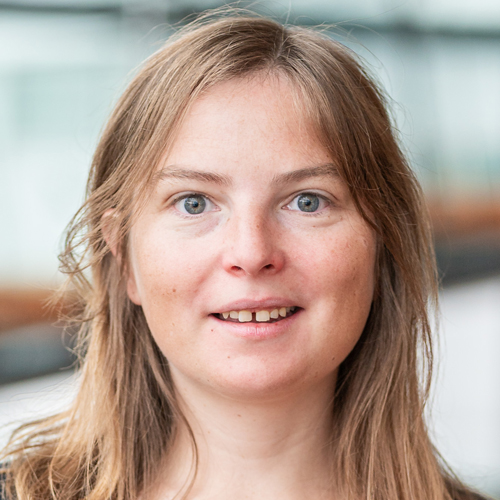
Marine Cazenave is a Group Leader at the Department of Human Origins, Max Planck Institute for Evolutionary Anthropology, Leipzig. Her research focuses on the functional and adaptive evolution of the postcranial skeleton in fossil hominins, emphasizing locomotor behavior reconstruction through bone structure analysis. She holds a PhD in Anthropobiology from Universities of Toulouse and Pretoria, with postdoctoral fellowships at the American Museum of Natural History (USA) and University of Kent (UK). PhD in Anthropobiology (University of Toulouse/University of Pretoria, 2015-2018) Postdoc: Richard Gilder Graduate School (2022-2024); Fyssen Foundation (2020-2022) Her research integrates virtual imaging (e.g., micro-CT scanning), comparative studies of living primates, and fieldwork to decode locomotion patterns in hominins. Key focuses include hip/knee joint adaptations, trabecular bone architecture, and the interplay between bone structure and environmental interactions. Recent work highlights locomotor diversity in South African australopiths, Paranthropus robustus hip loading differences, and the functional significance of calcar femorale variation. Awards include the 2022 Journal of Human Evolution Early Career Prize. Collaborations span institutions globally, advancing projects like the Bakeng se Afrika Digital Skeletal Repository. Her methodologies emphasize multi-disciplinary approaches, combining fossil analysis with experimental frameworks (e.g., captive primate studies).
Kristian J. Carlson serves as a Clinical Professor of Medical Education at the Keck School of Medicine, University of Southern California, where he teaches human gross anatomy to first and second-year medical students. His research bridges clinical medicine and paleoanthropology through interdisciplinary investigations of skeletal form and function across evolutionary timescales. Carlson earned his doctoral degree in biological anthropology from Indiana University's four-field program, followed by postdoctoral training at Stony Brook University's Department of Anatomical Sciences and the University of Zurich's Anthropological Institute and Museum. His research program integrates comparative anatomy , locomotor mechanics , and bone biology to analyze postcranial skeletons in extant primates and fossil hominins. Key investigations include: Trabecular and cortical bone adaptations to mechanical loading Evolutionary biomechanics of bipedal locomotion Clinical applications of skeletal maintenance through physical activity Morphological reconstructions of extinct hominin behaviors Advanced imaging analysis of fossil specimens like StW 573 ("Little Foot") Publication trends reveal consistent focus on hominin fossil analysis (particularly Australopithecus sediba), skeletal biomechanics, and clinical bone health applications, utilizing methodologies from high-resolution CT scanning to finite element analysis. No scientific awards or major grants were documented in the source material. Information regarding research teams, laboratory facilities, or student mentorship was not provided.
Tracy Kivell is a paleoanthropologist and Director of the Department of Human Origins at the Max Planck Institute for Evolutionary Anthropology in Leipzig, Germany. She previously held the position of Professor of Biological Anthropology at the University of Kent (2013–2023) and conducted postdoctoral research at the same institute (2009–2013). Her research focuses on the evolution of primate skeletons, particularly the relationship between bone structure and function in locomotion and manipulation. She leads studies on Australopithecus sediba and Homo naledi hand fossils, employing methods like microCT scanning and musculoskeletal modeling. Education: PhD in Biological Anthropology (2007) and MA (2002) from the University of Toronto, Canada. Research interests include the evolution of bipedalism, tool use, and functional morphology of the hand and skeleton. Key projects involve collaboration with institutions worldwide to analyze fossil and extant primate anatomy. Key Awards: Wolfson Foundation Award (2020), ERC Consolidator Grant (2019–2024), ERC Starting Grant (2014–2019). She has supervised numerous PhD students and postdoctoral researchers in evolutionary anthropology and related fields. Her work bridges anatomical analysis with biomechanical studies, advancing understanding of human origins and primate adaptation.
Andrew Moore is an Assistant Professor in the Renaissance School of Medicine at Stony Brook University , specializing in evolutionary anatomy and vertebrate paleontology. His research focuses on skeletal pneumaticity, sauropod dinosaur evolution, and axial skeleton morphofunctional variation. Education: PhD, George Washington University (2018) BA, University of Virginia (2009) Key Research Areas: Postcranial Skeletal Pneumaticity Sauropod Dinosaur Systematics Phylogenetic Comparative Methods CT Scanning & Digital Modeling Recent Publications: 2025 - Avian postcranial skeletal pneumaticity review 2024 - Respiratory system flight mechanics study 2023 - Mamenchisaurus long neck evolution analysis Expertise: Phylogenetic Analysis Morphometric Analysis Respiratory Anatomy Dinosaur Paleontology
Noreen von Cramon-Taubadel is a Professor in the Department of Anthropology at the University at Buffalo, College of Arts and Sciences, and serves as Director of Undergraduate Studies. She holds a PhD from the University of Cambridge, an MSc from University College London, and a BSc from the University of Galway. Her research focuses on Biological Anthropology, Human Evolution, and Evolutionary Morphology, with a specialization in modern human variation, craniometrics, and geometric morphometrics. She investigates how environmental, dietary, and cultural factors influence cranial and skeletal diversity, particularly in relation to the transition to agriculture and human adaptation. Her work spans global populations and time periods, including analyses of prehistoric and historical skeletal remains. Courses she teaches include 'Introduction to Physical Anthropology' and 'Advanced Research in Physical Anthropology.' Her research employs cutting-edge quantitative methods, such as geometric morphometrics and evolutionary quantitative genetics, to explore questions in human and primate evolution. Notable projects include studies on macaque taxonomy, craniofacial evolution, and the biological consequences of subsistence strategies.
Sandra Inouye, Ph.D., is Dean of the College of Graduate Studies and holds multiple professor appointments at Midwestern University, including positions in the College of Dental Medicine-Illinois, College of Dental Medicine-Arizona, and Arizona College of Optometry. She earned her B.S. from UC Davis (1985), followed by an M.A. (1987) and Ph.D. (1994) in Biological Anthropology from Northwestern University. Her research specializes in anatomical variation with orthopaedic applications, focusing on: Musculoskeletal variation and orthopaedic complications Ontogenetic changes in human/primate postcranial skeletons Surgical implications of anatomical variations Her publications demonstrate interdisciplinary expertise spanning: Orthopaedic surgery techniques (2010-2017) Primate locomotor anatomy (1989-2000) Hominin evolutionary morphology (1992-1997) Teaching responsibilities since 2000 include directing and instructing in: Gross Anatomy & Embryology (CCOM, CHS, CCO) Head & Neck Anatomy (CDMI) Musculoskeletal/Cardiovascular Systems (CDMI)
Dr. Jennifer Olori is Associate Professor in Biological Sciences at SUNY Oswego, specializing in vertebrate skeletal morphology and evolutionary biology. Her research integrates paleontological and neontological approaches. Education includes PhD from University of Toronto. Research examines morphological diversity in early tetrapods, modern amphibians, and burrowing squamates. Leads long-term study tracking ranavirus and chytridiomycosis in New York amphibians. Publications showcase expertise in comparative morphology, evolutionary development, and amphibian disease dynamics. Recent work combines CT imaging with phylogenetic analysis. Supervises student research on amphibian diseases and reptile morphology. Teaches comparative anatomy and evolutionary biology courses.
Dr. Veronica Diez-Diaz is a Senior Researcher at the Museum of Natural History, Leibniz Institute for Evolution and Biodiversity Research in Berlin, Germany. Her work focuses on Titanosaurian sauropod systematics , 3D musculoskeletal reconstruction , and digital data ethics in paleontology . She leads the DFG project 470751746 (2021-2024) analyzing sauropod locomotion and serves as Ethics Officer for the European Association of Vertebrate Paleontologists. Education: PhD in Geology (2013), Universidad del País Vasco/Euskal Herriko Unibertsitatea, Bilbao, Spain B.A. in Biology (2007), Universidad Autónoma de Madrid, Spain Research Interests center on titanosaur systematics , biomechanical modeling through 3D digitization , and establishing ethical frameworks for digital data sharing . Her work combines traditional paleontological methods with cutting-edge photogrammetry and CT scanning to analyze sauropod posture, locomotion, and tail biomechanics. Publication Trends show a focus on Cretaceous sauropod diversity across Spain, France, and Egypt , with methodological contributions to 3D digitization standards and digital data ethics . She has advanced understanding of titanosaur biogeography and ontogenetic dental changes in sauropods. Scientific Recognition 2018 Digital Female Leader Award 2015 UPV/EHU Premio Extraordinario de Doctorado Grants & Collaborations include Alexander von Humboldt Postdoctoral Fellowship (2015-2017), Berliner Chancengleichheitsprogramm funding (2018-2021), and participation in the 3DigiPal group promoting best practices for digital paleontological data.
Caley M. Orr is an Associate Professor in the Department of Cell and Developmental Biology at the University of Colorado Anschutz Medical Campus, with an affiliate appointment in the Department of Anthropology. Her research focuses on paleoanthropology and comparative anatomy, specifically examining the adaptations and phylogenetic relationships of early human ancestors and the evolutionary transformation of the postcranial skeleton. Dr. Orr's research interests include: Paleoanthropology and human evolution Comparative anatomy of hands and feet in humans, nonhuman primates, and fossil hominins Morphology related to bipedal locomotion and tool use Evolutionary transformation of the postcranial skeleton Functional morphology of the primate hand Her research methodology combines traditional anatomical study with quantitative bioengineering and computer science approaches, including computed-tomography-based analysis of joint kinematics, surface laser scanning, three-dimensional morphometrics, electromyography, and measurement of muscle moment arms. She has conducted fieldwork in numerous international locations including Italy, Bulgaria, Ethiopia, Kenya, South Africa, France, Spain, and Wyoming. Dr. Orr teaches human gross anatomy in the Master of Science Program in Modern Human Anatomy and in professional health science programs (School of Medicine and School of Dental Medicine) at CU Anschutz. She advises anthropology graduate and undergraduate students with interests in paleoanthropology and primate comparative morphology. Her publication record demonstrates significant contributions to the understanding of hominin evolution, particularly regarding Homo naledi and Homo floresiensis . Her research spans topics from wrist and hand morphology to broader evolutionary questions about bipedality and tool use in human ancestors.
Caley Orr , Ph.D., serves as Associate Professor at the University of Colorado Denver's School of Medicine within the Department of Cell & Developmental Biology. He teaches human anatomy in both the Masters of Science Modern Human Anatomy program and professional health science curricula, maintaining a dual research focus on paleoanthropology and comparative anatomy. Ph.D., Anthropology, Arizona State University, 2010 Graduate Affiliation: Anthropology & Modern Human Anatomy programs Dr. Orr investigates evolutionary origins of human adaptations through primate morphological studies and hominin fossil analysis. His work combines traditional anatomical examination with advanced technologies like computed tomography, laser scanning, and biomechanical modeling to trace evolutionary transformations in the postcranial skeleton. Current research encompasses Arma Veirana (Italy) excavations examining Neanderthal-modern human transition (~40,000 years ago), alongside fieldwork in Ethiopia, Kenya, South Africa, and Wyoming. Methodologically, he employs 3D morphometrics, electromyography, and muscle moment arm measurements to analyze locomotor constraints and novel behavior adaptations. Key publications demonstrate hominin wrist evolution patterns, Homo naledi thumb morphology, and Neandertal scaphoid-centrale fusion implications. While no students are explicitly listed, his international collaborations span multiple continents' paleontological investigations.
Jason Anderson is a Professor (Teaching & Research) at the University of Calgary's Faculty of Veterinary Medicine and holds an Adjunct Professor position in the Department of Biological Sciences, Faculty of Science. He is a founding faculty member of the University of Calgary's Faculty of Veterinary Medicine (2005) and previously held roles at Western University of Health Sciences (2003). His research focuses on vertebrate paleontology, particularly the origins of modern amphibians, fin-to-limb transitions, and CT imaging techniques for studying fossil anatomy. He has contributed significantly to understanding Carboniferous and Devonian vertebrate fauna through studies of Nova Scotia and Canadian Rocky Mountain fossils. Education: B.S. in Geological Sciences from the University of Michigan (1996), Ph.D. in Biological Sciences (Vertebrate Paleontology) from McGill University (2001), followed by postdoctoral work at the University of Toronto. His awards include the UCVM Award for Research Excellence (2017) and University of Calgary Teaching Award (2014). He has published extensively on topics ranging from salamander braincase morphology to dinosaur migration patterns using strontium isotope analysis. Research interests include: (1) Evolutionary origins of amphibians and reptiles, (2) Paleontological applications of CT imaging and histology, (3) Functional morphology of early tetrapods, and (4) Biomechanical analyses of fossil locomotion. He has participated in strategic initiatives such as Engineering Solutions for Health (2015–2021). Publications highlight interdisciplinary approaches combining fieldwork, micro-CT scanning, and geochemical methods. Recent work includes descriptions of new actinopterygian species and insights into Cretaceous dinosaur ecology through isotope studies. His teaching contributions include courses like Veterinary Anatomy and Clinical Presentations I.
Scott Alan Williams is an Associate Professor at New York University, affiliated with the Center for the Study of Human Origins and the New York Consortium in Evolutionary Primatology. He holds honorary research status at the Evolutionary Studies Institute, University of the Witwatersrand. His primary roles include directing the Master’s in Science program in Human Skeletal Biology and teaching courses such as Human Evolution, Human Origins, and graduate-level methods in paleoanthropology. Williams is a leading evolutionary morphologist and paleoanthropologist specializing in the evolution of positional behavior across hominoids, with a focus on the vertebral column and bipedalism. Education: Ph.D. in Anthropology from University of Illinois, Urbana-Champaign (2011) M.A. in Anthropology from Northern Illinois University (2006) B.A. in Anthropology from Kent State University (2003) Research Interests: Williams examines evolutionary transitions in hominoid fossils from 20 million-year-old apes to modern humans, emphasizing postcranial skeletal adaptations. His work explores the anatomical basis of upright posture, bipedalism, and spinal evolution in hominins like Australopithecus sediba and Homo naledi. He employs large comparative datasets and 3D modeling to analyze vertebral morphology, spinal pathology, and locomotor behavior. Scientific Awards: 2016 Golden Dozen Teaching Award (NYU College of Arts and Sciences) 2016 Manchester High School Distinguished Alumni Award 2015 Goddard Junior Faculty Fellowship (NYU) 2018 Sigma Xi Nomination Advising & Grants: Currently advises PhD students studying Miocene ape evolution, bipedalism, and morphological plasticity (Monica Avilez, Jordan Guerra, Madelynne Dudas, Xue Wang, Ailis Daly, Monica Msechu). His grants include Leakey Foundation funding for hominin lordosis studies. Recent projects include spinal analysis of early hominins and the last common ancestor of humans and chimpanzees. Labs/Teams: Collaborates with multidisciplinary teams in fossil digitization and analysis, including work at Rising Star Cave (South Africa) and the Sterkfontein Caves. Leads projects involving global comparative datasets and morphological modeling techniques.
Patricia Lambert is a Distinguished Professor in the Department of Anthropology within the School of Social Sciences at Utah State University. Her research and teaching are centered on bioarchaeology, skeletal analysis, and the anthropological study of prehistoric violence, health, and disease. She has been a leading figure in the field, publishing extensively in top journals and mentoring graduate students in biological anthropology and bioarchaeology. University: Utah State University School: School of Social Sciences Department: Department of Anthropology Academic Rank: Professor Email: patricia.lambert@usu.edu Office: Logan (MAIN 245E) Phone: +1 435 797 2603 Educational Background: PhD, Anthropology, University of California at Santa Barbara, 1994 MA, Anthropology, University of California at Santa Barbara, 1989 BA, Physical Anthropology, University of California at Santa Barbara, 1980 Other, Bioarchaeology/Skeletal Analysis, Smithsonian Institution, 1997 Her research interests span prehistoric warfare, paleopathology, bioarchaeology, North American prehistory, and Peruvian prehistory . She investigates trauma patterns in human skeletons to understand social conflict, health impacts of agricultural transitions, and the spread of diseases like treponemal infections. Her work integrates biological data with cultural and environmental contexts to reconstruct past lifeways and societal dynamics. The most recent publications reflect a sustained focus on violence, trauma, agricultural intensification, and ethical issues in bioarchaeology . Her studies span North America and coastal Peru, using osteological analysis to explore patterns of injury, disease, and mortuary behavior. She frequently collaborates with other leading scholars and contributes to both empirical research and theoretical debates in the field. Scientific Awards and Honors: Distinguished Professor Award, 2017 (CHaSS, USU) Certificate of Excellence in Reviewing, 2013, 2014 (International Journal of Paleopathology) USU Diversity Award, Community Member category, 2014 Fellow, 2012 (American Association for the Advancement of Science) Researcher of the Year, 2002 (College of Humanities, Arts & Social Sciences) AAUW Emerging Scholar Award, 1999 Smithsonian Fellowship Award, 1996 Andrew Isbell Award, 1992 Regents Fellowship Award, 1989 She has advised graduate students including Geena Black and Garnet Kwader , and has secured research grants supporting fieldwork and laboratory analysis. Her technical reports indicate active engagement in NAGPRA-related inventories and bioarchaeological assessments. She teaches core courses such as Biological Anthropology, Osteology, Anthropology of Disease, and The Anthropology of War, demonstrating a strong commitment to both undergraduate and graduate education. Dr. Lambert is involved in major research projects related to the Cerro Oreja site in Peru, the Tuqan Man remains from California, and prehistoric conflict on the Colorado Plateau . Her interdisciplinary collaborations include work with archaeologists, geochemists, and paleopathologists. She continues to publish on ethical issues in human remains research and the repatriation of ancestral materials, positioning her at the forefront of contemporary debates in bioarchaeology.
Dr. Laura A. B. Wilson is a Senior Lecturer in the School of Biological, Earth and Environmental Sciences at the University of New South Wales (UNSW). Her academic career spans evolutionary biology, paleontology, and morphological studies with a specific focus on vertebrate development and evolution. Dr. Wilson's research interests center around: Growth and development in vertebrates Application and development of geometric morphometric methods to study phenotypic evolution Statistical analysis of shape and 3D modeling Theoretical themes in evolutionary developmental biology (evo-devo) Paleontology, particularly vertebrate paleontology Biological adaptation mechanisms Her extensive publication record demonstrates a strong focus on morphological variation across diverse taxa including bats, crocodiles, birds of prey, and domesticated mammals. Dr. Wilson employs advanced quantitative methods such as geometric morphometrics and finite element analysis to understand evolutionary patterns and biomechanical adaptations. Her work frequently bridges the gap between developmental biology and evolutionary theory, examining how ontogenetic processes shape evolutionary trajectories. Dr. Wilson serves on multiple editorial boards including PeerJ, Mammalian Biology, Palaeontologica Electronica, MorphoMuseuM (M3), and the American Journal of Physical Anthropology. She is also a Council Member of the European Society for Evolutionary Developmental Biology (EED). Currently, Dr. Wilson is supervising PhD student Camilo Lopez-Aguirre and has served as a UNSW trained First Responder and UNSW Women in Maths & Science Champion. Her research has been published in numerous high-impact journals and she has contributed significantly to methodological approaches in morphometric analysis.
Juan Benito Moreno is a Henslow Fellow and UKRI-funded Postdoctoral Research Associate at the Department of Earth Sciences, University of Cambridge, and a Junior Research Fellow at Lucy Cavendish College. His research centers on reconstructing the evolutionary origins of modern birds through integration of fossil evidence and extant biodiversity, with particular focus on morphological transitions across the Cretaceous-Paleogene mass extinction boundary. His academic journey includes a Bachelor's degree in Biology from the University of Barcelona, a Master's degree in Palaeontology from the Autonomous University of Barcelona, and a PhD from the University of Bath focused on morphological transitions between modern birds and their extinct relatives. Dr. Moreno's research spans Paleontology , Evolutionary Biology , and Ornithology , employing comparative anatomy , phylogenetic inference , and high-resolution 3D computed tomography to investigate deep-time morphological evolution. His work specifically addresses how ecological factors and mass extinctions shaped avian body plans from the Cretaceous through the explosive radiation of modern bird lineages. Analysis of his publications reveals a dominant focus on Cretaceous bird fossils, particularly Ichthyornis , utilizing new specimens and advanced imaging to reconstruct postcranial morphology, locomotor adaptations, and phylogenetic relationships. Key trends include the application of topology-based 3D reconstruction to taphonomic studies and the integration of skeletal proportions with ecological modeling. His scientific recognition includes: Henslow Fellowship UKRI Postdoctoral Research Fellowship Junior Research Fellowship at Lucy Cavendish College Dr. Moreno has secured substantial research funding through UKRI and Cambridge fellowships, enabling his work on fossil bird morphology. While no formal advisees are documented, he maintains extensive international collaborations evident in co-authored publications with leading institutions. His outreach contributions include authoring the field-guide "Birds of the Mesozoic" (Lynx Edicions, 2022), which translates complex paleontological discoveries for public audiences.