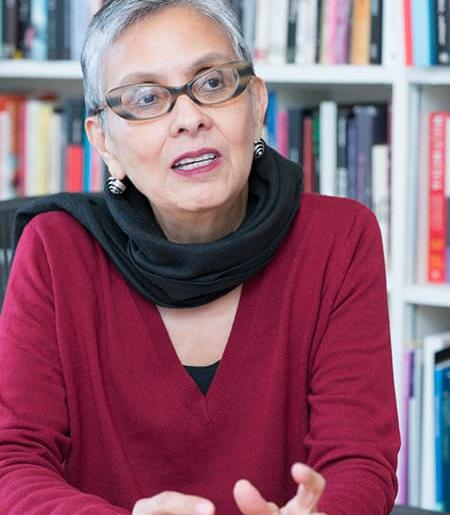
Maria Fernandez is an Associate Professor at Cornell University's College of Arts and Sciences, Department of History of Art and Visual Studies. She holds a Ph.D. from Columbia University and specializes in the history and theory of digital art, cybernetics, feminist media arts, and posthumanism. Ph.D., Columbia University Research Focus : Maria's work bridges cybernetics, feminist media arts, posthumanism, new materialism, BioArt, and AI in art. She investigates how women artists in new media contribute to posthumanist and new materialist discourses, with a current book project on British cybernetician Gordon Pask. Publications span digital art history, Latin American modernism, and feminist cybernetics. Her articles appear in Leonardo , Art Journal , and Third Text , with a focus on interactivity, media theory, and technological aesthetics. Scientific Awards : Arvey Book Award by the Association for Latin American Art (2015) She co-edited Domain Errors: Cyberfeminist Practices (2002) and Latin American Modernisms and Technology (2018). Her advising policy emphasizes formal departmental application reviews.
Ana Antic is a Professor in the Department of English, Germanic and Romance Studies at the University of Copenhagen, Faculty of Humanities. She is also affiliated with the Centre for Culture and the Mind, where she leads an ERC-funded project titled Decolonising madness: Transcultural psychiatry, international order and the birth of a ‘global psyche’ . Her academic journey includes a PhD in Modern European History from Columbia University (2012) and prior appointments at universities in the UK and US before joining the University of Copenhagen in August 2020. PhD in Modern European History, Columbia University (2012) Ana Antic’s research lies at the intersection of social and cultural history, focusing on the history of modern Europe, war and violence, and the 'psy' sciences—particularly psychiatry and psychoanalysis. Her work critically explores the decolonisation of psychiatric practices and concepts in the second half of the 20th century, examining how transcultural psychiatry emerged in the aftermath of WWII and during decolonisation. She investigates how Western and non-Western experts redefined the relationship between culture, race, and the individual psyche, and whether new frameworks succeeded in moving beyond colonial legacies. Her recent publications reflect a strong trend in global and transnational history, especially in the fields of transcultural psychiatry, Cold War science, and postcolonial mental health. The articles span interdisciplinary journals in history, global health, and medical humanities, often emphasizing decolonial critique and the politics of knowledge. A recurring theme is the role of experts from the Global South and Eastern Europe in shaping global psychiatric discourse. She has received multiple prestigious awards, including: Fraenkel Prize for Contemporary History (2016) British Academy Rising Star Engagement Award (2017) ERC Starting Grant (2019) Dan David Prize (March 2023) Ana Antic is actively involved in research leadership and academic collaboration. She currently heads the DNRF Centre for Culture and the Mind and leads a major ERC-funded project. She has organized international conferences and workshops, including the DECOLMAD Workshop and New Perspectives in Transcultural and Postcolonial Psychiatry . While no direct list of PhD students is provided, her leadership roles suggest active supervision and mentorship. Her work bridges history, psychiatry, and global health, contributing to a deeper understanding of the cultural and political dimensions of mental health. She is involved with the Centre for Culture and the Mind, a research environment that fosters interdisciplinary work on the intersections of culture, cognition, and history. Her project Decolonising madness brings together historians, anthropologists, and mental health professionals to re-examine the foundations of global psychiatric knowledge.
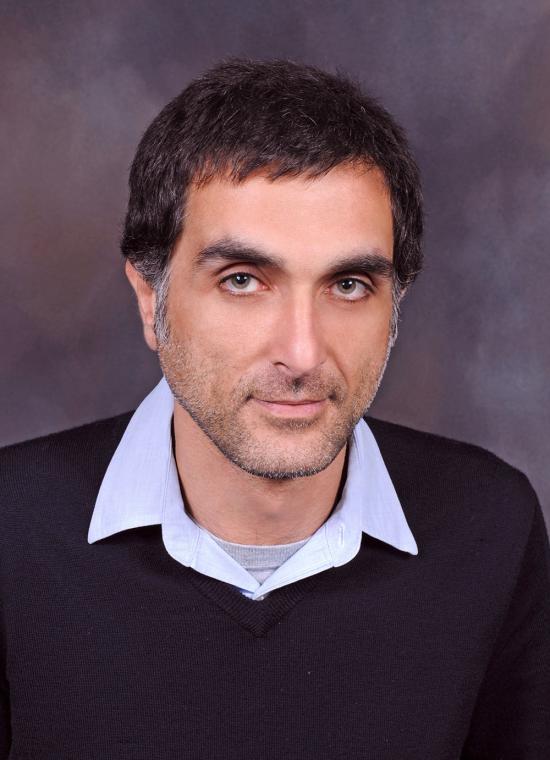
Arash Khazeni is Professor of History, Chair of the History Department, and Coordinator of Middle Eastern Studies at Pomona College, where he has been a faculty member since 2010. He holds a Ph.D. in History from Yale University and specializes in the imperial, environmental, and borderland histories of the modern Middle East, South Asia, and the Indian Ocean. Ph.D., Yale University M.A., Yale University B.A., University of Wisconsin, Madison His research explores the margins of empires and the interconnected histories of the Indo-Persian world, blending environmental history with world-historical perspectives. He investigates how societies on the periphery—such as tribal communities and pastoralists—interacted with imperial structures and shaped transregional exchanges. His approach is influenced by E.P. Thompson’s 'history from below' and engages with postcolonial and Marxist frameworks. His publications reveal a consistent focus on global trade, cultural mobility, and human-environment interactions, particularly in arid and frontier zones. Themes such as the turquoise trade, equestrian pastoralism, and Indo-Persian travel writing demonstrate his interdisciplinary reach across economic, cultural, and environmental history. Recipient of the Middle East Studies Association Houshang Pourshariati Book Award Balzan Keddie Fellowship, UCLA Huntington Library, Andrew W. Mellon Foundation Short Term Research Fellowship Khazeni advises on interdisciplinary scholarship and has co-edited thematic volumes on trade in the Persianate world. His academic leadership includes directing the Middle Eastern Studies program and teaching courses on Gunpowder Empires, Environmental Histories, and the Indian Ocean World. He has no known active grants listed, but his fellowships reflect sustained research support. He is deeply involved in shaping curricula that connect global regions and historical methodologies. His work is associated with intellectual communities focused on world history and environmental humanities, though no formal lab or research team is mentioned.
Macarena Gomez-Barris is the Timothy C. Forbes and Anne S. Harrison University Professor of Modern Culture and Media at Brown University, serving as Chair of the Modern Culture and Media Department and Director of the Center for Environmental Humanities. Her research focuses on decolonial environmental humanities, extractivism, media environments, and the intersection of cultural theory with artistic practice. She holds affiliations with the Brown Arts Institute and leads the Elemental Media Lab. Education : - PhD in Modern Culture and Media, University of California Santa Cruz (2004) - MA in Modern Culture and Media, University of California Santa Cruz (1999) - MA in Comparative Literature, University of California at Berkeley (1997) - BA in Literature, University of California, San Diego (1992) Her work explores themes such as colonial oceanic transits, racial ecologies, and the role of art in political resistance. She is the author of four books, including At the Sea’s Edge (forthcoming) and The Extractive Zone (2017). Her teaching spans courses like Racial Ecologies and Decolonial Futurities . Leadership & Initiatives : - Director of the Elemental Media Lab - Series Editor for Dissident Acts (Duke UP) - Member of the Social Text Collective
Prof. Dr. Jakob Leimgruber is Professor of English Linguistics at the University of Regensburg since 2022, where he is affiliated with the Department of English and American Studies within the Faculty of Languages, Literature, and Cultures. Previously, he served as Substitute Professor at the University of Freiburg (2020-2022) and Lecturer at the University of Basel (2018-2022). His academic journey includes a Habilitation in English Philology from the University of Freiburg (2018), a DPhil in English Language from the University of Oxford (2009), and a Licence ès lettres in English Linguistics from the University of Fribourg (2005). Leimgruber's research centers on World Englishes with particular focus on East and Southeast Asia, sociolinguistics, language planning and policy, linguistic landscapes, language contact phenomena, language variation and change, indexicality, and authenticity. His work employs empirical approaches including corpus linguistics, fieldwork, and eye-tracking methodologies to investigate multilingual contexts across Singapore, Montreal, Taiwan, and the UAE. He has made significant contributions to understanding Singapore English, linguistic landscapes in multilingual cities, and language variation in postcolonial contexts. His publication record demonstrates consistent research output across multiple high-impact journals in linguistics, with a strong focus on empirical studies of language variation in specific contexts. Recent work shows increased attention to East Asian Englishes beyond Singapore, including Taiwan, and expanding investigations into the linguistic landscapes of global cities like Dubai. His research often employs collaborative approaches with international scholars across multiple institutions. Leimgruber has been active in academic service through numerous conference presentations including invited talks at institutions worldwide, participation in research workshops, and contributions to edited volumes on World Englishes and multilingual cities. His work bridges theoretical linguistics with practical applications in language policy and education. As an academic leader, Leimgruber has directed research projects examining multilingualism in global contexts, with particular attention to the role of English in shaping linguistic landscapes and identity construction. His recent work has increasingly focused on comparative approaches across different multilingual settings, examining common patterns and context-specific variations in how English functions in diverse sociolinguistic environments.
Nicole Files-Thompson is an Associate Professor in the Mass Communications Department at Lincoln University. Formerly a television producer and writer, she brings industry experience to academia. She earned her PhD in Mass Communications and Media Studies from Howard University, where she also obtained graduate certificates in Women’s Studies, Distance Learning, and Preparing Future Faculty. Her interdisciplinary research explores marginalized groups through the lenses of Communication Studies, Gender Studies, and Cultural Theory. Key areas include: Sexual identity formation and negotiation Intersectionality in media representations Queer theory applications in tourism spaces Critical pedagogy in digital environments Race/ethnicity dynamics in mass communication Her publications engage with popular media texts like Beyoncé’s Formation, Noah’s Arc, and Love & Hip-Hop. These works examine power dynamics, identity performance, and cultural critique through feminist and queer frameworks. Scientific achievements include: Outstanding Ph.D. Dissertation award (Fethiye, Turkey) Leadership roles in National Communications Association (NCA) and Eastern Communications Association (ECA) Pioneering curriculum development for students of color As an educator, she has developed 24 communications courses, mentored students through research initiatives, and implemented pathways to graduate school. Her professional engagement spans both academic leadership and intersectional analyses of media systems.
Dr. Heather Latimer is an Assistant Professor in the Gender, Women and Sexuality Studies department at the University of British Columbia's Irving K. Barber Faculty of Arts and Social Sciences. She teaches courses including Politics of Reproduction, Critical Sexuality Studies, Feminist Epistemologies, Gender and Popular Culture, and Gender, Race, Sexuality and Power. Her academic work focuses on feminist theories, sexuality studies, and reproductive politics across various cultural texts. Dr. Latimer earned her PhD in English from Simon Fraser University and her MA in Gender and Women's Studies from the University of British Columbia. Her educational background has shaped her interdisciplinary approach to examining reproductive politics through literary and cultural analysis. Her research primarily explores feminist theories and epistemologies, sexuality studies, science and technology studies, cultural studies, literature and film, with a particular focus on reproduction and pregnancy, reproductive technologies and politics, and reproductive governance and abortion. She is currently investigating the role of reproductive politics in contemporary dystopian fiction through an SSHRC Insight Development Grant-funded project that examines how fourteen core texts portray dystopian societies fixated on reproductive control. This research suggests these narratives reveal 'the political unconscious' of public and private discourses about reproduction. Dr. Latimer's publications demonstrate a consistent thematic focus on reproductive politics across literature, film, and political discourse. Her work connects feminist theory with contemporary political debates, particularly around abortion rights and reproductive justice. The articles show increasing engagement with intersectional approaches, examining how reproductive politics intersect with race, migration, and environmental concerns. SSHRC Insight Development Grant (2019-22) UBC Teaching and Learning Enhancement Fund Grant (2017-19) UBC Killam Teaching Prize (2017) Women's and Gender Studies and Recherches Féministes Outstanding Scholarship Award (2015) As a graduate student supervisor, Dr. Latimer mentors students interested in feminist theory, reproductive politics, and cultural studies. Her teaching philosophy emphasizes critical engagement with contemporary issues of power, conflict, and ideas as they relate to gender, sexuality, and reproduction. She maintains an active research agenda that bridges academic scholarship with current political debates around reproductive rights and justice.
Thomas Schlag is Professor of Practical Theology at the University of Zurich , with research foci in religious education, church theory, and pastoral theology . He directs the university-wide research focus "Digital Religion(s): Communication, Interaction and Transformation in the Digital Society" , exploring the intersection of theology and digital culture. His career includes roles as Chairman of the Center for Church Development (ZKE) and Dean of the Faculty of Theology (2014–2016). Key Research Areas : Digital religion, public theology, interreligious education, confirmation work, church development, and socio-political theology. Academic Leadership : Directed international studies on confirmation work, co-edited interdisciplinary theological compendiums, and contributed to debates on state religious education and digital ethics. Recent Publications (2024–2025) examine digital media in religious education, Swiss church reform, theological responses to polarization, and interfaith educational models. His "Digital Religion(s)" program analyzes church-state-civil society dynamics in digital societies. He teaches courses on existential religious education , digital transformation , and ecclesiological-practical semesters . Collaborations include the European Network for Confirmation Work , International Academy of Practical Theology , and projects with Swiss and international theological institutions. His work bridges digital innovation , democratic education , and pastoral care in virtual environments .
James Mulholland is a Professor of English and Associate Dean of Academic and Student Affairs in the College of Humanities and Social Sciences at North Carolina State University. He oversees academic and student affairs for a college serving 3,900 undergraduates and 800 graduate students. His research focuses on the global eighteenth century and world anglophone literature, particularly works from British Asia before 1820. His book Before the Raj: Writing Early Anglophone India (2021) explores literary history in colonial India and has received multiple academic accolades. He holds a Ph.D. in English from Rutgers University (2005) and a B.A. from the University of Virginia (1997). His work has been supported by grants from ACLS, the Fox Center for Humanistic Inquiry, and the Whiting Foundation. A Fellow of the Royal Historical Society, Mulholland also writes about higher education issues, including humanities advocacy and academic career development. His research publications span literary analysis and professional advice, with notable contributions to PMLA , Literature Compass , and Journal of Scholarly Publishing . He has been featured in The Guardian and Chronicle of Higher Education for essays on public engagement and academic publishing. Mulholland’s recent work includes studies on translocalism in anglophone literature, queer historical poetics, and the cultural dynamics of British imperial expansion. His interdisciplinary approach bridges literary studies with historical and global perspectives.
Abidin Kusno is a Professor at the Faculty of Environmental and Urban Change, York University, where he has been a faculty member since 2015. He previously held the Canada Research Chair in Asian Urbanism and Culture at the University of British Columbia and taught at New York University and Binghamton University. His academic training includes a PhD and MA in Art History from Binghamton University and a BA in Architecture from Petra University, Indonesia. Education: PhD in Art History, Binghamton University MA in Art History, Binghamton University BA in Architecture, Petra University, Surabaya, Indonesia His research lies at the intersection of urban studies, cultural studies, history, and political theory, with a regional focus on Indonesia—especially Jakarta. He investigates how urban space, architecture, and infrastructure shape political consciousness, cultural memory, and social identities in postcolonial contexts. His work critically engages with themes such as informality, environmental crisis, urban nostalgia, religious spatial practices, and the politics of planning. The 15 most recent publications reflect a consistent engagement with Southeast Asian urbanism, particularly Jakarta’s transformation. The research spans topics from kampung studies and flood governance to Islamist spatial performances and transnational real estate developments. Collectively, the works demonstrate a deep interdisciplinary approach that combines architectural analysis, historical inquiry, and critical theory. Scientific Awards and Recognitions: Canada Research Chair Tier II Senior Visiting Research Fellow, Asian Research Institute, National University of Singapore Research Fellow, Swedish Collegium for Advanced Studies, Uppsala, Sweden Early Career Senior Scholar, Peter Wall Institute for Advanced Studies, University of British Columbia As a supervisor and mentor, while no students are listed in the provided text, he has led major research projects such as the SSHRC-funded Inundation and Environmental Politics in Southeast Asia (2016–2021), which examined socio-political responses to environmental degradation in Jakarta. He has also contributed significantly to academic discourse through editorial roles, including guest editing volumes on modernism and postcolonial traditionality in the built environment. While no formal lab or research center is mentioned, his work is closely affiliated with the York Centre for Asian Research (YCAR), where his research project was hosted. His ongoing scholarly contributions indicate active engagement with global urban theory, particularly in recentering knowledge from the Global South.
Angus Carlyle is a Professor of Sound Arts Practice and Sound Landscape at the London College of Communication, part of the University of the Arts London. His research explores soundscapes, environmental acoustics, and interdisciplinary art practices. He holds degrees in Law (LLB, University of Hull), Political Theory (MA, University of Manchester), and a PhD in Political Theory/Philosophy (University of Manchester). Carlyle’s creative work bridges documentary and poetic registers through field recordings and collaborations, including projects like Air Pressure and Zawawa , which investigate sound in contested environments. He has authored/co-authored influential books such as On Listening (2013), In the Field (2013), and Sound Arts Now (2021). His teaching focuses on sound arts education, designing courses like The Politics of Noise and supervising over 50 student projects. He has secured major grants, including the Arctic Auditories project (2021–2024) and the Positive Soundscape Project (2006–2010), exploring soundscapes’ social and environmental impacts. Carlyle is a member of the Creative Research into Sound Arts Practice (CRiSAP) research centre. Key research interests include sonic ecology, post-natural soundscapes, and decolonial listening practices. His work frequently engages with anthropological, environmental, and political frameworks to critique and reimagine auditory environments.
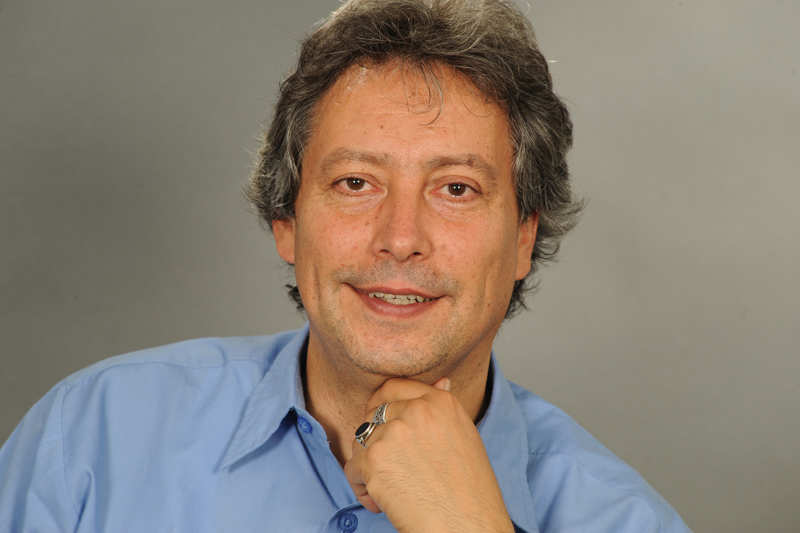
Ottmar Ette is Chair of Romance Literature at the University of Potsdam, Germany, where he has held a professorship since 1995. A leading scholar of Alexander von Humboldt and comparative literature, Ette has established himself as a major intellectual figure through his development of TransArea Studies and the conceptual framework of 'Lebenswissenschaft' (science of life). His academic career spans multiple continents with significant contributions to understanding the intersections of literature, globalization, and cross-cultural knowledge. Ette's research interests form a rich interdisciplinary tapestry exploring literary studies as life science , conviviality (living together), and the poetics of movement within TransArea Studies. His work examines how literary knowledge functions as essential repository of human experience, particularly regarding ethically relevant themes such as migration, belonging, and survival. The scholar has pioneered approaches to understanding literature beyond national boundaries, focusing on 'literatures without fixed abode' and the 'vectorial imagination' that transcends traditional dichotomies between national and world literature. His extensive publication record reveals consistent engagement with globalization processes across historical periods, with particular emphasis on the works of Alexander von Humboldt as a lens for understanding interconnected knowledge systems. Ette's scholarship demonstrates remarkable breadth, spanning from 18th century francophone literature to contemporary transareal literary phenomena, while maintaining focus on how literary texts generate knowledge for living in increasingly interconnected worlds. 2014 Research Award Escuela Nacional de Altos Estudios from UNAM 2014 Honorary Member of the Modern Language Association of America 2013 Ordinary Member of the Berlin-Brandenburg Academy of Sciences 2012 Chevalier dans l'Ordre des Palmes Académiques (France) 2010 Ordinary Member of the Academia Europaea 2001 Hugo Friedrich/Erich Köhler Research Award 1991 Young Scholars Award for Romance Literature 1987 Heinz-Maier-Leibnitz Award Ette has directed significant research projects including the 3-year Research Project on Humboldt's American Travel Diaries (2014-2017) and the 18-year project 'Travelling Humboldt - Science on the Move' at the Berlin-Brandenburg Academy of Sciences. He co-founded multiple DFG-funded Research Training Groups including 'lebensformen + lebenswissen' (2006), 'Zwischen Räume' (2009), and 'Sichtbarkeit und Sichtbarmachung' (2011). His editorial work encompasses founding the electronic journal HiN - Alexander von Humboldt in the Net and serving as co-editor of Iberoamericana and Istmo. As co-founder of the ForLaBB (Research Network Latin America Berlin-Brandenburg), Ette has created important institutional frameworks for transnational scholarly exchange. His academic leadership extends through organizing numerous international conferences on topics ranging from 'Caribbean(s) on the Move' to 'Conviviality in Difference,' fostering collaborative research environments that bridge disciplinary and geographical boundaries.
Abou-Bakar Mamah is an Associate Professor of French and Francophone Studies at Rhodes College's Department of Modern Languages and Literatures. His academic work bridges Francophone literature, film analysis, and African diaspora studies. Ph.D., French and Francophone Studies, University of Minnesota Twin Cities Ph.D. Minor, Africa and the African Diaspora, University of Minnesota Twin Cities M.A., French Critical Theory and New African Literary Writings, Université de Lomé, Togo B.A., French Critical Theory and Structuralism, Université de Lomé, Togo Mamah's research focuses on socio-political transformations in Sub-Saharan Francophone Africa. He explores Afropolitanism as a cosmopolitan African identity, Afrofuturism envisioning idealized African futures, and migration dynamics within African literary and cinematic frameworks. His work engages with postdemocracy theory, institutional violence, and allegorical storytelling. His publications analyze themes like transnational sex trade in Chika Unigwe's work, diaspora identity in Alain Mabanckou's narratives, and humanist allegory in Patrice Nganang's novels. The articles span journals such as Research in African Literatures and French Review , with a 2020 book chapter examining gender and migration in artistic creations. Mamah actively contributes to academic discourse through invited lectures, including analyses of postdemocracy in Francophone Africa and healthcare challenges in migrant communities. He co-organized the 2021 International Conference on Literature and Peace at Université de Lomé.
Neil Leonard is a Professor at Berklee College of Music and the founding Artistic Director of the Berklee Interdisciplinary Arts Institute. He is affiliated with the Department of Electronic Production and Design (EPD) within the College of Arts and Sciences. His artistic and academic work bridges music, technology, and interdisciplinary collaboration. Ph.D. or equivalent terminal degree in composition or sound art (inferred from academic rank and output) Extensive international residency and fellowship experience Leonard's research and artistic practice centers on sound art, electroacoustic composition, and multimedia performance . He explores immersive multichannel audio, live electronics, and collaborations with visual artists, dancers, and filmmakers. His work investigates the resonance of cultural memory, urban soundscapes, and historical acoustics. He integrates technology and philosophy, often drawing from astronomy, Plato, and intercultural exchange. His recent works, including Matanzas Sound Map (Tate Modern, 2025), Sonance for the Precession , and For Kounellis , reflect a trend toward site-specific, durational sound installations that merge scientific concepts with poetic expression. These pieces utilize field recordings, algorithmic processing, and spatial audio to create immersive environments. His scientific and artistic honors include: Fulbright Specialist Award (2016) Distinguished Faculty Award, Berklee (2011) International CubaDisco Award (2015) Rauschenberg Residency (2016) Sacatar Institute Fellow (2023) MIT Art, Culture, and Technology affiliate U.S. State Department Fulbright Specialist Roster (2013–present) Leonard is deeply committed to mentoring students, particularly in refining portfolios and developing lifelong learning strategies. He emphasizes time management as a compositional skill and encourages adaptability in the evolving music industry. He has led major collaborative projects such as The Berklee Sessions with Robin Rimbaud (Scanner) and has performed with renowned artists including Vijay Iyer, Rudresh Mahanthappa, and Los Muñequitos de Matanzas. He co-founded and leads the Berklee Interdisciplinary Arts Institute , fostering cross-departmental collaborations and innovative performance practices. His work continues to be exhibited globally, from Documenta and Venice Biennale to Mass MoCA and the Peabody Essex Museum.
Asst. Prof. Hilal Öztürk Baydere serves in the Department of Western Languages and Literatures at Karadeniz Technical University's Faculty of Arts and Humanities since 2021, advancing to Assistant Professor in 2024 after beginning her academic career at the university's School of Foreign Languages in 2013. Her institutional trajectory reflects deep integration within Turkey's translation studies community. Her academic foundation includes: Doctorate in Translation Studies (2016-2022) from Istanbul University's Institute of Social Sciences Postgraduate degree in English Translation and Interpretation (2011-2015) from Hacettepe University Undergraduate degree in English Language and Literature (2007-2011) from Hacettepe University Her research centers on Translation Studies with acute focus on machine translation's disruption of literary translation practices. She investigates translator competence evolution in AI-driven environments, creativity preservation in machine-assisted workflows, and historical/cultural dimensions of translation. Her work bridges theoretical linguistics with practical technological applications, particularly examining lexical diversity and stylistic integrity in neural machine translation outputs. Publication analysis reveals three dominant research vectors: (1) Machine translation evaluation frameworks for literary texts (25% of output), (2) Historical/cultural memory representation through translation (33%), and (3) Translator identity and competence in digital ecosystems (42%). Recent work increasingly incorporates large language models while maintaining strong philological grounding in English-Turkish translation contexts. She actively supervises student research on AI translation applications including subtitle translation effectiveness and e-commerce review sentiment analysis. Her TUBITAK-funded doctoral scholarship (2017-2022) and current membership in the European 'Language in the Human-Machine Era' research consortium demonstrate significant grant acquisition and international collaboration. Conference participation spans 8+ annual international symposia since 2017, primarily KTUDELL and NALANS events. Her ongoing projects with the European Cooperation in Science and Technology group indicate future research directions exploring human-AI symbiosis in translation pedagogy and professional practice, particularly regarding creativity metrics and cultural adaptation in neural machine translation systems.