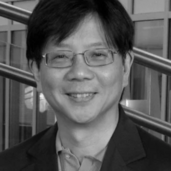
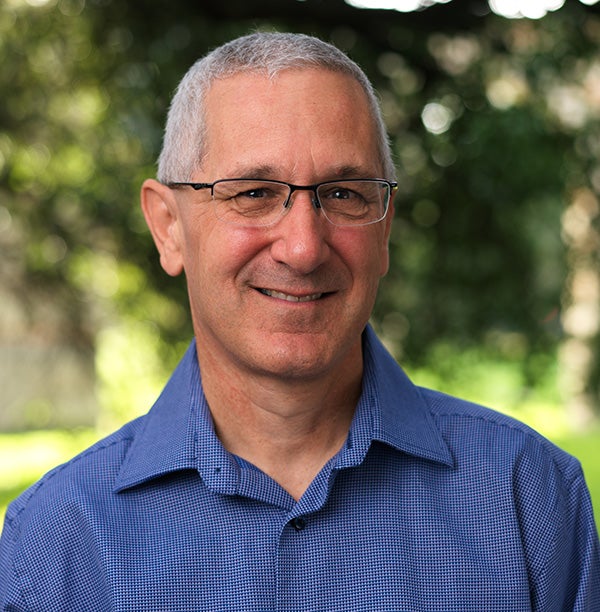
Joel Andreas is a Professor of Sociology at Johns Hopkins University since 2003, serving as Program Director of the East Asian Studies Program. His research focuses on political contention, social inequality, and social change in contemporary China. He holds a PhD in Sociology from UCLA and teaches social theory, political sociology, and courses on Chinese society. He has held visiting positions at universities including the University of Sydney, Hong Kong University, and Ningxia University. His work examines labor movements, rural land policies, and class dynamics in China. Recent research includes analyses of staff-worker congresses, rural land dispossession, and the persistence of militarism in U.S. policy. He critiques market reforms and explores the legacy of the Cultural Revolution. Andreas has contributed to debates on China’s transition to capitalism and the decline of socialist systems. His publications span topics from urbanization to state coercion in rural development. He maintains an active role in academic exchanges and policy-relevant research on China’s socio-political landscape.
Matthew Potolsky is Professor of English at the University of Utah, specializing in nineteenth-century literature and literary theory. His career spans from 1998 Lecturer at Harvard University to current University Professorship. He earned a BA in Comparative Literature and Philosophy (1990), followed by MA and PhD in Comparative Literature (1992, 1997) from UC Irvine. Chair of English Department (2013-2016) University Professor (2014-2016) Research focuses on Decadence , Mimesis , Finance-Aesthetics intersections , and Government Secrecy . His work traces connections between financialization and decadent aesthetics, revealing how economic cycles influence artistic production. Key themes include: Decadent anti-realist literary movements Finance capital's cultural impact Decadent counterpublic formations Victorian aesthetic education debates Sublime aesthetics in national security Cosmopolitanism in literary communities Recent publications analyze: Decadent style as financialization rhetoric Reintroduction of verisimilitude theory Decadent responses to financial crises Mimetic labor in artistic production Decadent cosmopolitan counterpublics Historical parallels between financialization and literary decadence
Norman M. Naimark serves as the Robert & Florence McDonnell Professor of East European Studies and Professor of History at Stanford University, with courtesy appointments in German Studies. He holds senior fellowships at both the Hoover Institution and Freeman Spogli Institute for International Studies, and is affiliated with The Europe Center and the Center on Democracy, Development and the Rule of Law. Education: Ph.D. in History, Stanford University (1972) Naimark specializes in Soviet-era Eastern European history, with dual research pillars: Soviet policies in post-WWII Europe and 20th-century genocide/ethnic cleansing phenomena. His work bridges historical analysis with contemporary human rights discourse, emphasizing geopolitical power dynamics and systematic violence against civilian populations. Methodologically, he combines archival rigor with comparative frameworks across national contexts. His publication trajectory from 1979–2019 reveals evolving focus from Marxist movements in partitioned Poland to Soviet occupation mechanics, culminating in comprehensive genocide studies. The 2019 monograph on Stalin's postwar European sovereignty struggles synthesizes decades of research into Soviet imperial practices. Scientific awards: Officer's Cross of the Order of Merit of the Federal Republic of Germany (1996) Richard W. Lyman Award for outstanding faculty volunteer service (1995) Stanford Dean's Teaching Award (1991-92, 2002-3) Naimark's academic leadership includes directing Stanford's Global Studies Division, Bing Overseas Studies Program, and Center for Russian, East European, and Eurasian Studies. His research informs current policy discussions on authoritarianism and democratic resilience, as evidenced by recent engagements with Belarusian democracy movements and U.S.-Russia relations. He collaborates extensively through Stanford's interdisciplinary centers, particularly contributing historical perspectives to The Europe Center's sovereignty research and the Center on Democracy, Development and the Rule of Law's governance initiatives.
Joseph Felter is a Research Fellow at the Hoover Institution (Stanford University) and the William J. Perry Fellow at the Center for International Security and Cooperation. His career bridges academia, military service, and policy advising, with expertise in counterinsurgency, national security, and US-China relations. He coauthored the influential book Small Wars, Big Data: The Information Revolution and Modern Conflict (2018) and developed the Hacking for Defense curriculum to connect military needs with Silicon Valley innovation. Military Background: Former US Army Special Forces officer with combat deployments in Panama, Iraq, and Afghanistan. Served as commander of the COMISAF Counterinsurgency Advisory and Assistance Team. Academic Roles: Assistant Professor at West Point’s Department of Social Sciences, Adjunct Associate Professor at Columbia University’s School for International and Public Affairs, and current codirector of Stanford’s Empirical Studies of Conflict Project. Research Focus: Politically motivated violence, economic development in conflict zones, and defense innovation. His work appears in top journals like American Economic Review and Journal of Conflict Resolution . Policy Engagement: Key advisor on US defense strategy (2017–2019) and founder of BMNT, a Silicon Valley defense technology incubator. Currently serves on Spirit of America’s board. Scientific Awards: Recognized as a William J. Perry Fellow and US Army War College Fellow. His empirical conflict research informs both academic and policy debates.
Dr. Victor Kempf is a postdoctoral researcher at the Institut für Philosophie , Humboldt-Universität zu Berlin, since March 2025. He completed his PhD at Goethe-Universität Frankfurt in 2017 and focuses on social and political philosophy from a critical theory perspective.
Professor Gabrielle Lynch is a leading scholar in Comparative Politics and African Studies at the University of Warwick. She holds the academic rank of Professor and serves as PAIS Impact Director, Comparative Politics cluster lead, and Warwick UCU Equalities Officer. Her research focuses on ethnic identities, elections, transitional justice, and social media's role in African politics. Lynch earned her BA, MPhil, and DPhil from the University of Oxford. She has conducted extensive fieldwork in Kenya, Ghana, and Uganda, supported by grants from the ESRC, Warwick Policy Support Fund, and others. Her awards include the ESRC Award for Outstanding International Impact (2019) and the Market Research Society’s President’s Medal. Lynch is editor of African Affairs and a member of the African Studies Association of the UK and British Institute in Eastern Africa. Lynch’s work bridges academia and public engagement, including columns in The Saturday Nation and The East African . She founded the African Judiciaries Research Network and co-authored influential books like Performances of Injustices and The Moral Economy of Elections in Africa . Her research emphasizes democratization challenges, electoral integrity, and the intersection of technology and politics in Africa.
Elias Dinas is a Full-time Professor in the Department of Political and Social Sciences at the European University Institute (EUI). He holds the Swiss Chair in Federalism, Democracy, and International Governance. His research focuses on political socialization, authoritarian legacies, and research methodology. Dinas earned his PhD in Political Science from the EUI in 2010. His research interests include the impact of historical traumas on political attitudes, experimental methods, and the dynamics of norm change. He collaborates with institutions like the Graduate Institute in Geneva through seminars, conferences, and methodological workshops. Recent work explores topics such as ideology mapping via AI, the electoral effects of early voting experiences, and the interplay between migration crises and public policy. His research has been published in top journals like the American Political Science Review and highlighted in outlets like The New York Times. Received the Michael Wallerstein Award (2019) for his work on migration and hostility. Supervises 14 students researching memory politics, norm change, and intergroup relations. Leads projects on post-authoritarian ideologies, German political identity, and elite-driven norm erosion. His teaching and supervision emphasize causal inference, experimental design, and quantitative methods, reflecting his commitment to rigorous political analysis.
Kathleen R. McNamara is Professor of Government and Foreign Service at Georgetown University, where she also co-founded the Global Political Economy Project with Professor Abe Newman. Her work centers on the European Union, globalization, and the cultural and political foundations of market authority. Her research interests include the political economy of the European Union, monetary politics, culture and identity in global markets, institutional change, and the democratic legitimacy of supranational governance. She examines how ideas, norms, and collective identities shape economic integration and state formation, especially in Europe. Her recent publications (2020–2024) reveal a strong focus on the EU’s geopolitical turn, industrial policy transformation, the impact of crises like COVID-19 on globalization, and the interplay between democracy and populism. These works reflect a deep engagement with both theoretical and policy-relevant dimensions of contemporary European and global political economy. International Studies Association 2018 Distinguished Scholar in International Political Economy ISA 2020 SWIPE Award for Mentoring Women in International Political Economy German Marshall Fund Fellow Fulbright Fellow Simone Veil Fellow at the European University Institute (2023) McNamara has been a visiting scholar at the Russell Sage Foundation, taught at Princeton University and Sciences Po (Paris), and advised the US National Intelligence Council. She is active in public scholarship, writing for Foreign Affairs , Foreign Policy , and The Washington Post . She is a founding figure in the Global Political Economy Project, which aims to reframe the study of global markets through interdisciplinary and critical lenses.
Dr. Herb Lin is the Hank J. Holland Fellow in Cyber Policy and Security at the Hoover Institution and Senior Research Scholar for Cyber Policy and Security at the Center for International Security and Cooperation (CISAC), both at Stanford University. He also serves as Chief Scientist, Emeritus for the Computer Science and Telecommunications Board of the National Academies, where he worked from 1990 to 2014, and as Adjunct Senior Research Scholar and Senior Fellow in Cybersecurity at Columbia University's Saltzman Institute for War and Peace Studies. Dr. Lin received his doctorate in physics from MIT, providing him with a strong technical foundation that informs his policy work at the intersection of technology and national security. His academic background bridges the gap between deep technical understanding and policy application in the cybersecurity domain. Dr. Lin's research focuses on the policy dimensions of cybersecurity and cyberspace, with particular emphasis on offensive cyber operations as instruments of national policy, information warfare, and influence operations affecting national security. His work addresses critical challenges at the intersection of emerging technologies like artificial intelligence, quantum computing, and their implications for nuclear security, election integrity, and democratic processes. He has been instrumental in analyzing how cyber capabilities are transforming traditional security paradigms and how policy frameworks must adapt to these changes. His extensive publication record reveals a consistent focus on the evolving relationship between cyber capabilities and national security strategy. Lin's work demonstrates increasing attention to the implications of artificial intelligence for warfare, the vulnerabilities created by quantum computing for current cryptographic systems, and the growing threat of cyber-enabled information warfare to democratic institutions. His research trajectory shows a progression from traditional cybersecurity issues toward the broader implications of digital technologies for national and international security. Member of Science and Security Board of Bulletin of the Atomic Scientists Served on President Obama's Commission on Enhancing National Cybersecurity (2016) Regular congressional testimony on cybersecurity matters Contributor to Stanford Emerging Technology Review As a mentor and collaborator, Dr. Lin works extensively with policymakers, military officials, and technology experts to translate complex cybersecurity concepts into actionable policy recommendations. His approach emphasizes practical solutions to emerging threats while recognizing the technical limitations and policy constraints that shape real-world security outcomes. Dr. Lin is associated with multiple research initiatives including Stanford's Center for International Security and Cooperation and the Stanford Emerging Technology Review, which aim to connect technological advances with policy considerations for national security decision-makers.
Sho Konishi serves as Director of the Nissan Institute of Japanese Studies and Associate Professor in Modern Japanese History at the University of Oxford, holding dual appointments in the Faculty of History and the Oxford School of Global and Area Studies. His interdisciplinary work bridges Japanese studies with transnational intellectual history, focusing on non-imperial connections between Japan, Russia, and global networks. Undergraduate studies completed as a U.S. military school cadet after extensive coursework in Russia Georgetown University: Philosophy and International Affairs University of Chicago: Ph.D. in History (Theology and History) Postdoctoral fellowship at Harvard University Konishi's research centers on intellectual and cultural history with emphases on transnational encounters, anarchist thought, and the history of science. He investigates non-imperial knowledge production across 19th-20th century Japan, Russia, and Eastern Europe, with particular focus on symbiosis theory, linguistic democracy, and the role of nonverbal communication in epistemology. His work challenges Western-centric modernity narratives through examinations of anarchist natural science and transnational emotional histories. His publications reveal consistent engagement with alternative epistemologies and cross-cultural exchanges, spanning transnational history, the history of science, and cultural studies. Key themes include Japan-Russia intellectual networks, anarchist cooperative movements, and non-imperial frameworks that reposition Japan within global knowledge systems rather than colonial paradigms. ICAS Book Prize 2023 – Humanities for Japan’s Russia: Challenging the East-West Paradigm Konishi contributes to international academic governance as Advisory Board Member for the Esperantic Studies Foundation, External Faculty at the University of Chicago Stevanovich Institute on the Formation of Knowledge, and International Advisory Board Member for Manchester University Press's Anarchist Studies Series. His cultural impact extends to architectural projects like the Venice Biennale's Philippine Pavilion through 'Symbiogenesis: The Art of Bayanihan Architecture'.
Lyubov Zhyznomirska is an Associate Professor of Political Science at Saint Mary's University, specializing in European studies, migration governance, and democratization processes. She holds a PhD in Political Science from the University of Alberta (2012), with a focus on EU migration cooperation with Eastern neighbors. Her current research examines the reception of war-displaced Ukrainians in Canada, the UK, and Germany. She has held a Jean Monnet Post-Doctoral Fellowship and is active in research networks such as the European Community Studies Association-Canada and the Migration Research Network. Teaching focuses on comparative politics, European Union politics, and migration studies. Recent SSHRC-funded projects include studies on Ukrainian refugee integration in Nova Scotia and the impact of temporary status on newcomer youth. Awards include the Jean Monnet Post-Doctoral Fellowship (2011-2012). Research interests include forced displacement, post-war societies, and EU-Ukraine-Russia dynamics. She co-edited The Routledge Handbook of the Politics of Migration in Europe (2019) and publishes in journals such as Comparative European Politics . Professional roles include Treasurer of ECSA-Canada (2021-2024) and President of the Atlantic Provinces Political Science Association (2022-2023).
G. John Ikenberry is the Albert G. Milbank Professor of Politics and International Affairs at Princeton University, jointly appointed in the Department of Politics and the Princeton School of Public and International Affairs. He is Co-Director of the Center for International Security Studies and the Princeton Project on National Security. Ikenberry also holds the title of Global Eminence Scholar at Kyung Hee University and has held visiting fellowships at All Souls College and Balliol College, Oxford. His research centers on international relations, with a focus on the liberal international order, American foreign policy, institutional design, and post-war order building. Ikenberry’s work explores how power, legitimacy, and institutions interact to shape global governance. His scholarship bridges theory and policy, influencing both academic discourse and real-world strategy. The 15 most recent articles and books reflect a deep engagement with themes such as liberal internationalism, U.S. primacy, multilateralism, and the resilience of global institutions. His publications analyze historical patterns of order creation, contemporary challenges to the Western alliance, and the future of democratic governance in a shifting geopolitical landscape. Scientific Awards: Schroeder-Jervis Award (2002) from the American Political Science Association for best book in international history and politics ( After Victory ) Fellow of the American Academy of Arts and Sciences Advising and Grants: While specific students are not listed, Ikenberry has co-directed major research projects including the Princeton Project on National Security and has advised on U.S. foreign policy through roles on the State Department Policy Planning Staff and the Council on Foreign Relations Task Force. His work has been supported by prestigious academic and policy institutions, enabling broad scholarly and practical impact. Labs and Research Centers: Ikenberry is actively involved in leading research centers at Princeton, including the Center for International Security Studies and the Princeton Project on National Security, which bring together scholars, policymakers, and practitioners to address pressing global challenges.
Michelle Arrow is a Professor at Macquarie University's School of Humanities and Centre for Media History. Her research focuses on cultural history, post-war Australia, and feminist movements. She holds a PhD from the University of Sydney (1999), with notable works including Upstaged (2002), Friday on Our Minds (2010), and The Seventies (2019), which won the Ernest Scott Prize. Her work explores how culture shapes identities and responds to political shifts. She has led projects like 'Public Intimacy: A Biography of Anne Deveson' and contributed to media initiatives such as ABC TV's Rewind . Awards include Fellowships from the Academy of the Social Sciences (2023) and the Royal Historical Society (2025). Her current projects include a biography of Anne Deveson and studies on gender citizenship and LGBTQIA+ activism. Michelle has been a media commentator on topics like historical representation and social policy. Education: PhD in History, University of Sydney (1999) Thesis: Social and cultural history of Australian women playwrights (published as Upstaged ) Research Interests: 1970s Australia, Royal Commissions, feminist politics Popular culture and its political dimensions Historical representation in media and film Awards: Ernest Scott Prize (2020) NSW Premiers' Multimedia History Prize (2014) Elected Fellowships (2023, 2025) Grants/Projects: ARC-funded projects on women's refuges and children's rights Audio-visual archive prototyping (2017) Biography of Anne Deveson (2020–2023) Media Engagement: ABC TV presenter ( Rewind ) Contributions to The Conversation and public talks
Professor Stephen Chan is a faculty member at SOAS University of London in the Department of Politics and International Studies (POL) . With a focus on African political thought and international relations, his work critically examines postcolonialism, decoloniality, and global governance. Key research themes include: Decolonizing international relations theory Sino-African political dynamics Election observation and democratic processes Non-Western cosmopolitanism Comparative diplomatic practices His recent publications analyze the ideological ambiguity of decoloniality (2023), pluralist visions for global security (2017), and the legacy of African liberation movements (2021). He has advised multiple theses on topics ranging from parliamentary governance in Kenya/Zimbabwe to China-Africa media interactions. Notably: Critiqued the misuse of 'decoloniality' as ideological rhetoric (2023) Authored a poetic autobiography of political engagement (2022) Traced Africa's intellectual history of freedom (2021) Examined Zimbabwean elections (2017) Explored non-Western modernity (2018)
Peter C. Caldwell is the Samuel G. McCann Professor of History at Rice University and Director of the Program in Politics, Law, and Social Thought. He specializes in modern European history with a focus on Germany, constitutionalism, welfare state development, and political thought. His research spans Weimar Republic legal crises, postwar West Germany, and 19th/20th-century intellectual movements. Education: PhD (1993), MA (1989), and BA (1987) from Cornell University, New York University. Awards include the George R. Brown Award for Teaching (2016) and Humboldt Fellowship. He has authored/co-authored major works like Democracy, Capitalism, and the Welfare State (2019) and Germany Since 1945 (2018, 2023 revision). Teaching focuses on European political history, comparative welfare states, and 19th-century political thought. Current research examines democratic rhetoric in contemporary Mexican politics and authoritarian constitutionalism. Advised over a dozen undergraduate theses on topics ranging from Weimar Republic legal theory to Cold War historiography. Publications span German constitutional history, Cold War dynamics, and East German politics. His work bridges legal, economic, and cultural dimensions of modern European history with interdisciplinary approaches to political theory.